Ten percent of American children are estimated to have Attention-Deficit/Hyperactivity Disorder (ADHD). Children with ADHD often struggle in school because they get distracted and have difficulty following through. Kids with ADHD also tend to LOVE screen technology. Not only do screens offer them a world of on-demand discovery, but they can also gain expertise over time and earn much-needed social capital that they may have difficulty earning in real life. To help your family make their way through the world with a fun, positive connection and better screen safety, access Dr. Tracy Bennett’s expert parent and family coaching videos through our GKIS Screen Safety Essentials Course. In today’s GKIS article, we will discuss the benefits of technology and app recommendation for children with ADHD.
What is ADHD?
Attention-Deficit/Hyperactivity Disorder (ADHD) is one of the most common neurodevelopmental disorders of childhood. Children with ADHD have trouble paying attention, controlling their behavior, and can be very active as if driven by a motor.[1] ADHD can impact emotions, behaviors, and the ability to learn new things. It is usually diagnosed in childhood and often lasts into adulthood. About 60% to 85% of the children diagnosed with ADHD at a young age continue to have it as teens, although symptoms might change with age.[2]
The Three Types of ADHD
Inattentive Type
ADHD, Predominantly Inattentive Type is characterized by a daydreamer who has difficulty paying attention, listening, and following through with tasks. Children with this type of ADHD are often overlooked until late grade school because they are quiet and not disruptive. However, their ability to function to their true ability is impaired in all contexts of their lives. It has been shown that more girls are diagnosed with inattentive ADHD than boys.[3]
Symptoms of ADHD, Predominantly Inattentive Type
Often has trouble giving close attention to details and makes careless mistakes
Has difficulty sustaining attention to certain tasks or play activities
Frequently distracted and doesn’t seem to pay attention to those speaking directly to them
Often does not follow instructions and fails to complete tasks
Has difficulties organizing tasks and activities
Doesn’t enjoy and avoids activities that require them to use mental effort
Hyperactive-Impulsive Type
ADHD, Predominantly Hyperactive-Impulsive Type is characterized by a child who fidgets, has trouble staying in their seat, and talks a lot. It is hard for them to stay still for long. They tend to be impulsive and interrupt others. It is more common for a child with hyperactivity to have more accidents and sustain frequent injuries. They also tend to be identified at younger ages because of their acting out potential.
Symptoms of ADHD, Predominantly Hyperactive-Impulsive Type
Frequently fidgets with or taps hands or feet
Leaves the seat in situations when remaining seated is expected
Runs or climbs in situations where it is inappropriate
Is “on the go” and doesn’t seem to get tired
Talks excessively
Answers questions before the person has time to finish it
ADHD Combined Type
ADHD, Combined Type is characterized by a child that has trouble paying attention and difficulty sitting still and staying quiet. This is the most common type of ADHD. It is characterized by the symptoms from both the inattentive criteria list and the hyperactive-impulsive criteria list.
How Technology Helps Children With ADHD
Children with ADHD commonly struggle with time management, organization, and failure to focus. Technology and apps can help children with ADHD stay organized, reach their goals, and fight the urge to get distracted.
GKIS-Recommended Apps for Kids With ADHD
Rescue Time
Rescue Time is a web-based time management and analytics tool that helps children be more efficient and productive. One of the symptoms of ADHD is “distraction.” This app aims to prevent distractions and any possibilities of children getting scattered. It allows you to rate each activity from “very distractive” to “very productive” and sets goals for children while tracking progress. With all of that rescued time, be sure to plan fun family activities. For great ideas, check out Dr. B’s GKIS article, #TogetherAtHome Family-Friendly Activity Ideas
Roblox
Roblox is available for iOS and Android. It is a video game that is reported to strengthen planning skills, organization, and working memory as children learn as they go. Roblox is a game where people come together to create and imagine as they play. It is a fun game where the whole family can have fun. To learn more about the risks and benefits of Roblox, check out our The GKIS Sensible Parent’s Guide to Roblox.
News-O-Matic
News-O-Matic is available for iOS. It is a captivating app that delivers news in small chunks which is useful for older children with ADHD. The stories vary from funny to serious and have a read-aloud option for kids who struggle with reading.
Mindnode
Mindnode is available for iOS and it is designed to help children focus and be organized. It is an app that uses mind maps to help children visualize their thoughts. The map can be color-coded and contains images. Children with ADHD tend to be energetic; this app can help make sure that they stay concentrated.
Relaxation and Mindfulness Apps
Headspace
Headspace is a mindfulness app that helps children exercise, meditate, and visualize. This is beneficial because it helps them take a moment to focus and stay calm.
Toonia Colorbook
Toonia Colorbook is an app where children use coloring activities to help them relax. It can help children concentrate, calm down, and keep their minds balanced. Keeping the brain busy with something simple as coloring can have a relaxing effect.
Ninety-eight percent of American homes with kids under eight years old have a mobile screen device.[1] Often children as young as three years old have their own! These bright, glowing, pieces of technology are incredibly attractive for the developing mind, so it’s no wonder kids may feel agitated, bored, or stressed when they must put it down and get to homework. Tantrums at the end of screen time may be a sign of screen addiction. If you worry your child has the potential for screen addiction, empower yourself with the knowledge and expertise provided through Dr. Bennett’s Screen Safety Essentials Course. This program offers weekly parent and family-oriented coaching videos designed to provide you with the information, tips, and tricks that the modern family needs to use screens while staying safe and connected. Today’s article offers 3 GKIS recommended tips to effectively deal with these symptoms.
Hyperarousal & Screen Addiction
Immersing oneself with a screen device is associated with hyperarousal of our nervous system.[2] This type of arousal is associated with irritability in adults and tantrums in children.
Following hyperarousal, the brain attempts to return to balance with an opposite response. Sometimes this results in fatigue and low energy – as in “what goes up must come down.” Some consider this crash to be evidence of addictive withdrawal.
If your child is allowed too much screen time, especially with intense content, expect a tantrum followed by fatigue. Further, if a child repeatedly undergoes this neurological rollercoaster unchecked, excessive screen time can result in chronic mental health conditions.
A study by Anita Restrepo and colleagues analyzed 564 children and their screen usage. They found that the children with problematic internet use suffered from higher rates of sleep disturbance, depressive episodes, and a reduction in healthy behavior.[3] Gaming addiction symptoms, such as feelings of loss of control and play despite negative consequences to school and relationships, can also result from unchecked screen time.
Dr. Tracy Bennett developed the Social Media Readiness Course to empower tweens and teens to employ wellness strategies themselves. Utilizing these techniques backed by research and experience by Dr. B’s 25+ years in the field will aid in retraining your kid’s brain. Our course not only teaches screen use moderation but also offers important information about potential sources of digital injury and critical psychological wellness tools.
Validation and Support
If your child is demonstrating severe meltdowns after screen time, yelling at them will only escalate the situation. Instead, coach emotional stabilization by validating their experience (“You must feel really out of control right now”) and coaching them to calm down. Supportive teamwork teaches important wellness skills, builds problem-solving and resilience, and ultimately results in greater autonomy and less conflict and resentment.
Psychologists Shin and Kim analyzed two types of parenting approaches with screen use among 303 parents. Active mediation emphasizes family discussions about screen use. Restrictive mediation emphasizes one-sided rule-setting for screen devices. Families that use active mediation demonstrated better outcomes than those who preferred restrictive mediation.[4]
When a child is involved in family decision-making, they are given a greater sense of confidence and autonomy. As a result, they have a lower chance of developing resentment.[5] Completing a digital contract, like our free GKIS Connected Family Screen Agreement, is an awesome way to get started with cooperative dialogue and accountability!
Providing Incentive
Following through with priorities and practicing work before play are important life skills. This can be challenging for children when online work feels tedious, boring, and lacks a clear payoff. If your child seems to lose steam and get distracted with online work, rewarding effort with incentives can be helpful.
A study by Radhakrishnan and colleagues looking at 201 students found that giving incentives to complete homework increased their performance and completion rates.[6] Incentives can be material like a new toy, or experiential like a family picnic.
Material incentives are great occasionally but try not to let this be the only motivator that keeps your kid going. Dr. Bennett finds that kids habituate quickly from material rewards and they fail to work overtime. She says family activities celebrating your kid’s hard work well-done ends up working far better, especially when utilizing reward charts and checklists like the Bennett Boxes technique found in her book Screen Time in the Mean Time.
Don’t Give In
Children are incredibly clever at implementing pester power. Pester power wears us down until we cave and give in to their demands for toys, games, and screen time. Sometimes we might simply be exhausted and give them a “fine, 30 more minutes.” But what just happened there is a learning moment for your child. They learn that by bugging you incessantly, they will be rewarded
This parent-child dynamic exemplifies intermittent reinforcement, which means that a behavior that is rewarded occasionally will dramatically increase that behavior—just like with gambling. Once a behavior has been reinforced in this way, it’s more difficult to “undo” it later.[7]
To avoid this trap, stick to your rules with consistency and follow-through. This teaches your child that they can trust your word, and it’s not worth the fight to argue.
Thanks to CSUCI intern, Avery Flower for researching effective ways to deal with behavioral issues, and for co-authoring this article.
I’m the mom psychologist who will help you GetKidsInternetSafe.
[1] Common Sense Media. (2017). The Common Sense Census: Media Use By Kids Age Zero to Eight. Retrieved from https://www.commonsensemedia.org/sites/default/files/uploads/research/csm_zerotoeight_fullreport_release_2.pdf
[3] Restrepo, A., Scheininger, T., Clucas, J., Alexander, L., Salum, G. A., Georgiades, K., Paksarian, D., Merikangas, K. R., & Milham, M. P. (2020). Problematic internet use in children and adolescents: Associations with psychiatric disorders and impairment. BMC Psychiatry, 20. https://doi-org.ezproxy.csuci.edu/10.1186/s12888-020-02640-x
[4] Shin, W., & Kim, H. K. (2019). What motivates parents to mediate children’s use of smartphones? An application of the theory of planned behavior. Journal of Broadcasting & Electronic Media, 63(1), 144–159. https://doi-org.ezproxy.csuci.edu/10.1080/08838151.2019.1576263
[5] Roth, G., Assor, A., Niemiec, C. P., Ryan, R. M., & Deci, E. L. (2009). The emotional and academic consequences of parental conditional regard: Comparing conditional positive regard, conditional negative regard, and autonomy support as parenting practices. Developmental Psychology, 45(4), 1119–1142. https://doi-org.ezproxy.csuci.edu/10.1037/a0015272
[6] Radhakrishnan, P., Lam, D., & Ho, G. (2009). Giving university students incentives to do homework improves their performance. Journal of Instructional Psychology, 36(3), 219–225.
Gaming has been a popular topic for GetKidsInternetSafe because it is the favorite past time for many children. We have covered a variety of gaming topics which include the brain traps of gaming, violent video games, professional gaming, and even if we should gamify education. Games have developed so much in the past 25 years and the graphics, concepts, and design continue to improve. One of the big concerns about children’s gaming is addiction and distraction from academics. When done right though, gaming can be a valuable supplement for well-rounded education.
What is Intelligence
Intelligence is a highly debated term because traditionally it involved biased measures of cognitive ability. However, over fifty years of scientific research has demonstrated that intelligence cannot fit as neatly into a box.
American psychologist Robert Sternberg suggested the Triarchic Theory which states that there are three types of intelligence: analytical, creative, and practical. Taking it a step further, developmental psychologist Howard Gardner proposed that there are eight different types of intelligence: linguistic, logical-mathematical, spatial, musical, bodily-kinesthetic, naturalist, interpersonal, and intrapersonal.[1]
The most widely used intelligence theory in Western culture, is centered around skills in math, memory, verbal comprehension, and visual-spatial reasoning.[2] Simply put, theories of intelligence center on one’s ability to eclectically conceptualize and utilize information.
Games That Surprisingly Affect Intelligence
Most games require specialty skills for success. Popular games can be incredibly complex and require high intelligence to engage successfully. Adults don’t typically consider that playing Overwatch, Roblox, or Minecraft is a learning opportunity. As a player myself, I disagree. In my experience, it is evident that my fellow players excel at things like reaction time, creativity, and spatial awareness.
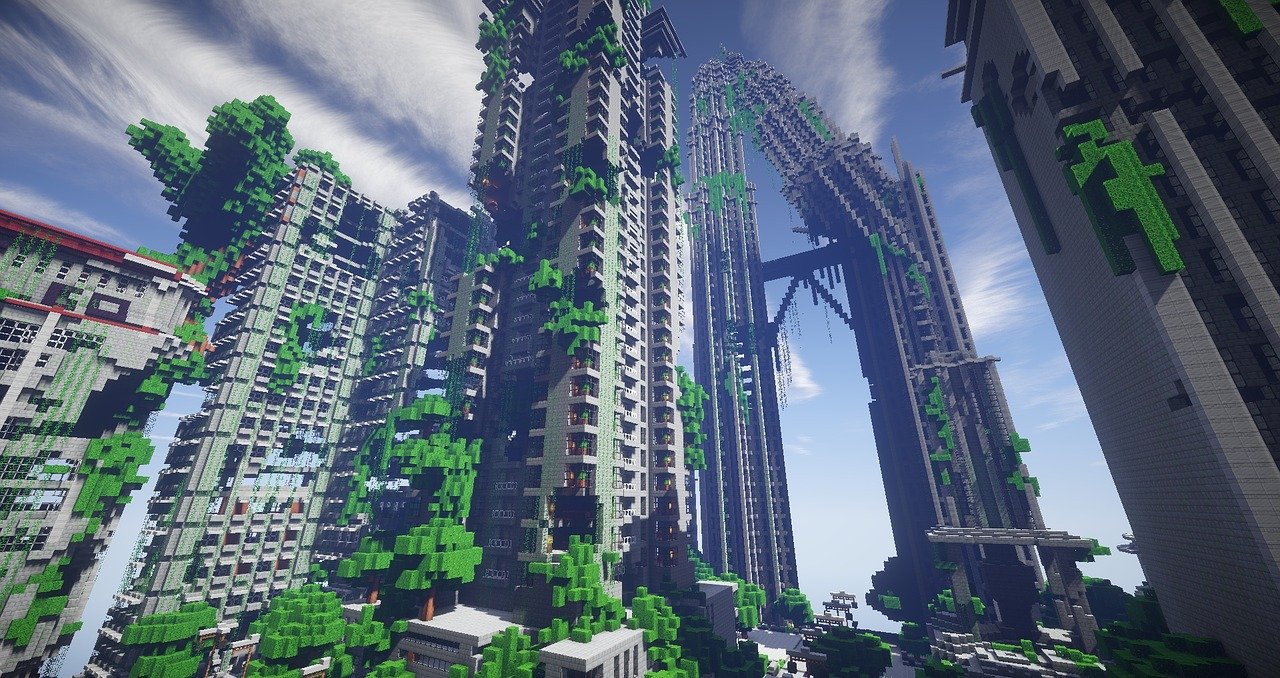
When I was in my mid-teens, I was an avid gamer. I played many games, but Minecraft was my favorite. What peaked my interest were the parallels with real life and the possibilities for creation were endless. Knowledge needed for the game helped me in real life by enriching my vocabulary, excelling my reaction time, and nurturing my creativity. My spatial awareness was also boosted due to understanding the means of measurement in Minecraft (each block was a square meter). Using those as reference, I had a better gist of measurement in comparison to my 6-meter-tall character. I even began to conceptualize fundamentals of construction and physics when I would set up mob traps to capitalize off the loot they dropped.
After my Minecraft phase, I moved onto Lumosity and my eyes opened to how impactful games could be. Lumosity is an educational gaming app that has minigames specially designed to challenge a variety of our cognitive abilities.
Many great new app developers seek to make fun educational games. Edutainment is refers to media designed to educate and entertain.[3] Many edutainment activities are developed by education specialists and cognitive scientists. Commonly targeted abilities are in the area of executive functioning, working memory, self-control, and mental flexibility.
A study by Jocelyn Parong and colleagues from the University of California, Santa Barbara researched the effects of games on cognition. They put students in two groups. The first group played Alien Game for four hours. The second group played an updated version of the game called All You Can ET. After the two groups played, an improvement in mental flexibility was found.[4] Their findings replicated those of a previous study that also studied cognition and gaming.
Further, a 2016 study by Viviane Kovess-Masfety and colleagues analyzed data from over 3,000 children. Upon gathering information from the children’s teachers on how they were in the classroom, Kovess-Masfety and colleagues found that children categorized as “high use” gamers had slightly higher reported intellectual functioning. Most of the high-use gamers reported approximately seven to ten hours of gaming per week.[5]
GKIS-Recommended Intelligence Games
Games that are designed specifically to improve intelligence are still relatively new. Research has been mixed but shows promising results for improvement. Gaming can be a practical approach to keep ones intelligence sharp and have fun! Here are some intelligence games GKIS recommends as promising:
Lumosity
Lumosity is a popular “brain training” app for mobile devices and computers that provide entertaining mini games that focus on an individual skill. The free version selects three mini-games for you to play from their bank of over 40 mini-games. With the premium version, you get access to in-depth statistics and can choose among all their available games.
Lumosity games may help with skills ranging from attention, memory, problem-solving, subitizing, language, and mental flexibility. This is great for tweens and teens.
Words with Friends
Words with Friends is a fun puzzle game—similar to Scrabble—that can expand your vocabulary and think creatively. You can play alone, challenge game bots, or play with friends.
Khan Academy Kids
Khan Academy Kids is a free educational game geared towards children. There is an assortment of games that help with language, reading, math, attention, memory, and problem-solving. An added benefit of these games is that they also help with emotional development, motor functions, and creativity.
Kiddopia
Kiddopia is an app focused on teaching kids a variety of skills and general knowledge. Kiddopia games are incredibly diverse, including school topics like learning numbers, basic arithmetic, language, and problem-solving. This app also has entertaining games that cover geography, human anatomy, animal care, and even careers!
[1]Shearer, C. B. (2020). A resting state functional connectivity analysis of human intelligence: Broad theoretical and practical implications for multiple intelligences theory. Psychology & Neuroscience, 13(2), 127–148. https://doi-org.summit.csuci.edu/10.1037/pne0000200.supp
[4]Parong, J., Wells, A., & Mayer, R. E. (2020). Replicated evidence towards a cognitive theory of game-based training. Journal of Educational Psychology, 112(5), 922–937. https://doi-org.summit.csuci.edu/10.1037/edu0000413
[5]Kovess-Masfety, V., Keyes, K., Hamilton, A., Hanson, G., Bitfoi, A., Golitz, D., Koç, C., Kuijpers, R., Lesinskiene, S., Mihova, Z., Otten, R., Fermanian, C., & Pez, O. (2016). Is time spent playing video games associated with mental health, cognitive and social skills in young children? Social Psychiatry and Psychiatric Epidemiology: The International Journal for Research in Social and Genetic Epidemiology and Mental Health Services, 51(3), 349–357. https://doi-org.summit.csuci.edu/10.1007/s00127-016-1179-6
In 2019, approximately 23% of children in the United States were bilingual.[1] Speaking more than one language implies education and competency. Popular media glamourizes bilingualism as a chic quality obtained by social elites. Recently, Princess Charlotte and Prince George received praise for being able to speak more than one language. A 2013 report finds that Spanish is the most spoken foreign language in the U.S., with three out of four Hispanic kids aged five and up speaking Spanish at home.[2] With online learning becoming the norm and inexpensive language-assisting apps available, helping your child learn a second language can be a great way to keep them engaged and educationally enriched.
The Best Time to Learn A New Language
Amazingly, babies have nearly twice as many brain cells as adults. These brain cells, called neurons, reduce in number as we age and become specialized to most efficiently perform complex tasks. One of these tasks includes language.
In the first few years of life, our brains are exquisitely receptive as we onload a boom in vocabulary. As our brains mature and specialize throughout childhood, the ease of learning language decreases. This is due to our brain gradually remodeling as we age by refining neuronal pathways. As a result of this complex genetically blueprinted growth process, we become better thinker, but less receptive to mass learning.
The bottom line is that we learn language best when we are very young. There is even evidence that hearing the unique sounds of particular languages in utero makes a difference later on! By encouraging bilingualism before your child reaches adulthood, you are optimizing language mastery.
The Benefits of Childhood Bilingualism
Effects on Thinking
Contrary to the belief that learning a second language may impede primary language learning, psychologist Adam Winsler and colleagues conducted studies with native Spanish speaking preschool children learning a second language (English). They found that preschool age children were able to competently achieve fluency in both languages while engaged in both the bilingual immersion program and the exposure program. This said, children in the preschool program have exceptional gains in learning.[3]
Along with language competency, bilingualism may help with the development of other complex tasks like working memory and problem solving. Working memory is the limited amount of information we can briefly store in our mind as we solve a problem like completing math problems or following the steps to bake a cake. A study by Daubert and Ramani found that bilingual preschoolers did better on working memory tests than monolingual preschoolers.[4]
Effects on Brain Development
Although we are still learning how our brains are impacted by learning a new language, there is evidence that the neurological remodeling discussed earlier can be impacted in positive ways. For instance, developmental researcher Maria Mercedes Arredondo analyzed brain scans of monolingual children and bilingual children. She found that during a linguistics challenge, bilingual children had less activity in the left frontal region of the brain which is associated with language.[5] This suggests that bilingual children process information more efficiently, thus needing fewer resources for complex linguistic tasks. Bilingual children also show greater brain activation with brain networks related to attention. The implications of this finding are that bilingualism may improve one’s attentional abilities.
The Drawbacks of Bilingualism
It is generally accepted that learning two languages is beneficial for children, but there can be temporary drawbacks. A common drawback is that young bilingual children tend to mix the grammatical rules of the two languages. For instance, if English is your child’s primary language and Spanish is their second, your child may say the literal English translation of a phrase like “At what time are you coming?” to the grammatically incorrect Spanish phrase “A que hora eres tu veniendo,” when it should actually be “A que hora vienes.”
Another finding is that young bilingual children are more likely to have a “silent period,” where they choose not to talk as much for a few months. It is as if their brains are preoccupied laying down the foundation necessary for more complex learning. Fortunately, these windows of silence are temporary.[6] When considering the pros and cons, the benefits of bilingualism strongly outweigh the temporary cons in the long run for most kids.
Language Delays
Of course, every child is different. Some children have an extra hurdle with language learning called a Specific Language Impairment (SLI). Children with SLI develop language fluency slower than their peers, but are not impacted in any other abilities. A research review by speech-language pathologist Lauren Lowry notes that while children with SLI learn language slower, learning a new language has not consistently shown to hamper their primary language. While research has been mixed, the majority of results note similar results with language proficiency between bilingual children with SLI and monolingual children with SLI.[7]
GKIS-Recommended Language Learning Apps
If you are interested in challenging your kids with bilingual education, here are four great language learning apps we recommend:
Duolingo
The Duolingo app offers courses for over 35 different languages and includes tools to learn vocabulary, put together sentences, practice pronunciation, translate audio to text, and how to have discussions in the new language. This is a free app that tracks progress along the way and is great for kids and teens.
Beelinguapp
Beelinguapp is a fun app that offers 13 popular languages and provides e-stories that contain both the primary language and the new language to aid learning. Stories come in wide ranges and make learning a new language fun! Some of the stories are behind a paywall.
Drops
Drops is a free app that offers over 40 languages and helps the user learn vocabulary, utilize the new vocab, understand pronunciations, and provides statistics of the user’s progress. It is particularly great for teens.
Unuhi: Bilingual Books
Unuhi is a free app that provides e-picture books in 20 common languages. Each page has two boxes of text, one for the primary language and one that has the same content, but in the new language. This app is geared towards children and some e-books are only available with purchase.
Other Ways to Learn A Language
Language-learning apps typically offer exercises to learn vocabulary and pronunciation, hone reading comprehension, and mindfully use the new language in conversation. Once a foundation for learning has been set, you can reinforce learning by:
Watching television programming in the new language
Reading easy books in that language, and
Frequently switching between the primary language and the new language for real-world application and practice.
To optimize the balance between online and offline learning, check out our Connected Family Course. Specifically designed for clever smart home setup, the Connected Family Course offers 10 easy steps for creative safe-screen home setup and fun parenting techniques for sensible screen management. Our expert techniques take the “battle” out of parenting in less than two hours!
Thanks to CSUCI intern, Avery Flower for researching bilingualism in children and co-authoring this article.
I’m the mom psychologist who will help you GetKidsInternetSafe.
[4] Daubert, E. N., & Ramani, G. B. (2019). Math and memory in bilingual preschoolers: The relations between bilingualism, working memory, and numerical knowledge. Journal of Cognition and Development, 20(3), 314–333. https://doi-org.summit.csuci.edu/10.1080/15248372.2019.1565536
[5]Arredondo, M. M. (2018). A bilingual advantage?: The functional organization of linguistic competition and attentional networks in the bilingual developing brain. In Dissertation Abstracts International: Section B: The Sciences and Engineering (Vol. 78, Issue 11–B(E)).
A 33-year-old army veteran named Ronnie McNutt gruesomely killed himself in a Facebook Live video on August 31, 2020.[1] Soon after, memes and jump cuts to his suicide were floating around social media sites like TikTok, Twitter, and Instagram. From there, reaction videos between friends and siblings began trending. Unfortunately, this is not the first time an online suicide began trending and turned into a meme. This subculture of macabre shock humor not only desensitizes kids to violence, but it can also cause copycat behaviors and serious trauma symptoms.
How Kids Fall Victim to Traumatizing Shock Humor
The extremely popular TikTok has a customized feed called the “For You” page. The For You page shares trending videos that may be relevant to the user’s view history with a few random videos added in for variety. This is the reason disturbing videos may appear out of nowhere on a user’s page.
Users often save and forward the most gruesome content to their friends on a variety of social media platforms. That means that, despite being reported and removed by moderators, the images and videos live on and on. Users even troll each other by hiding a gruesome clip in the middle of a seemingly unrelated video for the GOTCHA effect. Whether your kids are on YouTube, TikTok, Instagram, Snapchat, or Facebook, they may have a difficult time avoiding gruesome content.
Why do kids troll with gruesome videos?
Reaction Formation
Kids are particularly susceptible to videos that make them feel interested, curious, and shocked. The more shocking the video, the more social cred kids get which helps them fit in, gain popularity, and seem cool and edgy.
Because processing this type of content is horrifying, kids often morph their uncomfortable feelings into humor as a way of coping. The father of psychology, Sigmund Freud, called the tendency for people to have an opposite emotional reaction than expected, reaction formation.
Modeling
Modeling is defined in psychology as a type of learning that results from watching behavior and replicating it. Kids are particularly wired for learning through modeling because it helps them grasp useful life strategies such as social cues and dealing with emotions. Seeing peers laughing at these videos or attempting to make funny reactions, makes this type of behavior seem okay and leads them to abandon their initial reaction of revulsion. As a result, the cycle of sharing gruesome videos is repeated.
An example of this is seen in a popular response video created by Jorobe on TikTok. This video highlights a clip between a girl sharing the McNutt video with another girl. The victim gets wide-eyed, leans away from the phone, looks at the camera and then back at the girl who is showing the video, lets out a nervous chuckle, then covers her face. Her raw response shows shock, revulsion, and an uncomfortable attempt to process what she has seen. As she struggles to make sense of her distress, the other girl laughs. She then laughs in response. The transformation from revulsion to humor is, all by itself, the joke.
Most adults tend to be upset at this kind of “gotcha” humor, but kids tend to love it. Without life experience, they do not yet have the empathy skills to pull back before somebody gets hurt. Kids simply get carried away. Powerful and even stressful emotions can release the neurotransmitter, dopamine, which can be interpreted as pleasurable to immature brains.
Viewing Violence Can Cause Psychological Stress: The Impacts on the Mind and Body
Some videos may cause extreme stress and may even be traumatizing for children. In an article published in 2017 by McFadden, it is noted that the brain areas that play a role in complex thought and emotion—the prefrontal cortex and amygdala—are affected by stress. When we are exposed to a threat, our amygdala (commonly called the smoke detector in our brain) determines whether we need to go in crisis mode or problem-solving mode. If we go in crisis mode, the signal is directed to our brain stem so we can fight, flee, freeze, or fold. If we go into problem-solving mode, the signal is directed to our prefrontal cortex to calmly work the problem out.
McFadden found that, with prolonged stress, the brain cells in the prefrontal cortex will begin to deteriorate, while the amygdala will begin to strengthen. This impact then affects other parts of the brain—and therefore, one’s headspace—like a domino effect.[2]
If a person is exposed to traumatic or threatening material often, the crisis pathway overdevelops and the subject panics too easily. They can also lose their problem-solving abilities when stressed.
Further, trauma memories encode in the brain differently than factual memories. Unlike factual memories where we can retrieve the information at will, trauma memories may intrusively come back into our awareness uninvited. In extreme cases, these memories can be very upsetting – like a flashback of the originally traumatizing event. Psychologists recognize these behaviors as symptoms of post-traumatic stress disorder (PTSD). PTSD is characterized by serious sleep problems, social isolation, anxiety, and mood disorders.
Desensitization
Desensitization in psychology is explained as a decline in emotional response due to repeated exposure.[3] This could be from something as simple as a joke becoming less and less funny when it is heard many times to something as serious as becoming more and more emotionally numb towards upsetting events. For example, psychological research has demonstrated that violent video games can desensitize children to violence due to frequent exposure to battery, weapons, blood, and death or murder. Similarly, exposure to videos of real-life gore and violence can cause desensitization and lack of empathy.
How to Protect Your Child
When shock videos are trending, it’s best to stay off social media apps until the trend dies down. For young children, your best resource for blocking, filtering, and management is the GKIS Screen Safety Toolkit. With this resource guide, we offer links to the best parental controls, safety centers, and third-party tools and apps to help you protect your family.
For school-age kids, tech tools are simply not enough. GKIS also offers a free digital contract called our Family Agreement. With this powerful tool, you can set rules and regulations, teach important problem-solving skills, and discuss family values. An informed sensible parent-child alliance pays off for years to come. Our Connected Family Course complements the agreement with 10 steps for best-learning and safety.
Finally, we created a tool for tweens and teens that encourages more independence and accountability: our GKIS Social Media Readiness Course. Like driver’s training but for the internet, this course offers 10 lessons for your kid to work through with matching mastery quizzes at the end of each lesson. Not only does this course teach the risks of digital injury and how to avoid it, but it also offers Dr. Tracy Bennett’s hand-picked, outcome-based psychology wellness tools to help with resilience and mental health. We cannot keep them away from screens entirely, so it’s important that we offer them tools to avoid trauma.
Thanks to CSUCI intern, Avery Flower for researching how traumatic videos can affect childhood development and co-authoring this article.
I’m the mom psychologist who will help you GetKidsInternetSafe.
Onward to More Awesome Parenting,
Tracy S. Bennett, Ph.D.
Mom, Clinical Psychologist, CSUCI Adjunct Faculty
[3] Krahé, B., Möller, I., Huesmann, L. R., Kirwil, L., Felber, J., & Berger, A. (2011). Desensitization to media violence: Links with habitual media violence exposure, aggressive cognitions, and aggressive behavior. Journal of Personality and Social Psychology, 100(4), 630–646. https://doi-org.summit.csuci.edu/10.1037/a0021711











 An example of this is seen in a popular response video created by Jorobe on TikTok. This video highlights a clip between a girl sharing the McNutt video with another girl. The victim gets wide-eyed, leans away from the phone, looks at the camera and then back at the girl who is showing the video, lets out a nervous chuckle, then covers her face. Her raw response shows shock, revulsion, and an uncomfortable attempt to process what she has seen. As she struggles to make sense of her distress, the other girl laughs. She then laughs in response. The transformation from revulsion to humor is, all by itself, the joke.