
Need peaceful screen time negotiations?

Get your FREE GKIS Connected Family Screen Agreement

#science

Is Gaming Making Your Child Smarter?

Gaming has been a popular topic for GetKidsInternetSafe because it is the favorite past time for many children. We have covered a variety of gaming topics which include the brain traps of gaming, violent video games, professional gaming, and even if we should gamify education. Games have developed so much in the past 25 years and the graphics, concepts, and design continue to improve. One of the big concerns about children’s gaming is addiction and distraction from academics. When done right though, gaming can be a valuable supplement for well-rounded education.

What is Intelligence

Intelligence is a highly debated term because traditionally it involved biased measures of cognitive ability. However, over fifty years of scientific research has demonstrated that intelligence cannot fit as neatly into a box.

American psychologist Robert Sternberg suggested the Triarchic Theory which states that there are three types of intelligence: analytical, creative, and practical. Taking it a step further, developmental psychologist Howard Gardner proposed that there are eight different types of intelligence: linguistic, logical-mathematical, spatial, musical, bodily-kinesthetic, naturalist, interpersonal, and intrapersonal.[1]

The most widely used intelligence theory in Western culture, is centered around skills in math, memory, verbal comprehension, and visual-spatial reasoning.[2] Simply put, theories of intelligence center on one’s ability to eclectically conceptualize and utilize information.

Games That Surprisingly Affect Intelligence

Most games require specialty skills for success. Popular games can be incredibly complex and require high intelligence to engage successfully. Adults don’t typically consider that playing Overwatch, Roblox, or Minecraft is a learning opportunity. As a player myself, I disagree. In my experience, it is evident that my fellow players excel at things like reaction time, creativity, and spatial awareness.
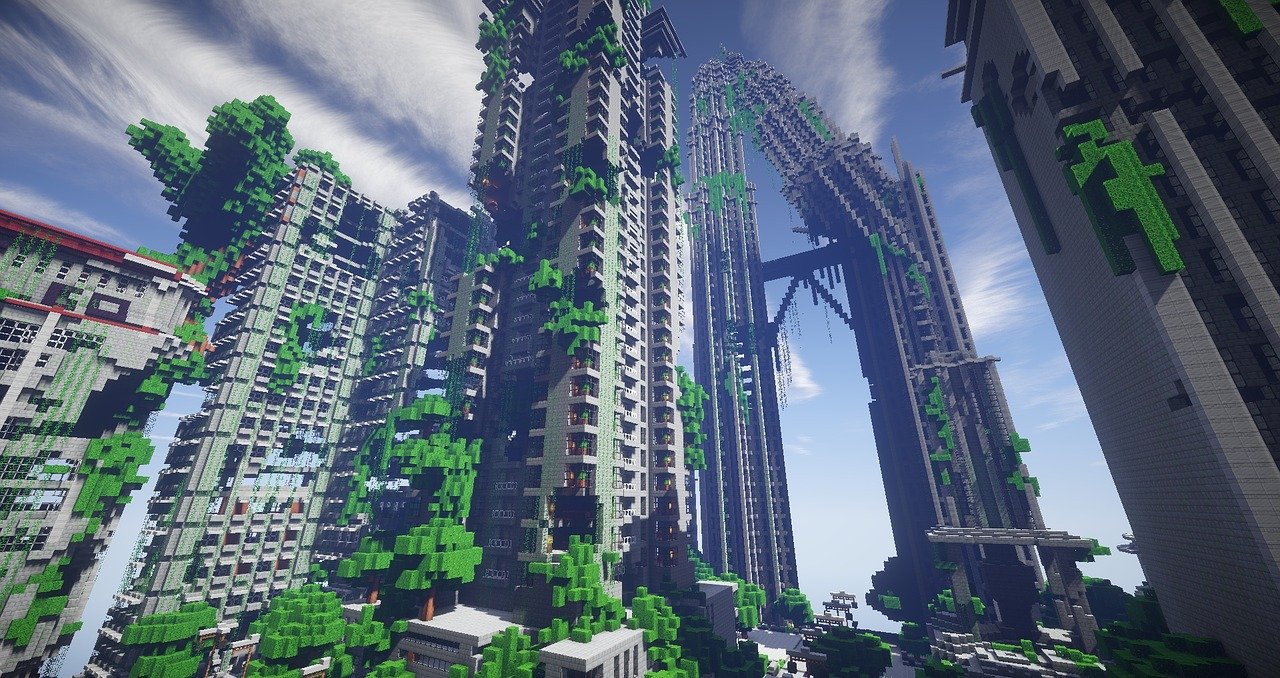
When I was in my mid-teens, I was an avid gamer. I played many games, but Minecraft was my favorite. What peaked my interest were the parallels with real life and the possibilities for creation were endless. Knowledge needed for the game helped me in real life by enriching my vocabulary, excelling my reaction time, and nurturing my creativity. My spatial awareness was also boosted due to understanding the means of measurement in Minecraft (each block was a square meter). Using those as reference, I had a better gist of measurement in comparison to my 6-meter-tall character. I even began to conceptualize fundamentals of construction and physics when I would set up mob traps to capitalize off the loot they dropped.

After my Minecraft phase, I moved onto Lumosity and my eyes opened to how impactful games could be. Lumosity is an educational gaming app that has minigames specially designed to challenge a variety of our cognitive abilities.

If you are wondering when is the right time to introduce video games to your kids and how to do it safely, check out Dr. Bennett’s age guidelines and recommendations in her book Screen Time in The Mean Time: A Parenting Guide to get Your Kids and Teens Internet Safe.

Gaming Designed Specifically for Intelligence

Many great new app developers seek to make fun educational games. Edutainment is refers to media designed to educate and entertain.[3] Many edutainment activities are developed by education specialists and cognitive scientists. Commonly targeted abilities are in the area of executive functioning, working memory, self-control, and mental flexibility.

A study by Jocelyn Parong and colleagues from the University of California, Santa Barbara researched the effects of games on cognition. They put students in two groups. The first group played Alien Game for four hours. The second group played an updated version of the game called All You Can ET. After the two groups played, an improvement in mental flexibility was found.[4] Their findings replicated those of a previous study that also studied cognition and gaming.

Further, a 2016 study by Viviane Kovess-Masfety and colleagues analyzed data from over 3,000 children. Upon gathering information from the children’s teachers on how they were in the classroom, Kovess-Masfety and colleagues found that children categorized as “high use” gamers had slightly higher reported intellectual functioning. Most of the high-use gamers reported approximately seven to ten hours of gaming per week.[5]

GKIS-Recommended Intelligence Games

Games that are designed specifically to improve intelligence are still relatively new. Research has been mixed but shows promising results for improvement. Gaming can be a practical approach to keep ones intelligence sharp and have fun! Here are some intelligence games GKIS recommends as promising:

Lumosity

Lumosity is a popular “brain training” app for mobile devices and computers that provide entertaining mini games that focus on an individual skill. The free version selects three mini-games for you to play from their bank of over 40 mini-games. With the premium version, you get access to in-depth statistics and can choose among all their available games.
Lumosity games may help with skills ranging from attention, memory, problem-solving, subitizing, language, and mental flexibility. This is great for tweens and teens.

Words with Friends

Words with Friends is a fun puzzle game—similar to Scrabble—that can expand your vocabulary and think creatively. You can play alone, challenge game bots, or play with friends.

Khan Academy Kids

Khan Academy Kids is a free educational game geared towards children. There is an assortment of games that help with language, reading, math, attention, memory, and problem-solving. An added benefit of these games is that they also help with emotional development, motor functions, and creativity.

Kiddopia

Kiddopia is an app focused on teaching kids a variety of skills and general knowledge. Kiddopia games are incredibly diverse, including school topics like learning numbers, basic arithmetic, language, and problem-solving. This app also has entertaining games that cover geography, human anatomy, animal care, and even careers!

Before your kids are introduced to gaming, check out one of Dr. B’s favorite GKIS articles Teaching Kids the Brain Traps of Video Games May Break the Spell.

Thanks to CSUCI intern, Avery Flower for researching intelligence and gaming, and co-authoring this article.

I’m the mom psychologist who will help you GetKidsInternetSafe.

Onward to More Awesome Parenting,

Tracy S. Bennett, Ph.D.
Mom, Clinical Psychologist, CSUCI Adjunct Faculty
GetKidsInternetSafe

Photo Credits

Photo by Vidal Balielo Jr. from Pexels

Image by DAMIAN NIOLET from Pixabay

Image by Egnez from Pixabay

Photo by Ketut Subiyanto from Pexels

Works Cited

[1]Shearer, C. B. (2020). A resting state functional connectivity analysis of human intelligence: Broad theoretical and practical implications for multiple intelligences theory. Psychology & Neuroscience13(2), 127–148. https://doi-org.summit.csuci.edu/10.1037/pne0000200.supp

[2]Flaim, M., & Blaisdell, A. P. (2020). The comparative analysis of intelligence. Psychological Bulletin146(12), 1174–1199. https://doi-org.summit.csuci.edu/10.1037/bul0000306

[3]Lathan, J. (2020). Edutainment in the Classroom: Technology’s Changing the Game. Retrieved from https://onlinedegrees.sandiego.edu/edutainment/

[4]Parong, J., Wells, A., & Mayer, R. E. (2020). Replicated evidence towards a cognitive theory of game-based training. Journal of Educational Psychology112(5), 922–937. https://doi-org.summit.csuci.edu/10.1037/edu0000413

[5]Kovess-Masfety, V., Keyes, K., Hamilton, A., Hanson, G., Bitfoi, A., Golitz, D., Koç, C., Kuijpers, R., Lesinskiene, S., Mihova, Z., Otten, R., Fermanian, C., & Pez, O. (2016). Is time spent playing video games associated with mental health, cognitive and social skills in young children? Social Psychiatry and Psychiatric Epidemiology: The International Journal for Research in Social and Genetic Epidemiology and Mental Health Services51(3), 349–357. https://doi-org.summit.csuci.edu/10.1007/s00127-016-1179-6

How to Optimize Childhood Bilingualism

In 2019, approximately 23% of children in the United States were bilingual.[1] Speaking more than one language implies education and competency. Popular media glamourizes bilingualism as a chic quality obtained by social elites. Recently, Princess Charlotte and Prince George received praise for being able to speak more than one language. A 2013 report finds that Spanish is the most spoken foreign language in the U.S., with three out of four Hispanic kids aged five and up speaking Spanish at home.[2] With online learning becoming the norm and inexpensive language-assisting apps available, helping your child learn a second language can be a great way to keep them engaged and educationally enriched.

The Best Time to Learn A New Language

Amazingly, babies have nearly twice as many brain cells as adults. These brain cells, called neurons, reduce in number as we age and become specialized to most efficiently perform complex tasks. One of these tasks includes language.

In the first few years of life, our brains are exquisitely receptive as we onload a boom in vocabulary. As our brains mature and specialize throughout childhood, the ease of learning language decreases. This is due to our brain gradually remodeling as we age by refining neuronal pathways. As a result of this complex genetically blueprinted growth process, we become better thinker, but less receptive to mass learning.

The bottom line is that we learn language best when we are very young. There is even evidence that hearing the unique sounds of particular languages in utero makes a difference later on! By encouraging bilingualism before your child reaches adulthood, you are optimizing language mastery.

The Benefits of Childhood Bilingualism

Effects on Thinking

Contrary to the belief that learning a second language may impede primary language learning, psychologist Adam Winsler and colleagues conducted studies with native Spanish speaking preschool children learning a second language (English). They found that preschool age children were able to competently achieve fluency in both languages while engaged in both the bilingual immersion program and the exposure program. This said, children in the preschool program have exceptional gains in learning.[3]

Along with language competency, bilingualism may help with the development of other complex tasks like working memory and problem solving. Working memory is the limited amount of information we can briefly store in our mind as we solve a problem like completing math problems or following the steps to bake a cake. A study by Daubert and Ramani found that bilingual preschoolers did better on working memory tests than monolingual preschoolers.[4]

Effects on Brain Development

Although we are still learning how our brains are impacted by learning a new language, there is evidence that the neurological remodeling discussed earlier can be impacted in positive ways. For instance, developmental researcher Maria Mercedes Arredondo analyzed brain scans of monolingual children and bilingual children. She found that during a linguistics challenge, bilingual children had less activity in the left frontal region of the brain which is associated with language.[5] This suggests that bilingual children process information more efficiently, thus needing fewer resources for complex linguistic tasks. Bilingual children also show greater brain activation with brain networks related to attention. The implications of this finding are that bilingualism may improve one’s attentional abilities.

The Drawbacks of Bilingualism

It is generally accepted that learning two languages is beneficial for children, but there can be temporary drawbacks. A common drawback is that young bilingual children tend to mix the grammatical rules of the two languages. For instance, if English is your child’s primary language and Spanish is their second, your child may say the literal English translation of a phrase like “At what time are you coming?” to the grammatically incorrect Spanish phrase “A que hora eres tu veniendo,” when it should actually be “A que hora vienes.”

Another finding is that young bilingual children are more likely to have a “silent period,” where they choose not to talk as much for a few months. It is as if their brains are preoccupied laying down the foundation necessary for more complex learning. Fortunately, these windows of silence are temporary.[6] When considering the pros and cons, the benefits of bilingualism strongly outweigh the temporary cons in the long run for most kids.

Language Delays

Of course, every child is different. Some children have an extra hurdle with language learning called a Specific Language Impairment (SLI). Children with SLI develop language fluency slower than their peers, but are not impacted in any other abilities. A research review by speech-language pathologist Lauren Lowry notes that while children with SLI learn language slower, learning a new language has not consistently shown to hamper their primary language. While research has been mixed, the majority of results note similar results with language proficiency between bilingual children with SLI and monolingual children with SLI.[7]

GKIS-Recommended Language Learning Apps

If you are interested in challenging your kids with bilingual education, here are four great language learning apps we recommend:

Duolingo

The Duolingo app offers courses for over 35 different languages and includes tools to learn vocabulary, put together sentences, practice pronunciation, translate audio to text, and how to have discussions in the new language. This is a free app that tracks progress along the way and is great for kids and teens.

Beelinguapp

Beelinguapp is a fun app that offers 13 popular languages and provides e-stories that contain both the primary language and the new language to aid learning. Stories come in wide ranges and make learning a new language fun! Some of the stories are behind a paywall.

Drops

Drops is a free app that offers over 40 languages and helps the user learn vocabulary, utilize the new vocab, understand pronunciations, and provides statistics of the user’s progress. It is particularly great for teens.

Unuhi: Bilingual Books

Unuhi is a free app that provides e-picture books in 20 common languages. Each page has two boxes of text, one for the primary language and one that has the same content, but in the new language. This app is geared towards children and some e-books are only available with purchase.

Other Ways to Learn A Language

Language-learning apps typically offer exercises to learn vocabulary and pronunciation, hone reading comprehension, and mindfully use the new language in conversation. Once a foundation for learning has been set, you can reinforce learning by:

  • Watching television programming in the new language
  • Reading easy books in that language, and
  • Frequently switching between the primary language and the new language for real-world application and practice.

To optimize the balance between online and offline learning, check out our Connected Family Course. Specifically designed for clever smart home setup, the Connected Family Course offers 10 easy steps for creative safe-screen home setup and fun parenting techniques for sensible screen management. Our expert techniques take the “battle” out of parenting in less than two hours!

Thanks to CSUCI intern, Avery Flower for researching bilingualism in children and co-authoring this article.

I’m the mom psychologist who will help you GetKidsInternetSafe.

Onward to More Awesome Parenting,

Tracy S. Bennett, Ph.D.
Mom, Clinical Psychologist, CSUCI Adjunct Faculty
GetKidsInternetSafe

Works Cited

[1]Kids Count. Children who speak a language other than English at home: KIDS COUNT Data Center. Retrieved from https://datacenter.kidscount.org/data/tables/81-children-who-speak-a-language-other-than-english-at-home

[2]Krogstad, J. M., & Gonzalez-Barrera, A. (2015, March 24). A majority of English-speaking Hispanics in the U.S. are bilingual. Retrieved from https://www.pewresearch.org/fact-tank/2015/03/24/a-majority-of-english-speaking-hispanics-in-the-u-s-are-bilingual/

[3]Winsler, A., Diaz, R., & Espinosa, L. (1997, January). Learning a Second Language Does Not Mean Losing the First: A Replication and Follow-up of Bilingual Language Development in Spanish-Speaking Children Attending Bilingual Preschool. Retrieved from https://www.researchgate.net/publication/234714239_Learning_a_Second_Language_Does_Not_Mean_Losing_the_First_A_Replication_and_Follow-up_of_Bilingual_Language_Development_in_Spanish-Speaking_Children_Attending_Bilingual_Preschool

[4] Daubert, E. N., & Ramani, G. B. (2019). Math and memory in bilingual preschoolers: The relations between bilingualism, working memory, and numerical knowledge. Journal of Cognition and Development20(3), 314–333. https://doi-org.summit.csuci.edu/10.1080/15248372.2019.1565536

[5]Arredondo, M. M. (2018). A bilingual advantage?: The functional organization of linguistic competition and attentional networks in the bilingual developing brain. In Dissertation Abstracts International: Section B: The Sciences and Engineering (Vol. 78, Issue 11–B(E)).

[6]American Speech-Language-Hearing Association. Learning Two Languages. Retrieved from https://www.asha.org/public/speech/development/learning-two-languages/

[7]Lowry, L. (2016). Can children with learning language impairments learn two languages? Retrieved from http://www.hanen.org/helpful-info/articles/can-children-with-language-impairments-learn-two-l

Photo Credits

Photo by Pixabay from Pexels

Photo by Julia M Cameron from Pexels

Photo by Ketut Subiyanto from Pexels

Photo by mentatdgt from Pexels

At-Home Indoor and Outdoor Fun Activity Ideas From GetKidsInternetSafe

We at GetKidsInternetSafe love fun, educational, and safe screen time. But even better than that? We love creative offscreen play activities that help family members get to know and bond with each other, teach initiative and problem solving, and make forever memories. Sometimes great ideas are hard to dream up on-the-run with busy families. Enjoy these fun at-home indoors or outdoors activities that we at GKIS are sure your kids will love!

Indoor Fun

Let Your Kid be the Media Star

  • Record your kid as their favorite video star doing fun activities
  • Create an old movie recorder from cardboard boxes and black paint, don’t forget the director’s board so you or your kids get to yell “cut!”
  • If your kids like do it yourself videos, set up a station and let them surprise you with the results
  • If your child wants to be a movie star, let their imagination run wild and have them do small skits of their favorite scenes
  • Share videos with friends and family and have them comment and let them “like” the videos as fans
  • Don’t forget to follow up on their roles and nominate them in their own awards show for a later idea.
  • A thank you speech from your kid is highly encouraged

Up-Cycle Old Games

  • Give your old board games new meaning by breaking them apart and making a new game
  • Create cards with inside jokes that only friends and family will know
  • Use a Jenga game and tape truth or dares to pull out for twice the amount of fun
  • Create fun Loteria cards! Customize cards to make up members of your family such as the overprotective father or the daughter who says “like” in every sentence
  • Update trivia games and have your kids teach you a thing or two about new pop culture words and celebrities
  • Need Inspiration? A blogpost by Claire Harmeyer demonstrates how games are currently being reused with an old Guess Who game!

At Home Art Gallery

  • Let your child show their artistic creativity in a variety of ways by hosting an art gallery!
  • Remember that there are various forms of creating art, encourage them to complete at least three different “sections” to their gallery which may include the following:
    • The painting room
    • Play-dough or moon sand sculptures room
    • Origami room
    • The Barbie fashion showcase room
    • Photography room
    • The popsicle architecture room
    • Live art with temporary tattoos or a henna kit
    • Food art room
  • As the art critique, give reassuring feedback to encourage their creativity

Home Lab

Have your kids play mad scientist with some of these fun science creations

  • Follow scientist Joe and create a storm in a glass. 
    • You’ll need: shaving cream, large glass, water food coloring, and a spoon
  • Help your kids create a baking soda volcano by following Science Bob’s easy steps
    • Something to put the liquids in, baking soda, liquid dish soap, food coloring, water, vinegar
  • Create a tornado in a bottle by looking at the young Youtuber Ryan lay out the steps with his dad
    • You’ll need: 2-liter soda bottles (same shape), duct tape or connector, water, lamp oil (any color)
  • Make a sundial and practice reading times 
    • You’ll need: Stones, a pencil, and a piece of clay

Outdoor Fun

Backyard Scavenger Hunt

  • Set up an imaginary scenario that will fit your child’s interests whether that be finding a treasure chest to a vial that will cure the zombie apocalypse
  • Entice your child: add something of interest to their treasure 
  • Set up a list of instructions that may include:
    • Riddles 
    • Math problems
    • Guessing an image outline
    • Word association games
    • DIY puzzles
    • Connect the dots images
    • Phone a Friend! (have them call a loved one for their next clue)
  • Create steps such as stacking stones or doing cartwheels to unlock the next set of instructions
  • If you’d like to play along, act as a helping hand and create a character that will help them 

Balcony Garden

  • For those in apartments, set up a small garden for your child if you have a balcony available.
  • Be sure everything is easily accessible so that there is no need for leaning or climbing on the railing
  • Consider easy to maintain plants such as succulents 
  • Customize pots with markers/paint or give them name tags to personalize
  • Make paper insects like butterflies and prop them into the plants for decoration
  • Use stick skewers for food or popsicle sticks to glue to your paper insects and stick them into the edge of the pots 
  • Color skewers green to act as plant stems
  • Set up Christmas lights around the balcony so your child can admire their plant friends at night

Home Triathlon

    • Set up a backyard triathlon using whatever sports equipment you have or can make.
    • The idea is to do each obstacle non-stop until they reach the finish line
    • Get creative and work with what you have!
    • Ideas for challenges include:
  • Pitch up a tarp/sheet and have your kid’s army crawl under
  • Draw a challenging hopscotch segment
  • Set a designated amount of hula hoops swirls
  • Have two volunteers be ready with a double dutch jump rope obstacle
  • How low can you limbo station
  • Basketball into a hoop
  • Making a soccer ball into a goal that’s
  • guarded
  • Jumping jacks
  • Backward walking
  • Set up a finish line using items such as ribbon or even tied up rags

Outside Movie Nights

  • Pull up some chairs, snacks, and whatever else you’ll need to be comfortable
  • If you have a projector get a flat white surface to hang to a wall 
    • If you’re trying this on a balcony, prop the backdrop on the sliding door
  • No projector? No worries, this idea will work fine with a device that’s big enough for you and your kids to see
  • Watch your favorite films under the night sky
  • Or make your own movie story
    • Grab a flashlight and have the family show their storytelling skills.
    • Give the group a movie genre they can work with
    • In a bowl you can add random folded words they will need to incorporate into their story
    • Set a timer that works for everyone
    • Deem the new storytelling king or queen of the night
    • The newest king or queen will get to be the judge for the next game
  • Added bonus! Stargazing till your kids are pooped and ready for bed
    • Wrap-up: These stars have a story, share a one constellation story and have them excited for the next one


Special thanks to Aroni Garcia for researching and co-writing this article. If you liked these fun tips and want to stay updated on new fun ways to keep your kids entertained follow GKIS on social media! Follow our @GetKidsInternetSafe Instagram and Facebook pages and @drtracybennett Twitter for our latest posts! And, as always, thanks for sharing us with friends and family. Cheers to happy memory making!


Onward to More Awesome Parenting, 

Tracy S. Bennett, Ph.D.
Mom, Clinical Psychologist, CSUCI Adjunct Faculty
GetKidsInternetSafe

Work Cited

[1] Haymeyer, C. (2020).”You can buy Friends-themed Guess Who-so could game night be any better?” Retrieved from https://hellogiggles.com/news/friends-guess-who-game/

[2] SFFE. (2017). “Storm in a Glass”. Retrieved from http://www.sciencefun.org/kidszone/experiments/storm-in-a-glass/

[3] ScienceBob. (2008).“Make an Erupting Volcano with Science Bob”. [Video] Retrieved from https://www.youtube.com/watch?v=vNz4DyUOsAw

[4] Ryan’sWorld. (2019). “Ryan create Tornado in the bottle science experiments for Kids!!!”. [Video] Retrieved from https://www.youtube.com/watch?v=21joF6lt0aY

[5] Yeats, W. (2010). “Otherwise Educating: Sundial”. Retrieved from http://otherwiseeducating.blogspot.com/2010/12/sundial.html

Photo Credits

  1. Photo by Bob_Dmyt on Pixabay
  2. Photo by ponce_photography on Pixabay
  3. Photo by StockSnap on Pixabay
  4. Photo by finelightarts on Pixabay
  5. Photo by Vladvictoria on Pixabay
  6. Photo by Pexels on Pixabay
  7. Photo by ROverhate on Pixabay
  8. Photo by 12019 on Pixabay
  9. Photo by dbreen on Pixabay

Is it a Scientific Finding or a Sensational Headline?

blog-11-classroom

The issue that got under my skin today is how sensationalism sells and how this has misled us and distorted “news.” As more of us rely on screens and social media to alert us to important world issues, yellow journalists are setting up fake virtual offices to create inflammatory, sharable articles. Each click-through brings money into their pockets from ads. That means a gullible public pays cons to misinform us. The cons recognize the more outrageous the claim, the more attention they get, and the more money they make. They have learned that repeating inflammatory statements over and over can lead to their adoption as facts. Does an intentionally groomed and misled public threaten American democracy?

The First Amendment

Our founding fathers created our governing system with the expressed intent of rule by the people. To protect the freedom and power of the people to be informed and vote, they wrote the first constitutional amendment protecting the free exercise of religion, the freedom of speech, the freedom of the press, the right to peaceably assemble, and the right to petition for a governmental redress of grievances.

They believed that the free flow of information to the American public from a press that serves as a credible watchdog keeps powerful officials in check. This was considered critical to American freedom.

Sensational Headlines

I started GetKidsInternetSafe (GKIS) because, despite being somewhat tech-savvy with great personal and professional resources, I was struggling to create a workable plan for managing my children’s technology use. I’d take a stab at this and that but either get distracted along the way because the plan was too cumbersome or become completely frustrated and throw up my hands. Ultimately I’d end up doing very little and feeling chronically guilty.

My anxious search was exasperating partly because the Internet is flooded with sensational headlines that exaggerate risk! Even responsible reporters sometimes bypass credible experts in favor of interviewing somebody willing to be provocative rather than factually responsible.

Then another article would counter-react with the opposing but also exaggerated viewpoint. Furthermore, sometimes even credible experts are inaccurately quoted. I was so frustrated trying to get sensible information that had persuasive evidence backing it, that I’d just give up in defeat.

As I turned to my family, friends, and colleagues, they just looked blankly back and said, “Yep! Exactly! I’m paralyzed too. Tracy, if you can’t do it with your expertise, then we’re doomed.”

Doomed? No way, not when it comes to kids. So from there, I sought out the smartest, most creative, most energetic hotshots I knew and launched GKIS. I decided to do the hard work and comb through the psychology research, news articles, academic theories, and tried-and-true parenting strategies to create a comprehensive, easy parenting course that works.

Religion and the Internet

As I was researching for my book Screen Time and Mean Time and my GKIS parenting courses, I ran across an article titled, “America’s Less Religious: Study Puts Some Blame on the Internet,” by Elise Hu on NPR. The article states that as Internet use has grown, people have become less religious. A study by computer scientist Allen Downey reportedly “found a causal relationship among three factors – a drop in religious upbringing, an increase in college-level education, and the increase in Internet use.” A causal relationship? They were saying that less religion causes more internet use and more education. That makes no sense. I’ll tell you why that’s a false claim.

The Experiment

I teach my university students that the only type of study that yields evidence about a causal relationship is an experiment. An experiment is conducted in the laboratory where you take two groups of subjects and expose one to the experimental variable (the independent variable)  and then measure the outcome for both groups (that measurement is the dependent variable). If the groups’ outcomes are the same, your independent variable did not have an impact. If they are more different than could happen by chance, then your independent variable did have an impact. You have to do other things to make sure your experiment is high quality, but the main point is that you have to act upon your subjects – not just survey or observe them.

Observational studies only suggest that there may be a relationship, but they cannot rule out unidentified outside (extraneous) variables that may contribute to the relationship between the study variables. More to the point, because they’re observational, these studies have no way to determine which – if any – of the variables they’re studying is causing the outcome and which is being affected. Causal claims are impossible to support if you have not conducted an experiment.

Yet this NPR article suggests that, since Downey can’t think of that third variable, there must not be one. And with a logistical regression method, voila! He can claim Internet use has killed religion! Pffft. This is a blatant misrepresentation of the data. Yes, based on the statistics those three variables appear to be related. But we don’t know if increased Internet use led to less religion or if less religion led to increased Internet use. A fourth unrecognized variable may have led to both, like maybe Internet use led to more screen time which led to more Facebook which led to more overwhelm which led to less leaving the house which led to less religiosity. I mean honestly, we don’t know until we integrate all variables or, better yet, design an experiment!

In this case, it is unclear to me if the researcher made these irresponsible claims or if the reporter misreported, but the article is flat wrong in its conclusion and misleading to the readers.

Dr. Rochelle Tractenberg

As a social scientist, I was irritated. So, in my ranting mood, I sought out my friend brilliant Georgetown double Ph.D. biostatistician Dr. Rochelle Tractenberg, and asked her to give us a quick and informed comment about her reaction to the NPR story about this study. You can’t get a more credentialed expert with statistics than Dr. Tractenberg. She responded:

My friend and colleague Tracy Bennett asked me to contribute some comments in response to the frustration she felt – and felt she needed to share with you! – after reading the media coverage of what seems, based on this coverage, to be a very weak study. I am a scientist myself, and I coach other scientists in the design and write-up of their work. I completely agree with Tracy about this media coverage!

As a person who sees “scientific articles” every day of the week, I am frustrated by how any “science” gets talked about in newspapers, on TV, blogs, “the Internet,” and radio. Probably the most common problem is that people outside of the field of science often believe that, if a scientific article made it through to publication, then it must be good, true, or right. That is just not true! Just because a paper was published in a “peer-reviewed” journal doesn’t make it good, correct, or meaningful.

I think a wider problem is that

_____________________________________________

journalists should not be trusted to sift through what was published to bring “what matters” to the public’s attention.

_____________________________________________

Just because a news outlet covers a paper’s having been published doesn’t mean the paper is accurate or even interesting. You might not know that new scientific papers are published every second of every day; probably TWO others were published in the same week on the exact same topic, with the opposite <maybe even the same!> results as whatever paper the media are covering that day. The question the reader must ask is, WHY WAS *THIS PAPER* CHOSEN FOR THIS REPORT? Very probably it was chosen because “it sounded interesting!” The CHOICE to cover a particular paper reflects the journalist’s interest and not the importance of the paper – not for its field and not for the public.

The purpose of scientists in publishing their work is usually to test theories and contribute new knowledge, but journalists’ purposes are to attract readers (if you have ever read a scientific paper, you can see plainly that it was NOT written to attract readers!).

_____________________________________________

That means that people who get their “science” from journalists do not actually get “science.”

_____________________________________________

Science moves in truly small steps and very few newsworthy “breakthroughs” ever occur, although news media make non-scientists believe that they happen often. Exceptions may come from fields like archeology or astronomy – where observations and not experiments are reported; if a new dinosaur was discovered and reported in the general media then it probably IS important!

Scientific papers follow very specific rules – including that they must consider the work that was done before and how their new results fit with those older results (whether the new results agree or disagree with the dominant theories). They must also always describe the limitations of their work and suggest what more might need to be done in future research.

Media coverage follows very different rules; the article Tracy found was probably chosen because it is provocative – it could not have been chosen for the NPR story because it is true (impossible to tell!) or well done (it wasn’t). I would go so far as to say that all that a reader really can “learn” from a news story on something scientific is that “that research is going on.” A reader should NEVER infer from a news story about research that something important for daily life has been learned.

faculty.photo.may2010Rochelle E. Tractenberg, Ph. D., M.P.H., Ph.D., PStat®
Director, Collaborative for Research on Outcomes and -Metrics
http://crom.gumc.georgetown.edu
Associate Professor
Neurology, Biostatistics, Bioinformatics & Biomathematics, and Psychiatry
Georgetown University Medical Center

[Read more…] about Is it a Scientific Finding or a Sensational Headline?