Socialization is a critical aspect to good health for kids and adults.[1][2] That’s why constant connection through social media, chatrooms, texting, and online gaming has become irresistible to us. For help managing in the online world and avoiding costly digital injuries, check out Dr. Bennett’s positive parenting and family coaching videos in our Screen Safety Essentials Course. We all need each other online and off. Afterall, the early people of our species were hunters and gatherers. Having a tribe was critical for our survival. In modern times, with many families living away from extended families and our lives as busy as ever, it’s often hard for adults to make friends. Today’s GKIS article covers the costly results of loneliness and offers suggestions for how to break out of our loneliness and enter the realm of meaningful connectedness.
The Prevalence of Loneliness
Higher rates of loneliness are found among young adults, seniors, those who are visually impaired, victims of abuse, and the unemployed.[3] Due to its prevalence, numerous outlets including Time, Forbes, US News, Cigna Insurance, and the Health Resources & Services Administration have referred to loneliness as an epidemic in the last decade.
Feelings of loneliness can result from a lack of friendships, intimacy, or emotional connection.[4] The long-term impacts of loneliness include poor sleep, depression, suicidal ideation, increases in cortisol (a stress hormone), compromised immune responses, and inflammation. Chronic loneliness has also been linked to the progression of Alzheimer’s, cardiovascular disease, and other chronic diseases. Further, loneliness is associated with poor lifestyle habits which include sedentariness and smoking.[5]
To avoid unfortunate outcomes, we must carve out the time to hang out with friends and family. For kids and teens, school is an easy resource to draw from. But for adults, social resources can be hard to find. To help you reach out and find more connection and community in your life, we’ve uncovered some novel ideas and resources!
Finding Community in Person
Volunteer
Volunteering is a fantastic way to meet friends, give back, and cultivate a sense of belonging. Research has found that volunteering is particularly helpful for those who have recently lost a loved one. In a study by Dawn Carr and colleagues observing over 5,000 recently widowed spouses, subjects who volunteered two or more hours per week had lower rates of loneliness than those who did not volunteer at all.[6]
Volunteering also has benefits for the whole family. The University of Nebraska-Lincoln Extension notes that youth volunteerism can help with the development of identity, empathy, skill-building, self-esteem, and relationships with like-minded people.[7] A study by Sandi Nenga from Southwestern University notes similar improvements in youth volunteerism. But Nenga also emphasizes that volunteering can connect multiple, diverse communities, creating better outcomes in future civic roles for youth volunteers.[8]
Join a gym
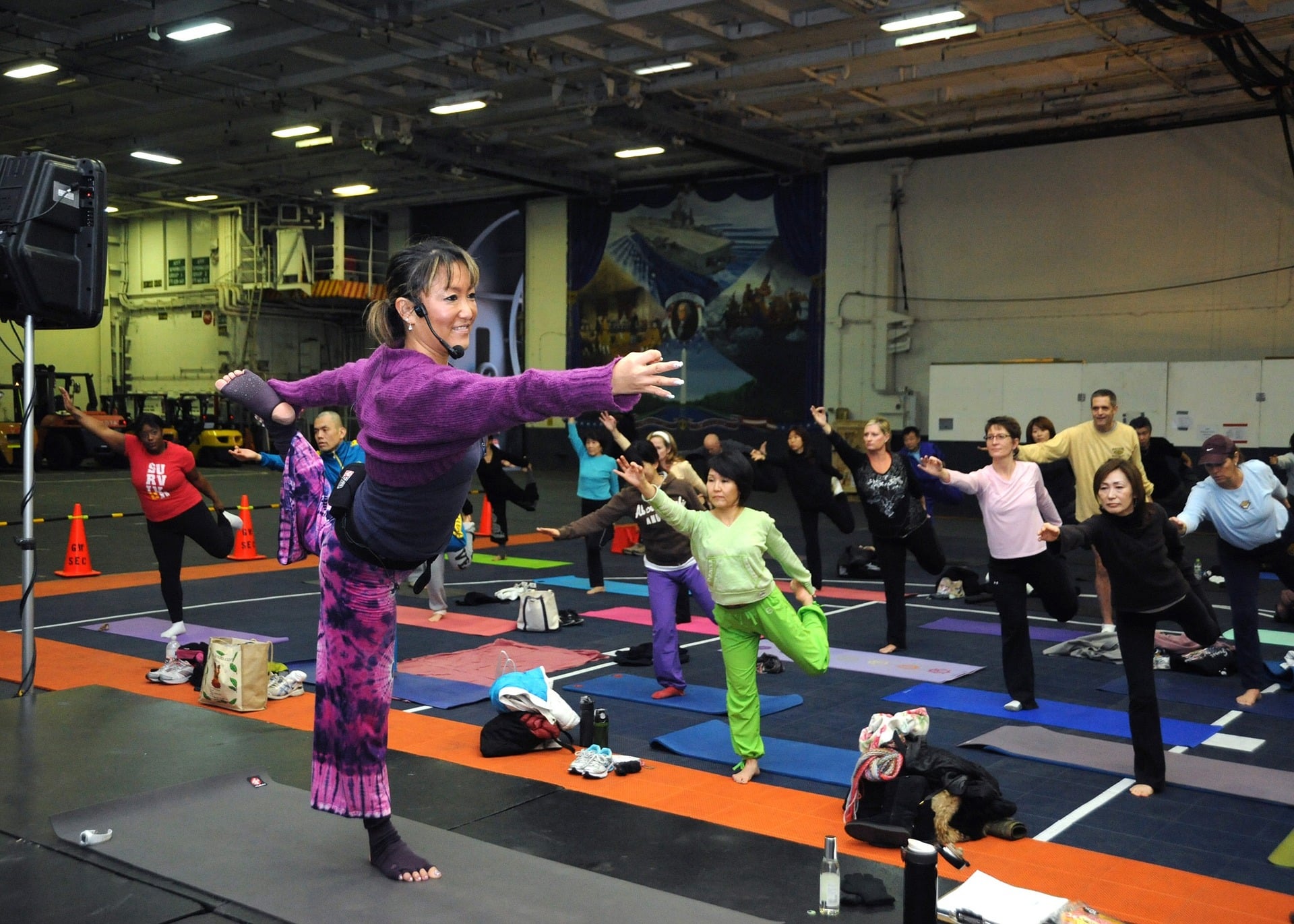
Many gyms offer classes like Zumba, pilates, yoga, kickboxing, and barre. Attending exercise classes provides opportunities to talk with others and explore your workout journeys together!
Exercise is associated with decreases in stress hormones including cortisol and adrenaline, and promotes the production of mood-enhancing endorphins.[9] For those who have social anxiety, these feel-good-feelings can help you gain confidence in seeking and maintaining new relationships.
Join a club or team
Clubs and teams offer great opportunities to make new friends and work together. Bulletins for clubs and teams may be found at your local college campus or community recreation center. A study by Scott Graupensperger and colleagues notes that being on a club sports team results in greater prosocial behaviors. Additionally, being on a team creates a strong sense of community and bonds, thus enhancing identification with others. A greater sense of identification can improve one’s mental health, social life, and well-being.[10]
Find Community Online
Online resources have made meeting like-minded people easier than ever. Today’s platforms allow us to connect with a host of individuals and groups that offer various forms of entertainment whether it is sushi classes, book clubs, or family potlucks! Of course, proper cautions are necessary when meeting people online. To help tweens and teens prepare for the potential hazards that await them on social media, we recommend they take our Social Media Readiness Course. This online course not only offers the information they need to stay safe, Dr. Bennett also shares critical wellness strategies she’s developed in over 25 years of clinical practice! Here are 4 GKIS recommended online platforms to help you connect with others
Meetup
Meetup.com is a great website to start your search for like-minded people. The groups available are diverse and range from substance abuse support groups to groups for beginner hikers! Some groups are also geared towards entire families and may host events to bring families together. You can also create your own group, however, a monthly charge to Meetup is needed to keep your group active.
Hey! VINA
Hey! VINA is a free new app with a design similar to the dating app Tinder. Hey! Vina is geared toward women and nonbinary people looking to make friends with other women and nonbinary people. The VIP membership gives users special access to certain features including faster matches, seeing who swiped right on (liked) your profile, and more.
The Dinner Party
The Dinner Party is an organization founded in 2018. The purpose of this organization is to bring grieving individuals who are between the ages 20 to 39 together. The intent is to connect and provide support for each other over dinner. They also expanded to create dinner parties for a wider audience of individuals who may be dealing with a different type of issue and would like a companion to talk to. To accommodate the recent COVID-19 guidelines, individuals are currently hosting Zoom dinner parties as a safer way to get together.
Eventbrite
Eventbrite is a popular platform used to get tickets for live events ranging from stadium concerts to yoga meetups at the park. While the service is free, the organizer of the event may require a small fee to attend while others offer their events for free.
Thanks to CSUCI intern, Avery Flower for researching ways to battle loneliness, and for co-authoring this article.
I’m the mom psychologist who will help you GetKidsInternetSafe.
[1] Williams, C. Y. K., Townson, A. T., Kapur, M., Ferreira, A. F., Nunn, R., Galante, J., Phillips, V., Gentry, S., & Usher-Smith, J. A. (2021). Interventions to reduce social isolation and loneliness during COVID-19 physical distancing measures: A rapid systematic review. PLoS ONE, 16(2). https://doi-org.ezproxy.csuci.edu/10.1371/journal.pone.0247139
[2] Lun, V. M.-C., & Bond, M. H. (2016). Achieving subjective well-being around the world: The moderating influence of gender, age and national goals for socializing children. Journal of Happiness Studies: An Interdisciplinary Forum on Subjective Well-Being, 17(2), 587–608. https://doi-org.ezproxy.csuci.edu/10.1007/s10902-015-9614-z
[3]Brunes, A., Hansen, M. B., & Heir, T. (2019). Loneliness among adults with visual impairment: Prevalence, associated factors, and relationship to life satisfaction. Health and Quality of Life Outcomes, 17. https://doi-org.ezproxy.csuci.edu/10.1186/s12955-019-1096-y
[4] Tiwari, S. (2013). Loneliness: A disease? Indian Journal of Psychiatry,55(4), 320. doi:10.4103/0019-5545.120536
[5] Beutel, M. E., Klein, E. M., Brähler, E., Reiner, I., Jünger, C., Michal, M., Wiltink, J., Wild, P. S., Münzel, T., Lackner, K. J., & Tibubos, A. N. (2017). Loneliness in the general population: Prevalence, determinants and relations to mental health. BMC Psychiatry, 17.
[6]Carr, D. C., Kail, B. L., Matz-Costa, C., & Shavit, Y. Z. (2018). Does becoming a volunteer attenuate loneliness among recently widowed older adults? The Journals of Gerontology: Series B: Psychological Sciences and Social Sciences, 73(3), 501–510. https://doi-org.ezproxy.csuci.edu/10.1093/geronb/gbx092
[10]Graupensperger, S., Panza, M., & Evans, M. B. (2020). Network centrality, group density, and strength of social identification in college club sport teams. Group Dynamics: Theory, Research, and Practice, 24(2), 59–73. https://doi-org.ezproxy.csuci.edu/10.1037/gdn0000106
“I can’t breathe, and my chest is killing me. My heart is racing. Am I having a heart attack? I am sweating, trembling, and dizzy. I think I’m going to vomit. My thoughts are racing. Have I gone crazy? What is wrong with me?” If this sounds familiar, you are probably one of three adults in the U.S. who has had an anxiety attack. Screens can have a significant effect on our levels of anxiety, but how?
What is anxiety?
In my 25+ years of clinical practice, I have treated many kids, teens, and adults with anxiety disorders. Since the advent of mobile screen technology, we have seen prevalence numbers increase dramatically. Twenty-five percent of 13- to 18-year-olds have mild to moderate anxiety with the median age of onset at 11 years old.[1]
There are five major types of anxiety disorder.
Generalized Anxiety Disorder(GAD) is characterized by chronic worry about things that don’t warrant that level of concern.
Obsessive-Compulsive Disorder (OCD) is characterized by recurrent, intrusive thoughts and repetitive ritualistic behaviors, like counting, tapping, washing, or checking.
Panic Disorder (PD) is a chronic dread of having a panic attack, which feels like intense fear and trouble breathing, heart racing, and dizziness.
Post-Traumatic Stress Disorder(PTSD) is typically triggered by a terrifying ordeal.
Social Phobia (SP) causes people to withdraw due to extreme self-consciousness or embarrassment around others and a fear of being scrutinized or judged.
How Screens Can Trigger Clinical Anxiety Symptoms
Generalized Anxiety Disorder
Screens can be distracting and lead to wasted time and poor work performance. Not only do kids worry about those missed assignments, but too many hours of online learning can put them in a state of irritable exhaustion. In Dr. Bennett’s book, Screen Time in the Mean Time, she details how multitasking, which refers to interrupting one task to attend to another (like social media notifications during homework), burns brain fuel at a rapid rate – leading to mental brownout.[2] Mental brownout can lead one to feel hopeless and helpless, which can lead to chronic worry about … just about everything.
Obsessive-Compulsive Disorder
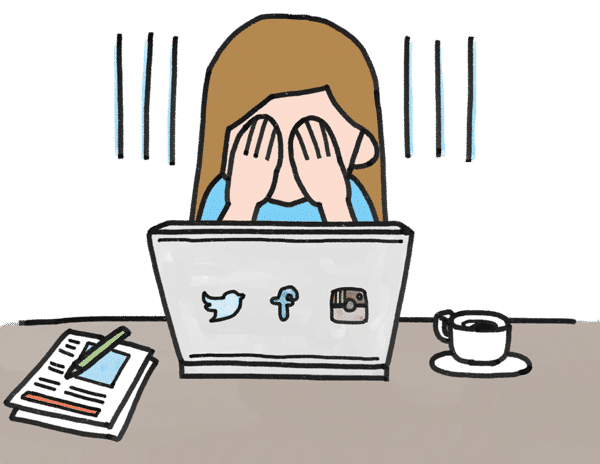
Keeping up with the Jones’s (or Kardashian’s) on social media can lead to obsessive scrolling and compulsive checking. We’ve all seen the notorious #GymSelfie or #FoodPorn that pops up on our news feed. Then there’s the #OutfitOfTheDay, #MCM (man crush Monday), #WCW (woman crush Wednesday), or your #TBT (throwback Thursday). Keeping up can feel overwhelming.
As Dr. B says in her article “Teaching Kids the Brain Traps of Video Games May Break the Spell,” “likes” are designed to tap into our evolutionarily-reinforced need to please our tribe – also called social capital. She elaborates, “When that notification pops up on our smartphone that somebody liked our post, we get a slight euphoria.”
Getting the likes makes us want more (compulsive use patterns), and not getting the likes can send us into compare and despair. Big tech is aware of this and plays on our psychology to keep our eyes on the screen. Our attention has been commodified (meaning that data about our online behaviors is for sale because it has value to marketers). The more we stay on screen, the more we fall victim to ads and the compulsion to buy.
Panic Disorder
Panic attacks happen when the autonomic nervous system, our survival center, gets triggered too easily. Poor self-care (like not sleeping, eating well, exercising, or socializing) can make us vulnerable having panic attacks. Dr. B says video games are also programmed to jack up your autonomic nervous system, which can lead to panic attacks.
Post-Traumatic Stress Disorder
In our GKIS article, “Live Streaming Can Cause PTSD in Adults and Children,” we detailed how watching live-streamed videos on social media and Youtube can lead to debilitating trauma symptoms. It’s critical to consider that screen content matters as much as, if not more than, screen time.
Social Phobia
It doesn’t take much imagination to consider that social media can lead to fear of excessive social scrutiny. Dr. B writes about the normal adolescent defense called the imaginary audience. She writes, “Teens can become extremely focused on their looks and very self-conscious, convinced that EVERYBODY is looking at them. As a result, they pay meticulous attention to clothing, makeup, hairstyle, body shape, and mannerisms. It’s as if they are carefully cultivating their brand to fit in and stand out among admired peers. Although imaginary audience has been observed among adolescents throughout history, social media may exacerbate anxiety. I believe compulsive urges to take perfect selfies are a healthy expression of the imaginary audience rather than the pathology of narcissism.”
It didn’t happen if you didn’t post it.
There is a popular saying that if you didn’t post about it, it didn’t really happen. Many teens are more invested in their virtual lives than they are in their non-virtual lives. This makes sense considering they spend more waking time on screen than they do off-screen!
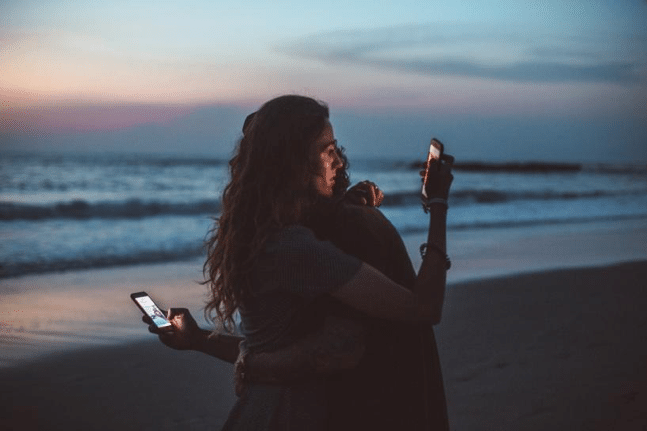
Teen life often happens in a snapshot and not much else. Our kids are spending time at events, the beach, and vacation looking for that split moment to capture a picture guaranteeing them likes from their followers. Conversations are “Uh-huh” and “Mm, sure” without eye contact. Screen time is the master, and we’ve grown to accept that that is “just what teens do these days.”
Social media can become a shrine of a person’s life, and if it is subpar, that person’s life seems subpar. Sound extreme? It is, and it is real. The pressure to be perceived in a certain way can consume our minds and impact self-esteem. A Canadian study found that the more time spent on screens, the higher the risk of developing anxiety in children.[3] Screen addiction is proving to be a real concern rather than a minor annoyance.
Driven to Distraction
Anxiety has the potential to impact not only the quality of time spent with family and friends but may also sever the most important relationship of all, the one with ourselves. Self-worth goes down, anxiety shifts to depression, and all because we judge others and ourselves through the safety of a screen, hidden in anonymity, and supported by strangers.
It can happen to anybody.
A child therapist friend of mine shared with me that she recently deleted all social media apps off her phone. She said she felt social media was consuming her and ultimately the cause of a lot of anxieties. Between clients, she browsed Facebook and Instagram instead of doing her mandatory briefings. Her briefings would get stacked up for weeks. Ultimately, this would contribute to her unease. This is a professional in mental health, one whom we would like to think could find a good balance. Now imagine your teenager…
What can we do about it?
Identify the triggers and recognize that you may be powerless against them without cutting down on screen time.
Set reasonable parameters.
Use time management and blocking apps.
Learn cognitive behavioral coping skills like breathing, mindfulness, cognitive restructuring, and meditation
Make your nonvirtual life more enriching
Thank you to Chad Flores for helping us recognize how screens may contribute to anxiety.
[3] Maras, D., Flament, M. F., Murray, M., Buchholz, A., Henderson, K. A., Obeid, N., & Goldfield, G. S. (2015). Screen time is associated with depression and anxiety in Canadian youth. Preventive Medicine: An International Journal Devoted To Practice And Theory, 73133-138. doi:10.1016/j.ypmed.2015.01.029
Feeling unproductive, unmotivated, and notice that you are wasting countless hours scrolling through social media? A social media cleanse may be a great decision to improve your well-being. In this week’s GKIS article, we will provide a step-by-step guide to putting down your phone and getting that much-needed break your mental health deserves. To help your tween or teen demonstrate they have the knowledge, problem solving ability, and judgment for social media, check out our Social Media Readiness Course. It’s an online course for tweens and teens that offers information about the risks of digital injury due to social media and psychological wellness tools. With a quiz for each module, they work their way through independently so their graduation certification demonstrates mastery of content. Of course, you can take it too if you’d like. It’s like driver’s training but for the internet!
According to pewresearch.org, 70% of Americans use social media.[1] For adults, the most popular social media platforms include YouTube (73%) and Facebook (68%). In contrast, 63% of teens use Instagram, making it the most popular social media platform amongst young users ages 15-25.[2]
According to the American Academy of Child & Adolescent Psychiatry, 90% of teens have used social media and teens spend an average of nine hours a day on social media.[3] Participants of a research study conducted by the Pew Research Center found that 74% of Facebook users visit Facebook daily. People of varying ages spend a lot of time on social media.
We use social media to view funny memes, stay connected to friends and family, meet new people, share opinions and information, show off passions and creative pursuits, advertise businesses, and even get news. Most of us find it extremely rewarding and feel we’ve got it under control. But for others, social media can negatively impact mental health.
Risks of Social Media Use
I’m a millennial who’s been using social media for 10 years. I’ve experienced a wide range of negative effects due to my social media use, including feelings of insecurity and not being good enough, anxiety, and the big one, fear of missing out (FOMO).
For years, I followed my friends’ and Instagram influencers’ profiles and wondered why I wasn’t as happy as them or why I couldn’t travel the world and have a life of fun and excitement. I often compared myself to others on social media and it hurt my mental health. In her book, Screen Time in the Mean Time, Dr. Bennett calls that “compare and despair” and believes it is a common contributor to teen anxiety and depression.
Social media can be a toxic place, especially during these unprecedented times. It’s too easy to spend hours on Google trying to figure out if you have COVID-19 and spend another 45 minutes scrolling through Facebook comments of people arguing over politics. Feelings are high and extreme opinions are rampant. According to helpguide.org, social risks include increased feelings of isolation, depression, anxiety, and insecurity.[4]
The Benefits of a Social Media Cleanse
To get away from negativity, a social media cleanse may be the answer. The benefits of a social media detox include:
More free time for other things, like research about a favorite topic
To research this article, I deleted all of my social media apps including my all-time favorite, Instagram, about a month ago. I was concerned that I was averaging too much screen time (6 hours a day), and I wanted to be more productive and connect more with my boyfriend and family.
My first week of being social media free was by far the hardest. But it became much easier after that. I often felt the urge to redownload my Instagram app, but for the most part I have been able to stay away.
The benefits of staying offline have really paid off for me. Almost immediately, I felt it was easier to fall asleep at night (since I was not on Instagram or TikTok late). I’ve also felt a reduction in stress, anxiety, and anger. Now I don’t feel the need to check my friend’s social media just to see what they’re doing all the time. Instead, I reach out directly to friends to reconnect.
I worried that if I deleted my social media accounts, I would feel more disconnected from my friends. But instead, I’ve kept in touch with them more than before my social media cleanse. Relationships and connections are important to me, and I’m glad that I’ve been able to connect in a more meaningful and sincere way. Overall, I’m happy with the results. I feel more mindful and present in my everyday life, my sleep has improved, I’ve experienced less stress and anxiety, and I have more free time to get work done and spend time reconnecting with the people I love.
Do You Need a Social Media Break?
Here are some red flags that may signal that you are ready for a social media cleanse:
You spend most of your free time on social media.
You feel like you need to share or post often.
You find it hard to focus on schoolwork or other life responsibilities.
You feel an increase in anxiety and stress after spending time on social media.
You feel more lonely, unmotivated, and less creative.
You are experiencing feelings of low self-esteem or low self-confidence.
You feel anxious without your phone.
You feel guilty or ashamed about the amount of time spent on social media.
How to Get Started
There are many ways to jump-start your social media cleanse. You can stop your phone use cold turkey, or you can delete one or two apps at a time. You can also cut down your friend list to only those you have a close, personal relationship with to cut out the less meaningful posts. Find whatever works best for you.
Here are some tips for getting started:
Deactivate or delete your social media accounts.
Delete social media apps from your phone.
Connect with family and friends in alternative ways.
Set a time limit on your phone to cut back on overall phone use.
Check your daily Screen Use and make adjustments if needed.
Set a specific “phone bedtime” before your actual bedtime (At least 3o minutes before you go to bed is recommended).
Make your bedroom a phone-free zone.
Turn your phone on “Night Mode” to decrease blue light emissions.[6]
Most importantly, remind yourself why you decided to go on a cleanse in the first place. And remember, your cleanse doesn’t have to be a permanent decision, you can always go back.
Enriching Activities to Reconnect Offline
There are endless possibilities for new enriching activities. You can practice meditation, pick up a new skill, or do that thing you’ve been meaning to do. Here are some fun ideas to reconnect with your loved ones:
Family game night
Family movie night
Cook a family dinner. Make it exciting by trying a new recipe or cooking an old family favorite.
Have a family yoga or workout session.
Practice meditation and deep breathing (alone or with family).
Using this extra time to reconnect and spend valuable time with your family is great, but it’s also important to spend time hanging out with yourself. Start by catching up on your sleep, creating a playlist, or reading a favorite book. Don’t feel pressured to constantly look for something to keep you busy unless that’s what you want to do. This is a well-deserved break. Do whatever you want with it and enjoy!
If you’re interested in learning more helpful tips about parenting in the digital age, check out the GKIS Connected Family Course. The GKIS Connected Family Course is family-tested and outcome-based and helps you close screen risk gaps and improve family cooperation and closeness.
Thanks to CSUCI intern, Remi Ali Khan for researching social media cleanses for this article.
I’m the mom psychologist who will help you GetKidsInternetSafe.
Ask anybody what they need more of – and they’ll say SLEEP! Surveys report that sleep deprivation among Americans is rampant. As a psychologist who treats kids, teens, and adults, I see that those who suffer the most are teens! Teens are burdened with a ton of schoolwork and the temptations of social media, video gaming, and binge-watching YouTube, TikTok, and Netflix. With crazy busy work weeks, we crave “me-time,” especially during those precious moments when we’ve settled in for bed without interruptions and distractions. Unfortunately, most people don’t know why sleep is so important. Without enough sleep, we are at risk for mental illness and overall performance decline. Today’s GKIS article goes over the reasons why sleep is so important and how to preserve your mental health and learning capacity by protecting much-needed restorative sleep.
Why is sleep so important?
During sleep, our brains conduct general housekeeping and memory-strengthening duties. Housekeeping tasks necessary for brain health include the pruning, repair, and new growth of neurons and the removal of toxins.
Memory strengthening, called memory consolidation, occurs by stabilizing memory traces that were collected while awake. Memory consolidation occurs with both declarative (fact-based) and procedural (how-to) information. Rapid-eye-movement (REM) sleep is particularly important for stabilizing complex or emotionally charged memories.[i]When we don’t get enough sleep, our brain’s housekeeping and memory consolidation tasks remain undone, leaving us unable to efficiently acquire (onboard) or retrieve information.
Sleep deprivation not only stunts learning, but it can also cause:
mood swings,
negative mood states like depression, irritability, and anxiety,
If people regularly sleep fewer than six hours a night, research has found that they may have:
a higher risk of developing Alzheimer’s Disease,
a 200% increased chance of having a heart attack or stroke,
a 70% reduction in cancer-fighting T-cells, and
disrupted melatonin and cortisol which can lead to weight gain and Type 2 diabetes.
For those who stay awake 16 hours straight, they may lower their overall functioning to resemble somebody who is legally drunk. Furthermore, sleep-deprived individuals often fail to recognize impairment. In other words, they don’t realize the costs and keep burning the candle at both ends.
Vamping
Missing out on much-needed sleep and staying up all night on screens is called vamping.
Teens with chronic sleep deprivation have been found to demonstrate:
How might you decrease the risk of vamping and encourage healthy sleep?
Stage the room to be restful.
I know it’s nearly impossible to motivate kids to unclutter their rooms. But a soothing environment contributes to a soothed mind. Offer your support by helping your child create a more restful environment with a fresh bedroom makeover. Light paint colors, soft textures, organized closets and bedside tables, soft lighting, white noise makers, and yummy smells can turn a chaotic hovel into a relaxing paradise.
Recognize that nutrition, exercise, and screen content impact the quality of sleep.
Research has demonstrated that young children who watch violent television content have more sleep problems, particularly delayed onset of sleep, than children who view age-appropriate content.[iv] Furthermore, kids who get adequate nutrition and exercise, especially outdoor exercise because of sunlight setting your circadian rhythm, also get better quality sleep. In practice, I find that teens, in particular, benefit from the mood benefits of regular cardio and cooperative team play.
No screens in the bedroom.
Why? Because screens wake up our brains! The blue LED light from the screen stimulates the photosensors in the retina that signal the brain to suppress melatonin production (our sleep-regulating hormone) and makes us more alert. Less melatonin disrupts our natural circadian rhythms, which can lead to sleep during the day and wakefulness during the night.
Using screens before bedtime has been found to cause people to:
go to bed later,
prolong the time it takes to fall asleep,
delay the timing of REM sleep, reduce the amount of REM sleep and sleep overall,
Screens also condition us to be awake in bed. If we are often awake in bed, our bodies will automatically be conditioned to cue, or believe that the bed is an “awake-only” zone.
Alternatively, if we only rest and sleep in bed, our bodies will be conditioned that the bed is a “sleep-only” zone.
In psychology, we call this type of cued learning classical conditioning. By these principles, we must resist the urge to do anything in bed but sleep to develop good expectations and habits.
Make the No Screens in the Bedroom Rule BEFORE it’s necessary. It’s asking a lot to say no TV, video games, tablets, or smartphones in the bedroom, but vamping leads to sleep deprivation. Sleep deprivation leads to impulsivity and risk-taking.[vi] Impulsivity while in intimate spaces leads to intimate gestures like sexting and viewing inappropriate online content.
Also, use alarm clocks with red-lighted numbers in bedrooms rather than screens for timekeeping.
Encourage a soothing nighttime ritual.
We are creatures of habit. Habitual activity during the thirty-minute bedtime wind-down signals the body to anticipate rest. Components of a soothing ritual may include soft lighting; quiet, repetitive, or white noise sounds; and comforting activities. Sticking to a consistent bedtime schedule is also important.
Screens off thirty minutes before lights out.
As our brains sort through our memory caches, information is prioritized to either forget or remember. Because experiences that trigger emotion are typically important, evolution has shaped our brains to prioritize memories infused with emotion. Based on cognitive science theories, looping on a troubling experience is thought to be the cause of nightmares.
Just like the response to fright when we’re awake, stress hormones like cortisol and adrenaline dump into our bloodstream when we have nightmares. If we are troubled upon falling asleep, agitated dreaming and tossing and turning may result, leaving us tired, irritable, and cognitively scrambled the next day. Over time, this can seriously impair mental health.
Although emotionally triggering and arousing screen activities like gaming, texting, or viewing activating content aren’t as troubling as real-life trauma, they still stimulate the same brain regions activated with chronic stress, often for hours at a time. The hangover from chronic stress has been referred to as mental brownout. Limiting activating screen activities at night and giving your children time to soothe prior to bedtime will result in better quality sleep overall and pave the way for healthy learning during the day. Particularly, avoid eating, triggering discussions, video gaming, and intense exercise before bed.
Teach sophisticated self-soothing strategies.
The opportunity to spend time with a relaxed parent is another factor critical to self-soothing. From birth, a child’s brain synchronizes with a responsive parent. Eye contact, narrative moment-to-moment comments with emotion words, and general conversation teach kids what emotions are and how to deal with them.
We cannot provide this kind of synching and teaching if we are focused on screens instead of each other. Also, if you don’t sleep well one night, don’t stress about it. Getting anxious or angry will wake you up more, and most of us get poor sleep here and there and simply make it up later.
If you are reading this because you are taking our Social Media Readiness Course, you’re about to learn cognitive-behavioral exercises like diaphragmatic breathing, progressive muscle relaxation, mindfulness, imagery, and meditation. These skills can prevent even the most persistent sleep disorders.
Exercising one’s mind to relax is critical to self-soothing. Another option for overcoming some of the negative effects of sleep deprivation is napping.
A full cycle of sleep takes about ninety minutes and provides cognitive rejuvenation that improves procedural memory and creativity with no sleep inertia (grogginess). Sixty to thirty minutes is good for slow-wave sleep, which helps with fact memory and retrieval but may still result in grogginess. Twenty to ten-minute power naps are shown to increase alertness and energy. If you have time to nap, it’s best to spend ninety minutes to complete a sleep cycle or just a power nap for ten.
[i] Xie, L., Kang, H., Xu, Q., Chen, M., Liao, Y., Thiyagarajan, M., O’Donnell, J., Christensen, D., Nicholson, C., Iliff, J., Takano, T., Deane, R., &
Nedergaard, M. (2013). Sleep Drives Metabolite Clearance from the Adult Brain. Science 342.6156: 373-77. Web.
[ii] Goel, N., Rao, H., Durmer, J., & Dinges, D. (2009). Neurocognitive Consequences of Sleep Deprivation. Seminars in Neurology 29.04: 320-39. Web.
[iii] Dewald-Kaufmann, J., Oort, F., Bogels, S., & Meijer, A. (2013). “Why Sleep Matters: Differences in Daytime Functioning Between Adolescents with Low & High Chronic Sleep Reduction & Short & Long Sleep Durations.” Journal of Cognitive & Behavioral Psychotherapies, 13, 171-182.
[iv] Garrison, M. & Christakis, D. (2012). The impact of a healthy media use intervention on sleep in preschool children. Pediatrics, 2011-3153; DOI: 10.1542/peds.2011-3153
[v] Chang, A., Aeschbach, D, Duffy, J., & Czeisler, C. (2014). Evening Use of Light-emitting EReaders Negatively Affects Sleep, Circadian Timing, & Next-morning Alertness. Proceedings of the National Academy of Sciences 112.4: 1232-237. Web.
[vi] Killgore, W., Kamimori, G., & Balkin, T. Caffeine Protects Against Increased Risk-taking Propensity During Severe Sleep Deprivation. Journal of Sleep Research 20.3 (2010): 395-403. Web.
Psychologists have successfully treated phobias for decades. Starting with education about what anxiety is, they then offer calming tools in preparation for exposure therapy. Exposure therapy is a form of therapy where the client and therapist focus on a specific fear and attempts to relax and gain control of the situation.[1] Initially, psychologists recommend imagining the thing their client is most afraid of. Then, over time, they work toward exposures of the event in real life. This can be difficult in situations where the real-life object can’t be found (like airplanes, spiders, and injection needles). Technology now has a solution for us. It’s called Virtual Reality Exposure.
Imagine being terrified of riding in an elevator. You sit in your therapist’s office with a headset and you are virtually walking into and riding an elevator. After several sessions with your therapist and the headset, you can walk into an elevator and ride it up several stories. Virtual reality is giving people the opportunity to overcome their phobias in the comfort and safety of their therapist’s office.
What is virtual reality?
Virtual reality projects an environment that feels real, but is not. Users wear a headset that resembles large goggles that have screens instead of lenses. Once the headset is on, users can only see what is being shown on the screens. They can no longer see anything around them. There are sensors in the headset that can tell when users move their heads. The screen view moves along with users heads to make it feel real.[2]
Top 10 Phobias
Phobias are extreme reactions to certain situations. Below are the 10 most common phobias among people
Arachnophobia: Fear of spiders
Ophidiophobia: Fear of snakes
Acrophobia: Fear of heights
Aerophobia: Fear of flying
Cynophobia: Fear of dogs
Astraphobia: Fear of thunder and lightening
Trypanophobia: Fear of injections
Social Phobia: Fear of social situations
Agoraphobia: Fear of being alone in a situation or place where escape is difficult
Virtual reality (VR) exposure therapy allows the client to face the object of their phobia through the headset while being in the safety of their therapist’s office. The therapist then coaches the client to manage anxiety during virtual reality exposure.
Benefits of VR Exposure Therapy
Gradual Exposure is More Tolerable
VR exposure is less triggering than real-life exposure. It’s an awesome second step, after imaginal exposure, to get them where they need to be before direct exposures.
Saves Time and Money
Real-life exposure therapy typically requires time and money to travel to different locations to treat the phobia. With virtual reality exposure therapy, travel is not needed since the therapy takes place in the therapist’s office – convenient, inexpensive, quick, and effective.
More Confidential
Any emotion elicited from the exposures will not occur in front of anyone besides their therapist.
Therapist Has More Control
The therapist can stop the simulation if necessary for the client. The therapist could also repeat the same simulation multiple times if the client needs it.
Less Risk
The simulation can end whenever the client needs to. For example, the client can easily get off the airplane in VR but in real life, the client would have to stay on the airplane once it has started taking off.[4]
I’m the mom psychologist who will help you GetKidsInternetSafe.
Onward to more awesome parenting,
Tracy S. Bennett, Ph.D.
Mom, Clinical Psychologist, CSUCI Adjunct Faculty
GetKidsInternetSafe.com
Works Cited
[1] exposure therapy. (n.d.). Retrieved from https://medical-dictionary.thefreedictionary.com/exposure therapy
[2] Emspak, J. (2016, March 22). What Is Virtual Reality? Retrieved from https://www.livescience.com/54116-virtual-reality.html
[3] Cherry, K. (2020, January 20). How Are the Most Common Phobias or Fears Treated? Retrieved from https://www.verywellmind.com/most-common-phobias-4136563
[4] Posted by Dr. Andrew Rosen, Rosen, D. A., & Anderson, J. (2017, April 7). Virtual Reality Therapy for Phobias. Retrieved from https://centerforanxietydisorders.com/virtual-reality-therapy-for-phobias/
Surveys reveal that depression and anxiety have increased for adults, teens, and kids. It’s unclear what is causing these increases, but longer workdays and overtasked lives may be strong contributors. Increased screen time on video games, social media, video and movie streaming, texts, and emails can be super fun and even improve productivity. But too much screen time can also lead to a mental brownout, a type of anxious fatigue that we may not even recognize until it leads to mental illness. Giving up screens to avoid it simply isn’t possible for most of us. But the good news is we don’t have to! Learn how smartphone health and wellness apps can benefit you without having to give up screen time!
Mental Health
Did you know that anxiety, depression, self-harm, and suicide is up 78% among teens?[1] In fact, by some estimates 1 in 6 children between the ages of 2 and 8 have a mental, behavioral, or developmental disorder. Left untreated, child symptoms may lead to more issues in adulthood.
Among children ages 3 to 17:
4% or 6.1 million have been diagnosed with ADHD
4% or 4.5 million have been diagnosed with a behavior problem
1% or 4.4 million have been diagnosed with anxiety and
2% or 1.9 million have diagnosed with depression.
Boys are more likely than girls to experience a mental, behavioral, or developmental disorder.[2]
Social Media Impacts on Children’s Mental Health
Sleep Deprivation
Social media has various effects on mental health, especially in children. Dr. Bennett writes in her book, Screen Time in the Mean Time, says that she feels sleep deprivation is the most common contributor to mental health problems today. The blue light on devices interrupts the sleep pattern and makes it more difficult to fall asleep. Many people also develop a compulsive impulse to check notifications which can also delay sleep.[3] Teens with sleep deprivation demonstrate lower achievement motivation, more teacher-child relationship problems, a poorer academic self-concept, and poorer school performance.
Self-Comparison
Too often, we see the best sides of our friends on social media. After all, nobody wants to read about the doom and gloom of a breakup or the fight someone just had with their mother-in-law. Positive posting can lead to friends feeling left out and generally bad about how their lives don’t compare. The GKIS article The FOMO EFFECT: How Fun Friend Posts Can Lead to Clinical Anxiety provides more information on self-comparison.
Distraction
Social media poses a major risk of distractibility. We tend to go on an endless cycle of content on one social media app or we cycle between multiple social media apps. This causes us to spend a longer amount of time on social media and forget about what we are supposed to do in the “real world”.
Mental Health Apps
Dr. Bennett recommends mental health apps to her clients all of the time. Free and convenient, they can be a great addition to psychotherapy. Even for people who aren’t in treatment, mental health apps can help us get to where we want to be by offering mood-enhancing toolkits, mood monitoring, and breathing and meditation ideas.
Mental health apps are awesome in that they are convenient, inexpensive, and even free, and available. They can be a comfortable first-step to wellness prior to (or even while) seeking out help from a mental health professional.
CAUTION: Keep in mind possible privacy issues due to the risk of data breaching and the release of private information to third parties. Many psychologists also agree that the apps are not as effective as seeing a mental health professional.[4]
Here are some mental health apps that GKIS is happy to share with you:
Sanvello
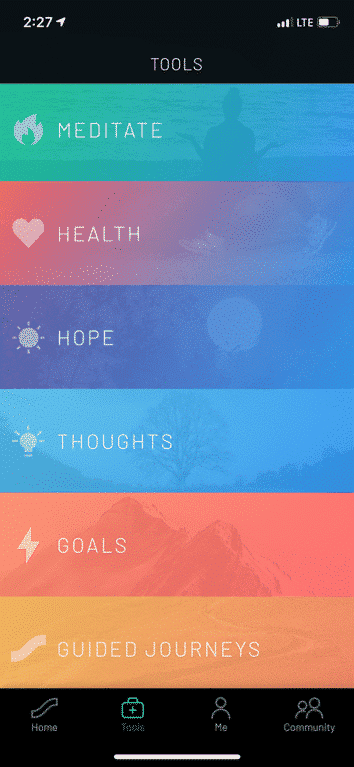
Sanvello is an app that aims to help you relieve symptoms of depression or anxiety by providing a complex toolkit of strategies and resources. It allows you to record your mood and health activities in order to track patterns.
There is also a Sanvello peer community that allows users to share stories, encouragement, and personal insights on any topic. The Terms of Service state “You must be over 13 years of age to use the Services, and children under the age of 13 cannot use or register for the Services.”[5]
The toolkit provided by Sanvello includes:
Meditation: Lessons focus on specific topics like relaxing, mindfulness, stressful situations, and calm down.
Health: Helps you track health habits that may be affecting your moods such as exercise, drug use, and water or caffeine consumption.
Hope: This tool provides the user with a space to save photos, quotes, activities, and community content.
Thoughts: Provides a place for journaling, analyzing events that have occurred, or discovering characteristics that have contributed to a feeling.
Goals: Allows users to select a challenge such as reconnecting with a friend or saying hello to a stranger.
Guided Journeys: A series of journeys that encourage a user to accomplish something they have never done before.
Porchlight: Being There
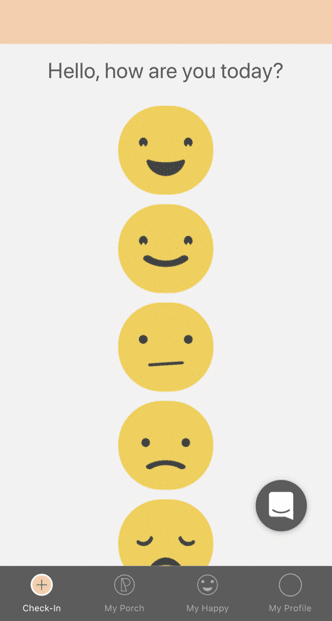
Porchlight is an app that is designed to allow loved ones to easily check in on each other’s mental health. The app prompts you to “check-in” once you enter the app where you can share your emotions using emoji. Users can connect with others which will send daily check-in notifications to the connected users. Porchlight provides prompts to check in with the connected users depending on what emotion they check in as.
Porchlight’s Terms of Service states “you must be 13 or older to register as a user or to use the app. If you are a minor, you must have your parents’ permission to donate through the App.”[6]
Headspace
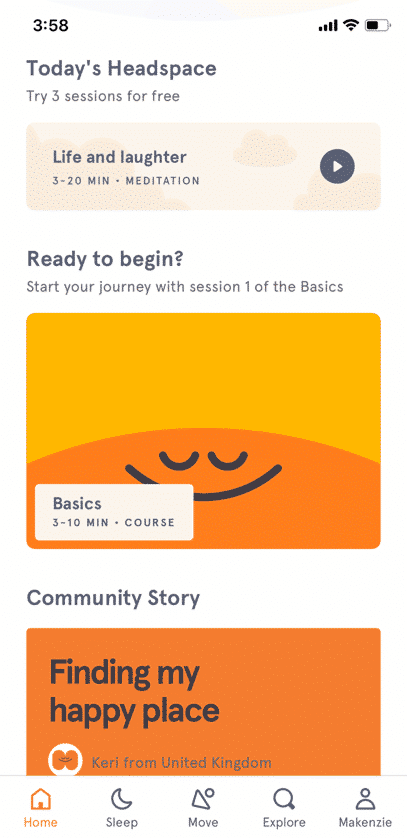
Headspace is an app that provides guided meditation exercises to help the user become healthier and happier. Headspace claims that it can increase happiness by 16% with just 10 days of use. It is also a popular app with over 60 million active users.
There are 4 main guides to mindfulness within the app:
The Wake Up: Daily short stories and small meditations to help you start your morning on a good start
Move Mode: Exercises to help strengthen mental and physical well-being
Sleep: Sleepcasts, music, and audio experiences to aid a restful night of sleep
Meditation: Teaches everyday mindfulness to help at any time of the day[7]
According to the Terms of Service for Headspace, “You must be 18 years of age, or the age of majority in your province, territory or country, to sign up as a registered user of the Products. Individuals under the age of 18, or the applicable age of majority, may utilize the Products only with the involvement and consent of a parent or legal guardian, under such person’s account and otherwise subject to these Terms.”[8]
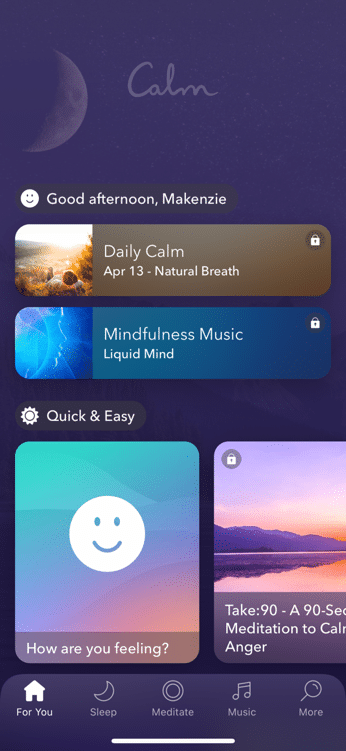
Calm
Calm is an app designed to assist users to develop healthy mental fitness, relax, and good sleep habits. The goal of the app is to introduce people to the benefits of mindfulness through meditation.
There are 6 different items of focus in the app:
Meditate: Teaches the skills of meditation
Sleep: Tools to have a restful sleep
Music: To help you relax, focus, or sleep
Body: Demonstrates mindful movement and stretching
Masterclass: Audio programs taught by experts
Scenes: Nature scenes and sounds to help relax and focus[9]
Calm’s Terms of Service state “you may only use the Services only if you are 13 years or older. To make a purchase via the Services, you must be 18 years or older and capable of forming a binding contract.”[10]
Thank you to CSUCI Intern, Makenzie Stancliff for providing insight on mental health apps. For more information about how electronics can impact our health, check out Dr. Bennett’s GKIS article, Is Wi-Fi Dangerous to Our Health?
I’m the mom psychologist who will help you GetKidsInternetSafe.
[1](n.d.). Retrieved from https://www.ajmc.com/focus-of-the-week/mental-health-issues-on-the-rise-among-adolescents-young-adults
[2]Data and Statistics on Children’s Mental Health. (2019, April 19). Retrieved from https://www.cdc.gov/childrensmentalhealth/data.html
[3] How does social media impact the mental health of young people? (2019, October 28). Retrieved from https://www.internetmatters.org/blog/2017/04/12/social-media-impact-mental-health-young-people/
[4]Technology and the Future of Mental Health Treatment. (n.d.). Retrieved from https://www.nimh.nih.gov/health/topics/technology-and-the-future-of-mental-health-treatment/index.shtml
[5]Home. (n.d.). Retrieved from https://www.sanvello.com/
[6]Being There. (n.d.). Retrieved from https://www.porchlightapp.io/