Imagine discovering that the “innocent” cartoon emoji pinging on your teen’s phone is not harmless fun, but instead a secret drug deal? To help you recognize dangerous dealings, I interviewed a recovering addict whose parents had no idea what he was up to until it was too late. With our Screen Safety Toolkit, you can get a head start with screen safety and prevention. The Screen Safety Toolkit is a resource guide that includes our best recommendations, how-to information, and easy links to our favorite easy-to-onboard parental control systems. Today’s GKIS article shares the true story of a young addict’s emoji workarounds, how to spot dangerous online dealings, and offers great tips to maintain your children’s safety when interacting online.
What are emojis?
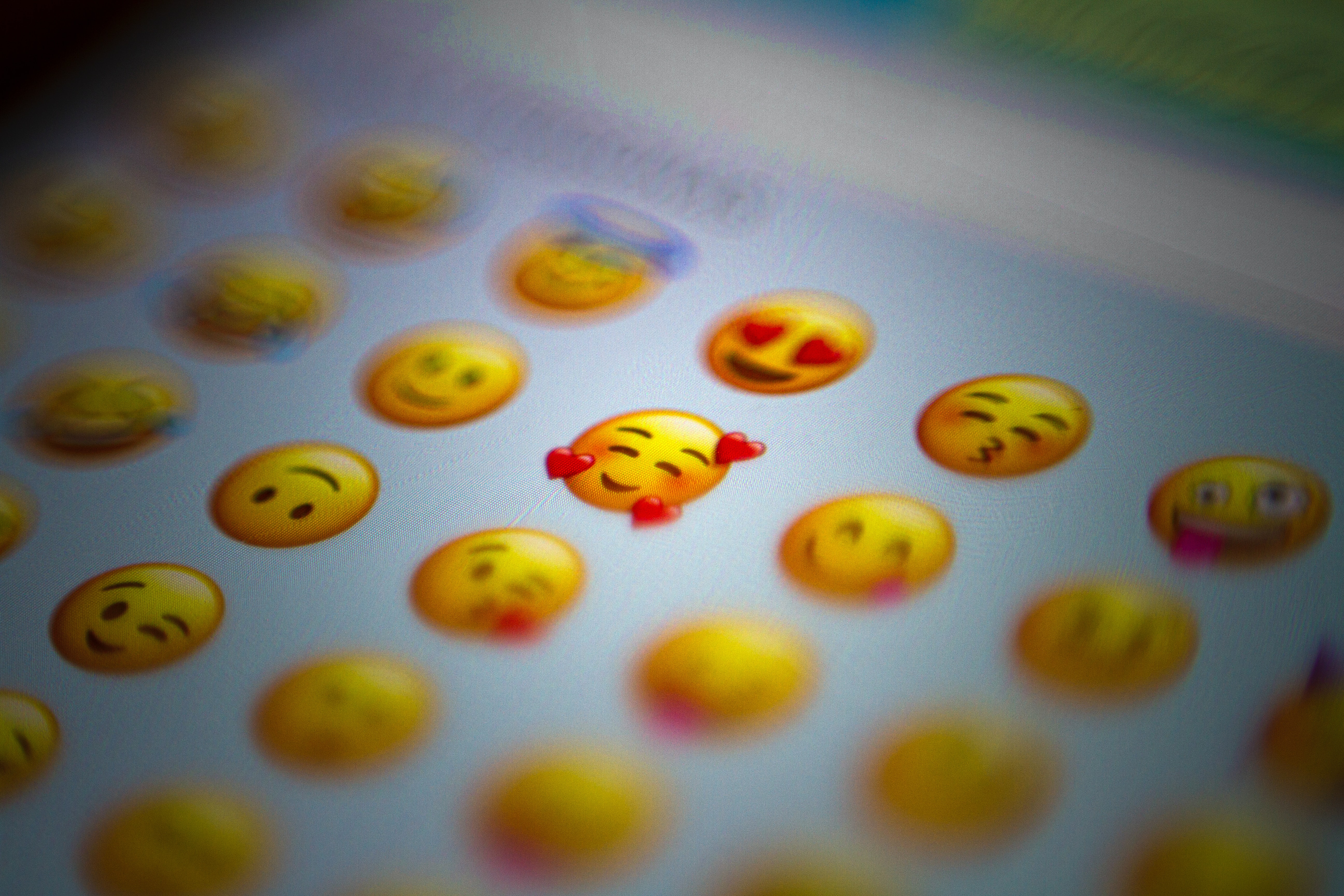
Emojis are small digital icons that are readily available on screen devices. Emojis range from facial expressions to common objects, places, animals, and more. According to a report from the emotional marketing platform Emogi, about 92% of online users use emojis.[1,2]
The Pros and Cons of Emoji use
Pros
Emojis add fun and excitement to conversations and social media posts- help convey emotions in online chats. They are particularly helpful because of the lack of nonverbal cues online, such as body language or facial expressions. For example, testing “sure.” suggests annoyance, while “sure 😊” suggests happy agreement.[3]
Cons
Although emojis were originally intended to represent simple concepts, teenagers also use these symbols for encrypted messages about drugs and other illicit activities. Encrypted emoji messages enable life-threatening drugs to reach communities faster, easier, and cheaper.
At a glance, a conversation on your child’s phone may appear to be about being at the gas station but instead is about buying marijuana laced with fentanyl, a synthetic opioid that is 80-100 times stronger than morphine.[4,5,7,8]
How to Tell if Emojis are Indicative of Illicit Drug Use
According to the Drug Enforcement Agency (DEA), the use of emojis alone should not be indicative of illegal activity. Concerns should be raised if the use of emojis is simultaneously accompanied by changes in behavior or appearance or a significant loss or increase in income. The DEA has even published drug decoding sheets for the public’s awareness.[4,6]
A Young Addicts Story
To better understand the workarounds of encrypted messaging, I interviewed a recovering addict. He reported that when he first started his drug use, he would use specific social media platforms to help keep his drug addiction a secret from family and friends.
Here are the tips he revealed:
Snapchat
The DEA reports that Snapchat is the number one social media platform for online drug activity, and my contact confirms that he and his dealers used it too. He explained that Snapchat is an application where people can keep conversations hidden. Snapchat has specific settings that allow users to quickly view pictures, videos, or messages that will disappear after viewing.
Privacy settings on Snapchat also allow users to ensure that only specific people can view what they refer to as “stories.” The young addict remembers his drug dealers adding him as a friend on Snapchat. From there he would track emoji-coded advertisements on their “stories” that revealed which drugs were available for sale.[6]
Venmo
Venmo was another platform that was used by the young addict. Venmo is an application that allows money transfers between users. LendEDU revealed that nearly 1/3 of their survey participants admitted to using this app to pay for drugs.
My interviewee admitted that this was not initially the way he paid for his drug transactions. Instead, before gaining the trust of his drug dealers, they’d come to his home to drop off the drugs and receive payment in only cash after sending an emoji encrypted text that they were outside. His mother reports being very scared to find out that her son’s drug dealers knew where their family lived, which made her reluctant to report the drug dealer to law enforcement officials despite figuring out his identity.[9]
Encoded Texts
The mother I interviewed confirmed that encrypted text messages are a useful way to suppress adult suspicion. She explained that, if it were not for other indicative factors like his drastic weight loss, mood swings, and incomes loss she would have never expected phrases such as, “Do you have kitty cat?” to be an encrypted message referring to the drug ketamine. She remembers seeing other emoji codes and “cute names” for drugs, but not giving them much attention initially. She said she was overwhelmed trying to research on how to stop dangerous online conversations and seek the help he needed.
If you worry things are getting by you, let go of the guilt and let us do the research for you! Researching digital safety tools is overwhelming! But lucky for you, we’ve made it easy. Our GKIS Screen Safety Toolkit is a resource guide perfect for those that need smart tech tools for filtering, monitoring, and management plus some time to find workarounds.
Dr. Bennett recognizes that it’s no longer possible to live a screen-free lifestyle or monitor 100% of the time. And it can be terrifying to know that kids can become victims of online predators and drug dealers. Our family-tested and outcome-based course helps you close screen risk gaps and improve family cooperation and closeness. Check it out to minimize risks and have easier dialogues for better parent-child relationships.
Teen curiosity online can be dangerous and teens don’t always make sound decisions due to lack of experience and poor impulse control. Our GKIS Social Media Readiness Course allows teens an opportunity to start taking accountability for their actions online and become proactive instead of reactive.
The story of the young addict demonstrates how parents can easily miss indications of digital injury and serious problems. Teenagers are becoming more innovative on how to keep their parents in the dark, such as emoji encrypted messages. With our GKIS Online Safety Red Flags For Parents, parents will learn what behavioral red flags they should be on the lookout for that may signal that a child is suffering from a digital injury.
Thanks to CSUCI intern Ashley Salazar for researching and co-authoring this article. If you suspect your loved one is struggling with substance abuse, please reach out for help. Contact your health insurance carrier or call SAMHSA’s National helpline for more resources and advice.
I’m the mom psychologist who will help you GetKidsInternetSafe.
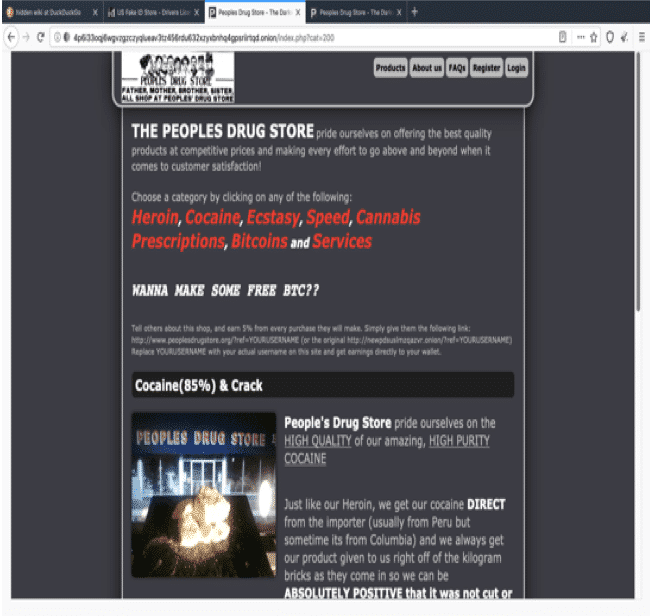
We know there are dangerous sites on the internet. But most of us have never accessed the dark web, where visitors are anonymous and access to the unthinkable is possible. Recently I visited and discovered that kids and teens easily access it to purchase illegal goods such as fake ids and drugs. Find out what is on the dark web, how easy it is for kids to access it, and what you can do to prevent it in today’s GKIS article. Caution: this article contains graphic descriptions of illegal activities, sex, and violence.
What is the dark web?
The dark web is the part of the internet that is not visible to regular search engines (like Google or Chrome) and requires the use of a special browser named Tor. Once Tor is downloaded and opened, you have arrived at what many call “Onionland.” Tor uses the onion router hidden service protocol, meaning that the Tor servers derived from the onion router offer users complete anonymity. Also, every website ends with .onion instead of .com, .org, or .gov.
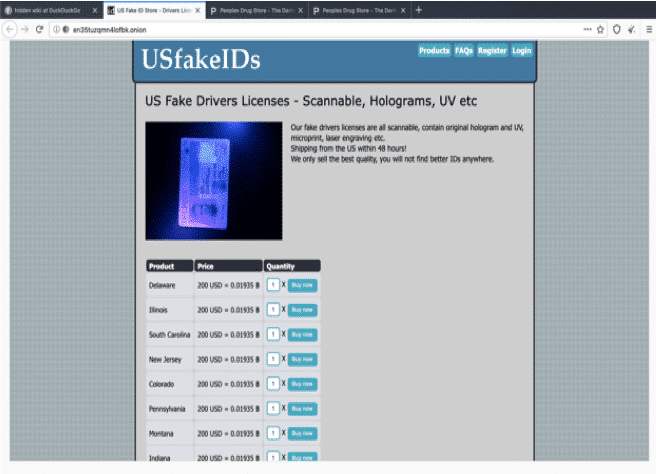
The dark web is a criminal underworld where bad actors online sell and purchase illegal goods like drugs, weapons, counterfeit money, bank accounts, passports and ID’s, and much more. Dark web online shops are set up with customer reviews very much like Amazon which gives users the confidence to purchase from specific vendors. There is even a darker side to the dark web which consists of images and videos of gore, pornography, child sexual abuse, bestiality, and even live murder shows called red rooms where paying customers can tell the person torturing the victim what to inflict on the victim next or how they would like to see the victim killed.
Clear Web Versus Deep Web
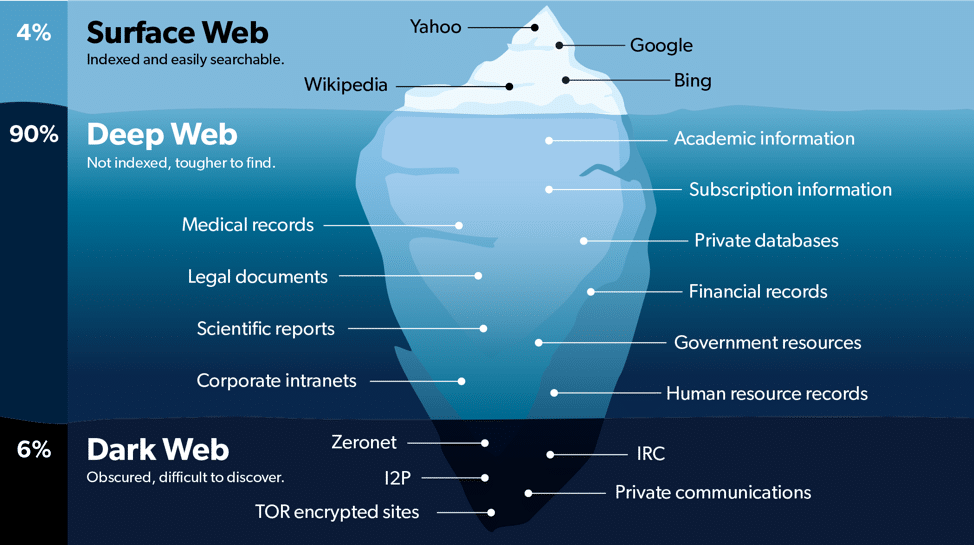
The clear web is the part of the internet that can be accessed from any browser. It’s the smallest part of the web, which is astonishing because it seems that the content there is infinite but in actuality, it only accounts for about 4% of the content on the web. Some browsers, like Google, will censor certain websites. The search engine used by Tor, Duck Duck Go, does not censor and will not save your search history.
Then there is the deep web which is not to be confused with the dark web. The deep web is the largest part of the web. It consists of all the content that is not indexed and will not appear on regular search engines. Many government and private company websites exist there, where you would need an exact address to access them. Accessing without permission is illegal.
Is it easy to access the Dark Web?
It is very easy to access the dark web. I’ve included the steps here so you can recognize them if you ever come across these searches on your child’s browser.
To access the dark web, all you have to do is:
Purchase a VPN for extra security and anonymity (optional)
Download Tor
Access Hidden Wiki Links
Use the links on Hidden Wiki to help guide you through the dark web
Create an anonymous email
Purchase bitcoin (which is an online currency)
Find an online store through the hidden wiki that carries the products or services you are looking for
Using the hidden wiki as a guide, you can follow the steps above by merely clicking links and it will guide you through. You can easily find the hidden wiki by typing “hidden wiki” on the search bar in the Tor app.
Dark Web Dangers
Fake IDs and Drugs
So, as a GKIS intern, how do I know that teens are accessing the dark web? I became interested when high school students that I worked with all had fake IDs and were getting into L.A. clubs. I asked how they got them, and they told me from the dark web using bitcoin. They also disclosed that they illegally purchase study drugs like Adderall and Modafinil as well as club drugs like cocaine and molly. I was shocked yet intrigued, so I followed these directions on how to get onto the dark web. I couldn’t believe how easy it was to access.
When I brought up my idea about writing about the dark web at our intern meeting, Dr. B worried we’d be publishing a how-to article. But I argued, and the other interns agreed, that there are plenty of YouTube videos showing the step-by-step process of accessing the dark web. Parents need to know about this!
It is mind-boggling how dangerous access to the dark web can be. As if purchasing illegal drugs from anonymous criminal vendors isn’t enough, consider that purity is not guaranteed. Drugs like cocaine and heroin have been known to be laced with fentanyl, an extremely powerful opiate that kills even the most severe addicts. And consider the risks teens take in 21-and-older clubs. Interaction with adults on the dark web can lead to any type of exploitive situation online and offline.
Violence and Pornography
Consider what watching violence and pornographic material can do to a child’s developing brain. For some kids, watching explicit material can lead to stress symptoms characteristic of clinical disorders such as acute stress disorder and PTSD. For others, they may become desensitized to shocking online content which may lead to craving and seeking increasingly dangerous content to experience that same rush. This type of explicit material can have a similar effect as addictive drugs due to the release of dopamine and endorphins.
Dopamine helps the brain recognize incentive salience. Incentive salience is the desiring attribute that includes a motivational component to a rewarding stimulus. In other words, dopamine is released when a reward is anticipated, and it motivates us to keep seeking that anticipated reward.
When shocking material is viewed, the opiate system in our brains begins to activate by releasing endorphins. Endorphins gives a sense of euphoria and eases pain, which is what heroin does. So, more and more shocking material may be craved due to dopamine released from the anticipation of viewing the shocking stimulus – and endorphins help ease the pain that the shocking stimulus caused. Endorphins are also what causes the “runners high” that people talk about after a good amount of cardiovascular exercise. So when we experience pain, endorphins are released to help ease the pain.
Hate Groups
An extremist group discussed in the media recently, the “Proud Boys,” is a group that is known for supporting President Trump and for their extremist chauvinist beliefs. If you search for their website on Google, you will likely not be able to find it. But if you use the search engine Duck Duck Go, it shows up right at the top.
Hate groups design their content to radicalize vulnerable adults and youth to their agenda. There have been many incidences where radical Islamic groups have radicalized western youth to fight for their cause. They do this on the clear web too. But when they need to be more discreet, they can use the deep web by creating a .onion site.
Facebook and other social media sites are on the deep web and their web address is www.facebookcorewwwi.onion. It is important to talk about these issues and set rules with your kids. because if they do not learn it from you they will learn from someone else who may not have the best intentions.
Without parent management tools, like those we recommend in our GKIS Screen Safety Toolkit, kids can spend hours over months interacting with extremists. These interactions can be moved offline and can result in child and teen trafficking as well as other crimes.
How You Can Keep Your Kids Safe From the Dark Web
If your kids have open access to the internet, GetKidsInternetSafe has an entire toolkit to get safety dialed in. Check out our GKIS Course Bundle in the plus and deluxe package options, which offers all of our GKIS courses plus bonuses for families with kids of all ages. Our course bundle option offers parent and teen education, communication tools, parenting tools, and tech tool recommendations. Our course summary page with the details can be found HERE.
Thanks to Andres Thunstrom for contributing to this GKIS article. Andres has been advised to never visit the dark web again. J
I’m the mom psychologist who will help you GetKidsInternetSafe.
I wrote this article for my awesome GKIS Social Media Readiness Course for tweens and teens. I have to admit, I have never worked so hard on an article. Explaining complex psychological principles that big tech bakes into video games in easy-to-understand language for teens is difficult. But this information needs to be understood by everyone who uses screen technology – like a how-to manual.
Why This is Important
Too many of us are addicted to our screens, and it’s not an accident. Programmers intentionally bake hidden brain traps into our devices and onscreen activities to capture our attention. Technology has moved us into a new wildly profitable market where our attention is the commodity. The more attention they can get us to surrender, away from healthy offscreen activities like hanging out in real life, sleeping, being in nature, and anything else that offers us three-dimensional brain enrichment, the more money they make.
Big tech has cracked the code on brain reward. With psychology research and protective laws lagging behind rapidly developing technology, it’s up to us to understand what we’re up against. Learning how to recognize manipulatively designed brain traps can break the spell, interrupting our screen dependence and our spending.
I’ve tested it on gamers in my practice. By teaching them how special features trigger our feel-good chemical (dopamine) in the pleasure center of the brain, gamers can be taught to recognize it as it’s happening. With this new awareness, many of them popped out of autopilot responses and found the games less enticing.
How To Teach Your Kids
If you teach your kids about the hidden brain traps of video games, maybe they too will change their addictive online habits! For younger kids, just cover a few items at a time. Older players may be willing to cover all of these hacks at once. Make the discussion interesting and fun. If your child is getting bored with these fun facts, take a break and return to the discussion later.
Don’t forget to ask them what they think along the way and be willing to listen and learn as well as teach. You’ll find that these ideas pop up again over and over if you keep the cooperative dialogue going.
The application of this learning has endless benefits. Get familiar with the ideas on your own first, then teach these concepts along with your free GKIS Connected Family Agreement. Congrats on being the parent who goes the extra mile for the health and happiness of your family.
What We’re Up Against
There are lots of screen activities that can addict users, but video games are among the strongest. They’re so fun and compelling that some gamers lose control and can’t pull away. Gambling and gaming are the only addictive behaviors officially recognized by the World Health Organization and the mental health community.
Behind gaming is a huge profit. In 2019, 2.5 billion gamers contributed to a gaming market that made 152 billion dollars![1] The most successful game in video game history is Fortnite. First released in July 2017, gamers can download it for free on nearly every gaming platform. In just two months of being on the market, Fortnite was played 2.7 billion hours, the equivalent of 300,000 years.[2] Currently, it boasts 78.3 million players a month.[3]
Under Fortnight’s spell of perfectly programmed brain traps, I’ve had clients drop out of school and isolate themselves from friends and family to play 12+ hours a day. The most addicted can barely sleep, fail school, and become socially isolated and burned out. Some are admitted to pricey screen addiction rehab programs that are often outside of their home states and away from their families!
What makes video games like Fortnite so addictive?
Each brain is unique with over 100 trillion synapses(the spaces between our brain cells where cell communication takes place). Not only does our DNA impact our brain wiring, but so does experience. That makes learning a nature-via-nurture phenomenon. In other words, we seek out certain experiences because of our brain wiring, and our brain wiring changes in response to our experiences.
No two people experience video games alike. Some people may be barely amused by the most addictive video game on the market, while others will forgo eating and sleeping to rack up points.
On the other hand, we are all human. We come from a common ancestry that developed with similar evolutionary triggers in play. As a species, we’ve been hunting and gathering for 200,000 years; that’s 90% of human existence.[4] Atari first introduced Pong in 1971. That means video games have only weighed in for the last .024% of our evolution. Find the triggers that captured the attention of our Neanderthal ancestors, and you’ll find triggers that capture us today. Technology has evolved much faster than our human brains. We simply can’t keep up.
Rewards and Punishments Are Folded into Gameplay
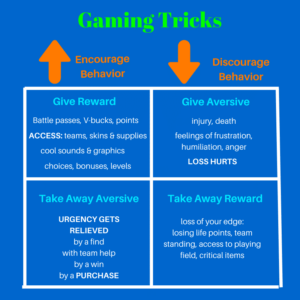
One of the first things college professors teach is the processes behind how we learn. Operant conditioning is a psychological learning method that involves rewards (pleasant) and aversives (unpleasant).
When a behavior increases, it has been reinforced. When a behavior decreases, it has been punished. Programmers use reinforcers and punishers to manipulate player behavior.
Rewards
The most obvious reinforcers in video games include points, prizes, and social likes that are delivered with attaboys in the form of yummy sights and sounds. Cool graphics, pleasing colors, attractive shapes, and amazing sounds stimulate the pleasure centers of our brains. When I asked my son what sounds he finds most appealing, he said the “kill” sounds are particularly attractive in Fortnite, especially the higher-pitched headshot sound and the sound of ammo reloading. My army of client gamers enthusiastically agreed.
Punishments
If we are doing badly in a game, it makes us anxious. Not only are we disappointing ourselves, but others may see we are failing too. Of course, game creators don’t let us feel crappy for long. They offer up relief from that unpleasant stress at mixed intervals (just like slot machines do), and we get double hooked!
Brilliant game builders exploit all four of the operant conditioning boxes on the blue image. Game features that interact with our primitive brains are so sophisticated and so well executed that we don’t even know it’s happening to us.
Remember nature via nurture? Our brain wiring sets us to seek gaming rewards and gaming rewards change our brains. Psychology research has demonstrated that addictive gameplay specifically permanently changes our brain’s interpretation of rewards and losses.[5] The addict’s rewired pleasure center makes recovery very challenging.
Learn these game traps that hack our pleasure centers, and you may be better equipped to make choices about gameplay instead of blindly getting tricked into them.
Expert Video Game Traps Designed to Snare Your Attention & Emotions
Finding Your Tribe & Being a Leader
One of the cornerstones of our survival as humans is our ability to form tribes and have babies. Through attachment and cooperative communication, humans dominate over other Earthly species.
Gaming programmers know what makes us tick. They build games by testing them on themselves and millions of teen players they pay to play for study. By isolating and testing addictive game features, programmers combine the motherload of behavioral reinforcers.
Social feedback is one of those ultimate rewards. The likes and verbal and written comments from other players are like crack cocaine to the human brain. This is why the most popular games allow you to make new friends and invite others. The more influence we have, the more social capital we’ve earned.
Social capital, the good feelings we collect from our interactions with friends, is particularly valuable to teens. It’s during this phase of development that one prepares to leave their family and hone in on attracting your tribe. By finding friends, testing skills, and “versing” each other, kids thrive on the team aspects of play.
But what if you are too shy to fail in front of your friends? No worries, the gaming engineers thought of that too. They allow you to start by playing anonymously or playing against yourself or strangers. That way you slowly gain confidence until you’re ready to show off your new skills with your team.
The emotional stimulation of wins and losses with your friends is extraordinarily captivating. As a young player told me, “Dying sucks and the team gets mad at you because they die too. If your friends are beating you, it makes you mad. So, you work to get more dubs (w for wins) to get bragging rights.”
Standing Out in the Crowd
But what if you become like everybody else in the game? You won’t stand out at all. That’s not fun.
Voila! Game makers thought of that too. They help you stand out with badges, points, and skins that discriminate who’s a newbie and who’s a pro. Sexy curves and muscled skins are valuable game commodities. By crafting the perfect look, players can attract other teammates. How you look, the levels you’ve achieved, and your arsenal of skills and weapons offer the optimal distinctiveness you need to stand out in a crowd. In Fortnite, you can even earn the opportunity to be paired with other high-ranking and even celebrity players.
Brain Candy Learning & Expert Mentorship
Humans love to set, pursue, and reach goals. Learning through trial and error and tracking progress is deeply satisfying to our most primitive selves. We especially love to learn from people we look up to and want to be someday, like celebrities and influencers. Celebrity endorsement as a branding (selling) strategy is illustrated by the popularity of Let’s Play videos (videos of other gamers playing and commenting on gameplay) on streaming sites like Youtube, Twitch, and Mixer.
You don’t want to put in the hours it takes to learn everything? No worries, game creators will let you pay your way to the top by buying up for levels. Even players who haven’t reached celebrity status can make money from expert play. I’ve had clients play an account until they’ve leveled up, then sell these accounts for thousands of dollars to buyers who want expert-level access to features without having to put in the time commitment.
Backchannel deals can also lead to big-earning e-sport tournament play. Some players even win college scholarships in tournaments that boast prize pools as big as 34 million dollars![6]
Hunting & Gathering > Building & Defending Community
Just as our ancestors did, our brains delight in building and defending the community. Being a good seeker, builder, and warrior gave us an evolutionary advantage.
Fortnite taps into these traits by having players forage for and gather useful, rare, and collectible items randomly placed around the map. Excited anticipation paired with finding items triggers our hunting and gathering instincts.
Fortnite also offers community competition and violence to scratch that primitive itch. Although parents are pleased there aren’t blood spatter and guts in Fortnite, developers know that tapping into our human need to protect and survive through violent in-group, out-group protectionism is a sure win.
How They Make Losing Fun
Getting a victory royale in Fortnite is difficult. Players must have the skill and luck to defeat other competitors in battle. Most gamers play multiple, consecutive rounds without getting a victory royale because, in their minds, they are not failing, they are “almost succeeding.”
In psychology, this is known as the near-miss effect. A gambler experiences a near-miss when almost winning a hand in poker. They take it as a sign to continue playing. During a near-miss, the brain’s reward system activates the same way it would during a win.[7] Earlier generation Candy Crush game developers learned that the near-miss effect kept players hooked for hours and willing to spend, and Fortnite adopted this strategy.
Attracting New Players & Keeping Old Players Playing
To stay successful, games need to bring in new players while keeping the attention of seasoned players (must cater to different player populations). Building anticipation for something new and exciting with a free gift is a sure way to hook and keep customers.
Upon signing up for Fortnite (which is free and convenient), players are offered a starter bundle. Once you get tired of that, more anticipation is generated with the promise of another free gift with repeated seasonal battle passes which contain prizes like free skins, a pickaxe, a glider, a rare item, and some XP multiplier to level up in the game. Each season offers a new map and fresh features to avoid burnout.
To reinforce habit and daily use, Fortnite even offers a fee asking for unlocking a majority of weekly challenges (55 of the 70) and cash if you log in on consecutive days! With immediate and long-term rewards, the game traps the immediate-reward players and the work-for-it-reward players.
Making Money From the Game & Within the Game
In 2018, Fortnite made 2.4 billion dollars in revenue.[8] Most of this revenue came from players purchasing skins and emotes. As of January 2020, Fortnite was in its first season of Chapter 2. Chapter 1 had ten seasons.
With each season comes the release of new skins and emotes, as well as the removal of ones from past seasons. Removing products from the marketing creates an impression of scarcity – meaning if you don’t buy now you’ll lose out. This makes collecting and purchasing skins and emotes a high priority to players, as it signifies status within the gaming community. The more fancy tools we collect in our cave, the more leadership we build within our community.
Triggering a sense of urgency in players is highly motivating, anxiety-producing, and builds intensity. Finding that sweet spot of flow between boredom and anxiety is the quest of every gamer. Once again, Fortnite doesn’t disappoint. The sense of urgency while searching and release upon finding creates a feedback loop of needing more, more, more! Being online puts us in a perpetual state of want.
Anxiety When We Leave the Game and Intense Craving to Get Back to Playing
Intensely craving game rewards feels pretty exciting in the short term, but in the long term, it can be stressful and take a toll on our mental health. That is why so many young gamers throw tantrums when they have to get off the game and older gamers feel irritated, frustrated, and depressed. Needing more skills to keep earning points builds what we call tolerance in addiction medicine, and the terrible feeling when we get off is called withdrawal. Just like drugs of addiction, tolerance keeps us using more and more and withdrawal makes us crave more gaming.
It’s Contagious!
Speaking of craving and withdrawal, Fortnite knows that watching friends have fun triggers FOMO (fear of missing out). By jacking up player anticipation with live online events, Fortnite gets players advertising to their friends for free.
To attract big numbers, Fortnite offers exclusive information and items. In other words, gamers must attend to get a chance to see what’s coming and get access to cool stuff. Players prioritize these events to get a leg up on team members.
Earning Your Trust & Upping the Ante
Since we covered the standards in marketing in business like scarcity and urgency, you might as well learn about the upsell. Marketers know that we buy out of habit. If they can get us to use our credit card once, we will be far more willing to use it a second and third time.
To get us into this buying habit, games offer an in-game purchase for cheap. Once we buy that, they then approach us with the pricier items. Since we trust them after liking the first item, we are more likely to purchase from them again.
An example of an upsell in Fortnite is the offer for a common emote or skin costs only $8. Once you buy that, Fortnite entices you with a more expensive and rare emote or skin for a higher $20 price. Fortnite in-game purchases can be very expensive. A father from England found out when his son spent $918 on the game in three days![9] Fortnite is a virtual marketplace that is very enticing to immature brains.
If You Like Them, You’ll Also Like Us!
Fun products that tie into popular brands, like The Avengers, are often integrated with video games. This is called affiliative marketing (meaning if you affiliate with or like another brand, they can entice that brand’s users over to them). By paying an already-popular brand to partner, both brands benefit by sharing each other’s user base. Celebrity skins, affiliation, and team competitions sweeten the offer even more.
Issues Specific to Neurodivergent Players
Neurodivergence simply means players who think differently than the average player. Most commonly, it refers to people who have traits of autistic spectrum disorder (ASD) or attention-deficit hyperactivity disorder (AD/HD). All players have gameplay strengths and weaknesses. But for neurodivergent players, these strengths and weaknesses can be more extreme.
For instance, many neurodivergent players have a tough time making and keeping friends in real life. For them, the opportunity for online mastery and social capital is particularly valuable. And the cool thing is, some strengths typical of neurodivergent players, like pattern recognition, make them awesome gamers. One of my ASD clients describes loving the problem-solving elements of gaming and the thrill of earning accolades from her teammates for her exceptional Jedi skills.
Should we just forbid video games?
Going screen-free is not an option for most because of the extraordinary learning, communication, and socialization benefits that screens bring. Also, the genie is out of the bottle already. If everybody else is doing it, it may be a real loss to your child to not have access to their friends.
Fortnite, which some say is on its way out, is not the only culprit. As long as the video game market continues to pull in a huge profit, developers will continue to build games with increasingly sophisticated brain traps.
By reviewing this article with your gamer tonight, covering the points where you agree or disagree, and asking them for their thoughts and observations, you will empower your child through the parent-child connection. Protecting your kids is less about depriving them of screen time, and more about giving them the tools they need to have informed agency. By equipping our children to be smart problem solvers on- and offline with loving support, we open the bridge to really connect as a family. It’s the connection that our children are looking for, and we are a part of that.
The Next Step
Although this article offers a ton of free information, there’s so much more to learn for long-term mental health and brain enrichment. Also, you want your kids to become increasingly more independent and start to solve problems on their own when you aren’t there for help. For even better coping and psychological resilience, you don’t want to miss our GKIS Social Media Readiness Course. Complete with lessons about digital injury risks and psychological wellness tools and individual lesson mastery quizzes, it’s the perfect prep!
I’m the mom psychologist who will help you GetKidsInternetSafe.
[5] Dong, G. Hu, Y., & Lin, X. (2013). Reward/punishment sensitivities among internet addicts: Implications for their addictive behaviors. Progress in Neuro-Psychopharmacology & Biological Psychiatry, 46, 139–145.
Fortnite is a video game that has taken the world by storm. It has kids glued to their screens for hours on end and flooded social media sites with videos of kids recreating its dances. In today’s GKIS Sensible Guide, you’ll learn all the things parents need to know to make an informed decision about whether your kids should play this wildly popular video game.
How long has Fortnite been around, and how popular is it?
Fortnite is a video game that was initially released in 2015 by a team led by the American game developer Tim Sweeny. The game has gone through radical changes in its short lifetime. In its first iteration, the game was centered around grouping with other players to take on computer-controlled enemies. While this version of the game received modest success, it wasn’t until the game’s Battle Royale game mode was introduced in 2017 that the game became a worldwide phenomenon.[i]
As of 2020, a staggering 250 million accounts have been created on Fortnite.[ii] In 2018, Fornite generated over 2 billion dollars from in-game purchases called microtransactions. Through these microtransactions, players can exchange real-world currency for an in-game currency called V-Bucks. The V-Bucks can subsequently be used to choose from an array of in-game purchases including dances, emotes, or outfits for their character.
Getting Started on Fortnite
In order to create a free Fortnite account, the user must be at least 13 years of age or have the consent of a parent or guardian. However, this restriction can easily be bypassed by simply lying about your age. Fortnite can be downloaded on all popular gaming platforms.
Before allowing your child to play a new app or game, we recommend you implement our free Connected Family Screen Agreement. The agreement is available for children and teens. Offering digital negotiation tips, it also covers family values and screen smarts. It’s far more than a digital contract. To claim yours today, go to the home page of GetKidsInternetSafe and fill in your name and email address. If the contract is not for you, you can simply unsubscribe.
Features of Fortnite
Save the World
The original game mode.
Players must collect firearms and resources to fight off waves of monsters.
There are different objectives in each mission, but the enemies are always the non-player monsters.
Battle Royale
The most popular game mode.
Players are dropped from a flying bus onto a large battlefield where they must find firearms and collect resources to fight other players.
Up to 100 players can be in the same game.
The last player standing earns the victory royale, and thus wins the game.
Once you die you must leave and join a different game; you don’t respawn.
Creative Mode
Players can build their own world and are free to do almost anything they desire.
They have unlimited resources and items.
Players can be alone in their world to create without interruptions, or they can invite friends and collaborate on a project.
If they desire, they can set rules and make mini-games in their world. This opens almost endless possibilities for custom player-made game modes.
Most of the game modes in Fortnite are optimized for multiplayer gameplay.
The Benefits of Fortnite
Fun
Fortnite is super fun for players. Like most video games, you start with 0 points, so there is only one way to go – UP!
Friendship and Cooperation
Fortnite has various benefits, most notably the cooperation aspect of the game. Players are required to cooperate with their teammates whether it be to create a building or fighting enemy players. It can be a great way to make new friends and spend time with the friends you already have!
Showcase Creativity and Ingenuity
The creative mode of the game also allows children to showcase their creativity and ingenuity with almost endless possible building projects.
Gaming Skills
The fast-paced competitive nature of Fortnite helps build hand-eye coordination, finely tune reaction time, problem solve in a fast-paced situation, and learn to cooperate and compete with others.
Monetization Opportunities
Expert players can be so good at Fortnite, that they build up a character and sell the account to the highest bidder. Players can also make money by becoming an influencer and streaming their play.
E-Sport Opportunities
Kids also pick up tech prowess and may even provide the foundation for an e-sports or a professional gaming career.
The Risks of Fortnite
Distraction and Addiction
Possibly the greatest risk of Fortnite is playing for extended periods of time. This could cut into children’s study time and real-life social interactions. Fortnite employs various brain hooks to keep kids glued to the screen as long as possible. The efficacy of these hooks was proven at the end of Season 10 when the game seemingly “disappeared,” leaving an image of a black hole in its place. This event caused a social media frenzy as players all around the world posted incessantly about it. Then after 48 hours, the game returned and ushered in a new season. The players were overjoyed – a genius move on Fortnite’s part!
Violence
Fortnite is a third-person shooter (TPS) style game. That means your character is visible on your 3D screen during the game. Although Fornite is inherently violent as a shooter game, parents often don’t mind because as the violence is depicted in the game’s seemingly innocuous cartoon art style.
Some of the violent acts can be carried out on Fortnite include:
Shooting an enemy player with a firearm, rocket launcher, or harpoon gun.
Killing an enemy utilizing a trap with retractable spikes
Bludgeoning an enemy to death with a pickaxe, bat, hammer, etc.
Lobbing a grenade at an enemy player.
Slicing an enemy player with a sword or knife.
Vulgarity
One can communicate with strangers through the in-game voice chat. Fortnite is a game that appeals to players of many ages. Many times small children may be paired up with adults on the same team. This can be alarming as older players frequently use vulgar or inappropriate language.
Cyberbullying
Children may also fall victim to cyberbullying behaviors that individuals employ in order to intimidate competitors. Distracting and stressing out other players, called griefing, is extremely common in the virtual, cut-throat environment of gaming. Because players can be anonymous or known to each other, cyberbullying online is commonplace. It is also common for older players to cyberbully younger players just because they are young. Young players have dubbed squeakers. For further insight on the dangers of multiplayer video games please check out our dedicated GKIS article.
Fortnite falls under the GKIS yellow-light app category. It may not be as violent as many games on the market, but it is violent nonetheless. As with any other video game, it is also important that the game is played in moderation so a child allocates enough time to take care of other responsibilities. It is recommended that parents have a look at the GKIS Cybersecurity and Red Flags Supplement so you are aware of the signs that your child has encountered danger while playing Fortnite. This supplement can be added to our free Connected Family Screen Agreement.
Thanks to CSUCI intern, Jess Sherchan co-authoring this article. If you’d like to learn how to create an enriching and enticing screen-free home environment (like with Makerspaces), check out our GKIS Connected Family Online Course. With 10 quick steps, you can bring the fun back into family life.
I’m the mom psychologist who will help you GetKidsInternetSafe.
[i] Hyatt, Edward (2019) Who created Fortnite, what is Tim Sweeney’s net worth and how much money does Battle Royale make? https://www.thesun.co.uk/tech/6285387/fortnite-creator-tim-sweeney-founder-net-worth-7-16b/
[ii] Loveridge, Sam (2020) How many people play Fortnite? Is it really as many as people say? https://www.gamesradar.com/how-many-people-play-fortnite/
Imagine having a personal assistant on your wrist to help you respond to messages, make calls, and track all types of fitness data. The newest wearable technology, like smartwatches, can do all of that and more. Wearable technology is advancing so rapidly that we are consumed by it. But being consumed can have its downsides for some people. Is wearable negatively affecting your health or helping your productivity?
What is wearable technology?
Wearable technology has been around for decades. In the 1970s, the calculator wristwatch and the Sony Walkman were launched. In the 1980s, the first digital hearing aids came on the market. In current times, major advances have been made in the wearable technology. From Bluetooth headphones to activity trackers to the Apple Watch to Snapchat Spectacles, wearable tech is wildly popular and keeps growing[1]
One of the most popular forms of wearable technology is fitness trackers. Fitbit is one of the leading contributors to the wearable technology industry. In 2018 alone, the company sold over fourteen million activity trackers. Currently, Fitbit has several different devices on the market including a weight scale that graphs your week’s weight, wireless headphones, watch activity trackers, and even activity trackers designed specifically for children.[2]
We at GKIS believe in smart screen use. To that end, we offer smart courses, like our Connected Family Course and our Screen Safety Toolkit, to help families dial in on the sweet spot of fun learning with a reasonable balance between virtual and screen-free activities. We recognize that screen technology can be a benefit in communication, learning, storage, and efficiency. It can be entertaining, helpful, and motivating. That is why we don’t encourage screen-free parenting. Instead, we believe that education, awareness, insight, and smart planning are behind best-used principles. The same applies to wearable tech. By considering these pros and cons, you’ll be best equipped to dial in on what’s right for you and better informed to facilitate smart management with your kids.
The Pros of Wearable Technology
One major positive aspect of wearable technology is health and fitness tracking.
Activity trackers continuously collect users’ health and fitness data including the number of steps taken, heart rate, calories burned, foods eaten, and sleep quality, among other things.[3] Health data can be important for people managing health issues because the data generated can give you a better understanding of behavioral patterns and motivate you to stay on the right track toward health and fitness goals.
Documented data can also help you communicate more effectively with your doctor.
Personal safety is another positive aspect that wearable technology provides.
Many pieces of wearable technology automatically track GPS and can notify an emergency contact if it detects something that went wrong. For example, an Apple Watch can detect a hard impact and will notify emergency services in the area and then text the emergency contact.[4] This is an important safety feature that has the possibility to save lives. While not all wearable technology has the ability, many of the activity trackers record the GPS of the device.
The Cons of Wearable Tech
One of the cons of wearable technology is product marketing, specifically persuasive upsells for further products.
Upsell refers to offering consumers additional products or upgrades after they’ve already made a purchase.[5] Wearable technology upgrades include new and improved devices and access to additional services. For example, Fitbit offers a subscription service that offers daily insights about fitness habits, access to workout programs and coaching exercises, and a wellness report developed by doctors.[6] The features of the subscription program seem intriguing, but the reality is that many people will stop using the features but continue to pay for the subscription.
Another negative aspect of wearable technology is compulsive data tracking or excessive checking and tracking of data.
Dr. Bennett says she has treated clients who suffer from behaviors characteristic of exercise addiction with wearable tech enabling unsafe patterns.* She elaborates that, not only can data tracking become too much of a priority over other life activities, but users can also fall into a compare and despair cycle. Rather than measuring feelings of satisfaction and well-being and promoting a healthy body image, some people are vulnerable to comparing their data to a “standard” data set that is general for the entire population. Seeing how their data compares to the standard may trigger chronic anxiety because the user is duped into thinking they are not performing as well as they should. Wearable tech users must seek expert medical advice instead of comparing their data to a standard that may not apply to their specific characteristics.[7]
A third negative aspect of wearable technology is the notifications that cause a distraction to the user.
On most smartwatches, notifications appear for messages, emails, and health statistics. Receiving those notifications may cause the user to get distracted from what they were previously focusing on. When tasks are constantly getting interrupted by notifications, we lose our ability to prioritize tasks. We also burn more oxygenated glucose, our brain’s fuel, when we frequently toggle between tasks. This can leave users irritable, fatigued, and less productive overall.
We at GetKidsInternetSafe believe that interrupting notifications should only contain time-sensitive information that needs to be addressed immediately rather than ads urging you to worry, stress and spend more money.[8] Dr. Bennett encourages batching notifications. This means setting certain windows of time to browse through all notifications at once instead of interrupting daily activity several times a day.
Thank you to GKIS intern, Makenzie Stancliff for alerting us about the risks of wearable technology. Check out the Screen Safety Toolkit for information on safety systems and apps and tips on building your own screen safety toolkit for your children.
I’m the mom psychologist who will help you GetKidsInternetSafe.
*Although exercise addiction is not officially recognized as a behavioral addiction by the American Psychiatric Association, many clinicians see impairment due to excessive fitness tracking and exercise that significantly interfere with healthy life functioning.
Photo Credits
Photo by Daniel Korpai on Unsplash
Photo by Carlos Muza on Unsplash
Photo by Charlotte Karlsen on Unsplash
Works Cited
[1] The Past, Present and Future of Wearable Technology. (2016, November 17). Retrieved from https://online.grace.edu/news/business/the-past-present-future-of-wearable-technology/.
[4] Use Emergency SOS on your Apple Watch. (2019, September 19). Retrieved from https://support.apple.com/en-us/HT206983#.
[5] Upsell. (n.d.). Retrieved from https://www.thefreedictionary.com/Upsell.
[6] Langley, H. (2019, August 28). Fitbit Premium: How the new subscription service will get you fit and healthy. Retrieved from https://www.wareable.com/fitbit/fitbit-premium-guide-how-it-works-7534.
[7] Keller, B. (2014, November 12). Self-tracking, to the point of obsession. Retrieved from https://www.invivomagazine.com/en/corpore_sano/tendances/article/66/self-tracking-to-the-point-of-obsession.
[8] Spinks, R. (2018, October 8). One simple thing you can do for better mental health: turn off your push notifications. Retrieved from https://qz.com/quartzy/1416069/turn-off-push-notifications-for-better-mental-health/.
Click on YouTube and the first video trending is “Million Dollar Home Tour.” The next recommended video is “My Multi-Country Vacation” followed by “Upgrading my Lambo (short for Lamborghini).” You’ve fallen into the rabbit hole of people flashing their wealth and the expensive items they have. Next thing you know, three hours have passed, and you catch yourself thinking about how nice it would be to afford the huge homes, nice cars, and expensive vacations. Could you be falling victim to wealth addiction?
Wealth Addiction
In Dr. Bennett’s CSUCI Addiction Studies course, we learned that addiction is often characterized by three factors, compulsive use, loss of control, and continued use despite the presence of consequences. Typically, these result from drug addiction. However, they are also seen in the behavioral addictions of gambling and video gaming. If you compulsively seek get-rich-quick schemes, can’t stop watching online flex videos, and make rash decisions in your quest for wealth, you might be wealth addicted!
Wealth addictionor money addiction is a fairly old concept that is currently being fueled by new social media trends. Philip Slater’s 1983 book, “Wealth Addiction” illustrated how Americans are addicted to money.[1] Thirty-six years later, more and more people seem wealth addicted than ever.
In his 1999 research, economist Romesh Diwan compared wealth to the general quality of life. He discovered that the overconsumption of materialistic items promotes wealth addiction. Diwan said that people believe that if they buy the material item they’ve been longing for, they’d be happy. However, his research surprisingly demonstrated that purchasing those items did not fulfill the need and want, instead leaving the consumer anxious and dissatisfied.[2]
Key Influencers
Many YouTube stars flaunt their wealth and material possessions in their videos. For example, YouTuber Jake Paul has 19.6 million subscribers on his channel.[3] As of 2018, his net worth was nearly $19 million.[4] Paul shows off how much money he has by posting videos such as, “I Spent $1 Million Dollars On This Vacation” where he documented an expensive vacation with his brother and friends.[3] In another video called, “I Spent $100,000 in 56 Minutes,” Paul created a competition where he and five of his friends had to spend $10,000 cash in less than an hour.[3]
Jeffree Star is another popular YouTuber who shows off how much money he has. With 15.9 million subscribers as of 2018, Star’s net worth is almost $75 million.[4] Star also posts videos that flaunt his wealth such as, “My Pink VAULT Closet Tour,” where he gave a tour of his dream closet in his home that is full of designer clothes.[5] In another video titled, “Surprising my Boyfriend with His Dream Car,” Star bought his boyfriend an Aston Martin Vantage worth roughly $150,000.[5]
The Benefits of Wealth Addiction
Not all aspects of longing for wealth are negative. For instance, if a watcher is encouraged to pursue higher education to get into a higher-paying career, one might argue that the dream is worthwhile.
Another positive aspect of wealth addiction is sparking the desire to give back with philanthropic gestures. Despite his obscene displays of wealth, Jeffree Star donates money to several charities including victims of gun violence and LGBTQ organizations.[6]
The Risks of Wealth Addiction
Teaching kids that wealth is the highest priority may lead them to seek wealth from opportunistic marketers. For instance, several years ago in Camarillo, a get-rich-quick scheme was introduced to popular high school and college students causing a rash of school dropouts. The product called Vemma Nutrition promised riches in exchange for selling their energy drinks and protein shakes. To get in on the action, the seller had to purchase the products themselves.[7]
Another risk is kids seeking wealth in place of healthier activities like academics, sports, and socializing. After binge-watching videos, they may get duped into believing that money will solve all their problems and make them happy. Of course, this may not be true, instead luring them into false hope with pressure to show off wealth instead of saving or investing in their future.
For some, the first goal of earning is never enough. They chase wealth in a quest to find true happiness. That could translate into depression and anxiety. Addiction studies tell us that living to chase a high is a dead-end scenario. If wealth is the goal, will you ever reach it?
Thank you to GKIS intern, Makenzie Stancliff for alerting us about the risks of wealth addiction. If you learned something about this article, please join us on our DrTracyBennett Instagram page so you won’t miss out on other fun GKIS opportunities.
I’m the mom psychologist who will help you GetKidsInternetSafe.
[1] Peele, S. (2015, February 8). Addicted to Wealth – A National Trait? Retrieved from https://www.psychologytoday.com/us/blog/addiction-in-society/201402/addicted-wealth-national-trait
[2] Diwan, Romesh. (2000). Relational wealth and the quality of life. Journal of Socio-Economics, 29(4), 305. https://doi-org.summit.csuci.edu/10.1016/S1053-5357(00)00073-1
[3] JakePaulProductions. (n.d.). Jake Paul. Retrieved from https://www.youtube.com/channel/UCcgVECVN4OKV6DH1jLkqmcA
[4] Chakrabarti, R. (2019, September 15). The Highest-Paid Stars on YouTube. Retrieved from https://moneywise.com/a/the-highest-paid-youtube-stars
[5] jeffreestar. (n.d.). jeffreestar. Retrieved from https://www.youtube.com/channel/UCkvK_5omS-42Ovgah8KRKtg
[6] Diply. (2018, October 24). 15 Facts About Controversial YouTuber Jeffree Star. Retrieved from https://diply.com/11366/15-facts-about-controversial-youtuber-jeffree-star
[7] Press, T. A. (2015, August 26). FTC: Vemma temporarily shut down for running pyramid scheme. Retrieved from https://www.ksl.com/article/36179492/ftc-vemma-temporarily-shut-down-for-running-pyramid-scheme.