Need peaceful screen time negotiations?

Get your FREE GKIS Connected Family Screen Agreement

video games

The GKIS Sensible Parent’s Guide to Fortnite

Fortnite is a video game that has taken the world by storm. It has kids glued to their screens for hours on end and flooded social media sites with videos of kids recreating its dances. In today’s GKIS Sensible Guide, you’ll learn all the things parents need to know to make an informed decision about whether your kids should play this wildly popular video game.

How long has Fortnite been around, and how popular is it?

Fortnite is a video game that was initially released in 2015 by a team led by the American game developer Tim Sweeny. The game has gone through radical changes in its short lifetime. In its first iteration, the game was centered around grouping with other players to take on computer-controlled enemies. While this version of the game received modest success, it wasn’t until the game’s Battle Royale game mode was introduced in 2017 that the game became a worldwide phenomenon.[i]

As of 2020, a staggering 250 million accounts have been created on Fortnite.[ii] In 2018, Fornite generated over 2 billion dollars from in-game purchases called microtransactions. Through these microtransactions, players can exchange real-world currency for an in-game currency called V-Bucks. The V-Bucks can subsequently be used to choose from an array of in-game purchases including dances, emotes, or outfits for their character.

Getting Started on Fortnite

In order to create a free Fortnite account, the user must be at least 13 years of age or have the consent of a parent or guardian. However, this restriction can easily be bypassed by simply lying about your age. Fortnite can be downloaded on all popular gaming platforms.

Before allowing your child to play a new app or game, we recommend you implement our free Connected Family Screen Agreement. The agreement is available for children and teens. Offering digital negotiation tips, it also covers family values and screen smarts. It’s far more than a digital contract. To claim yours today, go to the home page of GetKidsInternetSafe and fill in your name and email address. If the contract is not for you, you can simply unsubscribe.

Features of Fortnite

Save the World

  • The original game mode.
  • Players must collect firearms and resources to fight off waves of monsters.
  • There are different objectives in each mission, but the enemies are always the non-player monsters.

Battle Royale

  • The most popular game mode.
  • Players are dropped from a flying bus onto a large battlefield where they must find firearms and collect resources to fight other players.
  • Up to 100 players can be in the same game.
  • The last player standing earns the victory royale, and thus wins the game.
  • Once you die you must leave and join a different game; you don’t respawn.

Creative Mode

  • Players can build their own world and are free to do almost anything they desire.
  • They have unlimited resources and items.
  • Players can be alone in their world to create without interruptions, or they can invite friends and collaborate on a project.
  • If they desire, they can set rules and make mini-games in their world. This opens almost endless possibilities for custom player-made game modes.

Most of the game modes in Fortnite are optimized for multiplayer gameplay.

The Benefits of Fortnite

Fun

Fortnite is super fun for players. Like most video games, you start with 0 points, so there is only one way to go – UP!

Friendship and Cooperation

Fortnite has various benefits, most notably the cooperation aspect of the game. Players are required to cooperate with their teammates whether it be to create a building or fighting enemy players. It can be a great way to make new friends and spend time with the friends you already have!

Showcase Creativity and Ingenuity

The creative mode of the game also allows children to showcase their creativity and ingenuity with almost endless possible building projects.

Gaming Skills

The fast-paced competitive nature of Fortnite helps build hand-eye coordination, finely tune reaction time, problem solve in a fast-paced situation, and learn to cooperate and compete with others.

Monetization Opportunities

Expert players can be so good at Fortnite, that they build up a character and sell the account to the highest bidder. Players can also make money by becoming an influencer and streaming their play.

E-Sport Opportunities

Kids also pick up tech prowess and may even provide the foundation for an e-sports or a professional gaming career.

The Risks of Fortnite

Distraction and Addiction

Possibly the greatest risk of Fortnite is playing for extended periods of time. This could cut into children’s study time and real-life social interactions. Fortnite employs various brain hooks to keep kids glued to the screen as long as possible. The efficacy of these hooks was proven at the end of Season 10 when the game seemingly “disappeared,” leaving an image of a black hole in its place. This event caused a social media frenzy as players all around the world posted incessantly about it. Then after 48 hours, the game returned and ushered in a new season. The players were overjoyed – a genius move on Fortnite’s part!

Violence

Fortnite is a third-person shooter (TPS) style game. That means your character is visible on your 3D screen during the game. Although Fornite is inherently violent as a shooter game, parents often don’t mind because as the violence is depicted in the game’s seemingly innocuous cartoon art style.

Some of the violent acts can be carried out on Fortnite include:

  • Shooting an enemy player with a firearm, rocket launcher, or harpoon gun.
  • Killing an enemy utilizing a trap with retractable spikes
  • Bludgeoning an enemy to death with a pickaxe, bat, hammer, etc.
  • Lobbing a grenade at an enemy player.
  • Slicing an enemy player with a sword or knife.

Vulgarity

One can communicate with strangers through the in-game voice chat. Fortnite is a game that appeals to players of many ages. Many times small children may be paired up with adults on the same team. This can be alarming as older players frequently use vulgar or inappropriate language.

Cyberbullying

Children may also fall victim to cyberbullying behaviors that individuals employ in order to intimidate competitors. Distracting and stressing out other players, called griefing, is extremely common in the virtual, cut-throat environment of gaming. Because players can be anonymous or known to each other, cyberbullying online is commonplace. It is also common for older players to cyberbully younger players just because they are young. Young players have dubbed squeakers. For further insight on the dangers of multiplayer video games please check out our dedicated GKIS article.

Fortnite falls under the GKIS yellow-light app category. It may not be as violent as many games on the market, but it is violent nonetheless. As with any other video game, it is also important that the game is played in moderation so a child allocates enough time to take care of other responsibilities. It is recommended that parents have a look at the GKIS Cybersecurity and Red Flags Supplement so you are aware of the signs that your child has encountered danger while playing Fortnite. This supplement can be added to our free Connected Family Screen Agreement.

Thanks to CSUCI intern, Jess Sherchan co-authoring this article.  If you’d like to learn how to create an enriching and enticing screen-free home environment (like with Makerspaces), check out our GKIS Connected Family Online Course. With 10 quick steps, you can bring the fun back into family life.

I’m the mom psychologist who will help you GetKidsInternetSafe.

Onward to More Awesome Parenting,

Tracy S. Bennett, Ph.D.
Mom, Clinical Psychologist, CSUCI Adjunct Faculty
GetKidsInternetSafe.com

Works Cited

[i] Hyatt, Edward (2019) Who created Fortnite, what is Tim Sweeney’s net worth and how much money does Battle Royale make? https://www.thesun.co.uk/tech/6285387/fortnite-creator-tim-sweeney-founder-net-worth-7-16b/

[ii] Loveridge, Sam (2020) How many people play Fortnite? Is it really as many as people say? https://www.gamesradar.com/how-many-people-play-fortnite/

Photo Credits

Photo by Whelsko on Flickr

Photo by Jess Sherchan

Photo by Whelsko on Flickr

Are We All Prone to Addictions?

It’s easy to think that only people who make a series of bad choices become addicts. After all, hard work in recovery seems to switch things around for even the most hardcore addict. But brain research is uncovering processes that demonstrate the same areas in the brain for drug addiction are activated when using social media and other addictive behaviors. For some, genetic inheritance makes them particularly susceptible. Psychological research is also showing the environment plays a big role in sustaining addictive behaviors. Further, using an addictive substance can change your brain wiring immediately. With each use, that change becomes even more pronounced. That means that one momentary lapse of decision-making alters the way you experience reward and punishment. That is why experts say addiction is a disease rather than a moral failing. Once bitten, the addictive drug or behavior behaves more like a disease process. Overcoming the symptoms becomes far more difficult than a simple choice. In today’s article find out the brain processes behind addiction to understand how we are all susceptible. Then I explain the importance the environment plays on addictive behaviors and theories from the father of positive psychology, Martin Seligman. After reading the article, you will know the secret inoculation to online addictions…and it’s not what you’d expect.

What is a behavioral addiction?

Behavioral addictions involve behaviors like gambling, video gaming, shopping, exercise, food, and internet and social media use. “Our brains are made to respond to rewards, which then motivates our actions. Rewards are a brilliant solution to ensure we will do behaviors that are indispensable for the individual and the species.”[1]

For our ancestors, finding foods that tasted sweet meant the food was safe to eat and triggered a rewarding, pleasurable feeling. Once rewarded, we encode a pleasant experience to memory. Now the memory is pleasurable even when the food is nowhere around. In our modern on-demand society, we are surrounded by virtual rewards on our screens, including data about the steps we walk, the calories we eat, and the likes on social media.[2]

Dopamine’s role in reward and punishment has helped us survive.

The neurotransmitter, dopamine, is a primary factor behind reward and punishment. This chemical is released in our brains when we encounter an uncomfortable stimulus, like being chased by a bear, or pleasurable stimulus, like finding berries in the wilderness. Once stimulated, we remember that information for future use. Evolutionarily speaking, these actions helped us identify edible foods, select the right partners, and avoid predators.

Dopamine is also involved in other critical functions, including movement, memory, attention, motivation, arousal, and sleep regulation.[3] Not only is dopamine released when we experience pleasure, but neuroscientists have also found that simply anticipating a reward causes dopamine release. In some circumstances, almost getting the reward is even more reinforcing than actually experiencing the reward. For example, we may be rewarded for posting on social media just by anticipating the “likes” we may receive. Another example was recognized by Netflix producers. They discovered that watching a series cliffhangers is just as satisfying to customers as watching the problem being solved during the following episode.[4]

With periodic dopamine stimulation from experiencing reward, anticipating a reward, and remembering reward, the stage is set to develop behavioral addictions.

The conditioned response of dopamine release makes leaving a rewarding task harder to do. So we seek it, keep on doing it, and miss it when we don’t have it.

How does our evolutionary-based brain wiring lead to behavioral addiction?

In a study conducted at the National Institute on Drug Abuse, Dr. Volkow found behavioral and substance addicted individuals showed a reduction in dopamine D2 receptors. These receptors regulate the frontal part of our brain that allows us to exert self-control. With repeated and frequent administrations of dopamine, the brain progressively loses these D2 receptors.[5] With the desensitization due to lost receptors, we experience a “ludic loop,” a kind of hypnotic state that occurs when we are hooked in doing something with no real reward. Being in a ludic loop is like being trapped in an empty state of limbo, which is characteristic of addictive behavior.[6] The first high sets the trap, and from then on you are simply going through the motions unable to get out.

Furthermore, these brain patterns tap into the oldest parts of our reptilian brain as well as the newer cerebral cortex that surrounds it. With addiction highjacking the emotional seat of our brain (the limbic system) and our control center (the prefrontal region), we lock into reward pursuit and avoid actions that are less likely to bring a reward.[7] Our wiring is built to lock us into these patterns based on evolutionary principles.

Our environment also makes a difference.

A classic 1950s experiment that illustrates addiction involves rats pushing a lever for water or water laced with cocaine. Rats will choose water laced with cocaine over all other stimuli, resulting in a dead rat. But in the 1970s, a psychologist named Bruce Alexander noticed that these experiments were always done in empty cages. Nothing in the rat’s environment was meaningful but the drug. He wondered if this was because of the appeal of drug or could it be because of the environment they were in?

He tested his theory by building “rat parks,” where the rats had everything that makes a rat’s life worth living. They were equipped with exercise wheels, colored balls, and other rats to socialize and mate with. Then he set up the two kinds of waters. The researcher found that when the experiment was administered in “rat park”, the rats had stopped preferring the water with the drug in it. He took this outcome as an illustration that a meaningful environment can influence the pursuit of addictive behaviors. “The opposite of addiction is not sobriety, it is a sense of meaning and connection with others.”[8]

The brain hacks baked into screen technology and how they are impacting us.

In the digital age, we have multiple real-life and virtual identities where cookies mean very different things. We are motivated by online rewards just as we are offline. Programmers and developers have found ways to continually bombard us with new types of rewards like “likes” on social media and “kills” in video games. The first time these activities brought us pleasure, a path was forged for compulsive reward-seeking online.

It’s not unhealthy to seek pleasure that has meaning and brings you happiness, the problem is that the resulting addictive behaviors rarely provide us with meaning. The passion fades to a dull pursuit of something less than we felt initially. It’s the classic chasing of that first high.

To reverse that process, some must detox from that behavior and cultivate an environment rich in meaning so we do not return to the addictive cycle. Instead of a sterile room with one lever that delivers digital cocaine, we must invest in a room rich with opportunity for creativity, socialization, good food, exercise, rejuvenating sleep, productivity, and play.

Three Paths to Happiness

Dr. Martin Seligman, the father of Positive Psychology, studies resilience. He believes there are three paths for the pursuit of happiness, the pleasant life, the good life, and the meaningful life. To inoculate oneself from addiction, one must have a good or meaningful life characterized by personal meaning.

The Pleasant Life

Dr. Seligman describes the pleasant life as the pursuit of pleasurable things. This life revolves around the “ludic loops” of social media likes, endless dating, partying, and learning the skills to amplify them. This life is “not very modifiable.” It makes one vulnerable to routine, addictions, and obsession.

Online, people are extrinsically rewarded through the “likes” of other people and “views” they obtained in their profiles, continuing the habit even after knowing they no longer want to.[9] The person becomes unable to reliably predict when the behavior will occur, how long it will go on, and when it will stop. The problem with the life of pleasure is that it’s hedonistic and lacks meaningfulness.

The Good Life

Dr. Seligman describes the good life with having an “engagement to one’s work, where the individual may be so involved in his craft, that time stops for him,” a harmonious passion where the individual works to strive without the need of feeling obligated or forced. [10]  There are no positive emotions, instead it is characterized by flow, a concept first identified by Mihaly Csikszentmihalyi in 1990.

Flow is a mental state of intense concentration where the individual is incredibly focused on an enjoyable activity. They are, “in the zone.” This idea has been around for thousands of years and was predominate in eastern cultures. Flow is distinct from pleasure because, during flow, you can’t feel anything.

The Meaningful Life

Dr. Seligman explains the meaningful life as when an individual knows their highest strengths and use them to belong to and be of the service to something larger than themselves.[13] This is important because it provides an individual meaning in life through helping others and having a positive effect in the world, something a life of pleasure cannot provide.

We can’t rely on technology to give us meaning.

Technology is great for instant gratification when we need it. It’s not only the screen itself that is so addictive but the content that is accessible on it. We use technology when we have a psychological need when we feel confused about what to do next, or when we feel we have no effect on the world. Adam Atler describes how these are the moments when we’re most prone to developing behavioral addictions. He analogizes technology as being an “adult pacifier. It soothes and calms our minds by delivering small hits of bottomless entertainment and information.”[14] It characterizes a pleasurable life.

Of course, screens and technology are not all bad. They enable us to be connected with our loved ones and offer apps for health, reading, exercise, meditation, the weather, and education. Technology isn’t the source of meaning, rather it is a bridge to the tasks that bring us meaning, the tasks that allow us to develop a skill and have a positive effect on the world.

Are you using tech as a bridge to a meaningful life, or are you still stuck in the pursuit of pleasure?

Thanks to Andrew Weissmann for writing this important GKIS article.

I’m the mom psychologist who will help you GetKidsInternetSafe.

Onward to More Awesome Parenting

Tracy S. Bennett, Ph.D.
Mom, Clinical Psychologist, CSUCI Adjunct Faculty
GetKidsInternetSafe.com

Works Cited

[1] Why we get addicted? TEDMED By: Nora Volkow

[2] Irresistible By: Adam Atler

[3] 2-min. Neuroscience: Dopamine By Neuroscientifically Challenged

[4] Irresistible By: Adam Atler

[5] ncbi.nlm.nih.gov Imaging the Addicted Human Brain by J.S. Fowler, N.D. Volkow, C.A. Kassed, L. Chang

[6] Medium.com By Matilda Zhang

[7] 2-min Neuroscience: Nucleus Accumbens by Neuroscientifically Challenged

[8] Ted Talk Everything you think you know about addiction is wrong by Johann Hari

[9] Science Saturday Why do We Get Addicted?

[10] Ted The new era of Positive Psychology By Martin Seligman

[11] Ted The new era of Positive Psychology By Martin Seligman

[12] Ted The new era of Positive Psychology By Martin Seligman

[13] Ted The new era of Positive Psychology By Martin Seligman

[14] Big Think Digital Addiction: How Half the Developed World Got Hooked on the Internet By Adam Atler

Photo Credits

  1. unsplash by jeshoots.com
  2. flickr by Lucy Finle
  3. flickr by Dr. Jonathan B. Lauter
  4. flickr by NIH Image Gallery
  5. flickr by Kristin Gao
  6. flickr by Mike Licht
  7. Chris Weissmann by Zach Haggy
  8. burst.shopify.com by Nicole De Khors

GetKidsInternetSafe Response to President Trump’s Comments Linking Violent Video Games to Hate Crimes

Yesterday in response to the El Paso and Dayton mass shootings, President Trump stated, “We must stop the glorification of violence in our society. This includes the gruesome and grisly video games that are now commonplace. It is too easy today for troubled youth to surround themselves with a culture that celebrates violence. We must stop or substantially reduce this and it has to begin immediately.” In response, #videogamesarenottoblame started trending on social media. Talk show hosts came out in force stating that there are no research studies linking video games to mass shootings and youth in other countries play video games, yet they do not have mass shootings like America. Consistent with their argument, as video game playing has gone up, juvenile delinquency has gone down. Even Trump’s own 2018 school safety commission produced recommendations that do not support yesterday’s statement. But as founder of GetKidsInternetSafe, I’m behind the President on this one that the on-demand violent entertainment that proliferates American culture deserves serious discussion. Of course, video games are not the sole cause of hate crimes, nor is the research clean about video games causing violence. But that doesn’t mean it isn’t a contributing factor (among many) to making troubled people vulnerable to radicalization online.

In the wake of 31 additional innocent lives lost to senseless gun violence at the hands of extremists, we can all agree that we have reached a crisis point in the United States. The horrific violence of recent hate crimes demand that our leaders act with moral clarity and urgency of action. But they need our support to get this done. They cannot act decisively if everybody gets hysterical and arm-chair quarterbacks every statement of action. Instead of emotional one-sided arguments, let’s think through some of his points about violent entertainment and video games. After all, our kids are at virtual war several hours a day. It is common sense to consider that this may have negative impact on some of them…especially the psychologically vulnerable.

Here are two applicable excerpts from my book, Screen Time in the Mean Time: A Parenting Guide to Get Kids and Teens Internet Safe, that address violent entertainment consumption in America:

***

Violence for Profit: Passive Viewing of Television and Video

The United States has long been criticized as the dominant creator and celebrator of violent entertainment. Chalk it up to our fierce protection of the right to bear arms or our thirst for thrilling content, more and more Americans are fans of violent sports, television, movies, and video games. As adults gobble up violent content for entertainment, our children are too often exposed to violence early and often with little regard to the damage it may cause. Everybody is doing it. Right? Right. Yet it has been widely demonstrated that viewing screen violence, passively and interactively, causes aggressive and hostile behavior in children and adults. However, not everybody who watches violent TV or plays violent video games acts aggressively. How much is too much for children who are vulnerable due to immature brains?

First, we must accept that not all screen time is equal. Screen viewing can be passive (watching television and videos) or interactive (screen touch and video games). In regard to passive viewing of violent screen content, the American Psychological Association Council Policy Manual on Violence in Mass Media (1994) concludes from decades of research that there is correlative and causal risk. It specifically states:

On the basis of over 30 years of research and a sizeable number of experimental and field investigations, viewing mass media violence leads to increases in aggressive attitudes, values, and behavior, particularly in children, and has a long-lasting effect on behavior and personality, including criminal behavior;[i],[ii],[iii]

Viewing violence desensitizes the viewer to violence, resulting in calloused attitudes regarding violence toward others and a decreased likelihood to take action on behalf of a victim when violence occurs;[iv]

Viewing violence increases viewers’ tendencies for becoming involved with, or exposing themselves to, violence;

Viewing violence increases fear of becoming a victim of violence, with a resultant increase in self-protective behaviors and mistrust of others; and

Many children’s television programs and films contain some form of violence, and children’s access to adult-oriented media violence is increasing as a result of new technological advances.

These conclusions are particularly troubling when one considers that, despite these findings existing for decades, the Internet and screen technology has exploded access to on demand violent content for all ages. The younger the child, the more time viewed, and the intensity and applicability of the content, the more potential developmental impact. Research demonstrates that children who have not yet started talking are affected by screen viewing in ways parents cannot recognize and that impact changes month-to-month, year-to-year. Furthermore, even kids as young as infants who view alongside an older sibling or a parent may still be negatively affected by inappropriate content.

Violence for Profit: Gaming and Interactive Screen Use

All parents want their children to succeed and live happy lives. We’ve generally accepted that screens are part of it. But parents often wonder, how much impact does violent gaming content have on psychological process? Too often we are seeing school shooters reference violent video games in their pre-attack manifestos. Do we have anything to worry about?

The five main video game play genres include action, role-playing, simulation, strategy, and sports. Gaming ranges in content and interactivity from simple puzzle games to complex massive multiplayer online role-playing games (MMORPGs). In MMORPGs, a large number of people play online together as developed characters in complex, online lands with shared goals in real time. Platforms for gaming include smartphones, tablets, handheld gaming devices, computers, gaming consoles, and the developing market of virtual reality (wearable devices with sensors like a helmet, goggles, and gloves where users can “interact” with a three-dimensional environment) and augmented reality (computer-generated images superimposed on the player’s view of the real world, resulting in a realistic composite of real and virtual life).

Other new, immersive auditory and visual adjunct technologies include transmedia storytelling (story content presented across multiple platforms and formats using digital technology), mini-games (video games contained within video games), chrono- and geolocation (identifying the time and location of players), and object linking (embedded links that lead the player to sequential digital locations). With multibillions of dollars earned each year from the gaming market, gamevertising has also become increasingly prevalent. This means that games are being expertly designed for product placement and with manipulative neuropsychological principals built in to ensure that gamers stay online and spend more money.

Beyond education and entertainment, benefits that can be gained from playing video games include improvements in visual-spatial capabilities, reaction times, attention span, ability to process multiple target objects, and detail orientation,[v] as well as improved visual short-term memory, mental rotation, tracking, and toggling between tasks.[vi] Video games can also help with anxiety and mood and improve relaxation and improve problem solving, strategy building, goal setting, and cooperation with others.

Video games also have vocational applicability and can be customized for specific tasks, such as orienting and motivating employees, providing health care benefits like exercise or illness care, or teaching specialized skills like performing surgery or sporting ability.[vii] Some gamers compete in profitable e-sport tournaments in person and online, while others learn computer programming skills that can be marketable as a career specialty. Mastery of video games provides opportunity for increased confidence, social connection and networking, and self-esteem. Social benefits are particularly valuable for players who may be isolated by geographic remoteness or physical or mental disability.

Along with benefits come risks. Ninety-seven percent of teens play video games, and more than 85% of video games have violent content.[viii] As with all complex psychological phenomena, different effects happen in different situations with different people. Thus, issues like content, time spent playing, and player vulnerabilities due to family life or mental health must be taken into account when considering effect.[ix]This makes for messy factors to control for quality research and controversial opinions about the risks of violent video games.

Meta-analytic reviews of research have found that violent video games can cause aggressive behavior, aggressive thinking styles, and aggressive mood, as well as decreased empathy and prosocial behavior. In regard to the effect of violent video games on children, teens, and adults, the American Psychological Association Council Policy Manual Resolution on Violent Video Games (2015) concludes:

A convergence of research findings across multiple methods and multiple samples with multiple types of measurements demonstrates the association between violent video game use and both increases in aggressive behavior, aggressive affect, aggressive cognitions and decreases in prosocial behavior, empathy, and moral engagement;

All existing quantitative reviews of the violent video game literature have found a direct association between violent video game use and aggressive outcomes;

This body of research, including laboratory experiments that examine effects over short time spans following experimental manipulations and observational longitudinal studies lasting more than two years, demonstrates that these effects persist over at least some time spans;

Research suggests that the relation between violent video game use and increased aggressive outcomes remains after considering other known risk factors associated with aggressive outcomes;

Although the number of studies directly examining the association between the amount of violent video game use and amount of change in adverse outcomes is still limited, existing research suggests that higher amounts of exposure are associated with higher levels of aggression and other adverse outcomes;

Research demonstrates these effects are for children older than 10 years, adolescents, and young adults, but very little research has included children younger than 10 years;

Research has not adequately examined whether the association between violent video game use and aggressive outcomes differs for males and females;

Research has not adequately included samples representative of the current population demographics;

Research has not sufficiently examined the potential moderator effects of ethnicity, socioeconomic status, or culture; and

Many factors are known to be risk factors for increased aggressive behavior, aggressive cognition and aggressive affect, and reduced prosocial behavior, empathy and moral engagement, and violent video game use is one such risk factor.[x}

Not only do video games affect gamers in the immediate, but they can also lead to increased aggressive behavior later in life.[xi] Furthermore, some players become desensitized to their environment,[xii] increasingly spend more time gaming, and ultimately feel more connected to their virtual world than the real world around them. With new immersive technologies being introduced to younger and younger children every day, one can’t even imagine true cognitive and psychological impact over time.

Thus far, attempts to regulate and block violent video game content from minors have largely been unsuccessful. Since the 1972 release of the first popular video arcade game, Pong, parents have worried about the impact of video gaming on their children. Just like our kids, we have largely become desensitized to its impact. From 1976, when parents succeeded in getting the video game Death Race pulled from the shelf due to the little gravestone that appeared when a character was killed, to now, we’ve come a long way baby. Or have we?

In response to video game players committing violence, several lawsuits have been filed by private citizens and class actions claiming that video game manufacturers were negligent by selling violent content that is harmful to children. However, few have succeeded due to first amendment rights claims and insufficient evidence related to flawed research methodology or correlational rather than causal research. City ordinances attempting to limit violent gameplay by unaccompanied minors in public places have also largely failed. Law professors and psychologists continue to argue that the evidence is too flimsy to make solid claims that video games cause violence, particularly considering the fact that despite widespread gameplay, the rate of juvenile violent crime is at a thirty-year low.

A particularly impactful blow against state regulation was the United States Supreme Court ruling in Brown v. Entertainment Merchants Association (2011), which concluded by a seven to two opinion that the California law restricting the sale and distribution of violent video games to minors was unconstitutional. The ruling was based on first amendment rights, stating that “speech about violence is not obscene” and is “as much entitled to the protection of free speech as the best in literature.”

***

So, there you have it. Violent video games and entertainment are not turning us into gun-hungry zombies. Our avid gamers have friends, go to school, and love their families. We are not being infected en masse through our video consoles. But that doesn’t mean hours of violent play isn’t impacting us negatively, especially those vulnerable with growing brains or childhood trauma. Rather than arguing extreme positions and attacking issues of concern, let’s consider the idea that we can all do better. Four commonalities have been found among shooters; a history of childhood trauma, a situational crisis point, the study of previous shooters and searching for validation for their motives, and the means to carry out the hate crime.[xii] That leaves us with many potential entry points for intervention. Our first step is calm, generous, and intelligent dialogue. Let’s start acting like a community and make positive change. The finger-pointing is only a distraction.

I’m the mom psychologist who will help you GetKidsInternetSafe.

Onward to More Awesome Parenting,

Tracy S. Bennett, Ph.D.
Mom, Clinical Psychologist, CSUCI Adjunct Faculty
GetKidsInternetSafe.com

Works Cited

[i]Huston, A., Donnerstein, E., Fairchild, H., Feshbach, N., Katz, P., Murray, J., Rubinstein, E., Wilcox, B. & Zuckerman, D. (1992). Big World, Small Screen: The Role of Television in American Society. Lincoln, NE: University of Nebraska Press.

[ii]National Institute of Mental Health – NIMH (1982). Television & Behavior: Ten Years of Scientific Progress & Implications for the Eighties, Vol. 1. Rockville, MD: U.S. Department of Health & Human Services.

[iii]Murray, J. P. (1973). Television & violence: Implications of the Surgeon General’s research program. American Psychologist, Vol. 28, pp. 472-478.

[iv]Krahe, B., Moller, I., Kirwil, L., Huesmann, L., Felber, J., & Berger, A. (2011). Desensitization to Media Violence: Links with Habitual Media Violence Exposure, Aggressive Cognitions, & Aggressive Behavior. Journal of Personality & Social Psychology, Vol. 100, No. 4.

[v]Taylor, J. (2012, December 4). How Technology is Changing the Way Children Think & Focus. Retrieved October 18, 2012, from http://wwpsychologytoday.com/glog/the-power-prime/201212/how-technology-is-changing-the-say-children-think-and-focus

[vi]Holfeld, B., Cicha, J. & Ferraro, F. (2014). “Executive Function & Action Gaming among College Students.” Current Psychology Curr Psychol34.2: 376-88. Web.

[vii]Brown, S., Liebermann, D., Gemeny, B., Fan, Y., Wilson, D., & Pasta, D. (2009). Educational video game for juvenile diabetes: Results of a controlled trial. Vol. 22 (Issue 1), p. 77-89. Doi:10.3109/14639239709089835

[viii]NPD Group (2011). Kids & gaming, 2011. Port Washington, NY: The NPD Group, Inc.

[ix]Ferguson, C. (2011). Video Games & Youth Violence: A Prospective Analysis in Adolescents. Journal of Youth & Adolescence, Vol. 40, No. 4.

[x]Anderson, C., Ihori, Nobuko, Bushman, B., Rothstein, H., Shibuya, A., Swing, E., Sakamoto, A., & Saleem, M. (2010). Violent Video Game Effects on Aggression, Empathy, & Prosocial Behavior in Eastern & Western Countries: A Meta-Analytic Review. Psychological Bulletin, Vo. 126, No. 2.

[xi]Norcia, M. (2014, June 1). The Impact of Video Games. Retrieved October 26, 2014, from http://www.pamf.org/parenting-teens/general/media-web/videogames.html

[xii]Weger, U., & Loughnan, S. (2014). Virtually numbed: Immersive video gaming alters real-life experience. Psychonomic Bulletin & Review, 21(2), 562-565. Doi:10.3758/s13423-013-0512-2

[xiii] https://www.latimes.com/opinion/story/2019-08-04/el-paso-dayton-gilroy-mass-shooters-data 

Gaming Together Increases Family Bonding

Although a lot of parents let their kids play video games, not many co-play. Parents are busy! And for many, video games are unknown territory. Trust me, I’ve seen my mom try to play new video games, and she was beyond lost. But as a kid’s interest in video games increases, your relationship with them may seem to decrease, as if screen time replaces relationship-building. And with newer games like Fortnight, God of War, and Call of Duty, the complexities can drive a wedge between digital immigrants and digital natives. But it doesn’t mean they should! Many games offer teamwork and cooperation and can be fun for the whole family. Gaming might not be as scary as you think. Using hobbies your kids already enjoy is a great start to strengthening family bonds. Check out Dr. Bennett’s Connected Family Course for a guide on balancing screen time, like gaming, with family time. Read on to learn what co-playing has to offer, and why you might want to start gaming with your kids.

What makes co-play important?

The “fear of the unknown” can cause parents to separate themselves from their children’s virtual activities. As a result, kids can become isolated. Parents see this and either reprimand the kid for playing too much or guiltily allow the distance.

When I grew up, my mom provided me with interactive video games that offered entertainment and learning experiences. As a digital native, I started playing more and more online games and would even search some out in hopes that my parents would play with me. But because they were digital immigrants, they never did.

In 2013, researchers Hayes and Siyahhan found that “parents miss a huge opportunity when they walk away from playing video games with their kids.” They elaborated that parents don’t realize that there are many games designed to teach problem-solving, science, or literature. Not only can you learn alongside them, gaming with your kids can also offer countless ways to interact and have teaching moments. Gaming together offers new lines of communication and give them a reason to want to bond with you.[1]

Teaching and Bonding

In 2018, Bingqing Wang’s research on video games and family cooperation showed that family members who play video games together have better family satisfaction and family closeness. They also showed that families with poor family communication can benefit from co-playing.[2]

One benefit of co-play is the opportunity to work together to achieve a common goal. Strategizing and reflecting on executed choices encourages sportsmanship and the value of failure. Rather than the child walking away from a failure disheartened, parents can teach them to analyze the loss and improve on strategy with enthusiasm rather than defeat. Co-play also allows parents to set good examples for setting limits. Ending a gaming session together seems better than being “forced” or “made” to stop playing.[3] Shared experiences are more fun, wins are more fulfilling, and cooperation is much better than isolation.

You may be concerned that, even with effort, you’ll look stupid and won’t “get it.” But if you both played and had fun, they’ll recognize you took the effort to get close to them and better understand why they love to play. You’re not just an outsider trying to limit something they enjoy. Growing up, I had multiple friends who got to play with their parents and bond over the games they liked. They loved talking about it and became even closer, something I missed out on.

What to Play

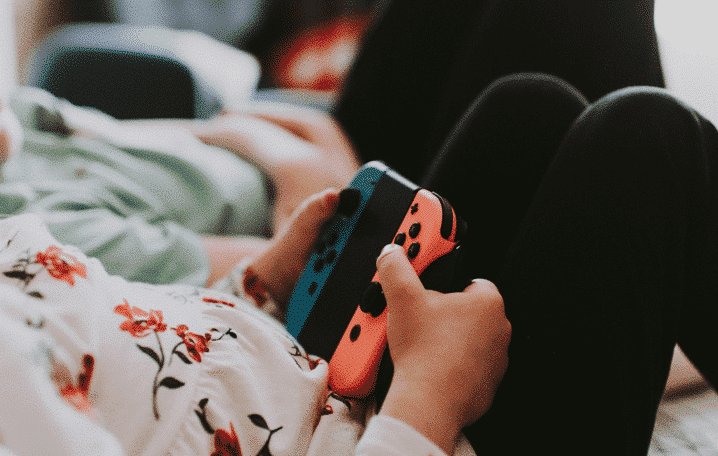
Which games are family-friendly? Dr. Bennett said her kids asked for a Nintendo Switch so they could return to games they used to play together on the Wii. There are many options that are rated E(for everyone). It also offers parent controls and time limits that allow parents to manage what and how much their kids are playing.

Some fun and family games we at GKIS recommend are:

Mario Kart is a competitive driving game with lots of cute levels, fun characters, and a ton of quality. Race against friends and family in different beloved Mario worlds. Dr. Bennett cautions to start with the cow land…she says she’s spent many hours screeching in agony trying to stay on the slippery Rainbow Road while her kids roared. She says kids can’t get trusted to pick the level…

Just Dance is another Nintendo Switch game that Dr. B says provided hours of fun family co-play. With many popular and even old hits, everybody finds their favorite games to competitively dance to. She says her youngest was delighted by this game, because even when he was little, he could out score her and his older sisters! Plus, everybody worked up a sweat and got a little exercise. No pain, all gain.

Super Mario Party is a game designed for group play and loads of fun. With 80 mini-games, like Bumper Brawl and Croosin’ for a Broosin’, everybody has a favorite. Play with or against your kids with the large board game style platform.

Yoshi’s Island is an fun and simple game for the whole family. Jump around as the adorable Yoshi solving creative puzzles and collecting all the hidden items.

Snipperclips has great games for the whole family don’t have to cost an arm and a leg. This game is designed for communicating and working together to snip your cute little paper characters into the perfect shape for each unique and entertaining puzzle.

Knock ‘Em Down Bowling is a fun one with many game modes like split screen, team matches, and no gutters. With a variety of traditional bowling games and party modes, team work is always a fun possibility.

Forza Motorsport Games for Xbox offers lots of options for fun family car racing in professional-style track racing events.

Scribblenaughts for the Nintendo DS is a fun, emergent puzzle action video game where the players must solve puzzles in order to collect Starlites. Warner Bros. Active Entertainment published this game with the goal of promoting emergent game play by challenging the player through systematically more difficult puzzles.

I’m Jack Riley a GKIS intern. I hope you find the courage to carve the time and try co-play now that you see the pros in family gaming. My parents were never able to do any of this with me and as my interest in games increased, I felt as if our family relationship decreased. Interested in learning about other benefits of video game play? Check out the GKIS article Is Your Child a “Professional Gamer”?

I’m the mom psychologist who will help you GetKidsInternetSafe.

Onward to More Awesome Parenting,
Tracy S. Bennett, Ph.D.
Mom, Clinical Psychologist, CSUCI Adjunct Faculty

Works Cited

[1] (July 2013). Move over, Monopoly: ASU researchers find families bond over video game play, Arizona State University.edu

[2]Wang, B. (April 2018). Families that play together stay together: Investigating family bonding through video games. Sage Journals.com

[3]Shapiro J.( December 2014). Research Says Parents And Kids Should Play Video Games Together. Forbes.com

Photo Credits

Photo By Kelly Sikkema

“My mini on our PS4” photo by Samantha Sophia

“Two people playing Sony PS4 game console” photo by JESHOOTS

“Nintendo Switch Joy-Cons” photo by Aleks Dorohovich

Is Your Child Screen Addicted? How to Avoid Screen Rehab

Screen addiction is officially a thing. As a mom and clinical psychologist for over 25 years, I recognized and identified it in 2014 when I founded GetKidsInternetSafe from treating hundreds of families in my private practice. Teaching addiction studies at CSUCI also highlighted the similarities between drugs and screen behaviors for me. Like everybody else, I too was having a hard time chasing my kids off our screens. Honestly, even I was getting lost in my research and on Facebook, losing the ability to chill and read a novel. I started to worry about my family. From there, I wrote my book Screen Time in the Mean Time, offered keynotes and presentations, consulted with tech companies, coached families, built and tested my online courses, and created a weekly blog. And, after all that, the World Health Organization finally confirmed what I’ve been screaming from the rooftops. Big tech creates screen products that are manipulatively designed to trigger the pleasure centers of our brains, and we are, in fact, clinically addicted.

Gaming Addiction

Nearly 60% of parents think their teens are addicted to their mobile devices. In 2018, the World Health Organization (WHO) classified gaming addiction (IGD) as a mental health disorder. In the last twenty years, the tech revolution has affected every aspect of our lives. Studies have shown that, for some subjects, compulsive screen use impacts the reward and pleasure areas of the brain in the same ways that alcohol, drugs, and other behavioral addictions do. Screen addiction treatment centers have been popping up in Asia for the last decade and are starting to be in the United States as well. Do you worry your child may be showing signs of screen addiction?

——————-

“Remember, when Betty Ford first admitted she was an alcoholic, we didn’t have people believing it was actually a problem until she came around and talked about her own problems with it. This is a place for people to go for help, and that we hope will help everyone around them stop taking Internet addiction so lightly.”

Kimberly Young (founder of The Center for Internet Addiction in 1995)

            ————————

Who is to blame?

Parents

Of course, we have some accountability for what happens under our roofs. Pester power breaks us down, and we allow too much screen use even though we know better. We need a break in our overtasked, screen-saturated lives. We can’t entertain our rug rats 24-7.

Kids

They are so persistent! They CRAVE screen use and are master manipulators. Children are vulnerable to screen addiction because their brains are not fully developed, particularly in the prefrontal cortex, which is responsible for impulse control and decision-making. Children who suffer from trauma like bullying, divorce, and abuse, as well as from psychological vulnerabilities like ADHD, anxiety and mood disorders, and autism are particularly vulnerable.

Schools

Schools are increasingly adopting curriculums that require screen use and Internet access during classroom and homework time. Without digital literacy, our kids academically falter. If you are reading this as part of your Social Media Readiness Course, then either your parents or your school are doing an awesome job prepping you to avoid addiction issues down the line.

Big Tech

Screens are programmed to addict us. Big tech, like Google, Amazon, and Facebook, are experts in how to keep us coming back for more. Using secret computer algorithms, our online behavior is studied, collected, and aggregated. This data is used to create and deliver content in the ways our brains will effortlessly absorb it. That translates to targeted ads for clicks and money leaving our bank accounts. Big profit indeed.

The Gaming Industry

The gaming industry made 183 billion dollars last year. Multi-level, high-sensory games, like Fortnite, are intentionally programmed for addictive use. Players are rewarded for staying on and punished for getting off. This keeps kids on-screen, vulnerable to hours of autonomic overarousal. That means they burn too much brain fuel and are left fatigued and in mental brown-out.

The Government

Where is the regulation to protect kids? Are civil liberties really that strong that legislators can’t step in to help parents protect their kids against known harm like online pornography? Or is it that research and treatment organizations can’t compete with rich lobbyists who get direct access to our legislators?  Did you know that the advertising budget for Budweiser alone exceeds the entire budget for research on alcoholism and all drugs of addiction?

How common is Internet Gaming Addiction?

Recent studies claim that around 1 – 5% of the US population could be classified as Internet game addicts. It is most common among single young males. Male Internet addiction most typically involves video gaming, cyber-pornography, and online gambling. Women are more likely to show addictive use patterns with social media, texting, and online shopping. IGD commonly cooccurs with depression, anxiety, AD/HD, self-harm, obsessive-compulsive disorder, oppositionality, suicidality, and personality disorders.

Other risk factors include living in the city, not living with a biological parent, low parent involvement, parent unemployment, and not having a reliable friend.

Consequences of IGD include skipping school, lower grades, family conflicts, lack of offline sociality, sleep problems, and unresolved developmental problems. These factors, along with emotional problems, often result in the addict lacking the very resources necessary to break out of the addictive cycle.

What do brain studies say?

Brain imaging studies have found brain changes like those seen in subjects with drug addictions. In other words, the more we play video games, the more our brains change and adapt.

Activation pattern changes that result in brain tissue changes are called adaptive neuroplasticity.

More specifically, subjects with video game addiction show a reduction in gray and white brain matter and reduced cortical thickness in various areas of the brain. The more the gamer plays, the more brain changes. Studies have also found evidence of dopamine release and higher activity in the brain’s pleasure center when playing video games. Heavy gamers have significantly more difficulty calming their emotions and making sound decisions than nongamers.

Thank you to CSUCI Intern, Katherine Bryan for contributing to this article. Screen addiction is real and now universally recognized. If you worry you are seeing red flags in your home, remember that screen addiction is preventable!

I’m the mom psychologist who will help you GetKidsInternetSafe.

Onward to More Awesome Parenting,

Tracy S. Bennett, Ph.D.
Mom, Clinical Psychologist, CSUCI Adjunct Faculty
GetKidsInternetSafe.com

Photo Credits

Everyone is really looking for the Z-generation’s grace Digital HungaryCC 2.o

It’s been such a long day Pat Charles CC 2.0

Gaming in the dark Jochem HerremansCC 2.0

Xbox ChapendraCC 2.0

Are Violent Video Games OK for Kids?

I love playing video games! My first article discussed the benefits of gaming. But the truth is, most popular games aren’t designed for kids. They’re designed to attract us and keep us playing. The more we play, the more money the gaming industry makes. Violence and sex attract gamers. But research has demonstrated that exposure to this content can negatively affect a child’s brain. However, child development experts have not been able to pull violent games off the shelves. The best they’ve done so far is accept the game industry’s offer to develop their own rating system. Today’s GKIS article covers why experts are concerned about child exposure to video game violence and why the research hasn’t been enough to make a dent in the global game industry’s annual $183billion revenue.[1]

Most kids start playing video games before adolescence. Content, time spent playing, ability to be interactive, and player vulnerabilities must be considered when determining effect.[3] This makes for messy factors to control for quality research and controversial opinions about the risks of violent video games.

The Benefits of Gaming

In Dr. Bennett’s book, Screen Time in the Mean Time, she covered many of the benefits of gaming.

Not only are they fun, but research has also found that they can lead to improvements in:

  • visual-spatial capabilities
  • reaction times
  • attention span
  • ability to process multiple target objects
  • detail orientation[4]
  • visual short-term memory
  • mental rotation, tracking, and toggling between tasks[5]
  • problem-solving
  • strategy building
  • goal setting
  • and increased confidence, social connection and networking, cooperation, and self-esteem.

Social benefits are particularly valuable for players who may be isolated in tiny towns or who have disabilities. Gaming can also teach important job skills and offer profitable e-sport tournament competition.

The Risks of Gaming

Research has demonstrated that gamers who play violent video games show more aggression toward others. It has also found that gamers show a decrease in friendliness, positivity, and helpfulness.[6] It’s also been demonstrated that gamers are less likely to emotionally react to violence over time. We call that sensitization to violence.

For example, a 2014 experiment also found that gamers were less likely to help and injured person, rated violent acts as less serious, and were less likely to respond to fights.[7]

Another study found that exposure to violence created the idea in children’s heads that violence is an acceptable form of problem-solving. It can also lead to a mean world syndrome, defined as a belief that the world is dark and dangerous.[8]

Video games are not designed for young kids.

Video game companies develop games for kids, but they amount to a small percentage revenue. The average age of gamers is 32-years-old.[14] Since 2009, the top-selling video games are rated mature.[15] Because of good marketing and pester power, a significant portion of those sales come from parents of young kids.

Young players are so common on video streaming sites and MMORPGs (massively multiplayer online role-playing games), they’re referred to as squeakers due to their child voices. Child predators hunt for victims on gaming platforms.

For example, in PokémonGo, predators have been reported to place lures , which are in-game items that spawn rare catches. Children close by will notice the new location and travel to catch the Pokémon unaware of the trap being set.[16]

Regulating Video Games

Attempts to block violent video game content from kids have been unsuccessful. Since the 1972 release of the first popular video arcade game, Pong, parents have worried about the impact of video gaming on their children. Just like our kids, we have largely become desensitized to its impact. From 1976, when parents succeeded in getting the video game Death Race pulled from the shelf due to the little gravestone that appeared when a character was killed, to now, we’ve come a long way. Or have we?

In response to video game players committing violence, several lawsuits have claimed that game manufacturers were negligent by selling violent content that is harmful to children. Few have succeeded due to first amendment (free speech) rights claims and insufficient evidence.

City ordinances attempting to limit gameplay by unaccompanied minors in public places have also failed. Law professors and psychologists argue that the evidence is too flimsy to make solid claims that video games cause violence. For instance, if video games cause aggression why is the rate of juvenile violent crime is at a thirty-year low?

A particularly impactful blow against state regulation was the United States Supreme Court ruling in Brown v. Entertainment Merchants Association (2011). This ruling concluded that the California law restricting the sale and distribution of violent video games to minors was unconstitutional. The ruling stated that “speech about violence is not obscene” and is “as much entitled to the protection of free speech as the best in literature.”

Video Gaming Rating System

To counteract consumer complaints and stop legislation, the video game industry created the Entertainment Software Rating Board (ESRB) in 1994. This voluntary and self-regulating board rates content and classifies video games based on the appropriate user age.

Most stores refuse to sell video games that don’t have an ESRB rating. Similar rating systems exist in other countries. Overall, ESRB ratings have been somewhat successful in limiting child access.

RP (Rating Pending) – this is placed on games that have not yet received a final ESRB rating

EC (Early Childhood) – suitable for ages 3+, these games tend to be educational and do not contain any inappropriate material

E (Everyone) – suitable for all ages, may contain mild fantasy or cartoon violence

E10+ (Everyone 10+) – suitable for ages 10+, may contain mild language, fantasy, or cartoon violence

T (Teen) – suitable for ages 13+, may contain violence, suggestive themes, crude humor, blood, infrequent use of strong language

M (Mature) – suitable for ages 17+, may contain intense violence, blood and gore, sexual content, strong language

A (Adults) – suitable for ages 18+, may contain prolonged scenes of intense violence, graphic sexual content, gambling with real currency

Tips for Parents 

  • Check the ESRB ratings before purchasing.
  • Engage in video game play with your child to learn about the game’s content, and to model appropriate play.
  • Set clear rules as to how long play can be at home and away with your free GKIS Connected Family Agreement.
  • Monitor your child’s online gaming conversations to make sure there are not taken advantage of or threatened.
  • Set up gaming stations in a family community area (never the bedroom) to optimize supervision.
  • Encourage your child to engage in alternative activities for a healthy balance, learning, and enriched learning.

Thank you to CSUCI Intern, Dylan Smithson for providing us with an experienced and balanced perspective about gaming. If you missed his first article, Is Your Child a “Professional Gamer”?, it is well worth the read!

I’m the mom psychologist who will help you GetKidsInternetSafe.

Onward to More Awesome Parenting,

Tracy S. Bennett, Ph.D.
Mom, Clinical Psychologist, CSUCI Adjunct Faculty
GetKidsInternetSafe.com

Photo Credits

Photo by Jessica Lewis from Pexels

Dead or alive KASUMI TECMO barite Videojuegos, CC BY-NC-ND 2.0

ESRB ratings Fred Seibert, CC BY-NC-ND 2.0

Video Game Violence Casey Fleser, CC BY 2.0

Works Cited

[1] https://newzoo.com/insights/articles/the-global-games-market-will-generate-152-1-billion-in-2019-as-the-u-s-overtakes-china-as-the-biggest-market/

[2] NPD Group (2011). Kids & gaming, 2011. Port Washington, NY: The NPD Group, Inc.

[3] Ferguson, C. (2011). Video Games & Youth Violence: A Prospective Analysis in Adolescents. Journal of Youth & Adolescence, Vol. 40, No. 4.

[4] Taylor, J. (2012, December 4). How Technology is Changing the Way Children Think & Focus. Retrieved October 18, 2012, from http://wwpsychologytoday.com/glog/the-power-prime/201212/how-technology-is-changing-the-say-children-think-and-focus

[5] Holfeld, B., Cicha, J. & Ferraro, F. (2014). “Executive Function & Action Gaming among College Students.” Current Psychology Curr Psychol 34.2: 376-88. Web.

[6] American Psychological Association (APA). (2015). Resolution on Violent Video Gameshttp://www.apa.org/about/policy/violent-video-games.aspx

[7] Martin R. (2014) Children as young as SIX are being exposed to video games scenes involving violence and prostitution because their parents ignore age limits. http://www.dailymail.co.uk/news/article-2723841/Children-young-SIX-exposed-video-games-scenes-involving-violence-prostitution-parents-ignore-age-limits.html

[8] Justin C. (2015) The Problem with Exposing Kids to Sexual and Violent Content. https://ifstudies.org/blog/the-problem-with-exposing-kids-to-sexual-and-violent-content/

[9] Laura S. (2013) 8 Ways Violent Games Are Bad for Your Kids http://www.huffingtonpost.com/laura-st-john/8-ways-violent-games_b_3875846.html

[10] Petry, N., & O’Brien, C. (2013). Internet Gaming Disorder & the DSM-5. Addiction 108.7: 1186-187. Web.

[11] Petry, N., Rehbein, F., Gentile, D., et al. (2014). An International Consensus for Assessing Internet Gaming Disorder Using the New DSM-5 Approach. Addiction 109.9: 1399-406. Web.

[12] Kuss, D., Griffiths, M., Karila, L., & Billieux, J. (2014). Internet addiction: A systematic review of epidemiological research for the last decade. Current Pharmaceutical Design, 20, 4026–4052. 10.2174/13816128113199990617

[13] Strittmatter, E., Parzer, P., & Brunner, R. (2016). “A 2-year longitudinal study of prospective predictors of pathological Internet use in adolescents.” Eur Child Adolesc Psychiatry 25(7): 725.

[14] 2019 Essential Facts About the Computer and Video Game Industry,  Entertainment Software Association

[15] Dougy (2014) The top selling video games of the past 30 years. http://thechive.com/2014/03/29/the-top-selling-video-games-of-each-of-the-past-30-years-photos/

[16] Tracy B. (2016) http://ktla.com/2016/07/10/pokemon-go-used-by-robbers-to-target-victims-in-st-louis-area-police/