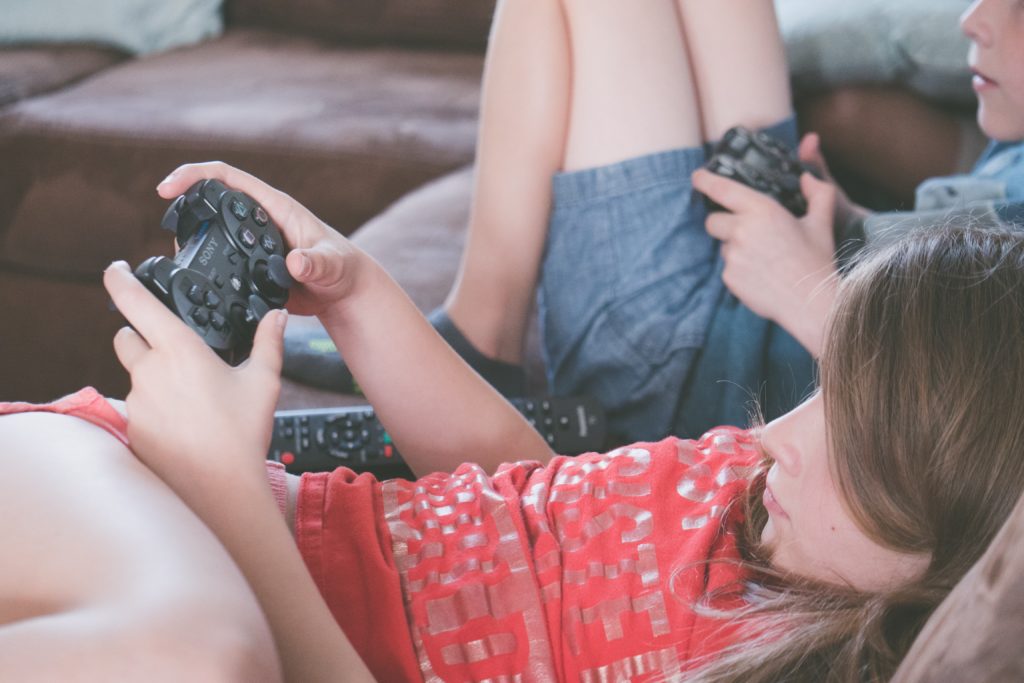
I love playing video games! My first article discussed the benefits of gaming. But the truth is, most popular games aren’t designed for kids. They’re designed to attract us and keep us playing. The more we play, the more money the gaming industry makes. Violence and sex attract gamers. But research has demonstrated that exposure to this content can negatively affect a child’s brain. However, child development experts have not been able to pull violent games off the shelves. The best they’ve done so far is accept the game industry’s offer to develop their own rating system. Today’s GKIS article covers why experts are concerned about child exposure to video game violence and why the research hasn’t been enough to make a dent in the global game industry’s annual $183billion revenue.[1]
Most kids start playing video games before adolescence. Content, time spent playing, ability to be interactive, and player vulnerabilities must be considered when determining effect.[3] This makes for messy factors to control for quality research and controversial opinions about the risks of violent video games.
mental rotation, tracking, and toggling between tasks[5]
problem-solving
strategy building
goal setting
and increased confidence, social connection and networking, cooperation, and self-esteem.
Social benefits are particularly valuable for players who may be isolated in tiny towns or who have disabilities. Gaming can also teach important job skills and offer profitable e-sport tournament competition.
The Risks of Gaming
Research has demonstrated that gamers who play violent video games show more aggression toward others. It has also found that gamers show a decrease in friendliness, positivity, and helpfulness.[6] It’s also been demonstrated that gamers are less likely to emotionally react to violence over time. We call that sensitization to violence.
For example, a 2014 experiment also found that gamers were less likely to help and injured person, rated violent acts as less serious, and were less likely to respond to fights.[7]
Another study found that exposure to violence created the idea in children’s heads that violence is an acceptable form of problem-solving. It can also lead to a mean world syndrome, defined as a belief that the world is dark and dangerous.[8]
Video games are not designed for young kids.
Video game companies develop games for kids, but they amount to a small percentage revenue. The average age of gamers is 32-years-old.[14] Since 2009, the top-selling video games are rated mature.[15] Because of good marketing and pester power, a significant portion of those sales come from parents of young kids.
Young players are so common on video streaming sites and MMORPGs (massively multiplayer online role-playing games), they’re referred to as squeakers due to their child voices. Child predators hunt for victims on gaming platforms.
For example, in PokémonGo, predators have been reported to place lures, which are in-game items that spawn rare catches. Children close by will notice the new location and travel to catch the Pokémon unaware of the trap being set.[16]
Regulating Video Games
Attempts to block violent video game content from kids have been unsuccessful. Since the 1972 release of the first popular video arcade game, Pong, parents have worried about the impact of video gaming on their children. Just like our kids, we have largely become desensitized to its impact. From 1976, when parents succeeded in getting the video game Death Race pulled from the shelf due to the little gravestone that appeared when a character was killed, to now, we’ve come a long way. Or have we?
In response to video game players committing violence, several lawsuits have claimed that game manufacturers were negligent by selling violent content that is harmful to children. Few have succeeded due to first amendment (free speech) rights claims and insufficient evidence.
City ordinances attempting to limit gameplay by unaccompanied minors in public places have also failed. Law professors and psychologists argue that the evidence is too flimsy to make solid claims that video games cause violence. For instance, if video games cause aggression why is the rate of juvenile violent crime is at a thirty-year low?
A particularly impactful blow against state regulation was the United States Supreme Court ruling in Brown v. Entertainment Merchants Association (2011). This ruling concluded that the California law restricting the sale and distribution of violent video games to minors was unconstitutional. The ruling stated that “speech about violence is not obscene” and is “as much entitled to the protection of free speech as the best in literature.”
Video Gaming Rating System
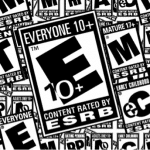
To counteract consumer complaints and stop legislation, the video game industry created the Entertainment Software Rating Board (ESRB) in 1994. This voluntary and self-regulating board rates content and classifies video games based on the appropriate user age.
Most stores refuse to sell video games that don’t have an ESRB rating. Similar rating systems exist in other countries. Overall, ESRB ratings have been somewhat successful in limiting child access.
RP (Rating Pending) – this is placed on games that have not yet received a final ESRB rating
EC (Early Childhood) – suitable for ages 3+, these games tend to be educational and do not contain any inappropriate material
E (Everyone) – suitable for all ages, may contain mild fantasy or cartoon violence
E10+ (Everyone 10+) – suitable for ages 10+, may contain mild language, fantasy, or cartoon violence
T (Teen) – suitable for ages 13+, may contain violence, suggestive themes, crude humor, blood, infrequent use of strong language
M (Mature) – suitable for ages 17+, may contain intense violence, blood and gore, sexual content, strong language
A (Adults) – suitable for ages 18+, may contain prolonged scenes of intense violence, graphic sexual content, gambling with real currency
Tips for Parents
Check the ESRB ratings before purchasing.
Engage in video game play with your child to learn about the game’s content, and to model appropriate play.
Set clear rules as to how long play can be at home and away with your free GKIS Connected Family Agreement.
Monitor your child’s online gaming conversations to make sure there are not taken advantage of or threatened.
Set up gaming stations in a family community area (never the bedroom) to optimize supervision.
Encourage your child to engage in alternative activities for a healthy balance, learning, and enriched learning.
Thank you to CSUCI Intern, Dylan Smithson for providing us with an experienced and balanced perspective about gaming. If you missed his first article, Is Your Child a “Professional Gamer”?, it is well worth the read!
I’m the mom psychologist who will help you GetKidsInternetSafe.
[5] Holfeld, B., Cicha, J. & Ferraro, F. (2014). “Executive Function & Action Gaming among College Students.” Current Psychology Curr Psychol 34.2: 376-88. Web.
[8] Justin C. (2015) The Problem with Exposing Kids to Sexual and Violent Content. https://ifstudies.org/blog/the-problem-with-exposing-kids-to-sexual-and-violent-content/
[9] Laura S. (2013) 8 Ways Violent Games Are Bad for Your Kids http://www.huffingtonpost.com/laura-st-john/8-ways-violent-games_b_3875846.html
[10] Petry, N., & O’Brien, C. (2013). Internet Gaming Disorder & the DSM-5. Addiction 108.7: 1186-187. Web.
[11] Petry, N., Rehbein, F., Gentile, D., et al. (2014). An International Consensus for Assessing Internet Gaming Disorder Using the New DSM-5 Approach. Addiction 109.9: 1399-406. Web.
[12] Kuss, D., Griffiths, M., Karila, L., & Billieux, J. (2014). Internet addiction: A systematic review of epidemiological research for the last decade. Current Pharmaceutical Design, 20, 4026–4052. 10.2174/13816128113199990617
[13] Strittmatter, E., Parzer, P., & Brunner, R. (2016). “A 2-year longitudinal study of prospective predictors of pathological Internet use in adolescents.” Eur Child Adolesc Psychiatry 25(7): 725.
“These games are a waste of time!” Does this parent-rant sound familiar? We are all hooked on our screen activities, but gaming has a particularly addictive quality. We already covered that there are many benefits. One big benefit that we haven’t covered yet is that gaming is a great launch for professional ventures that connect players to other people all over the world. Why is gaming so popular, and what can be accomplished or gained by playing them?
Why Kids Are Hooked
A common belief about video games make us mindless. Many studies have found links to aggression and gamers. However, these studies primarily tested a small subset of games with violent shooters. In contrast, studies from role-playing games have shown benefits for the player.
Specifically, gamers have been shown to demonstrate and build emotional skills like feeling guilt and shame when a character acts immorally.[1] Games also provide a fertile resource for building team play and social skills. For instance, in one study online gamers reported feelings of community and belonging while playing online. They claimed that the social relationships gained while playing provided them with social support and helped them develop a healthy social identity.[2]
Action games, which do include shooters, have also been shown to increase our ability to hold visual information[3], increase the ability to multi-task and manage attention[4], and calm and de-stress.[5]
Games are not simply a means of passing the time. The time spent playing is meaningful. Other exciting benefits include entertainment, identity exploration, and higher-order thinking and problem-solving. Gaming can even launch life-changing educational, entrepreneurial, networking, and earning opportunities!
What game do I want to play?
Each gamer is unique and expresses themselves through the genre or style of gameplay they choose. Each genre requires certain skills and characteristics for the player to succeed. There are five main genres in gaming: Action, Role-Playing, Simulation, Strategy, and Sports.
Action
The player is given challenges that can include climbing obstacles, solving puzzles, defeating enemies, or collecting certain key items.
The player must have fast hand-eye coordination and quick reflexes to succeed.
Popular games include Minecraft, Overwatch, Fortnite, Grand Theft Auto.
Role-Playing
Based on the tabletop game Dungeons and Dragons
The player is tasked with completing missions to progress and strengthen their character(s).
Contains immersive worlds and engaging stories
Popular games include World of Warcraft, Final Fantasy, Pokémon.
Simulation
Utilizes the use of virtual worlds to simulate aspects of reality and fantasy for training purposes
There are no goals the player has to follow.
Popular Games include The Sims, Farming Simulator, Flight Simulator.
Strategy
Gives the player control of multiple characters
Players must use these characters to explore, engage in combat, and gather and utilize economic resources.
To succeed the player must use strategy and great tactics.
Popular Games include StarCraft, Civilization, Age of Empires.
Sports
Allows the player to take control and play as their favorite sports team or player
Some games in the genre try to recreate current sports as realistically as possible, while others create new sports with over-the-top effects and fast gameplay.
Popular Games include Madden, FIFA, Rocket League.
What do I want to do in the game?
Through gaming, children are provided with unique freedoms and communicative abilities. In most games, the first goal is to decide what mission to pursue. Completion of the mission rewards the gamer by furthering the story, giving the gamer new items, or providing the gamer with experience points used to increase the skill of their character.
When deciding how to approach the mission, the gamer is given multiple options. In single-player games, the gamer can choose the look of their character, which missions to pursue, and how they wish to approach each mission. The gamer must decide if they want to take on the mission alone, team up with a friend, or tackle missions online with millions of other players worldwide. Cooperative games offer an intimate, fun experience that can be shared with friends and family on a single TV or in private online sessions. They also have to decide about strategy. For example, they can:
charge straight in taking on all challenges at once,
take a stealthy approach,
scout the area and gather resources along the way, or
create a tactic all their own.
Game Streaming & eSports
Social media sites have become an integral part of a gamer’s identity. They give players the ability to choose their online friends, the style of their home page, and what is posted and commented on their profile. Kids can communicate through private sessions with friends and live streams to a worldwide audience.
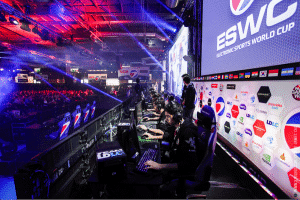
Dozens of video streaming sites and their users have taken advantage of this gaming movement. On YouTube and TikTok, popular personalities showcase themselves playing video games to garner more views and make revenue from advertisers.
Twitch TV is a video game streaming site that allow users to live-stream themselves playing games to global online audiences. Streamers are paid through viewer subscriptions, donations, and sponsorships. Sponsorships are given to gamers for unique and appealing personalities and highly acclaimed skills. Many gamers who are sponsored for their skills are also part of a rapidly growing eSports league.
The eSports leagueinvolves teams and tournaments similar to those seen in other professional sports leagues. Funding for tournaments and players comes through sponsorships, endorsements, advertisements, and online donations. Gamers are paid well for winning. For instance, a popular game, Dota 2, had a prize pool of over twenty million in 2016. Each player of the winning team took home $1.8 million.[6]
eSports can also bring fame. The eSports league has become a huge phenomenon spanning the globe, rivaling and even surpassing long-standing professional sports. In 2014, a popular PC game, League of Legends had a tournament that garnered more viewers than game seven of the MLB finals and game seven of the NBA finals combined![7]
Universities have begun to pick up on the eSports trend as well. Robert Morris University recently launched the first sponsored eSports Team. Players of the team are students who receive scholarships for their play just as another student would receive a scholarship to play football or basketball. They train just as another collegiate team would. They are instructed by a coach, study the competition, and practice running drills.[7]
In the past, the word gamer was associated with words like lazy and non-social. Fortunately, these stigmas are changing. Gamers today are seen as entrepreneurial (creating your own business), professional, and globally connected.
Thank you to CSUCI Intern, Dylan Smithson for teaching us about the skill-rich, lucrative world of gaming. If you enjoyed reading this article, feel free to share with friends and family, and give us a like on our GetKidsInternetSafe Facebook page.
I’m the mom psychologist who will help you GetKidsInternetSafe.
[6] Bednarski, S (2016) Top 5 Largest eSports Prize Pools of 2016. http://www.xygaming.com/content/top-5-largest-esports-prize-pools-of-2016/
[3] Blacker, K. J., Curby, K. M., Klobusicky, E., & Chein, J. M. (2014). Effects of action video game training on visual working memory. Journal Of Experimental Psychology: Human Perception And Performance, 40(5), 1992-2004. doi:10.1037/a0037556
[4] Maclin, E. L., Mathewson, K. E., Low, K. A., Boot, W. R., Kramer, A. F., Fabiani, M., & Gratton, G. (2011). Learning to multitask: Effects of video game practice on electrophysiological indices of attention and resource allocation. Psychophysiology, 48(9), 1173-1183. doi:10.1111/j.1469-8986.2011.01189.x
[1] Mahood, C., & Hanus, M. (2017). Role-playing video games and emotion: How transportation into the narrative mediates the relationship between immoral actions and feelings of guilt. Psychology Of Popular Media Culture, 6(1), 61-73. doi:10.1037/ppm0000084
[2] O’Connor, E. L., Longman, H., White, K. M., & Obst, P. L. (2015). Sense of community, social identity and social support among players of massively multiplayer online games (MMOGs): A qualitative analysis. Journal Of Community & Applied Social Psychology, 25(6), 459-473. doi:10.1002/casp.2224
[7] Ravitz, J (2016) Varsity Gamers Making History and Dumbfounding Parents http://www.cnn.com/interactive/2015/07/us/varsity-gamers-american-story/
[5] Reinecke, L. (2009). Games and recovery: The use of video and computer games to recuperate from stress and strain. Journal Of Media Psychology: Theories, Methods, And Applications, 21(3), 126-142. doi:10.1027/1864-1105.21.3.126