Is your child sharing their location with hundreds of “friends” online? Are they unwillingly giving away personal information that can put their privacy in danger? Our GKIS tools can help with that. In this article, we cover the ways kids overshare online and provide insightful tips and strategies to keep your child safe.
The GKIS Mission
GKIS helps families achieve screen sanity, prevent digital injury, and form deeper, more meaningful relationships. We don’t have to give up screens to be safe. GKIS offers tools and strategies that keep the joys of childhood discovery alive for all of us in today’s overtasked world.
Oversharing
Teenagers love to share what they are doing online, whether it’s posting what they’re eating, uploading selfies, or posting pictures of their pet. Sharing daily life online is fairly common; we adults are guilty of it too. But sharing location data can be particularly dangerous for teens because it offers a bridge from online contacts meeting them online to meeting them offline.
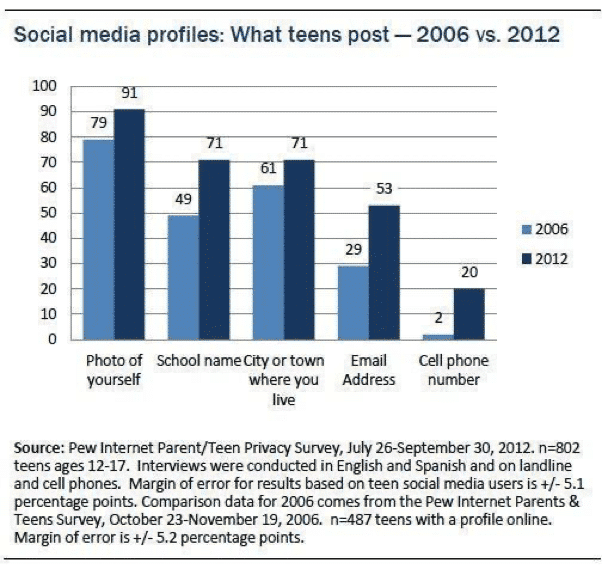
According to Pew Research Center, 71% of teens post their school name, 71% post the name of the city or town they live in, and 20% post their phone number.[1] Further, 36% of older teen’s Facebook friends are people they have never met in person.[2]
Although teens understand that oversharing can be dangerous, few have the life experience to understand exactly how it can be dangerous. When I was a teenager, the more “likes” I got on a photo or the more “friends” or “followers” I had on social media, the better I felt about myself and my online presence. I accepted friend requests from mutual friends who I had never met before, along with accepting requests from strangers. In my teenage mind, there wasn’t any harm in letting strangers see my online profiles. I felt that I would be okay as long as I wasn’t sending them my address. It didn’t occur to me that this data could be used to predict my location or even that anyone could have that kind of predatory intent.
Dr. Bennett shared a story with us where she worked on the production of the Lifetime TV show, I Catfished My Kid. In the show, producers created a poster board map (like detectives do) with yarn connecting the teens’ movements throughout the day for a week. With this data, they were able to predict daily habits like location, activities, and even who they hang out with.
How is Location Data Shared?
Instagram
One way location is shared on social media is through geotagged photos. A geotag is an electronic tag that assigns a geographical location to a photo or video posted on social media or other websites.[3] Geotags are commonly used to share what restaurant or city someone is in and are very popular on Instagram.
If your teen has a public profile and decides to post a photo on Instagram with a geotag, not only will their friends be able to see where they are, but users around the world can too. By simply clicking on that location’s tag, your teen’s photo will pop up as a current or recent visitor.
Another way location is shared on Instagram is by the use of hashtags. If your teen has a public profile and adds hashtags to their posts, their photos will show up as recent users of whatever hashtag they use, similar to the geotag feature. Hashtags are commonly used to have other users find their posts quicker and potentially gain more followers and traffic on their profile. However, that could be a privacy concern for younger users.
Facebook
The check-in feature on Facebook is similar to geotags. Facebook users “check-in” as an announcement to friends that they are visiting a particular location. Once checked-in, it appears on the user’s Facebook profile.
Snapchat
The SnapMap feature on Snapchat can also be a location risk. SnapMap allows your teen to share their location with their Snapchat friends every time they open the app. The SnapMap feature is a default, meaning it is automatically on so your teen might not even know that they are sharing their location. This is another privacy issue and may be a safety concern if your child accepts friend requests from strangers.[4]
Helpful Tips and Tools to Protect Your Child on Social Media
Set up a digital contact like our free Connected Family Screen Agreement and have ongoing, informative conversations with your kids about online safety. Our GKIS blog offers credible, interesting topics that will feed an ongoing agenda. Register for our Connected Family Screen Agreement to get on our weekly email list!
Set up your home to optimize best-use screen practices using our Connected Family Course for school-age kids.
Limit location sharing in Settings. On an iPhone, go to Settings and remove the location by clicking on the social media name > Location > select Never, Ask Next Time, While Using the App, or Always. You also have the option to turn off “Precise Location” meaning apps can only determine your approximate location
Don’t allow your child to have social media accounts until they are ready (we recommend after 13 years old or late middle school).
Require that your child set social media to private and only accept friend requests from family and friends they know in real life
Have your child change to the “Ghost Mode” on Snapchat (their location will no longer be viewable on SnapMap)
Thanks to CSUCI intern, Remi Ali Khan for researching common ways teens overshare on social media for this article.
I’m the mom psychologist who will help you GetKidsInternetSafe.
Onward to More Awesome Parenting,
Tracy S. Bennett, Ph.D.
Mom, Clinical Psychologist, CSUCI Adjunct Faculty
Photo Credits
Photo by Cottonbro from Pexels
Photo by Pixabay from Pexles
Photo by Pew Research Center
Works Cited
Deahl, D. (2017, June 23). Snapchat’s newest feature is also its biggest privacy threat. Retrieved November 04, 2020, from https://www.theverge.com/2017/6/23/15864552/snapchat-snap-map-privacy-threat
Dove, J. (2020, October 07). How to Remove Location Data From Your iPhone Photos in iOS 13. Retrieved November 04, 2020, from https://www.digitaltrends.com/mobile/how-to-remove-location-data-from-iphone-photos-in-ios-13/
Madden, M., Lenhart, A., Cortesi, S., Gasser, U., Duggan, M., Smith, A., & Beaton, M. (2020, August 17). Teens, Social Media, and Privacy. Retrieved November 04, 2020, from https://www.pewresearch.org/internet/2013/05/21/teens-social-media-and-privacy/
Oxford Languages and Google – English. (n.d.). Retrieved November 04, 2020, from https://languages.oup.com/google-dictionary-en/
Is your teen on Snapchat and Instagram? If so, they may be using what is popularly called, ‘plastic surgery’ filters. These filters may be altering your teen’s image of themselves and could be harmful to their mental health. I have been using filters on Instagram, Snapchat, and other social media platforms since I was a teen. Over the years these filters have become more face-altering than ever before. For more tips and guidance on social media, check out Dr. Bennett’s Social Media Readiness Course.
What Are ‘Plastic Surgery’ Filters?
Plastic surgery filters are filters that make users look like they have different types of cosmetic surgery. These filters give the users bigger lips, smoother skin, smaller noses, sharper cheekbones, and even different colored eyes. They are popularly used by celebrities, influencers, teens, and young adults.
Unrealistic Beauty Standards
‘Plastic surgery’ filters can be harmful because they promote unrealistic beauty standards by erasing imperfections and enhancing certain features. Teenagers view thousands of ‘perfect’ images daily on social media shared by peers, idols, and even themselves. This can cause self-esteem problems because beauty standards become less and less realistic.
Attention from Followers
Many celebrities and people I know refuse to post an unedited or unfiltered image of themselves, which is sad and scary. Attention from followers contributes to this problem. If a teenager posts filtered selfies and they get positive comments from their followers, they may depend on using those filters because they feel that they will not get the same attention without one. This can cause people to become obsessed with the filtered images of themselves and unhappy with their appearance without a filter.
Snapchat Dysmorphia
Along with lowering self-esteem, filters like these are inspiring more young people to get cosmetic surgeries because they prefer the edited version of themselves. Cosmetic doctors are noticing that filters might be leading to a new type of body dysmorphia. Body dysmorphia is a mental disorder where a person obsesses over a minor flaw in their appearance.
Dr. Esho, a cosmetic doctor, claims that an increasing number of individuals are bringing pictures of themselves with filters to plastic surgeons and asking to look like that. Doctors are calling this new type of body dysmorphia, ‘Snapchat Dysmorphia.’
My Personal Experience Using Filters
I have used filters that make my lips fuller, skin smoother, and face slimmer. When I was using them, I did not fully realize how often I was using them until my boyfriend once told me, “Why do you always use filters? You are beautiful without them.” He wasn’t telling me to stop using them, he simply asked me why.
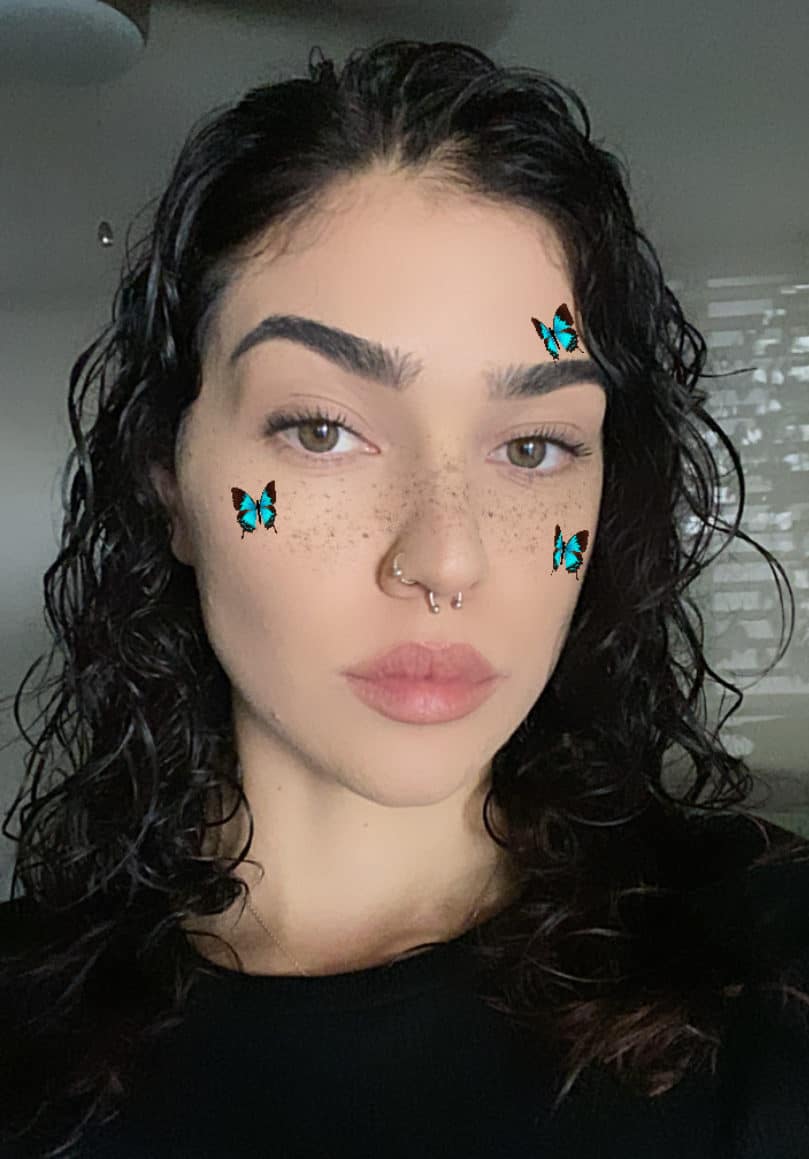
I realized that he was right, that I was relying on filters to feel beautiful. Since then, I limit my use of filters and embrace my imperfections. I want to share an authentic version of me. For this article, I decided to do a before and after using a few Instagram filters, so you can see how different they make me look.
(No Filter) Filter 1 Filter 2 Filter 3
What can you do if your teen is using filters on social media?
Just because your teen uses filters does not mean that they will develop a disorder or develop self-esteem problems. Everyone is different. But it is important to be aware of the potential risks of this social trend.
If you notice that your teenager is on social media and using filters here are some things you can do:
Have a conversation with your teen.
Talk to your teenager about what they see on social media. Remind them that most of the photos that they see on Instagram or any other platform are not 100% real because of filters or photo editing. This is something that they most likely are aware of, but I oftentimes have to remind myself of this when I am scrolling through Instagram.
In this generation where many teenagers and adults rely on likes and comments for self-worth, it is important to remind your teenager that there are more qualities in life that matter than their looks. Point out their other qualities and strengths like work ethic, intelligence, and kindness.
Don’t forget to remind them that they are beautiful without a filter!
Practice positive affirmations.
Teach your teenager positive affirmations and practice them together. Affirmations are positive statements that you say out loud to yourself. 7 Mindsets provide helpful affirmations for teens, here are a few:
“I embrace my flaws because I know that nobody is perfect”
Best, S. (2020, January 28). Instagram still has several ‘plastic surgery’ filters despite ban last year. mirror. https://www.mirror.co.uk/tech/instagram-still-several-plastic-surgery-21369194.
Cavanagh, E. (2020, January 11). ‘Snapchat dysmorphia’ is leading teens to get plastic surgery based on unrealistic filters. Here’s how parents can help. Insider. https://www.insider.com/snapchat-dysmorphia-low-self-esteem-teenagers-2020-1.
Hosie, R. (2018, February 6). People want to look like versions of themselves with filters rather than celebrities, cosmetic doctor says. The Independent. https://www.independent.co.uk/life-style/cosmetic-surgery-snapchat-instagram-filters-demand-celebrities-doctor-dr-esho-london-a8197001.html.
Kelly, S. M. (2020, February 10). Plastic surgery inspired by filters and photo editing apps isn’t going away. https://www.cnn.com/2020/02/08/tech/snapchat-dysmorphia-plastic-surgery/index.html.
Rodulfo, K. (2020, August 13). It’s Easier Than Ever To Make A New Face On Social Media. But Is It Killing Your Confidence? Women’s Health. https://www.womenshealthmag.com/beauty/a33264141/face-filters-mental-health-effect/.
Manavis, S. (2019, October 29). How Instagram’s plastic surgery filters are warping the way we see our faces. https://www.newstatesman.com/science-tech/social-media/2019/10/how-instagram-plastic-surgery-filter-ban-are-destroying-how-we-see-our-faces.
Yang, L. (2018, August 10). People are seeking plastic surgery to look like their edited selfies in real life – here’s why doctors think the trend is ‘alarming’. Insider. https://www.insider.com/plastic-surgery-selfie-filters-2018-8.
Four out of five GKIS interns this semester admit to visiting dangerous video chat sites as middle schoolers despite parent warnings. Could that mean it’s common these days? After surveying friends, we think so. Parents have no idea what kids are actually seeing and doing during these online chats. Today’s GKIS article is the real story from the mouth of a millennial, where I discuss how we worked around parent supervision and what actually happens in popular chat rooms. Learn what video chat rooms are, the dangers associated with them, red flags to look out for, and just how simple it is for your child to access them. With this information, you can parent smarter and prevent digital injury … our GetKidsInternetSafe mission.
Video Chat Rooms, Sites, and Apps
Video chat is a way to interact face-to-face with anyone around the world through webcams. Video chat rooms are on multiple platforms including online websites and apps on your child’s smartphone, computer, gaming system, or tablet.
To place a video chat call, all your child needs are internet access and a webcam. Video chat sites and apps can also include alternative ways of communication such as instant messaging and chatting through sharing photos. Video chat sites and apps randomly pair your child with another user.
The Most Popular Video Chat Websites and Apps
There are hundreds of video chat websites and apps that are easily accessible. Many video chat sites and apps are free, while others require purchase. The most popular sites include; Omegle.com, DirtyRoulette.com, ChatRandom.com, and Chatroullette.com.
Video chat sites accumulate millions of users a month, with the most popular being Omegle.com with a whopping 34,000,000 monthly visitors.[1] The most popular video chat apps for Android and IOS devices include Badoo, Telegram, and Azar. Similar to video chat websites, these apps are used by millions of people. The most popular video chat app is Badoo, with over 460 million users.
Why We Did It
Kids love discovery and novelty. Just as they would visit random neighborhoods in town if they could drive, they love to browse random neighborhoods on the internet if they have access. Get them with their friends and they’re even more reckless and bold. That is why we offer our GKIS Screen Safety Toolkit. Parents told us they felt overwhelmed by the number of parent-management tech options, so we made it easy for you. The GKIS Screen Safety Toolkit is a family-tested, outcome-based resource guide with our best recommendations, how-to information, and links to our favorite easy-to-onboard parental control systems. With the toolkit, you’ll be set to create the custom screen safety toolkit for your unique child. Managing your child’s access is a first step toward protecting them from dangerous choices.
Our parents didn’t have these resources. That’s why we were video chatting with strangers by middle school. When I was thirteen years old, using Omegle and Chatroulette was the fun thing to do. My friends and I would go on during sleepovers and after school hangouts. Occasionally, I would even access it late at night when I was alone in my bedroom.
We did it because it was funny and exciting. We were kids having face-to-face conversations with complete strangers; it was interesting to us. We felt like we were the ones in control, and we always felt relatively safe. Disgustingly, a majority of the random connections would connect us to older males masturbating in front of the webcam. They would continue touching themselves even when they could clearly see just how young we were.
In my personal experiences, whenever a creepy man would be touching himself, my friends and I would quickly hit the skip button in hopes to be connected with a clothed person we could talk to. But there were also times when we would chat with one of those perverts and let them know how disgusting it was.
Now that I’m in my 20s, I realize just how dangerous and repulsive our online experiences were. Luckily, nothing horrible happened to us. But if I or a friend would have shared enough information or decided to meet up with someone we met from Omegle or Chatroulette, it could have been devastating.
Dangers of Video Chatting with Predators
Psychological injury can result from children viewing sexual behaviors or being groomed by predators online. It’s not uncommon for kids to be coerced to reveal identifying information like where they live, where they go to school, and who their friends are. From there, some predators will persuade their victims to meet up in person, which can lead to a number of dangerous possibilities.
Red Flags That May Signal Risk
Your child interacting with a predator may go unnoticed, but there are a few red flags that you can look out for. For example, your child may be at risk if they
become secretive about what they were doing online or change screens the minute you walk into the room,
regularly deletes their browser history or their browser is typically on private browse,
spend a lot of time on the phone or computer, or
seem nervous when asked if the parent can check their history or search their phone.
For a more comprehensive list of child red flags, check out our Cybersecurity Red Flag Supplement. Three-tools-in-one, this supplement to your free Connected Family Agreement offers:
Our GKIS CYBERSECURITY SUPPLEMENT – Did you know that kids are the #1 targeted population for identity theft? That’s because the cybercriminal can benefit from fraudulent charges for years before the victim discovers it. Protect your family from hacking, scamming, malware, and phishing with our cybersecurity setup guide and best practices checklist (at home and while traveling).
PLUS
Our GKIS ONLINE SAFETY RED FLAGS FOR KIDS & TEENS – Parents in my clinical and coaching practices frequently ask me to teach their kids the red flags that may alert them to the tricks of online predators, hate groups, and cyberbullies. I offer you my clinical teaching list so you can educate your kids. Knowledge and assertiveness coaching are key elements of child resilience and good judgment online.
PLUS
Our GKIS ONLINE SAFETY RED FLAGS FOR PARENTS – Parents need to know the behavioral red flags that may signal their child is suffering a digital injury. This tool teaches parents what child behaviors to look for that may signal they are at risk – a tool I created from 25+ years of clinical practice. Being able to recognize behavioral red flags in your child may be the difference between stopping risk after one exposure versus not recognizing dangerous relationships and exposures until it’s too late.
With parent management tech tools, cybersecurity awareness, child education, and parenting tools to recognize risk, you are far better equipped to block anonymous strangers from predating on your kids.
Thanks to CSUCI intern, Remi Ali Khan for researching video chat websites and apps for this article.
I’m the mom psychologist who will help you GetKidsInternetSafe.
Onward to More Awesome Parenting,
Tracy S. Bennett, Ph.D.
Mom, Clinical Psychologist, CSUCI Adjunct Faculty
GetKidsInternetSafe.com
Photo Credits
Photo by Andrea Piacquido from Pexels
Photo by Julia Cameron from Pexels
Works Cited
[1] ChatHub. (2020, February 13). Top 12 Sites Like Omegle in 2020 (Ordered by popularity). Retrieved September 29, 2020, from https://blog.chathub.cam/top-12-sites-like-omegle/