Need peaceful screen time negotiations?

Get your FREE GKIS Connected Family Screen Agreement

socialmedia

Trending YouTube Communities That Kids (and we at GKIS) Love

Fun trends on the YouTube Explore page attract audience attention and vet the best online content and influencers. To build child resilience and teach problem-solving and good judgment, we at GKIS encourage parents to carve out the time to share online interests and co-view YouTube channels with their kids. To help you get started (or continue) having fun online as a family, we’ve found some fun trends and creators that may be a great source of inspiration for developing new interests and hobbies. Having fun together and building digital fluency and an awareness of what’s hot and what’s not will help you build credibility with your kids. Even better, they will start to teach you about what’s out there, and, ultimately, work with you to make difficult online decisions. Our goal isn’t to shut your kids off from online discovery. Instead, we believe in family togetherness, online learning and discovery, and building child resiliency and safety – and having fun while you’re at it!

**CAUTION: GKIS has chosen these creators because of their family-friendly content and the variety of communities that they represent. Although we are excited to share these amazing creators, please keep in mind that some of them are more suitable for older teenagers due to their language and the nature of their content. Further, many of these creators have hours of videos that we did not sample. Please watch and decide for yourself the appropriateness of each channel for your unique child.

Mukbangs

A kind of video trend that has been popular in recent years has been Mukbang videos. Mukbangs, a trend originally popularized in South Korea, are videos where people eat large quantities of food while interacting with their audience [1].

These kinds of videos are popular with young people because they can be enjoyed as entertainment, to satisfy cravings, or to enjoy the creator’s style, humor, and personality.

We recommend you check out YouTuber Zach Choi.  Zach, with almost 8 million subscribers, takes his viewers through his process of preparing for his mukbangs, consuming the food, and collaborates with other popular YouTube creators, both in and out of the Mukbang community.

In his videos, Zach silently eats large amounts of food with occasional captions that describe the foods or promotes the creators he features on his channel. Zach will often do a combination of a mukbang and an ASMR video. ASMR, or autonomous sensory meridian response, videos are videos that utilize audio and visuals in order to produce a tingling sensation that moves down the back and upper spine [2]. There are only certain people that get this “ASMR feeling”, and for them, videos like these can be very enjoyable to watch. Zach doesn’t seem to use inappropriate language, as he does not speak in his videos, or do sponsored content.

Technology Reviews

In the world of technology, YouTuber Marques Brownlee has made a name for himself with his thorough and unbiased technology reviews.

Marques is a creator who often trends on the YouTube Explore page and has over 10 million subscribers. For people interested in technology, watching Marques can be a good way to learn about the various features that go into different devices or simply get a professional opinion on what electronics to consider buying.

While Marques reviews technology, he does not promote buying the most recent devices or show bias towards certain brands. He simply reviews the newest technology on the market and gives his opinion on its features and performance.

For teens going into high school or college who need new devices for their academics, interested in creating content, or interested in studying technology, this is a great creator to watch. Marques very rarely does sponsored content and does not seem to use inappropriate language.

Food

In the food community, the brand Bon Appetit has created a popular platform on YouTube with a variety of series, all based on cooking.

Chefs from Bon Appetit post videos from their company test kitchen showing how to cook recipes from many different cuisines. What makes Bon Appetit different from your average Food Network cooking video are the chefs. While Bon Appetit’s crew of chefs provide detailed instructions on their recipes, they do so in a fun, humorous manner, letting their personalities naturally shine through and interacting with their fellow chefs in the test kitchen. This makes for some entertaining videos that have gained the attention of many young followers.

With fun and detailed videos, Bon Appetit has inspired this new generation to think twice about dining out and instead try something new in the kitchen. Two very popular series to check out are Gourmet Makes by chef Claire Saffitz and It’s Alive by chef Brad Leone. Bon Appetit does not seem to do sponsored content. This channel is recommended for an older audience, as some videos may contain explicit language.

Music

For people interested in music, the National Public Radio created a popular YouTube series called Tiny Desk Concert, dedicated to live performances from some of the most talented artists.

This YouTube series, which is on the NPR Music YouTube channel, posts new performances every month, with artists from varying genres and languages. These concerts differ from live performances, as they are played live with no prerecorded tracks or lip-syncing. Artists sing their songs live with either a band or by themselves with their preferred instrument in a small space that resembles an office desk, hence the name “Tiny Desk”, with a small studio audience.

This channel is great for young fans and music enthusiasts because it allows you to discover new artists every month, plus you can see your favorite artists perform their songs in new styles and see the different instruments and vocals it takes to best perform their music. NPR is careful with putting disclaimers in their videos for the artists that use explicit language, either in their songs or when speaking. This series does not do sponsorships, as they rely on donations from the public to keep the series going.

Charity

If you want to watch videos while contributing to a charitable cause, check out the YouTube channel Grandpa Kitchen.

This channel, with over 7 million subscribers, is a cooking channel created by a family in India to raise money for the local orphanage that they work for. The videos posted by this channel originally starred an older Indian gentleman lovingly referred to as “Grandpa” by subscribers. Grandpa would greet his subscribers and explain the meal he would be preparing for the orphans that day.

Grandpa cooked large quantities of food for all the orphans at his organization with the help of his grandsons. After Grandpa passed away, his grandsons took over the channel in order to continue the good work Grandpa started. Many families and fans from around the world have shared their support after Grandpa’s passing, and you can truly see how fans young and old were able to bond over watching Grandpa every week.

Although Grandpa is no longer with us, his grandsons continue to create videos with a similar format to Grandpa’s videos and continue to use the money earned from the channel to support the orphans with food, supplies, etc. These videos are in English, and the creators do not do sponsored content or use inappropriate language.

Discover Together

As we share these creators and communities, we encourage you and your children to discover new favorite communities and content to inspire you to create and discover beyond the screen. There are family-friendly creators in every community waiting to be discovered, all it takes is some time and patience.

Thanks to Alexandra Rosas-Ruiz for her research and help with writing this article. If you have questions about what your child is interested in on YouTube, try coaching sessions with Dr. B. These sessions, also offered online, can answer any specific questions on online safety and parenting in general. Sign up and receive special bonus products with your purchase.

I’m the mom psychologist who will help you GetKidsInternetSafe.

Onward to More Awesome Parenting,

Tracy S. Bennett, Ph.D.
Mom, Clinical Psychologist, CSUCI Adjunct Faculty
GetKidsInternetSafe

Works Cited

[1] (2020) Mukbang https://en.wikipedia.org/wiki/Mukbang

[2] (2020) ASMR https://en.wikipedia.org/wiki/ASMR


Photo Credits:

By Andrea Piacquadio from Pexels

By Quang Nguyen Vinh from Pexels

By Free Creative Stuff from Pexels

By Lee from Canva

By Pedro Sandrini from Pexels

By Ishay Botbol from Pexels

GKIS Offers Six Popular Instagram Pages Parents Can Trust

Instagram is one of the most popular social media apps among teens. It’s entertaining, easy to use, and offers different ways to create content to share with friends and family. Instagram is a great way to stay connected to others and share about your life. But besides following friends and family, there are many popular creators that can give your teens positive and inspirational content while scrolling through their Instagram feed.

What’s on Instagram

Instagram pages can either have dedicated themes or can be a mix of personal and themed content. Many popular Instagram users use their platform to keep fans updated on their personal lives and share positive and educational content. Because not all content is appropriate for kids and teens, we’re sharing seven (six plus a bonus)  positive and influential Instagram pages that are safe for teens to enjoy. Although we’ve done our best to choose from the most family-friendly popular creators, check them out and decide for yourself whether they are a good fit for your teen.

Meet Our Favorite Creators

Entertainment

In entertainment, the Instagram page zachking creates entertaining and mesmerizing videos using special effects and editing.

Zach and his team choose and edit their videos in a way that makes his actions seem magical. Whether its defying the laws of physics, conjuring celebrities, or making things disappear or multiply, Zach’s content is entertaining and leaves you wondering how he does the different tricks in his posts.

Zach King is entertaining and inspiring for those interested in learning about video editing as a skill or even a career. Zach also posts about life with his wife and two sons. He’s done many collaborations with celebrities and fellow influencers and occasionally does sponsored content, marking sponsored videos with the hashtag “ad”. Zach does not seem to use explicit language or explicit images in his videos.

Design/Organization

In design and organization, author and TV personality mariekondo (Marie Kondo) is best known for her organizational methods and lifestyle tips. Marie’s page is full of beautiful photos and videos made to inspire people to declutter their spaces.

This page can be useful for young teens to see how they can best make use of their space and easily keep organized. Plus, it can be really beautiful and satisfying to see clean, organized, and well-decorated spaces.

Marie is a firm believer that your space, as well as the things in it, should “spark joy.”After scrolling her page, you’ll feel inspired to clear out the unnecessary clutter in your life to live happier and more stress-free.

Aside from her design and organizational content, Marie shares photos from her fans on how they’ve decluttered and decorated their spaces and also posts videos about her two children. Marie does not seem to use explicit language or do sponsored content. The content she promotes is of her own products and projects.

Journalism

In writing and journalism, the Instagram page humansofny is dedicated to sharing photos and stories from New York residents. This page publishes stories and interviews from different individuals, whether it be about their current situation in life or an impactful story that helped shape who they are.

This page does a great job displaying the joys and struggles of contributing New Yorkers. It also does a good job of representing diversity in race, gender, religion, and political ideologies. For teens, this page can be a way to learn from different people’s experiences. By combining the images of the residents and their stories, this page also serves as a reminder to not judge others based on their outward appearance.

Caution: humansofny is recommended for older teens, since it talks about heavy topics like assault, addiction, abuse, etc. This page does not seem to use explicit language or do sponsored content.

Food

In nutrition and food, the Instagram page pickuplimes, run by licensed dietician and YouTuber Sadia Badiei, is a popular page full of vegan recipes. Food pictures have long been popular on Instagram. On Sadia’s page, you can find her beautiful food pictures and her easy recipes, perfect for people who want to go vegan or simply have a desire to start eating a more plant-based diet.

As plant-based food becomes trendier, this page is great for teens to get recipe ideas and get inspired to cook healthy foods to try and live a healthier lifestyle. Besides recipes, Sadia’s page contains posts about her hobbies, her partner, and positive messages towards her fans. Sadia does not seem to do sponsored content or use explicit language. She mainly promotes her YouTube channel on her page with links to her YouTube videos in her posts and bio.

Travel/Nature

In nature and travel, the official National Geographic Instagram page, natgeo, posts pictures and stories from different countries and cultures around the world.

Like food pictures, travel and nature have also been a popular form of content on Instagram. The National Geographic’s page contains beautiful photographs and descriptions of the people and places depicted, educating their followers about different traditions, environments, plants, and animals around the world. Their posts often reflect the different events and news stories happening in our world today.

This page is full of interesting stories and beautiful imagery that can inspire your teens to research different countries and cultures, maybe even sparking an interest in traveling. It can also serve simply as a way to relax and read about different people and places. This page does not seem to do sponsored content or use explicit language.

Business/Nonprofits

Lastly, in business and nonprofits, the official Instagram page for the nonprofit organization Kiva, kiva.org, promotes the work of the organization and shares the true stories of the people this charity benefits.

Kiva is an organization that gives small loans and provides aid in accessing loans to individuals and small businesses around the world. Similar to the Humans of New York Instagram page, Kiva shares stories from these individuals and small businesses, specifically about their work starting their business, and how the aid from Kiva allowed them to grow and become more successful.

This is an inspirational page that shows the impact nonprofits can make in the lives of others and how the hard work and perseverance of these individuals helped them become successful business owners. This page does not seem to use explicit language or sponsored content, the page only promotes their organization.

Bonus Instagram Page for Parents

While your teen is enjoying the content from these creators, parents can enjoy the content from our new official GKIS Instagram Page. Get updates and notifications about our newest blog posts and catch up with Dr. B and our team of GKIS interns. Our Instagram page is a great resource for parenting tips and effective ways to keep your family safe online.

Thanks to Alexandra Rosas-Ruiz for her research and help with writing this article. To learn more about Instagram and how to best protect your teen on the app, check out our GKIS Sensible Parent’s Guide to Instagram. Learn about how to access Instagram’s different privacy options, trends, language, and our tips for keeping your teen safe on the app.

I’m the mom psychologist who will help you GetKidsInternetSafe.

Onward to More Awesome Parenting,

Tracy S. Bennett, Ph.D.
Mom, Clinical Psychologist, CSUCI Adjunct Faculty
GetKidsInternetSafe.com

Photo Credits:

By energepic.com from Pexels

By Kaique Rocha from Pexels

By mcmike—2663328 from Pixabay

By Redrecords from Pexels

By THE 5TH from Pexels

By Porapak Apichodilok from Pexels

By Branimir Balogovic from Pexels

The GKIS Sensible Parent’s Guide to Facebook Messenger Kids


Full disclosure, when Facebook’s Messenger Kids (MK) first came out in 2017, I was skeptical. As a GKIS screen safety expert, I published an article accusing Facebook of branding our kids and introducing them to the world of social media too young. Soon after, Facebook’s Head of Global Safety contacted me to let me in on some things I hadn’t thought about. She said that they’d done the research and found that kids were already using their parents’ messaging apps whether we liked it or not. To increase safety and offer parent management and kid-friendly features, they decided to trial Messenger Kids. They also offered me a volunteer spot on their Youth Advisory Committee for ongoing input. Since I joined in 2017, I’ve enjoyed a monthly collaborative call with about 25 other child development experts from over the world. Messenger Kids has benefitted from some of the most respected experts in the business, including Sesame Street, The Fred Rogers Institute, and the Yale Center for Emotional Intelligence, among many others. Do you want a safe way for your child to message and video chat with friends and family? This GKIS Sensible Guide offers you the information you need to make a competent decision about whether Messenger Kids makes sense for your family.

What is Messenger Kids?

Messenger Kids is a video conferencing app for kids that was released by Facebook in 2017. It was created as a safe alternative to Facebook’s Instant Message.

How old is old enough for adoption?

Messenger Kids is designed for kids ages 6 to 12 as a safe, parent-managed way for children to video chat and message with friends and family.

After downloading the app, you will be prompted to complete the following:

  • Log into your Facebook account
  • Once logged in, you will be prompted to enter your child’s name and their birth date.
  • After the account is created, you will be shown a list of other Messenger Kids accounts, as well as Facebook accounts to add to your child’s friend list.
  • Add a second parent or guardian who would be able to manage the account as well.
  • Set a code that your child can give out to their friends which would request your permission to be a contact.

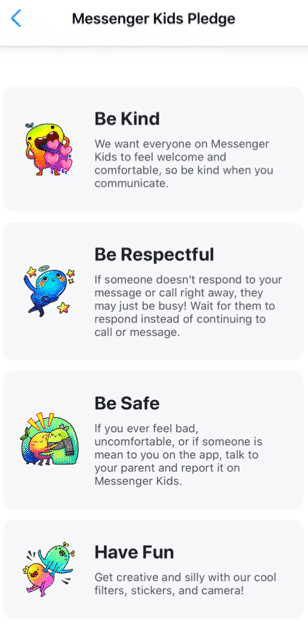
After you have completed all the above steps, your child will be prompted to add a photo of themselves, set a color to decorate the app, and complete “missions” to get to know the functions of the app. Your child will be prompted to read the Messenger Kids Pledge to be kind, be respectful, be safe, and have fun.[i]

What are the main features?

  • A parent dashboard that displays your child’s activities, contacts, and controls
  • Provide education to the child about new control features
  • Blocking a user allows the user to remain in the contact list, but the child will not be able to have individual conversations with that user
  • The child can use photo filters to send images to their contacts and to video chat
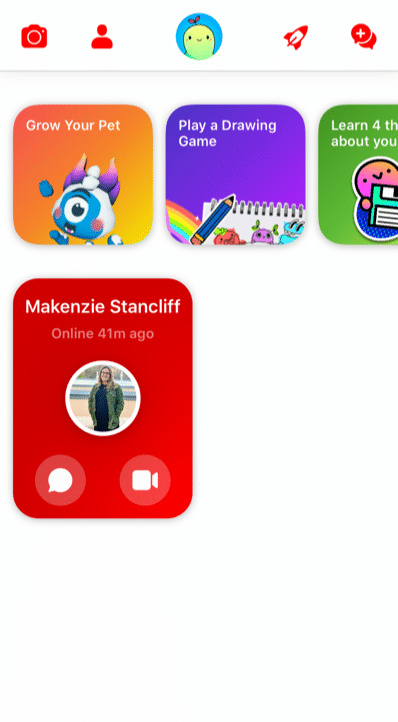
  • There are several “missions” the child can complete
    • Grow a pet
    • Play a drawing game
    • Learn 4 things about your information
    • Add a friend
    • Take a funny photo
    • Create a group

The Parent Dashboard

Because Facebook gets feedback from kids, parents, and child development experts, Messenger Kids is always changing for the better. For example, the updated parent dashboard is where you can see all of your child’s latest activities, contacts, and controls at a glance in one place. It also shows you

  • who and what content your child has reported or blocked and why,
  • a list of recent chats and calls (including how frequently your child is chatting/calling and with whom),
  • an image gallery of all the images and videos exchanged by your child and their contacts (including whether exchanged in a group).

User Education for Kids

Facebook has also thought through Kids’ digital literacy and privacy needs by notifying child users of the new parental control features in a Data Transparency Flow. Kids are prompted to go through this education with a push notification. It’s also available in the “mission” section of the app for kids. New users engage with this education during the registration process. They’ll get important basic information about how their personal data is used and shared when they use Messenger Kids – a great first step to cyber awareness and privacy issues in general.

Because child friendships need a healthy pause here and there, Facebook has also made blocking easier to use and less permanent. Before, if a child blocked someone, they were automatically removed as a contact. Now when a kid blocks someone, they won’t be able to communicate in a 1:1 chat, but they’ll remain contacts and still be able to be in group chats together. This allows kids to leave or stop individual interactions they no longer want while not having to leave group environments they may share with that contact. The child is always warned when they return to or start a group chat that contains a blocked contact that they have the option to continue to the chat, leave the group, or cancel joining the chat.

What are the privacy and safety options?

There is no minimum age of use outlined in the apps privacy policy. Facebook has a detailed list of what features they collect while using the app on their privacy policy. Here are a few of the features collected while using the app:

  • Child’s full name
  • Child’s profile photo
  • Child’s gender and birthday
  • Child’s contact list[ii]

Facebook has recently added more controls. In the controls tab, you can see which device your child is logged into on MK, when your child last used MK on those devices and enables you to log your child out of selected devices. Parents also have the ability to remove and report any of these images and videos from the same Dashboard (doing so will remove that content from the child’s thread and notify them that you removed it).

 As long as parents stay on top of who’s being friended and the information that is being exchanged, there are few risks associated with using Messenger Kids. The parent has the ability to control what the child can and cannot do as well as who they contact. Parents can also see what has been shared (and deleted).

However, any messaging app has its risks, especially when kids are involved. Here are a few we at GKIS thought you may want to consider

  • Your child and their friends may post inappropriately or impulsively
  • Cyberbullying between known contacts, like exclusion.
  • Too much access to friends and screens (of course, parents can schedule the use and use the sleep feature).
  • Your child is exposed to the Facebook brand, just as they are other popular American brands like Coca-Cola, Harley Davidson, and Budweiser.

Because parents have so much management opportunity and kids love the socializing, GetKidsInternetSafe rates Messenger Kids as a green-light app. We also love that Messenger Kids offers educational information that helps kids make better decisions with friends onscreen.

Thank you to CSUCI intern Makenzie Stancliff for co-authoring this article. For more information on keeping your child safe on social media, check out the Get Kids Internet Safe Screen Safety Toolkit. Be sure to add Messenger Kids on to the free GKIS Connected Family Agreement as “appropriate.”

I’m the mom psychologist who will help you GetKidsInternetSafe.

Onward to More Awesome Parenting,

Tracy S. Bennett, Ph.D.
Mom, Clinical Psychologist, CSUCI Adjunct Faculty
GetKidsInternetSafe.com

Works Cited

[i] Introducing Messenger Kids, a New App For Families to Connect. (2019, November 7). Retrieved from https://about.fb.com/news/2017/12/introducing-messenger-kids-a-new-app-for-families-to-connect/

[ii] (n.d.). Retrieved from https://www.facebook.com/legal/messengerkids/privacypolicy?version=2020

Photo Credits

Photo by McKaela Lee on Unsplash

Harvard Revoked Acceptance Because of Stupid Social Media Post Memes

“First impressions are everything.” This once referred to tone, dress, and personality. Now, it also refers to your social media page. Teens rack up an average of 6 hours per day of social mediag.[1] They not only browse endlessly, but many also post impulsively. With immature prefrontal brain development, kids and teens are unable to anticipate consequences. Plus, the internet culture is vulgar, shocking, and celebrates pushing moral limits. Using profanity, sub-tweeting and cyberbullying are common. Using principles from Dr. Bennett’s book, Screen Time in the Mean Time: A Parenting Guide to Get Kids and Teens Internet Safe, this article covers how to best guide your teen through the social media dilemmas of cyberspace.

Social media is the perfect place to “out” your enemies.

My friend “Catherine” used to expose her ex-boyfriends on Facebook. Once she posted, “He says he’s over me, but he just came to my house and cried.” Often, she’d think twice and delete her post. Other times, her ex-boyfriends posted angry responses outing her bad behavior back.

My friend “Robert” also shared a personal story. This is one about Myspace going wrong. When he was in the eighth grade, his high school sophomore girlfriend sent him sexy selfies. Robert showed his friends the photos. Although he refused to text them directly, a friend hacked his phone and sent himself the photos. Within a few days, the girl’s family and the police were at Robert’s door. Her photos had been posted on Myspace. Although Robert did not directly post her photos, he was held responsible because they were initially on his phone.

Online Behavior Matters

We love our podcasts at GKIS. In one of our favorites called Hidden Brain. The “You Can’t Hit Unsend” episode tells the story of William, whose social media posts destroyed a golden opportunity with Harvard.[2]

William was a brilliant high school senior from Pennsylvania. He was a great student who played competitive golf and performed for the local symphony. Although he didn’t believe he was “Harvard material,” he applied anyway. He was accepted through the early admission process and was overcome with joy. In the excitement of his acceptance, Will quickly joined an online group chat to meet other incoming freshmen.

One chatroom that focused on sharing memes was particularly funny. As the chatroom friends grew closer, they exchanged increasingly “edgier” memes, riding the fence between funny and offensive. To be added to the subgroup chat, at least one edgy meme had to be shared in the main group chat. As time passed, the memes increased in explicitness, oftentimes referring to outrageous, violent, and sexual topics. Will states that members of the chat knew that their meme was good based on how many likes and fire emojis members commented afterward.

The admissions department at Harvard University learned of the private chatroom and investigated. Harvard withdrew admission offers from ten prospective students because of their participation.

Will shared that he will always remember the last sentence of the email, “Harvard can withdraw admission under various conditions, including if you engage or have engaged in behavior that brings into question your honesty, maturity, or moral character.” Now he recognizes how adults would be offended and regrets his posts. He apologized, “It is far too easy to act out of character behind a screen in a fast-paced setting and to say things I would never say or even think of in my everyday life.”

The Harvard student newspaper later published the story. Soon after, the story was everywhere, including CNN and Fox News. Will and his family were devastated.

He waited a year and applied to other schools, only to be rejected by all ivy league universities. Will’s voice broke with emotion as he spoke of the experience. Fortunately, his emotional honesty appealed to a physics department chair at a school he was waitlisted at, and he was ultimately granted admission.

College Recruiters and Managers Search Applicants Online

Social media posts can make or break a teen’s future. The relationship between your digital footprint and personality is about as constant as the relationship between personality and behavior, also known as “the personality coefficient.[3] That means that your behavior on your social media profile is a reliable source of information about your personality.[4]

Many college admission officers and employers use online data to investigate prospective students or employees. While the internet is fun and creates a space for creativity and connection, adolescents can make dire mistakes online just as they do offline. Instead of those mistakes happening in front of a few close friends and family, they can be blasted out to millions. Social media profiles produce large amounts of user-generated data that may be used and sold in ways we cannot anticipate.[5]

As social media evolves, parenting tactics must evolve as well. That means educating yourself about the risks of posting and challenging your kids to explore online risk with ongoing empowering dialogue.

Here are a few ways you can prep them today:

  • Use our free GKIS Connected Family Screen Agreement to set parameters and create a screen-friendly, cooperative dialogue.
  • Engage in fun co-viewing, both with passive screen use (TV) and interactive screen use (browsing the internet). Fun projects may include researching a particular topic using various learning formats (articles, videos, images).
  • Find food recipes and cook a meal together.
  • Co-create a movie – complete with music, still-image slides, videos, and graphics.[6]
  • Work together to purposely stylize your family’s cyber footprint. Ensure that that footprint will work for you rather than against you.
  • Act as a role model on social media and encourage responsible posting.
  • Block, filter, and track online behavior using the tools offered in our GKIS Screen Safety Toolkit.

Internet sites can collect and analyze large quantities of data from everyday devices.[7] This information provides more opportunities to use data in deceitful ways. With helpful GKIS tools, you can best prepare yourself and your teens.

Thanks to Isabel Campos for her research and help with writing this article. Interested in learning more about current cyberspace news? Signup for weekly GKIS articles by entering your name and email address at GetKidsInternetSafe.com!

I’m the mom psychologist who will help you GetKidsInternetSafe.

Onward to More Awesome Parenting

Tracy S. Bennett, Ph.D.
Mom, Clinical Psychologist, CSUCI Adjunct Faculty
GetKidsInternetSafe.com

Photo Credits

Photo by Pixabayon Pexels
Photo by Brett Sayles from Pexels
Photo by Nathan Dumlao on Unsplash
Photo by picjumbo.com from Pexels

Works Cited

[1](Granet 2016)
[2](Hidden Brain, 2019)
[3](Meyer, Finn, Eyde, Kay, Moreland, Dies, Reed, 2001)
[4](Meyer, Finn, Eyde, Kay, Moreland, Dies, Reed, 2001)
[5](Azucar, Marengo, & Settanni, 2018)
[6](Bennett, 2019)
[7](Granet 2016)

YouTuber Marketing Strategies

Gambling was ruined for me after I took Psychology 101 in college. Learning that slot machines were programmed on the same ratio of reinforcement that makes rats ask for cheese made me feel controlled and conned. I mean, who wants to give hard-earned money to somebody who’s training you like a rat? Now our screen devices are jumping us through hoops, with addictive features and profitable scams. If your kids are on YouTube, then they’re ready to learn about the “business side” of social media.

Buyer Beware

The Internet is a “buyer beware” environment. That means it is up to us to discover where the tricks and scams are.

There are regulations about collecting information and marketing to children because they do not yet have the sophistication to make sound, informed financial decisions. However, marketers online can’t be sure who is watching their content.

That means they can create marketing funnels that kids can fall into. Publicly, YouTube celebrities would insist they are only marketing to adults. But if that’s the case, why are so many kids and teens spending money online?

Celebrity Endorsement

When celebrities endorse a product, they lend their credibility to it. Viewers think, “I trust them. If they like it, I like it.” Viewers can spot celebrity-endorsed products when Youtubers say they are sponsored, affiliated, or teamed up with a company.

For example, Tana Mongeau (2.8M subscribers), Gabbie Hanna (6.5M subscribers), and plenty of others[2] were paid by Kenza Cosmetics[3] or Bermona[4] to advertise “great deals” to their subscribers. To maintain credibility with their fans, celebrities must be honest about their support of a product. However, YouTube influencers who are out for quick cash with little regard for their credibility and reputation scam their fans with inflated prices and hidden shipping costs.[5]

Scarcity

Scarcity is a classic marketing technique that refers to the “buy now before you miss out on a one-time limited offer.” The urgency drives consumers to impulsively buy. YouTubers commonly say three things that reflect scarcity.

They will say:

  • the product is amazing and insist you’re getting a great deal.
  • the product is in short supply, or the deal is a limited-time offer.
  • “I don’t want you to miss out on this”.

Beauty guru Jeffree Star (13.9M subscribers) used scarcity to sell his collection of eyeshadow palettes priced around $80 each in only three minutes.[6] No wonder he’s worth $50 million!

Pester Power

Ask any child what they want to be when they grow up, and they’ll say “YouTuber.” Many kids believe that all they have to do is post a video, and in a few months, they’ll be raking in the cash. To prepare, they hang onto every word of their favorite influencer, imagining that they too will one day be rich and famous. They adopt their lingo, accents, and interests, and want to buy what they have. This leads kids to pester their parents for online products or even use their parent’s credit cards without asking.[8]

Provoking Minions by Creating Conflict with Other Celebrities

Creating large-scale competitions or beef (having a grudge or dislike for another person) is one technique influencers use to increase subscriber rates. Spurring online fans into promoting your “win” creates drama with dollar signs. Superfans promote content for you, sweeping their friends into the frenzy with them. Free of charge!

Superfans who become radicalized to show support for their ingroup is a process social psychologists call deindividuation. Deindividuation is a psychological state where people get so caught up in their cause, they become disinhibited and fail to self-evaluate. It’s an intense state of belonging where one seems to lose oneself in the service of their chosen tribe. Famous examples are usually negative, like mob violence, but positive behaviors can occur as well. Teens and young adults are particularly susceptible as they are innately motivated to find and enthusiastically support their tribe.

An example of this type of marketing campaign is YouTube Red’s 2018 Boxing Match between YouTube Influencers KSI (20M subscribers) and Logan Paul (18.8M subscribers). The finale of their feud was a pay-to-view event where the two “boxed” for around 20 minutes, bringing in 13 million viewers and 7 million dollars of profit.[1]

The Apology Video

Wondering how YouTubers survive unfair marketing techniques directed at their subscribers? More marketing and PR. Here are some tactics we identified that seem to clean up celebrity marketing mishaps.

Delete the Evidence

Although celebrities delete the videos that got them into trouble in the first place, we all know that anything that appears on the Internet is there to stay. If the video promises to draw further attention, drama vlogs (YouTube videos about YouTube drama) will rebroadcast the offending video while criticizing the decision. Not only does the new vlogger gain subscribers from spilling tea, but it also drives new subscribers to the screwup’s site!

Get Ahead of the Narrative and Focus on the Fans

By making an apology right out the gate, the celebrity attracts more view time and takes control of the narrative.[9] By also showing dramatic concern for those hurt by the mishap, they may humanize themselves, making it seem that their fans are more important than fame.

Logan Paul (18.8M subscribers) is an example. In 2018, he released a video of him and his friends laughing as a suicide victim in Japan’s infamous Suicide Forest.[14] Media, including Dr. Bennett who was appearing as a parenting expert on Access Hollywood Live, expressed grave concern over his lack of discretion and empathy. In his apology video, he spent the first 30 seconds quickly going over what he had done and then focused primarily on his followers and all those who were affected by his actions.

Tears and Relatability

When a YouTuber makes an apology, they change up their appearance to seem more personal and relatable. Placing themselves in a lower position than the camera, wearing neutral colors, and choosing casual loungewear make the celebrity look less threatening.

Next, they get sad…really sad. Laura Lee, for example, apologized for racist remarks using every tactic talked about in this article, including dramatic crying and brushing away nonexistent tears.[15] Although it seemed effective for some, others remarked that the evident lack of sincerity was a show in itself.

Provocative Victim

One method of gaining fan support is sparking conflict and then crying about it for the next few weeks. Dr. B calls this the provocative victim technique. Trisha Paytas (4.8M subscribers) is famous for making over a dozen 15-minute videos of tearful breakdowns. Viewers don’t even care about what the topic or apology is about. They just come to see the spectacle.

Project Blame

Some YouTubers will try to blame other celebrities or even their own subscribers. For example, Gabbie Hanna made an apology for scamming her audience with Kenza Cosmetics, claiming that her fans should’ve done their research before purchasing.[13]

How to Prevent Marketing Manipulation

Even with education, children don’t have the experience or brain wiring to identify slick marketing techniques. But it shouldn’t stop you from educating them anyway. Here are some helpful tips to stay Internet safe.

YouTubers are not our friends.

Recognizing that YouTubers are strangers with no particular skill set or expert training is the first step to a healthy approach to viewing content. No matter how much they try to sell the idea they’re your “close friends,” they don’t know you nor do they care about your particular vulnerabilities.[16]

Don’t turn a blind eye.

Dr. Bennett believes the most important aspect of screen safety is forming a fun, cooperative alliance with your kids. By adopting our free GKIS Connected Family Agreement and reading and sharing our weekly GKIS blog articles, you’ll have lots of ideas for important and challenging family discussions. Just as parents teach their kids about screen issues along the way, kids also teach their parents.

Raise a smart consumer.

Taking the time to teach your kids how to be clever, savvy, and assertive is far more important than encouraging blind obedience. Help your kids build resilience and protect them from the unpleasant aspects of the online culture. Use discretion, yes, but don’t allow complacency and ignorance.

Use supportive resources.

GKIS helps families become smarter and more connected. Want some easy-to-use, affordable tools to get started? Here are some options for you:

OUR FREE GKIS CONNECTED FAMILY AGREEMENT AND WEEKLY BLOG ARTICLES: Once you enter your name and address at GetKidsInternetSafe.com, you are scheduled to receive your agreement and weekly articles. Snuggle in for a cup of tea and a quick read once a week to set your teaching agenda and build a closer, empowering parent-child alliance.

CYBERSECURITY & RED FLAG SUPPLEMENT: Don’t miss your Cybersecurity and Red Flag Supplement for your Connected Family Agreement. Not only will my cybersecurity tips improve your family’s privacy and security, but your kids will benefit BIG from knowing what kind of red flags to look out for online to avoid danger. You’ll also love the red flags you should look out for in your children’s behavior that may signal they need your help. Early intervention can make a big difference between making a mistake versus suffering from serious digital injury.

Dr. B’s SCREEN TIME IN THE MEAN TIME PARENTING BOOK: If you’re looking for a comprehensive source about screen benefits, screen risks, and parenting strategies, check out my book, Screen Time in the Mean Time: A Parenting Guide to Get Kids and Teens Internet Safe. Available on Amazon in e-book or print.

GKIS SCREEN SAFETY TOOLKIT: Ready to dial in safety at the device level but too overwhelmed to know where to start? We’ve got your back with our Screen Safety Toolkit. Start building your family’s custom digital toolkit with the tried-and-true recommendations from our guide. Have you wondered how to check their browser history, filter and block inappropriate sites, and monitor use? You won’t want to miss what we offer in this super low-priced, comprehensive guide.

GKIS CONNECTED FAMILY ONLINE COURSE: Early on, I realized that many avenues feed fun family connections and screen safety. My Connected Family Course offers ten quick steps to create a happier, healthier home. Filled with creative and fun tips that are family-tested and outcome-based, these are far more fun and effective than the free parenting tips offered on safety websites.

COACHING WITH DR B: Feeling like you need a little support and shame-free TLC? I have reserved office hours to coach you through the most challenging issues. Whether you love the privacy of 1:1 coaching or the vibrant energy of a motivated parenting group, I’ve got easy-to-schedule coaching options ready to go!

Thanks to Jack Riley, GKIS intern, for watching hours of YouTube for the research on this article and his clever insights.

Onward to More Awesome Parenting,
Tracy S. Bennett, Ph.D.
Mom, Clinical Psychologist, CSUCI Adjunct Faculty


Works Cited

[1] Hale, J (2018, August) How Much Did Logan Paul And KSI Make From Their ‘Youtube World Boxing Championship’? A lot. tubefilter.com

[2] Tea Spill, BEAUTY GURU’S ARE LYING TO YOU!?, YouTube.com
[3] kenzacosmetic.com

[4] bermona.com

[6] JEFFREE STAR SOLD OUT MAKEUP IN 3 MINUTES

Rich Lux., YouTube.com

[7] Mansson, E (2018, December) Sister Stocked? Not A Chance. The James Charles x Morphe Palette Has Sold Out For A Second Time, thetalko.com

[8] Dr. Bennetts Marketing Manipulation advice

[9] Forbes Communications Council, Seven Tips To Improve Apologies During A PR Crisis, forbes.com

[10] Morris, C (2018, December), Popular YouTube Streamer promotes Channel that publishes Anti-Semitic Content, Fortune.com

[11] Aja, R (Feburary,2017), The controversy over YouTube star PewDiePie and his anti-Semitic “jokes,” explained, Vox.com

[12] PewDiePie’s Teammate gets killed, he says it with a hard R out of frustration, Livestream Fails, YouTube.com

[13] Cancelled, gabbie hanna kenza cosmetics scam, YouTube.com

[14] Logan Paul Vlogs, I’m Sorry., YouTube.com

[15] Deceased Laura Lee apology with original captions, YouTube.com

[16] Oldford, S (2018, October) Manipulation in Marketing: How It’s Used, and How to Use It Ethically, entrepreneur.com

Photo Credits

“YouTube” photo by Esther Vargas

Photo Taken fromFreeStocks

“Serious Woman with Laptop Photo” photo by Matthew Henry

“Man Crying” photo by Christian Erfurt

The Sting of the Loveless Troll. What It Teaches Us About Kindness.

blog-60-snoopyautograph

Originally published by Sammiches and Psych Meds

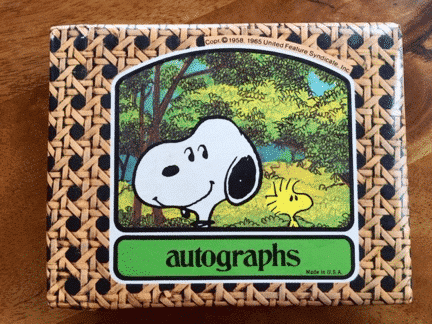
When I was in fifth grade I got a Snoopy autograph book to commemorate my move to the fifth school since starting kindergarten. Although nervous, it would mark another opportunity for resilience in my life of many shifting directions. I loved that autograph book with its padded glossy cover and subtle rainbow of pastel pages. I took it to school and asked my friends to autograph it for me. Here are some classic quotes (misspellings intentional):

  • UR2 good + 2be=4gotten. Wendy ‘79

  • Remember M, Remember E, but most of all remember ME. From, Marcie

  • You have bean a greet freind, stay that way good luck in 6th good dancing remember your old freind Steve

  • And from my very best friend: Dear Tracy, I think your very nice and you are fun to play with. Sincerely Yours, Theresa

How sweet is it that a kid’s first instinct is to be complimentary and polite. Especially at 11 years old, it seems to be a bit of a miracle my vulnerable request for a wish-you-well wasn’t ruined with a trollish comment. Perhaps they were more innocent days then. Or maybe it’s because those kids had to see my eager face when they handed me back my treasured autograph book and would not have risked seeing me hurt. For today’s kids, the sting of the loveless troll happens soon after they start using social media. Check out Ask.fm if you’d like to see the brutal forced-choice game of kiss, f*&k, or marry, or worse than that, anonymous questions inviting insults and harassment.

However today’s article is less about how online verbal assault hurts its victims, because it just does. Instead I’d like to focus on how much love and validation helps. Because all these years later, what I really learned from my Snoopy autograph book is to cherish those who truly know and champion me. Here’s the message from lavender page 3 from my number one fan:

Tuffy,

You have a real neat personality and a sensitivity that will always bring you close friendships but it will also cause you to have hurt feelings because others are not always as thoughtful as you. Always keep that cute little smile.

Love, Dad

PS You almost won the bike race.

I think my dad called me Tuffy in the ironic sense, although he’d never admit it. The family legend is that a neighborhood boy was picking on my 5 year-old sister, and at 2 years old I walked up and bit him on the nose – earning the nickname Tuffy. Being that I’m a bit of a chicken, I can’t imagine this is true. But then again, I’ll take a bullet protecting the underdog still…so there it is.

As a psychologist in my twentieth year of private practice, I’ve channeled that sensitivity both personally and professionally and adopted my dad’s validation and championing skills. It nourishes my soul to be of service. To see somebody blossom from the meekness fed by the shaming judgment of others into the courage to step forward and speak their truth is a privilege to witness.

blog60troll

It’s a tough balance to care for those we love while simultaneously nurturing ourselves. Whether it’s the desire to please others or the necessity of sacrificing as a caregiver, it’s just too easy to put yourself last. And so often, people will criticize to make sure you stay last. One of my most memorable AH-HA moments is when I realized that it’s a compliment when certain people hate you. Relationships based on feelings that form an inverse relationship (they get jealous when you do well) are a total waste of time. If comments are hurtful or not constructive, then it’s none of my business what others think of me.

But tell that to the Internet. Social psychologists can attest to the bold cloak of anonymity and how otherwise meek people will self-righteously hop on a hostile bandwagon. The famous Stanford experiment demonstrated how college students will morph into brutal prison guards when given a role to play. And remember how the Milgram and Asch experiments demonstrated how easy it is to influence people into brutality or false eyewitness with an authoritative instruction or through peer influence?

Anonymity and the immediacy of sharing momentary feelings with thousands turns the Internet into Lord of the Flies. Subtweets, flaming, social media shaming, and trollish online comments reflect a shameful display of the worst of what it is to be human. Not that haters are new. After all, even Mother Theresa, Ghandi, and Jesus Christ had haters. But let me tell you a story about how, just because there’s a time-honored tradition, doesn’t mean being an a-hole is acceptable, even if you think it’s in the self-righteous name of kindness.

***

In our community lives a proud, elderly rancher who owns a feed store. We will call him Ben. He’s the kind of man who serves customers sunrise to sunset without complaint and still has time leftover to volunteer for kids. If you need to know how to care for your first bunny, just stop by and he’ll give you all the free guidance you need. Hold a chick? He’s your guy. Every single time we’ve visited over the years, and that’s often, he encourages my kids to give their mom and hug and say, “I love you,” which he promptly rewards with a grin and handful of chocolate. He even lets you return your chick weeks later if it turns out you nurtured a rooster. All in all, from my view as his frequent customer, Ben is an amazing man.

One day I got messaged from a friend that said Ben got an unpleasant Yelp review about his business. His only review at that, go figure. Why do only the complainers leave online reviews? It turns out that an animal lover came by his store and saw a calf out in the rain. After insisting that the worker at the desk craft a shelter for the calf (keep in mind it was 65 degrees), the customer returned to build it himself. He then posted a scathing review about how the store owner, Ben, is cruel to animals.

Now, if you frequent the store as often as we do, you’d realize that that calf is named Princess and is perhaps the most spoiled animal alive. She was orphaned young so the store owner brought her to work to hang out at the neighboring veterinary hospital’s back yard. She comes when called to get her treats and is visited by the little ones of the town often. It’s arguable if calves need a roof on a sprinkling Southern California day, but honestly she usually has one. It turned out that that was one of those rare moments Ben wasn’t even manning the store. What was seemingly an attempt to champion a soggy calf ended up hurting a hard-working store owner with decades of generous service under his belt. Rumor had it that Ben teared up when he read the Yelp review (although he’d deny it).

So in defense of Ben, I and some other customers posted what this feed store really means to our kids and the community. We quickly watered down that one star with love and loyalty. The next time my kids went in to pet the chicks and shyly accept their chocolate, he looked at me with a twinkle and reminded me what’s really important in this life, that we must be careful how we champion those who are wronged and sing even louder for those who love. It was a beautiful lesson for my kids to return Ben’s kindness.

Next time you want to rant about your bad day online, remember that there’s a real person with years of invested sweat and tears on the other side. Maybe your time would be better spent being a champion to those who did go the extra mile for you rather than tearing those down who didn’t. And if you’re stinging from a cyberbullying comment by a loveless troll, remember what Winston Churchill once said, “You have enemies? Good. That means you’ve stood up for something, sometime in your life.”

This article is dedicated to those who nurture themselves as well as others and for the courage to follow your dreams. Drown out the trolls by posting some well-earned 5 star reviews today. It matters. I know the emails I get from my awesome GKIS subscribers and Facebook followers mean the world to me! And if you’re a parent, keep your eye out for social media apps that allow anonymity or a false alias. They are a cyberbully’s paradise, and your child won’t recognize the sting of the loveless troll unless they’re already hurting from it.

I’m the mom psychologist who will help you GetYourKidsInternetSafe.

Onward to More Awesome Parenting,

Tracy S. Bennett, Ph.D.
Mom, Clinical Psychologist, CSUCI Adjunct Faculty
GetKidsInternetSafe.com


If—

BY RUDYARD KIPLING

(‘Brother Square-Toes’—Rewards and Fairies)

If you can keep your head when all about you

Are losing theirs and blaming it on you,

If you can trust yourself when all men doubt you,

But make allowance for their doubting too;

If you can wait and not be tired by waiting,

Or being lied about, don’t deal in lies,

Or being hated, don’t give way to hating,

And yet don’t look too good, nor talk too wise:

If you can dream—and not make dreams your master;

If you can think—and not make thoughts your aim;

If you can meet with Triumph and Disaster

And treat those two impostors just the same;

If you can bear to hear the truth you’ve spoken

Twisted by knaves to make a trap for fools,

Or watch the things you gave your life to, broken,

And stoop and build ’em up with worn-out tools:

If you can make one heap of all your winnings

And risk it on one turn of pitch-and-toss,

And lose, and start again at your beginnings

And never breathe a word about your loss;

If you can force your heart and nerve and sinew

To serve your turn long after they are gone,

And so hold on when there is nothing in you

Except the Will which says to them: ‘Hold on!’

If you can talk with crowds and keep your virtue,

Or walk with Kings—nor lose the common touch,

If neither foes nor loving friends can hurt you,

If all men count with you, but none too much;

If you can fill the unforgiving minute

With sixty seconds’ worth of distance run,

Yours is the Earth and everything that’s in it,

And—which is more—you’ll be a Man, my son!

Photo credits:

fin dac-jade by dug_da_bug, CC by-NC-ND 2.0

http://www.newyorker.com/culture/cultural-comment/its-comments-all-the-way-down?mbid=social_facebook