Screen technology provides amazing entertainment, convenience, and communication as well as a wide range of problems, particularly for kids and teens. Parents and professionals complain they can’t find the perfect tech toolbox to help. There are a lot of costly third-party solutions out there, but where do parents start? None seem to cover all the bases! Apple may have helped us by launching the Screen Time setting in the new iOS 12 update. Promising more speed, the ability to FaceTime up to 32 people at once, new personal animojis, stickers, and filters, augmented realities, easily sharable photos, searching, and shortcuts, Apple is committing to more “power” overall. Features that promise to help us control our use include auto turn-off Do Not Disturb, Instant Tuning to selectively turn off notifications, advanced shortcut and privacy features, and Screen Time tracking. Find out what you need to know in today’s GKIS article.
Tracking Your Usage
This update offers Screen Time, which will allow you to see which apps you use most often and how much time you spend on each activity with an easy-to-read bar graph and data count. Screen Time also allows parents to see which of your kids is the Twitter addict and which is up past their bedtime watching YouTube videos. You can monitor multiple devices linked to your iCloud account.
The Screen Time feature also tracks how many notifications you receive and from which apps they are coming from. Screen Time even tells you how many times you picked up your phone, a number that may surprise you.
Setting Limits
There are several limits that you will find with this update. If you see that social media is taking up a majority of your child’s day, you can set a timer on that category and for the entire day they will only have a set time to use their phones for that specific purpose. If your concern is about a certain app, like Snapchat, then you can just set a limit on that app alone.
Another useful tool is the Content and Privacy Restrictions, which allows you to monitor your child’s internet usage and their app store purchases. This is a simple way to ensure that your child is not viewing graphic or inappropriate internet content.
The last major setting that can be utilized by this new update is called Downtime. Downtime allows for you to schedule time for yourself or your family to disconnect from the distractions of your apps. This may sound a lot like Airplane mode, however the difference with Downtime is the ability to allow certain apps to continue to be used. Calls and texts come in automatically with Downtime, but if you can’t be without your emails you can allow that to remain active during this scheduled break.
Opportunity to Start Important Screen Time Conversations with Your Family
With the new Screen Time feature, your kids may feel like their privacy is being infringed upon, and you aren’t giving them enough space. However, we at GKIS feel that filtering inappropriate content and monitoring screen use is an important aspect of parenting, especially for younger kids and teens.
Rather than avoid the discussion and lock their screen use down, negotiate what seems reasonable for your family. Have spirited conversations. Share important facts about risk and benefits that you learned from GKIS articles. Team work builds stronger relationships.
There is no more influential tool for screen safety than a healthy parent-child relationship. Trust is earned on both sides. As stated in Dr. Bennett’s book, Screen Time in the Mean Time, your attachment to your child is a relationship built upon communication, negotiation, and fun. It’s important to ensure that your children’s privacy is something that is as important to you as it is to them, and that seeing where their time on their phones is spent is a way to look after their digital health and social well-being.
Recap
You can see which apps are the most used and for how long
You can set limits to specific apps and categories of apps
You can set content restrictions for internet and iTunes usage
You can set a bedtime for yourself and your children
Thanks to GKIS intern Adam Ramos for keeping us up on the latest! We at GKIS are big fans of Apple’s new Screen Time innovation. It is worth carving the time out of your chaotic parenting schedule to check this one out. It’s easy to use, free, and a giant step toward personal screen time accountability. Need support how to start these important family conversations, set your home up for safe screen use with handy tech tools, and get your family behind sensible rules? Check out the GKIS Home Starter Kit. In 10 easy steps and in as little as two hours, you can make several giant steps toward a closer relationship and better screen safety in your home.
I’m the mom psychologist who will help you GetKidsInternetSafe.
I’m curled up on a weathered leather couch in a beautiful loft barn we rented for the weekend. A last of summer cozy couples’ retreat in the rolling hills of wine country. We are waking up to soft braying of ponies, early morning foggy walks in vineyards ripe for harvest, and a leisurely breakfast of fresh eggs, hot mint tea, fresh squeezed watermelon and orange juice, and buttery warm banana bread left by our generous hosts. Later we are meeting our friends for a delicious farm to table lunch from local farms and orchards. Best of all…a weekend of fun with old and new friends before a busy school year starts. Crazy grateful for the rejuvenation from the sunshine and laze of summer.
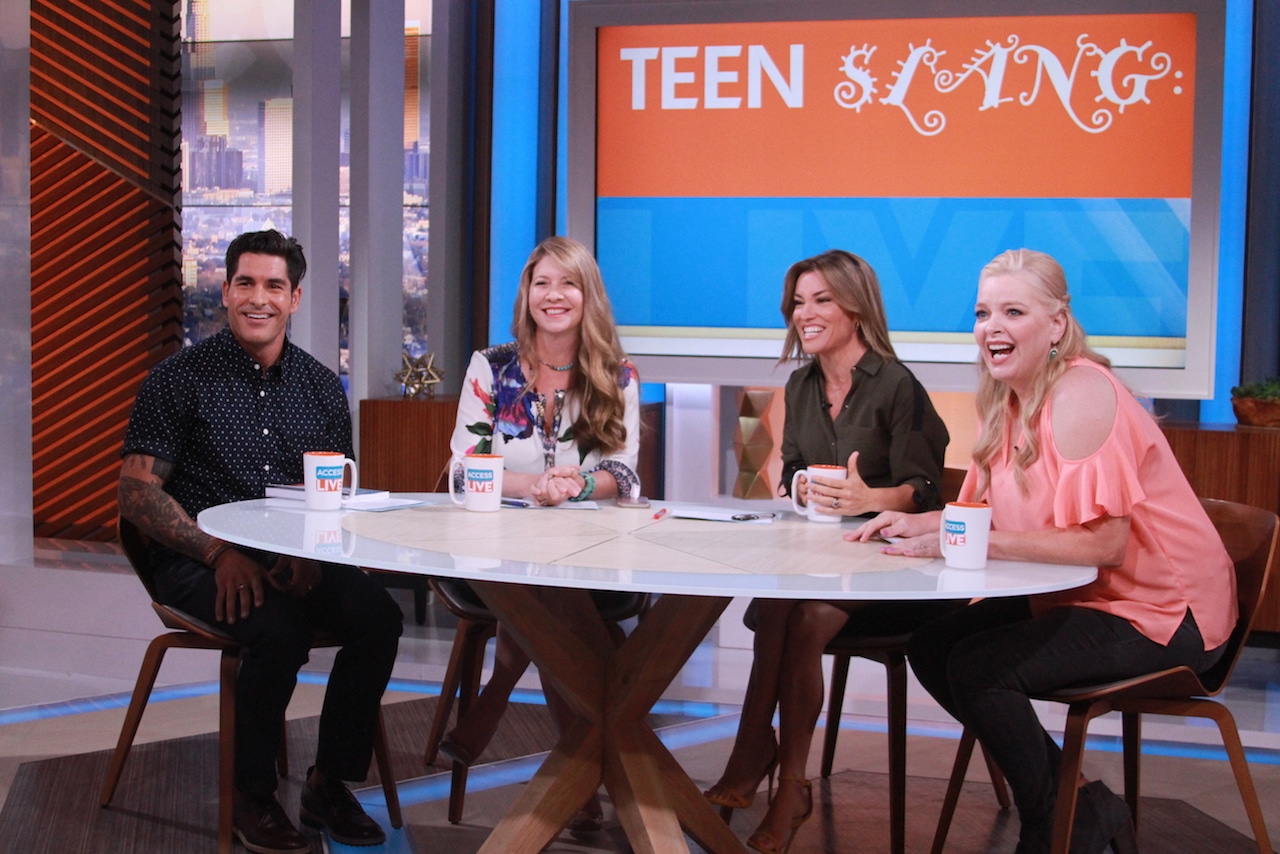
Now that my kids are teens, we are able to sneak away sometimes, guilt-free. If you have little ones and can’t seem to sneak off for weekends yet, don’t despair. It’s coming one day. And when you do, you’ll spend much of it fondly remembering being frazzled and sleep-deprived with your little ones. Each phase of parenting has its challenges and its pleasures. In the spirit of sharing and friendship, I’m taking fifteen minutes out in this sweet little farm kitchen to share the fun content producers of Access Hollywood Live helped me develop for my segment Monday on Online Teen Slang: Should We Worry? I hope you’ve set aside time each week to curl up with steaming hot tea for a moment of solitude to read your GKIS article. They are written to gently pepper you with useful information about tech, parenting, and safety so you can teach during screen-free dinners with you and yours. ❤️ Now on to the basics of teen online slang.
Why is slang always changing? Is it to be ‘cool’ with friends?
Slang is an expression of culture. Youth culture changes rapidly and is based on popular memes, songs, and movies. Part of the excitement is that you have to be an integral part of the culture to keep up. No parents!
Teen Slang: The Bad News
Often reflects and teaches concepts you may not want your child to know.
Can be used to hide from parents and plan secret and even dangerous activities
Can be vulgar, offensive, or cruel.
Teen Slang: The Good News
Young people who use slang are striving to form their own, independent, adult identities.
Sharing slang provides a sense of belonging, and being ‘in-the-know’with friends.
Using slang is a celebration of being young and having fun.
Every generation creates its own slang, but why does it seem so different now? Has it evolved in the age of social media and smartphones?
Slang is not new. But with the web, kids have a bigger, private, more versatile playgroundto live in. They juggle lots of virtual identities, each with its own characteristics, slang, activities, and community on demand with thousands of members of their tribe connected at once. We had our neighborhood buddies and the telephone. Big difference.
Should parents attempt to use their teens’ slang as a way to try to relate to their kids, or is that getting into majorly uncool territory?
If you want them to roll around in agony and openly insult you, you should totally use their slang.
Should parents be worried about the slang their teens are using now, or is it no different than if they think back to when they were younger?
It’s different. It’s more dark and vulgar for sure.But the teens I see in practice and the ones I’m raising are still good people. They’ve just habituated to a more troubling slang culture overall. Parents should be worried if their kids are too “thirsty”to belong, because that would result in being too eager to join in and take risks. They should be worried if they’re too secretive. They should be worried if there’s evidence of sneaking and dangerous defiance. Otherwise, have fun with it. Of course, correct them when they cross over the line, but stay engaged. Allowing them some privacy is also important.
Another topic we want to touch on is the cultural sensitivity issue of using slang — many of the terms originate in African American or LGBTQ communities — how mindful should people of other communities be of this before being quick to just use any term?
In-groups are delicate. If a person intrusively hijacks slang from a group they haven’t earned a place in, it can look aggressive or demeaning. Slang provides information about boundaries and belonging.
How can people make sure it’s appropriate to use a term before they start using it?
Do your research before using slang, like observe and ask others, Google it, err on the side of caution.Teens brutally police each other to follow social morè’s, which may even slip into bullying. Let your teen know you have their back 100%, even when they make stupid mistakes. Even better, teach them that mistakes are part of learning and you expect them often. Rather than shame them when they’re hurting with a lecture, take them for a smoothly, show deep compassion, and share stories about how common and healthy mistakes are. Sometimes providing a fun distraction while it passes is what they need.
How to Spot Red Flags in Teen Slang Use & What to do About it:
Talk to your teen often. Let them DJ in the car and share funny videos to stay connected. Keep up on their friends and interests. Be you but with humor. Encourage their independence but reassure them you are being them 100%.
Keep an eye out for concerning behavioral changes like increased isolation, poor hygiene, reckless behavior, or darkened moods are things that may signal trouble.
Block dangerous websites and monitor screen use.
Bookmark helpful websites, like Urban Dictionary, and set google alerts.
Look out for defensiveness and changing the browser quickly or erasing it.
If you’re worried and they won’t talk to you, consider psychotherapy. It’s shocking the influence I have with teens as they blatantly reject their parents with the same advice. It can really turn the situation around.
Want to know which slang terms to pay attention to and if slang use leads to teens having sex? Check out my earlier article Online Slang That Parents Need to Know.
I’m the mom psychologist who helps you GetKidsInternetSafe.
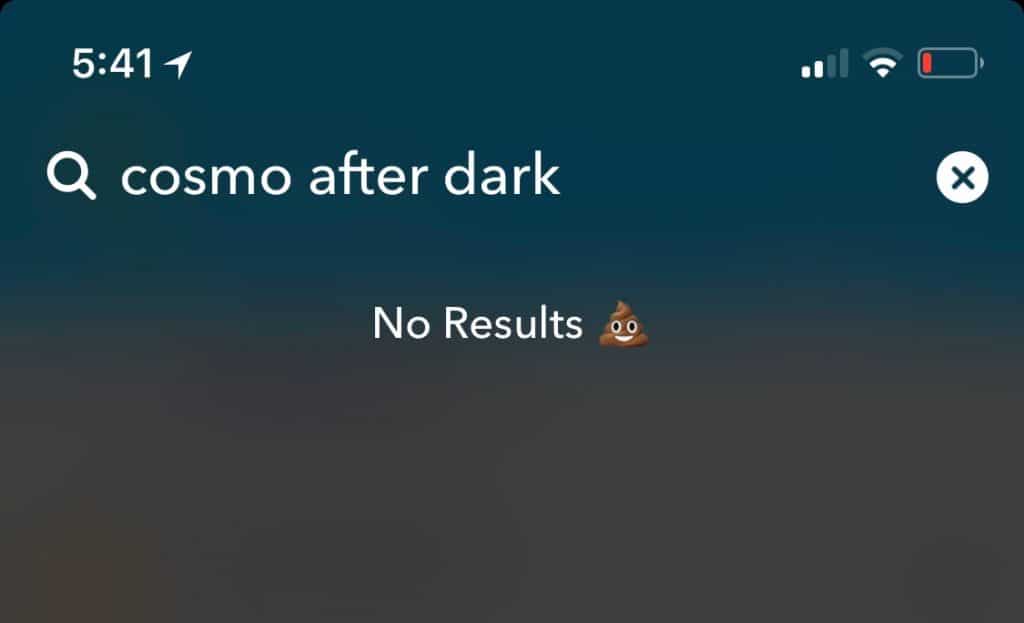
Now that consumers are getting more educated about online content, could the tide be turning in favor of more accountability and better online child safety? Earlier today I got a phone call from an FBI agent friend alerting me to the new Snapchat channel, “Cosmo After Dark,” after a parent called him with concern. This channel is searchable in the Discover feature of Snapchat. The issue became public knowledge when my friend at Protect Young Eyes, Chris McKenna, published his whistleblowing article, “Snapchat Introduces Cosmo After Dark (It’s P*RN).” Todays quick read explores why this is an issue GKIS parents need to know about.
Cosmo After Dark advertises that it is “an X-rated weekly edition that goes live every Friday at 6 p.m. and is exclusively dedicated to all things hot and h*rny.” Not only might your child access this content, they might even be able to subscribe to it! Although Snopes points out that Snapchat has age-gating tools that block “adult” content from users under 18 years old, Chris argues that Snapchat may be getting more desperate and allowing more lascivious content in order to maintain more marketshare. As Snapchat gets more worried about the bottom line, the worry is they may slip in corporate responsibility.
Another issue raised is if this content is Cosmo’s traditional sexy fare or is it actually pornography? You be the judge. Cosmo After Dark articles include:
“The 19 Best Sites to Binge-Watch Porn On”
“12 Songs You Should Have Sex to Right Now”
“The Steamiest Most X-Rated Sex Party Confessions”
Just sexy articles, right? I would argue that our kids and teens are harmed by hypersexual content. Are you comfortable with your teen son or daughter getting instructions for more satisfying anal sex? I didn’t think so.
After a busy day of watching this story evolve between clients, I am happy to say there is a happy ending. Due to parent outcry, Cosmopolitan magazine just pulled Cosmo After Dark. It turns out that our voices matter. As parents get more educated, we are becoming increasingly effective advocates with real influence. Thank you Chris for keeping an eye out for us. Unfortunately, this won’t be the last risk trap on social media.
WHAT CAN YOU DO TO PROTECT YOUR KIDS FROM ADULT ONLINE CONTENT?
If your teen has Snapchat, make sure their birthdate is accurate within the app. According to Snapchat, this will give some protection from inappropriate content.
If you’re worried your child may edit his or her birthday in order to access adult content, Protect Young Eyes reports that you can lock the edit feature by changing the birthdate on your child’s phone until you reach max attempts.
Avoid the whole issue altogether by following the Terms of Agreement on social media apps due to COPPA. If your child is younger than 13 years old, don’t allow them social media yet. Messenging apps and texting is risk enough.
Use sound digital parenting tools like Ourpact, Unglue, and Bark. Filtering content, tracking use, encouraging accountability, and monitoring content not only teaches kids important skills, it also puts parents in the screen driver’s seat so they can stay involved and offer teaching and support along the way.
Get informed about risk and best screen sanity parenting practices with Screen Time in the Mean Time: A Parenting Guide to Get Kids and Teens Internet Safe. It’s not just what you do that matters, how you do it counts too. Although safety strategies are important, forming a fun, cooperative relationship with your kids is key to a happy, healthy, screen safe family.
I’m the mom psychologist who will help you GetKidsInternetSafe.
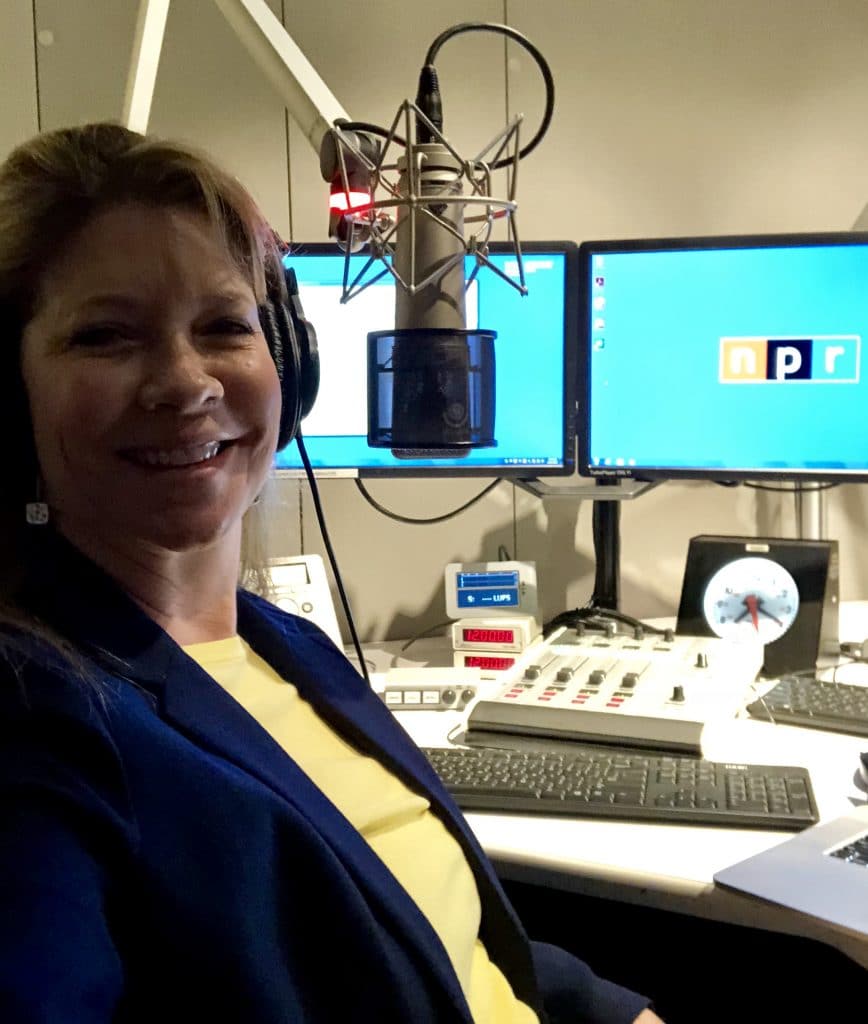
This morning I was invited to participate in the discussion, “How Parents Balance Privacy and Safety for Kids Online” on NPR WBEZ Morning Shift, Chicago. Host, Jen White, chose this topic based on a conversation she had when her best friend intervened with her 13-year-old son who took it upon himself to defend a peer against an Internet predator. Along with the other expert guest, Susan Tran from Depaul University, we discussed important issues that impact parents and families due to child smartphone use. Here are the highlights from the show, as well as a very personal story about my daughter just this weekend that shook me to my core.
Jen first asked about the challenges parents are facing in today’s digital age. Susan started the conversation saying that parents are concerned about risks like cyberbullying, access to unwanted content, and privacy issues like sharing too much personal information. I added that I’m seeing a spike in anxiety and mood disorders resulting from digital injuries. The danger is real, and parents need to do more, sooner, with better efficacy. Of course, if you are a frequent reader of the GetKidsInternetSafe blog, you are also aware of risks like health issues from screens like distraction from healthy relationships and activities (sleep, exercise, mindful eating), repetitive use injuries, and brain impacts (multitasking, mental brownout, addiction); interpersonal exploitation like cyberbullying, online predators, deceptive relationships (catfishing and hate groups and cults), and the encouragement of dangerous behaviors with pranks, online forums, and sexting; and exploitation for profit by selling violent or sexual content, product marketing, and cybersecurity issues. So many to talk about, so little time!
But there are also benefits. One benefit is the ability to monitor our kids for location and communication, real-time. This provides us with safety but also risks overparenting. In other words, parents can become too intrusive. I compared online access to a child wandering an airport. Of course, parents would want to know who kids were talking to and what they were talking about with strangers at the airport. It would dangerous for them to be wandering around alone, unsupervised. They face the same risks online. I believe we need to monitor most certainly, but we also need to let kids make their own mistakes and expand their independence by building resilience over time. We need to be there, slowly offering more opportunities for growth over time.
Jen stated that, according to a Pew Research report from 2016, about 48 percent of parents go through their kids’ text messages and call histories. Is it ever okay for parents to cyber-spy on their kids? My answer is yes to monitoring, no to spying. It’s difficult to know how to monitor, especially when kids push back with “I deserve my privacy” and “You’re the only mom who does that.” We give in to pester power too often. We don’t trust our gut and give them too much credit as digital natives. The truth is, with their immature brains and not a lot of experience yet, they can’t anticipate consequence and don’t realize how dangerous the world can be. They need us. Susan added that the conversation about child privacy changes with every generation. The key is having strong communication between parents and teens to navigate challenges as they arrive.
Jen’s friend called in and told her story about how she implemented strategies with her son, eloquently explaining the same process I experience with kids and teens in session. That is that kids will actually accept and even welcome reasonable limits, as long as the parent takes the time to explain their justifications and calmly negotiates the details. In fact, parent rules and supervision often calm kids down. Teens in particular often get too confident in their abilities to manage difficult online situations and get in over their heads. Having parent limits in place often provides them with an excuse to not get involved and even ask for help when they need it. This is the very dynamic that keeps kids devoted to therapy. Instead of firing me when I suggest limits, they are actually quite grateful. Setting fair limits is the first step to building an honest, open alliance.
Caller Kyle then expressed that he is totally lost and needs help finding software and apps for filtering and monitoring his kids’ phones. I shared some specific ideas, like setting parental controls on devices and through Internet service providers as well as setting privacy settings. Also buying third party services like Teensafe, Disney’s Circle, and OurPact can help. But the bottom line is, once your kids are instant messaging on social media platforms like Instagram and Snapchat, there is no third party software that monitors them. Instead, all you can do is collect usernames and passwords and check their phones regularly. Look out for secret profiles, as many kids have several in one platform (e.g., private and ultraprivate accounts on Instagram). Asking them to dock their screens at night, in your room to avoid sneaking, offers a regular opportunity to spot check. Please be honest about it. You don’t want to violate their trust. Besides, it gets them into the habit of realizing that other adults will see their posts and texts too, like other parents and school administrators. They may think before they post more if they see this as a possibility. If you want to monitor everything on smartphones, don’t allow social media.
As an illustration that it takes lots of tools and teamwork to keep our kids safe. I shared an incident that just happened to our family yesterday. We were at a volleyball tournament in Vegas with my 15-year-old daughter. When she was stretching and warming up with her team, a man snapped her photo without permission. The girls were aware enough (awesome) that my daughter’s teammate told the team mom. The team mom courageously approached the man and required that he delete the photo from his phone and in the deleted photos file as well. She also assured my daughter that she did nothing wrong. She had great concern that she would feel humiliation or blame and took efforts to reassure her. We were very grateful, wondering if he was a clueless grandpa like he said, or one of the 1:100 men out there that was a pedophile. Three hours later this same man was courtside with a telephoto lense during a game. We called security and asked him to stop taking photos of the girls. He apologized with suspicious insincerity and refused to wait for security. Security ultimately came and escorted him out for investigation, assuring us they have handled many cases like this before. Disturbing, yes. I was literally shaking I was so angry. It took awareness and trust for the girls and parents to work together for protection. For that I was proud and grateful. Another caller on the show reminded us to always keep digital evidence (videos, screenshots, and text strings) for law enforcement investigations.
How do we get past teen hesitation to talk to adults? Parents must get empowered and digitally literate by reading articles like those offered on the GetKidsInternetSafe blog. Around the dinner table (with devices in the basket), tell stories and ask their opinions. They will tell you stories in response. Viola! The cooperative dialogue has begun. Bidirectional learning overtime strengthens relationships and creates lots of learning opportunities.
When should kids get a smartphone? Susan said it’s different for every family, but be sure to be gradual. Start with a phone that’s not connected to the Internet. I added that parents are slipping. We need to get tougher. Don’t allow kids smartphones until after they’ve earned good grades the first semester of middle school. This will require gradual evidence of the judgement and initiative they need to manage a very powerful communication tool. For some kids, even middle school is too soon.
We ended with caller, Lucy, reminding us that parents need to model limits and set the example. Show kids that they are the priority, not screens. Set the message young that face-to-face interaction and nonvirtual relationships are the priority.
Thank you to WBEZ Morning Shift for such an important conversation to build closer relationships and safer screen use! To listen to the whole radio segment, CLICK HERE
I’m the mom psychologist who will help you GetKidsInternetSafe.
This has been a big week for grassroot efforts to GetKidsInternetSafe. First was the petition urging YouTube to delete the account of wildly successful YouTube celebrity, Logan Paul, after he tastelessly posted a video showing him giggling alongside a suicide victim. Second was an open letter from two investors urging Apple to help parents with screen management due to screen addiction rates among children. Although research is scrambling to get current, there is substantial evidence that kids are being exposed to harmful content and addicted to their mobile screens. These two precedent-setting moves reflect growing concern and awareness about the very aspects that spurred me to create GetKidsInternetSafe; that technology is profoundly changing childhood and even brain development. After her inspiring Golden Globes speech about our influence on kids, we need Oprah to help us get the GetKidsInternetSafe Revolution some momentum!
In modern times, child screen use has had a greater impact on the American family than anything since the abolition of child labor in 1938. Parenting has become a full-time preoccupation. Kids don’t labor for parents, parents labor for kids. Because of what we perceive as society’s high expectations of parents, raising healthy, happy kids has become overwhelming. We are expected to faithfully care for and entertain our children most of our waking hours without complaint. Although parents are waiting later to have kids and having fewer kids per family, with both parents working and the disappearance of extended family help, we have fewer supportive resources than ever before.
Even with little support, we have been accused of “helicopter parenting” to keep our kids safe and successful. We too often expect our kids to earn 4.0 GPAs, awards in robotics, and trophies in sports. Cs aren’t “average” anymore, now they’re a mark of parents not helping enough with homework. Our fear that we aren’t doing enough trickles down to our kids in the form of encouraging lectures and, too often, scathing shame and disappointment. We know this is too much pressure. So in between the “enriching” activities we work so hard to provide, we allow them leisure time…more leisure time than any children in history.
Parents are no longer willing to order their kids to go play outside until the streetlights come on. It’s too scary knowing what we do about child predators, bullying, sex, and drugs. To keep kids safe, we shelter them inside our houses to save them from the world’s perils. Instead of running amok like we did with hordes of neighborhood kids creating spontaneous, street-smart missions, they watch screens. And while they’re on their screens, we’re also on ours. Screen time gives us much needed breaks and provides what we hope is enriching content and a primer in digital literacy. But the troubling behaviors our kids demonstrate while compulsively viewing videos, social media, and video games eerily resemble signs of addiction. And we are the dealers, providing screens too often while they’re too young. We are hooked too. We feel guilty, but it’s often the best we can do. Screen technology has transformed childhood and parenting.
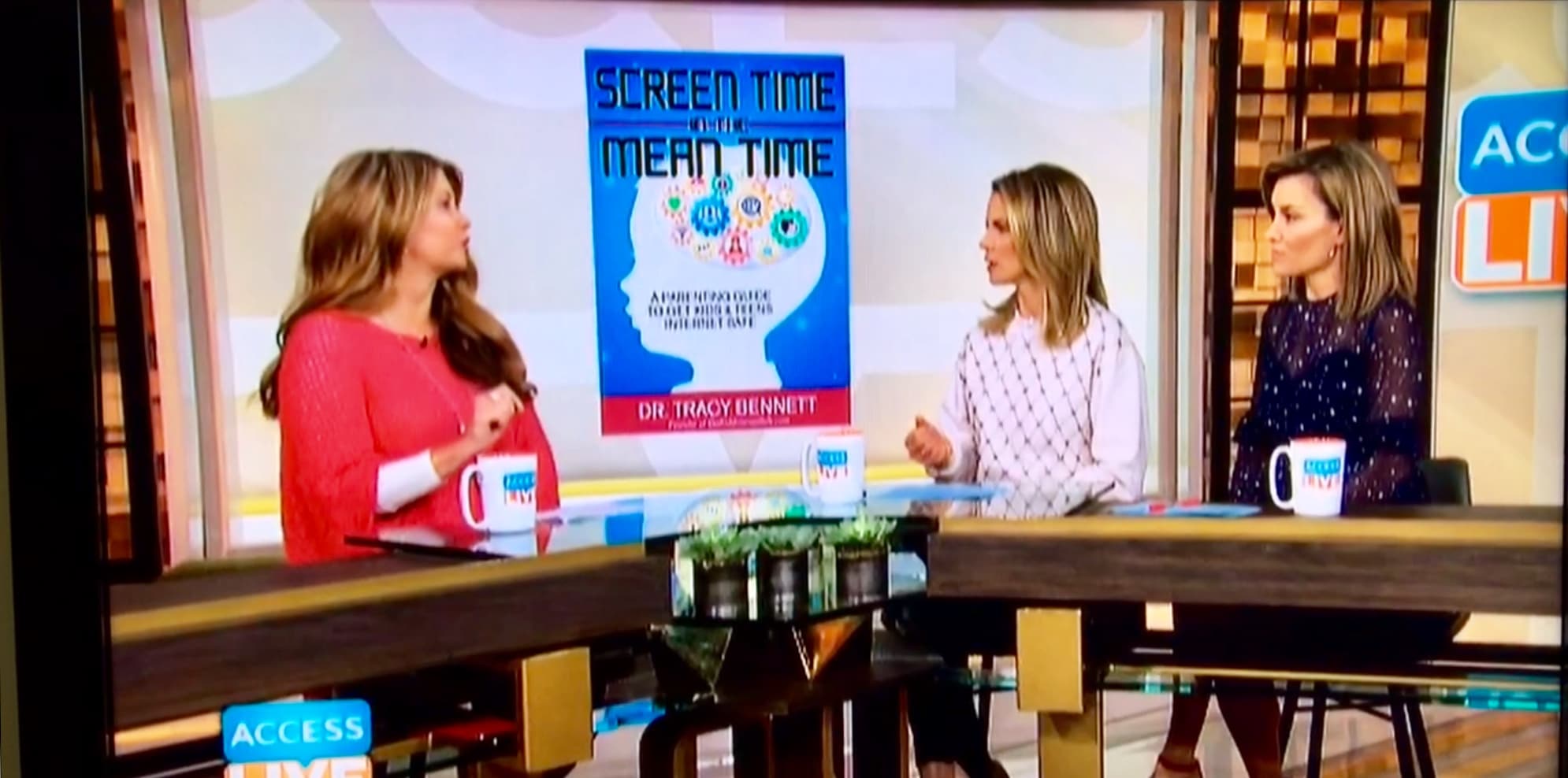
Thursday, Universal’s Access Hollywood Live, again hosted me as their parenting expert to talk about America’s concern about the negative impact of inappropriate video content through YouTube. As I stated on the program, the content that gets through is tantamount to child abuse, and kids don’t have insight into their psychological vulnerabilities. It is up to parents to filter and monitor. But we all know that there isn’t a tool strong enough to keep out sneaky algorhythms and celebrities and corporations bent on viral views that translate to big profits. We need help…and soon!
In their open letter to Apple, activist investors Jana Partners and the California State Teachers’ Retirement System (Calstrs), detail how surveys and studies definitively demonstrate that “it is both unrealistic and a poor long-term business strategy to ask parents to fight this battle alone.” They go on to say, “Imagine the goodwill Apple can generate with parents by partnering with them in this effort and with the next generation of customers by offering their parents more options to protect their health and well-being.” With their $2 billion dollar’s worth of Apple shares, their message is bound to get Apple’s attention.
Let’s be honest here. There is a rich clubhouse of companies that share the responsibility of the wellbeing of the world’s screen-watching kids. Youtube and Apple, yes, but grassroots activitists like myself are also reaching out to collaborate with other influential tech-giants like Facebook, Twitter, Instagram, Snapchat, Google, Amazon, and Disney, among others.
Until we come up with technology tools and sensible legislation protecting our kids from destructive violent and pornographic content as well as distracting, brain-changing, addictive use habits, we are stuck to do our best. Like I said on nationally syndicated television Thursday, how about we start by making our voices heard!
Here are the talking points from my AHL visit with fellow concerned moms, Natalie Morales and Kit Hoover:
Logan Paul has 15 million subscribers. He posts a 15-minute video a day, getting 300 million views a month (making 12-15 million dollars off these videos). His eager subscribers are primarily young people. How do you monitor?
With good old-fashioned supervision, location parameters, and rules to start. No screens in bedrooms, bathrooms, or behind closed doors. Dock mobile screens at night and set a Wi-Fi curfew. The GKIS Family Living Agreement helps get parents on-track.
YouTube does have a “safety” mode, but that doesn’t always prevent your child from seeing this content. Is it more about having a conversation as a family? How should you approach this?
There is a YouTube Kids site that also helps, but yes, it is about having conversation as a family, and a lot of it. Recognize that kids don’t yet have the experience to understand psychological vulnerabilities. Use current, fact-based information like that offered for free and delivered weekly on GetKidsInternetSafe to keep the conversation going. Saying “don’t do that” isn’t enough. Follow the specific conversation starters and sex ed tips offered in Screen Time in the Mean Time to ensure your kids know the difference between sensational content designed for profit (fake news) and content that reflects real-life, factual scenarios.
You have to be 13 years or older to use YouTube, but many of his followers are under the age of 13 (including Kit’s son)….
Exactly. We are all guilty of monitoring failure. We simply can’t supervise our kids 24/7, nor is it appropriate to do that. Social media platforms say 13 years old is required for use, but that is based on privacy issues rather than sound psychological reasoning. Accidental exposure is the most common type, but recognize that kids and teens are developmentally curious and bold; they’ll go looking for distressing material.
Is there a problem with kids being desensitized from these type of videos? Some kids who viewed this may have thought nothing of it.
My GetKidsInternetSafe articles detail how desensitization and even PTSD symptoms can result from livestream video viewing by kids and adults! Not only should Logan Paul have had x-generation team members to help him with common sense and compassion in that Japanese “suicide forest,” but our kids need a support team too. The victim ended his life in deep despair and his family members are destined to maintain it in their grief. Parents must specifically teach empathy and compassion and recognize that viewing violence and flippantly talking about issues like suicide can create real risk, like suicide contagion – a dangerous cry for help.
People are calling for Youtube to suspend Logan Paul’s account after posting this video. Do you think that’s the right move? Are you surprised Youtube hasn’t taken action?
The truth is that YouTube profits from viral videos, and you can’t help but wonder how often does profit get in the way of ethical constraint or human compassion. I think that parents need to advocate for better safety measures on all the livestreaming platforms. In my practice, I treat kids who are commonly viewing violent pornography, imitating life-threatening stunts, and engaging with human traffickers, hate groups, and child predators. The research is showing that seeing hours of livestream news video, like what we saw with the Las Vegas shootings, can be more psychologically distressing than being a live witness to the tragedy! We can prevent this, and more can be done.
What can you do today?
Decide on a course for getting kids Internet safe by advocating with your favorite organization, like GetKidsInternetSafe.
At the time of this publication, the “Delete Logan Paul’s YouTube Channel” petition by an unknown author on Change.org had over 465,000 signatures. I personally wish the petition was addressed to YouTube with a plea to tighten their security measures rather than publicly shame Logan Paul. Although he is on a well-earned break, he took the video down himself. Before he did that, it still got over 6.5 million views and is currently being shown by other YouTubers who are at once shaming him for his judgment while simultaneously rebroadcasting the videos. Really folks? Hypocrisy in action.
Clean up your own screen use habits.
We are all habituated to picking up our phones in the meantime, whether it be waiting in line or during soccer practice. Let’s all make a little more effort to stay in the present with our kids and risk being alone with our thoughts. Remember what that used to be like? 🙂
While we all spend the meantime on our phones, the mean time is being fueled. There are online risks to kids that most parents have never dreamed of. The future is here and despite how many of us, like Kit Hoover, wish we could go back to kick-the-can days, digital literacy is necessary for academic progression. Our kids won’t hear of no-screen weeks, nor will we. That means we need to get brave and educated. You may think you’ve heard it all, but I’m certain my information will help you make a more comprehensive and sensible safety plan and bring you closer to your kids. At the end of the day, what matters is that we do a good job raising great kids. Nothing is more important than that.
I’m the mom psychologist who helps you GetKidsInternetSafe.
A selfie is a self-portrait shared on texts or social media for attention-seeking, communication, documenting one’s day, and entertainment.[1] The term was first seen in 2002, but didn’t become popular until 2012. By 2013 The Oxford English Dictionary named it “The Word of the Year.”[2] We’ve all been guilty of taking selfies. But it takes education and practice to use good judgment. Today’s GKIS article asks, “Are selfies bad for our mental health?”
Celebrity Selfies
With ads on social and print media, billboards, and television, kids and teens are exposed to thousands of images and videos every day. And, it isn’t obvious how filtered, lighted, contoured, surgically and cosmetically altered, and digitally enhanced the photos are. They aren’t a quick, natural snapshot. They are highly produced and stylized. Kim Kardashian proudly shared that she once took 6,000 selfies during a four-day vacation. Her celebrity sister, Kylie Jenner, also admitted that it sometimes takes up to 500 photos before she gets the right shot.
With such exposure, kids are encouraged to scrutinize their appearance, striving to develop and refine the “perfect” face and body.3 Hyper-sexualized selfies further serve as a negative influence. One can easily get roped into hyper focusing on looks and attracting “likes” and comments as a reflection of worth and popularity.
Selfie Editing Apps
Makeup and selfie editor apps are very commonly used and include features to:
Change eye color
“Slim and trim to selfie perfection”
Enlarge features
Shrink the nose
Plump the lips
Enhance facial contours
And even offer hundreds of pupil templates “to make your eyes look beautiful.”
Apps also offer combo features that turn your image into cartoon perfection. For example, the “fairy filter” on Snapchat can change your selfie in multiple ways at once, making your eyes larger and gleaming bright while also smoothing out the skin and whitening teeth.
The Beauty, Fashion, and Health and Fitness Industries
Selfie alteration isn’t motivated simply by entertainment. A far more sinister reason often lurks behind the manipulation of young minds, namely profit.
Each year the beauty industry boasts a profit of 42 billion dollars.[10] Add that to the 30 billion dollars brought in by fashion, health, and fitness and the big business of advertising on social media, and one can imagine the lengths corporations will go to manipulate buyers into buying.[4] The worse we feel about ourselves, the more we buy products to “fix” us.
Do we adopt unrealistic attractiveness standards?
In the past twenty years, anxiety and depression have been rising at an alarming rate. The rates of mental health issues among women have particularly jumped.[5] Social media and the pursuit of perfection are likely contributors.
Not only can media exposure lead to mood issues, but body distortion and eating disorder issues are also on the rise.[7] Forty to 60% of elementary school girls report having concerns about weight.[8]
Body shaming among peers starts young and peaks during adolescence. Both males and females engage in shaming, but they do it differently. Males tend to be more directly aggressive, while females shame through passive-aggressive means like gossip and cyberbullying.[9]
Body image issues can lead to excessive use of diet and exercise products and potentially lead to clinical eating disorders. In the United States alone, 20 million women and 10 million men suffer from a clinically significant eating disorder at some time in their life.[6] Even with awareness and education, prevalence numbers continue to rise.
How can we protect our kids from unhealthy self-perception and distorted body image?
Love and compliment your kids loudly and unapologetically for all they are! This includes their worthiness of love just for being the “perfect,” nondigitally enhanced them.
Reinforce that the self is made up of far more facets than a beautiful face. Likes, interests, skills, and traits make up what’s important about a person, not eye size and hair color.
Discuss the fact that we will be hanging out with our bodies for the long haul, which means we must treat our bodies as our best friends rather than our enemies.
Lead by example. Do you voice your disapproval about your face or body aloud to your kids? If you do, they too will follow suit about themselves. Instead, be loud and proud of the woman or man you are today. Value yourself just as you would like your daughter or son to value themselves.
Implement healthy eating, sleeping, and exercise habits and explain why that is so important for strength and health. I prefer to focus on words like “delicious” and “nourishing” for healthy food to highlight lifestyle factors and frame nutritious food options as a treat, rather than words like “diet,” “cleanse,” or “cheat” that focus on junk food as treats and healthy foods as punishment while aggrandizing shaming fads.
Remind your teen that what they see on social media and in ads isn’t always the real deal. Take an Internet browsing journey with them researching this topic by searching “photoshop hacks” or looking up Jean Kilbourne’s ground-breaking work in this area with her “Killing Us Softly” video series. A must-see!
Thank you to CSUCI Intern, Brooke Vandenbosch for her contributions to this important article! Wonder if only girls are susceptible to body image risk to mental health? Check out, “Body Shame and the Average American Male” for a discussion about how boys are increasingly affected as well.
I’m the mom psychologist who will help you GetKidsInternetSafe.
1 – Sung, Y. , Lee, J. , Kim, E. , & Choi, S. (2016). Why we post selfies: Understanding motivations for posting pictures of oneself. Personality and Individual Differences, 97, 260-265.
5 -Press Association Newswire (2014). ‘Very High Rates of Anxiety and Depression for Young Women. Newsquest Media Group.
6 – Wade, T., Keski -Rahkonen A., & Hudson J. (2011). Epidemiology of eating disorders. In M. Tsuang and M. Tohen (Eds.), Textbook in Psychiatric Epidemiology (3rd ed.) (pp. 343 – 360). New York: Wiley.
7 – Leit, R. (2002). “The Media’s Representation of the Ideal Male Body: A Cause for Muscle Dysmorphia?” International Journal of Eating Disorders, vol. 31, no. 3, pp. 334–338., doi:10.1002/eat.10019.
8 – Smolak, L. (2011). Body image development in childhood. In T. Cash & L. Smolak (Ed s.),Body Image: A Handbook of Science, Practice, and Prevention (2nd ed.). New York: Guilford.
9 – Aslund, C., Starrin, B., Leppert, J., & Nilsson, K. (2009). “Social Status and Shaming Experiences Related to Adolescent Overt Aggression at School.” Aggressive Behavior 35.1: 1-13. Web.