Too much screen time can be harmful to our health. Findings suggest that, along with unhealthy diet and lack of exercise, increased screen time is a contributor to epidemic obesity among Americans. According to the CDC, 40% of adults and 18.5% of children in the United States are obese. Obesity increases the risk of developing other health conditions like diabetes, cancer, high blood pressure, heart disease, and stroke. But screen time isn’t all bad and can even help us get more active and track important health data. Today’s GKIS article offers recommendations for some awesome exercise apps that can help get you off the couch and on your feet for more healthy and fun fitness.
The Benefits of Exercise
Physical fitness is proven to have many physical health and mental health benefits. Exercise can improve sleep, reduce anxiety, and lift your mood, ultimately reducing the risk of depression. With busy schedules and limited access to gyms, we too often go without exercise. Luckily, there are hundreds of apps on our smart devices that make exercise enjoyable and easier, even on a tight schedule. Also, exercising with your family is a great way to teach kids important life skills and bond and stay connected!
Trending Exercise Apps that you (and we at GKIS) Love
Nike Training Club
A favorite of Dr. B’s, the Nike Training Club is a great free app that you and your family can enjoy at home. This app contains over 185 workouts for all levels including high-intensity training, yoga classes, and bodyweight workouts. Little to no equipment is required for most of the workouts, so you don’t have to stress about spending money on weights.
Here are some of the collections that are great for home:
Big Workouts for Small Spaces
For the Whole Family
Boost Your Mood
Rejuvenate with Yoga
Elevate Your Game
Other Features
In addition to the free workouts, Nike Training Club offers tips for nutrition, sleep, recovery, mindset, and wellness.
I have personally used this app, and I love it. Not only is it great because it is free, but the quality of what is being offered is fantastic. This app would be a perfect addition to your families’ devices and your daily routines!
Workouts and Exercises at Home
This fitness app is perfect for families with busy schedules because the workouts take only seven minutes. The app features a cute “Lazy Monster” character that guides you through up to 30 different exercises that require no equipment. All you have to do is set aside seven minutes of your day to try it out.
Other Features
Workouts and Exercises at Home allows you to create personalized workouts and track your progress. It currently costs $3.99 a week, but it is less than a gym membership and all of the workouts are planned for you. All you have to do is open the app. Workouts and Exercises at Home is an app that will make exercising fun for you and your family.
Gymondo: Fitness and Yoga
Gymondo is a fun fitness app that contains workouts under 30 minutes long. There are a variety of workouts to choose from like yoga, strength training, HIIT, mobility, and body weight. These workouts are available at any fitness level, so this would be perfect for anyone in your family.
Other Features
Gymondo is a free app, but the premium version gives you access to over 200 workouts, healthy recipes, and a nutrition plan. The premium version is only $7 a month, which is a good deal for all that is being offered. Get your family together and try this app out for free!
Seven
Seven is a high-quality fitness app that contains seven-minute workouts. This app is family-friendly and requires no equipment. All you need is seven minutes and some open space for a great, quick workout.
Other Features
Seven features daily challenges to keep you motivated to exercise every day. You can choose between 12 different instructors that will motivate you during your workout. You can also create workouts that are personalized for you and your family.
If you join The 7 Club, you get access to all the workouts and features on the app. One month costs $10, and one year costs $60. Seven is perfect for a quick workout in the morning, afternoon between zoom classes/meetings, or in the evening. All you have to do is set aside seven minutes for you and your family to get a good workout in.
A special thank you to Alisa Araiza for researching and co-writing this article. I hope that trying these apps will bring you closer to your family and make exercising enjoyable. For other ways to stay connected with your family, take a look at Dr. Bennett’s #TogetherAtHome Family-Friendly Activity Ideas on the GKIS website.
I’m the mom psychologist who will help you GetKidsInternetSafe.
The pandemic of 2020 has many of us working from home. For most of us, our internet must work quickly and efficiently to stay productive. The increasing demand for having reliable, quick internet coupled with new technology compatible with the internet has led to the creation of 5G, a new wireless internet connection. But many feel anxious about this new mobile network, wondering what impacts it may have on our health, privacy, and security. Learn all about 5G in today’s GKIS article.
What is 5G?
Introduced in 2019, 5G is the latest form of wireless internet connection. 5G will enhance internet connections and download speeds using “millimeter waves.” These waves are smaller and move faster than previously used 4G waves, allowing the space needed for the Internet of Things (IoT).
What is “IoT”?
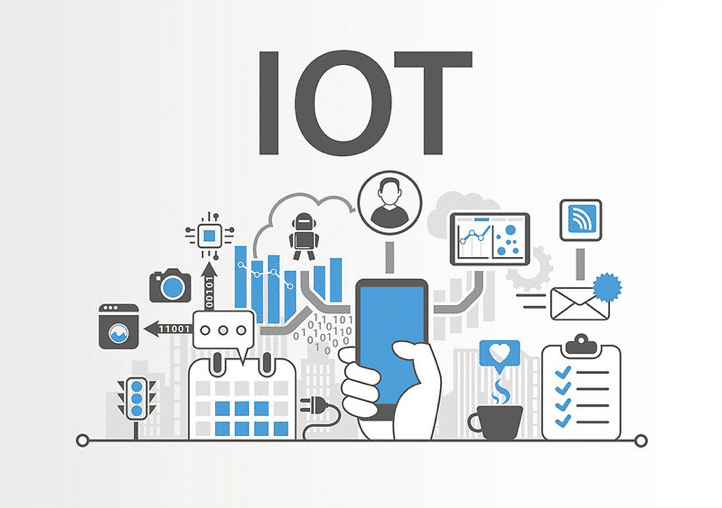
IoT stands for the Internet of Things, which refers to wired and WiFi-connected home products that collect data about our daily behaviors. This data is then used to better target us for marketing, to improve services, and to make more efficient, informed decisions based on probability and statistics. Currently, we have 6.5 billion devices connected to the internet. It is estimated that by 2026, more than 75 billion devices will be connected to the internet generating $1.1 trillion a year.1
How will IoT be applied?
Consumer
Door locks, security cameras and monitors, home appliances, light fixtures, thermostats, smart televisions, smart refrigerators, media platforms, and voice-assisted digital assistants like Amazon’s Alexa, Apple’s Siri, Google’s Google Assistant, and Microsoft’s Cortana will have the capacity to sense, analyze, and act as well as deliver data to the corporation for analysis, storage, and sharing.
Commercial
IoT is being applied to many industries, including the healthcare and automobile industries through the use of video training, building automation, security robots, pacemakers, wireless infusion pumps, and vehicle to vehicle communication (V2V). In 2019, at the Mobile World Congress in Barcelona, Dr. Antonio de Lacy guided a team of doctors operating on a patient through a live video from the other side of town.2 The video is clear, in real-time, and with no delays.
Military
Drones, robots, surveillance, and wearable biometrics are being implemented for warfare.
Industrial
Industrial applications of IoT include statistical evaluations of big data from manufacturing robots and smart farming. One study estimates IoT will replace up to 800 million farmworkers by 2030.3 Vertical farms and warehouses can produce the exact amount according to demand, rather than a surplus, and without the expense of employing workers.4
Infrastructure
Barcelona has embraced the development of becoming a “smart city” through the use of IoT. The results appear to have a positive impact on their economy, resulting in a $50 million per year revenue on smart parking alone. They have decreased their costs in energy consumption by $37 million a year using self-regulating lights, as well as saving $58 million a year with “smart gardens” that water plants at the right place and the right time.5
Security, Privacy, and the Internet of Things
We are headed for a paradigm shift, where our physical belongings are increasingly becoming computer systems. What was first “internet security” will be “everything security.” Unfortunately, most IoT software being manufactured and marketed is poorly written, insecure, and in the hands of corporations. Although you may trust the corporation with your data, do you trust the hackers who can breach that corporation’s controls to get access to it?
Security just isn’t a pressing concern for corporations and consumers. As consumers, we want inexpensive devices that work. Having insecure appliances connected to the internet like a thermometer, which is normally intended to last a long time, is dangerously allowing hackers the opportunity of exploitation.6 You might be able to get away with leaving the front door of your home unlocked, but in the cyberworld, every door can be attacked. Security professionals and hackers alike use what is known as wardriving to locate and record WiFi networks using a GPS.7
Wardriving is a GPS used to locate vulnerable and unprotected WiFi from a car. Problems arise when hackers recover the WiFi password through other connected smart devices.8 Thermometers, baby monitors, smart toys, surveillance cameras, and vehicles have been hacked in the past.9 More recently, throughout this pandemic, video conferencing Zoom applications have been hacked and banned all around the world because of poor security.10 Steps towards securing the IoT will need to be regulated, rather than patching the software for security after-the-fact, like Zoom.
Thank you to GKIS intern Andrew Weissmann for researching and authoring this article. To learn how to increase the cybersecurity in your home and identify the red flags that suggest your child may be in danger from bad actors online, check out our GKIS Cybersecurity and Red Flags Supplement. For less than a cup of coffee, you can be more informed and assured your family has adopted the best cyber-safety practices.
I’m the mom psychologist who will help you GetKidsInternetSafe.
Have you heard the rumor that Facebook is spying by recording your everyday conversation? Or maybe you’ve had an experience of Facebook offering a friend request after you had lunch with a shared friend? Facebook denies any form of spying. Are they being truthful or are they going behind our backs and hiding in the shadows of the Internet?
Ad Retargeting
Ad retargeting refers to a marketer using data about your browsing or buying history to advertise products you’re likely to buy.
It’s well known that Facebook and other websites participate in ad retargeting. However, stories have arisen that question how that data is being collected. One story that has been widely shared is about a couple talking about getting a cat and then, suddenly, ads for cat food appear on their Facebook profile.[1] Or the one about. a pregnant teen who was targeted for diaper and stroller ads before she even knew she was pregnant.
We’ve all been the victim of ad retargeting on Google or Facebook. For example, the other day I searched for a specific lotion from Bath & Body Works and added it to my cart. Before checking out, I closed the website to go on Facebook. JUST THEN, an ad was presented to me for the exact lotion I was waiting to purchase. Creepy!
Facebook
One of the largest social media outlets under fire regarding the invasion of privacy is Facebook. With over 2.3 billion Facebook users, this social media giant has a responsibility to protect its customers. Or do they?
In response to allegations, Facebook denied spying and claims they do not use microphone technology to listen in on our conversations.[2] Without our consent, that would be illegal.
Maybe there are different reasons why these coincidences are occurring. In psychology, we call the feeling of learning something and then noticing that the same thing appears constantly the Baader-Meinhof phenomenon.[2] In other words, it could be just your imagination and it’s truly a coincidence.
Smart Devices
Perhaps that explanation isn’t persuasive enough. There are smart devices (like televisions, refrigerators, and speakers) and even children’s toys that bend the rules of privacy and know more about us than we’d be comfortable with. Smart devices can use location, data, and even a microphone to gain personal information that is valuable to marketers.[3]
For example, smart connected toys like Talking Barbie are on the market, and parents are becoming concerned.[3] These toys not only record the sounds and conversations you home. They also store that data on a server. The doll can then respond with one of the thousands of canned responses based on an algorithm. If your daughter asks Barbie what outfit she should choose, Barbie may suggest she consider a career in fashion merchandising.
Smartwatches also raise privacy concerns.[3] For example, the Apple Health app on iPhones and Google Fit can track and collect data on your location wherever you take your phone.[4]
Smart speakers like Siri, Alexa, Echo, and Google Home are other examples of smart-connected appliances. Recent estimates are that Alexa has over 10,000 skills available.
Pixel and Digital Exhaust
The ‘liking’ and ‘sharing’ features on Facebook and other social media sites also provide important marketing data that allow those sites to more specifically target you.[5] The more they know about you, the better they can conveniently dish up items you will be compelled to buy.
Even with Facebook’s denial of privacy violations, many are still skeptical. During an episode of the podcast ‘Reply All,’ the hosts informed listeners that Facebook uses a program called Pixel. This program collects data about your online behavior and is installed on millions of websites.[6]
In fact, whenever you surf the Internet, you are followed by trackers, called digital exhaust, that collect data on your activity. This data that is very valuable to those trying to sell you something or learn about your interests and habits.
Is Facebook spying on you?
On the episode of Reply All titled, “Is Facebook Spying on you?” hosts investigated an incident where a listener was convinced Facebook listened in on her private conversation through her smartphone microphone. She reported that the same day she brought up the name of an old friend, Facebook suggested that individual as a contact.[6]
After much discussion, the listener learned that the site uses a shadow profile to access the contacts on your phone if that option is selected. The listener reasoned that since Facebook could determine her location was the same as her lunchmate, also a Facebook user, maybe the site decided they were friends and offered each of them friends from the other’s friends lists. She said it is kind of like a bird-of-a-feather-flocks-together offer.
The bottom line is that it’s almost impossible for us to anticipate how congregated (combined) data can be used to predict future behavior, and how that data might be useful to marketers.
Although most of us willingly sign over our private information in exchange for fun content, here are some ways to minimize risk.
Turn off the feature that tracks your location and embeds that data in your photos. For iPhone go to Settings > Privacy > Microphone and then unselect Facebook. On Android, go to Settings > Personal > Privacy > Safety > App permissions > Microphone and unselect Facebook.[2]
Turn off location services.
Avoid giving away private information.
Do not open or click on anything that looks suspicious.
Use a password generator, which is a software program or web page that will generate a one-time password for you to strengthen your cybersecurity.[8]


 Nike Training Club