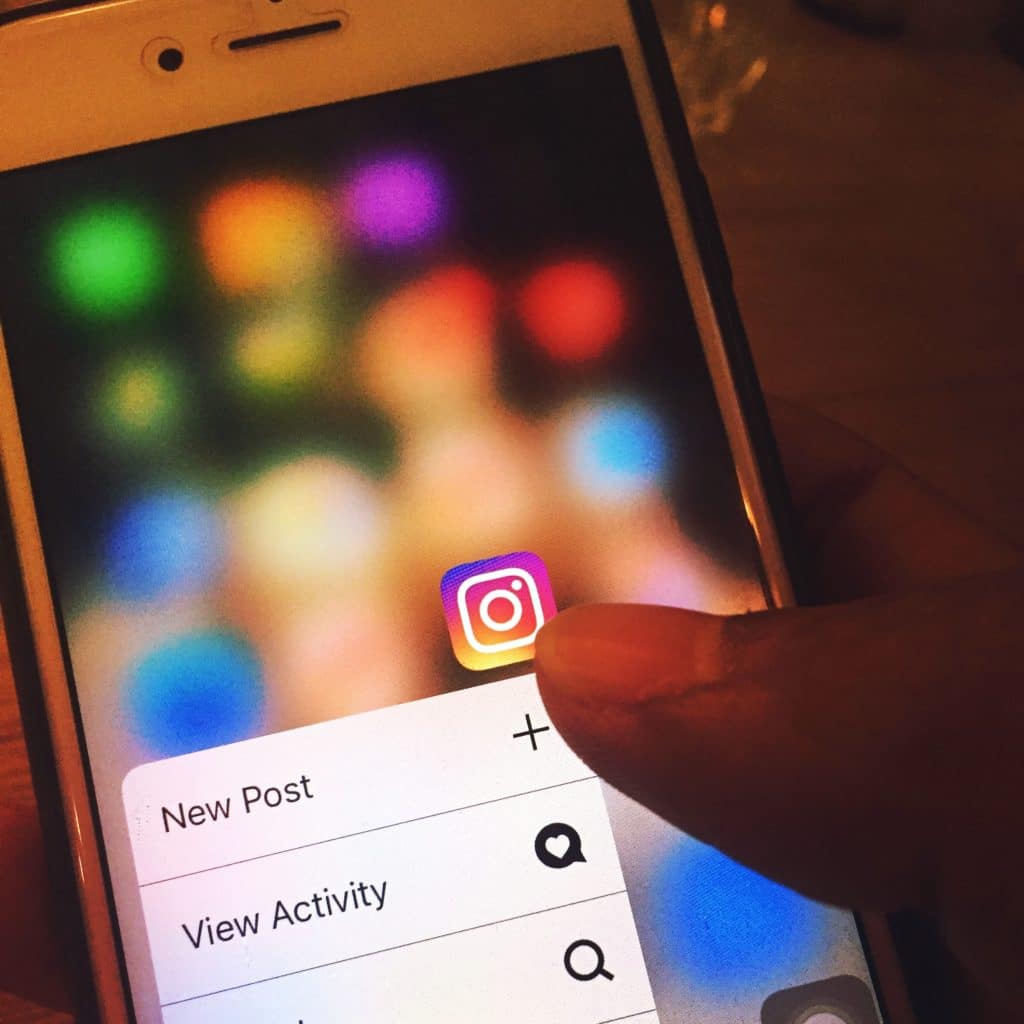
Instagram reports 1 billion monthly active users and more than 500 million daily users.[1] Most teens use social media for more than 6 hours per day.[2] Many social media users have shifted in intention, placing the highest importance on becoming insta-famous rather than sharing information with close friends. Insta-famousrefers to a person who is well-known on Instagram, reflected by thousands of followers and likes. Teens can become consumed in this virtual competition for internet popularity, sometimes leading to a destructive pattern described in my book, Screen Time in the Mean Time: A Parenting Guide to Get Kids and Teens Internet Safe, as compare and despair.
Insta-worthy? Self-Presentation Theory and Impression Management
Many Instagram users lurk profiles, consumed by other people’s lives and perfecting their virtual selves. According toself-presentation theory, people are motivated to present themselves to show off an ideal self and please their audience.[3]
Our frontis our best-stylized image. Our backstage is our true selves. Maintaining too many fronts can be overwhelming. Being great at impression management can be the difference between social media success or failure.
Shout Out for Shout Out
A SFS (Shout out For Shout out) is a branding strategy for optimal self-presentation on Instagram. It refers to teens posting someone else’s account to theirs and vice versa. The goal is to cooperatively promote their pages so both people gain more followers.
As self-presentation trends change in pop culture, so do trends online. In 2008, graphic t-shirts were the cool thing to wear to school. In 2015, hipsters ruled the school. And in 2019, the VSCO look was in. VSCOis the name of the popular app used to create fun colorful edits.
A “VSCO girl” has beach-wavy hair, carries around a hydro flask, has a scrunchie around their wrist, and shops at thrift stores and Urban Outfitters. My 13-year-old cousin shares, “Everyone wears skirts, Doc Martens, and scrunchies now. It’s so VSCO.”
Evolution and Optimal Distinctiveness
With popular editing apps such as VSCO or FaceTune, many social media users have unrealistic expectations for how attractive they should look in posts. Humans are social beings. We work best collaboratively. Social rewards like compliments, words of appreciation, affection, or being with a friend, are major behavioral motivators for young people.[3]
Seeking social reward and trying to achieve optimal distinctiveness (being unique but still super stylish) can be traced back to our ancestors. Belonging to a community meant being socially accepted and supported by a group of others. Many times, this meant life or death.
For teens today, that means walking a razor’s edge trying to look unique while still fitting in with peers. In this impossible quest, teens may be juggling several virtual and nonvirtual selves. Being too unique or too the same invites criticism and cyberbullying.
Getting social media likes rewards the brain with dopamine, the neurotransmitter released in the pleasure center.[2] Instagram programmers know it and bake it in so they can make more money.
Social media influencers are experts at achieving optimal distinctiveness. Viewers spend a lot of time and money trying to do the same. Views and likes result in millions of dollars in profit. This biological hack of social acceptance and connection makes the brand more profitable.
Risks of Social Media
Insta-Anxiety
The constant pressure to stay up to date with trends can cause compulsive online browsing and anxiety. Most teenagers do not have jobs to maintain the lifestyle that many YouTubers do. Social anxiety and the fear of being judged by peers can be overwhelming alongside daily social obstacles that teens face like bullying, hormonal changes, and self-judgment. Instead of fun, spontaneous sharing, teens can get caught up in compulsively second-guessing their posts or avoid sharing altogether.
According to recent studies, social media use has contributed to an increasing number of cases of social anxiety disorders in adolescents.[2] Untreated, anxiety can contribute to other mental health issues including depression, eating disorders, substance abuse, and even thoughts of suicide.
Social Anxiety Disorder Symptoms include:
Lack of desire to socialize
Being withdrawn
Feeling embarrassed or a deep fear of being judged by others
Low Self-Esteem
Forty-six percent of teen girls admit that social media makes them feel bad about themselves due to unrealistic standards.[2] Self-esteem is elevated when individuals are deemed popular by others. For example, having Facebook friends who are more responsive can satisfy psychological needs above and beyond the number of Facebook friends one has.[4]
Seeking Positive Feedback
We all like to know that people find us attractive. Social media, however, can impact us in ways we aren’t even aware of. For example, a 2018 study found that when young women received likes for sexy selfies, they were more likely to post similar photos again.[3]
Lack of Privacy
Teens don’t have the prefrontal brain development to anticipate consequences and engage in high order thinking. Subsequently, teens may not think ahead, instead focusing on the instant gratification of someone liking or commenting on their post. This can cause a habit of oversharing online. Eighty percent of people who commit crimes have taken information from social media sites.[5]
Ways to Improve Your Teen’s Emotional Reliance & Achieve Better Online Safety
To avoid triggering insta-anxiety, make sure your kids are neurologically, socially, and emotionally mature enough to manage risk. Although she says it depends on the child, Dr. Bennett recommends avoiding social media until the second semester of middle school.
Experts agree that Social Media Readiness Training is critical to help kids recognize risk, know how to ask for help, and self-manage use.
Use our free Connected Family Screen Agreement to set parameters and create a screen-friendly, cooperative dialogue. Just enter your email and name on our website, and it will be delivered directly to your email.
Create a customized filtering, tracking, and monitoring toolkit with the GKIS Screen Safety Toolkit. This course also offers smart parenting strategies, like making sure you have social media login information for back-end access.
Thank you to GKIS intern, Isabel Campos for alerting us about the risks of insta-anxiety. If you learned something, please share GKIS articles and tools with friends and family!
I’m the mom psychologist who will help you GetKidsInternetSafe.
[1] “Our Story.” Instagram, 26 Mar. 2019, instagram-press.com/our-story/.
[2] Granet, R. (2016, September 19). Living In Live Time: Social Media’s Impact On Girls. Retrieved from https://newyork.cbslocal.com/2016/09/19/social-media-use-teens/
[3] Bell, Beth T., Cassarly, Jennifer A., & Dunbar, Lucy. “Selfie-objectification: Self objectification and positive feedback (‘likes’) are associated with frequency of posting sexually objectifying self-images on social media.” Body Image, 26, 83–89. September 2018. https://doiorg.summit.csuci.edu/10.1016/j.bodyim.2018.06.005
[4] Burrow, A. L., & Rainone, N. (2016). How many likes did I get?: Purpose moderates links between positive social media feedback and self-esteem Journal of Experimental Social Psychology, 69, 232-236 https://doi.org/10.1016/j.jesp.2016.09.005
[5] Law Enforcement, Social Media and Your Privacy: How Your Data is Used to Solve Crimes. (2018, May 16). Retrieved from https://www.nextadvisor.com/law-enforcement-social-media-and-your- privacy-how-your-data-is-used-to-solve-crimes/
Martin Seligman, the father of Positive Psychology, emphasized the strength of social influence and how it can create meaning in life. We all need purpose. Despite its challenges, sometimes social media can help spread positive influence. Today’s GKIS article highlights some beautiful bright spots on GoFundMe and in the Twitter community. I hope you find it inspiring to join the joyful fray!
Paying it Forward: GoFundMe
GoFundMe.com is a popular website used for personal fundraising. For example, Dana Barrett’s tragic story of suffering from a traumatic spinal injury left her unable to breathe on her own. She’d already suffered a great loss with the death of both of her parents when she was only twenty-one years old. Now, after her accident, she was left struggling with quadriplegia. Dana is a loving, positive, and strong individual who is mightily loved and appreciated by her community. Her medical expenses will cost over $500,000. GoFundMe offered a platform for her loving community to come together for support. At the time of this writing, her fund was nearing $300,000 and growing!
Recent updates say that, with the support and money coming in from GoFundMe.com, Dana has been able to eat and drink on her own! She was told those goals were outside of her reach. The online community has consistently promoted events since her accident via social media, attracting the attention of singer-songwriter Gloria Estefan, comedian Amy Schumer, and actor Adrian Grenier.
The Ripple Effect
It doesn’t take a celebrity to spread generosity and joy; it can begin straight from your social media feed.
Recently I experimented with the ripple effect meaning one good deed spreads and encourages others. By offering thoughtful comments of appreciation and support on Instagram to friends and acquaintances, I let them know I read their captions and enjoyed their photos rather than mindlessly scrolling and clicking the heart eyes emoji. I took Martin Seligman’s active listening techniques and applied them to social media posts.
I saw a positive return on my posts almost immediately. I felt connected in an online world where connection is sometimes lost. Soon I started messaging people I wanted to be friends with just by watching their Instagram stories and saying something nice about the content. In a short time, I felt like I had a whole tribe of new friends eager to connect and share the joy.
Social media isn’t all about distraction. With a little bit of authentic, mindful effort, it is a tool for a fun and convenient connection.
The Positive Impact of Twitter Influencers
Twitter is, in my opinion, the fastest way to find hilarious memes, political content, and trolling. Trollingrefers to the act of intentionally fighting with someone online, often in a joking manner, just to spark a reaction.
My favorite Twitter account right now is that of rapper @lilNasX. He’s used his charismatic online presence to create the longest-leading Billboard No.1 track “Old Town Road.” He takes Twitter harassment and comments from “trolls” as gracefully as anyone I’ve ever seen.
In response to his brushing a mean comment off his shoulders recently, comedian Chris D’elia tweeted, “We love you, kid.” The music industry seems to have welcomed LilNas silly endless remixes of “Old Town Road” (ft. Billy Ray Cyrus, Diplo, Young Thug & popular meme “yodeling kid” Mason, Seol Town Road K pop version, and Cupcakkke) with open arms.
In response to lilNasX’s release“C7osure (you like)” on the last day of Pride month, Twitter went wild for LilNas’s came out as a full-time African American rapper LGBTQ representative with a country NO.1 hit and a hilarious Twitter account. The LGBTQ community loved it, adopting it as a new theme song, a voice spreading positivity, energy, and love.
Thank you LilNas for your positive representation. I found it so positive and inspiring. It’s time to use social media as a tool for positivity. The first step starts with your online footprint!
I’m Kaitlin Hoover, GKIS intern. Paying it forward is a great way to feel connected to the world and finding representatives that make you laugh is a great start. Check out GKIS article Gaming Together Increases Family Bonding for more ways to incite spontaneous joy and connection!
I’m the mom psychologist who will help you GetKidsInternetSafe.
Onward to More Awesome Parenting,
Tracy S. Bennett, Ph.D.
Mom, Clinical Psychologist, CSUCI Adjunct Faculty