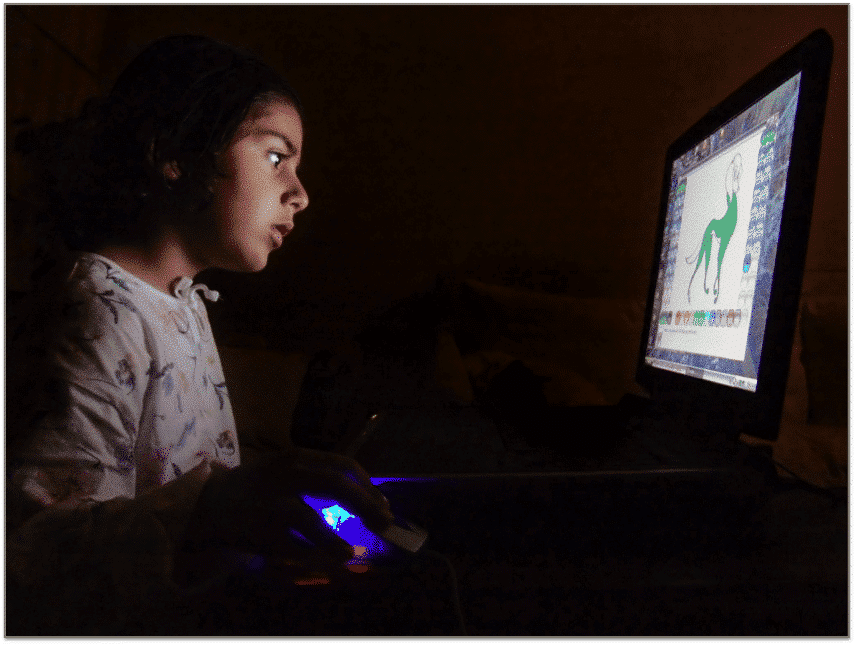

Need peaceful screen time negotiations?

Get your FREE GKIS Connected Family Screen Agreement

screen addiction

Is Facebook Messenger Kids Harmless Fun or a Gateway Drug for Compulsive Social Media Use?

Facebook recently launched Messenger Kids, a free, stand-alone video chat and messaging app for children ages 6 to 12 to “connect with people they love but also has the level of control parents want.” Designed with kid preferences in mind, this app aims to please with one-to-one and group video chat or text thread, fun filters, masks, stickers and GIFs. Facebook says they have integrated features with the consult of a 100-member team with child safety and privacy in mind. Although I welcome the integration of kid-friendly features (finally!) that doesn’t sell to kids or collect information for marketing, introducing young children to a screen activity may be distracting at the least and addictive at the worst. Having participated with a team of experts talking about Messenger Kids, I believe Facebook has developed a much-needed product that can be very positive when used optimally with parent guidance.

Why now?

Historically, kids have been restricted from social media app membership without parental consent because of The Children’s Online Privacy Act (COPPA, 1998). This federal law imposes certain requirements on operators of websites or online services, like not collecting data from or advertising to children under thirteen years of age. Facebook is compliant with COPPA in that Messenger Kids won’t show ads, offer in-app purchases, or collect data for marketing. Also, in order to adopt the app, kids must have parent permission as an extension of the parent’s Facebook profile. Other safety features include parent control over their child’s contact list, child inability to delete messages, and an option to block users and report inappropriate content with parent notification. Kids can be found through Facebook search and parents must ask permission to see kid content to avoid spying. Facebook also says they won’t automatically upgrade users to an adult account when the child reaches 13 years old.

What are the privacy risks?

In response to privacy and security concerns, Democratic Sens. Ed Markey and Richard Blumenthal asked Facebook to specify what data is collected and what they’re planning to do with it, if information about child device location is being collected and stored, and whether Messenger Kids will be walled off from the Internet. Facebook has said collected information will only be used for infrastructure purposes to improve the app.

What are the behavioral risks?

As a clinical psychologist and screen safety expert, I am pleased that Facebook has delivered a product with child safety in mind. After all, surveys reveal that most kids are using apps before age thirteen that don’t have safety features. Messenger Kids offers families an option without the same risk profile as Instagram, Snapchat, Twitter, or KIK. However, there are still some risks to consider before allowing your child to adopt Messenger Kids.

First, we are all well aware of the compulsive nature of social media use. According to Apple, we check our iPhones an average of 80 times a day, 30,000 times a year.[i] Nearly 60% of parents think their teens are addicted to their mobile devices.[ii] With features specifically designed to keep people using, social media can lead to addictive use patterns that distract us from healthier activities and nonvirtual relationships. The younger the brain, the higher the vulnerability to habit formation and brain wiring changes. I’m not entirely satisfied with the argument that without this, kids are going to use less safe social media anyway. It’s kind of like letting your teen drink at your house since they’re going to do it anyway…Maybe the answer is don’t let them drink in the first place.

Do we really want children as young as six years old to have that kind of opportunity?

After all, child screen use is so new we have no idea what kind of long-term impact these kind of use patterns will have. Behavioral conditioning is an intentionally embedded component of  Silicon Valley tech products to increase profits. I believe the old adage, “If you can’t see the product, you are the product” may apply here. Furthermore, just because parents can monitor child behavior doesn’t mean kids won’t impulsively offer or view inappropriate or embarrassing information that can lead to shame and cyberbullying. The younger the child, the higher the risk. As a parent, are you ready for your child to adopt the “training wheels” for social media independence?

On the other hand, we must keep in mind that Messenger Kids is a messaging app, not a social media app. Parents have full monitoring control and must approve the contact list. This app is a fun way for kids to connect to other kids and family members, with playful adjunct features like masks and stickers. Facebook has said that this is not a product designed to profit off of children. Instead, Facebook believes it is good business to build products that people love to use.

Things I learned when Facebook asked me to participate in a working session with child and technology experts:

I believe that the best outcomes are reached through collaboration from people of all different viewpoints. As a result, I was very pleased to accept the invitation of Facebook to participate in a discussion with a panel of experts. I believe that being a part of the solution means getting in there and working with industry, academia, and with front-line teachers and practitioners. Obviously, I am under the restrictions that are typical of nondisclosure agreements when one works with a company about a product. However, it is appropriate to share my impressions having interacted with Antigone Davis, Head of Global Safety for Facebook, and the Facebook employees who have developed and continue to work on Messenger Kids.

I am somewhat unique in that I have lots of day jobs, all relating to psychology and families. I have had a private practice for over 23 years working with kids, teens, and adults. I teach addiction studies, parenting, and clinical psychology at CSUCI and supervise interns writing from a screen-media research perspective, and I’m founder of GetKidsInternetSafe, my love project. I’m fond of saying that I’m the MacGyver of psychology in that I take the theories and research findings from academia and apply them to real people in my practice, adjusting and tweaking as I go. From this perspective, I have a lot of opinions about the benefits and risks of screen activities to the American family.

Having interacted with the impressive panel of experts Facebook invited to the Facebook Global Safety Summit, I came away with the feeling that Facebook is being thoughtful and open about their child products. They are conducting their own research, generously open to feedback, and clearly dedicated to an ongoing dialogue about what families want and need. Let’s face it, they are experts with what they do and have enormous reach. I believe they have the potential to provide positive child and family service, and they’re taking that role seriously. As the company has matured, they seem to realize that they have a precious social responsibility to their customers and were very enthusiastic to hear from those of us who have dedicated our careers to child and family advocacy. I’m feeling pretty good about Messenger Kids, yet believe that kids and parents still need more education and support to best implement this fun communication tool while optimizing learning and connection on screen and off screen.

What should you keep in mind if you want to try out Messenger Kids for interactive digital play?

  • Stay engaged during the on-boarding process and visit the Messenger Kids FAQ page.

  • Recognize that this app was not designed for education, but rather as an alternative to adult social media apps that kids were already using. Not only must parents create a Facebook profile for Messenger Kids setup (another customer?), but Facebook branding has just been launched in your child’s tender consciousness. Ready, set, go!

  • Start a teaching dialogue about privacy, marketing, and balance. Familiarize your kids with the rules at a developmentally optimal level for their age and understanding.

  • Adopt the GKIS Living Agreement digital contract found in my book, Screen Time in the Mean Time: A Parent Guide to Get Kids and Teens Internet Safe.

  • Once on-boarded, your child has launched a dynamic digital footprint within the walled garden of their contact list. This may be their first introduction to digital messaging. Exciting yes, but supervision and building teaching opportunities are important for positive outcome.

  • Set up a creativity kit next to the computer with play props, dress up clothes, art materials, and toys. When you are having a conversation on Messenger Kids, encourage your child to act out a fun, creative activity like pretending to prepare and serve you lunch, writing a poem and presenting it, or choreographing a dance. Augmenting virtual reality with fun nonvirtual reality keep kids engaged with a balanced life of two-dimensional and three-dimensional play. Building relationships and play are still critical learning opportunities for the developing brain.

  • Watch to make sure your child doesn’t exhibits behaviors suggestive of compulsive use or addictive patterns.

  • Encourage your child to attend to the other person’s words, facial expressions, and feelings while chatting. Recognize that fun animations may be distracting, so they need your prompts and teaching narrative to learn social skills and digital citizenship.

  • Most importantly, offer an enriching balance of virtual with nonvirtual activities, a key to healthy development.

For additional information about another popular child app, check out The GKIS Sensible Parent’s Guide to Musical.ly.

I’m the mom psychologist who will help you GetKidsInternetSafe.

Onward to More Awesome Parenting,
Tracy S. Bennett, Ph.D.
Mom, Clinical Psychologist, CSUCI Adjunct Faculty
GetKidsInternetSafe.com

Works Cited

[i] Bajarin, B. (2016). “Apple’s Penchant for Consumer Security.” Tech.pinions, 18 Apr. 2016, techpinions.com/apples-penchant-for-consumer-security/45122.

[ii] Common Sense (2015). The Common Sense Census: Media Use by Teens & Tweens. www.commonsensemedia.org/sites/default/files/uploads/research/census_executivesummary.pdf

Photo Credits

Facebook

Are Violent Video Games OK for Kids?

I love playing video games! My first article discussed the benefits of gaming. But the truth is, most popular games aren’t designed for kids. They’re designed to attract us and keep us playing. The more we play, the more money the gaming industry makes. Violence and sex attract gamers. But research has demonstrated that exposure to this content can negatively affect a child’s brain. However, child development experts have not been able to pull violent games off the shelves. The best they’ve done so far is accept the game industry’s offer to develop their own rating system. Today’s GKIS article covers why experts are concerned about child exposure to video game violence and why the research hasn’t been enough to make a dent in the global game industry’s annual $183billion revenue.[1]

Most kids start playing video games before adolescence. Content, time spent playing, ability to be interactive, and player vulnerabilities must be considered when determining effect.[3] This makes for messy factors to control for quality research and controversial opinions about the risks of violent video games.

The Benefits of Gaming

In Dr. Bennett’s book, Screen Time in the Mean Time, she covered many of the benefits of gaming.

Not only are they fun, but research has also found that they can lead to improvements in:

  • visual-spatial capabilities
  • reaction times
  • attention span
  • ability to process multiple target objects
  • detail orientation[4]
  • visual short-term memory
  • mental rotation, tracking, and toggling between tasks[5]
  • problem-solving
  • strategy building
  • goal setting
  • and increased confidence, social connection and networking, cooperation, and self-esteem.

Social benefits are particularly valuable for players who may be isolated in tiny towns or who have disabilities. Gaming can also teach important job skills and offer profitable e-sport tournament competition.

The Risks of Gaming

Research has demonstrated that gamers who play violent video games show more aggression toward others. It has also found that gamers show a decrease in friendliness, positivity, and helpfulness.[6] It’s also been demonstrated that gamers are less likely to emotionally react to violence over time. We call that sensitization to violence.

For example, a 2014 experiment also found that gamers were less likely to help and injured person, rated violent acts as less serious, and were less likely to respond to fights.[7]

Another study found that exposure to violence created the idea in children’s heads that violence is an acceptable form of problem-solving. It can also lead to a mean world syndrome, defined as a belief that the world is dark and dangerous.[8]

Video games are not designed for young kids.

Video game companies develop games for kids, but they amount to a small percentage revenue. The average age of gamers is 32-years-old.[14] Since 2009, the top-selling video games are rated mature.[15] Because of good marketing and pester power, a significant portion of those sales come from parents of young kids.

Young players are so common on video streaming sites and MMORPGs (massively multiplayer online role-playing games), they’re referred to as squeakers due to their child voices. Child predators hunt for victims on gaming platforms.

For example, in PokémonGo, predators have been reported to place lures , which are in-game items that spawn rare catches. Children close by will notice the new location and travel to catch the Pokémon unaware of the trap being set.[16]

Regulating Video Games

Attempts to block violent video game content from kids have been unsuccessful. Since the 1972 release of the first popular video arcade game, Pong, parents have worried about the impact of video gaming on their children. Just like our kids, we have largely become desensitized to its impact. From 1976, when parents succeeded in getting the video game Death Race pulled from the shelf due to the little gravestone that appeared when a character was killed, to now, we’ve come a long way. Or have we?

In response to video game players committing violence, several lawsuits have claimed that game manufacturers were negligent by selling violent content that is harmful to children. Few have succeeded due to first amendment (free speech) rights claims and insufficient evidence.

City ordinances attempting to limit gameplay by unaccompanied minors in public places have also failed. Law professors and psychologists argue that the evidence is too flimsy to make solid claims that video games cause violence. For instance, if video games cause aggression why is the rate of juvenile violent crime is at a thirty-year low?

A particularly impactful blow against state regulation was the United States Supreme Court ruling in Brown v. Entertainment Merchants Association (2011). This ruling concluded that the California law restricting the sale and distribution of violent video games to minors was unconstitutional. The ruling stated that “speech about violence is not obscene” and is “as much entitled to the protection of free speech as the best in literature.”

Video Gaming Rating System

To counteract consumer complaints and stop legislation, the video game industry created the Entertainment Software Rating Board (ESRB) in 1994. This voluntary and self-regulating board rates content and classifies video games based on the appropriate user age.

Most stores refuse to sell video games that don’t have an ESRB rating. Similar rating systems exist in other countries. Overall, ESRB ratings have been somewhat successful in limiting child access.

RP (Rating Pending) – this is placed on games that have not yet received a final ESRB rating

EC (Early Childhood) – suitable for ages 3+, these games tend to be educational and do not contain any inappropriate material

E (Everyone) – suitable for all ages, may contain mild fantasy or cartoon violence

E10+ (Everyone 10+) – suitable for ages 10+, may contain mild language, fantasy, or cartoon violence

T (Teen) – suitable for ages 13+, may contain violence, suggestive themes, crude humor, blood, infrequent use of strong language

M (Mature) – suitable for ages 17+, may contain intense violence, blood and gore, sexual content, strong language

A (Adults) – suitable for ages 18+, may contain prolonged scenes of intense violence, graphic sexual content, gambling with real currency

Tips for Parents 

  • Check the ESRB ratings before purchasing.
  • Engage in video game play with your child to learn about the game’s content, and to model appropriate play.
  • Set clear rules as to how long play can be at home and away with your free GKIS Connected Family Agreement.
  • Monitor your child’s online gaming conversations to make sure there are not taken advantage of or threatened.
  • Set up gaming stations in a family community area (never the bedroom) to optimize supervision.
  • Encourage your child to engage in alternative activities for a healthy balance, learning, and enriched learning.

Thank you to CSUCI Intern, Dylan Smithson for providing us with an experienced and balanced perspective about gaming. If you missed his first article, Is Your Child a “Professional Gamer”?, it is well worth the read!

I’m the mom psychologist who will help you GetKidsInternetSafe.

Onward to More Awesome Parenting,

Tracy S. Bennett, Ph.D.
Mom, Clinical Psychologist, CSUCI Adjunct Faculty
GetKidsInternetSafe.com

Photo Credits

Photo by Jessica Lewis from Pexels

Dead or alive KASUMI TECMO barite Videojuegos, CC BY-NC-ND 2.0

ESRB ratings Fred Seibert, CC BY-NC-ND 2.0

Video Game Violence Casey Fleser, CC BY 2.0

Works Cited

[1] https://newzoo.com/insights/articles/the-global-games-market-will-generate-152-1-billion-in-2019-as-the-u-s-overtakes-china-as-the-biggest-market/

[2] NPD Group (2011). Kids & gaming, 2011. Port Washington, NY: The NPD Group, Inc.

[3] Ferguson, C. (2011). Video Games & Youth Violence: A Prospective Analysis in Adolescents. Journal of Youth & Adolescence, Vol. 40, No. 4.

[4] Taylor, J. (2012, December 4). How Technology is Changing the Way Children Think & Focus. Retrieved October 18, 2012, from http://wwpsychologytoday.com/glog/the-power-prime/201212/how-technology-is-changing-the-say-children-think-and-focus

[5] Holfeld, B., Cicha, J. & Ferraro, F. (2014). “Executive Function & Action Gaming among College Students.” Current Psychology Curr Psychol 34.2: 376-88. Web.

[6] American Psychological Association (APA). (2015). Resolution on Violent Video Gameshttp://www.apa.org/about/policy/violent-video-games.aspx

[7] Martin R. (2014) Children as young as SIX are being exposed to video games scenes involving violence and prostitution because their parents ignore age limits. http://www.dailymail.co.uk/news/article-2723841/Children-young-SIX-exposed-video-games-scenes-involving-violence-prostitution-parents-ignore-age-limits.html

[8] Justin C. (2015) The Problem with Exposing Kids to Sexual and Violent Content. https://ifstudies.org/blog/the-problem-with-exposing-kids-to-sexual-and-violent-content/

[9] Laura S. (2013) 8 Ways Violent Games Are Bad for Your Kids http://www.huffingtonpost.com/laura-st-john/8-ways-violent-games_b_3875846.html

[10] Petry, N., & O’Brien, C. (2013). Internet Gaming Disorder & the DSM-5. Addiction 108.7: 1186-187. Web.

[11] Petry, N., Rehbein, F., Gentile, D., et al. (2014). An International Consensus for Assessing Internet Gaming Disorder Using the New DSM-5 Approach. Addiction 109.9: 1399-406. Web.

[12] Kuss, D., Griffiths, M., Karila, L., & Billieux, J. (2014). Internet addiction: A systematic review of epidemiological research for the last decade. Current Pharmaceutical Design, 20, 4026–4052. 10.2174/13816128113199990617

[13] Strittmatter, E., Parzer, P., & Brunner, R. (2016). “A 2-year longitudinal study of prospective predictors of pathological Internet use in adolescents.” Eur Child Adolesc Psychiatry 25(7): 725.

[14] 2019 Essential Facts About the Computer and Video Game Industry,  Entertainment Software Association

[15] Dougy (2014) The top selling video games of the past 30 years. http://thechive.com/2014/03/29/the-top-selling-video-games-of-each-of-the-past-30-years-photos/

[16] Tracy B. (2016) http://ktla.com/2016/07/10/pokemon-go-used-by-robbers-to-target-victims-in-st-louis-area-police/


Child Screen Addiction From Asia to America: Do We Need a Shut-Down Law?

My brother has been living in Singapore, Malaysia, for his freelance job. He recently told me he feels like he is constantly on screen and thinks his virtual life is overtaking his nonvirtual life. He also noticed that it’s impossible engage his friend’s kids away from their screens. He shared with their dad that he was concerned the kids were screen-addicted. The Dad brushed it off, saying all kids are screen addicted. He said they’d grow out of it. No big deal.

Online Overdose in Singapore

Except in India, Singapore citizens spent more time online than people from any other country in the world. More than half of Singaporeans admit that they are online for as many as 12 hours a day.[1]

Screen addiction has been defined as 38 hours or more of screen use per week or screen use that causes impairment in work and relationships, a loss of control (inability to stop despite unpleasant consequences), and evidence of tolerance (increasing use to get the same sense of satisfaction) and withdrawal (irritability and anxiety when prevented from screen time).

It’s not just adults that are screen addicted. Many kids are as connected as their parents, growing up with the newest technologies always online and up with the latest trends.

For some families, too much turns into way too much. Due to high screen addiction numbers, Asian countries like China, South Korea, and Singapore have more inpatient (hospital) treatment facilities for screen addictions than any others.

We may not want to face it, but based on alarming statistics American kids may be catching up. 28% of American adults now report that they go online “almost constantly,” up from 21% in 2015.[2] Over 50% of teens feel they are addicted to their smartphones.[3] Perhaps Americans have things to learn from Asians in terms of clinical treatment and government regulation.

Rules & Regulations

The Cinderella/Shut Down Law

At the last stroke of midnight, the spell will be broken ~ Fairy Godmother

Too many parents are naïve about the risks of screen addiction. In response to rising child addiction rates, the South Korean government implemented the Cinderella or Shut Down Law.[4] This law blocks access to gaming websites from midnight until 6 AM for those under the age of 16. South Korean parents are only allowed access after midnight if they enter their social security number. The idea behind this law is to force teenagers to sleep instead of game, ultimately improving school performance.[5]

The Cooling-Off System

Another approach from the South Korean Government to regulate screen use is the Cooling-Off System. It aims to regulate screen time by programming the gaming system to shut down automatically every 2 hours for 10 minutes, with gamers only able to log back on once every 24 hours.[6] Because screen addiction is connected to adolescent bullying and suicide, the idea behind this law is to get these issues under control.

Screen Addiction Treatment

If you worry that someone you know needs help with screen addiction, learning about the different types of treatment will be helpful.

Outpatient Treatment

Outpatient treatment includes day programs that clients attend while maintaining a normal school schedule and home life. Schedules typically vary from one to six hours/day. Addiction treatment programs offer services like:

  • individual and group psychotherapy,
  • psychoeducation,
  • medical evaluation and management,
  • art and music therapy,
  • life skills and mindfulness training, exercise and yoga,
  • academic tutoring,
  • job training, and
  • general skill-building programs, like goal setting, relaxation, and assertiveness and social skills.

Well-rounded treatment is based on the biopsychosocial team treatment model. This means that all aspects of the individual are cared for from the brain, self, and environment by a team of experts.

Outpatient care is usually preferable for mild to moderate screen addiction.

Inpatient Treatment

Inpatient treatment means that clients sleep on-site and are offered round-the-clock medical and therapeutic services like those listed above, either voluntarily or involuntarily. Involuntary treatment may be indicated only in cases of danger to self or others, like suicide or homicide, or the inability to get food, shelter, or medical care due to severe mental illness.

Inpatient treatments are the first choices in treating kids with serious screen addiction. Examples of impairment related to screen use include eating disorders, reduction of brain capacity, and repetitive use injuries like eye strain, hearing loss, and back and neck pain.[7]

China is at the forefront when it comes to inpatient treatment. There are over 250 inpatient treatment boot camps in Asia. Screen addiction boot camps combine military discipline with traditional clinical techniques to overcome addiction. These programs incorporate excessive workouts, group punishments, music, art, and psychological counseling to get clients free of their screens.

According to Tao, who began specializing in addiction treatment in 1991, these are necessary and inevitable methods to teach discipline in the treatment of addicted kids.[7] In his screen addiction boot camp, the children stay from three to six months dependent on their progress. Tao boasts a success rate of 75% since 2008, which is far higher than recovery statistics from traditional inpatient addiction treatment. Tao admits that long-term success is difficult to maintain. While most kids will soon fall back to old patterns after leaving the camp, Tao designed an after-care schedule while also educating parents on how to supervise their child’s gradual reintegration to the web.

What you can do to GetKidsInternetSafe and avoid screen addiction

  • Be perceptive and get to know your child, offline and online.
  • Set limits.
  • Create opportunities for fun offline activities and encourage a healthy lifestyle.
  • Read together.
  • No screens in the bedroom, bathroom, or behind closed doors.
  • No screens at mealtime.
    A 2014 study found that old-school family dinners decrease the risk of adolescent mental health issues and cyberbully victimization.[8] Screens at mealtime are also associated with poorer family communication and poorer nutrition choices.[9] Mealtime and car rides are awesome opportunities to inquire about your child’s daily highs and lows, share screen-relevant stories, and teach important skills that will get your kids Internet safe.

Thank you to CSUCI Intern, Lisa Sommer for her work on this article. What do you think? Are we headed for high addiction rates like what’s happening in Asia? What is the key to addiction prevention? Would you agree to country-wide regulations like the Shut Down Law? How about inpatient treatment with military tactics?

I’m the mom psychologist who will help you GetKidsInternetSafe.

Onward to More Awesome Parenting,

Tracy S. Bennett, Ph.D.
Mom, Clinical Psychologist, CSUCI Adjunct Faculty
GetKidsInternetSafe.com

Works Cited

Bogart, N. (2014). Top apps that give parents control over kids screen time. For: Global News, retrieved April 30th, 2017 from: http://globalnews.ca/news/1441624/top-apps-that-give-parents-control-over-kids-screen-time/

[3] Common Sense Media. (2016). Dealing with devices: The parent-teen dynamic; Are we addicted? Retrieved from https://www.commonsensemedia.org/technology-addiction-concern-controversy-and-finding-balance-infographic

[8] Elgar, F. J., Napoletano, A., Saul, G., et al. (2014). Cyberbullying Victimization and Mental Health in Adolescents and the Moderating Role of Family Dinners. JAMA Pediatr. 2014;168(11):1015-1022. doi:10.1001/jamapediatrics.2014.1223
Flisher, C. (2010). Getting plugged in: An overview of Screen addiction. Journal of Paediatrics and Child Health 46, p. 557–559

[9] Fulkerson, J. A., K. Loth, M. Bruening, J. Berge, M. E. Eisenberg, and D. Neumark-Sztainer. “Time 2 Tlk 2nite: Use of Electronic Media by Adolescents during Family Meals and Associations with Demographic Characteristics, Family Characteristics, and Foods Served.” Journal of the Academy of Nutrition and Dietetics. U.S. National Library of Medicine, July 2014. Web. 21 Apr. 2017.

[6] Hawkins, M. (2012). South Korea introduces yet another law to curb gaming’s ills. For: NBC News. Retrieved April 4th, 2017 from: http://www.nbcnews.com/tech/video-games/south-korea-introduces-yet-another-law-curb-gamings-ills-f158168

[4] Lee, J. (2011). South Korea pulls plug on late-night adolescent online gamers. For CNN. Retrieved March 17th, 2017 from http://www.cnn.com/2011/11/22/world/asia/south-korea-gaming/

[5] McLellan, H.(2011). South Korea’s “Shutdown Law” Takes Effect. For: The Escapist Magazine. Retrieved April 4th, 2017 from
http://www.escapistmagazine.com/news/view/114369-South-Koreas-Shutdown-Law-Takes-Effect

[2] Pew Research here

Rowan, C. (2010). Unplug-don’t drug: A critical look at the influence of technology on child behavior with an alternative way of responding other than evaluation and drugging. Ethical Human Psychology and Psychiatry, 12, 60–68.

Wieland et al. (2005). Computer Addiction: Implications for Nursing Psychotherapy Practice. Perspectives in Psychiatric Care Vol. 41, No. 4

[1] Williams, A. (2014). Singaporeans are second most Internet-addicted people in the world: Survey. For the straitstimes.com. Retrieved March 6th, 2017 from http://www.straitstimes.com/business/singaporeans-are-second-most-Internet-addicted-people-in-the-world-survey

[7] Zigor, A. (2015). Inside the Chinese boot camp treating Screen addiction. For: The Telegraph. Retrieved March 17th, 2017 from http://www.telegraph.co.uk/news/health/11345412/Inside-the-Chinese-boot-camp-treating-Internet-addiction.html

Photo Credits

Baby Wearing Pink Crew Neck Cap Sleeve Shirt Between 2 Person Standing during Daytime, 2016, CC0 1.0

Is Your Child a Screen Addict?

My niece is five years old and lives in a tiny village in Switzerland. You would think that in a cute Alpine village the world is still safe, that kids are playing outside until it gets dark, craft themselves little walkie-talkies from strings and cans, and don’t have any interest in online media. But you would be wrong. Smartphones and tablets and the vast possibilities of online entertainment are all the rage everywhere. With her little eyes fixed on the screen, my niece stays online for hours.

Generation X, Y, Z…and now: Alpha!

Futurist, demographer and TEDx speaker Mark McCrindle distinguished a new cohort of anyone born after 2010. He calls it Generation Alpha. The main characteristic of Generation Alpha is the constant use of screen technology. In his opinion, Alpha kids grow up with screens in hand, able to transfer a thought online in seconds (Sterbenz, 2014). Shocking numbers provide evidence of McCrindle’s observations, with kids from five to 16 years spending an average of 6 1/2 hours a day in front of a screen (Wakefield, 2015). Teenage boys have an even higher average of 8 hours a day (Wakefield, 2015).

Why do children spend so much time online?

Every time I visit my sister, I’m fascinated by how her daughter is able to use a smartphone or tablet at such a fast pace. It’s almost impossible for me to get her attention and convince her that drawing with her aunt can be more fun than styling dolls on her tablet. A reward for her for doing a chore could either be chocolate or smartphone-time. Guess what her choice usually is? And it’s not just my niece that prefers YouTube over Oreos, Disney, and Crayola. In Smarty Pants’ eighth annual Brands Love study with 8,125 kids, YouTube was chosen as the most loved brand for kids aged 6-12 (2016). Number one over 2,285 consumer brands!

Why do kids love screentime? Because browsing for quick, yummy screen content really fun. Interacting with friends, playing games, watching videos or movies, and sharing information and experiences are just a few examples of amusing online activities.

Another major contributor to screen addiction is FOMO (fear of missing out) and peer pressure. It’s hard to pass up online engagement when friends are sharing funny snapshots and their latest filtered selfies. You MUST join in or get left behind. Peer acceptance and forming an identity independent of your parents is just too tempting to turn away from.

Jim and Sandra

Jim is 11 years old and has always been a very shy child. He has an immense fear of meeting new people and feels uncomfortable around others. He is always worried about judgement from others, and when someone is rejecting him, he thinks it’s because he made a mistake and that he is unlikable.

Sandra is 10 years old and is a great soccer player. When she wins, she attributes it to factors outside herself, like the poor skills of the other team or luck. She doesn’t believe that she could be a contributor to her team’s success. Her psychologist recognizes that Sandra attributes success to an external locus of control, which means that she looks at everything around her as part of success or failure rather than herself.

Do you think that Jim and Sandra are at high risk for screen addiction?

Predisposing traits for screen addiction

Researchers have found that several personality traits serve as a predisposition for a child becoming an Internet addict. The more shy and the less faith a child has in his or her control over life, the higher the tendency of being addicted to the Internet (Chak & Leung, 2004).

For shy children online communication and interaction with others is less directly linked to judgments and possible disapproval than it would be in the offline world. That means Jim may be more comfortable and suffer less anxiety from online interactions. Although, that doesn’t mean all shy children will become addicted. But it does mean that parents may benefit from knowing shyness is a risk factor.

This study also suggests that kids like Sandra may be less successful at controlling Internet use and tend to offer external explanations why they stayed online for so long rather than take direct accountability (Chak & Leung, 2004).

When Internet use goes from innocent fun to addiction

Internet Addiction was first defined in 1995 by Young as a use of the Internet for more than 38 hours per week which will lead to clinically significant impairment or distress (Flisher, 2010). However, by these criteria most of America would be considered addicted. Today, experts detail several criteria that must be met in order for a person to be considered “addicted.”

Criteria for clinical addiction include four main features:

  • Loss of control
    Your child can’t disengage from the Internet even with the understanding that he or she is spending too much time.
  • Tolerance
    Your child needs more and more time to get the same “fix” from their screen use. Once 15 minutes would do, but now your child feels vaguely dissatisfied and chases more and more screen time.
  • Withdrawal
    When your child has to turn her screen off, she demonstrates classical withdrawal symptoms such as restlessness, nervousness, dissatisfaction, irritation, aggressiveness and psychological craving. Dr. Bennett further theorizes that screen-off meltdowns are the result of too much autonomic arousal. This means your child’s brain is overstimulated and tantrums are like coming down off crack rather than trying to express distress or manipulate parent behavior.
  • Negative social consequences/impairment
    Screen time becomes the sole focus of your child’s life. It’s all he/she wants to do, it’s all he/she wants to talk about. It has replaced nonvirtual relationships and activities needed for healthy balance.

Thank you to CSUCI intern Lisa Sommer for this GKIS article. Are you worried that your kids may be demonstrating symptoms of screen addiction? Wondering when and how to seek help?  Check out Lisa’s next article, “Child Screen Addiction From Asia to America: Do We Need a Shut-Down Law?” for answers!

I’m the mom psychologist who will help you GetKidsInternetSafe.

Onward to More Awesome Parenting,

Tracy S. Bennett, Ph.D.
Mom, Clinical Psychologist, CSUCI Adjunct Faculty
GetKidsInternetSafe.com

Works Cited

Chak, K. & Leung, L. (2004). Shyness and Locus of Control as Predictors of Internet Addiction and Internet Use. Cyber Psychology & Behavior, Volume 7, Number 5

Flisher, C. (2010). Getting plugged in: An overview of Internet addiction. Journal of Paediatrics and Child Health 46, p. 557–559

http://asksmartypants.com

Sterbenz, C. (2014) Generation Alpha Is Coming And It Will Change The World Forever for Business Insider. Retrieved February 15, 2017 from http://www.businessinsider.com/generation-alpha-2014-7?IR=T

Wakefield, J. (2015). Children spend six hours or more a day on screens for BBC Technology. Retrieved February 18, 2017 from http://www.bbc.com/news/technology-32067158

Photo Credits

Child & Computer 2014, Dilmen, N., CC BY-SA 3.0

Romain Guy, Shy little girl 2006, CC BY-SA 2.0