Need peaceful screen time negotiations?

Get your FREE GKIS Connected Family Screen Agreement

Marketing

The Psychology and Marketing Behind Online Tarot Reading

If your child has inquired about buying a deck of cards, candles, or pendulums, they might be showing interest in tarot! Tarot reading is a New Age practice that has acted as a spiritual guide and coping mechanism for many people. In the previous article on online astrology, we shed light on what astrology is, the marketing tactics behind it, and the psychological perspectives that relate to it. In today’s part two, this article covers tarot reading, testimony, common misconceptions, and red flags to be wary of.

What is tarot reading?

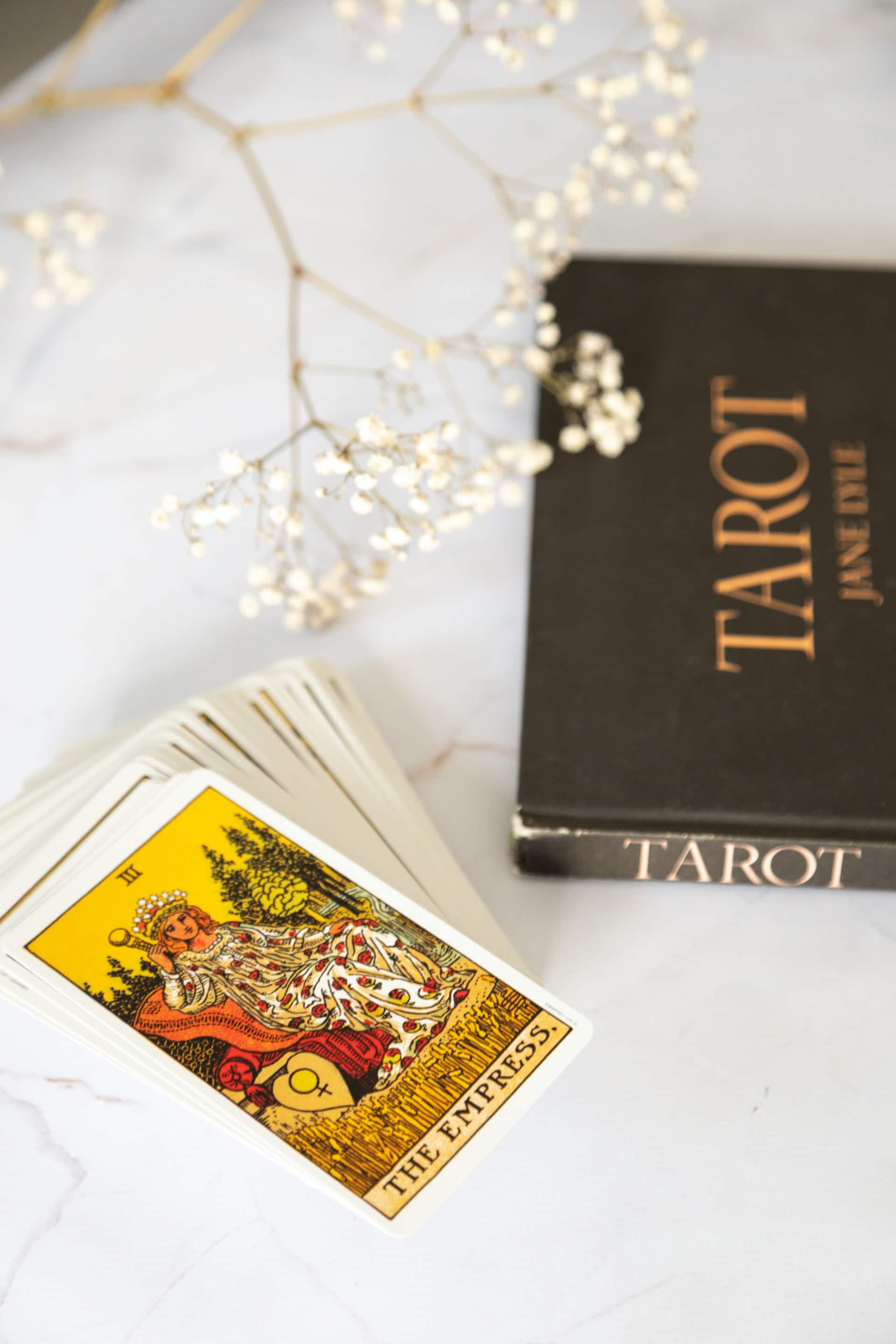
Tarot reading involves the process of picking cards, finding a common ground between the cards, and relating it to everyday life. Today’s tarot deck consists of 78 cards and are divided into two groups— the major arcana (22) and the minor arcana (56).[1] Similar to standard playing cards, tarot cards contain different suits and are used for different purposes (e.g., questions about spirituality, love, and finances).

I am not savvy in the world of tarot reading, so I interviewed someone who has used tarot in their life for over 20 years. For privacy purposes, I will refer to this person as “Hope.” Hope is not a professional tarot reader, but it is clear that her connection to tarot has merit. Hope deepened my understanding of tarot reading, as well as offered insight on misconceptions and red flags.

Tarot and Testimony

When asked about tarot reading and its massive trend across social media platforms, Hope stressed the importance of using caution and common sense, as fast information isn’t the best way to learn or receive information. During a time of chaos, people are looking for ways to cope and can easily be exploited. As discussed in the previous article on online astrology, horoscopes and tarot readings can work for you (positive effect) or work against you (negative effect).
Depending on the reading, children may succumb to high expectations or disappointment. Even when cautioned, kids simply don’t have the brain wiring or experience to anticipate all possible outcomes. They tend to lead with innocence and trust rather than cynicism and caution.

Hope recommends seeking tarot readers that have lineage through family members or those who have been taught by a reputable leader. Training, experience, and compassion should come together in a trustworthy tarot reader (as interpretations are also different among readers).

Common Misconceptions

Hope emphasized, “Tarot reading is not fortune-telling, rather, it’s about the reader interpreting the cards, breaking down its psychological symbols of the tarot, and applying it to everyday life.” It is meant to act as a guide, providing more open-ended questions than answers. Tarot also provides a different perspective, just as any other New Age practice such as meditation or yoga.

At face value, a tarot reading can come off very woo-woo, meaning unconventional beliefs concerning spirituality that typically do not have scientific proof. Hope explained that rituals can be meaningful by creating structure, providing creative, enriching support, and helping people move through the cycles of their life. Despite the crystal ball portrayals and witch-like stereotypes, tarot has evidently become more mainstream in the new age.

Red Flags

Hope advises beginners to “take what resonates and leave the rest.” Tarot is a tool that one can include in their toolkit of life, but it should not negate the power that someone has over their own life. Tarot is meant to be insightful, not harmful; she emphasized this by using a paywall as an example. “If someone tells you you’re going to have bad things happen to you unless you pay them $200, exit the door immediately.” A safe online experience with tarot reading should include keeping a sense of humor, as well as an open mind and sensible assessment.

Tarot Reading is Trending   
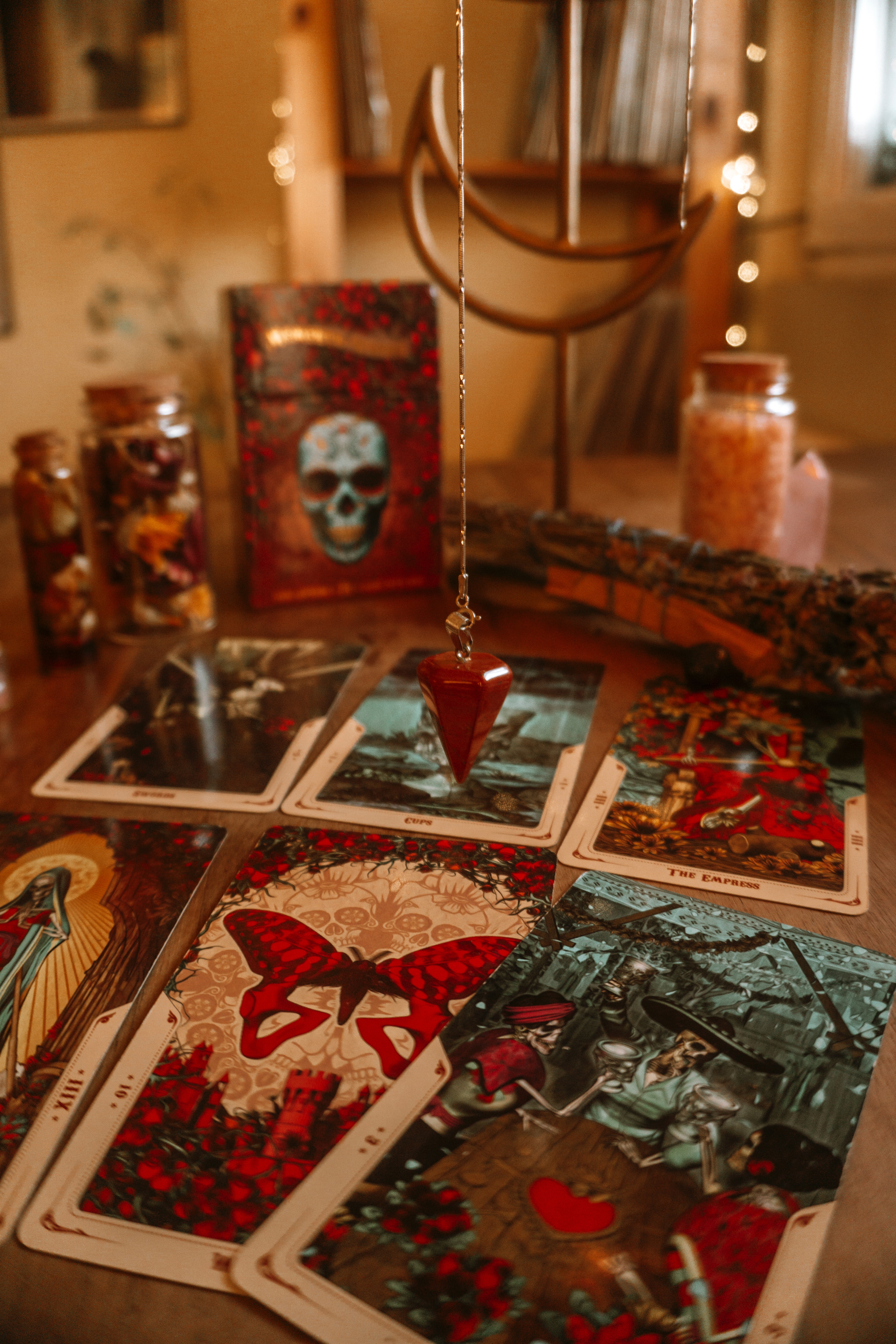
Tarot Reading is trending on platforms, most notably TikTok. With a total of 913.4 million views, the hashtag #tarotreading has become a daily affirmation among TikTok users. Your child may seemingly come across this content by chance, but that is not always true. TikTok offers content to users using computer-generated algorithms (formulas) to lead their users to content in their “For You” feature. As a supportive parent, it may be helpful to acquaint yourself with accounts that are age-appropriate for your child to ensure a healthy online experience.

Elementually is a well-known mother-daughter duo with a following of 1.2 million users. Elementually offers multiple daily affirmations through tarot cards, pendulums, crystals, and dice. I investigated this account and found their page to be appropriate for users of all ages. Not only do they offer daily card affirmations, but they are interactive with their following. Comments are selected from posts, and answers are given based on pendulum and dice outcomes. This duo also offers free tarot card readings, while other influencers charge anywhere between $10-30.

Tarot and Algorithms

The biggest concern over any online experience includes algorithms. Algorithms take your personal data and utilize it for marketing purposes. An important term to become acquainted with is bait engagement. Bait engagement involves a call to action to the user (usually to provoke likes, comments, or shares), but in reality, it boosts the posts in favor of the algorithms. With regards to tarot reading (or any other subject), bait engagement may sound like “like/comment/share this post to claim your reading.” While it may give the user some peace of mind that they are acknowledging and accepting their daily affirmation/refutation, children must also recognize when they are being manipulated to act and perhaps even exploited for profit.

Online tarot reading may not be completely exclusive, as the algorithms within the “For You” feature expose the user to content they predict is favorable. Children must acknowledge hashtags and understand that it may not be a coincidence. As Hope said earlier in her interview, the user is ultimately the one in control. While it may be comforting to connect with a public reading, online tarot readers on TikTok typically post multiple times a day. Depending on the post your child comes across, they must consider algorithms when receiving their daily card or reading.

GKIS Tips for Online Safety

If your child chooses to incorporate tarot reading as a tool on their spiritual journey, GKIS is here to offer our Screen Safety Toolkit to ensure a safe online experience. Features of our toolkit include links and information about parental controls, filtering and blocking for safe browsing, and social media monitoring to help keep your children internet safe. To further expand your tween’s or teen’s knowledge of digital injuries, GKIS also offers a Social Media Readiness Course. Encouraging autonomy and accountability, this course equips youth with 10 social media lessons, mastery quizzes, and Dr. B’s psychological wellness techniques to help prevent digital injury.


Thanks to CSUCI intern Kaylen Sanchez for researching online tarot reading for this GKIS article.

I’m the mom psychologist who will help you GetKidsInternetSafe.

Onward to More Awesome Parenting,

Tracy S. Bennett, Ph.D.
Mom, Clinical Psychologist, CSUCI Adjunct Faculty
GetKidsInternetSafe.com

Photo Credits

Photo by Lucas Pezeta from Pexels

Photo by Viva Luna Studios on Unsplash

Photo by Alina Vilchenko from Pexels

Photo by J. Kelly Brito on Unsplash


Works Cited

[1] https://www.britannica.com/topic/tarot

The Psychology and Marketing Behind Online Astrology

Has your child ever made a decision based on their horoscope? Or have they insisted on visiting the local mystic shop for healing crystals? Many are discovering solace in astrology and tarot reading during these stressful times. With the ongoing pandemic, many of us have reached out for new coping mechanisms. Some find solace in exercising or cooking, while others find comfort in daily affirmations. Horoscopes and tarot reading have become a means of reassurance during this time of ambiguity and isolation, as we wish for answers about our future in this vast universe. Today’s GKIS article discusses popular perspectives about online mystic spirituality and sensible tips to ensure a safe online experience.

What is astrology?

Astrology is the study of celestial movements and their influence over life on Earth.[1] Astrology is generally recognized by academia as a pseudoscience (collective of ideas and beliefs that, despite popular belief, are not supported by the scientific method). However, many find true meaning in its practice as an aid to spiritual journey.

Astrology and other New Age practices are extremely popular in the U.S. According to the Pew Research Center, a 2017 survey conducted between April and June found that 27% of U.S. adults identify as “spiritual but not religious.”[2] Another study found that six in ten American adults have adopted at least one New Age practice that pertains to spirituality, such as tarot reading, astrology, and meditation.[3]

Even if we aren’t “true believers,” most of us enjoy looking at our horoscopes out of curiosity now and then. For example, I am a Gemini with a rising sign of Cancer and a moon sign of Sagittarius. When I checked my horoscope today, it touched on the importance of slowing down and straying from tunnel vision.[4] Today’s horoscope aligned with my current situation, as I am nearing the end of my undergraduate education. The grind mentality is real. Although working hard has its merits, balance is key to sustainability. I found this comforting reminder inspirational, as it offered personal meaning that had value to me.

The Upsell

Of course, rarely are online services free. Typically, personal online consults offer a tempting free opt-in to get your email address. From there you are pitched for a paid product. This type of free opt-in to paid products is called an upsell and very common among online marketers. Many of us find it useful to be alerted to what’s out there so we can make an informed purchasing decision.

Unfortunately, not all online marketing is transparent. If you aren’t pitched for a product, like a report about your rising and moon signs, the information you provide to get the report has value to online marketers. They sell it to advertisers who can retarget you for similar products, like that adorable zodiac necklace that keeps showing up in your feed.

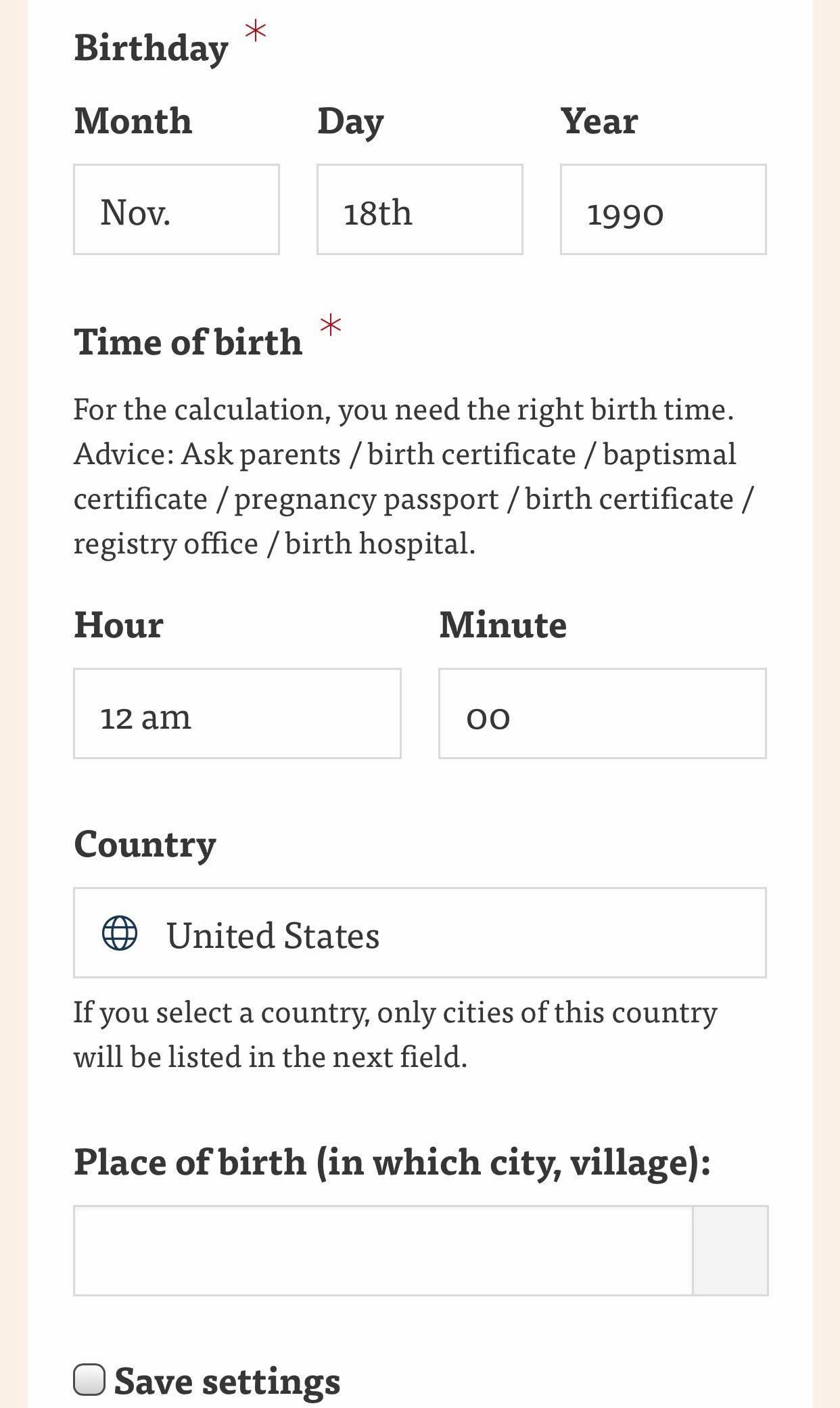
In the picture to the right, we can see an example of an astrology site that asks for my name, birthday, time of birth, and the city I was born in. Similar to online personality quizzes, websites that ask for fill-in information should be recognized as a red flag. At face value, personality quizzes can be fun; however, personal information can be sold on the dark web for use by cybercriminals as identifying, security answer, and password information for identity theft.

It can be difficult finding a place to start with screen safety. That’s why we created our Cybersecurity and Red Flags Supplement. This screen safety tool educates children about red flags such as tricks used by online predators, phishing, malware, and hacking schemes. It also helps parents recognize the behavioral red flags that their children may begin to show when suffering from digital injuries. It’s a great addition to our free Connected Family Screen Agreement.

Astrology May Negatively or Positively Impact Perception, Cognitive Performance, and Creativity  

The question remains, is it a good idea for vulnerable kids and teens to consume online astrology products if they’re being careful about not sharing their personal data? Stanford researchers conducted three separate experiments to investigate the influence of positive/negative horoscopes on the interpretation of ambiguous events, cognitive performance, and creativity.[5]

In the first study, the subjects were given a positive or negative horoscope and then asked to interpret five pictures depicting an ambiguous situation. Results confirmed the hypothesis that the group exposed to a positive horoscope were more likely to interpret a positive situation among the pictures and the group exposed to a negative horoscope were more likely to interpret a negative situation.

In experiment two, subjects were asked to summarize a short text narrative after they were exposed to a positive or negative horoscope. Participants were then asked to complete three different mathematical, verbal, and non-verbal tests related to fluid intelligence (e.g., logical problem solving). Those who read a positive horoscope had higher cognitive performance than those who read a negative horoscope.

In the final experiment, participants completed the same task as experiment two (the short text narrative) and were then exposed to a positive or negative horoscope. Creativity was then measured by the completion of two riddles. As expected, participants that were given positive horoscopes displayed greater creativity versus those who were given the negative ones.

The Psychology Behind our Love of Astrology

Locus of Control and the Self-Serving Bias

Social-Cognitive theorist Julian Rotter defined the concept of locus of control as a person’s perception of what happens to them.[6] There are two forms of locus of control— internal and external. Internal locus of control is the perception that we are responsible for what has happened to us. External locus of control is attributed to a source outside of ourselves that is beyond our control. Depending on the reader’s locus of control, interpretation of your horoscope can either work for you or work against you.

For example, if you have an external locus of control you may use your horoscopes to assign blame. This may relieve you from taking accountability and support a self-serving bias. The phrase “Mercury is in retrograde” is a prime example of the self-serving bias at work. Rather than taking responsibility for our actions, it has become a joke to blame the planet for moving abnormally (leading to a domino effect of disruptions in the universe).

The self-serving bias involves taking credit for the good things that happen to us and shifting the blame away from us when things take a turn for the worse. Protecting ourselves from anxiety is an important part of our day to day interactions, which is why we tend to attribute the better parts to ourselves and misfortunes to external forces.

The Confirmation Bias and Self-Fulfilling Prophecy

The confirmation bias is a digital injury that plagues online experiences. This bias involves looking for information that confirms your beliefs and disregarding the rest. In the case of horoscopes, the confirmation bias might serve as a security blanket to your child. At the same time, if the horoscope is off or predictions do not meet expectations, it may set your child up for disappointment.

In a more severe scenario, children may fall victim to the self-fulfilling prophecy. The self-fulfilling prophecy is the notion that our behavior is elicited according to expectations.[7] If we do not meet these expectations, an inferiority complex may rise, ultimately leading to chronic anxiety and depression.

How to Spot Marketing Supplement

Here at GetKidsInternetSafe, we strive to help families recognize the red flags of the internet. As technology continues to flourish, so does online marketing. To help children recognize the red flags of advertising, GKIS offers a How to Spot Marketing Supplement. Priced at only $7, we do not offer this supplement to get rich – but rather to cover our website costs. This supplement shows you how marketers profit off of the latest trends and how to teach your children to recognize when their interests are corrupted by a paywall. Kids and teens are a highly profitable audience in the online community, but with the help of our marketing supplement, they will be savvy consumers able to recognize sneaky marketing tactics.

If you enjoyed this article, stay tuned for part two, which will shed light on another New Age practice—tarot reading!

Thanks to CSUCI intern Kaylen Sanchez for researching online astrology and tarot reading for this two-part GKIS series.

I’m the mom psychologist who will help you GetKidsInternetSafe.

Onward to More Awesome Parenting,

Tracy S. Bennett, Ph.D.
Mom, Clinical Psychologist, CSUCI Adjunct Faculty
GetKidsInternetSafe.com

Photo Credits

Photo by Pexels

Photo by Andrea Piacquadio from Pexels

Photo by Kaylen Sanchez

Photo by Alexander Mils from Pexels

Work Cited

[1] Gunzburg, D., Brady, B., & Curry, P. (2019). Special Issue Introduction: Inside the World of Contemporary Astrology. Journal for the Study of Religion, Nature & Culture, 13(1), 5–11. https://doi-org.summit.csuci.edu/10.1558/jsrnc.38055

[2] https://www.pewresearch.org/fact-tank/2017/09/06/more-americans-now-say-theyre-spiritual-but-not-religious/

[3] https://www.pewresearch.org/fact-tank/2018/10/01/new-age-beliefs-common-among-both-religious-and-nonreligious-americans/

[4] https://www.horoscope.com/us/horoscopes/general/horoscope-general-daily-today.aspx?sign=3

[5] Clobert, M., Van Cappellen, P., Bourdon, M., & Cohen, A. B. (2016). Good day for Leos: Horoscope’s influence on perception, cognitive performances, and creativity. Personality and Individual Differences, 101, 348–355. https://doi-org.summit.csuci.edu/10.1016/j.paid.2016.06.032

[6] Griggs, R. A. (2014). Psychology: A concise introduction. Worth Publishers

[7] Griggs, R. A. (2014). Psychology: A concise introduction. Worth Publishers

YouTuber Marketing Strategies

Gambling was ruined for me after I took Psychology 101 in college. Learning that slot machines were programmed on the same ratio of reinforcement that makes rats ask for cheese made me feel controlled and conned. I mean, who wants to give hard-earned money to somebody who’s training you like a rat? Now our screen devices are jumping us through hoops, with addictive features and profitable scams. If your kids are on YouTube, then they’re ready to learn about the “business side” of social media.

Buyer Beware

The Internet is a “buyer beware” environment. That means it is up to us to discover where the tricks and scams are.

There are regulations about collecting information and marketing to children because they do not yet have the sophistication to make sound, informed financial decisions. However, marketers online can’t be sure who is watching their content.

That means they can create marketing funnels that kids can fall into. Publicly, YouTube celebrities would insist they are only marketing to adults. But if that’s the case, why are so many kids and teens spending money online?

Celebrity Endorsement

When celebrities endorse a product, they lend their credibility to it. Viewers think, “I trust them. If they like it, I like it.” Viewers can spot celebrity-endorsed products when Youtubers say they are sponsored, affiliated, or teamed up with a company.

For example, Tana Mongeau (2.8M subscribers), Gabbie Hanna (6.5M subscribers), and plenty of others[2] were paid by Kenza Cosmetics[3] or Bermona[4] to advertise “great deals” to their subscribers. To maintain credibility with their fans, celebrities must be honest about their support of a product. However, YouTube influencers who are out for quick cash with little regard for their credibility and reputation scam their fans with inflated prices and hidden shipping costs.[5]

Scarcity

Scarcity is a classic marketing technique that refers to the “buy now before you miss out on a one-time limited offer.” The urgency drives consumers to impulsively buy. YouTubers commonly say three things that reflect scarcity.

They will say:

  • the product is amazing and insist you’re getting a great deal.
  • the product is in short supply, or the deal is a limited-time offer.
  • “I don’t want you to miss out on this”.

Beauty guru Jeffree Star (13.9M subscribers) used scarcity to sell his collection of eyeshadow palettes priced around $80 each in only three minutes.[6] No wonder he’s worth $50 million!

Pester Power

Ask any child what they want to be when they grow up, and they’ll say “YouTuber.” Many kids believe that all they have to do is post a video, and in a few months, they’ll be raking in the cash. To prepare, they hang onto every word of their favorite influencer, imagining that they too will one day be rich and famous. They adopt their lingo, accents, and interests, and want to buy what they have. This leads kids to pester their parents for online products or even use their parent’s credit cards without asking.[8]

Provoking Minions by Creating Conflict with Other Celebrities

Creating large-scale competitions or beef (having a grudge or dislike for another person) is one technique influencers use to increase subscriber rates. Spurring online fans into promoting your “win” creates drama with dollar signs. Superfans promote content for you, sweeping their friends into the frenzy with them. Free of charge!

Superfans who become radicalized to show support for their ingroup is a process social psychologists call deindividuation. Deindividuation is a psychological state where people get so caught up in their cause, they become disinhibited and fail to self-evaluate. It’s an intense state of belonging where one seems to lose oneself in the service of their chosen tribe. Famous examples are usually negative, like mob violence, but positive behaviors can occur as well. Teens and young adults are particularly susceptible as they are innately motivated to find and enthusiastically support their tribe.

An example of this type of marketing campaign is YouTube Red’s 2018 Boxing Match between YouTube Influencers KSI (20M subscribers) and Logan Paul (18.8M subscribers). The finale of their feud was a pay-to-view event where the two “boxed” for around 20 minutes, bringing in 13 million viewers and 7 million dollars of profit.[1]

The Apology Video

Wondering how YouTubers survive unfair marketing techniques directed at their subscribers? More marketing and PR. Here are some tactics we identified that seem to clean up celebrity marketing mishaps.

Delete the Evidence

Although celebrities delete the videos that got them into trouble in the first place, we all know that anything that appears on the Internet is there to stay. If the video promises to draw further attention, drama vlogs (YouTube videos about YouTube drama) will rebroadcast the offending video while criticizing the decision. Not only does the new vlogger gain subscribers from spilling tea, but it also drives new subscribers to the screwup’s site!

Get Ahead of the Narrative and Focus on the Fans

By making an apology right out the gate, the celebrity attracts more view time and takes control of the narrative.[9] By also showing dramatic concern for those hurt by the mishap, they may humanize themselves, making it seem that their fans are more important than fame.

Logan Paul (18.8M subscribers) is an example. In 2018, he released a video of him and his friends laughing as a suicide victim in Japan’s infamous Suicide Forest.[14] Media, including Dr. Bennett who was appearing as a parenting expert on Access Hollywood Live, expressed grave concern over his lack of discretion and empathy. In his apology video, he spent the first 30 seconds quickly going over what he had done and then focused primarily on his followers and all those who were affected by his actions.

Tears and Relatability

When a YouTuber makes an apology, they change up their appearance to seem more personal and relatable. Placing themselves in a lower position than the camera, wearing neutral colors, and choosing casual loungewear make the celebrity look less threatening.

Next, they get sad…really sad. Laura Lee, for example, apologized for racist remarks using every tactic talked about in this article, including dramatic crying and brushing away nonexistent tears.[15] Although it seemed effective for some, others remarked that the evident lack of sincerity was a show in itself.

Provocative Victim

One method of gaining fan support is sparking conflict and then crying about it for the next few weeks. Dr. B calls this the provocative victim technique. Trisha Paytas (4.8M subscribers) is famous for making over a dozen 15-minute videos of tearful breakdowns. Viewers don’t even care about what the topic or apology is about. They just come to see the spectacle.

Project Blame

Some YouTubers will try to blame other celebrities or even their own subscribers. For example, Gabbie Hanna made an apology for scamming her audience with Kenza Cosmetics, claiming that her fans should’ve done their research before purchasing.[13]

How to Prevent Marketing Manipulation

Even with education, children don’t have the experience or brain wiring to identify slick marketing techniques. But it shouldn’t stop you from educating them anyway. Here are some helpful tips to stay Internet safe.

YouTubers are not our friends.

Recognizing that YouTubers are strangers with no particular skill set or expert training is the first step to a healthy approach to viewing content. No matter how much they try to sell the idea they’re your “close friends,” they don’t know you nor do they care about your particular vulnerabilities.[16]

Don’t turn a blind eye.

Dr. Bennett believes the most important aspect of screen safety is forming a fun, cooperative alliance with your kids. By adopting our free GKIS Connected Family Agreement and reading and sharing our weekly GKIS blog articles, you’ll have lots of ideas for important and challenging family discussions. Just as parents teach their kids about screen issues along the way, kids also teach their parents.

Raise a smart consumer.

Taking the time to teach your kids how to be clever, savvy, and assertive is far more important than encouraging blind obedience. Help your kids build resilience and protect them from the unpleasant aspects of the online culture. Use discretion, yes, but don’t allow complacency and ignorance.

Use supportive resources.

GKIS helps families become smarter and more connected. Want some easy-to-use, affordable tools to get started? Here are some options for you:

OUR FREE GKIS CONNECTED FAMILY AGREEMENT AND WEEKLY BLOG ARTICLES: Once you enter your name and address at GetKidsInternetSafe.com, you are scheduled to receive your agreement and weekly articles. Snuggle in for a cup of tea and a quick read once a week to set your teaching agenda and build a closer, empowering parent-child alliance.

CYBERSECURITY & RED FLAG SUPPLEMENT: Don’t miss your Cybersecurity and Red Flag Supplement for your Connected Family Agreement. Not only will my cybersecurity tips improve your family’s privacy and security, but your kids will benefit BIG from knowing what kind of red flags to look out for online to avoid danger. You’ll also love the red flags you should look out for in your children’s behavior that may signal they need your help. Early intervention can make a big difference between making a mistake versus suffering from serious digital injury.

Dr. B’s SCREEN TIME IN THE MEAN TIME PARENTING BOOK: If you’re looking for a comprehensive source about screen benefits, screen risks, and parenting strategies, check out my book, Screen Time in the Mean Time: A Parenting Guide to Get Kids and Teens Internet Safe. Available on Amazon in e-book or print.

GKIS SCREEN SAFETY TOOLKIT: Ready to dial in safety at the device level but too overwhelmed to know where to start? We’ve got your back with our Screen Safety Toolkit. Start building your family’s custom digital toolkit with the tried-and-true recommendations from our guide. Have you wondered how to check their browser history, filter and block inappropriate sites, and monitor use? You won’t want to miss what we offer in this super low-priced, comprehensive guide.

GKIS CONNECTED FAMILY ONLINE COURSE: Early on, I realized that many avenues feed fun family connections and screen safety. My Connected Family Course offers ten quick steps to create a happier, healthier home. Filled with creative and fun tips that are family-tested and outcome-based, these are far more fun and effective than the free parenting tips offered on safety websites.

COACHING WITH DR B: Feeling like you need a little support and shame-free TLC? I have reserved office hours to coach you through the most challenging issues. Whether you love the privacy of 1:1 coaching or the vibrant energy of a motivated parenting group, I’ve got easy-to-schedule coaching options ready to go!

Thanks to Jack Riley, GKIS intern, for watching hours of YouTube for the research on this article and his clever insights.

Onward to More Awesome Parenting,
Tracy S. Bennett, Ph.D.
Mom, Clinical Psychologist, CSUCI Adjunct Faculty


Works Cited

[1] Hale, J (2018, August) How Much Did Logan Paul And KSI Make From Their ‘Youtube World Boxing Championship’? A lot. tubefilter.com

[2] Tea Spill, BEAUTY GURU’S ARE LYING TO YOU!?, YouTube.com
[3] kenzacosmetic.com

[4] bermona.com

[6] JEFFREE STAR SOLD OUT MAKEUP IN 3 MINUTES

Rich Lux., YouTube.com

[7] Mansson, E (2018, December) Sister Stocked? Not A Chance. The James Charles x Morphe Palette Has Sold Out For A Second Time, thetalko.com

[8] Dr. Bennetts Marketing Manipulation advice

[9] Forbes Communications Council, Seven Tips To Improve Apologies During A PR Crisis, forbes.com

[10] Morris, C (2018, December), Popular YouTube Streamer promotes Channel that publishes Anti-Semitic Content, Fortune.com

[11] Aja, R (Feburary,2017), The controversy over YouTube star PewDiePie and his anti-Semitic “jokes,” explained, Vox.com

[12] PewDiePie’s Teammate gets killed, he says it with a hard R out of frustration, Livestream Fails, YouTube.com

[13] Cancelled, gabbie hanna kenza cosmetics scam, YouTube.com

[14] Logan Paul Vlogs, I’m Sorry., YouTube.com

[15] Deceased Laura Lee apology with original captions, YouTube.com

[16] Oldford, S (2018, October) Manipulation in Marketing: How It’s Used, and How to Use It Ethically, entrepreneur.com

Photo Credits

“YouTube” photo by Esther Vargas

Photo Taken fromFreeStocks

“Serious Woman with Laptop Photo” photo by Matthew Henry

“Man Crying” photo by Christian Erfurt