
Need peaceful screen time negotiations?

Get your FREE GKIS Connected Family Screen Agreement

Internet safety

The Third Baby Then…And Now. How a Blunt Soccer Mom’s Advice Lead to the Smartest Decisions I Ever Made

Young family of five people watching a movie

Originally published by Ten to Twenty

When I was pregnant with my third child, a stranger walked up to me on the soccer field and gave me the most compassionate, rudest, wisest advice I’ve ever received. She said, “I’m going to tell you something nobody else will tell you. Having a third child changes EVERYTHING. You’re going to have to get a new car, a new house, and people will stop inviting you over.” And before I could respond, she walked away.

That quickly I was left less glowy, stunned, and speechless, unable to tell if I’d just been insulted or nurtured. But considering my haze of pregnancy idealism, illustrated by the “I want it sassy!” moment of horrific judgment at the hair salon the day before, I had it coming. It turns out she was exactly right. Several months later after the blissful delivery of that third fat, fat baby (his nickname for the first two years), we quickly graduated to a midsize SUV, a bigger house, and became the lepers of family barbeques.

The fat, fat baby happened to be the easiest of all of my kids. It wasn’t his behavior that ousted us. It was the number “5” on the RSVP card. It did our social lives in. But we didn’t actually care, because the truth was, three kids also made even the simplest of outings completely exhausting. We now had a sulking tween, a giddy toddler that could run into the elevator and hit close before we could catch her, and a fat, fat baby that strained every caregiver’s back he every had. True story.

So now, I’m that mean stranger lady giving you unwanted but sage advice. Here it is. Unless you’re one of those magnificent manicured mothers that can effortlessly quiet a sobbing baby and frantic toddler throughout a plane flight and then rest without resentment in the hotel room during naptime while everybody else tastes the exotic delicacies of your most recent vacation destination, then this article is for you.

If you’re having your third baby, vacations as you once knew them are now gone. Plane flights will be chaotic, exhausting, and outrageously expensive. One hotel room will no longer cut it, doubling your vacation budget. And forget about pleasing everybody in the family. Somebody’s going to be miserable (like adults and tween), because you will be catering to the youngest child by necessity.

At nine months pregnant due to the inspiration from that blunt soccer mom, I had the foresight of a bedraggled not-sassy shaman. I detonated any hope of a near-future vacation budget and remodeled the kitchen and put in a pool. I painted the bathroom walls a soothing citrine and sprinkled the living room with China Pear scented tea lights. The master bedroom became a Moroccan-inspired Mommy escape and the backyard was swiftly littered with genius distractions like a trampoline, hoola hoops, and a zip line. During this frantic survivalist outfitting, I also surrendered my insistence of sorted pencil drawers and matching socks. In a sentence, I transitioned our home into a constantly cluttered and littered with fishy-crackers staycation paradise.

Now that my kids are older (21, 13, and 11 years old), we can occasionally venture out of the house for fun. And we do. But no longer does the pool and hoola hoops cut it in regard to keeping them happy at home. And, once again, I employed big home structural strategies to keep us balanced. In a sentence, I identified each child’s passion and exploited it!

What do I mean by “exploit?” I mean that in order to take respite from entertaining the kids myself or allowing them to vegetate in front of screen media for too many soul-killing hours, I deliberately sprinkle their passions throughout our home so they nourish themselves with a variety of healthy activities. Here are three examples from my three kids:

My oldest daughter lives away for college now. From a very early age, she was a chatty, social child and an only for her first eight years. Little could distract her from following me around chattering incessantly. Other than her telling the grocery store clerk our most embarrassing moments, repeatedly, her chirpy little prattle was adorable. But a mom needs a break on occasion.

My secret distractor for her was crafts. When her friends helped her sort through her room before she moved out (sob), they excavated 2.4 tons of half-complete crafts kits. These projects may have only distracted her for short moments, but they were necessary moments indeed. Although she doesn’t half-craft anymore, she is a senior in college and still talking to me. So that’s a good endorsement.

11349091_10207021108665312_1471667268_n

My middle daughter LOVES animals. She got this from me, although I’m not allowed to say that, because she will sassily say, “I’m my OWN person.” We have miraculously held off horse ownership despite weekly begs, because we don’t have those kinds of riches. But animals are the number one way to keep her happy and compliant with screen media restrictions.

Our four-legged/two winged bribes have expanded into what apparently looks to others like animal hoarding. For us, it’s heaven. We now have two dogs, a cat, three bunnies, seven chickens, two pigs, and two goats that leisurely graze on top of a pet cemetery of critters long lost. I highly recommend this strategy. Although it may not be for you if you’re like my gal-pal Val with her self-described “OCD’s.” She never leaves my house without the comment, “I NEED to go home and take a Valium.” It’s the poop that takes her over the edge, so be sure to realistically assess your limitations.

My youngest son (aka fat, fat baby)…he’s the hardest to distract. He wants video games like his perimenopausal mother needs meds. We’ve had to patchwork his nonvirtual reality with a climbing tree, hip-hop, and his Golden doodle, Reggie. I wish I could show you videos of he and Reggie playing hide and seek. It’s adorable. He throws the ball as far as he can, then frantically runs giggling to some hidey-hole as Reggie tears around whining and frantically searching for his boy. Each reunion is a woofing squealing delight. They will play this for hours. Even though these two smelly, dirty, and now svelte beasts are catastrophically noisy and tail-waggingly destructive, it’s the cutest thing ever. He also swims, climbs trees, listens to loud hip hop, and follows me around whining.

The key to great parenting is obviously staying engaged and connected. But in order to sustain our homes and personal lives as adults outside of just parenting, we must encourage our children’s independence and unique journey to find who they truly are. The trick is staying engaged in a way that is sustainable in a warm, vibrant home, recognizing that a sense of humor and flexibility is the key to family harmony.

I’m the mom psychologist who will help you GetYourKidsInternetSafe.

Onward to More Awesome Parenting,

Tracy S. Bennett, Ph.D.
Mom, Clinical Psychologist, CSUCI Adjunct Faculty

GetKidsInternetSafe.com

How to Create an Open, Honest Screen Media Family Conversation Like a Boss


2261753548_9a9c551a28_z

Teaching kids what they need to know to be best prepared for Internet safety isn’t an easy task for parents. To start with, parents need to form that super-charged connection with their kids so they have BIG influence. One way to connect AND influence is to sprinkle hot tech topics into everyday conversation. My GetKidsInternetSafe blog conveniently serves up weekly information to fuel connecting conversation. Worried about Internet predators, cyberbullying, and online porn? Teach them the assertiveness and problem-solving skills during your chats. Fueling that connection while implementing powerful parenting strategies like those offered in the GKIS Connected Family Online Course create an effortless GKIS family culture. Wondering how to get them jazzed and engaged? Here are some quick tips on how to get the conversation started:

Create an open, honest, and positive family environment.

  • If your kids have a different opinion than yours, have a sense of humor and go with it. Don’t scold or shame them. Encourage them to try out different perspectives.

Play HIGH-LOW.

  • Each person shares the HIGH part of their day and the LOW part of the day. This is a tried-and-true conversation starter!

Start young but recognize it’s never too late to get started.

  • Consider the age of your child and simplify your language accordingly, but don’t be afraid to talk to little ones about hot topics. Sharing your values, opinions, and problem solving style is an awesome opportunity to connect and teach.

Get out there and get tech-savvy.

  • Before your child gets a social media app, test it out first so you know the in’s and out’s. Be eager to let them teach you.

Seek them out to share funny memes and videos.

  • This will quickly become a fun two-way street, an awesome opportunity to engage and stay engaged!

Initiate the conversation with the intention to listen.

  • Don’t lecture, shame, or threaten. If you start with “kids these days…” you’re headed in the wrong direction. Connect rather draw lines between you.

Inform them about hot topics.

Structure conversations about complex situations as a series of legitimate options.

  • Stress that there is rarely one “right” way to respond and that you celebrate mistakes and failures. That’s how we all learn.

Recognize that, in fact, “everybody” IS doing it even if you won’t let them.

  • Have empathy for their dilemma but still stay firm.

Praise.

  • Look for demonstrations of good moral reasoning, assertiveness, and leadership and be generous with worthy compliments.

Don’t scare them but share that people are often inappropriate and unsafe to talk to online.

  • Role-play how to assertively manage these situations. For example, teach them how flattery is used as a manipulation technique.

Can’t figure out how to bring up an uncomfortable topic?

  • Let your kids “overhear” a conversation with your partner at dinnertime. Yes, the walls do have ears.

Be patient.

  • Be prepared to have many small conversations over time rather than one big one.

And there you have it! Some actionable, easy ideas for how to be awesome, even at the end of the day when you feel like an overworked, bedraggled turnip. Please don’t forget to say hi to me on Facebook. I’ve been a little social media lonely lately.

I’m the mom psychologist who will help you GetYourKidsInternetSafe.

Onward to More Awesome Parenting,

Tracy S. Bennett, Ph.D.
Mom, Clinical Psychologist, CSUCI Adjunct Faculty
GetKidsInternetSafe.com


 

Photo Credit:

Mommy Sandwich by Theresa Martell, CC by-NC-ND 2.0

The Texting Dead: 14 Ways We Are More Borg than Human

This-is-your-brain-on-crack

Originally published by The Good Men Project

You know why I LOVE The Walking Dead television series? Because I’m a nerd. I love to forever analyze how humans interact with nonhumans and how the nonvirtual interfaces with the virtual. But the confusing thing these days is that our virtual and nonvirtual worlds are so intertwined, it’s getting harder to tell them apart. I propose that the idea of zombies that lead us to the end of times is actually screen media.

My all time favorite novels are either fantasy or sci fi. I mostly love people, but I also love technology. I’m an introverted extrovert. Love to read. Love to surf the Internet and Facebook. Love to party. Most of all, I love to discuss apocalyptic, science fiction scenarios with real live humans (“If you could bring five people and five things on an island…”).

In regard to my opinions about technology, it turns out I’m a moderate. In other words, I’m not firmly in the techno-pessimist or techno-optimist camp. I realize we have reached the point of outsourcing so much to our screens that we are cyborg, yet we still crave one-to-one real time face contact more than anything else. After three years of intensive study about screen safety, I’m essentially an independent who loves her tech while helping clients manage through the very real perils of kids participating in screen activities too much too soon.

In regard to being cyborgs, our screens provide us powerful life tools. They are literally changing the structures of our brains. Specifically, scientists are identifying increased cortical thickness in commonly used neurological pathways among screen users. “ Use it or lose it” applies to brain development. Technology is changing us in ways we aren’t aware of, and in ways we don’t understand. Not only are we interacting with the world, and each other, differently, but we are absorbing nibbles of screen content like an amoeba absorbs nutrients. Sometimes we are active viewers, other times virtual images are flashing before us embedding messaging while we remain largely unaware of its impact. Some of these images are designed to brand and make us devoted paying customers, called neuromarketing.

It’s time we face it. Unless you go to extraordinary lengths for online privacy, you no longer have any. Every valuable mouse click you make is captured, categorized, and used for profit. If you online shop for a refrigerator today, you will be retargeted with refrigerator ads tomorrow. And if you refuse to click? No worries, your Samsung television will record your conversations and use those for retargeting. Facebook knows, and uses, everybody in your smartphone’s address book and your location to locate connectability and buy ability. Information about your habits is BIG business, and every move of your mouse is being collected to identify patterns and vulnerabilities. Rich corporations utilize powerful technology resources to get into your pocket in ways you haven’t even fathomed.

I recently went to see the fantasy/sci-fi thriller, Ex Machina. I left spooked, saying I felt like this is the first time my eye could not distinguish CGI from reality. I spent the movie looking for a distortion in how the robots looked or moved, and there wasn’t one! I panicked a little bit thinking, how are we going to tell fake news from real news if even video footage can be faked? Furthermore, machine learning is already a real thing. In other words, machines can now evolve based on their learning without human interface! Robots are here. They are patrolling parking lots collecting big data, including your license plate number, speed, time of arrival and departure, and giving directions when asked. They can even scan your face for identity and your body for weapons. As soon as you are identified, data about your habits populate the screen. Even mall billboards have this capacity now, identifying you and immediately displaying ads corporations are sure you’ll like. Privacy as we’ve known it is dead, dead, dead.

If you’re still in denial that we are irreversibly computer-dependent à la Jetsons, consider these 14 ways we are already more Borg than human:

  • We get speeding tickets from a camera and computer rather than a uniformed police officer.
  • Computer voices lead us through endless mazes of flowchart selections as the only option for “customer service.”
  • We order groceries with a button or a wand, and we pay with our thumbprint (see Amazon Dash and AmazonFresh).
  • We breakup on text and bully through online ratings and social media shaming, happy to escape that messy feeling when your hurtful missile hits its victim (psychologists call this the online disinhibition effect).
  • Our kids schedule online gaming playdates and text each other while hanging out.
  • We seek validation through social media and chat rooms. Computers have become our soothing tonic. ((hug))
  • Yesterday, you reached for the rewind button on your radio because you got distracted. And if it was a podcast, it actually worked.
  • We learn about gender roles from webcomic trolls and sex from online porn.
  • We can no longer remember things because our smartphone is our external hippocampal harddrive.
  • Bank tellers greet us with, “Good afternoon, please swipe your card and enter your pin.”
  • We are so exhausted from fractured attention and overload due to computer data, we have little energy left over for people. But we somehow scavenge enough for more screen media like TV or Facebook. (Please someone invent a can of wine-flavored oxygenated glucose.)
  • My new client who begged not to have ANY notation on my computer because of fear for government interference isn’t even psychotic.
  • Apple Watch
  • Google Glass
  • Virtual Reality

Am I right? Screen media is our drug. We are never satiated. We are too hungry for it to go to bed on time. We are so hungry for it it’s what we check first thing in the morning. As a clinical psychologist, it allows me to reach an audience of thousands at this very moment instead of a single individual. Bottom line, it lights up the same pleasure center part of our brains that every drug of addiction does.

Our greatest fear is that technology will end our planet and our greatest hope is that it will save it.

Name five people and five things you want on your post-apocalyptic island (genies and meatball sub sandwich factories aren’t allowed). If you didn’t say your laptop, you’re lying.

“Siri, add closing and send.”

I’m the mom psychologist who will help you GetYourKidsInternetSafe.

Onward to More Awesome Parenting,

Tracy S. Bennett, Ph.D.
Mom, Clinical Psychologist, CSUCI Adjunct Faculty
GetKidsInternetSafe.com

“She Shouldn’t Have Taken the Picture” Is No Longer the Acceptable Answer in Response to the Brutality of Revenge Porn. Bravo John Oliver!


girlintowel

June is turning out to be an extraordinary month for cyber civil rights. Not only did Google just announce a new protection policy (following Reddit, Twitter, Facebook, and Periscope last spring), but John Oliver, comedian host of HBO’s Last Week Tonight, gave a scathing monologue Sunday night addressing online attacks and abuse of women. And the big get, representatives Jackie Speier (D-CA) and Gregory Meeks (D-NY) are drafting the Intimate Privacy Protection Act, a federal bill that is rumored to be introduced in the near future. Finally real action is happening to hold cybercriminals accountable instead of brushing the issue off by blaming the victims!

Imagine being at work when your boss whispers to you that he didn’t know how to tell you, but your nude image was anonymously posted on his Facebook page. He is placing you on leave until an investigation can be completed. You immediately Google yourself and are horrified to find that not only has somebody posted your nude image on the social media profiles of several colleagues and family members, but your image, tagged with your name, address, social media links, and workplace is uploaded to a revenge porn website. Perhaps you took the photo for your intimate partner, or it was taken without your knowledge in the locker room of the gym, or maybe your face was digitally placed on another person’s body? Maybe you know the perpertrator or maybe not. Either way, everybody you think may help laments there is nothing you can do to remove the image, not do you legal rights against the dirtbag who posted it. What if you feel so helpless, humiliated, and scared by this horrifying ordeal that you get deeply depressed or suicidal?

This very thing has happened to thousands of (mostly) women all over the world, each facing the grim reality that their father, colleagues, or children may view this most intimate moment. Revenge porn is the act of posting nude or sexually explicit images, video, or private information of another person online, without their consent, in an effort to humiliate, harass, or extort them. Perpetrators are typically ex-lovers or hackers seeking notoriety, and victims are typically women. Consider for a moment the irreversible harm that has resulted from these brutal acts to ruin a victim, including damaged relationships, loss of community, lost jobs, expulsions from school, harassment, stalking, sexual assaults, extortion, anxiety and depression, PTSD, and suicide.

Mind-blowingly, revenge porn is legal in most states and countries, leaving victims with little recourse for protection. In response to increasing pressure by advocacy groups such as the Cyber Civil Rights Initiative and Without My Consent, 23 states have enacted revenge porn initiatives (with 17 more in the works), as well as many countries including Israel, France, Germany, Japan, and Brazil. Unfortunately, however, state laws vary in regard to protection. For example, many consider revenge porn acts harassment rather than violation of privacy, while others require that the perpetrator be shown to have “intent to harm or harass” without a reasonable doubt. California’s revenge porn law only applies if the perpetrator was also the photographer. Such discrepant standards often leave victims helpless to protect themselves or seek justice.

Despite recent prosecutions against revenge porn under invasion of privacy, extortion, identify theft, copyright, anti-hacking statutes, and conspiracy, thousands of revenge porn websites still exist. Free speech advocates argue that legislation risks going too far and may violate the First Amendment. In other words, we have a way to go to combat viciously destructive scumbaggery online.

Google’s announcement on June 15, 2015 reads, “We’ll honor requests from people to remove nude or sexually explicit images shared without their consent from Google Search results. This is a narrow and limited policy, similar to how we treat removal requests for other highly sensitive personal information, such as bank account numbers and signatures, that may surface in our search results.” If the complaint is verified, the content will reportedly be hidden from public view and the offender’s account will be locked until he/she agrees to remove the content or the offender’s account may be suspended. This is the biggest tech industry move to date, particularly considering Google’s tradition of hard line First Amendment issues.

As a clinical psychologist I see first-hand how devastating online cyberbully, harassment, and revenge porn can be on its victim. Mental health responses are similar to what clinical psychologists see with sexual molestation and rape. And to make it even more frightening, it’s not just adults that are having their worlds turned upside down by cruel online attacks. Children and teens are regularly being pummeled with piercing attacks at their vulnerable developing self-identities. Has it really come to people writing up prenuptual agreements to protect themselves against revenge porn? It has…

I’ve been calling for a GetKidsInternetSafe revolution to help to parents teach morality, values, and kindness as well as digital citizenship, encouraging boys and girls to develop a healthy online reputation from the very start. To get loads of free tips and information to prepare for regular cyber issue teaching moments in your family, please join me at GetKidsInternetSafe.

I’m the mom psychologist who will help you GetYourKidsInternetSafe.

Onward to More Awesome Parenting,

Tracy S. Bennett, Ph.D.
Mom, Clinical Psychologist, CSUCI Adjunct Faculty
GetKidsInternetSafe.com

Bravo John Oliver! (bad language alert)

Oh Delicious Summertime: 6 Tips to Balancing Nourishing Family Connection and Fun Screen Time


DSC_9722-tuWEB

Remember last summer? You started out strong with fantasies straight from your ‘80’s memories of yummy giggling connection, nourishing sunshine, fresh fruit, and dusty barefoot tree climbing. But then there were closets to sort, kids to feed, and socks to wash . . . Everybody kind of drifted off, positioning themselves in front of their screens. When you tried to chase them off they’d whine and complain and promised “just a minute.” You got tired of nagging, gave in, felt guilty, and promised to rally the next day. Rinse. Repeat. Before you knew it, the summer was gone and all there was to show for it was hours of video games, clean socks, and mommy remorse.

This summer be awesome and proactively prevent the dreaded screen media summer slide

Confession: I’m a mom with kids that have more resolve than I do. If I don’t have an easy plan in place, they wear me down. I’ve raised them to be smart and headstrong and sometimes the inmates run the asylum. Simply put, without a solid workable plan and preplanning, our summer days get thrown together in a tumble.

Here is a quick and doable checklist to help you set a reasonable screen media balance, plan fun family activities everybody will groove on, and most importantly stick to your goals without surrendering to the summer screen sinkhole.

  1. Stage the house for easy supervision and constrained use.

Two powerful and easy ways to stage are to set up GetKidsInternetSafe (GKIS) cowork and family docking stations and insist on no screens behind closed doors or in bedrooms or bathrooms. By cementing habit right from the beginning of summer vacation, you’ll avoid soul-killing nagging and whining, not to mention compulsive use and sneaking that can eventually lead to addiction and problematic activities like sexting or viewing online pornography.

Think your children are too young or have better judgment than that? That’s what families in my therapy sessions thought too. Check out our GKIS Connected Family Online Course if you’d like a powerful but fast and easy blueprint for home staging.

  1. Batten down your cyber security measures.

Keep out tech-cooties by turning on firewalls, cybersecurity software, and educating your kids about malware, phishing, and scamming. Imagine three weeks without screen media while it’s being debugged. How’s that for motivation?

By the way, I spent an hour at the Apple Genius Bar last night clearing adware off my laptop. Because I bought Apple Care, the genius looked through my directories teaching me along the way. He said there are no software programs or user strategies that will prevent adware from loading onto your computer. Adware is now unavoidable. It’s impossible to tell an adware link from any other kind of link. He showed me Apple’s list of ever-changing adware strings (available online) to clean adware on my own or instructed me to simply bring it in to a genius to rapidly search hidden directories for the occasional cleaning.(Apple does not pay me to give you information for the record).

  1. Block schedule blackout times.

By some miracle we successfully trained our inmates to respect #NoTechTuesday and #NoTechThursday during the school week this year. Honestly, I’m more shocked than anybody how easily my kids took to it. After the initial protests, T-days eventually became our best days. I looked forward to coming home to puppy trick training, goat cart pulling, outdoor forts, hide and seek, and even bone piles. Seriously, my two youngest are finally old enough to venture a bit and carefully crafted an adventure into the barranca where they giddily excavated a coyote den. Kind of gross but super educational! No humans died in the process and the pile of bleached bones became an anatomy lesson and effective props for creative horror movie making. (PS my husband says only Southern Californians use the word “barranca.” It means the undeveloped mountain-side by our house.)

Thinking ahead to long summer days, I’ve realized whole tech-free days would be too tough on everybody, especially me! So instead of being a zealot, instead I’m shooting for a balanced tech-activity day setup.

Of course, every child and family is different. I don’t recommend a strict adherence to these guidelines. In fact, we delight in media binge days and screen-free days on occasion. The goal here is for flexibility, spontaneity, and easy-going fun, not prison camp. The most workable and wise plan is to have some days with structured limits and other days where you let your family’s freak flag fly!

#TechTime Guidelines:

DAYLIGHT DELAY

  • No screens until 7 am. Otherwise the boy creeps out earlier and earlier in the morning for eager game play. A sleepy mom makes for a nightmare of a day for everybody. Early morning walks filled with laughter with my BFF is critical for my mental health these days. I recommend.

CHORE CHECK

  • I’ve achieved my happy life from a mix of gift, grit, and fortune. This is where teaching the grit comes in. We try to instill a good work ethic by teaching work before play.

Create a checklist that includes a daily chore and enriching academic task (a worksheet or academic game). Nothing grueling, just an opportunity to self-congratulate that between 9:00-10:00 stuff got done! Getting a little help from the kids takes the edge off of the parental servitude we all complain about.

SWEET SIESTA

  • Maybe you’re still in the sweet naptime stage, but we aren’t. Instead of relying on screen media to shut them down, 11-1:00 allows a leisurely lunch followed by yard play and a lazy read. WHAT? Academic enrichment during the summertime? Yep! Reading is one thing we insist on around here and it has served us well. Sometimes I allow a TED talk or podcast, because they seed stimulating dinnertime conversations.

AFTERNOON ACTIVITY

  • If we haven’t committed to an all-day adventure, then afternoon is rejuvenating adventure time. This may be the beach, swimming, the dog park, or a hike. Other times, it’s a family project like cleaning out the chicken coop or room cleaning. If the kids are whining, I provide a choice between the two types (haha). We try to do something going that makes us laugh and gets us exercise to keep us all from being screen zombies.

What if you’re working? On workdays I rely on kid camps, trades with other moms, or I bribe the 20-somethings to take the little ones out.

TABLE TOGETHERNESS

  • We go old-fashioned everyday and eat around the table and play high-low. No screens allowed. Best part of your day (high)? Worst part of your day (low)?

Ah sweet connection. This is also where we throw in sex-tech educational discussions, organic and easygoing information, often inspired by current events, weaved in with everyday chatter. GKIS FAMILY MEETING – ✔. THIS is what memories are made of, not Web Surfing, MineCraft, and social media stalking.

DSC_9442 tu WEB

  1. Implement our free GKIS Connected Family Screen Agreement.

This is a powerful parenting tool. A “living” agreement is a consistently negotiated, comprehensive contract that closes gaps and prevents work-arounds. Propose ideas, discuss it, and commit to guidelines.

Implementing screen-securing strategies haphazardly just doesn’t work. It’s like installing a screen door on a submarine. Implementing half-baked interventions and then panicking when something happens leads to sneaky spying and intrusive knee-jerk grounding. This is the perfect habitat for resentment and sneaking all the way around.

I’ve witnessed hundreds of times in my practice how a proactive agreement works to build parent-child cooperation and respect. With reasonable justification, even teens appreciate honesty and transparency.

  1. At the launch of summer vacation, calendar 7 day-trip adventures.

Invite the kids to participate in the planning and entice them with maps and websites. Anticipation is almost as fun as the trip itself, and it will fuel follow-thru. Another opportunity to involve the kids in the prep-work instead of being your family’s servant.

Great ideas include new vehicles of transportation (buses, trains, boats, horses) and hikes into exotic neighborhoods (city centers, river walks, mountain strolls). My family makes serious use of the AroundMe app whenever we drive into an unfamiliar area. This transforms Sunday afternoon drives into exotic ice cream tastings or best cheeseburger competitions.

  1. Maintain reasonable expectations. This isn’t Leave it to Beaver.

Let’s face it. None of us are perfect parents.

I cling to the concept of the good enough parent from D. W. Winnicott. He created this concept to affirm that authentic instinct drives parenting better than any expert plan. If you slip into occasional rants and screen media binges, then you’re in awesome company. You know what’s more important than having the perfect parent? Having a loving parent who is a real person.

Do you long for a blueprint that’s delivered in simple video format week by week? I’m here for you! Do you have a specific question you’d like answered? Email me at DrTracyBennett@GetKidsInternetSafe. As the mother of a 21 year-old, I can confirm that deliciously chaotic summers fly by before you know it. Cheers to putting a little effort into planning and making this the best summer you’ve ever had!

I’m the mom psychologist who will help you GetYourKidsInternetSafe.

Onward to More Awesome Parenting,

Tracy S. Bennett, Ph.D.
Mom, Clinical Psychologist, CSUCI Adjunct Faculty
GetKidsInternetSafe.com

Why Our Kids Struggle Not to Overuse Screen Media


Screenshot-2015-05-31-20.30.12

PLEASE SHARE OUR GKIS VIDEO by clicking on the share buttons on the left  🙂

Did you know that the prefrontal region of the brain, the part that involves impulsivity, complex reasoning, and problem solving, doesn’t fully mature until we are 23 years old? This is why kids don’t recognize future consequence and make unwise decisions.

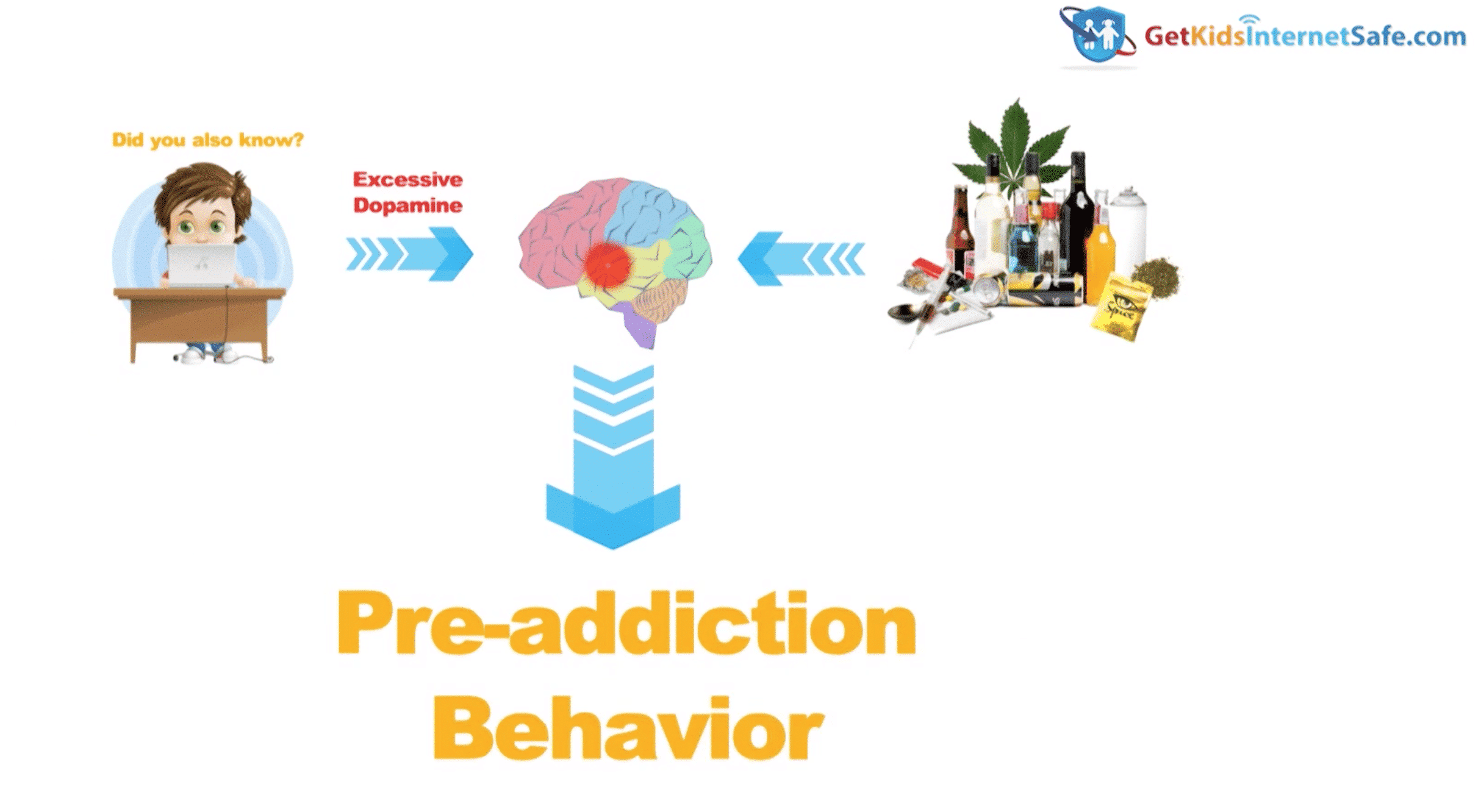
Did you also know that screen media may lead to excessive dopamine in the pleasure center of the brain in a similar way that all drugs of addiction do? That means some kids drift into pre-addiction behavior patterns, like “flow,” when video gaming or using social media.

Although every child’s different, boys tend to prefer gaming and girls tend to prefer social media.

Surging dopamine in the pleasure center quickly overpowers an immature frontal lobe. That means our kids need us to guide them well into what we consider “adulthood.”