A selfie is a self-portrait shared on texts or social media for attention-seeking, communication, documenting one’s day, and entertainment.[1] The term was first seen in 2002, but didn’t become popular until 2012. By 2013 The Oxford English Dictionary named it “The Word of the Year.”[2] We’ve all been guilty of taking selfies. But it takes education and practice to use good judgment. Today’s GKIS article asks, “Are selfies bad for our mental health?”
Celebrity Selfies
With ads on social and print media, billboards, and television, kids and teens are exposed to thousands of images and videos every day. And, it isn’t obvious how filtered, lighted, contoured, surgically and cosmetically altered, and digitally enhanced the photos are. They aren’t a quick, natural snapshot. They are highly produced and stylized. Kim Kardashian proudly shared that she once took 6,000 selfies during a four-day vacation. Her celebrity sister, Kylie Jenner, also admitted that it sometimes takes up to 500 photos before she gets the right shot.
With such exposure, kids are encouraged to scrutinize their appearance, striving to develop and refine the “perfect” face and body.3 Hyper-sexualized selfies further serve as a negative influence. One can easily get roped into hyper focusing on looks and attracting “likes” and comments as a reflection of worth and popularity.
Selfie Editing Apps
Makeup and selfie editor apps are very commonly used and include features to:
Change eye color
“Slim and trim to selfie perfection”
Enlarge features
Shrink the nose
Plump the lips
Enhance facial contours
And even offer hundreds of pupil templates “to make your eyes look beautiful.”
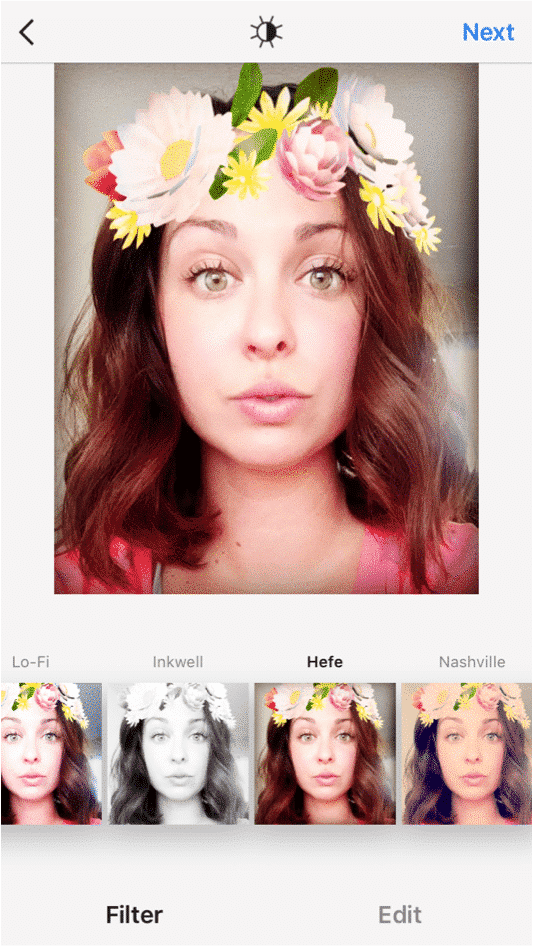
Apps also offer combo features that turn your image into cartoon perfection. For example, the “fairy filter” on Snapchat can change your selfie in multiple ways at once, making your eyes larger and gleaming bright while also smoothing out the skin and whitening teeth.
The Beauty, Fashion, and Health and Fitness Industries
Selfie alteration isn’t motivated simply by entertainment. A far more sinister reason often lurks behind the manipulation of young minds, namely profit.
Each year the beauty industry boasts a profit of 42 billion dollars.[10] Add that to the 30 billion dollars brought in by fashion, health, and fitness and the big business of advertising on social media, and one can imagine the lengths corporations will go to manipulate buyers into buying.[4] The worse we feel about ourselves, the more we buy products to “fix” us.
Do we adopt unrealistic attractiveness standards?
In the past twenty years, anxiety and depression have been rising at an alarming rate. The rates of mental health issues among women have particularly jumped.[5] Social media and the pursuit of perfection are likely contributors.
Not only can media exposure lead to mood issues, but body distortion and eating disorder issues are also on the rise.[7] Forty to 60% of elementary school girls report having concerns about weight.[8]
Body shaming among peers starts young and peaks during adolescence. Both males and females engage in shaming, but they do it differently. Males tend to be more directly aggressive, while females shame through passive-aggressive means like gossip and cyberbullying.[9]
Body image issues can lead to excessive use of diet and exercise products and potentially lead to clinical eating disorders. In the United States alone, 20 million women and 10 million men suffer from a clinically significant eating disorder at some time in their life.[6] Even with awareness and education, prevalence numbers continue to rise.
How can we protect our kids from unhealthy self-perception and distorted body image?
Love and compliment your kids loudly and unapologetically for all they are! This includes their worthiness of love just for being the “perfect,” nondigitally enhanced them.
Reinforce that the self is made up of far more facets than a beautiful face. Likes, interests, skills, and traits make up what’s important about a person, not eye size and hair color.
Discuss the fact that we will be hanging out with our bodies for the long haul, which means we must treat our bodies as our best friends rather than our enemies.
Lead by example. Do you voice your disapproval about your face or body aloud to your kids? If you do, they too will follow suit about themselves. Instead, be loud and proud of the woman or man you are today. Value yourself just as you would like your daughter or son to value themselves.
Implement healthy eating, sleeping, and exercise habits and explain why that is so important for strength and health. I prefer to focus on words like “delicious” and “nourishing” for healthy food to highlight lifestyle factors and frame nutritious food options as a treat, rather than words like “diet,” “cleanse,” or “cheat” that focus on junk food as treats and healthy foods as punishment while aggrandizing shaming fads.
Remind your teen that what they see on social media and in ads isn’t always the real deal. Take an Internet browsing journey with them researching this topic by searching “photoshop hacks” or looking up Jean Kilbourne’s ground-breaking work in this area with her “Killing Us Softly” video series. A must-see!
Thank you to CSUCI Intern, Brooke Vandenbosch for her contributions to this important article! Wonder if only girls are susceptible to body image risk to mental health? Check out, “Body Shame and the Average American Male” for a discussion about how boys are increasingly affected as well.
I’m the mom psychologist who will help you GetKidsInternetSafe.
1 – Sung, Y. , Lee, J. , Kim, E. , & Choi, S. (2016). Why we post selfies: Understanding motivations for posting pictures of oneself. Personality and Individual Differences, 97, 260-265.
5 -Press Association Newswire (2014). ‘Very High Rates of Anxiety and Depression for Young Women. Newsquest Media Group.
6 – Wade, T., Keski -Rahkonen A., & Hudson J. (2011). Epidemiology of eating disorders. In M. Tsuang and M. Tohen (Eds.), Textbook in Psychiatric Epidemiology (3rd ed.) (pp. 343 – 360). New York: Wiley.
7 – Leit, R. (2002). “The Media’s Representation of the Ideal Male Body: A Cause for Muscle Dysmorphia?” International Journal of Eating Disorders, vol. 31, no. 3, pp. 334–338., doi:10.1002/eat.10019.
8 – Smolak, L. (2011). Body image development in childhood. In T. Cash & L. Smolak (Ed s.),Body Image: A Handbook of Science, Practice, and Prevention (2nd ed.). New York: Guilford.
9 – Aslund, C., Starrin, B., Leppert, J., & Nilsson, K. (2009). “Social Status and Shaming Experiences Related to Adolescent Overt Aggression at School.” Aggressive Behavior 35.1: 1-13. Web.
I’m snuggled into bed at our family’s mountain cabin waiting for snow with anxious anticipation of the holidays. I smile as I reminisce about each child’s favorite toys over the years. The Christmas Eve when my husband and I were up ‘til 3 am constructing an insanely complex train table, the battery-operated Jeeps that were abandoned quickly when we realized they couldn’t propel up our wildly steep driveway, the hours spent figuring out the parental controls on shiny new Apple products. In some ways I’m grateful my kids are no longer little ones. Tonight my oldest made a yummy taco dinner and the two little ones did the dishes. The days are gone where my husband and I were run ragged finding binkies and chasing toddlers. They were precious for certain, but tonight I consider the cyber challenges parents are currently facing with their kids.
For some teens, social media is the primary method of communication with friends and family. Everyday more than half of pre-teens and teens will log on to one or more on social media sites, and 22% of those will log on more than ten times per day. That’s approximately twenty three years of their life on the Internet, with ten of the years specifically spent on social media sites! With that amount of time spent on social media, it is not surprising that more than 1.8 billion photos and personal posts are uploaded to these sites daily. The photos and posts that adolescents upload have become a part of their normal daily life and development. Some of the posts can be beneficial, but some have risks and consequences associated with them (Gary, & Christiansen, 2009).
My eleven year old daughter is a perfect example of these statistics. She communicates with her friends mainly via Instagram. Even though her dad and I are one of her “followers” and we feel like we are in the loop about her online activity, research shows that:
12% of teens admit that their parents do not know about all of their social media accounts,
33% of teens report that their parents know little to nothing about what they do online, and
22% of parents have never spoken to their children about Internet safety and etiquette.
As a busy parent, my days are hectic! It’s too easy to allow my daughter to spend time on the Internet while I get things done. Even though she uses screen media in my presence, I am not always looking directly at the computer screen, her smartphone gives her Internet access outside of home, and I am not up to date with the “lingo” and sites she and her friends use. For example, I just learned of two acronyms that I was unaware of, POS and PA911. They stand for “parents over shoulder” and “parent alert”. These are used by teens to alert someone they are communicating with online or via text to watch what they are saying so parents don’t see. I am now aware that I cannot be 100% sure of everything my daughter is doing online and am part of the statistics.
To help her make healthy online choices, I must be educated about the risks and benefits of online activity so I can share them with her.
Here are some concepts that parents should go over with their children so they are able make good online choices and guide them safely through the Internet:
Negative Feedback
Negative feedback refers to unkind comments on social media. Pre-teens and teens have the tendency to be preoccupied with how they are being perceived by their peers and highly sensitive to their opinions. Most of the time social media elicits healthy feedback within peer groups with responses such as “likes” and positive comments on posts and pictures. But 7% of teens report only receiving negative feedback on their online activity causing lowered self-esteem and feelings of insecurity (Koutamanis, Vossen, & Valkenburg, 2015).
Replicability
Once something has been uploaded to the Internet, it is still searchable even if the person who uploaded later deleted it. Replicability happens if a post or picture is copied and pasted to someone’s personal computer for future or personal use. Copying and pasting is not always done by someone the “poster” knows. Social media sites have the option to “share” a picture or post giving access to thousands of people in a matter of seconds. Once the image or post is someone else’s hands, they are free to do what they want with it, including altering it and reposting it. Anything uploaded can fall into anybody’s possession. Once posted online, no post or photo is safe from copying, altering, or sharing (Moore, 2012).
What gets posted online, stays online
Anyone who has ever used the Internet leaves behind a digital footprint. These footprints are an ongoing collection and recording of EVERYTHING an individual does online. Yes, that even includes websites that have been viewed and searched, accounts created, pictures that have been uploaded, deleted content, and comments left on sites.
Teens need to be aware that there may be future implications from their Internet activity, especially what is on their social media profiles and pages. For example, as many as 75% of employers use social media as part of a background check for potential employment and certain universities also use these platforms when deciding which applicants will be granted admission (McBride, 2011). Would your teen be prepared to turn over their social media accounts and passwords to the college of their choice?
Personal information
Posting too much personal information can lead a predator right up to a teen’s front door. An astonishing 20% of teens feel it is safe to post personal information and public blogs and social media sites. According to the Pew Research Center, 92% use their real name, 71% share the school they go to, 91% show their full face in their profile picture, 71% say what city/town they live in, 20% post their phone number, and 82% share their birthday. When a teen shares too much personal information, it not only makes them an easy target for a predator to find, it also gives identity thieves the information they need to ruin a teens future credit. Once credit is harmed from identity theft, it is hard to turn it back around.
What can parents do to promote positive and safe digital activity for their teen?
Follow age guidelines for specific sites and apps
The Children’s Online Privacy Protection Act (COPPA) was put in place to prohibit websites from collecting personal information of kids under the age of thirteen without parental permission. This is why popular sites such Facebook and Instagram require users to be thirteen or older. Allowing children to join sites by falsifying their age, sends mixed messages about lying and online safety (O’Keefe, & Pearson, 2011).
Teach them healthy digital citizenship
Just as one maintains a positive identity offline, one must also attend to their online reputation. Teach your teen to think about possible future repercussions before they view or post online. Be prepared to have ongoing discussions about what pictures and comments could imply to others (e.g., might be seen as provocative, unkind, or unfavorable to their character) (Moore, S., 2012). Remember that grandma (and UCLA) are watching!
Set up regular GKIS family meetings
Having regular family meetings about issues pertaining to online activity can keep parents informed about what their teen is up to online and offline. Parental involvement and communication is key to promoting healthy internet activity. Family meetings shouldn’t be used as a time for punishing online misuse, but rather a time to mutually teach each other and share issues that may come up due to screen use.
Gray, D. , & Christiansen, L. (2009). Protecting adolescents’ personal information online: Constraints and parameters. Journal of Information Privacy & Security, 5(4), 31.
Koutamanis, M. , Vossen, H. , & Valkenburg, P. (2015). Adolescents’ comments in social media: Why do adolescents receive negative feedback and who is most at risk?. Computers in Human Behavior, 53, 486-494.
McBride, D. (2011). Risks and benefits of social media for children and adolescents. Journal of Pediatric Nursing, 26(5), 498-499.
Moore, S. (2012). Digital footprints on the internet. International Journal of Childbirth Education, 27(3), 86.
O’Keeffe, G. , & Clarke-Pearson, K. (2011). The impact of social media on children, adolescents, and families. Pediatrics, 127(4), 800.
What if you saw your teenage daughter’s photo posted on a stranger’s Facebook page? Perhaps he created his own caption under her photo too, like “I’m so hot!” Perhaps he’s a grown man and has other women’s photos posted as well! I bet you’re thinking that’s too extreme or unlikely. Until recently, I would have agreed with you … until it happened to me. My name is Adrienne Roy-Gasper, and I am a CSUCI intern for Dr. Bennett. I was also guilty of thinking, “it won’t happen to me.” I believed my photos were safe on Facebook, and no one would ever want them.
I WAS WRONG.
Theft of my Photos
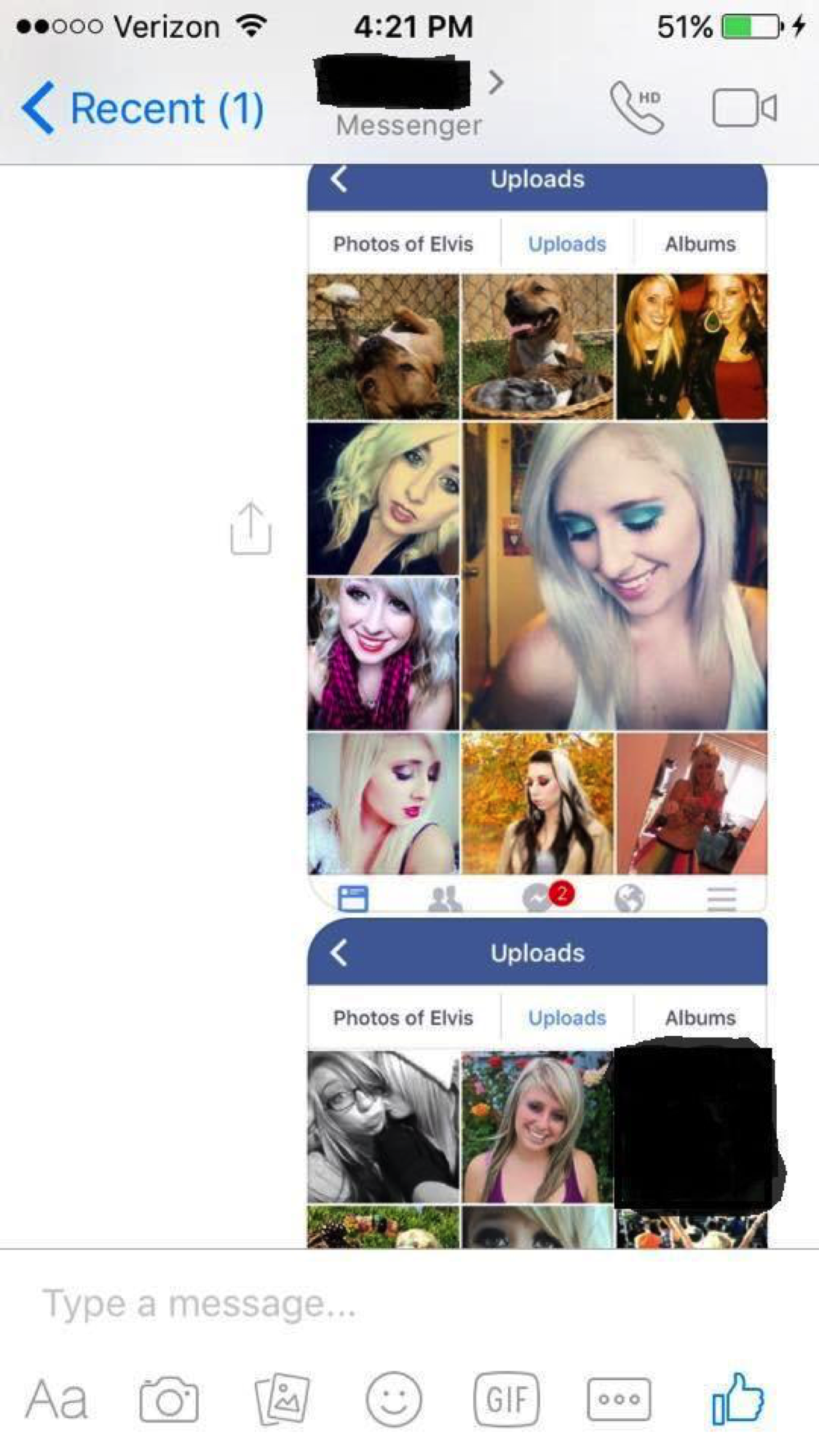
Several weeks ago, I received a message from a Facebook friend saying a forty-year-old man had a bunch of photos of me on his Facebook page. She elaborated, “This guy was being really scary and inappropriate with my friend, so I was looking through his Facebook page and saw pictures of you!”
My stomach dropped. I was shaking. My heart was racing. I panicked. When I went to his page, I saw that this man had visited my profile, stole my pictures, and posted them!
I was shocked and scared. I didn’t know this man. I never saw him in person. Never spoke to him. Yet somehow, he found my profile and stole my photos.
Why would he do this? Who is this guy? Why me? How did he find my Facebook profile? What else could he be using these photos for?!
I was freaked out and ready to cry. Maybe my reaction was “overdramatic.” But I was just notified that this man was sexually harassing another girl. This potentially dangerous man, who was a lot older than me, was downloading and publicly posting my personal pictures. How long had he been tracking me? Since I was 17? 20? A year ago? I wasn’t sure, and I didn’t have a way to find out.
How I Got Him to Cooperate
First, I asked for advice from friends and family by posting a Facebook message about the situation. Many of them were frightened for me. They felt it was unsafe and were just as upset as I was. With their suggestions, I ultimately decided to be direct and message this man with a polite request to remove my photos.
I messaged, “I notice that my pictures are on your profile. I did not give you permission to use them. Can you please take them down?”
Now it gets even stranger. Instead of taking the photos down, he replied, “I thought I told you I will when I get back.”
His response was so confusing to me. You thought you told me what? That you stole my pictures? I politely messaged him again, explaining that I’d never spoken with him before.
His response was defensive, “So don’t say rude things to me,” he replied.
At this point, I lost it!
Friends and family came to my rescue and decided to say something to him. I am not one for cyberbullying, but that’s what it came down to. Ten of my friends messaged him with threats like calling the cops or finding him and beating him up. Finally, he took my pictures down.
What do you think?
I kind of worry that this was a mass cyberbully campaign. But was it? Were my champions justified? Whether it was a good reason or not, I ended up feeling guilty but happy that he no longer had my photos on his profile.
I don’t know of many people this has happened to, and I wasn’t sure how to react. After I had time to process what had happened, I discussed the situation with our intern group and agreed to share the story, research solutions, and offer advice.
Facebook’s safety features suggest that you first try to handle situations like this on your own. If it remains a problem, then report it.
Go to Facebook’s Desktop Help. Go to “Report something” on the side.
Click what fits your problem the most. For me it was, “Someone is using my photos or my child’s photos without my permission.”
Then click the link that says, “Get help reporting unauthorized photos.”
Click “Image privacy rights.”
Lastly, click what fits your problem the most. For me, I would have chosen “Imposter accounts.”
Facebook will take you to a form to fill out and, hopefully, they will agree that something needs to be done.
There are three frustrating aspects to this reporting process:
First, you have to sit and wait for their response while the photo remains active.
Another frustration is your photos may not get removed from the other person’s account. Facebook may disagree with you and not view it as a problem.
Finally, Facebook can’t do anything about the fact the guy had downloaded the photos for his personal collection. Yuck!
Despite my initial reservations, I came away from this situation feeling that I went about it reasonably.
If timely trouble-shooting Facebook options are limited, I suggest two further considerations:
Don’t ever post photos with intimate content. You never really know where they’ll end up!
Think twice before you post your children’s photos on social media.
Select strict privacy settings on all social media profiles from the beginning rather than waiting until the damage is done.
There are even worse situations that could occur, such as virtual kidnapping, where a person collects personal information from your social media accounts and uses it to extort money from your loved ones, saying you are in danger and will be harmed or even killed if they do not send money. Or imagine if a child pornographer collects and shares your images with other sickos! Dr. Bennett suggests we re-label “child pornography” to be “images of child sexual assault.” I hadn’t considered that before, but I agree with her because that’s exactly what it is.
Disable location services for Facebook on your mobile device.
Take it from me! By accepting the Terms of Agreement from each social media app, we are consenting to have our personal data tracked, collected, and used for corporate profit and potentially personal exploitation. We apparently think it’s a reasonable trade for the free fun and real-time communications we have with friends and family. But the truth is, we all now have our virtual identity to protect as well as our nonvirtual identity. And if you’re a parent, posting images and information about your children launch their digital footprints as well as your own.
Before every comment and image I post, I now ask myself some important questions, including, “Do I care if this image is out there on the World Wide Web?”
Hey GKISsers. I’m in Berlin (!) for a security conference, and my email feed is alive with press inquiries for my opinion about how Snapchat’s new Snap Map feature threatens child safety. Because I try to have a life, I was unable to respond quickly. But I’m on it now, AND I have a unique opinion about why I’ve chosen Snapchat over Facebook on this trip for privacy reasons. Huh? You may ask.
Let’s start with Snapchat’s big news
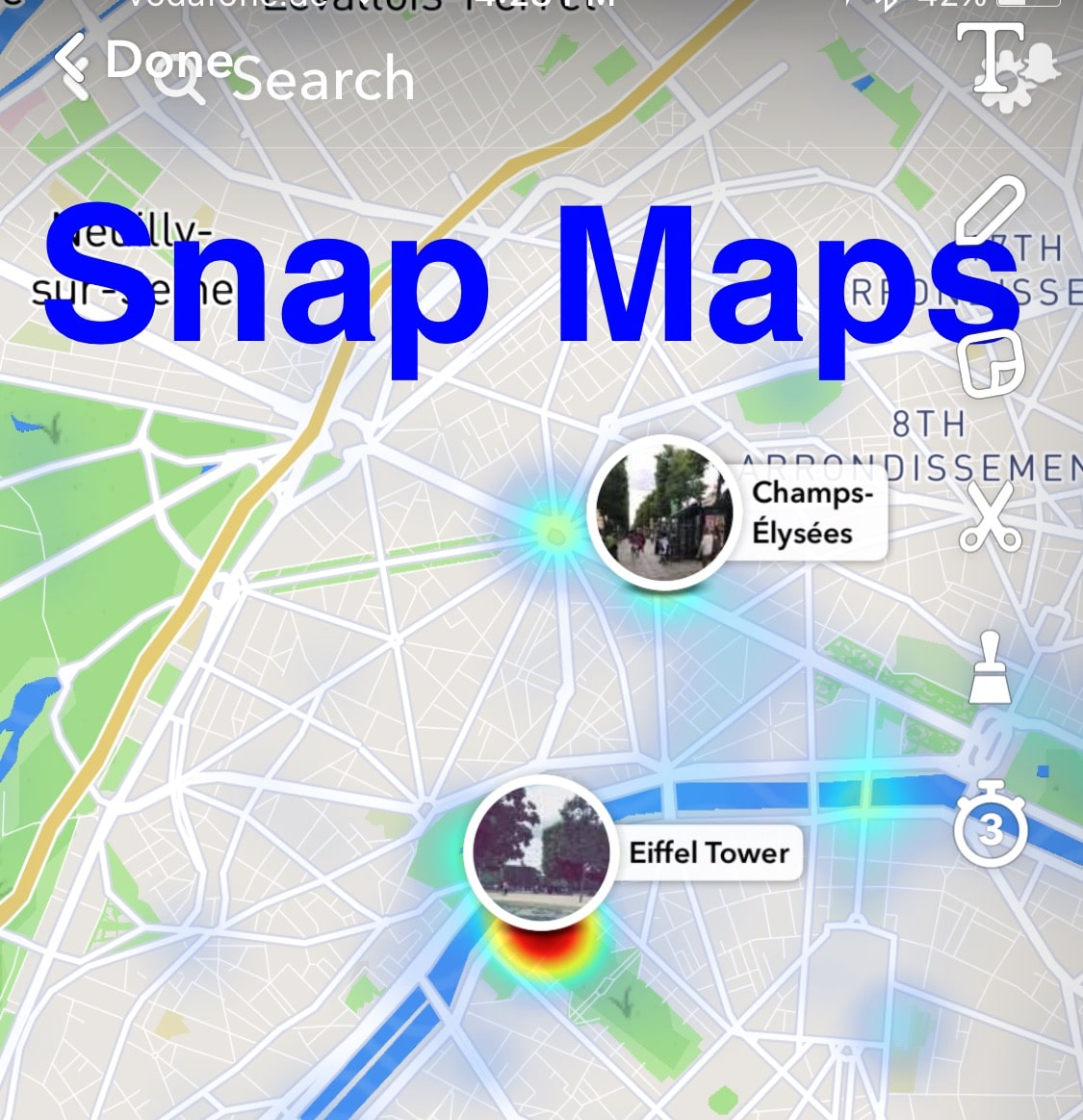
Here’s the skinny: With the new 10.11 Snapchat update, your teen’s worldwide location can be tracked real time using the new feature Snap Maps. That means anybody can pull up a map and see exactly where your child is posting from in the moment with such precision one can see which part of a building your child is in. Location updates only when Snapchat is open and will disappear from the map if the app hasn’t been opened for several hours.
Their location shows up as an “Actionmoji” on a map – an avatar doing Snapchat’s best guess of activity typical of that location (like sitting under an umbrella at the beach or listening to music). Snapchat also notes your speed of travel and whether or not your headphones are plugged into your phone. If your child views the map, she can see where her friends are at anytime, and what she is missing out on. She may also see the locations of Snapchat users she does not know for snaps submitted to “our story,” like a collection of snaps at a concert or sports event. Amazing to get a snapchat view of events occurring real time around the world.
In order to create this new feature, Snap bought social media mapping startup Zenly in May of this year. Snapchat’s press release states, “We’ve built a whole new way to explore the world! See what’s happening, find your friends, and get inspired to go on an adventure!”
What does that mean for our kids?
It means that today, not tomorrow, your kids need to select the ghost feature for Snap location sharing, or their Snapchat buddies may be able to track their exact location real time.
For the FOMO (fear of missing out) of adolescence, this feature is cool. Imagine seeing where friends and other Snap users are at all times, maybe inspiring Friday night plans or providing options about where to go. Also, if there are lots of Snapchat posts in one location, a patch of color appears to identify the hotspot. If friends are all in one group, you can even kick off a group chat. How cool is that? But let me be a huge mom-like buzzkill and paint a picture about what that could mean based on terrifying human trafficking scenarios I’ve seen in my office:
Impulsive Snap from your daughter: “<pouty face> alone again on a Friday night”
Snap maps identifies her bedroom address with a map to every creeper your daughter happened to friend in order to get her numbers up.
Knock at the door
I know that sounds dramatic, but it happens more than we’d like to think. Check out my GKIS article to learn how pimps and predators search out teens on social media to groom them for a face-to-face meeting. Imagine your daughter eventually agreeing to meet a predator who’s been wooing her for weeks for promised romance, tenderness, gifts, and understanding (what all young girls dream about), resulting in her being drugged and locked in a room so her new pimp can arrange a series of rapes by paying customers. I sincerely apologize for the graphic representation of truth, but honestly parents, we need to face the facts to get our GetKidsInternetSafe.
On a less scary note, there’s also a cyberbully risk when kids can see exactly which get-togethers they were excluded from.
What can you do to help keep your child safe?
If you’ve agreed to Snapchat for your teen, download the app and check it out so you can set up an informed digital contract with ongoing educational dialogue. Here is my GKIS article to help with Snapchat basics (update with Snap Maps pending).
Require that your child select appropriate privacy options on Snapchat. When you are on the Snapchat camera home screen, pinch out to get to Snap Maps. Tap on the settings gear in the top right hand corner. Select who you want to share your location with (a select group of friends, all Snapchat friends, or no friends at all – ghost mode). Obviously, I recommend that the ghost mode option “no friends at all” be selected. If friends-only gets selected, have a discussion about what that might mean in regard to friending strangers, frenemies, or what may happen if there is a falling out with a friend.
Keep a dialogue going to stay in the loop and model that you are a go-to consultant for social media and Internet challenges. Mistakes are inevitable, and you want to be a calm and knowledgeable resource for your child. No shame, no blame.
Turn the location option off for your smartphone camera to avoid default geotagging on all photos.
Finally, join me in pressuring the government to require social media apps to offer SAFE ACCOUNTS for use under 18. These accounts would be locked on highest privacy settings with location turned off.
You might be wondering why I don’t simply red light Snapchat with risks like these? I yellow light Snap, because it is a pretty amazing social media app that even I use with friends on occasion. I even prefer it for my activities right now.
Why did I choose Snapchat over Facebook for security reasons this week?
I mentioned that I’m in Berlin. As an avid Facebook user I wanted to share photos of this amazing experience I’m having with friends and family. The problem? I wasn’t particularly comfortable advertising to my 400+ FB friends that my home sat empty. Yes I keep my buddy list culled to friends and family, but I have added some bloggers and business people I particularly admire as well as high school friends. I can’t be 100% sure my privacy is secure. On Snapchat I have far fewer followers.
My carefully culled buddy list and convenient Snapchat story option (with creative filters) is the perfect format to send fun pics of me braving the metro in Paris on my own, wearing wooden clogs in Amsterdam, and sharing my Berlin taxi driver’s impressive road rage. In other words, on this occasion I think Snapchat was more secure than Facebook. PLUS my images go away. I don’t have to hire the 13 year-old across the street to delete my photos one-by-one, because I share TOO MUCH and that digital exhaust follows me for years. An ongoing saved photo stream is just too intimate. AND once posted, Facebook owns that content. Of course, Snapchat is reputed to also keep images for months on their server even after disappearing.
There you have it. I am not entirely Internet safe by choice, which occasionally has me worried amongst these intense security experts in Berlin who’s digital footprints are nil for good reason. They know the worst-case scenarios and made their best decisions. Are you making yours? And more importantly, are your teens posting safely?
I’m the mom psychologist who will help you GetKidsInternetSafe.
Onward to More Awesome Parenting,
Tracy S. Bennett, Ph.D.
Mom, Clinical Psychologist, CSUCI Adjunct Faculty
GetKidsInternetSafe.com
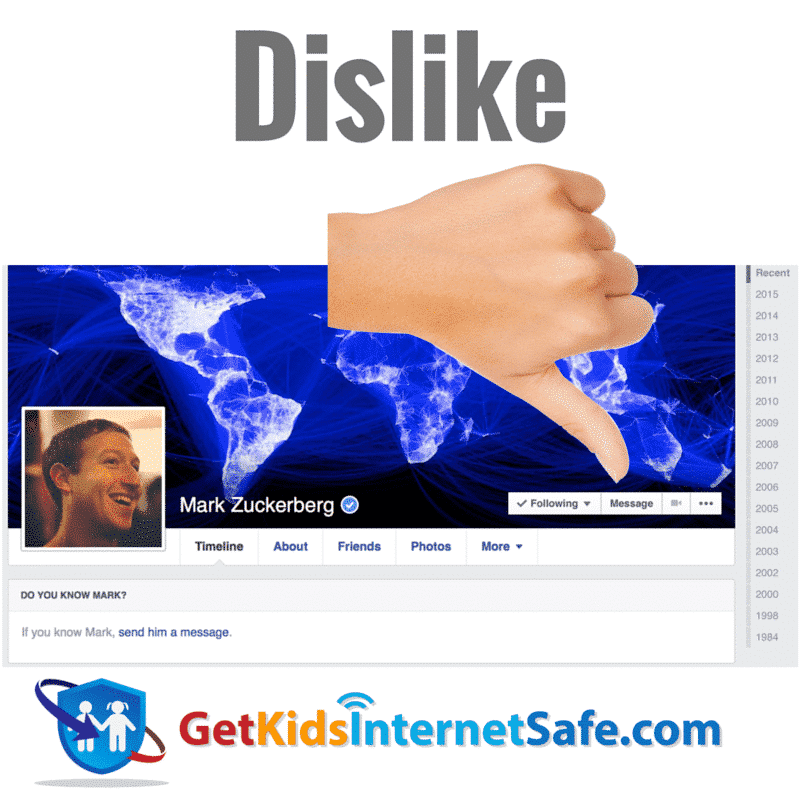
First, let’s get it out of the way that we are all totally disgusted that any of us even care about Facebook buttons. I mean of course there are far more important things going on in the world than Aunt Gertrude’s lazy finger stab of approval at my kids’ first-day-of-school pictures.
But truthfully, those of us who use Facebook happen to “like” that Aunt Gertrude cares enough to give a look and a stab. It even warms our little social-media-loving-hearts to imagine her toothless grin when we see her “like.” And don’t we feel a particularly cozy flush if she feels generous enough to give a several word comment (“Sweetie! They’re getting so big!”)? Rejoice!
After all, without Facebook Aunt Gertrude and I would only think of each other the split second before we see each other at the sweaty cousin-infested family reunions each decade. I wouldn’t know how much she loves cats and crochet, and she’d surely miss out on my cute goats and irreverent sense of humor. As weird as it is, Aunt Gertrude and I have a relationship because of Facebook. She’s not even going to survive until the next reunion that I may or may not attend. Sad maybe, but 1000 miles and busy lives make it true. So let’s just get over ourselves and admit that our petty social media relationships really matter. Aunt Gertrude is one relationship that threads the tapestry of my life, and her shocking shade of sappy comment magenta colored yesterday’s depressingly gray tint.
OK now that I’ve gotten my defensive and slightly desperate response to the Facebook haters out of the way. Let’s get sanctimonious about that confounded “dislike” button!
I’m conflicted about the “dislike,” because I agree that it is appealing to have an opportunity for a larger range of emotional reaction to a post than “like.” I mean sometimes I want to give a buddy a quick stab of recognition for that bummer post announcing personal or public tragedy. I want them to know I’m here, you know, micromovement-heart-and-soul.
But honestly, shouldn’t something as potentially powerful as a “dislike” (read angry or frowny face or supportive hug) require more than a keyboard stab? I mean if my social media buddy took the time to post something dislikable, don’t they deserve a soft startup to my boo opinion chased with a sugary sprinkle of hope?
Post: “Yesterday my dad died, I’m devastated”
Response: “Dislike” or “Fanny, I know how much you loved him. I’m so sorry for your loss. May he rest in peace”
Post: “Polar bear plight looking desperate”
Response: “Dislike” or “This image makes me so sad I’m going to Google this and see how I might help out”
Post: “I need a hug today because I’m sad”
Response: “Dislike” or “I love you! Let’s meet for coffee”
Maybe it’s my bleeding heart ravaged by years as a healer, but honestly, have we really gotten that uncomfortable with intimacy? Shouldn’t anything dislikable deserve a little more effort than a finger stab? A little more warmth? Those icky little heart flutters of emotion, they are far better served by a moment of empathetic reflection than a stab of “yep.”
And let’s consider the potential for passive-aggressive hostility, the kind that subtweets contain and Ask.FM votes wield. “Dislike” can easily mean, “f you” or “none of us think you belong” as easily as it can affirmation. Yes we are all grossed out by the potential for cruelty and taunts on social media, but think again if you believe it’s only the kids that are doing it. Something as lame as a “dislike” can be interpreted in too many hurtful ways to make it worth it. Consider these:
Post: “Look at my new haircut!”
Response: “Dislike”
Post: “I’m so happy my son had the courage to come out yesterday!”
Response: “Dislike”
Post: “Our newborn just arrived and we couldn’t be more ecstatic!”
Response: “Dislike”
Post: “I’m a vulnerable teen and I’m really hoping you like my awkward selfie and opinions and … please, please approve of me”
Response: “1.5k dislikes” & “3 likes”
Please Mark Zuckerberg, save the cyberbullying opportunities for the more cruel social media apps populated by trolls and teens. We all spill our uglier selves out on Facebook occasionally anyway; please don’t make it as easy as a stab.
What do you think? I could be missing something here. If you even care about Facebook at all, do you think my concern about potential hurt feelings is politically correctness gone too far? Or are you with me on this one? Mark Zuckerberg needs to know.
I’m the mom psychologist who will help you GetYourKidsInternetSafe.