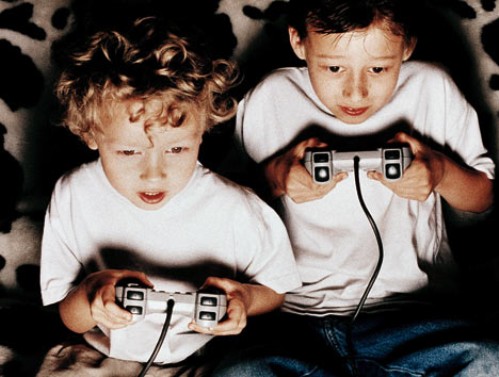
In the fast-paced world that we live in, it can feel downright impossible to get the entire family together in the same room. Trying to find an activity that everyone can enjoy together is an even more improbable task. Yet, sharing experiences as a family and spending time together is necessary for creating close family bonds and maintaining a sense of connection. Today’s GKIS article covers the pros and cons of the PlayStation 4 and the PlayStation 5, recommendations for games to play as a family, suggestions for appropriate games that your kid can play alone, and some brief tips to keep your kids safe and connected when it comes to gaming.
Yesterday versus Today
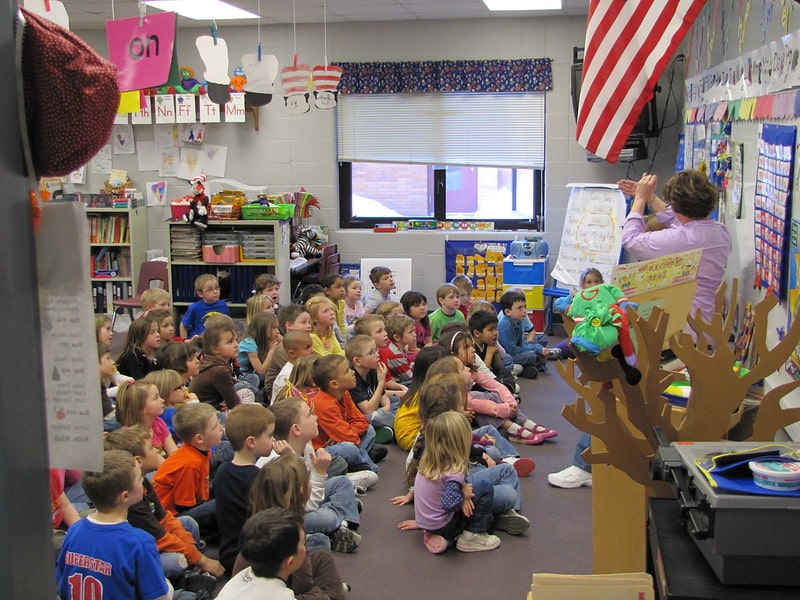
In today’s digital landscape, there is a generational divide when it comes to what is fun. While you may reminisce on the fun you had playing Chutes and Ladders and Monopoly with your family when you were a child, your memories are probably being affected by that funhouse mirror known as nostalgia. Even if those games were fun when we were kids (I am not so sure they were), your children are used to a much more technically advanced world where entertainment comes in the form of video games, social media, and streaming services. Therefore, adaptation may be needed to have a successful family night where everyone has fun.
Here are some reasons why video games are a great way to connect with your kids:
Can be accessed at any time
Can fit into the most restrictive of work schedules
No need for planning
Do not have to worry about losing game pieces
Do not have to explain a complex set of rules
Most games are highly intuitive requiring little explanation
Creating family cohesion and safely navigating the technological world we live in can be difficult at times. Our Connected Family Course gives expert advice and strategies to create a connected home environment without having to disconnect from the internet.
What is the PlayStation?
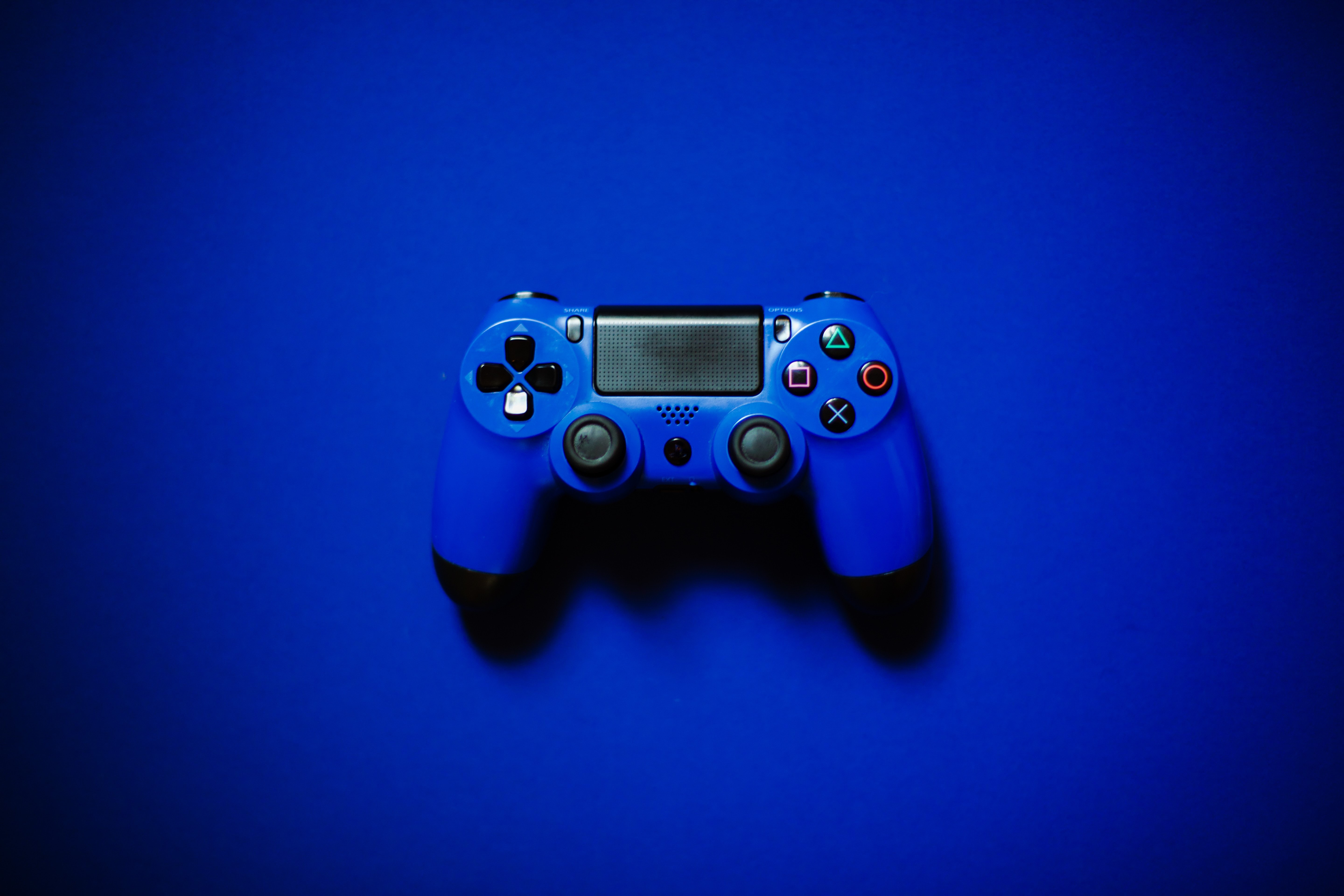
The PlayStation is a series of video game systems created by Sony. For this article, the focus will be on the PlayStation 4 and the PlayStation 5, which are the current production models. The PlayStation 4 was released in 2013 and has sold over 114.9 million units worldwide, making it one of the most successful gaming consoles ever released.[1] The PlayStation 5 is the newest of Sony’s consoles, released in 2020, and is wildly popular and highly sought after. The PlayStation 5 has already sold over 10 million units and sells for a substantial mark up in the secondary market.[2]
The Pros and Cons of the Sony PlayStation
Pros
The biggest advantage of the PlayStation is that it is the most technologically advanced series of consoles on the market. Also, the PlayStation has a huge userbase so there will always be people to play with online. The PlayStation 4 and 5 are not solely game consoles. They have brilliant interfaces allowing the user to stream movies, television, and music from different apps, making them great choices for a one-stop entertainment hub.
Additionally, the PlayStation 5 is mostly backward compatible with the PlayStation 4. So, if you buy a game on the PlayStation 4 and later upgrade to the PlayStation 5, you can play most of your PlayStation 4 games on the new console. With a gigantic catalog of games, many of the games are family-friendly.
Cons
The PlayStation 5 is in such high demand that it is nearly impossible to get your hands on one. While you may be able to find some models of the PlayStation 4 for under $300, the retail price of the PlayStation 5 is close to $1000. But they sell for much more on the secondary market due to the high demand. Due to Covid, there is a huge supply shortage making these things harder to get than a Tickle Me Elmo back in the day.
Many parents don’t realize that kids can browse the internet through their PlayStation consoles. That means they can access anything or anybody through that browser. That means you MUST program parental controls if you don’t want your child exploring inappropriate online neighborhoods.
PlayStation Games to Play as a Family
With the PlayStation, there are a variety of interactive ways to connect with your family. You can play games together or use the console as a multimedia hub to stream a movie through your favorite streaming service.
Here are 4 fantastic PlayStation games for you and your kids to play together:
Just Dance 2021
Rock Band 4
Little Big Planet 3
Just Dance 2021
Just Dance is a motion-based rhythm game, which is a fancy way of saying that you dance to the beat of the music and try to perform choreographed moves. This game is a brilliant choice as it is a great way to exercise as a family. There are plenty of songs to choose from ranging from Lady Gaga to Billie Eilish. Each song has its own choreography and poses to learn as well.
This game has an ESRB rating of “E10,” meaning it has been approved for everyone ages 10 and up. The reason for the 10 and up age rating is that some of the songs have crude lyrics, though it is no worse than anything that they will hear on the radio. If you don’t want your children to hear these songs, there is a “kids mode” with songs that are more tailored for young children, like “You’ve Got a Friend in Me” from Toy Story 3.
This game is perfect for slumber parties and family reunions, as well as for any other occasions where you or your kids want to be active. We think this game is well designed, and the controls are intuitive making it a fun way to exercise and get your groove on.
Rock Band 4
Have you ever wanted to start a family band or be the Partridge Family? Rock Band is a game where you physically interact with video game controller versions of instruments. Up to 4 people can play at once, as there are drums, bass, guitar, and a microphone to choose from. The cool thing about this game is that it is very interactive and some of the skills learned from playing this game can be carried over to real-life when it comes to the drums and vocals. Like the previous game on the list, Rock Band 4 is also a great way to get some exercise in.
This game has an ESRB rating of T for Teen due to some of the song lyrics. Yet, like Just Dance 2021, there is nothing in this game that your kids won’t hear on the radio. Also, you can customize which songs come up in the playlist to avoid any songs that you find problematic.
Rock Band can be a great choice for parties and sleepovers as well. Kids can take turns on the different instruments and switch out after each song. It is also fun to be a spectator watching others play as well, so kids won’t get too frustrated waiting for their turn.
Little Big Planet 3
Little Big Planet 3 is an action platformer at its core. Up to 4 players can work together to take on each stage as an obnoxiously cute sack person. Browse “Little Big Planet images” to see what the cute little dude looks like. The game is massive and there are an immense number of levels to play through. On top of that, players can create their own levels and share them with other players. Having a huge creative community has made the replay value for this game limitless as players have created a ridiculous number of unique experiences.
Little Big Planet 3 has an ESRB rating of E, meaning it has been approved for children of all ages. This game also allows your children to utilize their creativity in a way that they will not get anywhere else. You and your kids can take the role of game creators and make your own levels and experiences to play, share, and show off to your friends and family.
PlayStation Games Your Kids Can Play Alone
Video games make great rewards for when your kid does something wonderful. There are an immense number of games to choose from. However, it can be overwhelming to find a game for your child that is age-appropriate. There are plenty of games out there that are excessively violent, have strong language, and have sexual situations in them.
Here is a list of 3 games that we recommend as rewards for your child:
Tearaway Unfolded
Rayman Legends
Ratchet & Clank
Tearaway Unfolded
Imagine this game scene, your face is the sun observing and interacting with a paper doll character. You explore vast paper environments and manipulate objects to solve puzzles to help your paper character throughout the adventure. This game design allows for a level of empathy and emotion rarely seen in video games, as the characters directly interact with you.
Tearaway Unfolded is rated E for everyone and has been deemed acceptable for all ages. There is little in this creative game that could offend or be seen in a negative light.
The most brilliant part of this game is the bonus stuff that allows the player to interact with the characters in the real world. There are templates that can be printed out and constructed so that your kid can have a physical version of his character to play with. The creativity and uniqueness involved in this experience of bringing the game characters to life and interacting with them offers a shared activity between you and your kid that is unlike any other and utterly priceless.
Rayman Legends
Here at GKIS, we think that the music levels in Rayman Legends are some of the most wonderful levels ever made in the history of video games. Rayman Legends is undoubtedly one of the greatest platformers ever made. The controls are extremely smooth, and the gameplay is spotless.
In this game, you play as the titular character and make your way through the many levels and challenges throughout the game. The game has a very playful art style and is very satisfying to play.
This game has an ESRB rating of E10 for everyone age 10 and up due to cartoon violence and comic mischief. The violence is very mild when compared to other games, and there is no blood or guts. For a single-player game, it has an incredible amount of replay value due to the vast number of things to do in its virtual world.
Ratchet & Clank
Ratchet & Clank is an action-adventure game where the main characters are a “lombax” and his robot companion. In the game Ratchet and Clank, the goal is to navigate the world with the fox/human hybrid character and the robot to find new weapons and gadgets that will help to save the universe.
Ratchet & Clank has been rated E10 (for everyone 10 and up) due to the violence against animated monsters. Yet, the weapons used in the game are ridiculous and outlandish. There is little chance that your kid is going to get their hands on a “groovinator” or a “sheepinator” in real life unless they’re future genius inventors.
How To Keep Your Kids Safe Playing Video Games
Research the games before buying them
Check the ESRB ratings
Play with your children or check in on them
Talk to your children and maintain a close family bond.
To stay in the know about how to keep your kids and teens safe online, check out our weekly parenting and family coaching videos provided through the Screen Safety Essentials Course. This comprehensive program will help families to become informed by providing you with the tools and expertise to keep your family connected and safe while engaging online.
Doctor B’s parenting guide, Screen Time in the Mean Time, is a wealth of knowledge about screen safety and keeping your kids safe from the numerous dangers inherent in the world we live in.
Thanks to CSUCI intern, Michael Watson for researching family-friendly games for the PlayStation 4 and 5.
I’m the mom psychologist who will help you GetKidsInternetSafe.
Spending time together and sharing experiences is extremely important when it comes to developing close family bonds and a sense of connectedness. While many of us think of playing board and card games to develop connectedness, many children would disagree. These days, they would generally rather play video games than spend time with their parents. While we at GKIS recommend that real-world activities should be prioritized, video games can be utilized both as a reward and a convenient way of connecting with your child. You don’t have to wait for connection until you’ve found time to plan a lavish camping trip. For every day, a video game could be just what Dr. B ordered. Today’s GKIS article covers the pros and cons of the Nintendo Switch, recommendations for games to play as a family, suggestions for appropriate games that your kid can play alone and unsupervised, and some brief tips to keep your kids safe and connected when it comes to gaming.
What is the Nintendo Switch?
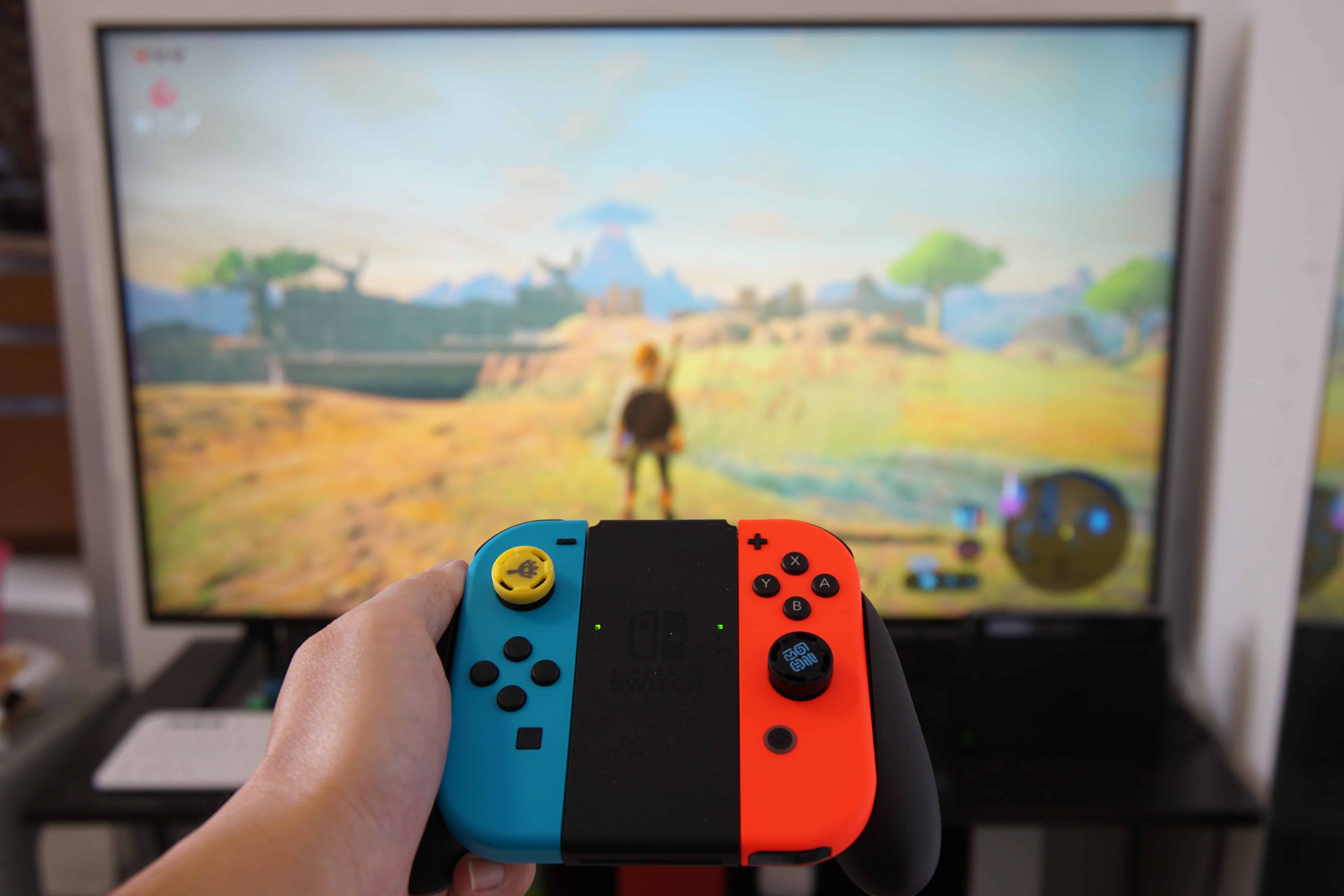
The Nintendo Switch is a video game system that was launched in 2017. The Switch is unique in that it is considered a hybrid system where the console itself can work as a tablet and the controllers can attach to the sides to be used as a portable game system. It is extremely popular and has sold over 89 million consoles worldwide.[1]
The Pros and Cons of the Nintendo Switch
Pros
The biggest advantage of the Nintendo Switch is its portability. Unlike the PlayStation and Xbox consoles, the Switch can be taken on long trips and utilized just about anywhere. Also, Nintendo heavily markets its console to families and children. Many of the games are family-friendly, perfect for family game night or for your children to play by themselves. Another big bonus is the price-point. At $299, which is at the low end for current generation consoles. In comparison, new PlayStation and Xbox consoles sell for about $1000.
Cons
The Nintendo Switch is not as technologically advanced as the current PlayStation or Xbox consoles. The graphics are not as jaw-droppingly realistic and the processing speed is not as quick. Yet, the differences are not so great that they will affect the overall gaming experience.
Nintendo Switch Games to Play as a Family
Playing video games as a family could be a great, interactive way to connect with your children. The Connected Family Course gives expert advice and strategies to create a connected home environment without having to disconnect from the internet. Here are 3 fantastic choices for Nintendo Switch multiplayer games.
Mario Kart 8 Deluxe
Super Mario Party
Super Smash Brothers Ultimate
Mario Kart 8 Deluxe
Mario Kart is an iconic series that has been around since the early 1990s, and they have not changed the formula that much. The reason that they haven’t changed the formula is because it works! It is ridiculously fun to race against your family and friends as your favorite Nintendo characters. Plus, there is a luck-based element to the game that evens out the playing field for younger less experienced players. It doesn’t matter how good someone is if they can get knocked out of first place when someone else gets the perfect power-up.
This game has an ESRB rating of “E.” meaning it has been approved for all age groups or “everyone.” Up to 4 players can play on a single Nintendo Switch. But if you have two consoles, there can be a total of 8 players at once. This is perfect for slumber parties, holidays, and other occasions where you might have a bunch of kids at home. We think this game is well designed, and the controls are intuitive making it just as fun for the parents as it is for the kids.
Super Mario Party
Super Mario Party is the ultimate family party game. Four people can play Super Mario Party on a single Nintendo Switch console. The great thing about Super Mario Party is the diversity of gameplay and modes of play. Players can play board games consisting of mini-games, which are short games that usually last under a minute. There is a total of 80 minigames that are chosen at random as characters move around the board. Because each minigame is short, kids don’t get bored easily.
On Super Mario Party, everyone competes against each other, as teams, or you can all play on the same team against the computer. Super Mario Party has an ESRB rating of E so it has been deemed appropriate for children of all age groups. This game is also great for parties and family game nights.
Super Smash Brothers Ultimate
Super Smash Brothers Ultimate can get extremely competitive, but we think it is crazy fun to play together. This game is a fighting game where everyone picks their favorite Nintendo character from a large selection of choices. The point of the game is to knock out the other players’ characters. The best part is that each character has a unique set of moves and plays completely differently than the others, so strategies for winning are almost endless.
Super Smash Brothers Ultimate has an ESRB rating of E10, so it has been approved for everyone ages 10 and up. It may not be appropriate for young children due to the cartoonish violence. As far as fighting games go, this is one of the most family-friendly options out there.
Nintendo Switch Games Your Kids Can Play Alone
There are many Nintendo Switch games to choose from. However, many have excessive violence, sexual themes, drugs, and other material that you don’t want your kids to be exposed to. If you are looking for a game for a younger child, it can be difficult to find something age-appropriate. Here are 3 games to kids can play on their own.
Luigi’s Mansion
The Legend of Zelda: Breath of the Wild
Splatoon 2
Luigi’s Mansion
Luigi’s Mansion is a fantastic single-player game that is great for all age groups and has an ESRB rating of E for Everyone. In Luigi’s Mansion, you wander around a haunted hotel sucking up goofy ghosts with a vacuum cleaner. Although there are ghosts, we don’t think they are very scary. It has a story mode made for a single player but could be played by two players (with one player playing as Luigi’s doppelganger, Gooigi). There are other online multiplayer modes to play as well.
The Legend of Zelda: Breath of the Wild
We at GKIS think Breath of the Wild is one of the best single-player Nintendo Switch games out there. In this game, your character explores an expansive and elaborately detailed world filled with almost never-ending things to do and places to explore.
This game has an ESRB rating of E10 for everyone age 10 and up due to the violence against animated monsters. The violence is very mild when compared to other games, and there is no blood or guts. For a single-player game, it has an incredible amount of replay value due to the vast number of things to do in its virtual world.
Splatoon 2
Splatoon is Nintendo’s answer to shooter-type games where none of the characters get hurt. In Splatoon 2, you play as human/squid hybrid characters and run around spraying each other with ink. Splatoon is probably the safest series of games to choose from if your kids are trying to get you to buy them a shooter.
Splatoon 2 has been rated E10 (for everyone 10 and up) due to cartoon violence, even though you are basically hitting each other’s squid characters with ink bombs, paint guns, and paint rollers. As a warning, even though Splatoon has taken out the blood and guts it still involves cartoonish gunplay. Though it is a single-player game, up to 10 players can play at the same time in one location. The downside is that each player needs their own Nintendo Switch console to play together, which would be expensive.
How To Keep Your Kids Safe Playing Video Games
Research the games before buying them
Check the ESRB ratings
Play with your children or check in on them
Talk to your children and maintain a close family bond.
To stay in the know about how to keep your kids and teens safe online, check out the Screen Safety Essentials Course. Through weekly coaching videos and other valuable resources, this program will keep you in the loop with ways to keep your family connected and safe while engaging with the internet, social media, video games, and more. The goal of this course is to provide families with the knowledge and tools to help prevent digital injury before it occurs.
Thanks to CSUCI intern, Michael Watson for researching family-friendly games for the Nintendo Switch.
I’m the mom psychologist who will help you GetKidsInternetSafe.
We are all under one of a variety of different directives due to COVID-19. The news is full of videos of people wearing masks and gloves and others panic buying at grocery stores. At a time when we need our wits about us, we feel overwhelmed and anxious. Our fight, flight, freeze, or fold responses are on hair-trigger standby. We are all freaked out and definitely all in this together.
That’s where psychology comes in. Our anxiety is guiding the ship and clogging the pipes when it comes to concentration and problem-solving. How we respond to this threat will make all the difference for how we feel for the next coming weeks.
For today’s GKIS article, I’m going to focus on YOU, helping you recognize where you’re at in regard to mental health and how to bring yourself down a notch. After all, the people around you are syncing with your heart rate and mood. If you are calm, they too will settle in better for the long stay-at-home haul. So let’s start with how you’re feeling right now . . .
If you’re like me and trying hard to keep busy, you may notice that intrusive, unwanted anxieties pierce your veil of concentration more often than you’re comfortable with. Maybe you are panic browsing the Internet or watching television for the most accurate and up-to-date news. Or you’re hitting the overstressed grocery stores to make sure you have two weeks’ worth of food just in case. Maybe you’re feeling irritable and angry and tempted to blame the politicians for underreacting or overreacting or annoyed with panic shoppers who once again bought up the last roll of toilet paper. Or maybe you’re pulling fighting kids apart and trying to figure out how to keep them busy so they’re not climbing the walls. However you’re coping, please know that a variety of stress responses are expected right now. Although uncomfortable, anxiety about COVID-19 is “normal” and “healthy.” Those feelings alert us that something new is underfoot, and it’s the right time to peek your head up from normal daily activities to make sure you’re equipped for whatever is coming your way.
Of course, not all responses are staying in the healthy coping category. Red flags that your moods or anxiety may be tipping into the “impaired” category include reduced or increased appetite, trouble sleeping, panic attacks, or excessive use of addictive substances to numb out like carbs, sugar, tobacco, alcohol, and marijuana.
Whether you’re a little bit anxious or a lotta bit anxious, here are some wellness and coping tips to help you through the COVID-19 crisis:
Wake up with an intention for independent psychological health.
That means facing the problems of the day with your thinking brain rather than your crisis-driven nervous system. My favorite tool for keeping my psychological stability is the 6-second exhale. Simply said, that means filling your belly with a deep cleansing breath and breathing out for 6 seconds. Repeat several more times with an easy breath and always a 6-second exhale. For extra calmness, imagine gathering up your stress with each breath and releasing it into the sky with each exhale.
Create best-coping language.
I’ve been speaking to a lot of clients this week about stress and fear. Rather than focusing on how scary and difficult things are right now, I focus on the language of empowerment. That means reminding people about how their safety measures are putting some control into their hands. Focusing on choice, smarts, strength, and love gets us into a far better place than focusing on vulnerability or fear.
Protect yourself from information overload.
Limit news to once in the morning and once in the evening and avoid constant COVID chatter amongst colleagues, friends, and family. A check-in is important but then change the subject. Endless conjecture about the what-ifs moves you too far away from empowerment.
Balance on-screen activities with off-screen activities.
Our brains need a variety of activities to stay healthy. To do this, stage your home for success. GKIS offers two great tools to help with this. First, use our GKIS Screen Safety Toolkit Course to implement tech tools that filter and manage technology. Second, implement out free digital contract (Connected Family Agreement) to avoid an exhausting and damaging habit of asking > pleading > yelling > threatening > fighting with your kids. A negotiated agreement saves you from all of that. Third, create a block schedule with balanced activities in the work and play categories. Following a routine helps. And finally, if you need help getting your kids to get creative with healthy activities on- and off-screen without the fight, implement our Connected Family Course.
Schedule opportunities for connection.
Schedule a morning digital coffee hour with a chosen group of friends and family. Ask people to join you for a walk or a hike. Reach out to friends, family, and neighbors who may need help with grocery delivery or animal care. Schedule an evening digital happy hour with a chosen group of friends and family. Game night!
Remember, this is temporary, and we will get through it.
Stay in the moment and recognize this is a temporary time, not a permanent one. That will help you distance from the current fear and shelf your anxieties while you focus on other things throughout the day.
Exercise your mind with productive, creative activities.
Touch the earth. Dig into projects you’ve been putting off, whether it’s digitizing your photos, making sense of the DNA genealogy test you got for Christmas, or mending fences (literally and figuratively). Journal your feelings once a day with words or art. Feed your brain something delicious, like that novel you’ve been dying to get to or that craft or building project that sounded so fun (jewelry making, an owl box, trivets out of corks – whatever, Pintrest is your friend).
Exercise your body with nurturing, health-promoting activities.
Take a run. Incorporate meditative and yoga practice (we love the free NIKE Training app for all things fitness).
Sleep well.
Practice good sleep hygiene practices like setting your room up to be cozy for all the senses, avoiding caffeine and alcohol, and practicing imagery to set yourself up for good dreams. (We love the apps Headspace or Calm for meditative and mindfulness practice).
Most of all, lower your expectations of yourself and others. Perfection is not the goal right now. Instead, set an intention to be good to yourself. Intentions allow you the slips without guilt and approximations for perfection without shame. It simply means that you commit to going in the direction of self-compassion right now and a lot of love and togetherness.
I’m the mom psychologist who will help you GetKidsInternetSafe.
More information and resources for managing anxiety and stress:
If you need some TLC and some real coping skills from an experienced clinical psychologist, schedule a telepsychology session with me at DrTracyBennett.com
If you’d like some great ideas about how to positively parent during this overwhelming time, schedule a coaching session with me at GetKidsInternetSafe.com.
NAMI (National Alliance for the mentally ill) is offering a “warmline,” a confidential, noncrisis emotional support telephone hotline staffed by peer volunteers who are in recovery at 800-950-NAMI (6264) and has a great list of COVID-19 (CORONAVIRUS) INFORMATION AND RESOURCES
For more information about stress and coping check out these articles:
It’s a battle keeping students engaged in education in our screen-soaked world. Kids love learning. But they seem less in love with school and more in love with screen time. How do we reengage our students in school and the love of learning? Have we reached the tipping point where tech in the classroom is necessary for engagement? Or since COVID-19 Stay at Home Orders, have screens isolated kids and made them too fatigued to learn? Screens are great at teaching kids to self-interrupt, leading often report that real-life classrooms turn them off instead of turning them on. Today’s GKIS article highlights the benefit of tech and how gamification is being tested in education.
Traditional Teaching Methods Versus Screen Tech
Traditionally, schools use teacher-led workbook activities, in-class discussions, and textbook-based homework that rely heavily on structured lessons and memorization. Lessons often span longer than 10 minutes. This can be problematic considering the typical adult’s attention span is only 15 minutes.[1]
Screen technology, on the other hand, is fast-moving and interactive and offers the student on-demand selection at the click of a button. The opportunity to self-select content is empowering and gratifying. Teachers can also track the student’s learning process in real time and gradually feed relevant and increasingly challenging content.
The rewarding versatility of technology has led children to immerse themselves in their virtual worlds an average of ten hours a day. With this number of hours on-screen, many kids are creating brain pathways best matched with on-demand screen delivery rather than teacher-facilitated instruction.
Evidence of Disengagement
Even before COVID, a 2014 poll of 825,000 5th-12th grade students found that nearly half of the students surveyed felt disengaged in the learning process. Only 40% of their teachers believed their students were engaged. Reported numbers were even lower (26%) in high-poverty schools.[2] This finding is particularly concerning, considering that a student’s engagement in grade school is correlated with how well they will do in college.[3]
When schoolteacher and gamification enthusiast Scott Hebert asked his students why they didn’t seem to care about the lessons taught in school, they replied, “I don’t get why we need to do this stuff, give us a reason to care.”[4] Without intrinsic interest, meaning the task isn’t naturally motivating, they felt like they had to jump through meaningless hoops to learn.
To be successful, education must speak their language and meet them where they’re at. For most kids, that means reaching them in their virtual worlds. Studies have reported that 90% of students agree using a tablet will change the way they learn in the future, and 56% of high school students would like to use mobile devices in the classroom.[5]
Gamification
Gamification was coined by computer programmer Nick Pelling in 2002. The concept of gamification is to take the natural enjoyments that attract people to technology and inject those into education. In other words, create a more fun humanisticapproach to education, rather than our traditional instruction-led, function-focused approach.[6]
Dr. See is a professor at the University of Hong Kong who teaches human anatomy and medicine. He noticed that video games and education have features that overlap. For example, they both:
require solving mental puzzles,
recalling information,
looking for patterns,
working under pressure,
communicating ideas, and
working within a time limit.
Because his students loved video games, he decided to use gamification within his classroom. He applied puzzles and games to the curriculum, like for the memorization of the names of medications. As a result, his students reported that they were more motivated and learned better.[7] His gamification worked!
Learning through gamification does not mean it is easy. Gamification is engaging because it requires the student to generate the material instead of being instructed to do so. It is not about making school easier. Instead, it allows the student to actively engage in the learning process.[8]
Intrinsic & Extrinsic Motivators
We are psychologically motivated by intrinsic and extrinsic factors.
Intrinsic motivators (things that you enjoy doing that compel you forward) are important for well-being.
The psychological needs that must be met to feel motivated are:
autonomy (working on your own),
competence (being good at it), and
relatedness (feeling connected to what you learn).
Extrinsic motivators are rewards that come from outside. Examples include grades, points, and praise. External rewards may become harmful to our psychological well-being when they’re the only reason for engagement.[9]
For great learning, then, we must avoid rewarding students with points and grades. Instead, we must allow students to have a choice in what they’re learning and a chance to try it on their own and celebrate their efforts. These goals within a classroom can be challenging.
Gamifying Tests
Video games are set up for lots of autonomy, competence, and relatedness. The player gets to pick the game they relate to. then they get to play it on their own, simply restarting after they fail. They may lose points. But so what. They can just start over. Nobody is judging them.
Traditional school testing methods do the opposite. Typically, a failing grade on the test is the student’s final act of the lesson. They don’t get a do-over. That means failure has huge consequences and may leave the learner feeling hopeless and demoralized.
Gamifying testing could reverse that process by offering smaller quizzes that the student can retake over and over as they learn the material. Instead of feeling terrible about their first attempt, they can see their points going up and up – just like in a video game.
Starting a student at 100% with nowhere to go but down can lead the student to feel hopeless. According to prospect theory, people have a difficult time choosing activities when they anticipate a loss.
Alternatively, starting at zero and gaining points from there encourages a growth mindset. That means looking forward to learning instead of feeling defeated by it. The student would begin the semester with zero points and as the year progresses, they could earn points as they complete assignments. This would give students a growth mindset for their education!
AltSchool
Educators have tested technology-assisted education models, especially since the 2020 COVID-19 pandemic. For example, millions of dollars have been invested in AltSchool, a school that promotes a personalized learning platform using technology. In Altschool, students are provided with iPads or laptops and given individualized learning activities. The school encourages students to learn at their own pace, developing the mastery skills needed to learn the subject. The goal is engagement and learning potential.
Outcome studies revealed that students who learned at their own pace felt more competent and autonomous.[10] However, a teacher noticed his students were less connected with each other than before. They were more engaged with the technology than they were with one another. Also, we all remember the Zoom burnout students felt after the COVID epidemic. Losing motivation and connectedness over time may be risks of technologically assisted education.
The need for relatedness and connection is particularly important in learning because others provide feedback and perspective.[11]Authoritative instruction may trigger the reactance theory, which explains how people value autonomy so much they will “react” or do the opposite of what they are told to feel they made their own decision.
Quest to Learn
Another applied experiment for new and creative education is Quest to Learn. This is a gamified high school in Manhattan that was founded in 2009. Many of the classes at the school are not internet-based but instead teach through role-playing. Students act out the responsibilities of a chosen profession, like learning about politics by impersonating a politician.[12] By narrating the character, a student generates the answers needed for complex subjects.[13]
Because screen technology is still new, innovative (new and creative) teaching models and outcome studies are still being developed. Hybrid models (part in-classroom and part on-screen) are also being tested. As tech optimists, we at GKIS look forward to seeing all the cool things coming up in education.
Thanks to Andrew Weissmann for his research for this article. For a glimpse into some of the benefits of video games, check out our GKIS article Is Your Child a “Professional Gamer”?
Works Cited
[1] Usnews.com Kids asked to learn in ways that exceed attention spans by the Hechinger Report
[7] School of Biomedical Sciences sbms.hku.hk Dr. See, Christopher
[8] Christopher See Gamification in Higher Education
[9] Kasser and Ryan (1993) A dark side of the American dream: Correlates of financial success as a central life aspiration. (1996). Further examining the American dream: Differential correlates of intrinsic and extrinsic goals.
[10] Black & Deci, (2000) selfdeterminationtheory.org
[11] The Backlash Against Screen Time at School by Rob Waters
[12] Worldgovernmentsummit.org Gamification and the future of education
It’s easy to think that only people who make a series of bad choices become addicts. After all, hard work in recovery seems to switch things around for even the most hardcore addict. But brain research is uncovering processes that demonstrate the same areas in the brain for drug addiction are activated when using social media and other addictive behaviors. For some, genetic inheritance makes them particularly susceptible. Psychological research is also showing the environment plays a big role in sustaining addictive behaviors. Further, using an addictive substance can change your brain wiring immediately. With each use, that change becomes even more pronounced. That means that one momentary lapse of decision-making alters the way you experience reward and punishment. That is why experts say addiction is a disease rather than a moral failing. Once bitten, the addictive drug or behavior behaves more like a disease process. Overcoming the symptoms becomes far more difficult than a simple choice. In today’s article find out the brain processes behind addiction to understand how we are all susceptible. Then I explain the importance the environment plays on addictive behaviors and theories from the father of positive psychology, Martin Seligman. After reading the article, you will know the secret inoculation to online addictions…and it’s not what you’d expect.
What is a behavioral addiction?
Behavioral addictions involve behaviors like gambling, video gaming, shopping, exercise, food, and internet and social media use. “Our brains are made to respond to rewards, which then motivates our actions. Rewards are a brilliant solution to ensure we will do behaviors that are indispensable for the individual and the species.”[1]
For our ancestors, finding foods that tasted sweet meant the food was safe to eat and triggered a rewarding, pleasurable feeling. Once rewarded, we encode a pleasant experience to memory. Now the memory is pleasurable even when the food is nowhere around. In our modern on-demand society, we are surrounded by virtual rewards on our screens, including data about the steps we walk, the calories we eat, and the likes on social media.[2]
Dopamine’s role in reward and punishment has helped us survive.
The neurotransmitter, dopamine, is a primary factor behind reward and punishment. This chemical is released in our brains when we encounter an uncomfortable stimulus, like being chased by a bear, or pleasurable stimulus, like finding berries in the wilderness. Once stimulated, we remember that information for future use. Evolutionarily speaking, these actions helped us identify edible foods, select the right partners, and avoid predators.
Dopamine is also involved in other critical functions, including movement, memory, attention, motivation, arousal, and sleep regulation.[3] Not only is dopamine released when we experience pleasure, but neuroscientists have also found that simply anticipating a reward causes dopamine release. In some circumstances, almost getting the reward is even more reinforcing than actually experiencing the reward. For example, we may be rewarded for posting on social media just by anticipating the “likes” we may receive. Another example was recognized by Netflix producers. They discovered that watching a series cliffhangers is just as satisfying to customers as watching the problem being solved during the following episode.[4]
With periodic dopamine stimulation from experiencing reward, anticipating a reward, and remembering reward, the stage is set to develop behavioral addictions.
The conditioned response of dopamine release makes leaving a rewarding task harder to do. So we seek it, keep on doing it, and miss it when we don’t have it.
How does our evolutionary-based brain wiring lead to behavioral addiction?
In a study conducted at the National Institute on Drug Abuse, Dr. Volkow found behavioral and substance addicted individuals showed a reduction in dopamine D2 receptors. These receptors regulate the frontal part of our brain that allows us to exert self-control. With repeated and frequent administrations of dopamine, the brain progressively loses these D2 receptors.[5] With the desensitization due to lost receptors, we experience a “ludic loop,” a kind of hypnotic state that occurs when we are hooked in doing something with no real reward. Being in a ludic loop is like being trapped in an empty state of limbo, which is characteristic of addictive behavior.[6] The first high sets the trap, and from then on you are simply going through the motions unable to get out.
Furthermore, these brain patterns tap into the oldest parts of our reptilian brain as well as the newer cerebral cortex that surrounds it. With addiction highjacking the emotional seat of our brain (the limbic system) and our control center (the prefrontal region), we lock into reward pursuit and avoid actions that are less likely to bring a reward.[7] Our wiring is built to lock us into these patterns based on evolutionary principles.
Our environment also makes a difference.
A classic 1950s experiment that illustrates addiction involves rats pushing a lever for water or water laced with cocaine. Rats will choose water laced with cocaine over all other stimuli, resulting in a dead rat. But in the 1970s, a psychologist named Bruce Alexander noticed that these experiments were always done in empty cages. Nothing in the rat’s environment was meaningful but the drug. He wondered if this was because of the appeal of drug or could it be because of the environment they were in?
He tested his theory by building “rat parks,” where the rats had everything that makes a rat’s life worth living. They were equipped with exercise wheels, colored balls, and other rats to socialize and mate with. Then he set up the two kinds of waters. The researcher found that when the experiment was administered in “rat park”, the rats had stopped preferring the water with the drug in it. He took this outcome as an illustration that a meaningful environment can influence the pursuit of addictive behaviors. “The opposite of addiction is not sobriety, it is a sense of meaning and connection with others.”[8]
The brain hacks baked into screen technology and how they are impacting us.
In the digital age, we have multiple real-life and virtual identities where cookies mean very different things. We are motivated by online rewards just as we are offline. Programmers and developers have found ways to continually bombard us with new types of rewards like “likes” on social media and “kills” in video games. The first time these activities brought us pleasure, a path was forged for compulsive reward-seeking online.
It’s not unhealthy to seek pleasure that has meaning and brings you happiness, the problem is that the resulting addictive behaviors rarely provide us with meaning. The passion fades to a dull pursuit of something less than we felt initially. It’s the classic chasing of that first high.
To reverse that process, some must detox from that behavior and cultivate an environment rich in meaning so we do not return to the addictive cycle. Instead of a sterile room with one lever that delivers digital cocaine, we must invest in a room rich with opportunity for creativity, socialization, good food, exercise, rejuvenating sleep, productivity, and play.
Three Paths to Happiness
Dr. Martin Seligman, the father of Positive Psychology, studies resilience. He believes there are three paths for the pursuit of happiness, the pleasant life, the good life, and the meaningful life. To inoculate oneself from addiction, one must have a good or meaningful life characterized by personal meaning.
The Pleasant Life
Dr. Seligman describes the pleasant life as the pursuit of pleasurable things. This life revolves around the “ludic loops” of social media likes, endless dating, partying, and learning the skills to amplify them. This life is “not very modifiable.” It makes one vulnerable to routine, addictions, and obsession.
Online, people are extrinsically rewarded through the “likes” of other people and “views” they obtained in their profiles, continuing the habit even after knowing they no longer want to.[9] The person becomes unable to reliably predict when the behavior will occur, how long it will go on, and when it will stop. The problem with the life of pleasure is that it’s hedonistic and lacks meaningfulness.
The Good Life
Dr. Seligman describes the good life with having an “engagement to one’s work, where the individual may be so involved in his craft, that time stops for him,” a harmonious passion where the individual works to strive without the need of feeling obligated or forced. [10] There are no positive emotions, instead it is characterized by flow, a concept first identified by Mihaly Csikszentmihalyi in 1990.
Flow is a mental state of intense concentration where the individual is incredibly focused on an enjoyable activity. They are, “in the zone.” This idea has been around for thousands of years and was predominate in eastern cultures. Flow is distinct from pleasure because, during flow, you can’t feel anything.
The Meaningful Life
Dr. Seligman explains the meaningful life as when an individual knows their highest strengths and use them to belong to and be of the service to something larger than themselves.[13] This is important because it provides an individual meaning in life through helping others and having a positive effect in the world, something a life of pleasure cannot provide.
We can’t rely on technology to give us meaning.
Technology is great for instant gratification when we need it. It’s not only the screen itself that is so addictive but the content that is accessible on it. We use technology when we have a psychological need when we feel confused about what to do next, or when we feel we have no effect on the world. Adam Atler describes how these are the moments when we’re most prone to developing behavioral addictions. He analogizes technology as being an “adult pacifier. It soothes and calms our minds by delivering small hits of bottomless entertainment and information.”[14] It characterizes a pleasurable life.
Of course, screens and technology are not all bad. They enable us to be connected with our loved ones and offer apps for health, reading, exercise, meditation, the weather, and education. Technology isn’t the source of meaning, rather it is a bridge to the tasks that bring us meaning, the tasks that allow us to develop a skill and have a positive effect on the world.
Are you using tech as a bridge to a meaningful life, or are you still stuck in the pursuit of pleasure?
Thanks to Andrew Weissmann for writing this important GKIS article.
I’m the mom psychologist who will help you GetKidsInternetSafe.