Need peaceful screen time negotiations?

Get your FREE GKIS Connected Family Screen Agreement

Internet regulation for children

The Hidden Risks of Over-monitoring Kids Online

Parents feel a heavy burden to protect their kids from online harm. Threats such as cyber-bullying, predators, and unwanted content are real, and it’s understandable to want to put tight restrictions in place. But what if the very tools we use to protect our children are creating unintended consequences? Over-monitoring can undermine trust, limit children’s development of independence and online resilience, and even expose privacy vulnerabilities. Here’s what the research shows and how parents can find the perfect balance.

Where did we go wrong?

66% of parents surveyed say that parenting is harder today than 20 years ago, and digital technology is to blame.[1] Parents monitor in a variety of ways, including limiting screen time, checking websites, requiring password access, using GPS tracking, and checking social media following/friending.[1] Yes, tighter supervision sounds like a necessary solution in a world full of endless apps, social networks, and online risks, but is it?

A study conducted by the University of Central Florida found that parental-control apps, which allow for deep monitoring of children’s online activities, were associated with more, not fewer, online risks for teens. More specifically, the study found that teens whose parents used these apps reported unwanted explicit content, online harassment, and sexual solicitations. This doesn’t mean monitoring caused the risks; instead, parents often turn to these apps because their teens are already encountering online issues. The researchers concluded that instead of building digital competence and trust, many of these apps fostered a control-heavy and distrusting family environment.[2] So, instead of turning to these apps for help, try Dr. Bennett’s Connected Family Course.

Another study of children’s apps found that even “family-friendly” apps often include trackers, location permissions, or mislabeling of age ratings.[4] Further, children and teens with over-monitoring parents saw their parents as intrusive and were more likely to hide, deceive, and intentionally misbehave.[4] All in all, when monitoring feels oppressive, kids may respond by hiding and lying rather than being open and honest.

What does that mean for parents?

If the goal is safety, forced online surveillance may undermine the trust between parent and child and may hinder the open and honest communication we should be working to establish. As we teach in our Screen Safety Essentials Course for families, just implementing controls isn’t enough. One of the most damaging costs of over-monitoring is to trust and self-regulation. When children know they are constantly being watched, they may feel that their parents don’t believe they are capable of making responsible choices. That can lead to secrecy, feelings of giving up on communicating openly, and a lack of connection or engagement with parents.

“Why tell mom and dad if they won’t believe me anyway?”

I found myself asking this exact question at 12 years old when I made my first Facebook account and kept it a secret. I didn’t want to get in trouble, and I wanted to connect with my friends outside of school. I felt left out. But, when I asked my mom if I could open my own account, she said no. When I asked her why, she had no answer. So, I took it upon myself to create an account anyway.

I lied about my age so that I could create the account without parental supervision, and I kept it a secret. I would use it when she was not paying attention. My intentions were pure, and I did use it to connect with friends. But, of course, like with all online platforms, creepy older men would try to befriend me or message me.

GetKidsInternetSafe’s mission is to improve parent-child relationships AND screen safety. Had my mom and I had access to the GKIS Social Media Readiness Course, we would have been able to find a safer middle ground for me to connect to my friends. Not only would I have learned more about screen safety and been better equipped to solve online problems independently, but my parents and I would have engaged in healthier conversations and maybe even gotten closer. Ultimately, I would have been prepared to protect myself from getting into a relationship with a 17-year-old. Read The Hidden Dangers of Online Grooming: I Was Only 13, to find out how my lack of preparation for having social media resulted in me forming a premature physical relationship with a young man who was four years older than me at that time.

How Can We Do Better?
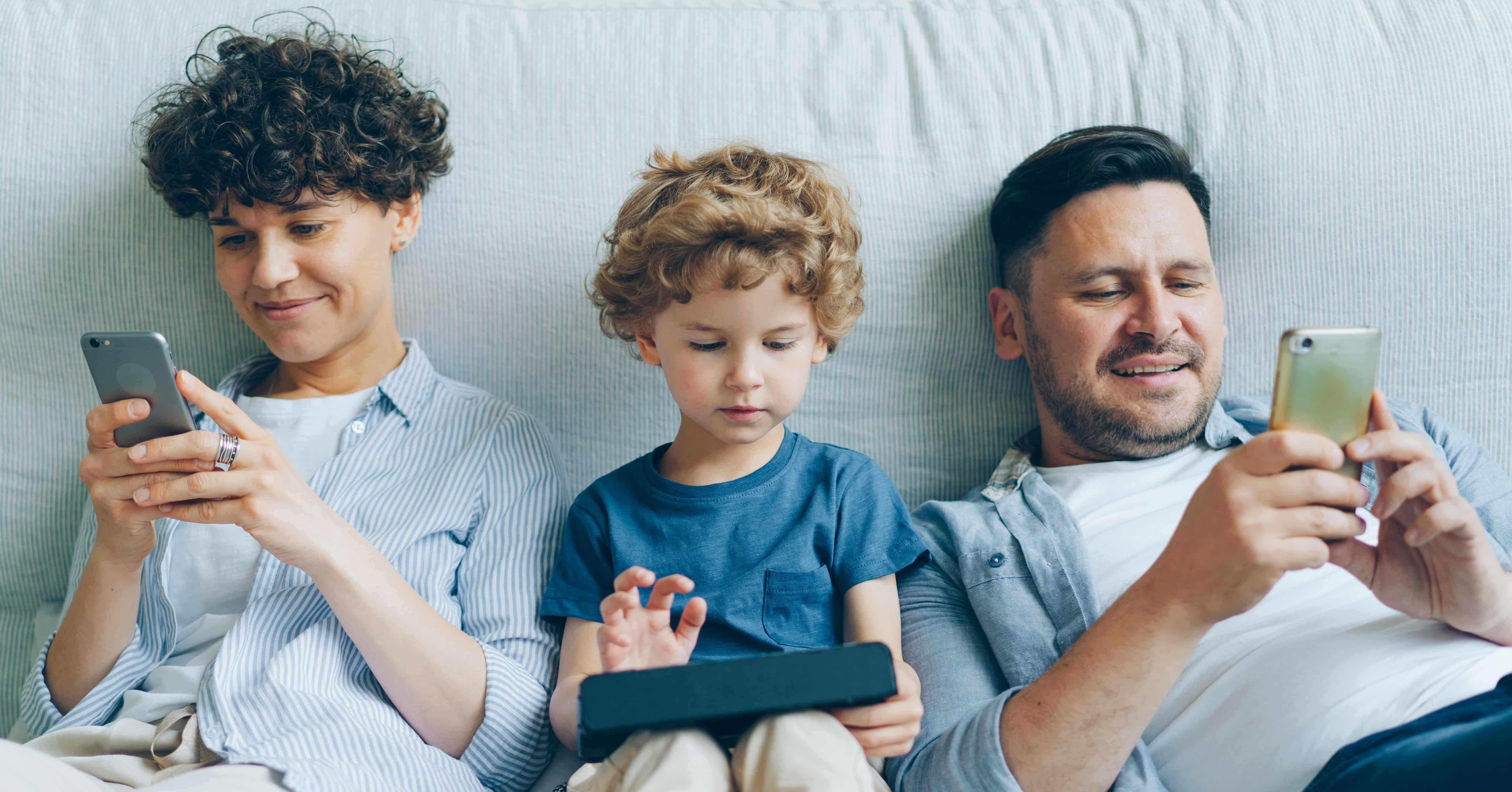
One of the most effective ways to guide children safely online isn’t through hidden surveillance, but through connection, conversation, and shared agreements. When parents begin by listening to their children about what worries them, what they enjoy, and what feels out of control, they build a foundation of trust. That trust becomes the launch pad for screen-time guidelines, digital boundaries, and the kind of autonomy children need to develop resilience. GKIS emphasizes this approach through its Connected Family Screen Agreement, a free tool designed to invite open dialogue instead of enforcing silence. It helps kids understand why parents have concerns and utilize safety tools and techniques.

Instead of solely relying on rigid controls, the path to healthier online habits includes tools, skill-building, and gradual transition. GKIS’s Screen Safety Toolkit isn’t a spy-kit; it’s a resource for families to use as practical checklists, conversational prompts, and strategies to empower children rather than just restricting them.

By investing in tools like this, parents can shift from pushing their kids to secrecy to creating a trusting relationship through honest communication. This way, your child knows that they are safe, supported, and ready to navigate the digital world with you by their side.


Thanks to CSUCI intern, Elaha Qudratulla, for researching and sharing an important story about how online safety is more important than online policing.

I’m the mom psychologist who will help you GetKidsInternetSafe.

Onward to More Awesome Parenting,

Tracy S. Bennett, Ph.D.
Mom, Clinical Psychologist, CSUCI Adjunct Faculty
GetKidsInternetSafe.com

Works Cited

[1] https://www.pewresearch.org/internet/2020/07/28/parenting-children-in-the-age-of-screens/

[2] https://www.ucf.edu/news/apps-keep-children-safe-online-may-counterproductive/

[3] https://arxiv.org/pdf/2303.09008

[4] https://www.sciencedirect.com/science/article/abs/pii/S0140197117302051


Photos Cited

[1] Rizki Kurniawan

[2] Marten Newhall

[3] Tasha Kostyuk

[4] Vitaly Gariev

https://unsplash.com/

Off the Phone and On the Soccer Field: My Cure for Digital Disconnection

Kids crave connection. Face-to-face interaction and emotional closeness are vital for healthy development—particularly for adolescents.[1] Screen time offers shallow connections and distracts kids from those unpleasant cravings. It also keeps kids so busy that they don’t seek the connection they so desperately need. What if they didn’t have to be so lonely? What if there was a way they could be off their screens, doing something good for their health, and making friends at the same time?  For me, that was playing sports.

The Seed Was Planted

As a child, I was most excited to hang out with my friends, be on my phone, watch TV, or eat sweets, in that order. That was until I joined a team sport.

It all started when my mother asked me if I wanted to join the local soccer team. I was nine years old and against the idea because I didn’t want it to cut into cartoon time on the weekends, and had we gone through the Screen Safety Essentials Course, we wouldn’t have worried so much about the impact of screens on us. But she insisted. I only agreed because my favorite cousins were on the team.

I learned from the first practice that I loved the intense physical activity of soccer, and after a while, I began to really get the hang of it. I felt proud and accomplished. I made great friends on the team. We loved team bonding activities and even began to hang out outside of practice. I loved it so much, I gave it my all and looked forward to it all week.

By high school, I had won medals and genuinely felt like I was good at the sport. I received praise and encouragement for all of my efforts and hard work. It also inspired me to work hard in other aspects of my life. I tried harder in school, was friendlier with classmates, more obedient in class, and more eager to participate in the learning process. According to Project Play, high school athletes are more likely to further their education and even receive higher grades in college.[2] I started seeing everything in the world as a skill waiting to be attained, something that required courage, effort, and training.

Having that view of the world helped me when I sprained my ankle right before the start of my freshman season. While recovering, I could have easily scrolled through Snapchat and Instagram endlessly. But I wanted to make sure I continued to build the bond with my teammates for when I returned. It taught me to wait my turn, keep a positive attitude, remain patient, and support others as they shine. As soon as I recovered, my teammates were more than happy to catch me up to speed, and I rebuilt my strength.

Core Memories That Last

One of my most memorable moments taught me something I will never forget. It was my junior year; we were tied 0-0, with a minute left in the game. My team was exhausted, but as captain, I knew this is where my job was most important. I dribbled the ball up the center, dodging two midfielders and one defender, set it up for my left forward, and yelled, “SHOOT!” She shot and sent it straight into the upper right corner of the goal. Everyone who was there to support us was on their feet, our coaches were throwing their clipboards in the air and hugging each other, and our teammates ran to us for a celebratory hug and a jump around. We spent the last 15 seconds of that game with tears in our eyes and joy in our hearts. We had just beaten a 40-year record for our school!

This is when I realized this would have a lifelong impact on me. It was one of those moments that I’ll look back on happily. It was a lifetime of preparation to become someone people could rely on when things got tough and hope felt lost. It was the moment I truly understood what being a leader meant to me and the impact it had on others.

I hugged and thanked my mother for signing me up for soccer at nine years old. She introduced me to the first love of my life, and I would forever be grateful for that. From then on, I never doubted my abilities to get something done, never lost confidence in myself, and never hurt someone without apologizing or broke something without trying to replace it.

The Impact of The Beautiful Game

Project Play reports that sports, in particular, can positively impact aspects of personal development among young people, keep them away from harmful substances, and encourage cognitive, educational, and mental health benefits.[2] I believe my experience of playing soccer was so much more than just a fun sport or a way to stay active, although both are tried and true. It was a refinement of my character, it was a positive shift in how I viewed the world and myself in it, it was what taught me that rejection was just redirection, and it was a way to build and maintain connections with people I am still close to, at 27 years old.

Why Everyone Should Play Sports

Participation in sports can protect against the development of mental health disorders.[4] These benefits include lowering stress levels, rates of anxiety and depression.[5]Lifelong participation in sports leads to improved mental health outcomes and even immediate psychological benefits which continue long after participation is over with. The improve self-confidence, encourage creativity, and nurture a higher self-esteem. Statistically, adolescents who play sports are eight times more likely to be physically active at age 24.[3]


Thanks to CSUCI intern, Elaha Qudratulla, for sharing an important story about how beneficial playing sports were for her then and how it still helps her today.

I’m the mom psychologist who will help you GetKidsInternetSafe.

Onward to More Awesome Parenting,

Tracy S. Bennett, Ph.D.
Mom, Clinical Psychologist, CSUCI Adjunct Faculty
GetKidsInternetSafe.com


Works Cited:

[1] https://www.uvpediatrics.com/topics/alone-together-how-smartphones-and-social-media-contribute-to-social-deprivation-in-youth

[2] https://projectplay.org/youth-sports/facts/benefits

[3] https://odphp.health.gov/sites/default/files/2020-09/YSS_Report_OnePager_2020-08-31_web.pdf

[4] https://baca.org/blog/does-playing-organized-youth-sports-have-an-impact-on-adult-mental-health/

[5] https://pce.sandiego.edu/child-development-through-sports/

Photos Cited:

[Header] Eva Wahyuni on UnSplash

[2] Olivia Hibbins on UnSplash

[3] Elaha Qudratulla

[4] Jeffrey F Lin on UnSplash

[5] Elaha Qudratulla

https://unsplash.com/

Likes and Lies: The Hidden Dangers of Your Child’s Feed

Your child’s social media feed knows more about them than you do. It knows when they’re sad, when they’re bored, and exactly what will keep them doom-scrolling. What started as a tool to share selfies is now a billion-dollar system designed to study their every click. It used to be strangers in parks, but now, it’s the threat in your child’s pocket. Instagram and Snapchat look like fun and harmless apps, but their design is all but innocent. Behind every selfie and snap streak is an algorithm trained to hijack your child’s attention, exploit their self-esteem, and guide their decisions. Today, this function serves as a 24/7 behavioral lab where your child is the test dummy. Every tap and swipe are testing what makes influences them or makes them click and buy.[1]

Before the Storm: When Social Media Felt Safe

When Instagram launched in 2010, its focus was to bring users together, show off talent, share good news, and discover something new. Snapchat followed shortly after, allowing people to share moments in real time, making it feel like you can never be too far away to keep up a connection.[2] For a while, both platforms served as exciting digital spaces for teens to express themselves, keep up with friends, and build their identity during a critical stage of development. That was before the algorithms took over.

Your Child, The Algorithms’ Prey

With time, social media platforms changed and added features to collect more user data and became more addictive. For example, Instagram is no longer a walled garden where users only view the content they search for. Now your child is offered content that their algorithm thinks will keep them hooked on scrolling.

According to the Google Dictionary, an algorithm is a process of calculations, which is usually followed by a computer, to generate problem-solving operations.[3]

Similar to gambling, teens get hooked not by the actual content, but by the mere possibility of upcoming content that can spike their interest for a few seconds longer.[4] Teenage brains are especially vulnerable to dopamine-driven design. Each like or snap streak triggers a small release of dopamine (the brain’s reward chemical).

These dopamine hits reinforce behavior, which grows the addiction to likes, snaps, and screen time. Studies show that likes on social media activate the brain’s reward center the same way winning money or eating chocolate does. The effect is often strongest in adolescents.[5] Check out a similar article on What “Going Viral” Does to Your Brain and Self-Esteem.

Snapchat’s “discover” and “spotlight” tabs work similarly, offering endless videos of curated, attention-grabbing content. These algorithms are powered by machine learning models trained on user data, so that every like, pause, screenshot, and swipe is noted and catered to. Eventually, all of this info is used to create a feed of things your child’s eyes and attention will be glued to for hours on end.

Also, Snapchat’s infamous “Snapsteaks” turn communication into an obligation. Teens often feel pressure to maintain streaks daily, even with people they barely know, just to avoid losing their digital relationships.

Social media has always been performative to some degree. But algorithms now reward exaggerated, filtered, and fake versions of life. Filters that alter facial features and bodies have made it harder for teens to see the difference between real and edited images. The compare and despair dynamic can lead to poor self-image and increasing dissatisfaction among vulnerable kids and teens. External validation through repeated use of social media is linked to increased anxiety, depression, and low self-esteem in adolescents.[6] Check out this GKIS article on how Beauty Filters Don’t Embrace Brown Beauty: The Rise of Colorism.

Take Back the Power

As tempting as it is to ban the use of these apps altogether, it can backfire. Overly punitive responses can promote child secrecy and risky behavior, especially as teens are coming into their own and learning to be more and more independent. Get ahead of it and be their ally by educating them about the hidden risks. Tackle this problem together by taking The GKIS Social Media Readiness Course. Our online course was created for tweens and teens to help them learn safer social media habits and practice better emotional wellness. With these skills, when they come in contact with harmful social media content, they will have their shields up.


Thanks to CSUCI intern, Elaha Qudratulla, for researching and co-writing this article. Check out more of her work here on GKIS:

The Hidden Dangers of Online Grooming: I Was Only 13

Netflix Documentary, Bad Influencer, Exposes Parent Producer Abusing Child Influencers


I’m the mom psychologist who will help you GetKidsInternetSafe.

Onward to More Awesome Parenting,

Tracy S. Bennett, Ph.D.
Mom, Clinical Psychologist, CSUCI Adjunct Faculty
GetKidsInternetSafe.com

Works Cited

[1]https://www.frontiersin.org/journals/sociology/articles/10.3389/fsoc.2020.599270/full

[2]https://doi.org/10.1080/1369118X.2015.1084349

[3]https://www.google.com/search?q=definition+of+an+algorithm&rlz=1C1GCEU_enUS947US947&oq=definition+of+an+algorithm+&aqs=chrome..69i57j0i512j0i22i30l8.10231j0j7&sourceid=chrome&ie=UTF-8

[4]https://doi.org/10.1016/j.tics.2015.09.004

[5]https://doi.org/10.1111/cdev.12838

[6]https://doi.org/10.1080/02673843.2019.1590851

Photos Cited

[Header] Gaspar Uhas on Unsplash

[2] Karsten Winegeart on Unsplash

[3] Soheb Zaidi on Unsplash

[4] Adrian Swancar on Unsplash

[5] Jeffery Kennan on Unsplash

https://unsplash.com/

Schools are Banning Child Smartphone Use During School

September 23rd, Governor Gavin Newsom signed the Phone-Free School Act (Assembly Bill 3216). This requires every school district, charter school, and county office of education in California to adopt a policy limiting or prohibiting child smartphone use in school by July 1, 2026. Authored by Assemblymembers Josh Hoover, David Alvarez, Josh Lowenthal, and Al Muratsuchi, this bipartisan legislation is intended to reduce the digital injuries resulting from in-school smartphone use, including harm to academic and social success and overall mental health.

California is not alone. As of October 3, 2024, eight states, including California, Florida, Indiana, Louisiana, Minnesota, Ohio, South Carolina, and Virginia, have passed policies to ban or limit child smartphone use in schools. Many of these policies also call for schools to implement content blocking, social media readiness training, and a digital literacy curriculum that specifically addresses issues like spreading misinformation. Most also allow for exceptions due to emergency, medical, or educational necessity (e.g., learning accommodations) or with teacher permission.

Bipartisan Support & Health Advisory Recommendations

Screen safety policies have received widespread bipartisan support, with the Biden-Harris administration continuing to promote child online safety. The U.S. Surgeon General has also been outspoken in response to America’s youth mental crisis, illustrated by the CDC’s 2023 Youth Risk Behavior Survey. UNESCO has called for limits on cellphone use in schools globally, and the American Psychological Association released a health advisory on social media use in adolescence in April of 2023 with specific recommendations based on the psychological evidence.

What Schools Are Saying About Their Initial Efforts

Many California schools are already embracing change by adopting smartphone-free classrooms. For example, Nordhoff Junior High and High School recently invited Dr. Tracy Bennett, Psychologist, Screen Safety Expert, and Founder of GetKidsInternetSafe, to speak to their students in preparation for these changes. We interviewed Beth Burke,  LCSW Mental Health Clinician/Clinical Supervisor at Nordhoff about their experience implementing the new policy.

What was your final policy?

7th and 8th graders are not allowed smartphones at any time, even during lunch and breaks. Cell phone hotels hold phones during class and in backpacks outside of class. Use is only allowed for pickups and in case of emergency.

9th through 12th graders put their phones in a cell phone hotel during class. This is a big change. They can have them out during snack time and lunch.

There’s some discipline on the junior high level here and there. We have a first through fourth offence system. 1) take it away, 2) take away and parent contact and lose citizenship points. 3) has to be picked up by the parent. 4) need a behavior contract.

What factors led you to this policy?

Our teachers approached the administration for help with the cell phone use in and out of class. Research is also showing more and more that smartphones are very distracting. We read about other schools doing this and how it was doing well. As a faculty, we discussed the policy specifics and gained consensus that we wanted to implement this schoolwide. Last year was our first year with 7th and 8th graders on campus, and it was even more distracting for them. Parents in the community were glad about it. When it was announced at the parent orientation there were cheers.

What preparations did you make?

Our principal sent out parent square messaging during the summer citing some research so they could get ahead of it.

What opposition did you face?

A few parents expressed concern about emergencies. They were afraid in case of mass shootings. One or two students with IEPs due to anxiety wanted to keep their phones to text when they became anxious. We offered to let them keep it in their backpack because they will need it if they leave the classroom. That was in line with the policy so that was ok.

What are your first impressions?

I want to do a survey. Anecdotally, the kids are saying that they’re feeling less distracted and like being able to focus. I’m not hearing a lot of negatives, especially for the 7th and 8th graders. They all want to be the same. An overall policy is like a school uniform. It works! They don’t want to be the one and only kid calling mom. Teachers like it better. At first, they were like, “Do we have to do one more thing?” But they’re noticing less distraction. There is definitely more positive than negative.

Any tips on how to do this successfully?

It’s gone better than we expected. We expected more parent and student pushback and drama. Having all teachers enforce the policy made it easier since the old policy was not uniformly enforced or supported. But it’s good! It’s good for them to not have that distraction in the classroom and on campus for the 7th and 8thgraders. It can be a true addiction, and the more they can focus on school and interactions with one another the better. School is hopefully one place they can come to focus on learning and interacting with one another face-to-face.

GetKidsInternetSafe Offers Screen Safety Tools for Kids, Families, and Professionals

GetKidsInternetSafe has been advocating for efforts like these since it was founded by Dr. Tracy Bennett in 2014. Our GKIS courses, like the Social Media Readiness Course for tweens and teens and our Screen Safety Essentials Course for families, offer information in line with expert recommendations.

In partnership with Tarzana Treatment Centers, we are also launching our Screen Safety Certification Course. This online course offers 20 continuing education units and helps prepare paraprofessionals and professionals to expertly work with families and youth for better screen safety. Thanks to input from Caitlin McCranie, Honors English Teacher at Oak Park High School, we offer a student survey to GKIS certification students to help them get their youth ready for smartphone-free classrooms.

A special thank you to our hard-working mental health professionals and teachers who are on the front lines fighting for child wellness. We are especially grateful to Beth Burke and Caitlin McCranie for helping us with the information included in this article.

I’m the mom psychologist who will help you GetKidsInternetSafe.

Onward to More Awesome Parenting,

Tracy S. Bennett, Ph.D.
Mom, Clinical Psychologist, CSUCI Adjunct Faculty
GetKidsInternetSafe.com

Works Cited

https://www.apa.org/topics/social-media-internet/health-advisory-adolescent-social-media-use

https://www.cdc.gov/yrbs/results/2023-yrbs-results.html

https://www.flsenate.gov/Session/Bill/2023/379

https://legiscan.com/IN/text/SB0185/id/2935758

https://www.kff.org/mental-health/issue-brief/a-look-at-state-efforts-to-ban-cellphones-in-schools-and-implications-for-youth-mental-health/#:~:text=In%202009%2C%2091%25%20of%20public,with%20excessive%20use%20of%20smartphones.

https://legiscan.com/LA/bill/SB207/2024

Photo Credits

Photo by Tamarcus Brown on Unsplash

Do Netflix Serial Killer Exposés Cause Kids to Romanticize Murderers?

True crime is a popular trend that plays off our fascination with the morbid. As popular streaming services produce documentaries and dramatizations to meet the demand for true crime content, these crimes become less of a horrific event and more of a meme or something to live tweet. These exposés also tend to be led by actors who are well known for their looks, like Evan Peters, Zac Efron, and Ross Lynch, adding more to the romanticization of serial killers like Jeffrey Dahmer and Ted Bundy. Today’s article covers why this romanticization is dangerous and how you can keep your child safe from digital injury with our GKIS Screen Safety Toolkit.

Why has true crime skyrocketed in popularity?

Netflix’s recent limited-run Dahmer series has been viewed by 56 million households for a total of 701.37 million hours, putting it as their second most-viewed English Netflix series of all time.[1] In fact, true crime documentaries have covered the Netflix top 10 trending list for a combined total of 232 days, meaning that if your child is logging into Netflix, chances are they will be suggested one of these exposés.[2] There is no denying that true crime is hot content, and it does not seem to be declining in popularity anytime soon. This begs the question of why our society and humans, in general, are so obsessed with the morbid acts of our fellow human beings.

Evolutionary scientists have attributed this obsession to the fact that murder, rape, and theft have been part of our society for as long as humanity has existed. We are fascinated with learning about the facts of true crime as a form of human preservation and how we can protect ourselves and our families from the same fate.[3]

Psychologists agree and add that we also feel a sort of elation at these stories, glad that we are not the victims of such a crime. They also believe that we feel elated that we are not the perpetrator of the crime either.[4] This suggests on some level that we can relate to the perpetrator, a feeling that adds to the romanticization of criminals.

Psychology and Social Effects of Romanticizing Criminals

Movie violence as shown in true crime documentaries and dramatizations has been shown to have real lasting effects on viewers, including overall desensitization to real-life violence. A study found that youth with medium levels of exposure to TV/movie violence had much lower blood pressure when viewing violent media compared to those with low exposure.[5] These results show that sustained exposure to violent media leads to emotional numbing when presented with violence.

Following the release of the 2019 film Extremely Wicked, Shockingly Evil and Vile, in which Ted Bundy is played by Zac Efron, a concerning TikTok trend began of young girls dressing up as Bundy’s victims using makeup to create blood, bruising, and bite marks on their skin.[6]

These exposés create an impression on children and teens that they are not real events, but rather just make-believe, a trend, or a meme. The use of conventionally attractive actors to play these criminals leads to the romanticization of their crimes. This delusion creates hardships for the families of these crimes who watch as the atrocities their family faced are reduced to trends and memes online.

Mother of Dahmer victim Tony Hughes, Shirley Hughes, shared that learning about the series and its content brought her to tears. She told The Guardian, “I shed tears. They’re not tears of sorrow, and it’s not disbelief in the Lord. The tears [are] tears of hurt because it hurts. It hurts real bad.”[7] Not only do these exposés hurt our children, but they hurt the families of these violent crimes and cause them to relieve their trauma publicly over and over.

What Parents Can Do

  • If your child is interested in true crime, it is important to express to them that is okay and understandable. Notable psychologists believe that interest in crime is healthy and something that is natural, so long as that interest is confined to health habits.[8] Express to your child that these true crime stories are more than just a “limited-run show” but something that has real-life effects on people. Perhaps even share with them the thoughts and feelings of the families of these crimes as an empathy-building exercise.
  • Another important action you can take is to look at parental guides online for the media your child is consuming so that you can understand exactly what is in it. Also, sit and watch the show together so that you can fast forward through anything inappropriate and have a conversation about it.
  • To help guide you in these healthy conversations, check out our GKIS Connected Families Screen Agreement to work with your child to create a collaborative, living document.
  • If you fear your child may be watching these true crime exposés without your knowledge and permission, check out our GKIS Screen Safety Toolkit. This toolkit helps to empower parents and provides them with smart tech tools to filter, monitor, and manage online behavior.

Thanks to CSUCI intern, Katherine Carroll for researching true crime exposés and the romanticization of serial killers. To learn more about true crime and its consequences check out our article, “Is Your Child Following True Crime?”.

I’m the mom psychologist who will help you GetKidsInternetSafe.

Onward to More Awesome Parenting,

Tracy S. Bennett, Ph.D.
Mom, Clinical Psychologist, CSUCI Adjunct Faculty
GetKidsInternetSafe.com

Works Cited

[1] Tassi, P. (2022). ‘Dahmer’ Is Netflix’s Second Highest Viewed English Language Show Ever. Forbes. https://www.forbes.com/sites/paultassi/2022/10/12/dahmer-is-netflixs-second-highest-viewed-english-language-show-ever/?sh=2592e60d40e0

[2] Sayles, J. (2021).  The Bloody Bubble. The Ringer. https://www.theringer.com/tv/2021/7/9/22567381/true-crime-documentaries-boom-bubble-netflix-hbo

[3] BBC Science Focus Magazine. (2021).  Why are we so obsessed with true crime? BBC Science Focus. https://www.sciencefocus.com/the-human-body/why-are-we-so-obsessed-with-true-crime/

[4] McCarthy, E. (2018). 12 Reasons We Love True Crime, According to the Experts. Mental Floss. https://www.mentalfloss.com/article/559256/why-we-love-true-crime

[5] Mrug, S., Madan, A., Cook, E. W., 3rd, & Wright, R.A. (2015). Emotional and physiological desensitization to real-life and movie violence. Journal of youth and adolescence, 44(5), 1092–1108. https://doi.org/10.1007/s10964-014-0202-z

[6] Lockwood, J. (2021). The danger of romanticising serial killers. Palatinate. https://www.palatinate.org.uk/the-danger-of-romanticising-serial-killers/

[7] Vargas, R. (2022). Mother of Dahmer victim condemns Netflix series: ‘I don’t see how they can do that’. The Guardian. https://www.theguardian.com/us-news/2022/oct/10/dahmer-victim-tony-hughes-mother-condemns-netflix-series

[8] Cox, T. (2009). The Psychology Behind America’s Crime Obsession. NPR. https://www.npr.org/transcripts/99803591

Photo Credits

Photo by Thibault Penin (https://unsplash.com/photos/AWOl7qqsffM)

Photo by Lacie Slezak (https://unsplash.com/photos/gHwOUe9OLwE)

Will Social Media Companies Be Sued for Addicting Kids?

Recently, practices and policies enacted by social media companies have come under public scrutiny for their harmful effects on kids and teens. Many parents, public figures, and experts have expressed that screen addiction is a rampant issue being faced by kids, teens, and adults. Figuring out how to best protect your family in the online world can be tough. For some help in this area, check out Dr. Bennet’s Screen Safety Toolkit which comes with recommendations, how-to information, and links to easy-to-onboard parental control systems.  To combat the issue in California, lawmakers are proposing a bill that would allow the parents of children who have become addicted to social media apps to sue the companies that own them.[1]

Social Media Platform Duty to Children Act

The Social Media Platform Duty to Children Act, formally known as Assembly Bill 2408, is the latest in a string of political endeavors to crack down on the exploitation of children by social media companies. The bill was introduced to the California State Assembly by two bipartisan lawmakers, Democrat Buffy Wicks of Oakland and Republican Jordan Cunningham of Paso Robles and with support from the University of San Diego School of Law Children’s Advocacy Institute.[1] Its creation is likely a response to internal documents leaked by whistleblowers from prominent social media companies. The documents leaked provide evidence that some social media companies have been aware of the harmful effects of some of their practices and policies on children, yet they continue to implement them without safeguards.

For more information about screen addiction, how to spot it in your kids, and ways to combat it, order Dr. Tracy Bennet’s book, Screen Time in the Mean Time: A Parenting Guide to Get Kids and Teens Internet Safe. Dr. Bennett understands that technology is a helpful tool that is here to stay, but also recognizes that it imposes risks like screen addiction due to effective manipulative designs that hack our brains’ reward systems. Using her decades of expertise as a clinical psychologist and mom, Dr. B’s developed family-tested parenting strategies that will help you build the tools you need to help your family navigate today’s technological pitfalls.

Details, Penalties, and Exemptions

Information provided by the Children’s Advocacy Institute explains that, if passed, the bill would first obligate social media companies to avoid engaging in any practices or policies that are harmful or injurious to child users. This may include forcing the companies to eliminate or change design features or data collection practices that contribute to or promote addictive behaviors. If the companies fail to comply with these standards, parents and guardians will be empowered to seek legal action in the form of a lawsuit on behalf of their children who were harmed by the companies’ products.

According to the Institute, damages may potentially include $1,000 or more per child in a class-action suit or up to $25,000 per child per year in a civil penalty. The legislatures who introduced the bill speculate that companies will adopt a varied range of potential compliance solutions that may include changes to certain algorithms or simply not allow kids to sign up anymore. Additionally, representatives of the Institute state that there will be a provision that prevents responsible companies who take basic steps to avoid implementing practices, features, or policies that contribute to children’s addictions to their platforms. Further, social media companies that make less than $1oo million per year will be exempt from penalties.[1]

The Argument for Introducing the Bill

The two lawmakers behind the bill expressed their reasoning for introducing it during the State Assembly. Rep. Jordan Cunningham stated that tech companies willfully design their social media platforms and products with features that make kids and teens want to spend more and more time engaging with them to the point that they begin exhibiting addictive behaviors. He argues that tech companies should stop profiting from child harm and instead share in the cost of treating screen-addicted kids. Rep. Cunningham also explained that social media should be regulated the same way that any other products consumed by children are regulated and for the same reason, to keep them safe.[1]

Facebook Whistleblower

The most prominent whistleblower is a former data scientist at Facebook, Frances Haugen, who leaked internal documents containing evidence about Facebook’s extensive knowledge of Instagram’s negative effects on young girls’ body images. Facebook, which also owns Instagram, had compiled studies with alarming statistics. One such study found that 32% of teens said they felt worse about their bodies after using Instagram.[2]

In 2021, Haugen presented the documents during a congressional hearing during which several members expressed deep dissatisfaction with Facebook’s practices. Subcommittee Chair Richard Blumenthal stated that, despite being aware of these statistics, “Facebook exploited teens using powerful algorithms that amplified their insecurities.”[2] Haugen argued that lawmakers must examine the algorithms that drive popular features as well as the data collecting practices used by Facebook and Instagram. Assembly Bill 2408 aims to sidestep Section 230 which protects social media platforms from being liable for third-party content.

Thanks to CSUCI intern, Mackenzie Morrow for researching The Social Media Platform Duty to Children Act and co-authoring this article.

I’m the mom psychologist who will help you GetKidsInternetSafe.

Onward to More Awesome Parenting,

Tracy S. Bennett, Ph.D.
Mom, Clinical Psychologist, CSUCI Adjunct Faculty
GetKidsInternetSafe.com

Works Cited

[1] Contreras, B. (2022). California bill would let parents sue social media companies for addicting kids. Los Angeles Times. https://www.latimes.com/business/technology/story/2022-03-16/california-bill-would-let-parents-sue-social-media-companies-for-addicting-kids

[2] Allyn, B. (2021). Here are 4 key points from the Facebook whistleblower’s testimony on Capitol Hill. NPR. https://www.npr.org/2021/10/05/1043377310/facebook-whistleblower-frances-haugen-congress


Photo Credits

Photo by Liliana Drew (https://www.pexels.com/photo/kids-in-costumes-playing-games-with-tablet-computer-8506374/)

Photo by Tara Winstead (https://www.pexels.com/photo/red-and-blue-us-a-flag-8850737/)

Photo by Magnus Mueller (https://www.pexels.com/photo/photo-of-hand-holding-a-black-smartphone-2818118/)

Photo by Mikhail Nilov (https://www.pexels.com/photo/woman-in-black-tank-top-and-blue-denim-jeans-8670186/)