Children deserve the best possible education and the brightest future opportunities. What parent doesn’t want their child to succeed in life? Many view education as the gateway to success. At the same time, COVID-19 has caused a challenge for our school systems providing quality virtual education. How are our children faring?
The Negatives of Virtual Learning
For younger children, this transition has proved to be difficult and stressful for both students and teachers. Young children have a tough time staying engaged on-screen for long. As a result, their education is likely suffering and they may not be learning the basics they will need for later in life.
There is also a large lack of social interaction for children in this age range. The impact of this might be seen for generations to come, perhaps a rise in social anxiety may be discovered?
What about the older students? The California Department of Education has reported that 2020 had 3,000 fewer high school graduates than 2019.[1] In addition to this shortage of expected graduates, 2021 prospective graduates are enduring their entire senior year virtual. Many students report feeling less optimistic about their future, less motivated to learn, and less confident in their academic abilities. Time will tell how the 2021 graduation rate will be, but it will likely be lower than even the 2020s’ was.
The Positives of Virtual Learning
There are some upsides to virtual learning. First, it’s the safest means of learning during the era of COVID. Education can be redone, learning can happen later, but continuing to protect our children and their teachers from one of the most destructive events in our time is the number one priority. In addition to just the health benefits, the drop-out rate for California has also decreased, with 800 fewer drop-outs than in 2019.[1] This is likely due to the opportunity to learn from home. Virtual learning allows for more flexible learning and more self-responsibility for one’s learning, something that may benefit high school students as they transition to higher education.
Virtual Learning and Parents
If you are ever feeling overwhelmed by virtual learning, pause and try to think about the following points:
It’s temporary! Virtual learning is only temporary. Before too long, our children will be back into the classroom and off of the screens. Don’t let yourself get too upset about something that isn’t going to last forever.
You’re not alone. Almost every parent is experiencing the same frustrations that you are. If you need someone to vent or talk to, reach out to one of your fellow parents. The shared experiences will likely help you both feel better about what is going on.
Don’t blame the teachers. Many of them were thrown into this unprepared and unwarned, just like you and your children were. Some teachers are struggling through this time with their kids just like you. They want to be back in the classroom as soon as it is viably safe to do so too.
Don’t blame your children. They didn’t ask for any of this to happen, and they are likely doing the best they can. They want to be back with their friends on the playground, it might be difficult for them to understand why they aren’t allowed to. Try and remind them, in an age-appropriate way, that this is for their safety and the safety of those around them.
Finally, don’t blame yourself. You have no power over this unprecedented situation. Remind yourself that you are only human and that you are giving it your absolute best. It’s okay to feel out of patience from time to time. Giving yourself and others grace is critical to wellness.
More Resources on Virtual Learning and Online Safety
With social media and public servers for games, your child is likely to come across many different types of people. Just like in real life (IRL), they may come to be great friends. There is concern—and for good reason—if this is safe. A “catfish” is a term commonly used in popular culture to refer to someone who presents themself online to be someone or something that they are not. In our GKIS article “What You Need to Know About Online Catfishing,” we covered information about the rise of the term catfish, the psychology behind it, and certain red flags. In this article, we will cover how to best recognize catfishing and how your child can more safely meet an online friend once you, as the parent or guardian, have determined it is safe.
The Benefits of Making Friends Online
The internet displays a diverse range of people from many different cultures, ethnicities, identities, and lifestyles. Exposure to people different than themselves can be a great learning opportunity and help your child develop empathy and a greater perspective of the world. Dr. Tracy Bennett, Screen Safety Expert and Founder of GetKidsInternetSafe offers weekly parent and family coaching to help parents optimize the benefits of screen tech while minimizing risk. To learn more about her coaching videos, check out the GetKidsInternetSafe App. Sign up now and the first 30 days are free!
For kids who may be of a marginalized community themselves, like those who identify as LGBTQ+ for example, online contacts can be a lifesaver. Not only can kids have fun with their online friends who share similar interests and values, these friendships may also provide a sense of understanding, bonding, and representation.
In a 2014 study by Van Zalk and colleagues, shy adolescent participants who had online friends reported fewer depressive symptoms than those who were friendless.[1] Also, they found that having online friends didn’t distract the subjects from making IRL friends. Instead, online friends improved real-life friendships. This suggests that online friendships may boost self-esteem and social skills, so kids gain the confidence to seek friends offline too.
Making friends online may also be easier and more realistic for some kids, especially if they have trouble approaching new peers in real life. Further, if your child feels outcasted, they might search for an online community with or without your permission. So, preparing your child for safer online exploration may be your best option.
My Catfish Story
I’m a 23-year-old CSUCI intern for Dr. Bennett. In 2013, I joined an online friend group from a public Minecraft server. We would regularly participate in Skype group calls to play. All of us except one person—who I will call Sam—would regularly show our faces on video camera. Because we often saw each other, we felt we knew each other. But Sam refused to show himself on camera. Instead, he led us to believe that he was who he said he was by occasionally updating his profile picture.
Sam was really handsome and he eventually started dating one of the girls in our friend group. They tried meeting a few times, but something always came up where Sam had to cancel. We were in awe of his skills in the game and he gave us some assurance by going on camera although it was in a dark room.
Over a year into our friendship, Sam accidentally let the camera slip to reveal his face. Although it was a relief to see that we were, in fact, talking to someone our age, we were unsettled that the photos he was using were not him. Imagine the ways Sam could have been dangerous for us in slightly different circumstances.
How to Prevent Being a Victim of Catfishing
Verify Identity Through Social Media History
It is rare for a person to not have a digital footprint these days. However, with kids – they are often new users. If your child’s new friend does have social media, be suspicious if all their profiles are new.
Red flags for catfishing on Instagram might be if the person’s photos were all posted recently, if they are not tagged in any photos, or if the photos they are tagged in are from new accounts or accounts with under 30 followers.
To determine if a Snapchat account is new, look at the person’s Snap Score. A Snap Score is a feature shown on a Snapchat friend’s profile that displays the amount of live Snapchats the friend has received and sent. A Snap Score lower than 100 could indicate that the online friend recently created their account.
Other Snapchat Tricks
Snapchat offers a few features in addition to video calling. For example, you can send pictures and videos that have just been taken. One way to game this exchange is for the catfish to use their phone to take live pictures of preexisting pictures from another device.
A good way to challenge this deceptive catfish trick is to insist that the online friend send a personalized video that mentions your child’s name or a specific activity of your choosing. A few years ago, sending a selfie holding a sign with a name would have been satisfactory. But now with easily accessible editing software, written messages on paper or signs can be altered.
Opt for Video Chatting
Live video chatting can take place in many different forms through platforms like FaceTime, Skype, Facebook, or Zoom. We at GKIS especially like Facebook’s Messenger Kids. Dr. B is on Facebook’s Youth Advisory Team and has enjoyed having a part in its development from the beginning! She says she loves Messenger Kids because it doesn’t expose kids to ads and is the walled garden with parent transparency we’ve all been hoping for. Live interaction between two people makes it difficult to catfish. Even if the person tries to recycle prerecorded media in an attempt to appear live, it won’t look authentic because live chat conversation typically requires personal response.
Meet in Public
Unfortunately, there is no way to be 100% certain until you meet the friend in person. With deep fake technology, even personalized messages can be created.
If you’ve vetted your child’s friends online and you feel it is time for them to meet, meeting in public with your supervision is a good first option.
Meet their Parent(s)
Meeting the friend’s family can also help develop confidence in supporting your child’s new friendship. That way future plans can be run through the parents first.
Have Fun
Most importantly, have fun! Your child may have been waiting for months to meet their friend and now they finally can. You can also take comfort in the fact that you helped your child bring their newfound virtual friendship into real life.
Social Media Readiness Course
As kids get older, they must demonstrate knowledge, capability, and resilience to gain independence. We recommend our GKIS Social Media Readiness Course to help improve your tween’s or teen’s online experience by teaching the potential risks on social media and providing them with emotional wellness tools. As your teen works through the course, there are mastery quizzes at the end of each module so you can take track their knowledge-build course.
Thanks to CSUCI intern, Avery Flower for researching the pros and cons of creating friends online and co-authoring this article.
I’m the mom psychologist who will help you GetKidsInternetSafe.
Onward to More Awesome Parenting,
Tracy S. Bennett, Ph.D.
Mom, Clinical Psychologist, CSUCI Adjunct Faculty
[2]Van Zalk, M. H. W., Van Zalk, N., Kerr, M., & Stattin, H. (2014). Influences between online‐exclusive, conjoint and offline‐exclusive friendship networks: The moderating role of shyness. European Journal of Personality, 28(2), 134–146. https://doi-org.summit.csuci.edu/10.1002/per.1895
The pandemic of 2020 has many of us working from home. For most of us, our internet must work quickly and efficiently to stay productive. The increasing demand for having reliable, quick internet coupled with new technology compatible with the internet has led to the creation of 5G, a new wireless internet connection. But many feel anxious about this new mobile network, wondering what impacts it may have on our health, privacy, and security. Learn all about 5G in today’s GKIS article.
What is 5G?
Introduced in 2019, 5G is the latest form of wireless internet connection. 5G will enhance internet connections and download speeds using “millimeter waves.” These waves are smaller and move faster than previously used 4G waves, allowing the space needed for the Internet of Things (IoT).
What is “IoT”?
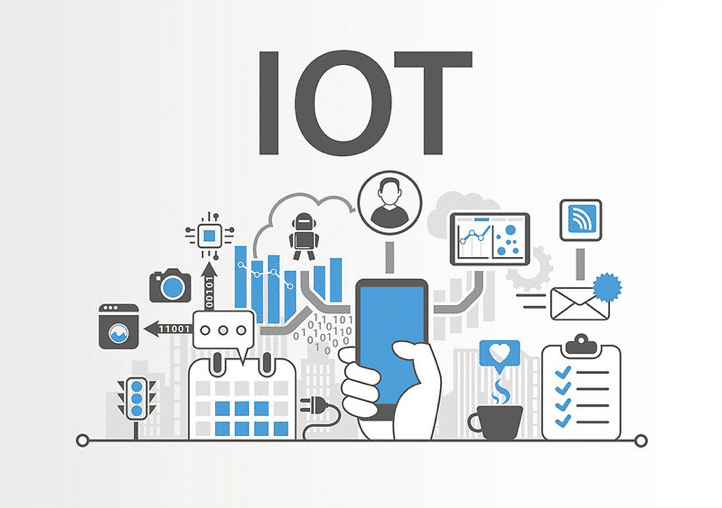
IoT stands for the Internet of Things, which refers to wired and WiFi-connected home products that collect data about our daily behaviors. This data is then used to better target us for marketing, to improve services, and to make more efficient, informed decisions based on probability and statistics. Currently, we have 6.5 billion devices connected to the internet. It is estimated that by 2026, more than 75 billion devices will be connected to the internet generating $1.1 trillion a year.1
How will IoT be applied?
Consumer
Door locks, security cameras and monitors, home appliances, light fixtures, thermostats, smart televisions, smart refrigerators, media platforms, and voice-assisted digital assistants like Amazon’s Alexa, Apple’s Siri, Google’s Google Assistant, and Microsoft’s Cortana will have the capacity to sense, analyze, and act as well as deliver data to the corporation for analysis, storage, and sharing.
Commercial
IoT is being applied to many industries, including the healthcare and automobile industries through the use of video training, building automation, security robots, pacemakers, wireless infusion pumps, and vehicle to vehicle communication (V2V). In 2019, at the Mobile World Congress in Barcelona, Dr. Antonio de Lacy guided a team of doctors operating on a patient through a live video from the other side of town.2 The video is clear, in real-time, and with no delays.
Military
Drones, robots, surveillance, and wearable biometrics are being implemented for warfare.
Industrial
Industrial applications of IoT include statistical evaluations of big data from manufacturing robots and smart farming. One study estimates IoT will replace up to 800 million farmworkers by 2030.3 Vertical farms and warehouses can produce the exact amount according to demand, rather than a surplus, and without the expense of employing workers.4
Infrastructure
Barcelona has embraced the development of becoming a “smart city” through the use of IoT. The results appear to have a positive impact on their economy, resulting in a $50 million per year revenue on smart parking alone. They have decreased their costs in energy consumption by $37 million a year using self-regulating lights, as well as saving $58 million a year with “smart gardens” that water plants at the right place and the right time.5
Security, Privacy, and the Internet of Things
We are headed for a paradigm shift, where our physical belongings are increasingly becoming computer systems. What was first “internet security” will be “everything security.” Unfortunately, most IoT software being manufactured and marketed is poorly written, insecure, and in the hands of corporations. Although you may trust the corporation with your data, do you trust the hackers who can breach that corporation’s controls to get access to it?
Security just isn’t a pressing concern for corporations and consumers. As consumers, we want inexpensive devices that work. Having insecure appliances connected to the internet like a thermometer, which is normally intended to last a long time, is dangerously allowing hackers the opportunity of exploitation.6 You might be able to get away with leaving the front door of your home unlocked, but in the cyberworld, every door can be attacked. Security professionals and hackers alike use what is known as wardriving to locate and record WiFi networks using a GPS.7
Wardriving is a GPS used to locate vulnerable and unprotected WiFi from a car. Problems arise when hackers recover the WiFi password through other connected smart devices.8 Thermometers, baby monitors, smart toys, surveillance cameras, and vehicles have been hacked in the past.9 More recently, throughout this pandemic, video conferencing Zoom applications have been hacked and banned all around the world because of poor security.10 Steps towards securing the IoT will need to be regulated, rather than patching the software for security after-the-fact, like Zoom.
Thank you to GKIS intern Andrew Weissmann for researching and authoring this article. To learn how to increase the cybersecurity in your home and identify the red flags that suggest your child may be in danger from bad actors online, check out our GKIS Cybersecurity and Red Flags Supplement. For less than a cup of coffee, you can be more informed and assured your family has adopted the best cyber-safety practices.
I’m the mom psychologist who will help you GetKidsInternetSafe.