Need peaceful screen time negotiations?

Get your FREE GKIS Connected Family Screen Agreement

WiFi

5G, the Internet of Things, and What it Means for Our Future of Privacy

The pandemic of 2020 has many of us working from home. For most of us, our internet must work quickly and efficiently to stay productive. The increasing demand for having reliable, quick internet coupled with new technology compatible with the internet has led to the creation of 5G, a new wireless internet connection. But many feel anxious about this new mobile network, wondering what impacts it may have on our health, privacy, and security. Learn all about 5G in today’s GKIS article.

What is 5G?

Introduced in 2019, 5G is the latest form of wireless internet connection. 5G will enhance internet connections and download speeds using “millimeter waves.” These waves are smaller and move faster than previously used 4G waves, allowing the space needed for the Internet of Things (IoT).

What is “IoT”?

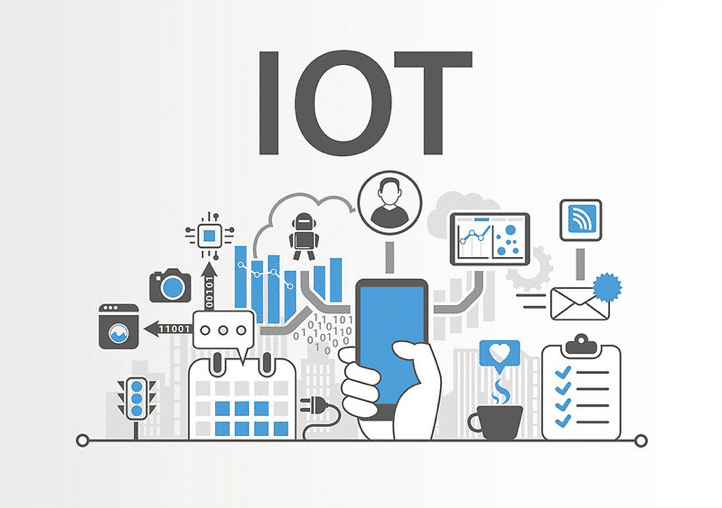
IoT stands for the Internet of Things, which refers to wired and WiFi-connected home products that collect data about our daily behaviors. This data is then used to better target us for marketing, to improve services, and to make more efficient, informed decisions based on probability and statistics. Currently, we have 6.5 billion devices connected to the internet. It is estimated that by 2026, more than 75 billion devices will be connected to the internet generating $1.1 trillion a year.1

How will IoT be applied?

Consumer

Door locks, security cameras and monitors, home appliances, light fixtures, thermostats, smart televisions, smart refrigerators, media platforms, and voice-assisted digital assistants like Amazon’s Alexa, Apple’s Siri, Google’s Google Assistant, and Microsoft’s Cortana will have the capacity to sense, analyze, and act as well as deliver data to the corporation for analysis, storage, and sharing.

Commercial

IoT is being applied to many industries, including the healthcare and automobile industries through the use of video training, building automation, security robots, pacemakers, wireless infusion pumps, and vehicle to vehicle communication (V2V). In 2019, at the Mobile World Congress in Barcelona, Dr. Antonio de Lacy guided a team of doctors operating on a patient through a live video from the other side of town.2 The video is clear, in real-time, and with no delays.

Military

Drones, robots, surveillance, and wearable biometrics are being implemented for warfare.

Industrial

Industrial applications of IoT include statistical evaluations of big data from manufacturing robots and smart farming. One study estimates IoT will replace up to 800 million farmworkers by 2030.3 Vertical farms and warehouses can produce the exact amount according to demand, rather than a surplus, and without the expense of employing workers.4

Infrastructure

Barcelona has embraced the development of becoming a “smart city” through the use of IoT. The results appear to have a positive impact on their economy, resulting in a $50 million per year revenue on smart parking alone. They have decreased their costs in energy consumption by $37 million a year using self-regulating lights, as well as saving $58 million a year with “smart gardens” that water plants at the right place and the right time.5

Security, Privacy, and the Internet of Things

We are headed for a paradigm shift, where our physical belongings are increasingly becoming computer systems. What was first “internet security” will be “everything security.” Unfortunately, most IoT software being manufactured and marketed is poorly written, insecure, and in the hands of corporations. Although you may trust the corporation with your data, do you trust the hackers who can breach that corporation’s controls to get access to it?

Security just isn’t a pressing concern for corporations and consumers. As consumers, we want inexpensive devices that work. Having insecure appliances connected to the internet like a thermometer, which is normally intended to last a long time, is dangerously allowing hackers the opportunity of exploitation.6 You might be able to get away with leaving the front door of your home unlocked, but in the cyberworld, every door can be attacked. Security professionals and hackers alike use what is known as wardriving to locate and record WiFi networks using a GPS.7

Wardriving is a GPS used to locate vulnerable and unprotected WiFi from a car. Problems arise when hackers recover the WiFi password through other connected smart devices.8 Thermometers, baby monitors, smart toys, surveillance cameras, and vehicles have been hacked in the past.9 More recently, throughout this pandemic, video conferencing Zoom applications have been hacked and banned all around the world because of poor security.10 Steps towards securing the IoT will need to be regulated, rather than patching the software for security after-the-fact, like Zoom.

Thank you to GKIS intern Andrew Weissmann for researching and authoring this article. To learn how to increase the cybersecurity in your home and identify the red flags that suggest your child may be in danger from bad actors online, check out our GKIS Cybersecurity and Red Flags Supplement. For less than a cup of coffee, you can be more informed and assured your family has adopted the best cyber-safety practices.

I’m the mom psychologist who will help you GetKidsInternetSafe.

Onward to More Awesome Parenting,

Tracy S. Bennett, Ph.D.
Mom, Clinical Psychologist, CSUCI Adjunct Faculty
GetKidsInternetSafe.com

Work Cited

1 Securitytoday.com The IoT Rundown for 2020 Stats, Risks, and Solutions

2 Cnet.com 5G is still a little magic, a little smoke and mirrors

3 Career.du.edu University Denver How will the Internet of Things Affect your Job Prospects

4 Digital Trends Leafy greens are grown by machines at new, automated Silicon Valley farm

5 Datasmart.ash.harvard.edu

6 Nist.gov What is the Internet of Things (IoT) and How can we secure it?

7 Techterms.com Wardriving

8 Internet of Things Security Ken Munro

9  Finance-monthly.com The Worst and Weirdest IoT Hacks of All TImes

10 Techrepublic.com Who has banned Zoom? Google, NASA, and more

Photo Credits

Flickr- by 4timesfasttechnologies

Flickr- by Jefferson William

Flickr- by terrasphere

Flickr- by Rick Teremi

Flickr- by Mike Dent
Child Identity Theft is on the Rise. Protect Your Family Against Cybercrime

Cybercrime concept with flag - United States

Kids are the number one target for identity theft due to the chances that the crime won’t be detected until the child reaches adulthood and seeks their first loan. This cybercrime involves the theft and fraudulent use of a child’s personal information (like name, social security number, address, and date of birth) to open lines of credit, take out loans, or access financial accounts. This scary issue is the drive behind developing our Cybersecurity and Red Flags Supplement, a comprehensive tool to detect online scams before the worst can happen. Find out more about cybercrime and what you can do to prevent it with this GKIS article.

Identity Theft

Identity theft can be used for many types of crimes, including:

  • taking out a loan
  • buying lines of credit
  • accessing the victim’s financial accounts
  • securing a driver’s license or employment or
  • seeking medical care.

Personal information can be stolen from virtual sources, like screen devices, websites, and email accounts, or in real life (IRL) from skimming information from your ATM card with a special device or stealing it from your home, wallet, trash, or mail.

Who is vulnerable?

Unsuspecting victims can be tricked into revealing private information by phishing scammers. These cybercriminals impersonate legitimate companies asking for passwords and credit information necessary to process a fake change of address form, application for credit, or to avoid an IRS tax lien or fake criminal charges.

Vulnerable populations include young people, the elderly, and immigrants or workers here on a visa.

Why is it important to check for identity theft?

Once discovered, it may take several costly months or even years to get credit and criminal records cleaned up and sorted out. Your child’s financial options may be blocked or delayed when deadlines, like college and employment, are most critical.

Can you imagine dealing with that in your overtasked, underfunded life? There are companies that offer cyber protective services and others that help you clean up the catastrophic results of cybercrime.

The Child Identity Theft Bill

In 2015, I received a phone call from Assemblymember Jacqui Irwin’s office asking for a statement about a Child Identity Theft bill (AB1553) that she is sponsoring. Asm. Irwin served as Chair of the Assembly Select Committee on Cybersecurity in Sacramento.

This bill served to “amend the Civil Code to require credit agencies to allow parents or guardians to create a new credit report for a minor child for the purpose of placing a security freeze on the child’s credit. Without a credit report to freeze, protection is difficult.” She was asking for my statement and support and wondering if I knew any child victims of identity theft.

After sending out an inquiry on my GetKidsInternetSafe Facebook page, it didn’t take long before I’d uncovered three victims who were willing to share their stories. Two involved child identity theft for financial cybercrime and the other involved identity theft on social media for cyberbullying. I’m sharing the financial theft stories to demonstrate how easy it is to become a victim and suggest steps you can take to protect your kids starting today.

Megan’s Story

My first respondent was a dad whose stepdaughter had recently graduated from nursing school. When the family went to their credit union in preparation for purchasing a car, they discovered that the stepdaughter’s credit report was pages and pages long with a sub-par (mid 5’s) credit rating.

It turned out that a criminal out of Phoenix had fraudulently opened several lines of credit with her social security number. From Sprint to multiple department stores, the crook had charged a debt of over $60,000. The family filed a police report to start the long process of calling creditors and clearing her name.

Although they had the criminal’s address, they elected not to press formal charges. When I spoke to the stepfather, he did not know whether the criminal was ever charged. He also said they never discovered how or when the fraud started, but it seemed to be a single party that may have gotten her personal information when she applied for a loan for nursing school.

The fraud seemed to stop once the credit agencies were notified, and an alert was placed on her account. Ultimately, it took the family over twenty hours of filing time plus another fifteen hours from a private credit fraud service to get her credit repaired. A year after the discovery, they had finally gotten her credit score back to the 700s with letters from the creditors with apologies. Nightmare!

Jose’s Story

The second identity fraud victim shared a truly tragic tale that has spanned over thirty years. Jose, who is 40 years old now, was 13 years old when he was first contacted by the IRS and told that he owed over $10,000 in back taxes. Despite all efforts to get clear of fraud, he still has issues like denied credit (including a first-time home buyer loan because it looked like he already owned properties) to two court-ordered paternity tests for mistaken-identity child support cases.

Jose also shared a story about being pulled over on an arrest warrant while he was on his way to becoming a priest. The officer said if it turned out he was lying about the fraud, he would arrest him and make him apologize directly to his lieutenant. He responded to the police officer that if HE was correct, the officer would have to go to church and apologize directly to his bishop. He laughed when he said the officer lived up to his promise.

Despite his resilient attitude, Jose has had to change phone numbers and bank accounts, can’t pay anything with checks, and has elected to put all property in his wife’s name. Considering the decades of victimization, he has had to endure, he goes to great lengths to protect his children’s personal information.

What can a parent do to avoid child identity theft?

    • Protect personal information at home with tools such as a locking mailbox, an in-home safe for storage, and a shredder for the disposal of personal documents.
    • Install cybersecurity safeguards on-screen media like passcodes and screensavers, firewalls, antivirus and encryption software, and secure passwords.
    • Educate your children about maintaining privacy and using discretion online. That means cautioning them about disclosing their name, address, school, date of birth, or any other personally identifying information in images (t-shirts with their school logo) or texting or posting. Geotagging on photos and social media should be turned off to hide location.
    • Setup up filtering and monitoring software and parent protection options like those from our Screen Safety Toolkit to block inappropriate contacts on the Internet and monitor your children’s activities, particularly in chat rooms, social media, texting, and instant messaging.
    • Teach your children about cybersecurity issues and skills to protect against hacking, phishing, and malware. Good habits include consistently downloading updates for security patches, using strong passwords and changing them often, and not clicking on embedded links or opening attachments from unknown sources.

If you are traveling…

    • Don’t post pictures that can reveal travel data, like boarding passes, passports, or travel or hotel vouchers. Not only can criminals benefit from knowing the details of your trip, but they may also read personal information from barcodes to steal your identity. The best option, wait until you’re home to post travel photos.
    • Avoid public WiFi. Hackers can access your private information using a man-in-the-middle attack (MITM). This means the criminal intercepts the link between your device and the server. This breach is like eavesdropping and can result in your private information being accessed and even altered. Malware can even be delivered to your device. A MITM attacker may set up a fake access point named similarly to the public network connection (called an “evil twin”) or engage in “packet sniffing” or “sidejacking,” which means using a tool to capture network traffic at the Ethernet frame level. Simple shoulder surfing at coffee shops or on airplanes can also result in privacy breaches. If you have to use public WiFi, practice situational awareness, and verify the WiFi name with staff at the public site. Avoid online tasks that involve private information like online banking or using private transaction information like date of birth, credit card numbers, tax IDs, or social security numbers. Always log out when using a hotspot to avoid the hacker continuing the session. Consider setting up a secure virtual private network (VPN) to encrypt inbound and outbound data. However, VPNs can decrease your bandwidth. Public WiFi may not be encrypted, but most major websites that use a password, like Amazon and PayPal, have encryption. If the URL has an “S” (for “secure”) at the end, as in HTTPS, then there’s some level of encryption.
    • Avoid using public computers for the same reasons it’s risky to use public WiFi. The software could be silently running in the background, thus capturing data from your online activities.
    • If your child is traveling with you, turn off location settings so criminals can’t intercept your location data and use it for targeted attacks. On Snapchat, this is called going “ghost mode.” Of course, if your child is on an independent walkabout, you may want to leave location services on so you can track them for safety.

Freeze your child’s credit.

Contact one of the three major credit card companies to see what kind of protection options they offer, like a credit freeze, which has been demonstrated to be one of the most effective strategies for preventing child identity theft. Each state has laws on how a credit freeze can be done. Remember, once a freeze has been implemented you must order a “thaw” on the account before applying for credit.

    • Equifax: This website explains what is needed to mail in the request. According to the person I spoke to there is no fee for minors.
    • Experian: This link explains what is needed to mail in the request. After 3 tries I gave up trying to upload the docs online. I couldn’t reach anybody, so I sent in a check for $10 plus 7.25% tax (Ventura County).
    • Transunion: I had better luck with Transunion when I called the number 888-909-8872. A polite and helpful representative informed me that neither of my minor children had credit files (a good start). He then offered the procedure necessary to get a free security freeze on my child’s account by mailing a letter with the following information:
      • Send in 2 pages: 1st page: Cover letter listing the minor info: full name, address, last four of social and file # (rep will give you) plus reason for security freeze (“Proactively protecting my child against fraud) plus requester info (parent): Full name, address, relationship. 2nd page: Official request in letter style format mentioning enclosure copy of minor’s social security card and birth certificate.

GetKidsInternetSafe was created to inform parents about proven preventative strategies before tragedy strikes. To get a head start today, check out my GKIS Connected Family Online Course.

I’m the mom psychologist who will help you GetYourKidsInternetSafe.

Onward to More Awesome Parenting,

Tracy S. Bennett, Ph.D.
Mom, Clinical Psychologist, CSUCI Adjunct Faculty
GetKidsInternetSafe.com