Video games have come a long way since Pong was first released in the 1970’s. Advances in gaming technology can enhance the experience for adults, but for children more realistic games are harder to distinguish from reality. At GKIS, our Social Media Readiness Course is designed to prepare your tweens and teens for the unexpected dangers of video games and social media sites. Our course is backed by Dr. Bennett’s years of experience helping tweens and teens who have already suffered digital injury from the unforeseen dangers found online. In this GKIS article we will cover the evolution of graphics and the steps gaming companies take to make games seem more real.
Video games Are Evolving
Video games are based in technology, and since players got their hands on Pong there has been a push to
advance that technology. Originally, video games were played using bulky arcade cabinets. The first home consoles were very restricted by their hardware. Games were flat and involved a character moving around the screen like a piece on a board. This all changed with the introduction of 3D graphics in the early 2000s. For the first time, video games had physical depth and the characters on screen moved more like a real person would.
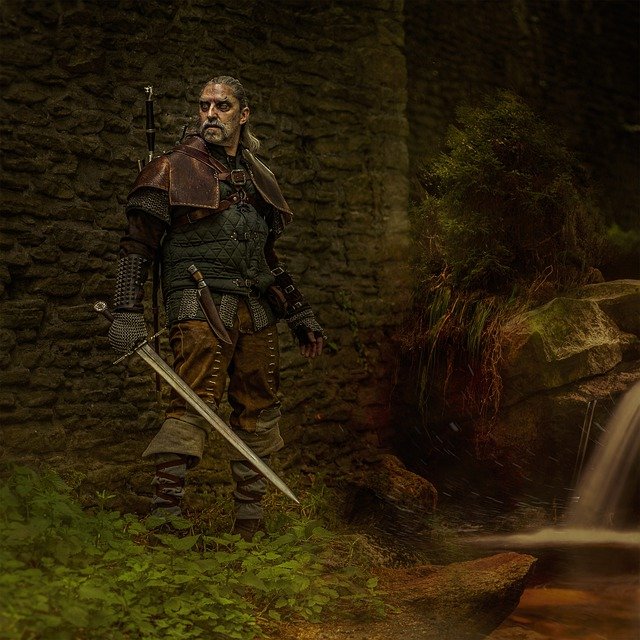
Video games are striving every year to create a more realistic virtual environment. Games now have wind that moves individual leaves on tree branches, light that dances across the surface of the water, and characters that look real from a distance. Modern video games have advanced technology to foster a sense of extreme realism and maximize immersion. With such engaging digital experiences, it is important that children are provided with boundaries so as to prevent screen-time overload and digital injury. Our Screen Safety Essentials Course grants you access to weekly videos with parenting tips and coaching from Dr. Bennett that will help you pull your child out of their digital world and back into ours.
Motion Capture
It can be difficult to program a character to move in a realistic way. The awkward way early 3D characters moved unfortunately hampered immersion. Recently, the gaming industry began to use motion capture technology to solve this issue. Motion capture is a technique whereby a real human being is recorded in a studio as a program captures their motion and applies it to the game character to make the movement look as real as possible.
In a game called LA Noir, you are a 1940’s detective. One of the major objectives of the game is to interrogate suspects and solve crimes. For authenticity, developers created the characters with real facial expressions. The game used an advanced motion capture system to record the real facial expressions of the voice actors portraying the game characters. Players can tell what a character is feeling or if they’re lying based on facial expressions alone. The game uses very real human empathy and natural social cues as a part of the game, offering deeper immersion and better quality overall.
Real Game with Real Fear
Realistic graphics are fascinating when they’re used to make a character blink and breathe like a real person. Immersion is the goal, especially in horror games. Early horror games were limited in what they could create by the consoles of the time. However, as modern technology has evolved, new possibilities have opened for the horror genre.
Games can include motion-captured characters with realistic looks of fear and pain on their face. Horror games originally wanted to compete with the horror movie industry, but horror games now have the ability to do more than movies ever could.
For example, a game called Dead Space takes the classic zombie movie genre and sets it in a futuristic space station. An alien artifact mutates humans into nearly unkillable monsters. The game makes great use of body horror to drive home the alien nature of these dead humans. Body horror is a type of horror derived from twisting the human body into unnatural shapes creating nightmarish monsters. Our mind still sees that the monster is technically human, but is terrified by how wrong it has become. For example, in Dead Space, the zombie you are tasked to fight is a human with an open chest cavity and arms twisted in unnatural positions with sharpened bone where hands used to be. The key feature is that they still have a human face attached to the monstrous form to remind you that they used to be like you.
Immersion in horror games
The main thing horror games have over movies is the personal nature of the narrative and fear within. A zombie movie may be scary to watch as your favorite character fights for their life. However, an immersive game like Dead Space can make you feel like you’re the one fighting for your life. The immersive narrative attempts to draw you into the character’s shoes and, for the time you play, you can believe that you’re really in danger. The narrative takes on a whole new depth as suddenly you’re the one backed into a corner with only a handful of ammo and your wits.
Another dimension is that a game doesn’t guarantee a happy ending. When you run out of ammo, you know that you’re the one who’s going to die. Often when a gamer talks about an experience with a horror game, they speak in the first person. When I first played Dead Space, I remember the adrenaline rush I got when I had no ammo, because I knew I was going to have to fight my way out with my bare hands. The memory of playing a game differs from a movie because it stores itself as if the player had physically been there.
What does immersion mean for kids?
Realistic video games can be frightening and exciting to play. But at the end of the day, a player can still distinguish the game from reality. The same can’t be said for children exposed to the same things. Children have a harder time separating fantasy from reality.
As video games strive to be as close to reality as possible the task only gets harder. An adult who plays a particularly realistic horror game may have trouble sleeping for a night, but a child will suffer far worse than any adult.
Even outside of horror, we have shooter games that strive for realistic blood and death. Sniper Elite is a game that will follow the bullet fired from a sniper rifle through an enemy to show bones break and organs rupture as the bullet penetrates their body. These advances in immersion are great for taking a player into the world of a game, but only as long as that player has developed enough to pull themselves back out.
What can you do for your young gamer?
ESRB Ratings
Most video games come with an ESRB rating on the box to let players and parents know what type of audience the game is suitable for. If a game is rated for an audience older than your child, the game contains content inappropriate for their age group.
Our Connected Family Course is designed to help keep your family connected in a world separated by screens. Backed by years of psychological research our course is designed to keep your family connected and working together to prevent digital injury.
Play games with your kids
Make sure the game your child is playing is appropriate and get some fun bonding time in. You can learn what the game your kids are playing is really like by just spending time with them while they play. If a game is inappropriate, it’ll be hard to hide for long.
Thanks to CSUCI intern, Jason T. Stewart for researching advances in the video game industry and co-authoring this article.
I’m the mom psychologist who will help you GetKidsInternetSafe.
Walker, C. (2010, December 22). Video games and realism. Wake Forest News. Retrieved November 3, 2021, from https://news.wfu.edu/2010/12/22/video-games-and-realism/.
In a time of online learning your child’s safety is vital, and GKIS is needed more than ever. Enjoy a highlight of Dr. B’s News Reels! With over 25 years in private practice, Dr. Bennett is seeing more families in crisis due to internet safety problems. To prevent digital injury, she developed GetKidsInternetSafe.com! When it’s your kids ON-the-LINE GetKidsInternetSafe.com
Join us in a special Vlog style episode where Dr. Tracy Bennett visits her CSUCI office after a year of in-home schooling due to COVID-19. Tune in and get to know more about Cal State Channel Islands. www.GetKidsInternetSafe.com In over 25 years of practice, Dr. Bennett is seeing more families in crisis due to Internet safety problems. To help families prevent digital injury, she developed GetKidsInternetSafe.com! When it’s your kids ON-the-LINE GetKidsInternetSafe.com
COVID-19 has been an unprecedented moment for all of us. Join Dr. Tracy Bennett as she works from home and reminisces about why she founded GetKidsInternetSafe. You’ll see the passion she has for helping children and families avoid risks from the dark web and screen addiction. In over 25 years of practice, Dr. Bennett is seeing more families in crisis due to Internet safety problems. To help families prevent digital injuries, she developed GetKidsInternetSafe.com!
When it’s your kids ON-the-LINE GetKidsInternetSafe.com Link to Screen Safety Essentials Course 👇 https://getkidsinternetsafe.com/essentials-course/
Do you worry that you allow too much, or too little, screen time for your kids?
Have you read about digital injuries, like interaction with Internet predators, screen addiction, and neck and spine deformities, and worry you don’t know enough to spot risk in time to intervene?
Do you yell, punish, and lecture too often trying to keep them from doing what they beg to do online?
I did too! That’s why I started GetKidsInternetSafe 7 years ago. Yes, even psychologists find parenting challenging – especially nowadays with teens. When I started this legacy project, I was heartbroken and overwhelmed when my dad died and my mom succumbed to dementia. To get everything done and keep my kids happy, I was relying too much on Minecraft. The parents in my practice were doing the same…at the expense of the kids. I started to get freaked out.
But when I looked for digital safety tools and parenting strategies online for support, the best I could find was Dr. Phil saying to supervise all child screen use – as in, sit with them every time they were on screen. Because we all know that can’t happen, I did a deep-dive in the research, created my own screen safety parenting programs based on my 25+ years of momming and working with families, pooled resources of friends and colleagues, and founded GetKidsInternetSafe. Every day, I hear from families just like ours telling me how much they needed it and how much they appreciate it! A feel-good project, indeed.
If you who have been with me from the beginning, THANK YOU! I’ve appreciated your support more than you know. And for those who are new to GKIS or considering subscribing, you’ll want to know what’s happening with GKIS these days!
As a subscriber,
1. You receive your free Connected Family Screen Agreement, designed to inform and inspire you to cooperatively connect as a family and set reasonable and sensible online safety guidelines for kids and teens. It’s delivered in 4 weekly chunks so you don’t get overloaded. Slow, steady, and fun is the goal.
And of course, I never share your information with anyone. Please let me know if there’s anything you want to learn more about (or just to say hi!) by emailing me at DrTracy@DrTracyBennett.com.
Thanks again for being part of the GKIS community!
I’m the mom psychologist who will help you GetKidsInternetSafe.
Onward to More Awesome Parenting,
Tracy S. Bennett, Ph.D.
Mom, Clinical Psychologist, CSUCI Adjunct Faculty
“These games are a waste of time!” Does this parent-rant sound familiar? We are all hooked on our screen activities, but gaming has a particularly addictive quality. We already covered that there are many benefits. One big benefit that we haven’t covered yet is that gaming is a great launch for professional ventures that connect players to other people all over the world. Why is gaming so popular, and what can be accomplished or gained by playing them?
Why Kids Are Hooked
A common belief about video games make us mindless. Many studies have found links to aggression and gamers. However, these studies primarily tested a small subset of games with violent shooters. In contrast, studies from role-playing games have shown benefits for the player.
Specifically, gamers have been shown to demonstrate and build emotional skills like feeling guilt and shame when a character acts immorally.[1] Games also provide a fertile resource for building team play and social skills. For instance, in one study online gamers reported feelings of community and belonging while playing online. They claimed that the social relationships gained while playing provided them with social support and helped them develop a healthy social identity.[2]
Action games, which do include shooters, have also been shown to increase our ability to hold visual information[3], increase the ability to multi-task and manage attention[4], and calm and de-stress.[5]
Games are not simply a means of passing the time. The time spent playing is meaningful. Other exciting benefits include entertainment, identity exploration, and higher-order thinking and problem-solving. Gaming can even launch life-changing educational, entrepreneurial, networking, and earning opportunities!
What game do I want to play?
Each gamer is unique and expresses themselves through the genre or style of gameplay they choose. Each genre requires certain skills and characteristics for the player to succeed. There are five main genres in gaming: Action, Role-Playing, Simulation, Strategy, and Sports.
Action
The player is given challenges that can include climbing obstacles, solving puzzles, defeating enemies, or collecting certain key items.
The player must have fast hand-eye coordination and quick reflexes to succeed.
Popular games include Minecraft, Overwatch, Fortnite, Grand Theft Auto.
Role-Playing
Based on the tabletop game Dungeons and Dragons
The player is tasked with completing missions to progress and strengthen their character(s).
Contains immersive worlds and engaging stories
Popular games include World of Warcraft, Final Fantasy, Pokémon.
Simulation
Utilizes the use of virtual worlds to simulate aspects of reality and fantasy for training purposes
There are no goals the player has to follow.
Popular Games include The Sims, Farming Simulator, Flight Simulator.
Strategy
Gives the player control of multiple characters
Players must use these characters to explore, engage in combat, and gather and utilize economic resources.
To succeed the player must use strategy and great tactics.
Popular Games include StarCraft, Civilization, Age of Empires.
Sports
Allows the player to take control and play as their favorite sports team or player
Some games in the genre try to recreate current sports as realistically as possible, while others create new sports with over-the-top effects and fast gameplay.
Popular Games include Madden, FIFA, Rocket League.
What do I want to do in the game?
Through gaming, children are provided with unique freedoms and communicative abilities. In most games, the first goal is to decide what mission to pursue. Completion of the mission rewards the gamer by furthering the story, giving the gamer new items, or providing the gamer with experience points used to increase the skill of their character.
When deciding how to approach the mission, the gamer is given multiple options. In single-player games, the gamer can choose the look of their character, which missions to pursue, and how they wish to approach each mission. The gamer must decide if they want to take on the mission alone, team up with a friend, or tackle missions online with millions of other players worldwide. Cooperative games offer an intimate, fun experience that can be shared with friends and family on a single TV or in private online sessions. They also have to decide about strategy. For example, they can:
charge straight in taking on all challenges at once,
take a stealthy approach,
scout the area and gather resources along the way, or
create a tactic all their own.
Game Streaming & eSports
Social media sites have become an integral part of a gamer’s identity. They give players the ability to choose their online friends, the style of their home page, and what is posted and commented on their profile. Kids can communicate through private sessions with friends and live streams to a worldwide audience.
Dozens of video streaming sites and their users have taken advantage of this gaming movement. On YouTube and TikTok, popular personalities showcase themselves playing video games to garner more views and make revenue from advertisers.
Twitch TV is a video game streaming site that allow users to live-stream themselves playing games to global online audiences. Streamers are paid through viewer subscriptions, donations, and sponsorships. Sponsorships are given to gamers for unique and appealing personalities and highly acclaimed skills. Many gamers who are sponsored for their skills are also part of a rapidly growing eSports league.
The eSports leagueinvolves teams and tournaments similar to those seen in other professional sports leagues. Funding for tournaments and players comes through sponsorships, endorsements, advertisements, and online donations. Gamers are paid well for winning. For instance, a popular game, Dota 2, had a prize pool of over twenty million in 2016. Each player of the winning team took home $1.8 million.[6]
eSports can also bring fame. The eSports league has become a huge phenomenon spanning the globe, rivaling and even surpassing long-standing professional sports. In 2014, a popular PC game, League of Legends had a tournament that garnered more viewers than game seven of the MLB finals and game seven of the NBA finals combined![7]
Universities have begun to pick up on the eSports trend as well. Robert Morris University recently launched the first sponsored eSports Team. Players of the team are students who receive scholarships for their play just as another student would receive a scholarship to play football or basketball. They train just as another collegiate team would. They are instructed by a coach, study the competition, and practice running drills.[7]
In the past, the word gamer was associated with words like lazy and non-social. Fortunately, these stigmas are changing. Gamers today are seen as entrepreneurial (creating your own business), professional, and globally connected.
Thank you to CSUCI Intern, Dylan Smithson for teaching us about the skill-rich, lucrative world of gaming. If you enjoyed reading this article, feel free to share with friends and family, and give us a like on our GetKidsInternetSafe Facebook page.
I’m the mom psychologist who will help you GetKidsInternetSafe.
[6] Bednarski, S (2016) Top 5 Largest eSports Prize Pools of 2016. http://www.xygaming.com/content/top-5-largest-esports-prize-pools-of-2016/
[3] Blacker, K. J., Curby, K. M., Klobusicky, E., & Chein, J. M. (2014). Effects of action video game training on visual working memory. Journal Of Experimental Psychology: Human Perception And Performance, 40(5), 1992-2004. doi:10.1037/a0037556
[4] Maclin, E. L., Mathewson, K. E., Low, K. A., Boot, W. R., Kramer, A. F., Fabiani, M., & Gratton, G. (2011). Learning to multitask: Effects of video game practice on electrophysiological indices of attention and resource allocation. Psychophysiology, 48(9), 1173-1183. doi:10.1111/j.1469-8986.2011.01189.x
[1] Mahood, C., & Hanus, M. (2017). Role-playing video games and emotion: How transportation into the narrative mediates the relationship between immoral actions and feelings of guilt. Psychology Of Popular Media Culture, 6(1), 61-73. doi:10.1037/ppm0000084
[2] O’Connor, E. L., Longman, H., White, K. M., & Obst, P. L. (2015). Sense of community, social identity and social support among players of massively multiplayer online games (MMOGs): A qualitative analysis. Journal Of Community & Applied Social Psychology, 25(6), 459-473. doi:10.1002/casp.2224
[7] Ravitz, J (2016) Varsity Gamers Making History and Dumbfounding Parents http://www.cnn.com/interactive/2015/07/us/varsity-gamers-american-story/
[5] Reinecke, L. (2009). Games and recovery: The use of video and computer games to recuperate from stress and strain. Journal Of Media Psychology: Theories, Methods, And Applications, 21(3), 126-142. doi:10.1027/1864-1105.21.3.126