

Need peaceful screen time negotiations?

Get your FREE GKIS Connected Family Screen Agreement

trump

The GKIS Sensible Parent’s Guide to Twitter

Twitter is a popular social media app that allows users to communicate with their peers through short “tweets” or posts. Many users post whatever is on their mind, what happened to them during the day or to reach out to their friends. Twitter has the potential for cyberbullying, communicating with strangers, sharing fake news, and viewing inappropriate content. This GKIS Sensible Guide provides the information parents need to know to be familiar with Twitter and make informed decisions on when and how to allow their children to use Twitter.

What is Twitter?

Twitter is a social media platform that allows users to communicate with others using short messages. Twitter messages are called “tweets” and may include text, photos, and videos. Many people use Twitter to follow and reach out to others and to post tweets that aim at becoming “viral.”

Many companies like Target, Starbucks, and fast-food restaurants have Twitter accounts and use them to advertise their products and reach customers. Twitter is also useful for customer service and reporting issues to companies. During highly political times, it is not uncommon to see politicians and their followers using Twitter to garner support and attack opposing opinions.

Twitter has produced many popular influencers. Katy Perry and Justin Bieber are the popular influencers for entertainment/celebrity. Elon Musk, inventor of Tesla, and Jack Dorsey, founder of Twitter, are the top influencers in the technology area. There are several other areas with influencers including The Frugal Traveler as a travel influencer, Jamie Oliver as a health influencer, and Atelier Dore as a fashion influencer.[1]

How long has Twitter been around and how popular is it?

Twitter was founded by Jack Dorsey and officially launched in July of 2006. It is based in San Francisco and has over 25 offices around the world. In a statistic published in February 2020, 56.2% of United States Twitter users were male.[2] There is a wide age range of users with the most common ages 25 to 34 and 55 to 64.[3] In 2019, 330 million monthly active users were reported.[4]

How old is old enough for adoption?

According to Twitter’s Terms of Service, a user “must be at least 13 years old to use the Services.” [5] This age is selected for compliance with the U.S.’s Children’s Online Privacy Protection Act (COPPA). However, in Dr. Bennett’s book Screen Time in the Mean Time, she recommends no social media app adoption until at least the second semester of sixth grade, when kids have more social experience for creative problem solving and are no longer transitioning into middle school. (If the seventh grade is a transition year in your community, she recommends waiting until spring semester for the introduction). Because every child has unique strengths and vulnerabilities, parents are well suited to make the best-informed decision for their family.

What is included in the personal profile?

To create a Twitter account, you will need to enter your name, phone number or email, and create a password. The name you enter does not have to be your real name. It can also be a nickname. You will be directed to set a profile photo that will be used as a thumbnail for all your tweets. A cover photo may also be uploaded and will appear at the top of your profile.

A profile also includes your birthday, including the year, and the month and year that you joined Twitter. It also displays the number of people who follow you and the number of people that you follow. The profile also has four tabs that include Tweets, Tweets & replies, Media, and Likes.

  • Tweets: Shows all tweets the user has posted or retweeted.
  • Tweets, retweets, & replies: Shows all tweets the user has posted or retweeted and any replies to tweets.
  • Media: Shows any photos, videos, or gifs the user has tweeted.
  • Likes: Shows all tweets the user has liked.

When clicking on a stranger’s profile, it will display if they are following you. It will also list everyone that follows them and that you follow. It also gives you an option to follow the user, turn on their notifications, send them a direct message, and mute, block, or report.

What are the privacy options?

When clicking on “Privacy and Safety” in your settings, Twitter gives you several options which include information on protecting your tweets, direct messages, discoverability and contacts, safety, and personalization and data.

  • Tweets
    • The Protect your Tweets option allows users to only show their tweets to those that follow them. This also requires users to approve their followers.
    • The location information option allows users to add their location to each of their tweets. Users also have the ability to delete all location information.
    • The photo tagging option allows users to block others from tagging them in photos.
  • Direct Messages
    • Users are able to block others from messaging them
    • Users are able to turn on or off their read receipts which notify the sender with the time they read their message.
  • Discoverability and Contacts
    • Users are able to allow people to find their accounts using their phone number or email address.
  • Safety
    • Users have the option of blocking media that may contain sensitive content
    • User can also mark the media they tweet as containing sensitive content
    • Users have the option of muting works or account
    • Users can block accounts which means they will no longer see the account and the account will no longer see their account
    • Users can change their notification settings or turn off notifications
  • Personalization and Data
    • Through these settings, users can control how Twitter personalizes content and collects and shares certain data
    • Users can block Twitter from sharing their data with business partners.

What are the risks for use?

Inappropriate Content

It is easy for users to stumble upon potentially inappropriate content for their age and/or fake news. If one user retweets or shares something potentially inappropriate, all their followers will see that post. The best way to prevent your child from viewing inappropriate content on their Twitter feed is to go through their privacy settings and make sure to block inappropriate accounts. Requiring your child to get approval before the following accounts is another way to prevent inappropriate content. Please note, however, that once on Twitter it is impossible to filter out all inappropriate content.

Cyberbullying

Twitter carries a major risk for cyberbullying due to the anonymous nature of the platform. Twitter users may use a fake name and photo in order to remain anonymous and then send harmful messages or leave harmful comments on others’ tweets. The best way to prevent cyberbullying is to have the Twitter profile set on private and only approve people who are known by the user.

Sub tweeting is another common form of cyberbullying that is found on the platform. Sub tweeting means posting a tweet about someone without specifically naming that person. Most subtweets are harmful and are used as a way to attack a person without having an explicit connection to that person. Once again, even with best efforts, it’s impossible to block all cyberbully behaviors once on the Twitter platform.

Communicating with Strangers

Users who have a public profile are able to be contacted by any Twitter user. This means that strangers of any age can message a user and send them text or photos. Predators have the ability to send messages to young users. A private Twitter account is the best way to prevent contact with strangers.

Distractibility & Constant Access

Twitter produces a wide variety of content which makes it easy to keep scrolling for hours. Users often start looking at one tweet which leads to others of similar content. The cycle can go on for hours. Also, consider how comfortable you are having your child’s friends have constant screen access with your child. Social media fills one’s digital inbox constantly, all-the-time.

GetKidsInternetSafe rates Twitter as a yellow-light app due to the easy access to strangers, inappropriate content, and the potential for cyberbullying. Twitter tries to block inappropriate content from being posted, but there are millions of users who post multiple times a day. If you do opt to allow Twitter, be sure and get your child’s username and password and monitor posts.

Thank you to CSUCI intern Makenzie Stancliff for co-authoring this article. For more information on keeping your child safe on social media, check out the Get Kids Internet Safe Screen Safety Toolkit. Be sure to add Twitter on to the free GKIS Connected Family Agreement as a “not yet.”

I’m the mom psychologist who will help you GetKidsInternetSafe.

Onward to More Awesome Parenting,

Tracy S. Bennett, Ph.D.
Mom, Clinical Psychologist, CSUCI Adjunct Faculty
GetKidsInternetSafe.com

Works Cited

[1] Meet The Top Twitter Influencers by Topic. (2018, February 20). Retrieved from https://izea.com/2018/02/20/influencers-on-twitter/

[2] Clement, J. (2020, February 18). U.S. Twitter user distribution by gender 2020. Retrieved from https://www.statista.com/statistics/678794/united-states-twitter-gender-distribution/

[3] Clement, J. (2019, August 9). Twitter: U.S. user age distribution 2018. Retrieved from https://www.statista.com/statistics/192703/age-distribution-of-users-on-twitter-in-the-united-states/

[4] Clement, J. (2019, August 14). Twitter: number of active users 2010-2019. Retrieved from https://www.statista.com/statistics/282087/number-of-monthly-active-twitter-users/

[5] Twitter Terms of Service. (n.d.). Retrieved from https://twitter.com/en/tos

Photo Credits

Photo by Sara Kurfeß on Unsplash
The Psychology Behind Fake News, Bots, and Conspiracy Theories on the Internet

Clickbait headlines and Internet autofeeds tempt us into mindless scrolling. They soak into our memories without our awareness and tempt us to share even after only reading the headline. False information manipulates stock markets, our political views, and our purchasing. It makes us feel connected to celebrities and can divide families. Everybody has an opinion that they are happy to argue about online even if they believe it’s too rude to share at a dinner party. What is fake news? How do bots contribute to fake news? Why does fake news suck us in so expertly? And how can we avoid its seductive allure?

What is “fake news?”

Fake news is false information designed to inform opinions and tempt sharing. It could be a rumor, deliberate propaganda, or an unintended error that deceives readers.

Fake news can affect attitudes and behavior. Fake news about a celebrity may not be harmless, but chances are it won’t have a long-lasting and devastating impact. However, fake news about the spread of a virus, the necessity of medical interventions, or the intentions of a politician can have a huge impact and manipulate behavior in dangerous ways.

Bots!

In addition to the three billion human accounts on social media, there are also millions of bots.[i] Bots are created using a computer algorithm (a set of instructions used to complete a task) and work autonomously and repetitively. They can simulate human behavior on social media websites by interacting with other users and by sharing information and messages.

Bots possess artificial intelligence (AI). They can learn response patterns in different situations. Programmed to identify and target influential social media users, bots can spread fake news quickly.

According to a 2017 estimate, there were about 23 million bots on Twitter, 27 million bots on Instagram, and 140 million bots on Facebook. Altogether, that adds to 190 million bots on just three social media platforms, more than half the population of the United States.[ii]

3 Reasons Why We Get Sucked in by Fake News

With convenient on-demand internet access, we’ve gotten into the habit of greedily gulping rather than thoughtfully chewing our news. We browse instead of reading then impulsively jump to share.

A recent study found that 59% of shared articles on social media are never even read. Most social media users get their information based solely on a headline.[iii] Why are we susceptible to this form of online behavior? Are we lazy with low attention spans, or could it be something else?

Fake news is crafted to be widely appealing. 

A recent study found that fake news is 70% more likely to be retweeted than true stories. A true story takes six times longer to reach 1,500 people than it takes for fake news to reach the same amount of people. Fake news is typically new and unusual information that is tested for shareability. Unlike truth, which you consume and it’s over, fake news is alive and constantly evolving.[iv]

We hear and see what we want.

An echo chamber is a metaphor for a closed online space where beliefs are repeated by different users. With each contact with that information, the information is exaggerated and the reader becomes more convinced that the content is factual and impactful.

Social media sites repetitively send us links to information based on our previous internet searches. This is called targeted advertising. It is designed to take us into a rabbit hole of single-minded desire. Not only does this sell us ideas, belief systems, and facts, but it can also get us to back politicians and influencers and ultimately spend our money. The act of unconsciously seeking out and remembering information that supports our views is called confirmation bias. Fake news feeds this bias.

Shortcuts are easier.

Heuristics are shortcuts our minds take to make quicker decisions. They allow us to function without having to think about every action we make.

Humans are not designed to have an honest view of the world. We form our decisions based on a vague worldview supported by emotional confirmation. We search for facts that make us feel more confident and avoid or flatly reject those that don’t.

Black-and-white thinking calms our anxiety and makes us feel like we have more control. Considering complex information and complicated nuance takes more effort and time. It also requires a more informed database to work from. Most online readers don’t want to take the time to patiently and humbly build up that kind of expertise. Quick information that offers more successful shareability is a more attractive option for online communication.

3 Reasons Why We Believe It

British psychologist Karen Douglas found three criteria for why someone would believe in conspiracy theories.

The Desire for Understanding and Certainty

It’s human nature to try to explain why things happen. Evolutionarily, those who were the best problem-solvers were more likely to survive. There is an adaptive advantage for those who ask questions and quickly find answers. Easy answers ease our anxiety and simply confirm our worldview.

Conspiracy theories are also false beliefs, and those who believe in them have a vested interest in keeping them. Uncertainty is an unpleasant state. Conspiracy theories provide a sense of understanding and certainty that is comforting.

The Desire for Control and Security

We need to feel like we have control over our lives. For conspiracy theorists, this is especially true when the alternative to their belief is stressful. For instance, if global warming is true and temperatures are rising, we will have to change our lifestyles. That would be uncomfortable and costly. Instead, you could listen to influencers who assure you that global warming is a hoax so you can continue with your way of living. This is called motivated reasoning and is a strong component of belief in conspiracy theories.

The Desire to Maintain a Positive Self-Image

Research has shown that those who feel they are socially marginalized will be more likely to believe in conspiracy theories. A positive self-image is fed from our successes in our relationships and accolades from those we admire. Chatting in online forums with same-minded others brings us community and feelings of self-worth. Researching a conspiracy theory can give one a feeling of having exclusive knowledge and expertise and offer opportunities for adulation and leadership.[v]

How to Protect Ourselves from Being Duped by Fake News and Conspiracy Theories

Assess the characteristics of the article you are reading.

  • Is it an editorial or an opinion piece?
  • Who is the author?
  • Is the author credible?
  • Have they specialized in a certain field or are they a random person with an unresearched opinion?
  • Can you trust the information they offer?
  • Do they cite their sources or is the article designed to impress instead of informing?

Check the ads.

Be wary of articles containing multiple pop-ups, advertisements of items not associated with the article, or highly provocative and sexual advertisements.

Verify images.

Are the images copied from other sources or are they licensed for use by the author? Google Image Search is an easy tool to find published copies of the image.

Use fact-checking websites.

Examples are Snopes, Factcheck.org, and PolitiFact.

Research opposing views. 

Check out sources with viewpoints opposing the articles you read that differ from your own opinions. To defend a point of view, you must understand the other side.

Learn to tolerate several complex ideas at once, even if it causes tension.

Smart discussion requires that we discuss the nuance of complex ideas rather than engaging in faulty or black-and-white thinking. Experts are not shy to say they don’t know something. Insecure amateurs try to fake it.

Share responsibly. 

As important as it is to protect yourself from fake news, it is equally important to help protect others from fake news. Make sure to check the authenticity of an article before posting it online. If Aunt Joyce posts something inaccurate, side message her and let her know that it is fake news and how you found that information so she can better use fact-checking in the future.

Thanks to CSUCI intern, Dylan Smithson for researching the ways fake news is affecting us and how to avoid being morons online. To view some valuable news clips of Dr. Bennett’s interviews about parenting and screen safety, check out her YouTube channel at https://www.youtube.com/DRTRACYBENNETT,

I’m the mom psychologist who will help you GetKidsInternetSafe.

Onward to More Awesome Parenting,

Tracy S. Bennett, Ph.D.
Mom, Clinical Psychologist, CSUCI Adjunct Faculty
GetKidsInternetSafe.com

Works Cited

[i] Simon Kemp (2019) Digital trends 2019: Every single stat you need to know about the internet https://thenextweb.com/contributors/2019/01/30/digital-trends-2019-every-single-stat-you-need-to-know-about-the-internet/

[ii] Amit, Argawal (2019) How is Fake News Spread? Bots, People like You, Trolls, and Microtargeting http://www.cits.ucsb.edu/fake-news/spread

[iii] Jayson DeMers (2019) 59 Percent Of You Will Share This Article Without Even Reading It https://www.forbes.com/sites/jaysondemers/2016/08/08/59-percent-of-you-will-share-this-article-without-even-reading-it/#646fecdb2a64

[iv] Kari Paul (2018) False news stories are 70% more likely to be retweeted on Twitter than true ones https://www.marketwatch.com/story/fake-news-spreads-more-quickly-on-twitter-than-real-news-2018-03-08

[v] David, L (2018) Why Do People Believe in Conspiracy Theories?

https://www.psychologytoday.com/us/blog/talking-apes/201801/why-do-people-believe-in-conspiracy-theories

Photo Credits

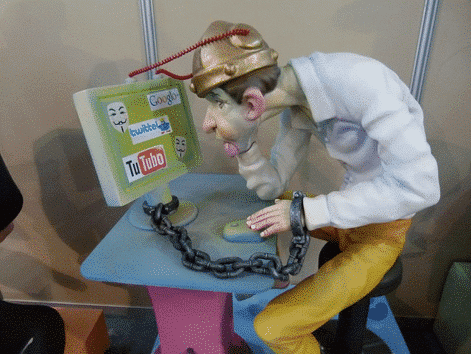
Antonio Marín Segovia Internet ha sido asesinado por el macarrismo ilustrado de Wert, con el beneplácito del PPSOE CC BY-NC-ND 2.0

Free Press/ Free Press Action Fund’s photostream Invasion of Fake News CC BY-NC-SA 2.0

Sean MacEntee social media CC BY 2.0

Keywords: Internet, Conspiracy Theories, Fake News, Bots, AI, Confirmation Bias, Heuristics, Echo Chamber


GetKidsInternetSafe Response to President Trump’s Comments Linking Violent Video Games to Hate Crimes

Yesterday in response to the El Paso and Dayton mass shootings, President Trump stated, “We must stop the glorification of violence in our society. This includes the gruesome and grisly video games that are now commonplace. It is too easy today for troubled youth to surround themselves with a culture that celebrates violence. We must stop or substantially reduce this and it has to begin immediately.” In response, #videogamesarenottoblame started trending on social media. Talk show hosts came out in force stating that there are no research studies linking video games to mass shootings and youth in other countries play video games, yet they do not have mass shootings like America. Consistent with their argument, as video game playing has gone up, juvenile delinquency has gone down. Even Trump’s own 2018 school safety commission produced recommendations that do not support yesterday’s statement. But as founder of GetKidsInternetSafe, I’m behind the President on this one that the on-demand violent entertainment that proliferates American culture deserves serious discussion. Of course, video games are not the sole cause of hate crimes, nor is the research clean about video games causing violence. But that doesn’t mean it isn’t a contributing factor (among many) to making troubled people vulnerable to radicalization online.

In the wake of 31 additional innocent lives lost to senseless gun violence at the hands of extremists, we can all agree that we have reached a crisis point in the United States. The horrific violence of recent hate crimes demand that our leaders act with moral clarity and urgency of action. But they need our support to get this done. They cannot act decisively if everybody gets hysterical and arm-chair quarterbacks every statement of action. Instead of emotional one-sided arguments, let’s think through some of his points about violent entertainment and video games. After all, our kids are at virtual war several hours a day. It is common sense to consider that this may have negative impact on some of them…especially the psychologically vulnerable.

Here are two applicable excerpts from my book, Screen Time in the Mean Time: A Parenting Guide to Get Kids and Teens Internet Safe, that address violent entertainment consumption in America:

***

Violence for Profit: Passive Viewing of Television and Video

The United States has long been criticized as the dominant creator and celebrator of violent entertainment. Chalk it up to our fierce protection of the right to bear arms or our thirst for thrilling content, more and more Americans are fans of violent sports, television, movies, and video games. As adults gobble up violent content for entertainment, our children are too often exposed to violence early and often with little regard to the damage it may cause. Everybody is doing it. Right? Right. Yet it has been widely demonstrated that viewing screen violence, passively and interactively, causes aggressive and hostile behavior in children and adults. However, not everybody who watches violent TV or plays violent video games acts aggressively. How much is too much for children who are vulnerable due to immature brains?

First, we must accept that not all screen time is equal. Screen viewing can be passive (watching television and videos) or interactive (screen touch and video games). In regard to passive viewing of violent screen content, the American Psychological Association Council Policy Manual on Violence in Mass Media (1994) concludes from decades of research that there is correlative and causal risk. It specifically states:

On the basis of over 30 years of research and a sizeable number of experimental and field investigations, viewing mass media violence leads to increases in aggressive attitudes, values, and behavior, particularly in children, and has a long-lasting effect on behavior and personality, including criminal behavior;[i],[ii],[iii]

Viewing violence desensitizes the viewer to violence, resulting in calloused attitudes regarding violence toward others and a decreased likelihood to take action on behalf of a victim when violence occurs;[iv]

Viewing violence increases viewers’ tendencies for becoming involved with, or exposing themselves to, violence;

Viewing violence increases fear of becoming a victim of violence, with a resultant increase in self-protective behaviors and mistrust of others; and

Many children’s television programs and films contain some form of violence, and children’s access to adult-oriented media violence is increasing as a result of new technological advances.

These conclusions are particularly troubling when one considers that, despite these findings existing for decades, the Internet and screen technology has exploded access to on demand violent content for all ages. The younger the child, the more time viewed, and the intensity and applicability of the content, the more potential developmental impact. Research demonstrates that children who have not yet started talking are affected by screen viewing in ways parents cannot recognize and that impact changes month-to-month, year-to-year. Furthermore, even kids as young as infants who view alongside an older sibling or a parent may still be negatively affected by inappropriate content.

Violence for Profit: Gaming and Interactive Screen Use

All parents want their children to succeed and live happy lives. We’ve generally accepted that screens are part of it. But parents often wonder, how much impact does violent gaming content have on psychological process? Too often we are seeing school shooters reference violent video games in their pre-attack manifestos. Do we have anything to worry about?

The five main video game play genres include action, role-playing, simulation, strategy, and sports. Gaming ranges in content and interactivity from simple puzzle games to complex massive multiplayer online role-playing games (MMORPGs). In MMORPGs, a large number of people play online together as developed characters in complex, online lands with shared goals in real time. Platforms for gaming include smartphones, tablets, handheld gaming devices, computers, gaming consoles, and the developing market of virtual reality (wearable devices with sensors like a helmet, goggles, and gloves where users can “interact” with a three-dimensional environment) and augmented reality (computer-generated images superimposed on the player’s view of the real world, resulting in a realistic composite of real and virtual life).

Other new, immersive auditory and visual adjunct technologies include transmedia storytelling (story content presented across multiple platforms and formats using digital technology), mini-games (video games contained within video games), chrono- and geolocation (identifying the time and location of players), and object linking (embedded links that lead the player to sequential digital locations). With multibillions of dollars earned each year from the gaming market, gamevertising has also become increasingly prevalent. This means that games are being expertly designed for product placement and with manipulative neuropsychological principals built in to ensure that gamers stay online and spend more money.

Beyond education and entertainment, benefits that can be gained from playing video games include improvements in visual-spatial capabilities, reaction times, attention span, ability to process multiple target objects, and detail orientation,[v] as well as improved visual short-term memory, mental rotation, tracking, and toggling between tasks.[vi] Video games can also help with anxiety and mood and improve relaxation and improve problem solving, strategy building, goal setting, and cooperation with others.

Video games also have vocational applicability and can be customized for specific tasks, such as orienting and motivating employees, providing health care benefits like exercise or illness care, or teaching specialized skills like performing surgery or sporting ability.[vii] Some gamers compete in profitable e-sport tournaments in person and online, while others learn computer programming skills that can be marketable as a career specialty. Mastery of video games provides opportunity for increased confidence, social connection and networking, and self-esteem. Social benefits are particularly valuable for players who may be isolated by geographic remoteness or physical or mental disability.

Along with benefits come risks. Ninety-seven percent of teens play video games, and more than 85% of video games have violent content.[viii] As with all complex psychological phenomena, different effects happen in different situations with different people. Thus, issues like content, time spent playing, and player vulnerabilities due to family life or mental health must be taken into account when considering effect.[ix]This makes for messy factors to control for quality research and controversial opinions about the risks of violent video games.

Meta-analytic reviews of research have found that violent video games can cause aggressive behavior, aggressive thinking styles, and aggressive mood, as well as decreased empathy and prosocial behavior. In regard to the effect of violent video games on children, teens, and adults, the American Psychological Association Council Policy Manual Resolution on Violent Video Games (2015) concludes:

A convergence of research findings across multiple methods and multiple samples with multiple types of measurements demonstrates the association between violent video game use and both increases in aggressive behavior, aggressive affect, aggressive cognitions and decreases in prosocial behavior, empathy, and moral engagement;

All existing quantitative reviews of the violent video game literature have found a direct association between violent video game use and aggressive outcomes;

This body of research, including laboratory experiments that examine effects over short time spans following experimental manipulations and observational longitudinal studies lasting more than two years, demonstrates that these effects persist over at least some time spans;

Research suggests that the relation between violent video game use and increased aggressive outcomes remains after considering other known risk factors associated with aggressive outcomes;

Although the number of studies directly examining the association between the amount of violent video game use and amount of change in adverse outcomes is still limited, existing research suggests that higher amounts of exposure are associated with higher levels of aggression and other adverse outcomes;

Research demonstrates these effects are for children older than 10 years, adolescents, and young adults, but very little research has included children younger than 10 years;

Research has not adequately examined whether the association between violent video game use and aggressive outcomes differs for males and females;

Research has not adequately included samples representative of the current population demographics;

Research has not sufficiently examined the potential moderator effects of ethnicity, socioeconomic status, or culture; and

Many factors are known to be risk factors for increased aggressive behavior, aggressive cognition and aggressive affect, and reduced prosocial behavior, empathy and moral engagement, and violent video game use is one such risk factor.[x}

Not only do video games affect gamers in the immediate, but they can also lead to increased aggressive behavior later in life.[xi] Furthermore, some players become desensitized to their environment,[xii] increasingly spend more time gaming, and ultimately feel more connected to their virtual world than the real world around them. With new immersive technologies being introduced to younger and younger children every day, one can’t even imagine true cognitive and psychological impact over time.

Thus far, attempts to regulate and block violent video game content from minors have largely been unsuccessful. Since the 1972 release of the first popular video arcade game, Pong, parents have worried about the impact of video gaming on their children. Just like our kids, we have largely become desensitized to its impact. From 1976, when parents succeeded in getting the video game Death Race pulled from the shelf due to the little gravestone that appeared when a character was killed, to now, we’ve come a long way baby. Or have we?

In response to video game players committing violence, several lawsuits have been filed by private citizens and class actions claiming that video game manufacturers were negligent by selling violent content that is harmful to children. However, few have succeeded due to first amendment rights claims and insufficient evidence related to flawed research methodology or correlational rather than causal research. City ordinances attempting to limit violent gameplay by unaccompanied minors in public places have also largely failed. Law professors and psychologists continue to argue that the evidence is too flimsy to make solid claims that video games cause violence, particularly considering the fact that despite widespread gameplay, the rate of juvenile violent crime is at a thirty-year low.

A particularly impactful blow against state regulation was the United States Supreme Court ruling in Brown v. Entertainment Merchants Association (2011), which concluded by a seven to two opinion that the California law restricting the sale and distribution of violent video games to minors was unconstitutional. The ruling was based on first amendment rights, stating that “speech about violence is not obscene” and is “as much entitled to the protection of free speech as the best in literature.”

***

So, there you have it. Violent video games and entertainment are not turning us into gun-hungry zombies. Our avid gamers have friends, go to school, and love their families. We are not being infected en masse through our video consoles. But that doesn’t mean hours of violent play isn’t impacting us negatively, especially those vulnerable with growing brains or childhood trauma. Rather than arguing extreme positions and attacking issues of concern, let’s consider the idea that we can all do better. Four commonalities have been found among shooters; a history of childhood trauma, a situational crisis point, the study of previous shooters and searching for validation for their motives, and the means to carry out the hate crime.[xii] That leaves us with many potential entry points for intervention. Our first step is calm, generous, and intelligent dialogue. Let’s start acting like a community and make positive change. The finger-pointing is only a distraction.

I’m the mom psychologist who will help you GetKidsInternetSafe.

Onward to More Awesome Parenting,

Tracy S. Bennett, Ph.D.
Mom, Clinical Psychologist, CSUCI Adjunct Faculty
GetKidsInternetSafe.com

Works Cited

[i]Huston, A., Donnerstein, E., Fairchild, H., Feshbach, N., Katz, P., Murray, J., Rubinstein, E., Wilcox, B. & Zuckerman, D. (1992). Big World, Small Screen: The Role of Television in American Society. Lincoln, NE: University of Nebraska Press.

[ii]National Institute of Mental Health – NIMH (1982). Television & Behavior: Ten Years of Scientific Progress & Implications for the Eighties, Vol. 1. Rockville, MD: U.S. Department of Health & Human Services.

[iii]Murray, J. P. (1973). Television & violence: Implications of the Surgeon General’s research program. American Psychologist, Vol. 28, pp. 472-478.

[iv]Krahe, B., Moller, I., Kirwil, L., Huesmann, L., Felber, J., & Berger, A. (2011). Desensitization to Media Violence: Links with Habitual Media Violence Exposure, Aggressive Cognitions, & Aggressive Behavior. Journal of Personality & Social Psychology, Vol. 100, No. 4.

[v]Taylor, J. (2012, December 4). How Technology is Changing the Way Children Think & Focus. Retrieved October 18, 2012, from http://wwpsychologytoday.com/glog/the-power-prime/201212/how-technology-is-changing-the-say-children-think-and-focus

[vi]Holfeld, B., Cicha, J. & Ferraro, F. (2014). “Executive Function & Action Gaming among College Students.” Current Psychology Curr Psychol34.2: 376-88. Web.

[vii]Brown, S., Liebermann, D., Gemeny, B., Fan, Y., Wilson, D., & Pasta, D. (2009). Educational video game for juvenile diabetes: Results of a controlled trial. Vol. 22 (Issue 1), p. 77-89. Doi:10.3109/14639239709089835

[viii]NPD Group (2011). Kids & gaming, 2011. Port Washington, NY: The NPD Group, Inc.

[ix]Ferguson, C. (2011). Video Games & Youth Violence: A Prospective Analysis in Adolescents. Journal of Youth & Adolescence, Vol. 40, No. 4.

[x]Anderson, C., Ihori, Nobuko, Bushman, B., Rothstein, H., Shibuya, A., Swing, E., Sakamoto, A., & Saleem, M. (2010). Violent Video Game Effects on Aggression, Empathy, & Prosocial Behavior in Eastern & Western Countries: A Meta-Analytic Review. Psychological Bulletin, Vo. 126, No. 2.

[xi]Norcia, M. (2014, June 1). The Impact of Video Games. Retrieved October 26, 2014, from http://www.pamf.org/parenting-teens/general/media-web/videogames.html

[xii]Weger, U., & Loughnan, S. (2014). Virtually numbed: Immersive video gaming alters real-life experience. Psychonomic Bulletin & Review, 21(2), 562-565. Doi:10.3758/s13423-013-0512-2

[xiii] https://www.latimes.com/opinion/story/2019-08-04/el-paso-dayton-gilroy-mass-shooters-data 

School Shooters: Mental Illness, Guns, and President Trump

Once again, America is mourning and devastated from a tragic loss of innocent lives at the hands of a school shooter. Yesterday 19-year-old Nikolas Cruz shot and killed 17 students and injured 14 others at his former high school in Parkland, Florida. He’d been identified as a threat to other students and expelled last year. Buzz Feed reported that both his parents had died, and he was known as a loner who frequently posted about his obsession with guns on social media. He may be the same Nikolas Cruz who wrote on Ben Bennight’s YouTube vlogger site in September, “I’m going to be a professional school shooter.” The FBI conducted an interview with Bennight the day after he reported the comment and again reached out to him yesterday. In response to the tragedy, President Trump tweeted, “So many signs that the Florida Shooter was mentally disturbed, even expelled from school for bad and erratic behavior. Neighbors and classmates knew he was a big problem. Must always report such instances to authorities again and again!” He promised support to America’s children, saying “We are here for you. Whatever we can do to ease your pain.” What is going on and how do we stop it? What do these shooters have in common? What role does gun control, mental illness, online radicalization, first-person shooter video game play, politics, and parenting play as contributors to this violence?

Like all “experts,” I have pockets of advanced knowledge and gaping blind spots. No single authority can tell us how to fix this insidious and complicated issue. Many of us even hesitate to speak out, as we know we will be diluged with trollish insults and inflammatory arguments. But let’s face it. We all have to get braver and speak up. Children’s lives are on the line and our everyday safety has been compromised. I believe there are many factors at play, many of which we can change to positively impact child safety.

Schools

In over twenty years of being a mom and treating kids, families, and teachers, I’ve seen school resources and policies change. We’ve moved from swatting with a paddle, to expensive team treatment plans, to expelling problem students with “zero tolerance.” Class sizes are too big, behavioral issues have dramatically increased, teachers are overworked and underpaid, and administration is understaffed. With one counselor per school (if they’re lucky) and a few school psychologists per district, at-risk kids go unidentified and underserved. By the time these kids hit middle and high school, they are too often suspended, expelled, or sent for independent study in response to problem behavior. This leaves at-risk kids more isolated with fewer supportive resources when they most need it. They cry out lonely, rejected, and angry; left to play first-person shooter games for hours on end with a team of other self-selected assassins.

Where’s the funding for education?

Mental Illness

I’m a clinical psychologist. That means I have a Ph.D. and five years of post-graduate training for diagnostics and treatment. I often get referred the more challenging cases for treatment. Psychologists are the only mental health experts trained for standardized testing and assessment. We are diagnostic experts with powerful assessment tools at our disposal. Even with years of experience and expert abilities, our accuracy for predicting violence is poor. The number one factor for violence prediction is a history of violence. Yet, many school shooters do not have a criminal or violent history. FBI officials agree that taking a threat assessment perspective is best for detecting potential violence, but there is no crystal ball.

Furthermore, even if an at-risk individual is identified, cost-effective intervention is hard to come by. In 22 years of private practice, I’ve seen either no or negligible change in insurance reimbursement for mental health providers. As a result, to economically survive our higher insurance and overhead costs, many of us charge client’s out-of-pocket for treatment. This results in services unaffordable for many families in need, including military families.

Where’s insurance reform and funding for mental illness research, assessment, and intervention?

Inpatient Hospitals and Prison

Federal and state funding for the treatment of mental illness has not been priority since the closure of state hospitals during deinstitutionalization in the 1960s – 1990s. I was a staff psychologist at Camarillo State Hospital in 1996 when my adolescent male unit was the last to leave. I saw mental health treatment move from a state-of-the-art research and team treatment facility to community mental health. Although I believe the intent for more cost-effective treatment was a good one, a majority of our chronically mental ill transferred from the state hospital, to homelessness, to the costly churn of imprisonment. Our most vulnerable citizens have been left to wander cold and hungry relying on the generosity of churches, not unlike the mentally ill in the dark ages. The money did not follow them, nor did the treatment. Instead too many of our mentally ill are in county, state, and federal prisons who offer little treatment. In fact, many of these inmates are put in jail as a mercy booking, meaning they’re housed waiting for the availability for too few psychiatric beds in order to get shelter and food. Not only do they not get treatment, they are also among the most vulnerable for assault by violent inmates. We have more people in jail than any other industrialized country in the world. The enormous churn of Americans going in and out of the prison system is a subject of intense debate for good reason.

Where’s prison reform and funding for the chronically mentally ill?

Violent Video Games and the Internet

Screen use has transformed childhood in all the ways detailed in my book, Screen Time in the Mean Time: A Parent Guide to Get Kids and Teens Internet Safe. One such way is the potential to be radicalized online, as evidenced by the raging manifestos of school shooters Dylann Roof in Charleston and Elliot Rodger in Isla Vista. From this radicalization comes a desire to go “viral” and be famous on the Internet, often in response to being rejected in nonvirtual life. Further, anger and hate are too often fed by unmanaged violent video game play.

Ninety-seven percent of teens play video games and more than 85% of video games have violent content. As with all complex psychological phenomena, different effects happen in different situations with different people. Thus, issues like content, time spent playing, and player vulnerabilities due to family life or mental health must be taken into account when considering effect. This makes for messy factors to control for quality research and controversial opinions about the risks of violent video games. However, meta-analytic reviews of decades of psychological research have found that violent video games can cause aggressive behavior, aggressive thinking styles, and aggressive mood, as well as decreased empathy and prosocial behavior. That doesn’t mean all kids that play first-person shooter games will be violent, but it does raise serious concern about vulnerable kids and overall empathy and prosocial skills.

Where are the laws that protect kids? In response to video game players committing violence, several lawsuits have been filed by private citizens and class actions claiming that video game manufacturers were negligent by selling violent content that is harmful to children. However, few have succeeded due to first amendment rights claims and insufficient evidence related to flawed research methodology or correlational rather than causal research. City ordinances attempting to limit violent game play by unaccompanied minors in public places have also largely failed. Law professors and psychologists continue to argue that the evidence is too flimsy to make solid claims that video games cause mass violence, particularly considering the fact that despite widespread game play, the rate of juvenile violent crime is at a thirty-year low.

Where is legislation for technology risks and psychological research funding?

Limiting Access to Firearms

We can argue all day if it’s safer to have armed school personnel or limit access to firearms overall. But I think there’s one thing we can all agree on in the wake of another mass murder by a semi-automatic weapon. How is it possible that a troubled teen like Nikolas Cruz can legally obtain a semi-automatic AR-15 rifle and enough ammunition to murder so many of his classmates? And why, if President Trump is focusing on mental illness as a primary risk factor in school shootings, did he repeal an Obama-era regulation that would add the names of SSI-registered mentally ill people to a database for gun purchase and background checks?

It’s impossible to overlook that his campaign received $30 million in donations from the National Rifle Association (NRA), leading him to say at their 2017 annual convention, “Only one candidate in the general election came to speak to you, and that candidate is now the president of the United States, standing before you.” “You came through for me, and I am going to come through for you.” If President Trump genuinely believes mental illness plays a role here, then how is it that he’s not working for more sensible gun access laws rather than helping his rich friends get richer? If only the rich lobbyists are being represented by our law makers, than what about American citizens?

Where is campaign contribution reform and sensible firearm access legislation?


Clearly there are no easy answers in regard to violence prevention. There is no single school shooter profile and no single funding option or legislation that is going to stop it. But one thing President Trump and I agree on is that meaningful connection is at the heart of the solution. We need to prioritize and fund issues that impact America’s children. No child in the United States should be afraid to go to school and no parent should panic when they see a district phone call. Character building starts at home, and we need to step up and do even better. It’s time we work collaboratively and make some hard decisions to curb school violence.

To learn more strategies to overcome screen use risk, get my book Screen Time in the Mean Time: A Parenting Guide to Get Kids and Teens Internet Safe. If you like what you read, please leave an Amazon review. <3


I’m the mom psychologist who will help you GetYourKidsInternetSafe.


Onward to More Awesome Parenting,

Tracy S. Bennett, Ph.D.
Mom, Clinical Psychologist, CSUCI Adjunct Faculty
GetKidsInternetSafe.com

Photo Credits

Photo by Cel Lisboa on Unsplash

Photo by Danielle MacInnes on Unsplash