
Need peaceful screen time negotiations?

Get your FREE GKIS Connected Family Screen Agreement

teens

Why Our Kids Struggle Not to Overuse Screen Media


Screenshot-2015-05-31-20.30.12

PLEASE SHARE OUR GKIS VIDEO by clicking on the share buttons on the left  🙂

Did you know that the prefrontal region of the brain, the part that involves impulsivity, complex reasoning, and problem solving, doesn’t fully mature until we are 23 years old? This is why kids don’t recognize future consequence and make unwise decisions.

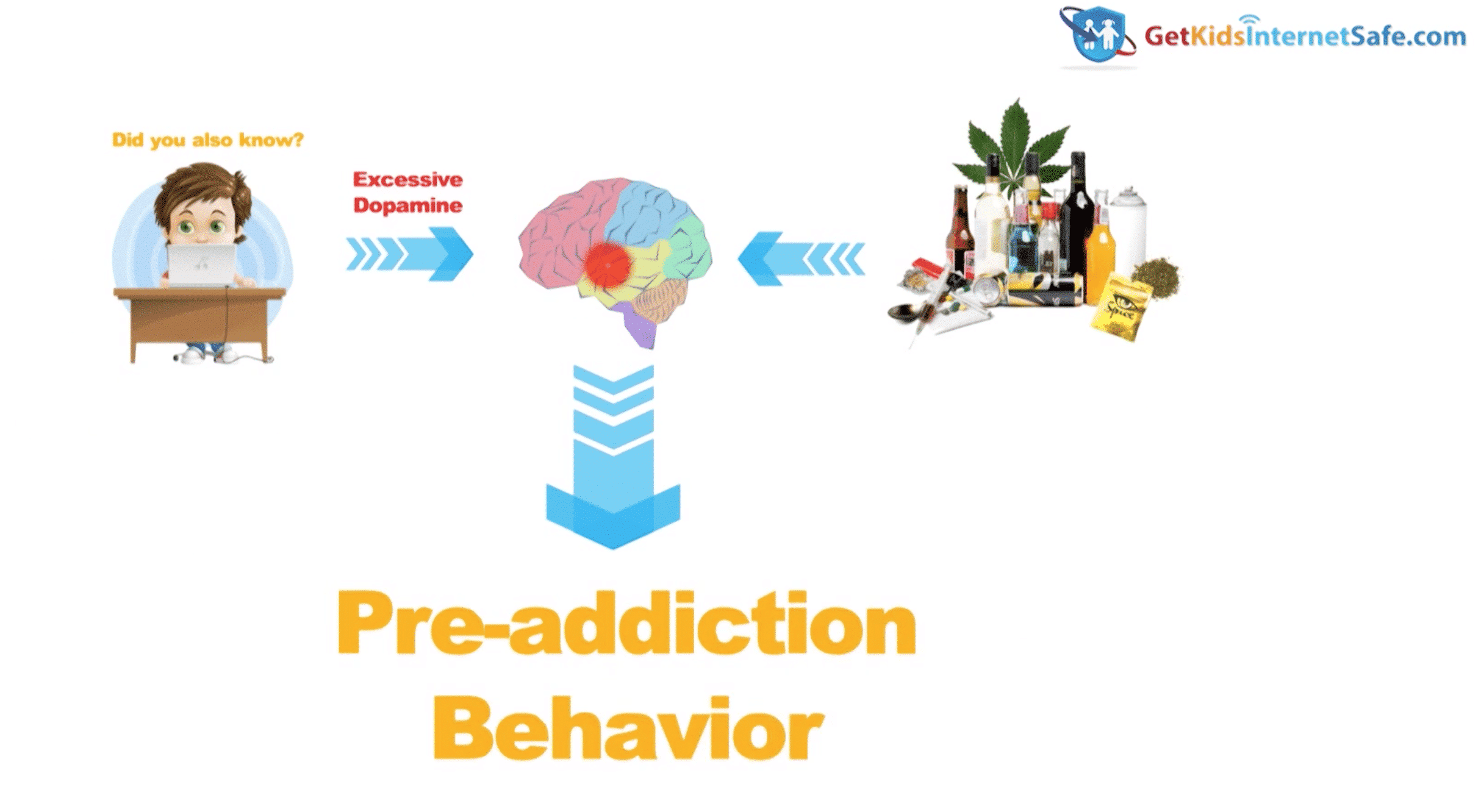
Did you also know that screen media may lead to excessive dopamine in the pleasure center of the brain in a similar way that all drugs of addiction do? That means some kids drift into pre-addiction behavior patterns, like “flow,” when video gaming or using social media.

Although every child’s different, boys tend to prefer gaming and girls tend to prefer social media.

Surging dopamine in the pleasure center quickly overpowers an immature frontal lobe. That means our kids need us to guide them well into what we consider “adulthood.”


Having Difficulties Teaching Your Teen Social Media Safety?


e790406d6b92be77b445d5413407805be91398eb Originally published on Mamapedia

I’ve had a successful private psychology practice for almost twenty years. Half of my clients are adults and half children and teens. It is not uncommon on the first visit to encounter a motivated parent and a resistant teen. And by “resistant” I mean sullen, unfriendly, and sometimes outright hostile.

My first goal is to ensure that both parents and teens open up and engage with the therapeutic process. Imagine how difficult this is. Each party in the room has different and often opposing agendas. But essentially each wants me to tell the other how wrong they are while assuring them they are right. It’s impossible really.

The teens assume that they are at a serious disadvantage. After all, I’m old and a mother myself. How can I possibly relate to the plight of teens? And consider that they have already accrued some painful experiences with adults in the community who often treat teens unfairly with self-righteous contempt about the “entitlement of kids these days.”

Please join me in a virtual representation of a typical psychotherapy session in my office. Of course this representation is not of an actual client due to confidentiality concerns. Janie is fictional. She is a mosaic of many clients I have seen over the years.

Janie is a 14 year-old girl who was referred for treatment by her pediatrician after her parents checked her texts and discovered that she had a new best friend. The friend is a same-aged girl who lives in another state. The friendship consists of hundreds of texts, images, and videos shared every day for the last two months. Sally, the new bestie, seems like a nice enough girl, except she struggles with some painful psychological issues including anorexia, depression, anxiety, and cutting.

Janie is a compassionate caretaker for Sally and has shared her own secrets over the two-month-long friendship. Janie’s secrets include how angry she is with her stupid parents, how she got drunk last Friday night, how much she wants to lose her virginity . . . and . . . and . . . and . . .

Janie’s parents are devastated. They’d noticed she had become sullen, lost weight, and was being uncharacteristically cruel to them and her little brother over the last month. As a result, they decided to check her texts for the first time, elaborating that they had never had reason to be concerned before. In desperation, they yanked all screen media from Janie immediately and demanded that Janie never speak to Sally again.

Now, they sit across from me pleading with me to tell them what to do.

Parent demand for directive advice often puts me in a rough spot. Unlike popular public perception (thanks Dr. Phil), good psychotherapy is less about advice and more about facilitation and empowerment. Furthermore, when a family presents with an issue like this, there are five potential clients in the room: the daughter, the mother, the father, the marriage, and the family. Everybody needs something from the session, and desperately.

Not only do they all need reassurance and understanding, but they also need strategies, tried and true research-based strategies that are sensible and immediately actionable. They also need hope and healing from shame and guilt.

Prior to creating GetKidsInternetSafe(GKIS), I sometimes found myself blinking at distraught families asking for screen media advice like a well-intentioned, but dense jersey cow. I mean I was fully loaded to help with the relationships, but screen media rules? Yikes!

Ultimately, epidemic screen media issues in my practice and the need for support with my own kids propelled me to launch GetKidsInternetSafe. I worked for a year and a half to develop a state-of-the-art screen media toolkit; a toolkit that my families sorely needed, just like yours might, if not today then definitely tomorrow.

You might still be dying to know, what is the one thing that will destroy your parent-child relationship? One of the most common mistakes parents are making today with their kids is allowing screen media without putting a screen media living agreement in place.

What is a screen media living agreement? It is a written contract that comprehensively addresses any issues that may arise as the result of screen media, including family values, netiquette, rules, and regulations. And it’s a living agreement, because it is designed to be renegotiated and altered over time as issues come up and kids get older.

But how is this possible to develop a contract early enough, since even infants are allowed screen media? Educating yourself BEFORE your children use their first screen is essential. Recognize the risks and benefits of screen media and lay out a plan that allows enrichment but minimizes danger. GetKidsInternetSafe provides lots of free material to get you started, but parents must initiate the process.

What if you blew it and your kids have already been using screen media for awhile, like Janie’s family? Here’s the quick version of the plan I offered for Janie’s family.

In order to untangle screen media risk, a family like Janie’s must cleanse the screen media environment and start over. Lucky for me, most families already come in having already stripped screen media from their teens because if they haven’t, then it’s my job to suggest it. I have to justify it to the teens and quick, or I’ll lose their “like” forever.

From there, I lead the family through a psychoeducation process about how to:

  • reconnect as a family,
  • setup appropriate tech for cybersecurity, filtering, and monitoring,
  • make a workable and comprehensive GKIS Living Agreement,
  • implement sound parenting strategies for maintenance, and
  • slowly re-introduce screen media privileges while isolating and containing risk factors, monitoring and filtering as appropriate for the child’s age and the family’s beliefs.

You’d think the teens would despise me for suggesting this lockdown of their screen media, right? To the contrary, I am frequently shocked and impressed with the teenagers’ abilities to accept reasonable limits and embrace a more honest, up-front screen media plan. No more fearing parental spying and ambush, no more guessing at rules, and no more disappointing the people they love the most. Teens typically love the cooperative negotiation process and the opportunity to use their screen media without constant threats and withdrawal of privileges. I am not exaggerating when I say it delights me to see families transform from utter estrangement and desperation to cooperation, kindness, and compassion.

Just as parents must recognize that teens need their privacy, teens must recognize that screen media is not the appropriate medium for private content. There are countless interception and reproduction points in screen media communication. The illusion of screen media privacy is a trap.

Teens have to learn (hopefully the easy way) that it’s a trap, because one is lured into thinking that the conversations they are having will stay private. It’s a trap because it’s so easy to carry your friend with you 24/7, constantly sharing every activity, feeling, and venti frappuccino. It’s a trap because constant contact leads to dependent, intimate friendships. It’s a trap because, once shared, you lose control over that content, not only in regard to who sees it but also how it may be shared. A text, post, or image now becomes a physical entity that represents who you are – the good, the bad, and the ugly; an entity that can be edited and reshared with unknown numbers of people without consent.

If you’re a parent or know one, please avoid family crisis by taking an hour and sketching out a screen media living agreement for your family. GetKidsInternetSafe is here to help. And heads up, I’ve seen these screen media traps snare even young children and their parents. Don’t wait.

I’m the mom psychologist who will help you GetKidsInternetSafe.

Onward to More Awesome Parenting,

Tracy S. Bennett, Ph.D.
Mom, Clinical Psychologist, CSUCI Adjunct Faculty
GetKidsInternetSafe.com


Do Your Kids Vamp? A GKIS Parent’s Guide to Good Sleep Hygiene

S
S

Originally published in Empowering Parents

I’m a psychologist married to a psychiatrist. Yes, I know how many of us it takes to screw in a light bulb . . . Between us, we treat people ages 2 to 92 and attempt to raise three of our own offspring. Ask us what we worry the most about with our clients (and offspring), and we’ll say sleep deprivation. Hands down, sleep deprivation is the most common and insidious threat to mental health in our practices.

With teens, we call staying up all night vamping, like a vampire but on screen media. And kids who stay up all night tend to sleep all day. Anybody who’s parented a teen during the summer knows this is a common state of being when a teen is left to their own devices. Then, when it’s time for school or other daytime activities it can be very difficult to reset a more reasonable sleep-wake schedule. I often see teens fall into anxious avoidance and depression as they try to make the switch.

Tips for How to Avoid the Slippery Slope of Vamping

NO SCREENS IN THE BEDROOM

Screens wake up our brains! Screen media stimulates the photosensors in the retina that signal the brain to suppress melatonin production (our sleep-regulating hormone). Less melatonin disrupts our natural circadian rhythms.

Pavlov & his dogScreens in the bedroom also train us to be awake in bed. If we are often awake in bed, our bodies will automatically believe that the bed is an awake-only zone. If we only rest and sleep in bed, our bodies will be cued that the bed is a sleep-only zone. Although it is a challenge to stop teens from living their full life cycle on their beds, this habit can create sleep problems with the principles of conditioned behavioral response (awake paired with bed and screen time is a hard conditioning to overcome).

Make the No Screens in the Bedroom Rule BEFORE it’s necessary. I know it’s asking a lot to say no TV, video games, tablets, or smartphones in the bedroom. But, believe me, intimate spaces eventually lead to intimate gestures like sexting and the viewing of inappropriate online content. Too late for you because you’ve already allowed it? Stage a discussion and go slow. Yanking their freedom abruptly may trigger a backlash that may damage your hard-earned parent-child connection. The best-case scenario is starting with this rule from the very beginning.


SCREENS OFF 30 MINUTES BEFORE LIGHTS OUT 

Psychologists have discovered that one of the most disabling features of post-traumatic stress disorder (PTSD), an impairing anxiety disorder that results from trauma, is sleep deprivation that results from nightmares. While sleeping, the brain tends to prioritize and loop on frightening memories as it sorts through its memory cache for sorting and storage. As it loops, frightening content will appear in our dreams.

Just like the response to fright when we’re awake, stress hormones like cortisol and adrenaline dump into our bloodstream when we have nightmares. If we are troubled upon falling asleep, poor sleep quality may result and we will be unable to awaken feeling refreshed or rejuvenated. This can seriously impair mental health.

Although emotionally triggering screen media activities like gaming, texting, or viewing activating content aren’t as troubling as real-life trauma, they still stimulate the same brain regions. Limiting activating screen media activities at night and giving your children time to soothe before bedtime will likely result in better quality sleep overall.

ENCOURAGE A SOOTHING NIGHTTIME RITUAL

We are creatures of habit. Habitual activity during the 30-minute bedtime wind-down signals the body to anticipate rest. Components of a soothing ritual may include soft lighting, quiet repetitive sounds, and comforting activities. Avoid eating, triggering discussions, and intense exercise. Sticking to a consistent bedtime schedule is also important.

STAGE THE ROOM TO BE RESTFUL 

I know it’s nearly impossible to motivate teens to unclutter their dens. However, research is clear that a soothing environment contributes to a soothed mind. Offer your support in creating a more grown-up environment with a fresh bedroom makeover that reflects rest and relaxation. Light paint colors, organized closets and bedside tables, subtle lighting, and crisp, cleansing smells can turn a chaotic hovel into a relaxing paradise.

TEACH SOPHISTICATED SELF-SOOTHING STRATEGIES

As a psychologist, I can attest by first-hand experience that cognitive-behavioral exercises like diaphragmatic breathing, progressive muscle relaxation, mindfulness, yoga, imagery, and cognitive restructuring can fend off even the most severe anxiety and mood disorders.

There’s preliminary evidence that screen media delays the onset of sleep, negatively affects sleep quality, and results in difficulty awakening and feeling refreshed. It also decreases REM (rapid eye movement) and sleep time.

Children and adolescents who use screen media at night go to bed later, get fewer hours of sleep, and report more daytime sleepiness. Sending texts or e-mails after initially going to bed increases daytime sleepiness among teens (even if it’s only once/week).

A full cycle of sleep takes 90 minutes. (A full cycle provides cognitive rejuvenation that improves procedural memory and creativity with no sleep inertia.) 10-20 minute power naps are shown to increase alertness and energy. 30 minutes will result in sleep inertia (grogginess). And 60 min is good for slow-wave sleep (helps remember facts but some grogginess).

I’m the mom psychologist who will help you GetYourKidsInternetSafe.

Onward to More Awesome Parenting,

Tracy S. Bennett, Ph.D.
Mom, Clinical Psychologist, CSUCI Adjunct Faculty
GetKidsInternetSafe.com

Hey Mom, Your Fifteen Year-Old Boy is Acting Like an Internet Predator

blog42internetpredator

Originally published by The Good Men Project

Earlier this week The Good Men Project published my article, “Hey Dad, Your Twelve Year-Old Daughter Has a “Nude Out,” and it’s getting some justified attention (over 20,000 views and 8,000 FB shares). As I watched the FaceBook share number rise, I realized that my title made the victim (the younger girl) the active agent instead of the predator (the older boy). Isn’t that kind of blaming the victim? Shouldn’t the boy be the agent in my title considering he is older, being coercive, and has intent to deceive in this scenario? But then again, predator is probably a harsh word for a goofy impulsive teenage boy, or is it? To make it more complicated, sometimes the girls are more willing to pose and distribute their “sexy” image than the boys are willing to receive it. Ultimately, both the boy and the girl may suffer serious moral and legal consequences. Join me in tackling this issue by considering what you want for your kids and how we might facilitate their delicate and important journey toward good judgment, compassionate morality, and sexual power.

Last week’s article detailed a spooky teen “trend” that I learned from teen clients in my private practice. This trend involves a well-traveled digital bridge between middle school girls and high school boys where high school boys deliberately plot and groom middle school girls to send sexy pictures via text. The boys then assign point values, share, and trade with their friends a la human Pokémon cards. Seriously, this topic makes me rant, and for good reason.

Admittedly, I’m somewhat conflicted in my feelings. On the one hand, I’m angry that a boy grooming a girl to expose herself on screen media at such a painfully tender age is manipulative, selfish, and potentially very damaging to both of them. And for the boy to share it without her consent is frankly criminal and makes him (and the girl) vulnerable to child pornography and revenge porn charges. But is it predatory? After all, let’s face it, teenage boys are pretty much drunk from a brain newly flooded with testosterone and their frontal lobe won’t be done developing until they’re around 23 years old. What’s more, the thousands of sexualized images of women, and to a lesser degree men, that bombard our kids on screen media everyday fuels this objectification. Even our adult culture has a long way to go to responsibly and sensibly deal with issues like intimacy and sexuality. The multi-billion dollar porn industry and lecherous sexual trolling on adult dating sites are testament to that.

I’m also angry with the girls for participating. What does it mean that so many young women willingly release images of their blossoming sexuality for praise, status, and attention? (Insert snarky comment about the queen of all sheep-wolves, Kim Kardashian, and her new bajillion-dollar-earning book of selfies here). Ugh. As parents, we want them to value all that they are, but not by posing languidly for the lecherous consumption of strangers. And unlike any time in history, it’s too easy to turn a confusingly sexy impulse into a consequence that may be in play for years to come. With this enormous technological power comes enormous risk. In such a complex digital landscape, kids need our involvement in their day to day decisions more than ever.

As a psychologist, I notice two glaring mistakes that parents make when dealing with these issues. First, they start too late. If you’re waiting until your kids are teens before you talk about gender, sexuality, and personal privacy rights, you are starting too late.

The second mistake parents make is they only challenge their daughters with discussion and leave their sons out of it. The digital bridge observation illuminates that we must teach girls AND boys to be respectful, nurturing, and responsible. Sexual education and social problem solving must happen with both genders. You’d be shocked how few boys raise their hands in my university class when we discuss who received sexual education in their homes. And the girls admit that most of their parents were only willing to awkwardly mutter quick comments about menstruation. There’s soooo much more to it than that!

In an effort to “walk the walk,” my husband and I staged a discussion about some of these issues over dinner last night. Although it admittedly deteriorated into goofy comments and sticky marshmallow spills on occasion, some awesome insights emerged.

My kids asked that I use discretion and not discuss their comments in a public article, but I loved the concept my Navy veteran husband used to help illuminate the issue of assertiveness and social responsibility. The quote comes from Lt. Col. Dave Grossman and Stephanie Rogish’s book, Sheepdog Meet Our Nation’s Warriors A Children’s and Educator’s Book:

If you have no capacity for violence then you are a healthy productive citizen: a sheep. If you have a capacity for violence and no empathy for your fellow citizens, then you have defined an aggressive sociopath—a wolf. But what if you have a capacity for violence, and a deep love for your fellow citizens? Then you are a sheepdog, a warrior, someone who is walking the hero’s path.

A little heavy for our thirteen year-old daughter and eleven year-old son perhaps? Initially, yes! In fact, at one point in the discussion my son looked at me and pleaded, “But I love wolves! Why can’t I be a wolf?” clearly missing the metaphorical value of Grossman’s insights. But we persevered in explaining to him what being a “good man” and a “good woman” means to us. We didn’t lecture. We listened and encouraged knowing that this discussion would happen over and over for years to come in many different forms. We taught them that “wrong” happens the moment you’ve hurt yourself or another human being, not just when you’re caught. Most of all, we reassured them that we will be there for them every step along the way, when they do things they are proud of and when they make mistakes. We reminded them that nobody can do this alone, and we are in it together.
blog42backpacks

Here are some of the points we considered that might facilitate your discussion with your family around the dinner table tonight:

  • People are far more than a body part. Behind every text, image, and idea is a human being with thoughts, feelings, and value. Treating yourself or others as an object instead of a person is demeaning.
  • Screen media is a powerful tool. Once your hit “send,” that text, image, or video can never be taken back. Consider if it would be OK to show it on the screen in a school assembly before you send it to anybody. And parents, if you need help don’t hesitate to reach out to the school administration or the police. They are well versed in these issues and have specially-trained personnel. It’s rarely a good idea to approach the other children involved or their parents for that matter.
  • Save private interactions for face-to-face relationships. If it’s on screen media, it’s unlikely to stay private.
  • Collecting “likes” is not love. Sometimes it’s even the opposite.
  • Represent yourself online just as you would offline. Character matters.

Although parents don’t want to admit it, romance and sex titillates people of all ages, even children. As adolescent hormones come online those pressures increase. The world gets all that much more overwhelming and confusing as teens learn to drive their new brains. A middle school girl recently told me that a boy came up to her and said, “I can’t decide if you’re a slut or a nerd.” This disclosure launched an important discussion about what those words mean and what he was trying to accomplish by demeaning her with them. From this discussion she insisted she would not cower like a sheep, and I promised to encourage boys not to be wolves. What do you want for your sons and daughters?

I’m the mom psychologist who will help you GetYourKidsInternetSafe.

Onward to More Awesome Parenting,

Tracy S. Bennett, Ph.D.
Mom, Clinical Psychologist, CSUCI Adjunct Faculty
GetKidsInternetSafe.com

Link to Lt. Col. Dave Grossman and Stephanie Rogish’s book, Sheepdog Meet Our Nation’s Warriors A Children’s and Educator’s Book

Hey Dad, Your Twelve Year-Old Daughter Has a “Nude Out”


blogbc11-sadteen Originally published by The Good Men Project

You’re reading with the hopes that this is one of those bait-and-switch sensational articles, right? Oh how I wish that was true. Unfortunately, I have run across a phenomenon that few parents know about, and those that do are too ashamed to tell anybody. The ugly truth is that middle school girls, with their immature frontal lobes and tender insecurities, are trying to attract high school boys by texting them sexy images of their blossoming private parts. It’s like they’ve invented an unregulated child porn matchmaking profile that doesn’t even have privacy settings, terms of agreement, or the option to delete the profile. Just a CLICK and SEND and your daughter’s catastrophically nude profile image is available to everybody everywhere forever, no take-backs. Thirty seconds of bad judgment at twelve years old launches a nightmare digital footprint and sullied online reputation. Ouch!

And what about the boys? They enthusiastically log in to this mess too. Some become expert at grooming the girls to send the sexy photos which they then share with their “boyz” on the wrestling team for quickly growing “<city name> nudes exposed!” collections. And to make things more horrifying, the boldest of the boys proudly share their name lists of the virginity prizes personally collected from girls they intentionally targeted who were too young to know any better. Fifteen minutes and these young women have exposed their vulnerabilities, their reputations, and the essence of their true potential. It’s like these teens lost their minds and logged in for an on- and off-line pimp-prostitute internship program. All that was needed was a mobile phone with texting ability and a misguided sense of adventure.

How do I know this? Because I’m a psychologist and the teens I see tell me the shameful truth, all of it; the truths that trigger pride, shame, sadness, and desperation. They tell me all about how they “released their nude” when they turned 12 years old in order to attract attention from the older boys. Or how they were duped into it by the soothing promises from entrepreneurial Romeos, only to find out later that they were lied to and it had been shared over text to the high school football team. There’s also the confessions from the boys that get their “ah-ha! I was being a dirt bag” moment when their frontal lobes come online later in high school. And believe it or not, both genders are capable of being predatory on the other. I hear what most parents don’t know.

I remember the first session when I realized this was a thing. I was seeing a beautiful eighth grade girl who was starting to get it and was lamenting about her best friend who purposely “put a nude out” when she was 11 year old. At 15 years old, the friend was bizarrely proud of it being re-released via text to “everyone in the county” four years later. My client guessed it was the fourth mass texting of the image. I sat there, horrified and dumbfounded, assessing my ethical requirements to the teens involved and my community in general. As a mother, I began visualizing the creation of a blueprint for Rapunzel’s tower in our backyard for my kids, screen-media-free.

So much of my young client’s disclosure made me deeply upset for everybody involved. I was saddened that children this young had already learned how to use and exploit sexuality as a cheap commodity. I was saddened that these kids broker power through contemptuous attention catamount to social media “likes.” I was saddened that there was an army of teenagers willing to receive these tragic misperceptions of self worth. And I was furious that some actively groomed their victims to build a sick collection of lost innocence with no more thought than they gave to their Pokémon collections six months earlier. Keep in mind that in many cases these releases are consensual, while in others coerced.

I imagine you’re thinking, “What kind of amoral community does this writer live in anyway? My kids would NEVER do that!” Right? I’m sorry to tell you that I live in the same community you do. This is not an isolated phenomenon. Participants come from all types of families, families of all income levels and religions with great parents and slack parents. Short of raising your child in a stone tower, there is no family situation where your parenting supervision cannot be breached.

Of course there are situations where children tend to be the most vulnerable. But the temptation is there for even the most well adjusted kids. And to make things even more concerning, this pimp-prostitute culture does not always end by college age. The media is rampant with stories of fraternity houses that have private Facebook pages littered with nude photos of non-consenting women and blatant drug deals, not to mention social media and hookup dating sites flooded with sexual trolling. Like it or not, the young have their own culture of sexuality that is different from their parents.

What has led us here? Is it the unregulated Wild West atmosphere of the Internet? Perhaps it is the moral decay of the Western culture? Perhaps it is the accumulation of sexualization and objectification of women splashed throughout popular culture over decades? Are permissive parents to blame or the rapid technological developments we simply cannot keep up with? And more importantly, what is going to lead us out?

My university students and I discuss this often, and I think you would be surprised how many advocate for mass regulation and filtering while I wonder about the sincerity of their self-righteousness. Because like them, I am conflicted about what makes up our “rights” for online liberties balanced with personal vulgarity and decency standards. Until our legislators are able to fully secure online child pornography portals, some which apparently begin in our own unsuspecting homes, parents must get serious about becoming informed and taking real action. And believe it or not, waiting until your child reaches the teen years to do this is simply too late.

I created GetKidsInternetSafe (GKIS) to provide sensible support and easy-to-implement guides for parents at all stages of the game. After all, the fantasy of locking your child out of technology is simply not realistic. Whether you have a toddler just starting to clamor for her tablet, an elementary schooler playing his first video game, a middle schooler begging for social media, or a high schooler who’s already technologically fluent, it is imperative that you become fluent in screen media activities.

With the help of GKIS, you can become informed, educate your children and set expectations about digital citizenship and online reputation, create a family dialogue about GKIS screen smarts, stage your home, filter and block online portals, set up sensible GKIS family rules and regulations, and most important of all, become your child’s trusted ally and guide should they stumble into an on or offline tangle. Too busy or overwhelmed by the task? Let GKIS be your guide.

I’m the mom psychologist who will help you GetYourKidsInternetSafe.

Onward to More Awesome Parenting,

Tracy S. Bennett, Ph.D.
Mom, Clinical Psychologist, CSUCI Adjunct Faculty
GetKidsInternetSafe.com

Confession of an Internet Expert: This Week’s Embarrassing Parenting Fail With Internet Safety

blog40bdcake I’m sitting outside shivering under three fleece layers while seven noisy boys experiment with new ways to get a head injury while screaming like Scottish chieftains in the pool. I’m exhausted. My son is at the tail end of his slumber party.

Last night my husband shuffled out at 2 am to deliver his best threats to get them to surrender to sleep, only to be followed by my award-winning stomping performance at 3 am. Then we heard nothing until 6 am, probably because my brain simply ran out of juice.

You heard me say 6 am right? It’s 10 am now. Thirty minutes till pickup. Thank all that is holy because I’m kinda miserable except that my 21 year old, Morgan, came to hang out with us last night to be part of the chaos that was our son’s birthday happiness.

She just announced she’s going back to her apartment to study in a town an hour away. She has reminded us with piercing clarity that these miserable parenting moments go away too quickly. And then we weirdly long for them. The older kids long for them too, it turns out. Last night Morgan sat with me around the fire pit reminiscing about her fourth grade slumber parties in vivid, grinning detail. It was a precious moment for sure.

Have you ever heard the saying “parenting is full of joy and no fun”? At this moment that dynamic applies in spades. It is during these “no fun” moments when we make our worst parenting mistakes.

This week I’m going to share mine from Tuesday. Of course I risk falling off the expert pedestal that some may put me on, but that’s exactly why I’m doing it. I may have expert parenting advice to share, however the truth is PARENTING IS HARD FOR ALL OF US. We all make stupid mistakes that we flinch to remember. We all get tired and confused and stuck. We all need fresh ideas and rejuvenating experiences to be the “good enough” parent psychologists encourage us to be.

This week is a story about how I failed to practice what I preach with parenting and Internet safety.

My 13-year-old daughter, Sidney, is bright, unflappable, and feisty. When I created www.GetKidsInternetSafe, she announced that she too was going to start a business, on YouTube giving MineCraft advice. I told her she should and that it sounded great, thinking it would be a fun creative venture for her.

Flash forward several months later. I’m checking her computer and find that she has created her own YouTube profile and there are several favorite videos already featured…and one is not appropriate for public profiling. Not terribly bad, but not terribly good either. Very middle school funny, if you know what I mean.

In my 30 Days to Internet Safety video parenting course, I stress how important it is to not rant, shame, or abruptly yank away privileges when you find that your child has not used good screen media judgment. Instead, use it as a learning opportunity. If you must consequate, be sensible. Don’t overdo or take away screen media by habit or your kids will learn that it’s a bad idea to come to mom or dad when Internet issues arise. And arise they will, for all of our kids, regardless of how careful and brilliant we may be in our strategies.

You hear where this is going?

Well, in this situation it didn’t take me long to rant and shame as I deleted everything; scolding her for proceeding without my permission and using poor judgment. Lecturing her about her online reputation and the risks of the digital footprints. All of it. It was kind of ugly and my bold, brilliant child started to cry.

I realized I’d kind of blown it, but didn’t want to crumble fully in that my message was important and some impact resulting from the situation was important as a reality check.

The next day I apologized for my overreaction. It became evident to me that I was partly worried about my credibility being ruined as an online expert if the YouTube channel were to be discovered. And I felt ashamed. I let my emotions override my empathy. It was the next day when she told me that she thought she had my permission. That the borderline inappropriate video she’d watched was super funny to middle schoolers. And that she thought those videos were only viewable to the user, not to the public. And the truth was, I wasn’t sure. I was too busy having a shame spiral spasm of my own to effectively hold Sidney’s emotional well being securely in the forefront of my mind. I was in a selfish panic really.

I’m not telling this story to administer a masochistic flogging, but to acknowledge that parenting is impossible to get right at every opportunity.

We all screw up, we all rant, and we all get selfish. But when we fill our hearts with compassion for our kids AND OURSELVES, we are more likely to stay on course. We are more likely to consider their developmental perspective, allow them the freedom to explore, and to validate their experience as we provide them with wise and gentle guidance (and if you live in our chaotic but loving home, to laugh at ourselves later among those we love, kids included). Because there’s really no better gift you can give your kids than a loving acknowledgement that failure is a part of life. If you are living a full one, those failures never go away, whether you’re 13 or 47 years old.

I’m the mom psychologist who will help you GetYourKidsInternetSafe.
Onward to More Awesome Parenting,
Tracy S. Bennett, Ph.D.
Mom, Clinical Psychologist, CSUCI Adjunct Faculty
GetKidsInternetSafe.com

Photo credit:

Birthday cake by Omer Wazir CC by-SA 2.0