Need peaceful screen time negotiations?

Get your FREE GKIS Connected Family Screen Agreement

#internetsafety

How A Mom-Entrepreneur’s Dream Became the Multimillion Dollar Baby Einstein Company. Part 1 of a 3-Part Series.

When my CSUCI intern, Alanna Dantona, expressed her interest in researching and writing about the history of educational software for infants and toddlers I was thrilled. As a mother of a 22 year-old, I was one of the parents who plunked her infant down in front of Baby Einstein videos in the 1990s, with the hopes of stimulating intellect and creativity. Fast-forward to the software available to infants and toddlers today and one sees a fascinating trajectory in hope and profit, indeed. Read part one of this three-part series to learn about what Alanna uncovered about screen content intended to help infants and toddlers learn. Not only will it help you with the teeny ones in your life, but this article is also a fascinating tale of hope, entrepreneurship, and brain development among we hopeful, screen-addicted cyborgs.

Technology on the Rise

Tech innovators are constantly creating new screen activities to make our lives better and easier. With immediate information access at our fingertips, we are getting increasingly dependent on our screens for outsourcing tasks, including childcare and academic tutoring. Parents spend BIG money for educational and entertainment screen content ever since the first “intellectual development videos for baby” were introduced by the Baby Einstein Company in the late 1990s. Despite a scarcity of research demonstrating benefit, the child toy and software market continue to flood the market with more products each year, increasingly targeting infants and toddlers as consumers. How did this get started and what do we know today?

The Beginning of Baby Einstein

Julie Aigner-Clark, founder of the Baby Einstein Company, developed the idea for the multimedia brand after leaving her teaching career to become a stay-at-home mom. As a mom of an infant daughter, she became discouraged by the lack of media available to expose children to music, poetry, and art. Determined to introduce her daughter to the subjects she once taught in her own classroom, Mrs. Clark created a personalized educational video using borrowed film equipment, toys, classical music, and computer editing software.

After spending approximately a year and $15,000 creating the first Baby Einstein video, Clark started to market her new invention aimed at enriching baby’s intellectual and emotional experience. She sent her first tape to a catalog company, but received no response. She hung in there though, and by a stroke of luck later met a buyer from that same catalog at a trade show. The company loved her work so much they ordered over 100 copies and sold every one. Baby Einstein was launched. In the first five years in business, Clark earned a profit of $22 million for her video sales (Garrard, 2009).

Through her desire to educate her infant daughter, Clark unknowingly sparked a video revolution in the field of early childhood education. In an effort to compliment the explosive brain development that infants and toddlers undergo in their first three years of life, she sought to enrich their language and literacy skills and promote creativity through use of colorful, moving art materials in synch with classical music. Catchy and clever characters such as “Vincent Van Goat” and “Bach the Rabbit” were created to be particularly attractive and marketable to young children and their parents. By offering videos with content not typically taught through traditional instruction, she was able to establish a wildly popular brand that still has name recognition today (Thomas, 2007).

The Disney Deal

Julie Aigner-Clark was not only a great inventor, but she also had a head for good marketing. Along with selling the public on the Baby Einstein brand, she also sold them on her personal brand as an entrepreneuring mom. In a stroke of genius, she personalized her products by including a segment at the end of each video, where she introduced herself as a hard-working middle class mom who believed fully in her mission to enrich the intellectual lives of babies and toddlers. Moms all over the world felt a kinship with Julie, wanting their babies to benefit from her vision and sharing and supporting her venture as well. When the Disney Company considered the purchase of her company in 2001, they learned through focus groups that there was little need for further advertising, because word of mouth from mother-to-mother was enough to substantially increase sales (Thomas, 2007).

In 2001, Julie Aigner-Clark and her husband sold the Baby Einstein Company to the Walt Disney Company for $25 million dollars. It would seem that if a multi-billion dollar company took over, the program must have some educational promise. Right?
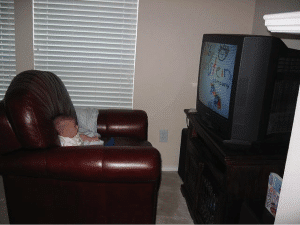
Did Baby Einstein Videos Enrich Baby’s Learning?

Despite the appeal and wild success of Baby Einstein, the research failed to demonstrate that Baby Einstein videos did what was promised to consumers. As a result, the Campaign for a Commercial Free Childhood (CCFC) pressured the company into providing a $15.99 refund to anyone who purchased a Baby Einstein video between June 5, 2004 and September 4, 2009. Furthermore, the Baby Einstein website agreed to no longer offers DVDs or videos. Due to ethical labeling requirements, they can also no longer label their videos as “educational.” It appears that the Baby Einstein generations did not produce Einsteins after all . . . but what about today’s screen products?

Congratulations and thank you to Alanna Dantona, CSUCI intern, for co-authoring this awesome GKIS article! Want to know WHAT the research found and what this has meant for other companies that produce educational software for young children? Check out part two of the three-part series, “The Downfall of Baby Einstein.”

I’m the mom psychologist who will help you GetYourKidsInternetSafe.

Onward to More Awesome Parenting,

Tracy S. Bennett, Ph.D.
Mom, Clinical Psychologist, CSUCI Adjunct Faculty
GetKidsInternetSafe.com

Works Cited

Baby Einstein Recall: Refunds Offered on Educational DVDs. (2009, October 26). Retrieved from http://study.com/articles/Baby_Einstein_Recall_Refunds_Offered_on_Educational_DVDs.html

Garrard, C. (2009). Big Idea: Meet the Creator of Baby Einstein. Retrieved from http://www.parents.com/baby/development/intellectual/baby-einstein-creator/

Thomas, S. G. (2007). Buy, buy baby: How consumer culture manipulates parents and harms young minds. Boston: Houghton Mifflin.

Photo Credits

Untitled By Venturist, BY CC 2.0

Mason Watching Baby Einstein by .imelda, BY CC 2.0

Baby Einstein by Pablo Orezzoli, BY CC 2.0

Cyberbullies, RATs, and Online Predators. Two Things You Can Do To Protect Your Kids From Online Dirtbaggery


blog60family

Originally published by Kids in the House

The C.S. Mott Children’s Hospital National Poll on Children’s Health found that parents rank INTERNET SAFETY as number 4 (up from 8th in 2014) for biggest child health concern and SEXTING as number 6 (up from 13th). You know why parents are getting so concerned? Because they need to be!

Let’s be honest here. Kids want Internet access like a crack addict wants a hit. And so do we! Screen media is our favorite past time. Those elegant screens clutched in our greedy hands feed us delicious content that we gobble up too many minutes of our day. Kids love it too. And parents are conflicted about what to do about that.

If we disallow it, our kids are dependent on us for entertainment. Keeping them happy and busy without screens is exhausting! Our parents chased us outside to run with the neighborhood kids. When we reminisce about being latch key kids, we tell stories of the eight shades of happy peril we were regularly in. We don’t want our kids in any shade of peril. We want them tucked in the safety of our homes. As a result, we have agreed to be in their constant servitude. Poor us. Poor them.

We do the best we can to keep them busy. Then we worry they’re too busy! What do we rely on when we’ve run out of ideas? Screen media! My daughter’s first love, besides her parents and her poodle Buster, was her purple stuffed Barney. I guiltily admit she was so sold on that annoying talking dinosaur she was a successfully branded consumer by toddlerhood. Every morning while I made breakfast she sat in front of the TV in her expertly branded Disney princess feety jammies and Mickey Mouse toddler chair. I allowed Disney to have that kind of influence on my kid, because I didn’t consider it that harmful and television gave me a moment’s peace. Parents today have even a bigger dilemma with so many screen devices.

Consumer branding is the least of our worries these days. The Internet offers amazing vistas for education, but parents have a tough time managing it effectively. In response to the sad outcomes to poor screen management I was seeing in private practice, I created parenting programs like the GetKidsInternetSafe Screen Safety Toolkit to help families avoid online dangers. I’m aware that parents want to dismiss the GetKidsInternetSafe (GKIS) message as sanctimonious hysteria. If I could forget what I know, believe me I would too. You know what we moms want to read? We want snarky articles about the pleasures of red wine and celebrity bashing and to avoid scary information that makes us feel guilty and scare the crap out of us.

So, admittedly, here I am delivering today’s informational kale salad with a bit of fun snark. And the good news? I’m not going to leave it at the scary stuff. Here are some parenting maneuvers you can do today to prevent tragedy and build your child’s resilience, hopefully avoiding a trip to the psychologist’s office down the line.

  1. If your child is allowed Internet access, ongoing dialogue for education and skill-building is a must.

I know this kind of sucks for us. It takes time to research what to talk about so we don’t blow our credibility stringing together sensational media headlines like our parents did about pot. We also risk annihilating their sense of safety telling them about online predators and risk.

But it doesn’t have to be an awkward or terrifying one-time lecture. Skill building is important for little kids to teens. It just takes targeted conversation and lots of listening. With an eye on the news and an occasional follow of a free online safety blog like GetKidsInternetSafe, you have the information you need to introduce topics into family conversation that are cooperative and positive rather than threatening and exaggerated. The best part is that every conversation builds that important parent-child connection.

How can you get a conversation started? It can go something like this, “Did you hear about the dad that cyberbullied the cyberbully yesterday? He got fed up with a kid harassing his daughter on Snapchat so he posted a video talking about the kid’s dad. Do you think he did the right thing?” You can even show the video. By avoiding shaming lectures and staying curious and positive, it will become evident that you are their go-to person and have their backs online as well as offline.

What topics should you cover? The same kind of social skills you talk to them about in their offline world. How about start with digital citizenship. Introduce how to respond to cyberbullying and, if they’re older, the risks of sextortion. Dialogue provides opportunity for education and skill building. It’s not enough to just introduce the issues, tell your kids details, like how to recognize the manipulative techniques online predators use to groom their victims. With this information your kids will be that much more resilient should a predator get through your controls.

Even easy cybersecurity strategies, like a post-it note over your computer’s camera lense, may cripple a Remote Access Trojan’s (RAT) ability to take over your computer’s camera. Beyond educating and skill building, there’s another thing parents need to do to get their kids Internet safe.

2. Install filtering and monitoring apps and software.

One day of installation can prevent months of online risk. If your kids are little, that means installing filtering tools like child-safe browsers and setting parental controls. If your kids are older, manage their use of social media apps and add monitoring software. Let them know you’re supervising their screen use, because lying and sneaking may harm the very connection that your dialogue has nurtured.

Although kids will initially complain about monitoring strategies, it’s not a mystery to anybody why parents need to parent online as well as offline. You may not be the über mom servant of their dreams, but we are all just doing the best we can, aren’t we?

I’d love to hear how your screen media strategies are faring on the GetKidsInternetSafe Facebook page. If you’d like more suggestions on staging your home for screen safety success, check out the GKIS Connected Family Online Course.

I’m the mom psychologist who will help you GetYourKidsInternetSafe.

Onward to More Awesome Parenting,

Tracy S. Bennett, Ph.D.
Mom, Clinical Psychologist, CSUCI Adjunct Faculty

GetKidsInternetSafe

The Sting of the Loveless Troll. What It Teaches Us About Kindness.

blog-60-snoopyautograph

Originally published by Sammiches and Psych Meds

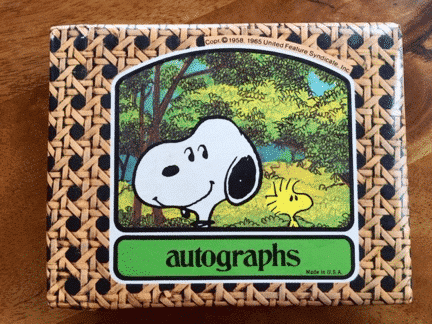
When I was in fifth grade I got a Snoopy autograph book to commemorate my move to the fifth school since starting kindergarten. Although nervous, it would mark another opportunity for resilience in my life of many shifting directions. I loved that autograph book with its padded glossy cover and subtle rainbow of pastel pages. I took it to school and asked my friends to autograph it for me. Here are some classic quotes (misspellings intentional):

  • UR2 good + 2be=4gotten. Wendy ‘79

  • Remember M, Remember E, but most of all remember ME. From, Marcie

  • You have bean a greet freind, stay that way good luck in 6th good dancing remember your old freind Steve

  • And from my very best friend: Dear Tracy, I think your very nice and you are fun to play with. Sincerely Yours, Theresa

How sweet is it that a kid’s first instinct is to be complimentary and polite. Especially at 11 years old, it seems to be a bit of a miracle my vulnerable request for a wish-you-well wasn’t ruined with a trollish comment. Perhaps they were more innocent days then. Or maybe it’s because those kids had to see my eager face when they handed me back my treasured autograph book and would not have risked seeing me hurt. For today’s kids, the sting of the loveless troll happens soon after they start using social media. Check out Ask.fm if you’d like to see the brutal forced-choice game of kiss, f*&k, or marry, or worse than that, anonymous questions inviting insults and harassment.

However today’s article is less about how online verbal assault hurts its victims, because it just does. Instead I’d like to focus on how much love and validation helps. Because all these years later, what I really learned from my Snoopy autograph book is to cherish those who truly know and champion me. Here’s the message from lavender page 3 from my number one fan:

Tuffy,

You have a real neat personality and a sensitivity that will always bring you close friendships but it will also cause you to have hurt feelings because others are not always as thoughtful as you. Always keep that cute little smile.

Love, Dad

PS You almost won the bike race.

I think my dad called me Tuffy in the ironic sense, although he’d never admit it. The family legend is that a neighborhood boy was picking on my 5 year-old sister, and at 2 years old I walked up and bit him on the nose – earning the nickname Tuffy. Being that I’m a bit of a chicken, I can’t imagine this is true. But then again, I’ll take a bullet protecting the underdog still…so there it is.

As a psychologist in my twentieth year of private practice, I’ve channeled that sensitivity both personally and professionally and adopted my dad’s validation and championing skills. It nourishes my soul to be of service. To see somebody blossom from the meekness fed by the shaming judgment of others into the courage to step forward and speak their truth is a privilege to witness.

blog60troll

It’s a tough balance to care for those we love while simultaneously nurturing ourselves. Whether it’s the desire to please others or the necessity of sacrificing as a caregiver, it’s just too easy to put yourself last. And so often, people will criticize to make sure you stay last. One of my most memorable AH-HA moments is when I realized that it’s a compliment when certain people hate you. Relationships based on feelings that form an inverse relationship (they get jealous when you do well) are a total waste of time. If comments are hurtful or not constructive, then it’s none of my business what others think of me.

But tell that to the Internet. Social psychologists can attest to the bold cloak of anonymity and how otherwise meek people will self-righteously hop on a hostile bandwagon. The famous Stanford experiment demonstrated how college students will morph into brutal prison guards when given a role to play. And remember how the Milgram and Asch experiments demonstrated how easy it is to influence people into brutality or false eyewitness with an authoritative instruction or through peer influence?

Anonymity and the immediacy of sharing momentary feelings with thousands turns the Internet into Lord of the Flies. Subtweets, flaming, social media shaming, and trollish online comments reflect a shameful display of the worst of what it is to be human. Not that haters are new. After all, even Mother Theresa, Ghandi, and Jesus Christ had haters. But let me tell you a story about how, just because there’s a time-honored tradition, doesn’t mean being an a-hole is acceptable, even if you think it’s in the self-righteous name of kindness.

***

In our community lives a proud, elderly rancher who owns a feed store. We will call him Ben. He’s the kind of man who serves customers sunrise to sunset without complaint and still has time leftover to volunteer for kids. If you need to know how to care for your first bunny, just stop by and he’ll give you all the free guidance you need. Hold a chick? He’s your guy. Every single time we’ve visited over the years, and that’s often, he encourages my kids to give their mom and hug and say, “I love you,” which he promptly rewards with a grin and handful of chocolate. He even lets you return your chick weeks later if it turns out you nurtured a rooster. All in all, from my view as his frequent customer, Ben is an amazing man.

One day I got messaged from a friend that said Ben got an unpleasant Yelp review about his business. His only review at that, go figure. Why do only the complainers leave online reviews? It turns out that an animal lover came by his store and saw a calf out in the rain. After insisting that the worker at the desk craft a shelter for the calf (keep in mind it was 65 degrees), the customer returned to build it himself. He then posted a scathing review about how the store owner, Ben, is cruel to animals.

Now, if you frequent the store as often as we do, you’d realize that that calf is named Princess and is perhaps the most spoiled animal alive. She was orphaned young so the store owner brought her to work to hang out at the neighboring veterinary hospital’s back yard. She comes when called to get her treats and is visited by the little ones of the town often. It’s arguable if calves need a roof on a sprinkling Southern California day, but honestly she usually has one. It turned out that that was one of those rare moments Ben wasn’t even manning the store. What was seemingly an attempt to champion a soggy calf ended up hurting a hard-working store owner with decades of generous service under his belt. Rumor had it that Ben teared up when he read the Yelp review (although he’d deny it).

So in defense of Ben, I and some other customers posted what this feed store really means to our kids and the community. We quickly watered down that one star with love and loyalty. The next time my kids went in to pet the chicks and shyly accept their chocolate, he looked at me with a twinkle and reminded me what’s really important in this life, that we must be careful how we champion those who are wronged and sing even louder for those who love. It was a beautiful lesson for my kids to return Ben’s kindness.

Next time you want to rant about your bad day online, remember that there’s a real person with years of invested sweat and tears on the other side. Maybe your time would be better spent being a champion to those who did go the extra mile for you rather than tearing those down who didn’t. And if you’re stinging from a cyberbullying comment by a loveless troll, remember what Winston Churchill once said, “You have enemies? Good. That means you’ve stood up for something, sometime in your life.”

This article is dedicated to those who nurture themselves as well as others and for the courage to follow your dreams. Drown out the trolls by posting some well-earned 5 star reviews today. It matters. I know the emails I get from my awesome GKIS subscribers and Facebook followers mean the world to me! And if you’re a parent, keep your eye out for social media apps that allow anonymity or a false alias. They are a cyberbully’s paradise, and your child won’t recognize the sting of the loveless troll unless they’re already hurting from it.

I’m the mom psychologist who will help you GetYourKidsInternetSafe.

Onward to More Awesome Parenting,

Tracy S. Bennett, Ph.D.
Mom, Clinical Psychologist, CSUCI Adjunct Faculty
GetKidsInternetSafe.com


If—

BY RUDYARD KIPLING

(‘Brother Square-Toes’—Rewards and Fairies)

If you can keep your head when all about you

Are losing theirs and blaming it on you,

If you can trust yourself when all men doubt you,

But make allowance for their doubting too;

If you can wait and not be tired by waiting,

Or being lied about, don’t deal in lies,

Or being hated, don’t give way to hating,

And yet don’t look too good, nor talk too wise:

If you can dream—and not make dreams your master;

If you can think—and not make thoughts your aim;

If you can meet with Triumph and Disaster

And treat those two impostors just the same;

If you can bear to hear the truth you’ve spoken

Twisted by knaves to make a trap for fools,

Or watch the things you gave your life to, broken,

And stoop and build ’em up with worn-out tools:

If you can make one heap of all your winnings

And risk it on one turn of pitch-and-toss,

And lose, and start again at your beginnings

And never breathe a word about your loss;

If you can force your heart and nerve and sinew

To serve your turn long after they are gone,

And so hold on when there is nothing in you

Except the Will which says to them: ‘Hold on!’

If you can talk with crowds and keep your virtue,

Or walk with Kings—nor lose the common touch,

If neither foes nor loving friends can hurt you,

If all men count with you, but none too much;

If you can fill the unforgiving minute

With sixty seconds’ worth of distance run,

Yours is the Earth and everything that’s in it,

And—which is more—you’ll be a Man, my son!

Photo credits:

fin dac-jade by dug_da_bug, CC by-NC-ND 2.0

http://www.newyorker.com/culture/cultural-comment/its-comments-all-the-way-down?mbid=social_facebook

12 Things Exceptional Parents Do Everyday

blog42family-two-children Originally published by The Good Men Project

We all have million tasks to do in a day with little time to do them. But we can all agree that parenting is our most important and gratifying job. Have you ever heard the saying “parenting is all joy and no fun?” Today’s GetKidsInternetSafe article offers fresh tips about how to make it joyful and fun! What do exceptional parents do everyday?

  1. They turn toward their kids when they walk into the room and allow their faces to *light* up with adoration.

Of course we are attached to our children, but the day’s endless tasks often get in the way of our showing it. When kids feel overlooked they seek attention in all the wrong ways on- and offline. Make sure they know they are numero uno in your home and that you will set things aside when they need you.

  1. They are interested in their kids’ day-to-day happenings on- and off-line and ask follow-up questions about them (“So how did it go?”)

If you don’t ask, they won’t tell. The best way to really get to know your kids is hearing all about their thoughts, feelings, and daily interests. If they feel you are interested, they are more likely to come to you about the things that are important, both the fun and the scary. Nobody knows them as well as you do, but just like with marriage, profound connection takes consistent effort. And at every age your child transforms into a more complex being. Make them your most passionate hobby! 

  1. They have a sense of humor about their own screw-ups and are quick to accept and forgive their children’s mistakes as well.

If we want our children to work through their pain with self-compassion and wisdom, we must practice it ourselves. We are more likely to be our true selves in front of our kids than anybody else. In order for them to learn, we must show them the good, the bad, and the healing. Saying to them, “I’m sorry, I really could have handled that much better,” is a generous gift. They’ll love and respect you, and themselves, more if you teach them how to be compassionate and forgiving. Failure is going to happen if you are learning new things. Embrace it! 

  1. They plan fun family activities with happy sing-along music, cleansing outdoor activity, and hilarious light-hearted banter.

There is no better conduit to your inner child than playing whole-heartedly with your kids. Get away from your screen media, melt into the present, experience the wonder, belly laugh, and LIVE FULLY!

blog42grandcanyon

  1. They understand that humor, slang, and interests are different for kids than adults on- and off-line and don’t get threatened or contemptuous about it.

Childhood may have been forever ago, but it’s worth your time to take a memory journey and get in touch with how it felt. Just like our offspring, we were impulsive, ridiculous, silly, and reckless. But now they have the World Wide Web to stumble around in, which each step forever recorded in a digital footprint. Filter their exposure to the damaging stuff along the way, and when they do run into trouble (and they will), gently coach them through it. 

  1. They refrain from lecturing because they realize that adult solutions don’t work within kid social culture.

Saying, “That hurt my feelings, please don’t do that,” honestly may not get them very far in the schoolyard. Kids are more expert than parents are when it comes to maneuvering through the brutal gauntlet of childhood friendships. Empower them with your trust and encouragement instead of annihilating their confidence with shaming lectures and demands. Encourage good choices but don’t pick their friends or make their decisions for them.

  1. They put the effort in to have a working knowledge of screen media and show a genuine interest.

The ONLY way to stay a step ahead of your kids and protect them online is to study up and get proficient on the fourth literacy (reading, writing, arithmetic, digital). GetKidsInternetSafe 30 Days to Internet Safety was created to help you with that. It’s simple, easy, and comprehensive.
blog44typinghands

  1. They expect their kids to sneak so they simply eliminate the opportunity rather than shame them when it happens.

In my psychology practice I celebrate when kids are successful and strategic. If their gray matter is firing, they will try some sneaky solutions to solve problems on occasion. Skilled parents accept that. Rather than providing them with opportunity to sneak and then punishing them for it, instead disable screen media during blackout times. Just because you say “no” doesn’t mean your kids will comply. Expect the best of them, but don’t freak out when they have immature judgment. The prefrontal regions of their brains (the part responsible for attention, concentration, organization, and decision making) won’t be done cooking until they are 23 years old. Be realistic in your expectations of them. 

  1. They initially limit access to inappropriate video games and social media and then gradually lighten up as it becomes developmentally appropriate.

Overdoing it by blindly blocking screen media may not only be upsetting to kids, but crippling to them as well. Like it or not, screen media is the way of the world and becoming digitally literate when they’re young may benefit your kids academically and socially. Are you being too restrictive or too permissive out of fear or laziness? These are definitely questions worth asking yourself.

  1. They present family rules and regulation in a clear, honest way so kids don’t have to guess about what is or is not acceptable.

The GKIS Living Agreement is a brilliant tool for helping parents spell out screen media limits in a simple, comprehensive format that is flexible enough to change as your children’s needs change. Being proactive with your parenting is always better than being reactive. 

  1. They are respectful of their kids’ privacy and check screen media sparingly rather than being intrusive and creepy. Most importantly, great parents are honest and up-front rather than electronically spying and lying.

As a clinician, I see that some of the most damaged parent-child relationships got that way because parents were brutally over-controlling or too permissive with their children. The healthiest parenting strategies incorporate teaching, discussion, and opportunity for independent exploration and growth. It may feel good to you to be a critical decision-maker in your children’s lives, but it’s likely not in the best interest of your children. Child neglect and helicoptering won’t bring you closer to your kids, and will harm them in the long run. Great parents nurture rather than neglect or smother. Younger kids need stricter blocking and monitoring while older kids must be allowed to earn gradual independence. Allowing them some opportunity for failure is a healthy way to teach resilience. Just be there when they fall for wisdom and warmth.

blog44plantcomputer

  1. They realize that their kids aren’t responsible for the online behavior of others. Viewing is not the same as creating the content.

No matter how tempted you are to freak out when your kids run across something inappropriate on- or offline, do your best not to freak out. Even though it is scary when your children find a gap in your safety net, it’s bound to happen. Keep your perspective and don’t be too hard on them. Curiosity and exploration is healthy and will lead them to scary places on occasion. It’s unavoidable. Don’t let your fear or guilt transfer into shaming them when it happens. It’s best to compassionately and gently guide them through.

If you like what you’ve read and want more free GKIS parenting tips, go to www.GetKidsInternetSafe.com/cyberbullyguide to hear about my most recent tip that will help you protect your kids from cyberbullying.

I’m the mom psychologist who will help you GetYourKidsInternetSafe.

Onward to More Awesome Parenting,

Tracy S. Bennett, Ph.D.
Mom, Clinical Psychologist, CSUCI Adjunct Faculty
GetKidsInternetSafe.com

Hey Mom, Your Fifteen Year-Old Boy is Acting Like an Internet Predator

blog42internetpredator

Originally published by The Good Men Project

Earlier this week The Good Men Project published my article, “Hey Dad, Your Twelve Year-Old Daughter Has a “Nude Out,” and it’s getting some justified attention (over 20,000 views and 8,000 FB shares). As I watched the FaceBook share number rise, I realized that my title made the victim (the younger girl) the active agent instead of the predator (the older boy). Isn’t that kind of blaming the victim? Shouldn’t the boy be the agent in my title considering he is older, being coercive, and has intent to deceive in this scenario? But then again, predator is probably a harsh word for a goofy impulsive teenage boy, or is it? To make it more complicated, sometimes the girls are more willing to pose and distribute their “sexy” image than the boys are willing to receive it. Ultimately, both the boy and the girl may suffer serious moral and legal consequences. Join me in tackling this issue by considering what you want for your kids and how we might facilitate their delicate and important journey toward good judgment, compassionate morality, and sexual power.

Last week’s article detailed a spooky teen “trend” that I learned from teen clients in my private practice. This trend involves a well-traveled digital bridge between middle school girls and high school boys where high school boys deliberately plot and groom middle school girls to send sexy pictures via text. The boys then assign point values, share, and trade with their friends a la human Pokémon cards. Seriously, this topic makes me rant, and for good reason.

Admittedly, I’m somewhat conflicted in my feelings. On the one hand, I’m angry that a boy grooming a girl to expose herself on screen media at such a painfully tender age is manipulative, selfish, and potentially very damaging to both of them. And for the boy to share it without her consent is frankly criminal and makes him (and the girl) vulnerable to child pornography and revenge porn charges. But is it predatory? After all, let’s face it, teenage boys are pretty much drunk from a brain newly flooded with testosterone and their frontal lobe won’t be done developing until they’re around 23 years old. What’s more, the thousands of sexualized images of women, and to a lesser degree men, that bombard our kids on screen media everyday fuels this objectification. Even our adult culture has a long way to go to responsibly and sensibly deal with issues like intimacy and sexuality. The multi-billion dollar porn industry and lecherous sexual trolling on adult dating sites are testament to that.

I’m also angry with the girls for participating. What does it mean that so many young women willingly release images of their blossoming sexuality for praise, status, and attention? (Insert snarky comment about the queen of all sheep-wolves, Kim Kardashian, and her new bajillion-dollar-earning book of selfies here). Ugh. As parents, we want them to value all that they are, but not by posing languidly for the lecherous consumption of strangers. And unlike any time in history, it’s too easy to turn a confusingly sexy impulse into a consequence that may be in play for years to come. With this enormous technological power comes enormous risk. In such a complex digital landscape, kids need our involvement in their day to day decisions more than ever.

As a psychologist, I notice two glaring mistakes that parents make when dealing with these issues. First, they start too late. If you’re waiting until your kids are teens before you talk about gender, sexuality, and personal privacy rights, you are starting too late.

The second mistake parents make is they only challenge their daughters with discussion and leave their sons out of it. The digital bridge observation illuminates that we must teach girls AND boys to be respectful, nurturing, and responsible. Sexual education and social problem solving must happen with both genders. You’d be shocked how few boys raise their hands in my university class when we discuss who received sexual education in their homes. And the girls admit that most of their parents were only willing to awkwardly mutter quick comments about menstruation. There’s soooo much more to it than that!

In an effort to “walk the walk,” my husband and I staged a discussion about some of these issues over dinner last night. Although it admittedly deteriorated into goofy comments and sticky marshmallow spills on occasion, some awesome insights emerged.

My kids asked that I use discretion and not discuss their comments in a public article, but I loved the concept my Navy veteran husband used to help illuminate the issue of assertiveness and social responsibility. The quote comes from Lt. Col. Dave Grossman and Stephanie Rogish’s book, Sheepdog Meet Our Nation’s Warriors A Children’s and Educator’s Book:

If you have no capacity for violence then you are a healthy productive citizen: a sheep. If you have a capacity for violence and no empathy for your fellow citizens, then you have defined an aggressive sociopath—a wolf. But what if you have a capacity for violence, and a deep love for your fellow citizens? Then you are a sheepdog, a warrior, someone who is walking the hero’s path.

A little heavy for our thirteen year-old daughter and eleven year-old son perhaps? Initially, yes! In fact, at one point in the discussion my son looked at me and pleaded, “But I love wolves! Why can’t I be a wolf?” clearly missing the metaphorical value of Grossman’s insights. But we persevered in explaining to him what being a “good man” and a “good woman” means to us. We didn’t lecture. We listened and encouraged knowing that this discussion would happen over and over for years to come in many different forms. We taught them that “wrong” happens the moment you’ve hurt yourself or another human being, not just when you’re caught. Most of all, we reassured them that we will be there for them every step along the way, when they do things they are proud of and when they make mistakes. We reminded them that nobody can do this alone, and we are in it together.
blog42backpacks

Here are some of the points we considered that might facilitate your discussion with your family around the dinner table tonight:

  • People are far more than a body part. Behind every text, image, and idea is a human being with thoughts, feelings, and value. Treating yourself or others as an object instead of a person is demeaning.
  • Screen media is a powerful tool. Once your hit “send,” that text, image, or video can never be taken back. Consider if it would be OK to show it on the screen in a school assembly before you send it to anybody. And parents, if you need help don’t hesitate to reach out to the school administration or the police. They are well versed in these issues and have specially-trained personnel. It’s rarely a good idea to approach the other children involved or their parents for that matter.
  • Save private interactions for face-to-face relationships. If it’s on screen media, it’s unlikely to stay private.
  • Collecting “likes” is not love. Sometimes it’s even the opposite.
  • Represent yourself online just as you would offline. Character matters.

Although parents don’t want to admit it, romance and sex titillates people of all ages, even children. As adolescent hormones come online those pressures increase. The world gets all that much more overwhelming and confusing as teens learn to drive their new brains. A middle school girl recently told me that a boy came up to her and said, “I can’t decide if you’re a slut or a nerd.” This disclosure launched an important discussion about what those words mean and what he was trying to accomplish by demeaning her with them. From this discussion she insisted she would not cower like a sheep, and I promised to encourage boys not to be wolves. What do you want for your sons and daughters?

I’m the mom psychologist who will help you GetYourKidsInternetSafe.

Onward to More Awesome Parenting,

Tracy S. Bennett, Ph.D.
Mom, Clinical Psychologist, CSUCI Adjunct Faculty
GetKidsInternetSafe.com

Link to Lt. Col. Dave Grossman and Stephanie Rogish’s book, Sheepdog Meet Our Nation’s Warriors A Children’s and Educator’s Book

What Parents Need to Cover About Kim Kardashian’s Un-covering

BLOGBCkkcover1rgbwatermark-221x300

There’s nothing like Kim Kardashian’s greased assets to make a mother get honest about female empowerment. I mean, I think the female form is beautiful. In general, I’m all for nudity!

Until…

I am intrusively confronted with it greasily slinking out of sequins and “breaking the Internet.”

I reflect that the photograph was brilliantly strategized to promote the Kardashian’s multimillion-dollar celebrity profile.

I am struck that our children and teenagers are soaking in this slick marketing technique as the way to get self worth (and millions more Twitter followers). And in many instances, are emulating her…down to the detailed cosmetic application, hairstyle, and nude selfies. And more seriously, mimicking the polished and languid avoidance of topics deeper than “favorite looks.”

 ****

Are you freaked out now? Well you should be if you’re a parent and have functioning grey matter. I mean honestly, did you read the article that accompanied the photos in Paper Magazine? Amanda Fortini did a great job addressing Kim Kardashian’s brilliant execution of celebrity fortune, including a mocking observation that Kim’s “perceived lack of accomplishment is also, perhaps, an accomplishment in itself.” Fortini did such a great job, that after reading the article I was left dumbfounded and disturbed.

Between celebrity trash culture turned on our TV channels and our obscene pursuits of impossible beauty standards, we have nearly annihilated the intelligent female image our mother’s fought for in the ‘60’s. I’m dismayed to hear stories from my college students that they must have to have a male escort at parties or feel at risk for being publicly grabbed or otherwise sexually assaulted! I can assure you, as a teenager in the ‘80’s, I was never worried about my shoulder padded, neon outfitted parts being groped during a party simply because I had parts.

What has happened to female empowerment? Kim’s nudie-shootie screams as a call to action for parents everywhere to start teaching their kids about self worth, sexuality, and the true meaning of social media likes.

Tips to help ensure our kids blossom into proud, intelligent, self-honoring adults:

  • Don’t take nude or provocative selfies. Although your body is beautiful, exciting, and fun, a digital blast of it is not something you can control. You may think the message is your ownership of sexy, but the cutting criticism and mocking of others is not the messaging you want to have or that you can control. If Kim Kardashian’s style team can’t stop people from annihilating her with despicable criticisms, neither can you. As a thinking human being you have a responsibility to protect yourself from others being emotionally abusive just for the fun of it. Honor yourself by loving and protecting your body and the heart that it harbors.
  • The true seed of self worth comes from your soul, not your private parts. Who you are comes from intelligent reflection and acts of true kindness, not from social media exposure. Social media is fun, but means nothing beyond that. Keep it in perspective.
  • Your body, with all of its uniqueness, is powerfully worthy of love. We don’t have to have Kim’s skin which is the “golden color of whiskey, is free of wrinkles, crow’s feet, laugh lines, blemishes, freckles, moles, under-eye circles, scars, errant eyebrow hairs or human flaws of any kind” to radiate true beauty. We are beautiful in the way we were born, not in the way we are digitally altered.
  • Wasting two hours executing a torturous beauty regimen is a waste of precious moments. Spend 15 minutes accentuating your “cute,” and the remaining 105 soaking in the true pleasures in your life, like your family, friends, pets, and the sunny blue sky. Those moments have true meaning, not eyeliner and mascara applications.
  • Kim’s last marriage lasted 72 days. She simply doesn’t have it right. But as a human being, she’s welcome to her journey without us hating on her…or emulating her. Our time is best spent becoming the best we can be. If Kim’s best is “her perceived lack of accomplishment,” then I challenge you to leave her to it. As the loving protectors of our children, our energies are best spent making sure our children aim far higher. Let’s love and support them in that journey by giving them our time, our validation, and our wisdom from lives lived passionately.

I’m the mom psychologist who will help you GetKidsInternetSafe.

Onward to More Awesome Parenting,

Tracy S. Bennett, Ph.D.
Mom, Clinical Psychologist, CSUCI Adjunct Faculty
www.GetKidsInternetSafe.com