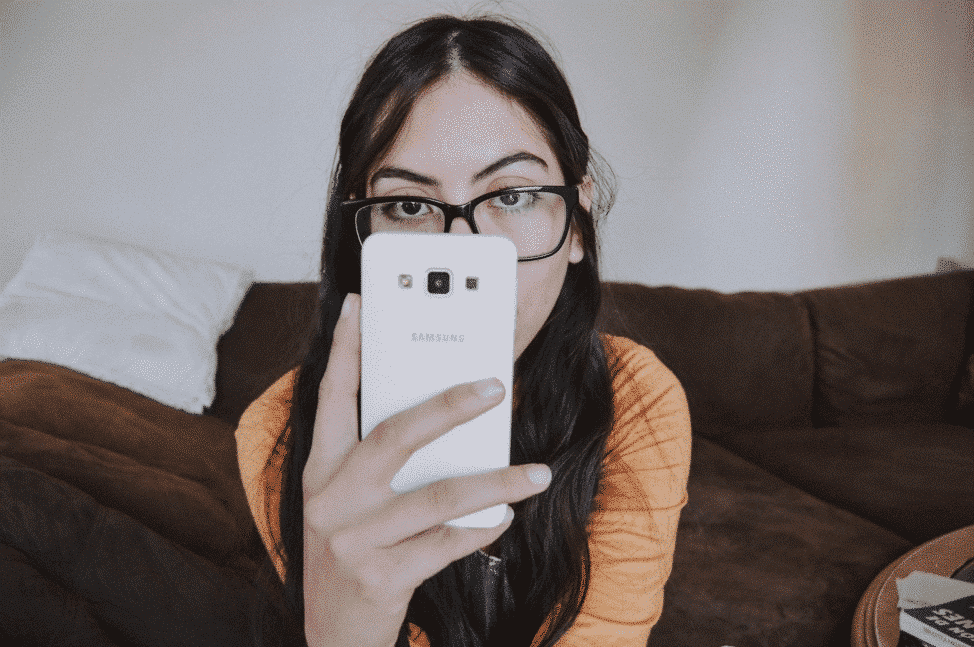
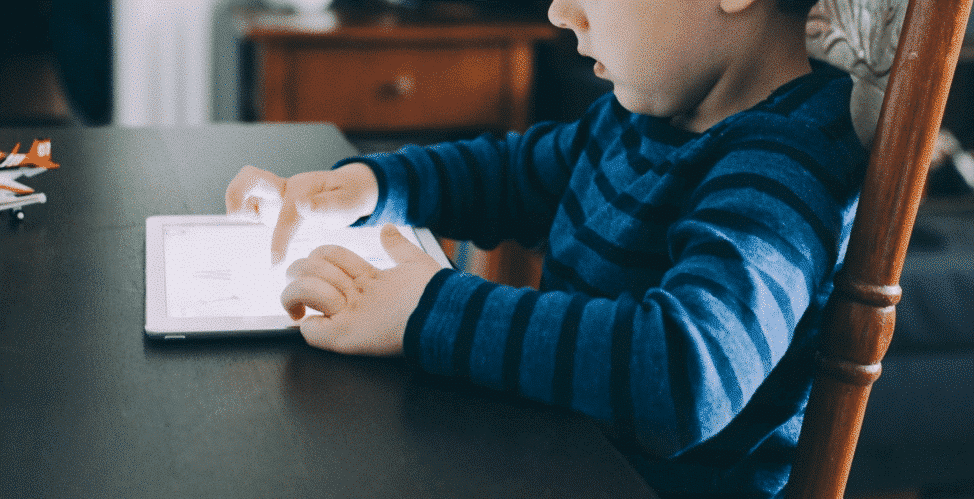
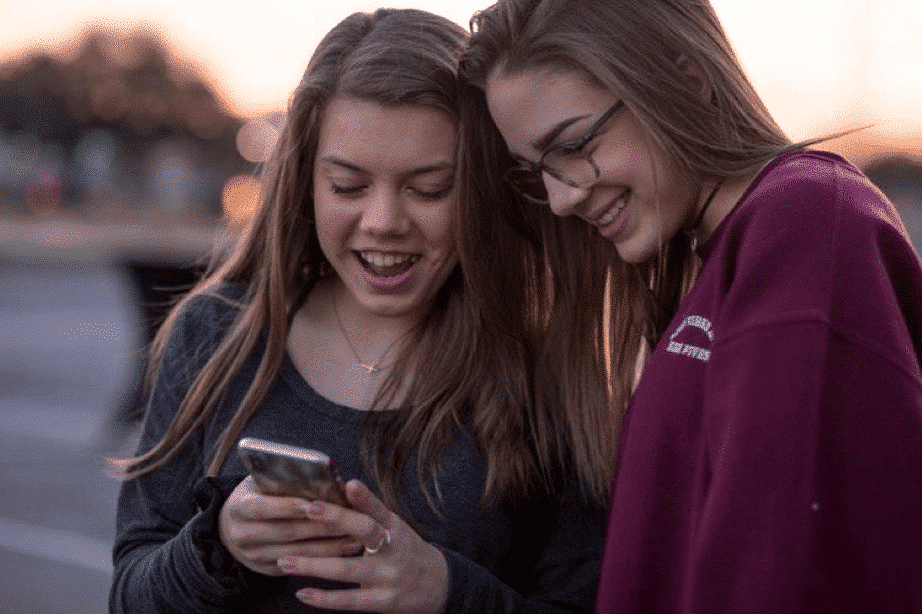
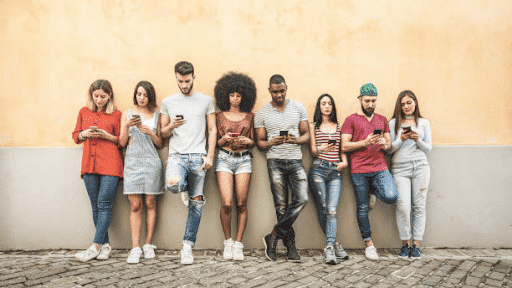
The creation of the Internet has transformed society in every way imaginable, and 84% of us use it every day.[1] The two generations that grew up with the Internet are millennials and generation Z. You may be surprised at how differently these two groups use it, and how it’s affected them as human beings overall. Today’s GKIS article highlights the difference between teens and young adults and those who are 25 and older. If you’d like to help prepare your gen Z’s for healthy Internet media consumption by building good habits and communication, check out our Screen Safety Essentials Course.
What defines a generation?
A generation refers to all people born and living around the same time. The average period of a generation is 20 to 30 years, and the cutoffs are defined by when people become adults and start having children of their own. Although the specific years that group a generation is often up for debate, for our purposes we define millennials to be anyone born between 1981 and 1996 and generation Z to be anyone born between 1997 and 2012. That means millennials are currently between the ages of 26 and 41, and Gen Zs are between the ages of 10 and 25. Millennials were in their teen years when they first started using social media and gen Z’s were still children when they ventured into online neighborhoods independently.
Millennials and the Internet: Jackie’s POV
To gather better insight into how millennials view and interact with the internet, I interviewed Jackie (age 25).
Jackie started using Instagram and Facebook when she was 16 years old. She considers the biggest impact social media had on her was the comparison. Comparing her social media posts to others’ posts was the biggest issue she thinks she faced. It’s an issue for her because when she would compare posts, insecurities often arose. She said that constantly seeing others’ posts of selfies, vacation pictures, and pictures with significant others and friends made her feel inadequate, especially when she was much younger. She overcame those issues by no longer using social media as often.
Gen Z and the Internet: Sophia’s POV
To better understand gen Z’s views and interactions with the internet, I interviewed Sophia (age 12) about her experiences.
Sophia started using social media when she was 10 years old, specifically Snapchat and TikTok. She feels that the biggest impact social media had on her was the concern of appearing ‘cringe’ online and in front of others in real life. Micro-managing one’s appearance and mannerisms is another problem many gen Zs face. Snapchat and TikTok often contain videos of people recording others doing things, sometimes without their knowledge. Certain behaviors are labeled as ‘cringe’ or ‘embarrassing’ by others in comment sections. Nowadays, she says she still uses social media often but not as much as she used to, claiming she used to be glued to her screen 24/7 when she first started.
Compare and Despair
The biggest similarity between the two is the micro-management of what is shared online. Many are concerned with how they’re perceived on social media in addition to comparing their lives to others. Curating the perfect image or life is something that seems to be an issue for many social media users regardless of age.
The negativity and insecurities that come from social media aren’t age-restricted. However, it can have a particularly heavy effect on tweens and teens. Our Social Media Readiness Course can help with that. By teaching kids the red flags of digital injury and clinically tested psychological wellness tools, we can help prepare your kids for safer screen use and prevent feelings of inadequacy, low self-esteem, and the desire to compare online.
More Access and More Influence on Self-Identity
Taking both interviews and research into consideration, it seems that there are both similarities and differences in how both generations interact with the Internet. The biggest difference is that gen Z has been exposed to social media much younger than millennials before they solidly formed self-identity. Further, more social media platforms and sophisticated personal mobile devices were available to them – giving them almost constant, on-demand, mutual contact with peers and strangers.
Parent Replacement
In addition, more parents were inclined to help introduce technology to gen Z children. Smartphones became a sort of transitional object assigned by parents as their substitute.[2] This is something millennial children never experienced because smartphones weren’t around when they were toddlers and young children.
More Competence and Confidence Online
Those exposed to the Internet at younger ages tend to be more savvy and aware of online dangers. Research demonstrates that gen Zs tend to have more confidence protecting themselves online than people who are 25 and older.[1].
Self-Guided Learning Opportunities
Those who love to self-direct their learning argue that early browsing offered opportunities that older generations didn’t have. They say that the internet offered them a tremendous breadth of opportunity and a depth of learning as they directed themselves into deeper and deeper learning.[3]
However, from a developmental stance, gen Z kids who use such advanced technology to assist them in critical thinking and comprehension can have downsides. One is known as the Google Effect, also known as digital amnesia. By using the Internet, we end up storing less information in our biological memory, becoming less knowledgeable overall.[4] Another problem is that gen Zs use advanced search engines and smartphones to cheat by looking up answers to homework and quizzes. Learn more in our GKIS articles, The Google Effect. Because Memorizing is So Yesterday andSiri and Alexa Help Kids Cheat on Homework.
Social Impacts
Internet access at young ages can have developmental effects on social development as well. Positive aspects include convenient social management tools during interpersonal conflicts, like pause or block options for regulation and impulse control, and the creation of virtual identities for experimentation and practice.[2]
Potential negative effects include feelings of social inadequacy and exclusion, increased risk of body dysmorphic disorders, and exposure to cyberbullying and interpersonal exploitation. Insta-Famous Brings Insta-Anxiety is a GKIS blog article that touches on the risks that can arise from using social media.
GKIS Tools That Can Help
Our free GKIS blog articles are an excellent source of information, from parenting tips to media headlines, child development, and much more.
Our Screen Safety Toolkit offers a great resource guide so you can find the tools necessary to implement proper management, monitoring, and supervision to navigate the Internet more safely.
[1] Jiang, M., Tsai, H. S., Cotten, S. R., Rifon, N. J., LaRose, R., & Alhabash, S. (2016). Generational differences in online safety perceptions, knowledge, and practices. Educational Gerontology, 42(9), 621–634. https://doi-org.ezproxy.csuci.edu/10.1080/03601277.2016.1205408
[3] Ransdell, S., Kent, B., Gaillard, K. S., & Long, J. (2011). Digital immigrants fare better than digital natives due to social reliance. British Journal of Educational Technology, 42(6), 931–938. https://doi-org.ezproxy.csuci.edu/10.1111/j.1467-8535.2010.01137.x
[4] Heersmink, R. (2016). The Internet, cognitive enhancement, and the values of cognition. Minds and Machines: Journal for Artificial Intelligence, Philosophy and Cognitive Science, 26(4), 389–407. https://doi-org.ezproxy.csuci.edu/10.1007/s11023-016-9404-3
Clickbait headlines and Internet autofeeds tempt us into mindless scrolling. They soak into our memories without our awareness and tempt us to share even after only reading the headline. False information manipulates stock markets, our political views, and our purchasing. It makes us feel connected to celebrities and can divide families. Everybody has an opinion that they are happy to argue about online even if they believe it’s too rude to share at a dinner party. What is fake news? How do bots contribute to fake news? Why does fake news suck us in so expertly? And how can we avoid its seductive allure?
What is “fake news?”
Fake news is false information designed to inform opinions and tempt sharing. It could be a rumor, deliberate propaganda, or an unintended error that deceives readers.
Fake news can affect attitudes and behavior. Fake news about a celebrity may not be harmless, but chances are it won’t have a long-lasting and devastating impact. However, fake news about the spread of a virus, the necessity of medical interventions, or the intentions of a politician can have a huge impact and manipulate behavior in dangerous ways.
Bots!
In addition to the three billion human accounts on social media, there are also millions of bots.[i]Bots are created using a computer algorithm (a set of instructions used to complete a task) and work autonomously and repetitively. They can simulate human behavior on social media websites by interacting with other users and by sharing information and messages.
Bots possess artificial intelligence (AI). They can learn response patterns in different situations. Programmed to identify and target influential social media users, bots can spread fake news quickly.
According to a 2017 estimate, there were about 23 million bots on Twitter, 27 million bots on Instagram, and 140 million bots on Facebook. Altogether, that adds to 190 million bots on just three social media platforms, more than half the population of the United States.[ii]
3 Reasons Why We Get Sucked in by Fake News
With convenient on-demand internet access, we’ve gotten into the habit of greedily gulping rather than thoughtfully chewing our news. We browse instead of reading then impulsively jump to share.
A recent study found that 59% of shared articles on social media are never even read. Most social media users get their information based solely on a headline.[iii] Why are we susceptible to this form of online behavior? Are we lazy with low attention spans, or could it be something else?
Fake news is crafted to be widely appealing.
A recent study found that fake news is 70% more likely to be retweeted than true stories. A true story takes six times longer to reach 1,500 people than it takes for fake news to reach the same amount of people. Fake news is typically new and unusual information that is tested for shareability. Unlike truth, which you consume and it’s over, fake news is alive and constantly evolving.[iv]
We hear and see what we want.
An echo chamber is a metaphor for a closed online space where beliefs are repeated by different users. With each contact with that information, the information is exaggerated and the reader becomes more convinced that the content is factual and impactful.
Social media sites repetitively send us links to information based on our previous internet searches. This is called targeted advertising. It is designed to take us into a rabbit hole of single-minded desire. Not only does this sell us ideas, belief systems, and facts, but it can also get us to back politicians and influencers and ultimately spend our money. The act of unconsciously seeking out and remembering information that supports our views is called confirmation bias. Fake news feeds this bias.
Shortcuts are easier.
Heuristicsare shortcuts our minds take to make quicker decisions. They allow us to function without having to think about every action we make.
Humans are not designed to have an honest view of the world. We form our decisions based on a vague worldview supported by emotional confirmation. We search for facts that make us feel more confident and avoid or flatly reject those that don’t.
Black-and-white thinking calms our anxiety and makes us feel like we have more control. Considering complex information and complicated nuance takes more effort and time. It also requires a more informed database to work from. Most online readers don’t want to take the time to patiently and humbly build up that kind of expertise. Quick information that offers more successful shareability is a more attractive option for online communication.
3 Reasons Why We Believe It
British psychologist Karen Douglas found three criteria for why someone would believe in conspiracy theories.
The Desire for Understanding and Certainty
It’s human nature to try to explain why things happen. Evolutionarily, those who were the best problem-solvers were more likely to survive. There is an adaptive advantage for those who ask questions and quickly find answers. Easy answers ease our anxiety and simply confirm our worldview.
Conspiracy theories are also false beliefs, and those who believe in them have a vested interest in keeping them. Uncertainty is an unpleasant state. Conspiracy theories provide a sense of understanding and certainty that is comforting.
The Desire for Control and Security
We need to feel like we have control over our lives. For conspiracy theorists, this is especially true when the alternative to their belief is stressful. For instance, if global warming is true and temperatures are rising, we will have to change our lifestyles. That would be uncomfortable and costly. Instead, you could listen to influencers who assure you that global warming is a hoax so you can continue with your way of living. This is called motivated reasoning and is a strong component of belief in conspiracy theories.
The Desire to Maintain a Positive Self-Image
Research has shown that those who feel they are socially marginalized will be more likely to believe in conspiracy theories. A positive self-image is fed from our successes in our relationships and accolades from those we admire. Chatting in online forums with same-minded others brings us community and feelings of self-worth. Researching a conspiracy theory can give one a feeling of having exclusive knowledge and expertise and offer opportunities for adulation and leadership.[v]
How to Protect Ourselves from Being Duped by Fake News and Conspiracy Theories
Assess the characteristics of the article you are reading.
Is it an editorial or an opinion piece?
Who is the author?
Is the author credible?
Have they specialized in a certain field or are they a random person with an unresearched opinion?
Can you trust the information they offer?
Do they cite their sources or is the article designed to impress instead of informing?
Check the ads.
Be wary of articles containing multiple pop-ups, advertisements of items not associated with the article, or highly provocative and sexual advertisements.
Verify images.
Are the images copied from other sources or are they licensed for use by the author? Google Image Search is an easy tool to find published copies of the image.
Use fact-checking websites.
Examples are Snopes, Factcheck.org, and PolitiFact.
Research opposing views.
Check out sources with viewpoints opposing the articles you read that differ from your own opinions. To defend a point of view, you must understand the other side.
Learn to tolerate several complex ideas at once, even if it causes tension.
Smart discussion requires that we discuss the nuance of complex ideas rather than engaging in faulty or black-and-white thinking. Experts are not shy to say they don’t know something. Insecure amateurs try to fake it.
Share responsibly.
As important as it is to protect yourself from fake news, it is equally important to help protect others from fake news. Make sure to check the authenticity of an article before posting it online. If Aunt Joyce posts something inaccurate, side message her and let her know that it is fake news and how you found that information so she can better use fact-checking in the future.
Thanks to CSUCI intern, Dylan Smithson for researching the ways fake news is affecting us and how to avoid being morons online. To view some valuable news clips of Dr. Bennett’s interviews about parenting and screen safety, check out her YouTube channel at https://www.youtube.com/DRTRACYBENNETT,
I’m the mom psychologist who will help you GetKidsInternetSafe.
Your heart is racing, your chest is constricting, and it feels as if you may vomit. The logical part of your brain tries to soothe the panic that’s building in your chest by informing you it’s due to the three cups of coffee you’ve consumed in the last hour. But instead of listening to your better instincts, you turn to Google. Article after article feeds your worst fears with information about heart attacks. And just when you think your “diagnosis” can’t get any worse, a dreaded link takes you to a site for cardiac tumors. Before you know it, you are texting your mom to tell her how much you love her and escaping into social media rather than paying your bills. All you can think about is how painful it’s going to be to die from this fatal medical condition. While you are preoccupied with your heart, a muscle spasm occurs in your lower back which drives you into more panic. Now you’re convinced your kidneys are shutting down…
What is Illness Anxiety Disorder?
Illness Anxiety Disorder is a relatively new concept that has replaced the diagnosis of hypochondriasis. Individuals who suffer from this disorder are frequently preoccupied with worry over becoming extremely ill or developing a rare life-threatening condition. They may fixate on a specific part of the body or a certain medical condition like cancer or tumors.
Although illness anxiety or health anxiety will not kill you, it is extremely distressing and can be debilitating. According to Mayo Clinic (2018), illness anxiety disorder typically develops in early to middle adulthood and can get progressively worse over time.
Symptoms of Illness Anxiety Disorder
Repeatedly checking your body for signs of illness or disease, like checking your breasts for lumps or checking moles constantly
Frequently making medical appointments for reassurance
Frequently searching the internet for causes of symptoms or possible illness
Worrying excessively about a specific medical condition or your risk of developing a medical condition because it runs in the family
Having so much distress about a possible illness that it’s hard for you to function.[1]
Cyberchondria
With information just a click away, it is very easy to become a victim of cyberchondria. Cyberchondria is a subtype of illness anxiety disorder. It occurs when an individual seeks Dr. Google to research their ache or pain. Cyberchondria refers to preoccupation with a feared illness paired with compulsive Internet browsing.
What the Research Says About Illness Anxiety Disorder
A research team from Microsoft found that, although people reported low levels of health anxiety when Googling their symptoms, the searching provoked anxiety, leading to more compulsive searches. From there, many went on to schedule exploratory doctor or specialist appointments.
Although occasionally triggering unnecessary anxiety, White and Horvitz (2009) pointed out that a benefit of Googling a pre-existing medical diagnosis is an opportunity to become acquainted with accurate medical terminology. With this knowledge, a patient can give a more informative history and be a better advocate for appropriate treatment with their doctor.
Illness Anxiety Disorder Often Occurs with Another Psychiatric Disorder
Research has shown that illness anxiety disorder is more commonly comorbid with other anxiety disorders, such as generalized anxiety disorder (worrying excessively), panic disorder (impairment due to fear of panic attacks), agoraphobia (avoidance of everyday life experiences due to fear of panic attacks), and even phobias (excessive fears).[3] It can also be seen in those who suffer from depressive symptoms but is most commonly seen in those with anxiety disorders.
Not much information is known on illness anxiety disorder because individuals who suffer from this will seek medical help first over psychiatric help. That means the client undergoes expensive medical diagnostic procedures rather than cognitive-behavioral therapy (the psychological treatment that is the most effective treatment).
What Causes Illness Anxiety Disorder?
While the exact cause of illness anxiety disorder is still unknown, researchers believe certain events contribute to the early onset of an illness anxiety diagnosis.[2]
Possible contributors:
History of abuse as a child
Excessive screen use overall
A serious medical diagnosis as a child or a parent had a serious medical diagnosis
Experiencing a major stressful life event
Excessive worrying related to health
Difficulty asserting oneself or impoverished social skills
How to Help Individuals Suffering from Illness Anxiety
If your child or teen is demonstrating tendencies, use the tools offered in our GKIS Screen Safety Toolkit. They will allow you to identify risk by monitoring browser searches, emails, and inquiring text messages.
Limit screen time and Internet access to WebMD and Mayo Clinic
Develop a positive, healthy relationship with your doctor by informing them about your tendencies
Find a psychologist for cognitive-behavioral therapy
Develop ways to ease stress, like exercise or meditation
Thank you to CSUCI intern, Kassidy Simpson for providing parents with the knowledge they need to help recognize and become aware of the signs of illness anxiety disorder. If you learned something new from this article, please talk to your friends about us and “like” our GetKidsInternetSafe Facebook page so other parents can find us!
I’m the mom psychologist who will help you GetKidsInternetSafe.
Onward to More Awesome Parenting,
Tracy S. Bennett, Ph.D.
Mom, Clinical Psychologist, CSUCI Adjunct Faculty
White, R. W., & Horvitz, E. (2009). Experiences with web search on medical concerns and self-diagnosis. AMIA … Annual Symposium proceedings. AMIA Symposium, 2009, 696–700.
Scarella, T. M., Laferton, J. A., Ahern, D. K., Fallon, B. A., & Barsky, A. (2016). The Relationship of Hypochondriasis to Anxiety, Depressive, and Somatoform Disorders. Psychosomatics,57(2), 200–207. doi:10.1016/j.psym.2015.10.006
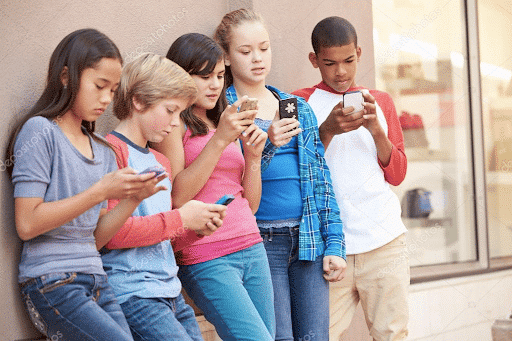
Move over debutante balls and high school dances, unboxing a brand new smartphone is the new coming-of-age ritual for today’s teens.[6] Teenagers born in 1995 and after are the first generation to live their entire adolescence with a smartphone.[5] In 2017, ten years old was the national average for receiving a smartphone.[6] This profound and sudden cultural shift has fundamentally changed childhood and parenting. Smartphones are a new-found necessity and parents are scrambling to provide one as soon as possible.
“What’s the WiFi password?”
Technology is an important part of our modern culture. In comparison to the rest of the world, the United States provides cell phones to the youngest kids.[8] Everywhere you go there’s a child or teen glued to a screen. There are babies listening to “Baby Shark” in their strollers during morning walks with mom, toddlers playing Candy Crush in their restaurant booster seats, and teenagers scrolling their Instagram feeds while blindly following their parents around Costco. It shouldn’t be surprising that adults and kids alike spend more than half of their days staring at a smartphone screen.[6]
With a smartphone in every hand, parents are peer pressured by their friends and begged by their children to provide one. Parents feel guilty for withholding one for too long because they see their children socially isolated.[11] Yet, giving a smartphone to a ten-year-old today is fundamentally different than when parents gave sixteen-year-olds flip phones in the 90s.[4]
Nokia Flip Phone vs. iPhone
Down to the basics, the main function of a cell phone is to call and send text messages wirelessly with no data. Smartphones such as iPhones, Androids, Google Pixels, and so forth have transformed those basic necessities.[7] They need data and WiFi to power infinite applications and endless Internet access. Basically, it’s a mini-computer that is more powerful than all of NASA’s computing power in 1969…in the palm of your hand!
Innovative or Addictive?
Unlike phones in the 70s, there are thousands of engineers and tech designers updating smartphones every day.[5] Their job is to make sure that smartphones and applications consume all our attention. They dazzle us with colorful visuals, sound effects, and seamless switching between applications. Studies have shown that children exposed at a young age to these stimulating effects become wired to crave easy dopamine release.[12] Instead of going outside and playing with their friends, they turn to their screens for pleasure
Sean Parker confessed to taking advantage of the human psyche when developing Facebook.[1] The former president of Facebook explained their objectives were, “How do we consume as much of your time and conscious attention as possible?”[1] He and Mark Zuckerberg knew that small hits of dopamine from notifications would hook everyone.[1] Parker reflects, “I don’t know if I really understood the consequences…God only knows what it’s doing to our children’s brains.”[1]
It’s true. Silicon Valley’s tech executives have become wary of their own creations. They’ve noticed the negative effects on their own children.[11] For example, Apple’s co-founder Steve Jobs limits his children’s tech time. He even kept the iPad away from them when it was first released.[10]
Smartphone Dependency
With all this power comes responsibility. Former Apple designer Tony Fadell struggles with whether his apple products have helped or hurt society.[2] In his own children he has seen smartphone dependency:
“They literally feel like you’re tearing a piece of their person away from them — They get emotional about it, very emotional…They go through withdrawal for two to three days.”[2]
Dr. Bennett details in her book, Screen Time in the Mean Time: A Parenting Guide to Get Kids and Teens Internet Safe, how smartphone dependency is like that of drug and alcohol addictions. Whenever teens hear a notification or see new content, dopamine is released and pleasure is felt. If too much time is spent apart, the smartphone-dependent gets agitated. There’s even evidence that we get distracted just by having a smartphone near us, even if it’s turned off as if we are in a state of chronic hypervigilance for notification. She chooses to have a screen-free classroom, stating that the research demonstrates that, not only is the screen users distracted from the lecture, but so are those around them.
Notifications on smartphones can be so addicting they cause phantom buzzing or ringxiety. Daniel Kruger researched cell phone dependency at the University of Michigan. His study found that “if your phone is rubbing in your pocket or if you hear a similar tone, you might experience it as your phone vibrating or ringing, especially if your phone messages are highly rewarding to you.”[3] That’s how adept our attention has become to our smartphones.
“Best” Age
Many studies have tried to determine which age would be best for a smartphone. Recently, the World Health Organization (WHO) came out with guidelines recommending no screen use for infants under one year of age and only an hour a day for kids under 5. Dr. Bennett’s GKIS guidelines, which are offered in her must-have Connected Family Online Course, are consistent with this recommendation as well. The American Academy of Pediatrics and the Canadian Pediatric Society also recommend no screen time for toddlers younger than two years old.[12]
Many parents are under the false impression that virtual reality can replace real-life lessons for toddlers. But the psychological research shows that the skills don’t transfer over. For example, toddlers who play building block games don’t know how to build the same blocks when presented the toys in real life.[5] This is because the toddlers didn’t develop the skills before seeing it on the Internet.
Furthermore, Dr. Bennett states in her keynote lectures that some kids are less likely to try a task after seeing performed on YouTube. It’s as if watching “scratches the itch” of wanting to do it themselves. How-to videos often demonstrate an effortless learning curve, as the practice and messy sessions are edited out – leaving a quick and perfectly executed trial to view. When a child tries out the task themselves, they can fall into “compare and despair,” feeling that their very normal imperfect trial was a failure rather than a healthy try.
Dr. Bennett recommends that, from two to twelve years old, children shouldn’t have Internet-enabled smartphones. A normal flip phone that only allows for calling and texting will suffice for any safety concerns. Some starter phones even have GPS tracking.
Those are a general rule of thumb since all children vary in maturity. Age doesn’t qualify a child to use a smartphone well but instead impulse control, social awareness, and true comprehension of what technology does.[5] Bill Gates’ household requires at least one of the following to be met before a smartphone is given[6]:
Must be 14 years old
Demonstrate behavioral restraint
Comprehend the value of face-to-face communication
Dr. Bennett further points out that, even at 14 years old, kids don’t have the brain development to anticipate consequences and engage in high-order thinking. Just telling them what not to do will not keep them from making unwise, impulsive decisions online. In fact, kids are neurologically programmed to copy some of the cruel and vulgar behaviors they will invariably run across online, even with parental controls. Be prepared to calmly coach them through a variety of online mistakes. No child escapes it.
Wait Until 8th Campaign
If you’re looking for a place to start, GKIS recommends Wait Until 8th. As of March 2019, 20,000 families across the entire nation have signed the Wait Until 8th pledge.[9] These families have pledged not to give their children smartphones until at least the 8th grade. They emphasize that it isn’t the only path, but a path that offers a safe space for parents with the same concerns. Professionals in law, psychology, education, healthcare, business, and social work created the non-profit pledge.[10] They’re parents who have seen the negative effects of premature smartphone usage in classrooms, court systems, private practices, communities, and households. By spreading the pledge, the Wait Until 8th Campaign hopes to:
Increase engagement in education
Encourage parents to set screen time boundaries
Change society’s view on technology so children can live authentic childhoods
“Can I have one now?”
Your teens will eventually get a smartphone, like everyone else. We don’t want to restrict them for so long that they go wild once given access. But first, we have to coach them to make good decisions on their own. This way, we can better trust them to be mature when facing issues like cyberbullying and age-inappropriate content. As simple as they seem, smartphones are very powerful. With that power comes great responsibility for parents to make sure that smartphones are a tool we use, not a tool that uses us.
Already given them a smartphone or getting ready to start? It’s never too late to make some adjustments. Dr. Bennett has put together a reliable Screen Safety Toolkit to help you get started. This resource offers links and explanations of parental control options on devices, through your Internet service provider, and through third party products so you can match your child’s use patterns with the right toolkit. She also offers a bonus of great learning apps and websites to help your child build their joy of tech-assisted learning!
Thank you to our GKIS intern Hanna Dangiapo for writing about this topic! (She admits that she still reminisces about her Motorola Razr).
I’m the mom psychologist who will help you GetKidsInternetSafe.









 Research opposing views.