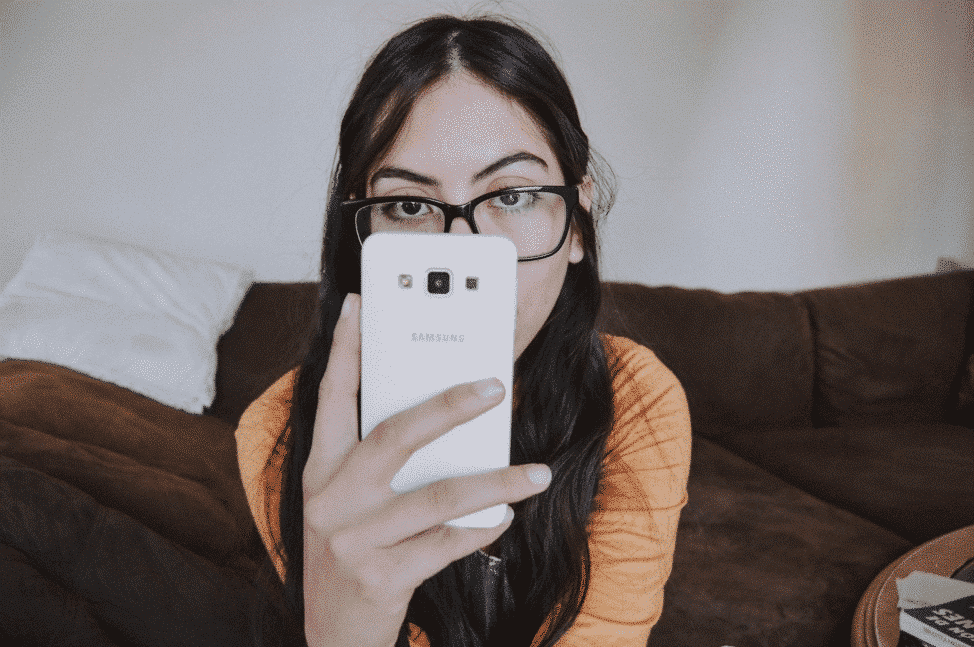
Move over debutante balls and high school dances, unboxing a brand new smartphone is the new coming-of-age ritual for today’s teens.[6] Teenagers born in 1995 and after are the first generation to live their entire adolescence with a smartphone.[5] In 2017, ten years old was the national average for receiving a smartphone.[6] This profound and sudden cultural shift has fundamentally changed childhood and parenting. Smartphones are a new-found necessity and parents are scrambling to provide one as soon as possible.
“What’s the WiFi password?”
Technology is an important part of our modern culture. In comparison to the rest of the world, the United States provides cell phones to the youngest kids.[8] Everywhere you go there’s a child or teen glued to a screen. There are babies listening to “Baby Shark” in their strollers during morning walks with mom, toddlers playing Candy Crush in their restaurant booster seats, and teenagers scrolling their Instagram feeds while blindly following their parents around Costco. It shouldn’t be surprising that adults and kids alike spend more than half of their days staring at a smartphone screen.[6]
With a smartphone in every hand, parents are peer pressured by their friends and begged by their children to provide one. Parents feel guilty for withholding one for too long because they see their children socially isolated.[11] Yet, giving a smartphone to a ten-year-old today is fundamentally different than when parents gave sixteen-year-olds flip phones in the 90s.[4]
Nokia Flip Phone vs. iPhone
Down to the basics, the main function of a cell phone is to call and send text messages wirelessly with no data. Smartphones such as iPhones, Androids, Google Pixels, and so forth have transformed those basic necessities.[7] They need data and WiFi to power infinite applications and endless Internet access. Basically, it’s a mini-computer that is more powerful than all of NASA’s computing power in 1969…in the palm of your hand!
Innovative or Addictive?
Unlike phones in the 70s, there are thousands of engineers and tech designers updating smartphones every day.[5] Their job is to make sure that smartphones and applications consume all our attention. They dazzle us with colorful visuals, sound effects, and seamless switching between applications. Studies have shown that children exposed at a young age to these stimulating effects become wired to crave easy dopamine release.[12] Instead of going outside and playing with their friends, they turn to their screens for pleasure
Sean Parker confessed to taking advantage of the human psyche when developing Facebook.[1] The former president of Facebook explained their objectives were, “How do we consume as much of your time and conscious attention as possible?”[1] He and Mark Zuckerberg knew that small hits of dopamine from notifications would hook everyone.[1] Parker reflects, “I don’t know if I really understood the consequences…God only knows what it’s doing to our children’s brains.”[1]
It’s true. Silicon Valley’s tech executives have become wary of their own creations. They’ve noticed the negative effects on their own children.[11] For example, Apple’s co-founder Steve Jobs limits his children’s tech time. He even kept the iPad away from them when it was first released.[10]
Smartphone Dependency
With all this power comes responsibility. Former Apple designer Tony Fadell struggles with whether his apple products have helped or hurt society.[2] In his own children he has seen smartphone dependency:
“They literally feel like you’re tearing a piece of their person away from them — They get emotional about it, very emotional…They go through withdrawal for two to three days.”[2]
Dr. Bennett details in her book, Screen Time in the Mean Time: A Parenting Guide to Get Kids and Teens Internet Safe, how smartphone dependency is like that of drug and alcohol addictions. Whenever teens hear a notification or see new content, dopamine is released and pleasure is felt. If too much time is spent apart, the smartphone-dependent gets agitated. There’s even evidence that we get distracted just by having a smartphone near us, even if it’s turned off as if we are in a state of chronic hypervigilance for notification. She chooses to have a screen-free classroom, stating that the research demonstrates that, not only is the screen users distracted from the lecture, but so are those around them.
Notifications on smartphones can be so addicting they cause phantom buzzing or ringxiety. Daniel Kruger researched cell phone dependency at the University of Michigan. His study found that “if your phone is rubbing in your pocket or if you hear a similar tone, you might experience it as your phone vibrating or ringing, especially if your phone messages are highly rewarding to you.”[3] That’s how adept our attention has become to our smartphones.
“Best” Age
Many studies have tried to determine which age would be best for a smartphone. Recently, the World Health Organization (WHO) came out with guidelines recommending no screen use for infants under one year of age and only an hour a day for kids under 5. Dr. Bennett’s GKIS guidelines, which are offered in her must-have Connected Family Online Course, are consistent with this recommendation as well. The American Academy of Pediatrics and the Canadian Pediatric Society also recommend no screen time for toddlers younger than two years old.[12]
Many parents are under the false impression that virtual reality can replace real-life lessons for toddlers. But the psychological research shows that the skills don’t transfer over. For example, toddlers who play building block games don’t know how to build the same blocks when presented the toys in real life.[5] This is because the toddlers didn’t develop the skills before seeing it on the Internet.
Furthermore, Dr. Bennett states in her keynote lectures that some kids are less likely to try a task after seeing performed on YouTube. It’s as if watching “scratches the itch” of wanting to do it themselves. How-to videos often demonstrate an effortless learning curve, as the practice and messy sessions are edited out – leaving a quick and perfectly executed trial to view. When a child tries out the task themselves, they can fall into “compare and despair,” feeling that their very normal imperfect trial was a failure rather than a healthy try.
Dr. Bennett recommends that, from two to twelve years old, children shouldn’t have Internet-enabled smartphones. A normal flip phone that only allows for calling and texting will suffice for any safety concerns. Some starter phones even have GPS tracking.
Those are a general rule of thumb since all children vary in maturity. Age doesn’t qualify a child to use a smartphone well but instead impulse control, social awareness, and true comprehension of what technology does.[5] Bill Gates’ household requires at least one of the following to be met before a smartphone is given[6]:
Must be 14 years old
Demonstrate behavioral restraint
Comprehend the value of face-to-face communication
Dr. Bennett further points out that, even at 14 years old, kids don’t have the brain development to anticipate consequences and engage in high-order thinking. Just telling them what not to do will not keep them from making unwise, impulsive decisions online. In fact, kids are neurologically programmed to copy some of the cruel and vulgar behaviors they will invariably run across online, even with parental controls. Be prepared to calmly coach them through a variety of online mistakes. No child escapes it.
Wait Until 8th Campaign
If you’re looking for a place to start, GKIS recommends Wait Until 8th. As of March 2019, 20,000 families across the entire nation have signed the Wait Until 8th pledge.[9] These families have pledged not to give their children smartphones until at least the 8th grade. They emphasize that it isn’t the only path, but a path that offers a safe space for parents with the same concerns. Professionals in law, psychology, education, healthcare, business, and social work created the non-profit pledge.[10] They’re parents who have seen the negative effects of premature smartphone usage in classrooms, court systems, private practices, communities, and households. By spreading the pledge, the Wait Until 8th Campaign hopes to:
Increase engagement in education
Encourage parents to set screen time boundaries
Change society’s view on technology so children can live authentic childhoods
“Can I have one now?”
Your teens will eventually get a smartphone, like everyone else. We don’t want to restrict them for so long that they go wild once given access. But first, we have to coach them to make good decisions on their own. This way, we can better trust them to be mature when facing issues like cyberbullying and age-inappropriate content. As simple as they seem, smartphones are very powerful. With that power comes great responsibility for parents to make sure that smartphones are a tool we use, not a tool that uses us.
Already given them a smartphone or getting ready to start? It’s never too late to make some adjustments. Dr. Bennett has put together a reliable Screen Safety Toolkit to help you get started. This resource offers links and explanations of parental control options on devices, through your Internet service provider, and through third party products so you can match your child’s use patterns with the right toolkit. She also offers a bonus of great learning apps and websites to help your child build their joy of tech-assisted learning!
Thank you to our GKIS intern Hanna Dangiapo for writing about this topic! (She admits that she still reminisces about her Motorola Razr).
I’m the mom psychologist who will help you GetKidsInternetSafe.
Does your teen know how to safeguard their future by cleaning up their social media? I was recently invited to present at a local National Charity League meeting with high school seniors on the topic, “The Cyber Footprint.” Typically, I speak to parents rather than teens about screen safety. But for this group, I went the extra mile. Today’s GetKidsInternetSafe article is a blueprint for how teens can turn a social media footprint from devastating to standout for college and summer or internship employment opportunities.
A digital footprint can make you look good!
Most of us are aware that social media content can have long-lasting negative effects on reputation. That’s why parents monitor child posts. But what many people don’t realize is that having no digital footprint or a dull virtual self can also be a liability (work against you).
In the professional and college worlds, it is widely assumed that having no cyber footprint reflects a lack of productivity and know-how. Not only is it important to have a positive online presence to avoid being screened out of opportunity, but you must also stand out to be selected.
Do employers and colleges care what you post online?
Yes, they do! Not only do employers recruit via social media, but they also screen out potential hires based on your posts and comments.
A 2016 survey conducted by the Society for Human Resource Management revealed:
Recruiting via social media is growing, with 84% of corporations using it currently and 9% planning to use it.
44% of HR professionals agreed that a job candidate’s public social media profile can provide information about work-related performance.
36% of organizations have disqualified a job candidate in the past year because of concerning information (e.g., an illegal activity or a discrepancy with an application) found on a public social media profile or through an online search.
When should you start stylizing your cyber footprint?
…as soon as you’re old enough to care about post-high school education and employment – if not sooner! It’s never too early to consider who you don’t and do want to be online and offline. Using social media to showcase special talents, like art, dancing, modeling, and acting can work for you.
Before using social media for publicity, here are some critical points to consider for safety.
STEP ONE: Cleanse your social media profiles and cyber footprint of content that doesn’t make you look good.
Google yourself and track down and delete unwanted content.
If you’re lucky, you don’t have years of unflattering comments or images to track down, but you won’t know what employers may find until you Google your name first.
Back up your old profile data before you delete your account.
Expect that it may take a few weeks for your chosen social media platform to delete your old profile and allow you to create a new one.
Cleanse all social media profiles, even those set to private.
In some states, it’s legal for employers and college application counselors to ask for social media usernames and passwords. Refusing to do so may cost you. That means it’s necessary to delete inappropriate images, comments, and shares such as those involving drugs, alcohol, sexuality, profanity, cyberbullying, poor spelling/grammar, political affiliations, and off-color jokes.
Social media platforms purposely make it difficult to have more than one personal account or delete your old accounts and start over. Not only does Facebook require you to use a new email address and phone number to create a new profile, but you will lose all of your friends, favorites, photos, messages, comments, and games.
They don’t want you to delete your old profile because they lose ownership over your content. The more metadata they collect about your online activities such as likes and dislikes, the more profit they can make saturating your online time with targeted ads. Since we now select what we want to view rather than being captive television and commercial watchers, advertisers are hungry to capture every opportunity to get our attention. That means we are blitzed with 5,000 ads a day in contrast to 500 ads in the 1970s.
Are you ready to reveal an impressive school or job candidate who is searchable for the right people? Recreating your best virtual self isn’t easy!
STEP TWO: Create an irresistible virtual you!
Choose two or three popular social media platforms.
Quality is more important than quantity. Rather than do a poor job on several platforms, focus on doing a great job with a few.
LinkedIn, Instagram, and Twitter are currently the most popular social media platforms. Get familiar with them to take advantage of useful features. For example, set appropriate privacy settings and avoid default responses in favor of your own words.
Visualize your perfect virtual self and plan before you tackle the project.
Search out those who are doing it right and create a swipe file (think Pinterest). A swipe file is a digital folder where you store your favorite examples of content and style. Keep your eyes open for catchy headlines and titles, image ideas, and potential networking connections. Incorporating multimedia, like colorful and unique images and videos, attracts attention and effectively communicates concepts.
Be strategic, concise, and innovative.
Your online profile is not as formal as a résumé. Be fun and creative while displaying your ideas, research, products, and activities. Proofread. Delete any extra words and avoid big blocks of text by using bullet points and breaking up content into titled sections. Include keywords for search engine optimization.
Blogs can be highly effective, as storytelling is an awesome way to stand out and show rather than tell. Become an author and illustrator. Be the clever, positive, well-rounded person you’d want to work with.
Friend and join influential others.
Every opportunity I’ve ever gotten was the result of good relationships. Not only are your productivity skills critical to success, but so is networking.
Use social media as it’s intended, to connect with like-minded others who fuel and enrich your creativity and protect your confidence. That includes clubs, organizations, special interest groups, and corporations as well as impressive individuals. Don’t friend people you don’t know or haven’t reached out to personally.
Stimulate online engagement and stay active.
Attracting interesting others is one thing but keeping them warmly engaged with valuable content is key to longevity. Just as you do with your friends, be available and share interesting articles you know your online contacts will like. Creating reciprocity will keep others interested in you and generous with potentially valuable invitations and introductions.
6 WAYS TO MAKE YOUR ONLINE PROFILE A COLLEGE/EMPLOYER MAGNET
Switch from teen personal to adult professional with a first-person tone that is warm and welcoming. Make certain any content that a future employer may see as inappropriate or silly has been deleted.
Write a mission statement detailing what opportunities you are looking for. Avoid buzzwords and lingo. Stick to what’s relevant.
Keep your connections education- and employment-focused. Don’t get frivolous and network with everybody. Be selective and seek out those who may lead to mutual opportunity.
Include an attractive headshot.
Include contact information, an email link, and custom URLs for your website or other social media profiles.
Highlight impressive activities/achievements related to education, employment, & community service. Testimonials and endorsements are powerful. Make sure your online profiles are consistent with the content on your résumé.
My best friend’s mother always said, “It’s just as easy to fall in love with a successful man as a loser.” The same can be said about landing your dream job rather than settling for what’s convenient. On the other hand, you’ve got to start somewhere!
As a teen, I worked for a drug store and learned how to be a responsible employee, cashier, organize and stock, and deal with difficult customers. I also learned this position was not for me long-term. From there I landed jobs in accounting, research, and administration, each providing me with business skills that are still paying off today.
Don’t pressure yourself into thinking today’s profile will immediately lead to your dream job. This is scaffolding. One job will lead to another and so on, ultimately building the very best you. Enjoy the creativity of the journey. Take time to daydream about design elements and all of the ways you can blossom.
Have good ideas of your own to improve a digital footprint? Please share with us in the comment section below.
Screen addiction is officially a thing. As a mom and clinical psychologist for over 25 years, I recognized and identified it in 2014 when I founded GetKidsInternetSafe from treating hundreds of families in my private practice. Teaching addiction studies at CSUCI also highlighted the similarities between drugs and screen behaviors for me. Like everybody else, I too was having a hard time chasing my kids off our screens. Honestly, even I was getting lost in my research and on Facebook, losing the ability to chill and read a novel. I started to worry about my family. From there, I wrote my book Screen Time in the Mean Time, offered keynotes and presentations, consulted with tech companies, coached families, built and tested my online courses, and created a weekly blog. And, after all that, the World Health Organization finally confirmed what I’ve been screaming from the rooftops. Big tech creates screen products that are manipulatively designed to trigger the pleasure centers of our brains, and we are, in fact, clinically addicted.
Gaming Addiction
Nearly 60% of parents think their teens are addicted to their mobile devices. In 2018, the World Health Organization (WHO) classified gaming addiction (IGD)as a mental health disorder. In the last twenty years, the tech revolution has affected every aspect of our lives. Studies have shown that, for some subjects, compulsive screen use impacts the reward and pleasure areas of the brain in the same ways that alcohol, drugs, and other behavioral addictions do. Screen addiction treatment centers have been popping up in Asia for the last decade and are starting to be in the United States as well. Do you worry your child may be showing signs of screen addiction?
——————-
“Remember, when Betty Ford first admitted she was an alcoholic, we didn’t have people believing it was actually a problem until she came around and talked about her own problems with it. This is a place for people to go for help, and that we hope will help everyone around them stop taking Internet addiction so lightly.”
Kimberly Young (founder of The Center for Internet Addiction in 1995)
————————
Who is to blame?
Parents
Of course, we have some accountability for what happens under our roofs. Pester power breaks us down, and we allow too much screen use even though we know better. We need a break in our overtasked, screen-saturated lives. We can’t entertain our rug rats 24-7.
Kids
They are so persistent! They CRAVE screen use and are master manipulators. Children are vulnerable to screen addiction because their brains are not fully developed, particularly in the prefrontal cortex, which is responsible for impulse control and decision-making. Children who suffer from trauma like bullying, divorce, and abuse, as well as from psychological vulnerabilities like ADHD, anxiety and mood disorders, and autism are particularly vulnerable.
Schools
Schools are increasingly adopting curriculums that require screen use and Internet access during classroom and homework time. Without digital literacy, our kids academically falter. If you are reading this as part of your Social Media Readiness Course, then either your parents or your school are doing an awesome job prepping you to avoid addiction issues down the line.
Big Tech
Screens are programmed to addict us. Big tech, like Google, Amazon, and Facebook, are experts in how to keep us coming back for more. Using secret computer algorithms, our online behavior is studied, collected, and aggregated. This data is used to create and deliver content in the ways our brains will effortlessly absorb it. That translates to targeted ads for clicks and money leaving our bank accounts. Big profit indeed.
The Gaming Industry
The gaming industry made 183 billion dollars last year. Multi-level, high-sensory games, like Fortnite, are intentionally programmed for addictive use. Players are rewarded for staying on and punished for getting off. This keeps kids on-screen, vulnerable to hours of autonomic overarousal. That means they burn too much brain fuel and are left fatigued and in mental brown-out.
The Government
Where is the regulation to protect kids? Are civil liberties really that strong that legislators can’t step in to help parents protect their kids against known harm like online pornography? Or is it that research and treatment organizations can’t compete with rich lobbyists who get direct access to our legislators? Did you know that the advertising budget for Budweiser alone exceeds the entire budget for research on alcoholism and all drugs of addiction?
How common is Internet Gaming Addiction?
Recent studies claim that around 1 – 5% of the US population could be classified as Internet game addicts. It is most common among single young males. Male Internet addiction most typically involves video gaming, cyber-pornography, and online gambling. Women are more likely to show addictive use patterns with social media, texting, and online shopping. IGD commonly cooccurs with depression, anxiety, AD/HD, self-harm, obsessive-compulsive disorder, oppositionality, suicidality, and personality disorders.
Other risk factors include living in the city, not living with a biological parent, low parent involvement, parent unemployment, and not having a reliable friend.
Consequences of IGD include skipping school, lower grades, family conflicts, lack of offline sociality, sleep problems, and unresolved developmental problems. These factors, along with emotional problems, often result in the addict lacking the very resources necessary to break out of the addictive cycle.
What do brain studies say?
Brain imaging studies have found brain changes like those seen in subjects with drug addictions. In other words, the more we play video games, the more our brains change and adapt.
Activation pattern changes that result in brain tissue changes are called adaptive neuroplasticity.
More specifically, subjects with video game addiction show a reduction in gray and white brain matter and reduced cortical thickness in various areas of the brain. The more the gamer plays, the more brain changes. Studies have also found evidence of dopamine release and higher activity in the brain’s pleasure center when playing video games. Heavy gamers have significantly more difficulty calming their emotions and making sound decisions than nongamers.
Thank you to CSUCI Intern, Katherine Bryan for contributing to this article. Screen addiction is real and now universally recognized. If you worry you are seeing red flags in your home, remember that screen addiction is preventable!
I’m the mom psychologist who will help you GetKidsInternetSafe.
The summer is coming to a close, which means students and parents are preparing for the back to school mayhem. I don’t know about you, but the first day of school always manages to sneak up too suddenly at our house. We at GKIS are all about making family life easier so there’s more time for joyful rejuvenation. Here are a few helpful screen-help parenting hacks that can get you prepared for the madness.
Virtual Shopping for Back to School
I’m already after my kids to make their linked wish list for school clothes to avoid crowded school shopping that leaves us all haggard. The Giftster app is what I was looking for! The app allows for family members to share a wish list for the next upcoming event such as birthday, holiday, and back-to-school.
Super Deals
It’s not just the time shopping that can leave us depleted, so can the spending! To get the best coupon discounts, download RetailMeNot.
Not only can you browse for sales, coupons, cash back, and gift card savings, but I often search store names once I’ve collected my purchases. The online coupon can then be scanned at the register. I’m also in the habit of asking for AAA, education, or military discounts in the counter. Our local retail mall often offers up to 20% off every purchase if you qualify.
Staying Within the Budget
Beyond discounts, many of us need to stay within a budget. Intuit’s Mint app links to your bank card for close budget tracking. Spending is laid out on an easy-to-read graph to help you tracking spending in real time.It also gives spending suggestions, allows you to track and pay bills, and gives tips on how to improve your credit score.
Quick and Easy Money Transfers
Another money app that can alleviate stress is the Venmo app. This app allows users to send money to each other with a click of a button.
If your teen is eager to earn independence, a quick money transfer can be the difference between a fun trip with their friends and a stressful tug of war with a parent. Handy notations help parents track how much and when money was offered. This is far easier than handing over money or your credit card.
Location Sharing
Location sharing is a where one person can locate the other via their phone signal. For teens this may be a fun way to see where your friends are; however for parents, this is the perfect way to see what your kids are up to.
Wondering if your youngest made it home safely on the bus? Look up his location, and you’ll be put to ease knowing they’re safe. Wondering why your oldest isn’t picking up your calls? Look them up and see that they’re at the movies, so there’s no need to worry.
As a parent, keeping track of your kids may sound easy, but life can get crazy and sharing your location with your family is a great tool to put little worries to rest and reduce stress.
For android users with a Google account, simply add their Gmail address to your Google Contacts, open the Google Maps app and sign in, tap Menu> Location sharing> Add people.
For iPhones, simply go to the contact that you wish to share your location with, then select Share Location, and select the amount of time you wish to share your location. I often track my kids from messages simply by tapping the little i in the circle in the upper right-hand corner on your texting screen.
Life360 is a free location app that is amazing! You can set up alerts for when family members make it to a specific location (like kids home from school), view route information for distracted driving details, give at-a-glance information and easy access to check in messaging requests, and offers private and group chats as well as group circles and flexible location sharing. Now that my 16 year-old is driving, this is a MUST HAVE at our house.
Thank you to GKIS intern, Adam Ramos, for helping us get the most useful time-and money-saving apps. Also, because teens can be sneaky, make sure and read The GKIS Sensible Parent’s Guide to Venmo so you know every work-around. Have time-saving apps you love? Share them with us in the comments.
I’m the mom psychologist who will help you GetKidsInternetSafe.
It seems we may have FINALLY reached the tipping point for Internet safety. Governments are paying attention (GDPR), states are paying attention (Utah’s free-range parenting law), and Silicon Valley is paying attention (Google’s Family Link and Facebook’s Parents Portal). Guess why they’re paying attention! Because parents are demanding help. Parents now care, A LOT, about online privacy and preventing digital injury, and we are using our voices to make real change for our families. Today’s post is a quick summary of several things that have happened in the last few weeks that mean BIG THINGS are on the way to achieving screen safety for our kids.
General Data Protection Regulation (GDPR)
Today is GDPR’s implementation date. The new mutually agreed General Data Protection Regulation was adopted by the European Parliament and European Council on April, 2016 after four years of negotiation. The two-year preparation period allowed businesses and public bodies opportunities to prepare for the changes. These new data protection laws were developed to replace the 1995 data protection directive with the objective to “harmonise” data privacy laws and give greater protection and rights to individuals.
After the slew of massive data breaches in the past six months with giants like Yahoo, MySpace, and LinkedIn, we at GetKidsInternetSafe believe this is a very positive move toward customer awareness and overall privacy protection. Under GDPR, the “destruction, loss, alteration, unauthorised disclosure of, or access to” personal data has to be reported to the country’s data protection regulator. Also, companies and organizations who collect customer data are required to document and inform customers about the details behind their data collection practices and systematically monitor processing. For some companies, this may mean hiring a data protection officer (DPO) and obtain consent in some situations. Noncompliance could result in fines. GDPR also gives customers more accessibility to the data collected about them and information about how it’s processed and what it’s used for.
What does this mean for American companies? For most, it means they’re scrambling to get compliant with GDPR. Giants like Facebook and Google have released statements committing to GDPR compliance, while others have gone dark as they block European customers from their sites until they’re confident with their compliance to avoid steep fines.
Utah’s Free-Range Kids
May 8thUtah Governor Gary Herbert signed bill SB65 that allows kids to have some independence from their helicopter parents to earn independent problem-solving skills. Controversial for certain, I commend Utah for taking a stand supporting kids to branch out and walk to school, hang out at the neighborhood park, and wait in the car while mom or dad runs errands. I like the idea of parents making decisions for their kids without fearing law enforcement sanctions. Obviously, safety must be considered, but our kids long for a chance to spend time running and biking outdoors. Let’s give it to them!
Facebook’s Messenger Kids, Youth Portal, and Parents Portal
Facebook has been on the well-deserved hot seat lately. But I also want to commend them for reaching out to the child development expert community for partnership in the development of their Messenger Kids messaging app. Even some of us on their Youth Advisory Council were openly and outspokenly suspect of the potential risks of this child product, yet they are correct in saying that kids are on their parent’s social media platforms and messaging sites already. By developing a platform with kids in mind, they have implemented much-needed parent controls and socioemotional and educational features that enrich development and connection. Their new Parents Portal and Youth Portal promises to provide much-needed information that can help many of us get back on track with safety measures.
It’s a work in process, with testing and tweaks. But now that the bridges have been built, I believe Facebook may open their doors to all types of facilitation for connection. I love that corporate is cooperating with the academic and clinical communities in support of kids and families. I, for one, will continue to be a fierce advocate for family connection and safety and welcome collaborative, creative opportunities.
Google’s Family Link and Apple’s Families Web Page
Google’s Family Link and Apple’s Families Web Page are also newly live. Although there are improvements to be made, the focus is shifting to the potential for digital injury with kids and how to prevent it. That is what I’ve been clamoring for many years now. Good news!
With all the expert portals up, parents are getting the information they need to set controls. However, I also think the main issue is getting missed. It’s not only a corporate issue, or government issue, parent issue, or a kid issue … it’s a family issue. We’ve been helicoptering away to keep our kids safe and too many of us have lost the fun in being a family. It’s possible to limit for safety, be on screens, and be close as a family. That’s what GetKidsInternetSafe is all about.
Thanks for spreading GKIS info to friends and family. Have an awesome Memorial Day Weekend! Mine starts right now!
I’m the mom psychologist who will help you GetKidsInternetSafe.
Crowdsourcing has changed the way the world does business. In the past decade 85% of the best global brands (Apple, Google, Coca Cola, Microsoft) have taken advantage of the booming crowdsourcing market (Steve, 2015). Few concepts in business have been so popular and appealing. With the allure of lower costs, customer involvement, and diversity of perspective and opinion, it’s easy to see why. How can you utilize crowdsourcing, and what should you consider before deciding if crowdsourcing is right for you?
What is crowdsourcing?
Crowdsourcing is a method of obtaining ideas by outsourcing a problem-solving task to an online community. By gathering creative response from multiple diverse sources, innovative approaches and solutions develop. Crowdsourcing compiles the sum of logged in human knowledge into a central source, providing informed guidance to individuals and helping businesses best create, support, and utilize customers.
Free Encyclopedic Online Knowledge
Wikipedia is the most popular online informational website that is constantly developing with crowdsourcing. Boasting more than seven billion visits in February 2018 alone , Wikipedia’s has more than five million English articles with 800 new articles coming out daily (Cunctator, 2018; Erik, 2018). Many of these articles are edited, written, and discussed in community forums by over 33 million English users, who refer to themselves as Wikipedians (Bignose, 2018). Anyone who visits Wikipedia can edit the articles and become a Wikipedian. Edits are read and reviewed by a group of workers hired by Wikipedia as well as a trusted group of active Wikipedians who account for 50% of the edits (Pipedreamer, 2015).
Medical Miracles
A 22-year-old college student was on her way to school when she fell off her bike and hit her head so hard her helmet cracked in two. The accident lead to chronic migraines, heart problems, and spinal issues. After years of treatment and $250,000 in medical bills, no progress was made. She then found CrowdMed, a crowdsourcing website founded in 2012 that assists patients who have found little success with medical visits. For only $150-$350, she submitted her case for analysis by doctors, nurses, medical students, Eastern Medicine practitioners, and other patients with similar ailments. The medical detectives who reviewed her case believed that she may have a form of complex headache and referred her to the Cleveland Clinic. There she was diagnosed with a post-concussive complex migraine syndrome and, with their assistance, was able to ease her debilitating pain with the right combination of treatment and medications. She credits the medical detectives for helping point her in the right direction and providing positive encouragement throughout the process (Christina, 2015).
Online Microtasking Provides Valuable Service
Amazon Mechanical Turk (MTurk) is a crowdsourcing marketplace where anyone can browse small tasks that companies need completed. The tasks can be as simple as identifying objects in a photo or video or answering a survey about a product. Although providers earn only a few cents per task from requesters, some have turned MTurk into a full-time job making $150-$300 a week (Mike, 2016). Other companies are willing to pay large amounts for help with their crowdsourced projects. For example, the GO FLY competition by BOEING challenges participants to create a safe, quiet, compact, personal flying device capable of flying twenty miles. The grand prize for the highest rated prototype is set at one million dollars.
Other projects, according to Wikepedia (ha), include missing person searches, social science experiments, artistic and educational research, and third party programming used for processing photos or videos, data cleaning and verification, information collection, and data processing.
Because I Love the Brand
Companies today have large fanbases who follow every change the company makes. These fans want the company to improve, and crowdsourcing has enabled them to put in their own time and effort to help. In 2008, Starbucks launched the website, My Starbucks Idea, where customers can suggest improvements to anything from drinks to the music played in the store. In the first year, over 70,000 ideas were generated by fans. Since then Starbucks has implemented approximately 300 submitted fan ideas into stores (Tina, 2015).
Advantages and Disadvantages to Crowdsourcing
Cost Reduction
Through crowdsourcing, you can outsource work to thousands of free laborers. This enables your companies to eliminate overhead and minimize management.
Company Engagement
Crowdsourcing enables companies to receive feedback from current and past customers. It also allows them to engage one-on-one with their customers in real time.
Creativity and Diversity
With crowdsourcing, companies can maximize their options. They can choose from thousands of different submissions that will vary in design and creativity.
Missing the Talent
While numbers aren’t an issue when dealing with crowdsourcing the quality can. Multiple ideas will not always equal a great idea. Instead of hiring someone who can accomplish the task, you may be stuck waiting to find somebody.
Popularity Can be Misleading
When you crowdsource an idea, things can get messy. Rather than getting a correct answer, a popular answer can win out. A recent online poll to determine the name of a polar research vessel ended with the name Boaty McBoatface leading the polls. Those who created the poll were smart to say the winning name would be a suggestion, however due to popularity the name may stay.
No Confidentiality
By being transparent with customers and engaging with them online, you leave yourself vulnerable to other companies viewing you progress. This may reduce your competitive advantage.
Hidden Costs
Time is money, right? Searching through thousands of suggestions can be time consuming.
Thank you to CSUCI Intern, Dylan Smithson for informing parents on the multiple ways to crowdsource. The next time you are online remember that you can easily become a part of the crowdsourcing community. If you enjoyed reading this article, feel free to share with friends and family, and give us a like on our GetKidsInternetSafe Facebook page.
I’m the mom psychologist who will help you GetKidsInternetSafe.