

Need peaceful screen time negotiations?

Get your FREE GKIS Connected Family Screen Agreement

gaming

Do Your Kids Vamp? A GKIS Parent’s Guide to Good Sleep Hygiene

S
S

Originally published in Empowering Parents

I’m a psychologist married to a psychiatrist. Yes, I know how many of us it takes to screw in a light bulb . . . Between us, we treat people ages 2 to 92 and attempt to raise three of our own offspring. Ask us what we worry the most about with our clients (and offspring), and we’ll say sleep deprivation. Hands down, sleep deprivation is the most common and insidious threat to mental health in our practices.

With teens, we call staying up all night vamping, like a vampire but on screen media. And kids who stay up all night tend to sleep all day. Anybody who’s parented a teen during the summer knows this is a common state of being when a teen is left to their own devices. Then, when it’s time for school or other daytime activities it can be very difficult to reset a more reasonable sleep-wake schedule. I often see teens fall into anxious avoidance and depression as they try to make the switch.

Tips for How to Avoid the Slippery Slope of Vamping

NO SCREENS IN THE BEDROOM

Screens wake up our brains! Screen media stimulates the photosensors in the retina that signal the brain to suppress melatonin production (our sleep-regulating hormone). Less melatonin disrupts our natural circadian rhythms.

Pavlov & his dogScreens in the bedroom also train us to be awake in bed. If we are often awake in bed, our bodies will automatically believe that the bed is an awake-only zone. If we only rest and sleep in bed, our bodies will be cued that the bed is a sleep-only zone. Although it is a challenge to stop teens from living their full life cycle on their beds, this habit can create sleep problems with the principles of conditioned behavioral response (awake paired with bed and screen time is a hard conditioning to overcome).

Make the No Screens in the Bedroom Rule BEFORE it’s necessary. I know it’s asking a lot to say no TV, video games, tablets, or smartphones in the bedroom. But, believe me, intimate spaces eventually lead to intimate gestures like sexting and the viewing of inappropriate online content. Too late for you because you’ve already allowed it? Stage a discussion and go slow. Yanking their freedom abruptly may trigger a backlash that may damage your hard-earned parent-child connection. The best-case scenario is starting with this rule from the very beginning.


SCREENS OFF 30 MINUTES BEFORE LIGHTS OUT 

Psychologists have discovered that one of the most disabling features of post-traumatic stress disorder (PTSD), an impairing anxiety disorder that results from trauma, is sleep deprivation that results from nightmares. While sleeping, the brain tends to prioritize and loop on frightening memories as it sorts through its memory cache for sorting and storage. As it loops, frightening content will appear in our dreams.

Just like the response to fright when we’re awake, stress hormones like cortisol and adrenaline dump into our bloodstream when we have nightmares. If we are troubled upon falling asleep, poor sleep quality may result and we will be unable to awaken feeling refreshed or rejuvenated. This can seriously impair mental health.

Although emotionally triggering screen media activities like gaming, texting, or viewing activating content aren’t as troubling as real-life trauma, they still stimulate the same brain regions. Limiting activating screen media activities at night and giving your children time to soothe before bedtime will likely result in better quality sleep overall.

ENCOURAGE A SOOTHING NIGHTTIME RITUAL

We are creatures of habit. Habitual activity during the 30-minute bedtime wind-down signals the body to anticipate rest. Components of a soothing ritual may include soft lighting, quiet repetitive sounds, and comforting activities. Avoid eating, triggering discussions, and intense exercise. Sticking to a consistent bedtime schedule is also important.

STAGE THE ROOM TO BE RESTFUL 

I know it’s nearly impossible to motivate teens to unclutter their dens. However, research is clear that a soothing environment contributes to a soothed mind. Offer your support in creating a more grown-up environment with a fresh bedroom makeover that reflects rest and relaxation. Light paint colors, organized closets and bedside tables, subtle lighting, and crisp, cleansing smells can turn a chaotic hovel into a relaxing paradise.

TEACH SOPHISTICATED SELF-SOOTHING STRATEGIES

As a psychologist, I can attest by first-hand experience that cognitive-behavioral exercises like diaphragmatic breathing, progressive muscle relaxation, mindfulness, yoga, imagery, and cognitive restructuring can fend off even the most severe anxiety and mood disorders.

There’s preliminary evidence that screen media delays the onset of sleep, negatively affects sleep quality, and results in difficulty awakening and feeling refreshed. It also decreases REM (rapid eye movement) and sleep time.

Children and adolescents who use screen media at night go to bed later, get fewer hours of sleep, and report more daytime sleepiness. Sending texts or e-mails after initially going to bed increases daytime sleepiness among teens (even if it’s only once/week).

A full cycle of sleep takes 90 minutes. (A full cycle provides cognitive rejuvenation that improves procedural memory and creativity with no sleep inertia.) 10-20 minute power naps are shown to increase alertness and energy. 30 minutes will result in sleep inertia (grogginess). And 60 min is good for slow-wave sleep (helps remember facts but some grogginess).

I’m the mom psychologist who will help you GetYourKidsInternetSafe.

Onward to More Awesome Parenting,

Tracy S. Bennett, Ph.D.
Mom, Clinical Psychologist, CSUCI Adjunct Faculty
GetKidsInternetSafe.com

A Genderqueer Polyromantic Bisexual Teen Formerly Known as Miley Cyrus Walked Into My Office


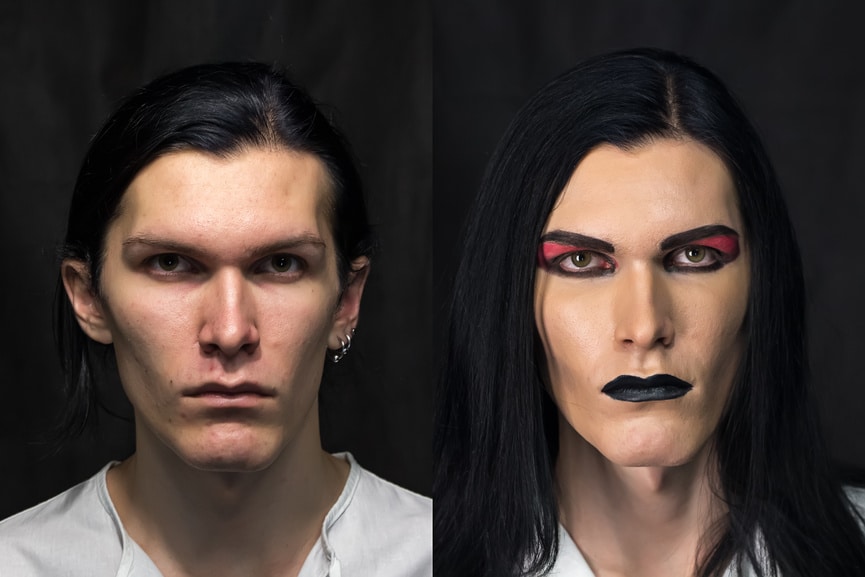
Photo of man's make up, before and after
Photo of man’s make up, before and after

Originally published in The Good Men Project

OK OK, she wasn’t Miley Cyrus. But recently several of my teen clients who role-play online have been experimenting with gender, sexual, and romantic orientation. And just this morning I read on Facebook (my primary source for news these days) that Miley Cyrus came out as, well, gender-something. And it has me wondering, is online role-play healthy experimentation or a dangerous trend?

Screen media is having a profound influence on our culture. Between the Internet, YouTube, video games, and social media apps, we are bombarded by information with more frequency and time spent than ever before in history. Not only is screen media changing the way we consume information, it is also changing how we learn, think, develop as individuals, and interact with the world. There is even evidence that it is changing the structure of our brains! It’s one thing if you’re an adult and your brain is already developed, but what if your brain is still developing?

Teens are particularly expert with screen media, especially those obsessed with webcomics and fandoms.

A webcomic is a comic published on a website, some of which continue on for months at a time (e.g., Homestuck began in 2009, has published over 7,500 pages, and still boasts over a million unique visitors per day).

A fandom is a subculture of fans that interact around a particular interest, such as a webcomic. Fans follow complex story arcs while engaging in analytical discussions about the story and the real world, discussions ripe with slang and constantly building upon shared understanding. Fans exchange artistic and costumed images, videos, and memes that relate to their shared passion and form close relationships and subgroups that interact several hours a day. Some fans meet up at conferences for cosplay (costume play) of their favorite characters.

Along with a love of fantasy and creativity, webcomic fans often have a flair for intelligent and vigorous investigation of gender, sexual orientation, and romantic interest.

Recently I’ve observed that teens are challenging traditional gender and sexual orientations with a dizzying array of alternative sociological  concepts and, ultimately, lifestyles. What do I mean?

Because webcomic characters are fantasy-based, they can incorporate any combination of state or trait imaginable. One particular way webcomic authors take artistic license is to create a character of ambiguous gender and/or sexual orientation (e.g., an alien troll who is neither male nor female). As the audience follows these forever growing storylines, they become increasingly tolerant of and curious about character trait ambiguity.

In addition to following webcomic characters with multi-faceted states and traits, many fans go on to act out their interests playing as customized avatars in massively multiplayer online role-playing games (MMORPGs like World of Warcraft). By experimenting with looks, backstories, and behaviors, players witness the intricate impacts that these variables play in social interaction. Keep in mind that they are not only communicating publicly within the game, but they are also interacting privately with individual or groups of players via instant messaging or with headsets and microphones.

Then, from the online world players go into the real world to parody traditional gender behaviors in gender crossplay, a type of cosplay in which participants cross dress.

Consider that fandom kids get a triple load of influence, one as a passive webcomic observer, a second as an engaged fandom participant on- and offline, and a third as a gamer. Many spend more time in these fantasy scenarios and online friendships than as live participants in the non-virtual world. As you might expect, their real lives gradually begin to mimic their virtual lives.

I’ve now worked with several fandom-influenced teens who no longer identify as their born gender in identity, expression, or behavior. Check out the terminology I’m learning from my clients:

  • Pangender: Those who identify with all genders
  • Trigender: Those who shift from one gender to another depending on their mood or situation
  • Gender Fluid: Those who mix two or more genders at a time (bigender for example)
  • Transgender: Those who identify with another gender than the assigned gender at birth

Along with using gender-neutral pronouns, my clients born as girls cut their hair short and wear t-shirts and basketball shorts. Clients born as boys wear their hair long and apply guy-liner. It’s all very confusing, indeed.

Now complicate that with sexual orientations (asexual, pansexual, skoliosexual, bisexual, homosexual, heterosexual) and romantic orientation (aromantic, panromantic, polyromantic), and one’s head starts to spin. Lest you think it’s city livin’ that’s creating these issues, think again. With the World Wide Web, anyone with a screen is audience and potential participant to these complex sociological principles.

young woman with fake moustache dressed up as a man

The teens in my office insist that their open-minded exploration is creating the supportive cultural milieu they idealistically envision. Some feel they were born with unique gender or sexual identities and others believe this exploration is a natural result of experience and experimentation. Their parents look on dazed and shrugging, trying their best to make decisions about slumber party arrangements amidst constantly-shifting gender, sexual, and romantic orientations.

Imagine how these scenarios challenge families. Parents look to me for guidance as to whether they should encourage or discourage gender and sexual experimentation. They fear how their stance may affect their kids’ gender and sexual development.

If they whole-heartedly support gender, romantic, and sexual orientation play, are they encouraging behavior that may be overwhelming for teens in the already complex landscape of adolescence? Alternatively, if they forbid experimentation are they creating the kind of shame and isolation that can lead to serious trouble? After all, transgender youth have among the highest suicide rates of any minority group, leading us to understand this is not always “play,” but for some a working through of their very identity.

In situations where a teen is alone and closeted among family and friends, one can imagine that the opportunity for anonymity and the support of a positive, affirming community such as a fandom could literally be a lifesaver. Alternatively, game play typically involves provocative themes such as violence and sex. Online peers are friends and strangers of all ages, some with positive and others with predatory intent. The lack of transparency and versatility to manipulate what is seen and said during game play, along with a false expectation of anonymity and privacy adds further layers of risk.

On the heels of Bruce Jenner’s recent interview, Miley Cyrus was quoted in OUT Magazine saying, “I didn’t want to be a boy. I kind of wanted to be nothing. I don’t relate to what people would say defines a girl or a boy, and I think that’s what I had to understand: Being a girl isn’t what I hate, it’s the box that I get put into.” So like it or not, our gender-awareness as a society is stretching as I write.

Gender-awareness is one aspect, but sexual awareness is another. Sexual exploration on and offline is a delicate topic for even the most open-minded parents. Teens are often curious and aching for information about their developing bodies and urges, often leading them into online chat rooms for information, chatrooms with little to no monitoring for inaccurate or inappropriate information or conduct and virtually no screening of participants. They also look to celebrity idols for modeling and guidance, maybe not the wise parent’s choice for a big brother/sister/pansibling.

What should today’s parents do to help their teens through these complex identity explorations?

First, become aware that there are some life-spinning issues coming through the digital pipelines. Second, reflect and untangle your ideas and beliefs about these complex issues before you pass confusion and shame onto your kids. And most importantly, keep them safe by filtering inappropriate content before they’re ready and by providinig gender and sexual education early with an ongoing open dialogue. As a parent myself, I am in a constant state of untangling and discussion with every new TMZ report.

As I was writing this article I was reflecting on how my life would be different if I had hours of experience logged with varying gender and sexual identities. Mind-blowing right? When I discussed these issues with my 13 year-old, she responded confidently, “It’s ALWAYS good to be allowed the freedom to be whoever you want,” while I thought on…but do you even know where to start at 13 years old?

Need some sex ed tips to do your best parenting? Check out GetKidsInternetSafe for specific ideas and advice. Please comment and tell me what you think. And please remember, no matter what challenges our kids face, they will always need our patient guidance, love, and support.

I’m the mom psychologist who will help you GetYourKidsInternetSafe.

Onward to More Awesome Parenting,

Tracy S. Bennett, Ph.D.
Mom, Clinical Psychologist, CSUCI Adjunct Faculty
GetKidsInternetSafe.com