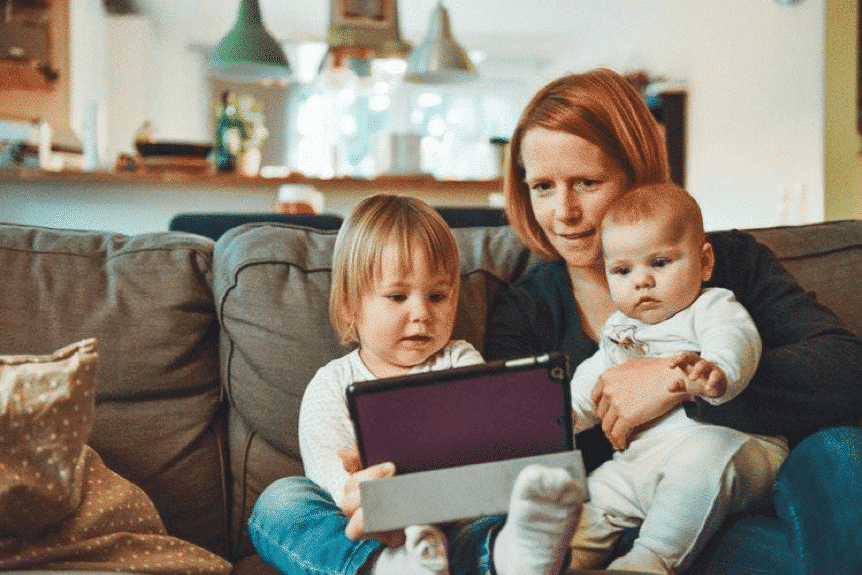
With the Covid-19 pandemic creating an unexpected need for online school, tech has been forever integrated into our children’s everyday curriculum. Teachers recognize that kids benefit from tech tools, and schools now offer individual devices for kids as young as elementary age. We’ve become reliant on screen devices at home too. Smart assistants, like devices that support Alexa, Google Assistant, and Siri, get us fast answers to questions in seconds. But is it helpful to outsource the brainwork we should be doing ourselves? What if you’re a kid who hasn’t yet mastered independent reasoning? Does relying on a screen device impair learning rather than help us develop it? Are teachers aware of how much kids are outsourcing learning to their devices? If you worry that your child is using tech too much, our Screen Safety Toolkit offers a resource guide so you can tighten up screen time supervision and management.
What are smart assistants?
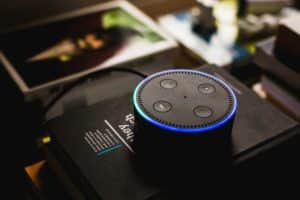
Smart assistants are tech devices, like phones, portable screens, watches, and speakers that use software to perform verbally requested tasks.[1] Among the most popular are Alexa, Google Assistant, and Siri.
As of 2021, about 47% of smartphone users in the United States are Siri-equipped iPhone users.[2] In 2020, close to 70% of smart speaker users in the United States used Alexa-equipped Amazon Echos.[3] The prevalence of these two smart assistants has created an encyclopedia of knowledge accessible just at the sound of our voices. In fact, Amazon promotes using Alexa for that very purpose.
Last year, Amazon ran an ad that showed a father asking Alexa what year Pompeii was destroyed. Once he receives his answer from Alexa, he shares it with his daughter who is clearly doing homework at the dining table. She then turns to ask him for the name of the volcano. He responds by turning back to the Alexa device. Although this ad intends to demonstrate a fun interaction between father and daughter, it also demonstrates how smart devices are being used to cheat on assignments and get easy answers.
Are kids using smart devices to cheat?
The modern generation of students is smart, and they know how to use the technological resources they are given. But they also know how to use them to cheat and get away with it.
A college student I interviewed recalls a run-in with a fellow classmate who had Siri turned on during a test in high school. “We were in the middle of a test in my AP European history class, and suddenly the iPhone of the girl sitting next to me begins speaking. You can hear Siri say, ‘The War of 1812 was…’ before she abruptly turned it off. The teacher immediately turned to her and said, ‘Make sure all phones are turned off please.’ The student turned bright red, so I think she definitely learned her lesson.”
This instance of cheating occurred in 2017. Since then, opportunities for cheating with smart devices are more common than ever. A recent high school graduate recalls taking tests during Covid-19. “The teachers would make us all have our cameras on, but they wouldn’t require us to be unmuted since it would be a distraction. Since they couldn’t hear us, anytime I would get stuck I would just ask the Alexa sitting in my room. Sometimes my friends and I would even Facetime each other and use my Alexa together whenever we felt confused. I honestly would never study for tests because I didn’t see a point when I could just get the information from Google so easily.”
For a student who is struggling, smart devices provide the perfect assistance for quick and easy answers to questions while simultaneously being practically untraceable. Other forms of cheating leave behind indicators or evidence, but smart assistants don’t.
It is a given that cheating is bad, but you may not know of the many downsides to cheating that go beyond academia. A recent study by a Harvard-Duke research team found that cheaters tended to engage in “self-deception,” meaning they would view their high performance as a sign of high intelligence, which may not actually be true. They see a high score, and even though they cheated, they believed that they are smart enough to have earned that score.[4] Another study found that when our kids cheat, they deprive themselves of the happiness that comes from independent accomplishment.[5] Smart devices are helpful tools, but when their assistance turns into dependence, kids begin to create a world where there actually at a disadvantage.
Take away or manage smart devices during class or homework time using resources from our Screen Safety Toolkit.
Advocate for your kids and communicate your preferences about tech integration with teachers and school administrators.
Offer valuable information and support for your learning community by suggesting a screen safety webinar from Dr. Bennett, our Screen Safety Expert, at your school and church.
Set up tech-free learning challenges for the whole family like a family game or trivia night.
Encourage creativity, curiosity, confidence, and a love of learning by offering a variety of fun educational materials and outings.
Optimize health tech integration for the whole family with the parents-only and family coaching videos from our Screen Safety Essentials Course.
Thanks to CSUCI intern, Katherine Carroll for researching kids cheating using smart assistant devices and co-authoring this article.
I’m the mom psychologist who will help you GetKidsInternetSafe.
In 2014, the Founder of GetKidsInternetSafe Dr. Tracy Bennett wrote an article on artificial intelligence (AI) facial recognition and the potential dangers associated with such technology. Fast-forward 6 years to 2020 and many of her predictions have proven true plus more than could have been anticipated. AI facial recognition has boomed to an extent that many companies are using our social media data to increase profits. Big tech is willing to do to capitalize on us, even if it is not in our best interest. For a glimpse into the scary future possibilities of privacy invasion and trampling on our civil rights, check out what’s happening in China in today’s GKIS article.
Artificial intelligence (AI) facial recognition has come a long way in the past few years especially since engineers have been using artificial neural networks. These neural networks are similar to an actual human brain. They consist of a connection of nodes called artificial neurons and can transmit a signal to other nodes. Once a node receives a signal, it can process the signal and relay the information to the other nodes connected to it. When it comes to neural networks, a person can input any type of information. In face recognition technology, an image of the face is entered. AI marks each feature as a nodal point, collecting more data with each image.
Facebook uses neural networks and processes over 350 million new pictures daily. Amazon also has a service called recognition where customers can pay to acquire Clearview AI is a controversial service that many in Silicon Valley have opposed due to implications on privacy. Clearview AI searches social media platforms and has acquired over 3 billion pictures in their inventory. When someone searching Clearview gets a match, they get data AND a link to the social media accounts where the facial data was acquired. Many have concerns that this takes the privacy breach a step further.
Beneficial Ways Facial Intelligence is Being Used
AI has led to the recovery of many missing children that have been sex trafficked or sexually exploited.
Taylor Swift’s security team used facial recognition at her concerts to see if any of her stalkers were in the audience.
Law enforcement uses AI to identify people that cannot identify themselves, like people with severe mental illnesses, people high on drugs, or people that are refusing to identify themselves. With a three-minute turnaround time, law enforcement is saving a ton of money and time so they can focus on other crimes.
Controversial Ways Facial Intelligence is Being Used
A man seen stealing beer at a CVS in New York City looked a lot like Woody Harrelson. The police entered a picture of Woody Harrelson into facial recognition technology and found a match. Although police were able to locate and apprehend the suspect, this technology could implicate the wrong person with similar facial geometry.
People of color are more likely to be misidentified due to AI facial recognition not being as good at differentiating people with darker skin.
The government could enable continued surveillance of certain individuals like they are doing in China. China uses facial recognition to follow Uighurs, a largely Muslim minority, as well as monitor all Chinese citizens using a social credit score.
Dystopian Surveillance
AI advancements worry people due to fear of one day living in a dystopian surveillance taped society. Having this type of society would mean that all citizens would be tracked, and privacy would cease to exist. One might think that with the civil rights protections in the United States we are not at risk. I wonder if Chinese citizens have concerns…
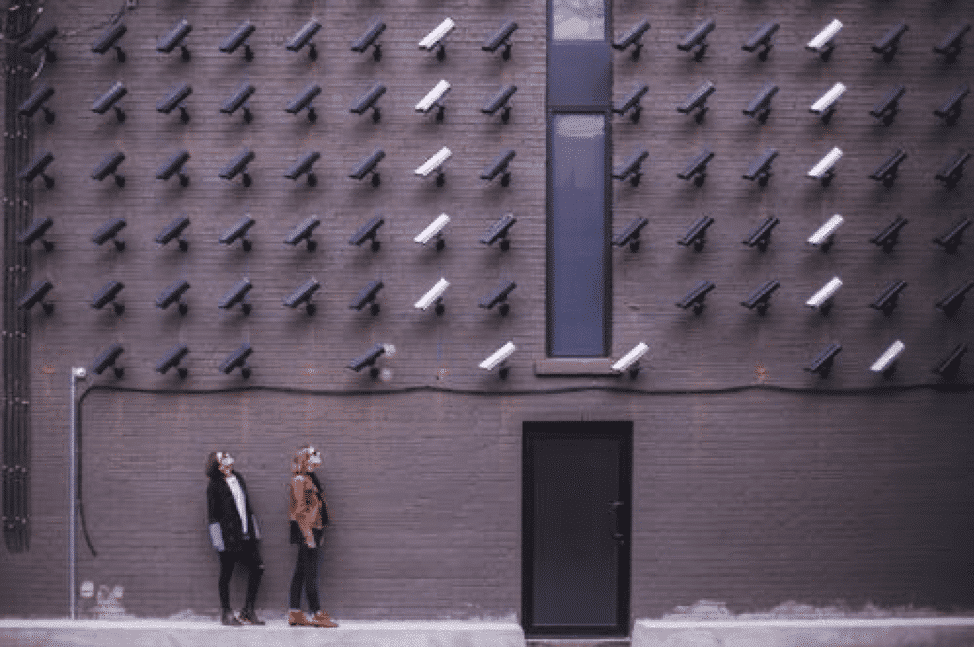
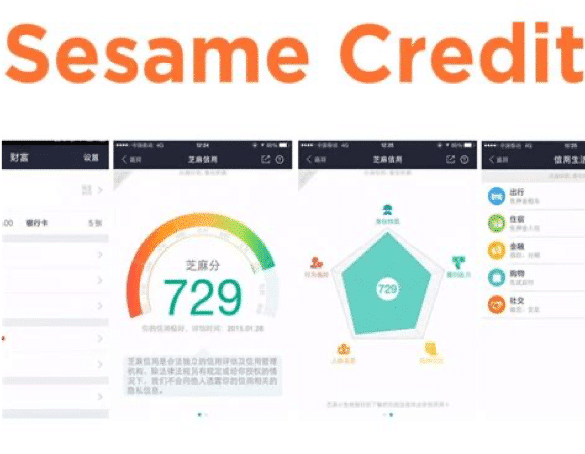
China has more AI facial recognition CCTV cameras than any other country in the world and is a prime example of dystopian surveillance. The Chinese government claims to use AI to lower crime and increase prosocial behavior using a social credit system by a company called Sesame Credit. They contend that this system encourages citizens to behave in a socially appropriate manner and if someone is a good citizen, then they have nothing to hide and the cameras should not be a concern.
Specifically, using Sesame Credit in China, if a Chinese citizen is caught on camera doing anything that is not considered “socially appropriate” like jaywalking, littering, smoking, or buying too much alcohol or too many video games, their social credit score will decrease. A low social credit score may result in the inability to purchase airline or train tickets or book at certain hotels, or they may be barred from certain schools and jobs. Citizens can also have their dog taken away if it isn’t walked on a leash or is a public disturbance. It is also mandatory for blacklisted citizens to register to a public blacklist which typically results in social stigmatization. Parent scores can affect other family members, like preventing kids from being accepted to private schools. Public shaming is a big part of the social credit system. Pictures of blacklisted and low scoring citizens are shown on TikTok, pictures and videos with names play on public LED screens, and addresses are shown on a map on WeChat.
People with good social credit scores appreciate the system since they get rewarded. Perks consist of discounts on hotels, entertainment, and energy bills and one can rent bikes without a deposit. High scorers also get into better schools and get access to better jobs. Users on dating apps are required to put in their social credit score; good scores get more dates.
Ways Citizens Can Raise Their Scores
Donating to college funds for poor students
Caring for elderly or disabled people
Repaying a loan even if the bank canceled it
How the United States is Implementing Social Credit
The U.S. has not implemented AI as comprehensively as China. However, it is used in some industries. For example, life insurance companies in New York are allowed to look at a person’s public social media account to see if they are engaging in risky behavior. They base a person’s premium on what they find. In fact, a 2020 survey found that 98% of professionals do a background check on new hires and 79% disqualified a job candidate due to unfavorable social media content.
There is also a company called PatronScan which was designed to help restaurants and bars manage customers. It can help spot fake IDs and troublemakers by scanning an ID upon entry. A public list is shown for all PatronScan customers. The problem is that judgment about what constitutes a “troublemaker” is subjected and may result in an unfair listing without the owner’s consent.
Rideshares like Uber and Lyft have reviews for both drivers and riders that may result in a customer being refused a ride. Airbnb also works by reviewing both hosts and renters. Many hosts refuse to rent to certain people based on their past reviews, and many hosts may not be booked based on renter reviews.
China is a prime example of the dangers of AI facial recognition and how it can affect our privacy and freedoms. There is not yet much legislation preventing AI from being used in the United States and there’s a need to push for it. Like the frog in the pot, people adapt so willingly to advancing technology that it’s difficult to recognize possible consequences.
For information and safety tips about how to keep you and your family safe, we highly recommend Dr. B’s Cybersecurity and Red Flags supplement. In an age where technology is advancing at such a fast rate, it is important to keep you and your family informed on current technological risks and how to prevent them.
Thank you to CSUCI intern Andres Thunstrom for co-authoring this article.
I’m the mom psychologist who will help you GetKidsInternetSafe.
Move over debutante balls and high school dances, unboxing a brand new smartphone is the new coming-of-age ritual for today’s teens.[6] Teenagers born in 1995 and after are the first generation to live their entire adolescence with a smartphone.[5] In 2017, ten years old was the national average for receiving a smartphone.[6] This profound and sudden cultural shift has fundamentally changed childhood and parenting. Smartphones are a new-found necessity and parents are scrambling to provide one as soon as possible.
“What’s the WiFi password?”
Technology is an important part of our modern culture. In comparison to the rest of the world, the United States provides cell phones to the youngest kids.[8] Everywhere you go there’s a child or teen glued to a screen. There are babies listening to “Baby Shark” in their strollers during morning walks with mom, toddlers playing Candy Crush in their restaurant booster seats, and teenagers scrolling their Instagram feeds while blindly following their parents around Costco. It shouldn’t be surprising that adults and kids alike spend more than half of their days staring at a smartphone screen.[6]
With a smartphone in every hand, parents are peer pressured by their friends and begged by their children to provide one. Parents feel guilty for withholding one for too long because they see their children socially isolated.[11] Yet, giving a smartphone to a ten-year-old today is fundamentally different than when parents gave sixteen-year-olds flip phones in the 90s.[4]
Nokia Flip Phone vs. iPhone
Down to the basics, the main function of a cell phone is to call and send text messages wirelessly with no data. Smartphones such as iPhones, Androids, Google Pixels, and so forth have transformed those basic necessities.[7] They need data and WiFi to power infinite applications and endless Internet access. Basically, it’s a mini-computer that is more powerful than all of NASA’s computing power in 1969…in the palm of your hand!
Innovative or Addictive?
Unlike phones in the 70s, there are thousands of engineers and tech designers updating smartphones every day.[5] Their job is to make sure that smartphones and applications consume all our attention. They dazzle us with colorful visuals, sound effects, and seamless switching between applications. Studies have shown that children exposed at a young age to these stimulating effects become wired to crave easy dopamine release.[12] Instead of going outside and playing with their friends, they turn to their screens for pleasure
Sean Parker confessed to taking advantage of the human psyche when developing Facebook.[1] The former president of Facebook explained their objectives were, “How do we consume as much of your time and conscious attention as possible?”[1] He and Mark Zuckerberg knew that small hits of dopamine from notifications would hook everyone.[1] Parker reflects, “I don’t know if I really understood the consequences…God only knows what it’s doing to our children’s brains.”[1]
It’s true. Silicon Valley’s tech executives have become wary of their own creations. They’ve noticed the negative effects on their own children.[11] For example, Apple’s co-founder Steve Jobs limits his children’s tech time. He even kept the iPad away from them when it was first released.[10]
Smartphone Dependency
With all this power comes responsibility. Former Apple designer Tony Fadell struggles with whether his apple products have helped or hurt society.[2] In his own children he has seen smartphone dependency:
“They literally feel like you’re tearing a piece of their person away from them — They get emotional about it, very emotional…They go through withdrawal for two to three days.”[2]
Dr. Bennett details in her book, Screen Time in the Mean Time: A Parenting Guide to Get Kids and Teens Internet Safe, how smartphone dependency is like that of drug and alcohol addictions. Whenever teens hear a notification or see new content, dopamine is released and pleasure is felt. If too much time is spent apart, the smartphone-dependent gets agitated. There’s even evidence that we get distracted just by having a smartphone near us, even if it’s turned off as if we are in a state of chronic hypervigilance for notification. She chooses to have a screen-free classroom, stating that the research demonstrates that, not only is the screen users distracted from the lecture, but so are those around them.
Notifications on smartphones can be so addicting they cause phantom buzzing or ringxiety. Daniel Kruger researched cell phone dependency at the University of Michigan. His study found that “if your phone is rubbing in your pocket or if you hear a similar tone, you might experience it as your phone vibrating or ringing, especially if your phone messages are highly rewarding to you.”[3] That’s how adept our attention has become to our smartphones.
“Best” Age
Many studies have tried to determine which age would be best for a smartphone. Recently, the World Health Organization (WHO) came out with guidelines recommending no screen use for infants under one year of age and only an hour a day for kids under 5. Dr. Bennett’s GKIS guidelines, which are offered in her must-have Connected Family Online Course, are consistent with this recommendation as well. The American Academy of Pediatrics and the Canadian Pediatric Society also recommend no screen time for toddlers younger than two years old.[12]
Many parents are under the false impression that virtual reality can replace real-life lessons for toddlers. But the psychological research shows that the skills don’t transfer over. For example, toddlers who play building block games don’t know how to build the same blocks when presented the toys in real life.[5] This is because the toddlers didn’t develop the skills before seeing it on the Internet.
Furthermore, Dr. Bennett states in her keynote lectures that some kids are less likely to try a task after seeing performed on YouTube. It’s as if watching “scratches the itch” of wanting to do it themselves. How-to videos often demonstrate an effortless learning curve, as the practice and messy sessions are edited out – leaving a quick and perfectly executed trial to view. When a child tries out the task themselves, they can fall into “compare and despair,” feeling that their very normal imperfect trial was a failure rather than a healthy try.
Dr. Bennett recommends that, from two to twelve years old, children shouldn’t have Internet-enabled smartphones. A normal flip phone that only allows for calling and texting will suffice for any safety concerns. Some starter phones even have GPS tracking.
Those are a general rule of thumb since all children vary in maturity. Age doesn’t qualify a child to use a smartphone well but instead impulse control, social awareness, and true comprehension of what technology does.[5] Bill Gates’ household requires at least one of the following to be met before a smartphone is given[6]:
Must be 14 years old
Demonstrate behavioral restraint
Comprehend the value of face-to-face communication
Dr. Bennett further points out that, even at 14 years old, kids don’t have the brain development to anticipate consequences and engage in high-order thinking. Just telling them what not to do will not keep them from making unwise, impulsive decisions online. In fact, kids are neurologically programmed to copy some of the cruel and vulgar behaviors they will invariably run across online, even with parental controls. Be prepared to calmly coach them through a variety of online mistakes. No child escapes it.
Wait Until 8th Campaign
If you’re looking for a place to start, GKIS recommends Wait Until 8th. As of March 2019, 20,000 families across the entire nation have signed the Wait Until 8th pledge.[9] These families have pledged not to give their children smartphones until at least the 8th grade. They emphasize that it isn’t the only path, but a path that offers a safe space for parents with the same concerns. Professionals in law, psychology, education, healthcare, business, and social work created the non-profit pledge.[10] They’re parents who have seen the negative effects of premature smartphone usage in classrooms, court systems, private practices, communities, and households. By spreading the pledge, the Wait Until 8th Campaign hopes to:
Increase engagement in education
Encourage parents to set screen time boundaries
Change society’s view on technology so children can live authentic childhoods
“Can I have one now?”
Your teens will eventually get a smartphone, like everyone else. We don’t want to restrict them for so long that they go wild once given access. But first, we have to coach them to make good decisions on their own. This way, we can better trust them to be mature when facing issues like cyberbullying and age-inappropriate content. As simple as they seem, smartphones are very powerful. With that power comes great responsibility for parents to make sure that smartphones are a tool we use, not a tool that uses us.
Already given them a smartphone or getting ready to start? It’s never too late to make some adjustments. Dr. Bennett has put together a reliable Screen Safety Toolkit to help you get started. This resource offers links and explanations of parental control options on devices, through your Internet service provider, and through third party products so you can match your child’s use patterns with the right toolkit. She also offers a bonus of great learning apps and websites to help your child build their joy of tech-assisted learning!
Thank you to our GKIS intern Hanna Dangiapo for writing about this topic! (She admits that she still reminisces about her Motorola Razr).
I’m the mom psychologist who will help you GetKidsInternetSafe.
Screen addiction is officially a thing. As a mom and clinical psychologist for over 25 years, I recognized and identified it in 2014 when I founded GetKidsInternetSafe from treating hundreds of families in my private practice. Teaching addiction studies at CSUCI also highlighted the similarities between drugs and screen behaviors for me. Like everybody else, I too was having a hard time chasing my kids off our screens. Honestly, even I was getting lost in my research and on Facebook, losing the ability to chill and read a novel. I started to worry about my family. From there, I wrote my book Screen Time in the Mean Time, offered keynotes and presentations, consulted with tech companies, coached families, built and tested my online courses, and created a weekly blog. And, after all that, the World Health Organization finally confirmed what I’ve been screaming from the rooftops. Big tech creates screen products that are manipulatively designed to trigger the pleasure centers of our brains, and we are, in fact, clinically addicted.
Gaming Addiction
Nearly 60% of parents think their teens are addicted to their mobile devices. In 2018, the World Health Organization (WHO) classified gaming addiction (IGD)as a mental health disorder. In the last twenty years, the tech revolution has affected every aspect of our lives. Studies have shown that, for some subjects, compulsive screen use impacts the reward and pleasure areas of the brain in the same ways that alcohol, drugs, and other behavioral addictions do. Screen addiction treatment centers have been popping up in Asia for the last decade and are starting to be in the United States as well. Do you worry your child may be showing signs of screen addiction?
——————-
“Remember, when Betty Ford first admitted she was an alcoholic, we didn’t have people believing it was actually a problem until she came around and talked about her own problems with it. This is a place for people to go for help, and that we hope will help everyone around them stop taking Internet addiction so lightly.”
Kimberly Young (founder of The Center for Internet Addiction in 1995)
————————
Who is to blame?
Parents
Of course, we have some accountability for what happens under our roofs. Pester power breaks us down, and we allow too much screen use even though we know better. We need a break in our overtasked, screen-saturated lives. We can’t entertain our rug rats 24-7.
Kids
They are so persistent! They CRAVE screen use and are master manipulators. Children are vulnerable to screen addiction because their brains are not fully developed, particularly in the prefrontal cortex, which is responsible for impulse control and decision-making. Children who suffer from trauma like bullying, divorce, and abuse, as well as from psychological vulnerabilities like ADHD, anxiety and mood disorders, and autism are particularly vulnerable.
Schools
Schools are increasingly adopting curriculums that require screen use and Internet access during classroom and homework time. Without digital literacy, our kids academically falter. If you are reading this as part of your Social Media Readiness Course, then either your parents or your school are doing an awesome job prepping you to avoid addiction issues down the line.
Big Tech
Screens are programmed to addict us. Big tech, like Google, Amazon, and Facebook, are experts in how to keep us coming back for more. Using secret computer algorithms, our online behavior is studied, collected, and aggregated. This data is used to create and deliver content in the ways our brains will effortlessly absorb it. That translates to targeted ads for clicks and money leaving our bank accounts. Big profit indeed.
The Gaming Industry
The gaming industry made 183 billion dollars last year. Multi-level, high-sensory games, like Fortnite, are intentionally programmed for addictive use. Players are rewarded for staying on and punished for getting off. This keeps kids on-screen, vulnerable to hours of autonomic overarousal. That means they burn too much brain fuel and are left fatigued and in mental brown-out.
The Government
Where is the regulation to protect kids? Are civil liberties really that strong that legislators can’t step in to help parents protect their kids against known harm like online pornography? Or is it that research and treatment organizations can’t compete with rich lobbyists who get direct access to our legislators? Did you know that the advertising budget for Budweiser alone exceeds the entire budget for research on alcoholism and all drugs of addiction?
How common is Internet Gaming Addiction?
Recent studies claim that around 1 – 5% of the US population could be classified as Internet game addicts. It is most common among single young males. Male Internet addiction most typically involves video gaming, cyber-pornography, and online gambling. Women are more likely to show addictive use patterns with social media, texting, and online shopping. IGD commonly cooccurs with depression, anxiety, AD/HD, self-harm, obsessive-compulsive disorder, oppositionality, suicidality, and personality disorders.
Other risk factors include living in the city, not living with a biological parent, low parent involvement, parent unemployment, and not having a reliable friend.
Consequences of IGD include skipping school, lower grades, family conflicts, lack of offline sociality, sleep problems, and unresolved developmental problems. These factors, along with emotional problems, often result in the addict lacking the very resources necessary to break out of the addictive cycle.
What do brain studies say?
Brain imaging studies have found brain changes like those seen in subjects with drug addictions. In other words, the more we play video games, the more our brains change and adapt.
Activation pattern changes that result in brain tissue changes are called adaptive neuroplasticity.
More specifically, subjects with video game addiction show a reduction in gray and white brain matter and reduced cortical thickness in various areas of the brain. The more the gamer plays, the more brain changes. Studies have also found evidence of dopamine release and higher activity in the brain’s pleasure center when playing video games. Heavy gamers have significantly more difficulty calming their emotions and making sound decisions than nongamers.
Thank you to CSUCI Intern, Katherine Bryan for contributing to this article. Screen addiction is real and now universally recognized. If you worry you are seeing red flags in your home, remember that screen addiction is preventable!
I’m the mom psychologist who will help you GetKidsInternetSafe.
This has been a big week for grassroot efforts to GetKidsInternetSafe. First was the petition urging YouTube to delete the account of wildly successful YouTube celebrity, Logan Paul, after he tastelessly posted a video showing him giggling alongside a suicide victim. Second was an open letter from two investors urging Apple to help parents with screen management due to screen addiction rates among children. Although research is scrambling to get current, there is substantial evidence that kids are being exposed to harmful content and addicted to their mobile screens. These two precedent-setting moves reflect growing concern and awareness about the very aspects that spurred me to create GetKidsInternetSafe; that technology is profoundly changing childhood and even brain development. After her inspiring Golden Globes speech about our influence on kids, we need Oprah to help us get the GetKidsInternetSafe Revolution some momentum!
In modern times, child screen use has had a greater impact on the American family than anything since the abolition of child labor in 1938. Parenting has become a full-time preoccupation. Kids don’t labor for parents, parents labor for kids. Because of what we perceive as society’s high expectations of parents, raising healthy, happy kids has become overwhelming. We are expected to faithfully care for and entertain our children most of our waking hours without complaint. Although parents are waiting later to have kids and having fewer kids per family, with both parents working and the disappearance of extended family help, we have fewer supportive resources than ever before.
Even with little support, we have been accused of “helicopter parenting” to keep our kids safe and successful. We too often expect our kids to earn 4.0 GPAs, awards in robotics, and trophies in sports. Cs aren’t “average” anymore, now they’re a mark of parents not helping enough with homework. Our fear that we aren’t doing enough trickles down to our kids in the form of encouraging lectures and, too often, scathing shame and disappointment. We know this is too much pressure. So in between the “enriching” activities we work so hard to provide, we allow them leisure time…more leisure time than any children in history.
Parents are no longer willing to order their kids to go play outside until the streetlights come on. It’s too scary knowing what we do about child predators, bullying, sex, and drugs. To keep kids safe, we shelter them inside our houses to save them from the world’s perils. Instead of running amok like we did with hordes of neighborhood kids creating spontaneous, street-smart missions, they watch screens. And while they’re on their screens, we’re also on ours. Screen time gives us much needed breaks and provides what we hope is enriching content and a primer in digital literacy. But the troubling behaviors our kids demonstrate while compulsively viewing videos, social media, and video games eerily resemble signs of addiction. And we are the dealers, providing screens too often while they’re too young. We are hooked too. We feel guilty, but it’s often the best we can do. Screen technology has transformed childhood and parenting.
Thursday, Universal’s Access Hollywood Live, again hosted me as their parenting expert to talk about America’s concern about the negative impact of inappropriate video content through YouTube. As I stated on the program, the content that gets through is tantamount to child abuse, and kids don’t have insight into their psychological vulnerabilities. It is up to parents to filter and monitor. But we all know that there isn’t a tool strong enough to keep out sneaky algorhythms and celebrities and corporations bent on viral views that translate to big profits. We need help…and soon!
In their open letter to Apple, activist investors Jana Partners and the California State Teachers’ Retirement System (Calstrs), detail how surveys and studies definitively demonstrate that “it is both unrealistic and a poor long-term business strategy to ask parents to fight this battle alone.” They go on to say, “Imagine the goodwill Apple can generate with parents by partnering with them in this effort and with the next generation of customers by offering their parents more options to protect their health and well-being.” With their $2 billion dollar’s worth of Apple shares, their message is bound to get Apple’s attention.
Let’s be honest here. There is a rich clubhouse of companies that share the responsibility of the wellbeing of the world’s screen-watching kids. Youtube and Apple, yes, but grassroots activitists like myself are also reaching out to collaborate with other influential tech-giants like Facebook, Twitter, Instagram, Snapchat, Google, Amazon, and Disney, among others.
Until we come up with technology tools and sensible legislation protecting our kids from destructive violent and pornographic content as well as distracting, brain-changing, addictive use habits, we are stuck to do our best. Like I said on nationally syndicated television Thursday, how about we start by making our voices heard!
Here are the talking points from my AHL visit with fellow concerned moms, Natalie Morales and Kit Hoover:
Logan Paul has 15 million subscribers. He posts a 15-minute video a day, getting 300 million views a month (making 12-15 million dollars off these videos). His eager subscribers are primarily young people. How do you monitor?
With good old-fashioned supervision, location parameters, and rules to start. No screens in bedrooms, bathrooms, or behind closed doors. Dock mobile screens at night and set a Wi-Fi curfew. The GKIS Family Living Agreement helps get parents on-track.
YouTube does have a “safety” mode, but that doesn’t always prevent your child from seeing this content. Is it more about having a conversation as a family? How should you approach this?
There is a YouTube Kids site that also helps, but yes, it is about having conversation as a family, and a lot of it. Recognize that kids don’t yet have the experience to understand psychological vulnerabilities. Use current, fact-based information like that offered for free and delivered weekly on GetKidsInternetSafe to keep the conversation going. Saying “don’t do that” isn’t enough. Follow the specific conversation starters and sex ed tips offered in Screen Time in the Mean Time to ensure your kids know the difference between sensational content designed for profit (fake news) and content that reflects real-life, factual scenarios.
You have to be 13 years or older to use YouTube, but many of his followers are under the age of 13 (including Kit’s son)….
Exactly. We are all guilty of monitoring failure. We simply can’t supervise our kids 24/7, nor is it appropriate to do that. Social media platforms say 13 years old is required for use, but that is based on privacy issues rather than sound psychological reasoning. Accidental exposure is the most common type, but recognize that kids and teens are developmentally curious and bold; they’ll go looking for distressing material.
Is there a problem with kids being desensitized from these type of videos? Some kids who viewed this may have thought nothing of it.
My GetKidsInternetSafe articles detail how desensitization and even PTSD symptoms can result from livestream video viewing by kids and adults! Not only should Logan Paul have had x-generation team members to help him with common sense and compassion in that Japanese “suicide forest,” but our kids need a support team too. The victim ended his life in deep despair and his family members are destined to maintain it in their grief. Parents must specifically teach empathy and compassion and recognize that viewing violence and flippantly talking about issues like suicide can create real risk, like suicide contagion – a dangerous cry for help.
People are calling for Youtube to suspend Logan Paul’s account after posting this video. Do you think that’s the right move? Are you surprised Youtube hasn’t taken action?
The truth is that YouTube profits from viral videos, and you can’t help but wonder how often does profit get in the way of ethical constraint or human compassion. I think that parents need to advocate for better safety measures on all the livestreaming platforms. In my practice, I treat kids who are commonly viewing violent pornography, imitating life-threatening stunts, and engaging with human traffickers, hate groups, and child predators. The research is showing that seeing hours of livestream news video, like what we saw with the Las Vegas shootings, can be more psychologically distressing than being a live witness to the tragedy! We can prevent this, and more can be done.
What can you do today?
Decide on a course for getting kids Internet safe by advocating with your favorite organization, like GetKidsInternetSafe.
At the time of this publication, the “Delete Logan Paul’s YouTube Channel” petition by an unknown author on Change.org had over 465,000 signatures. I personally wish the petition was addressed to YouTube with a plea to tighten their security measures rather than publicly shame Logan Paul. Although he is on a well-earned break, he took the video down himself. Before he did that, it still got over 6.5 million views and is currently being shown by other YouTubers who are at once shaming him for his judgment while simultaneously rebroadcasting the videos. Really folks? Hypocrisy in action.
Clean up your own screen use habits.
We are all habituated to picking up our phones in the meantime, whether it be waiting in line or during soccer practice. Let’s all make a little more effort to stay in the present with our kids and risk being alone with our thoughts. Remember what that used to be like? 🙂
While we all spend the meantime on our phones, the mean time is being fueled. There are online risks to kids that most parents have never dreamed of. The future is here and despite how many of us, like Kit Hoover, wish we could go back to kick-the-can days, digital literacy is necessary for academic progression. Our kids won’t hear of no-screen weeks, nor will we. That means we need to get brave and educated. You may think you’ve heard it all, but I’m certain my information will help you make a more comprehensive and sensible safety plan and bring you closer to your kids. At the end of the day, what matters is that we do a good job raising great kids. Nothing is more important than that.
I’m the mom psychologist who helps you GetKidsInternetSafe.



 Thanks to CSUCI intern, Katherine Carroll for researching kids cheating using smart assistant devices and co-authoring this article.