Like movies, video games have contributed to a massive and diverse industry. The video game market place Steam has over thirty-thousand games available for sale and only 47% of developers sell their games using steam. This article will teach you what you need to know about the diversity in the gaming market, the games that came out of home projects, and what you need to know for you young gamers. Here at GKIS we care about the internet safety of your young gamers and we want to protect them from digital injuries. Check out the GKIS Social Media Readiness Course to prepare your tweens and teens for the dangers they will face while playing games and interacting on social media.
What is an indie game?
A video game can be classified into one of two groups based on who produced the game, AAA games and Indie games. AAAgames are produced by a major company that can back the game’s production with money, personnel, and any other resources the production may need. Indie games are produced by either a small team or a single developer with minimal resources at their disposal. An indie game developer is typically a single person with a good idea and access to game developing software.
A video game is a large time investment for any developer. Large game developers have teams of experts who each work on the pieces of the game resulting in a short production time. Indie developers, on the other hand, typically have minimal resources. They often crowd-fund projects and make sacrifices to release games in a reasonable amount of time. Indie developers tend to rely on social media for brand awareness and marketing.
Well Known Indie Games
Indie games may start out as small passion projects, but well-made games can gain popularity and become just as popular as AAA games. When an Indie game becomes popular enough, AAA publishers may buy the game from the original developer. This allows the publisher to put their formidable resources behind the project and then reap the rewards of the new and improved game. Here at GKIS, we put the formidable resource of Dr. Bennett’s years of knowledge and experience as a licensed clinical psychologist to work to create the Screen Safety Essentials Course. The Screen Safety Essentials Course provides parents and children with access to a comprehensive program that will help families to create safer screen-home environments and foster open communication.
Here are some Indie games you may recognize:
Minecraft
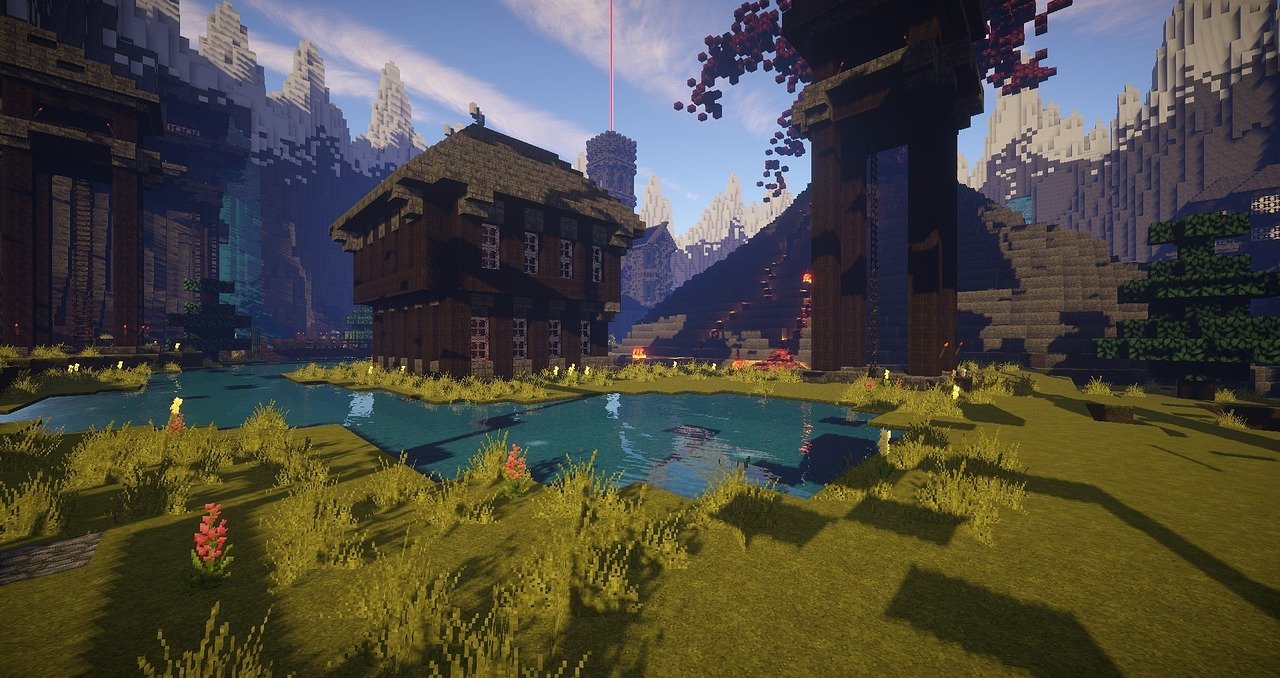
Minecraft is an incredibly popular Indie title, having sold over 200 million copies to date, and was sold to Microsoft the company behind the Xbox game console in 2014. Microsoft has since updated Minecraft with new content, released two more games under the Minecraft title, and expanded the game into other profitable areas such as toys.
Undertale
Undertale is a game that was crowd-funded and released in 2015 with an estimated 5.8 million users. Created by a single developer, this game has reached a level of acclaim that Nintendo licensed one of the characters to appear in one of their own games. The game also has its own line of merchandise and a much-anticipated sequel currently in development.
Among Us
Among Us is a more recent success story of a small social deception game that rocketed into the public eye, and boasted 60 million active users a day at the peak of its popularity. The game was very popular amongst YouTube and Twitch creators, which acted as a very successful marketing campaign. The game has become so popular that, during Halloween, kids were running around in inflatable costumes of the Among Us space suits.
The Benefits of Indie Games
Without a big corporation behind them forcing big decisions, indie developers can make any game they want. For example, Cup Head is an extremely difficult game with an art style designed to be an homage to the early era of hand-drawn cartoons. Some games are designed off of a single weird concept or a specific labor of love based upon an obscure passion.
Most indie developers try to get the funding they need to produce a game using crowd-funding. Crowd-funding is when a designer puts out a concept of a project online and gets funding from the potential fanbase to make the game through a mixture of donations, pre-purchasing the game before development begins, and additional benefits for backers of the game. Benefits can include anything from your name in the credits of the game as a backer to having input into a part of the game or a character in the game being named for the backer. Crowd-funding allows a developer to pool money for a passion project from people who are excited about the game. Crowd-funding success helps to attract investors because it reflects customer interest.
The Dangers of Indie Games
Indie games have been a source of some of the greatest titles of the last two decades, but that doesn’t mean that every Indie game is going to be like Minecraft. Indie games can be whatever the creator wants, and that’s not always a good thing. For example, some developers push the boundary of horror games and explore themes AAA horror would never touch. For example, The Binding of Isaac is one of the most popular Indie games of all time. The game explores themes of child abuse, religious extremism, and child suicide.
Indie games can explore any theme no matter how dark or twisted and the limit to what can be made is limited only by human imagination. That doesn’t mean all Indie games are horror games. But the range of themes available is significantly more diverse than the AAA scene for games.
What does this mean for your young gamers?
Within the gaming industry, Indie games are incredibly diverse. The diversity of genres and topics can create games that range from poorly made first attempts to truly frightening horror games and all the way to amazing successes like Minecraft.
So, what can you do for your young gamers online?
Read the summary.
If your child wants to get an Indie game it will often come from a website that allows developers to post and sell their games. There is a store page on Steam associated with a game that will give you a description of the plot, gameplay, pictures of the game, and reviews from people who have played the game. This will allow you to make an informed decision if this game is right for your child.
Our family course is designed to bring your family closer and get your kids working with you to stay safe on the internet. Our connected family course is outcome-based and will help you close screen risk gaps and increase family closeness and cooperation.
YouTube
You can often find YouTube creators that have recorded gameplay of popular new Indie games. If your child wants to play the new game their favorite YouTuber is playing, watch one of their videos with them. It’ll show you what kind of game your child is looking at, and you’ll get to hang out with your kid while you do it.
Thanks to CSUCI intern, Jason T. Stewart for researching advances in the video game industry and co-authoring this article.
I’m the mom psychologist who will help you GetKidsInternetSafe.
Coble, V. (2021, September 30). 10 most disturbing psychological horror indie games. CBR. Retrieved November 20, 2021, from https://www.cbr.com/indie-games-disturbing-psychological-horror/.
Curry, D. (2021, November 11). Among us revenue and usage statistics (2021). Business of Apps. Retrieved December 4, 2021, from https://www.businessofapps.com/data/among-us-statistics/.
Curry, D. (2021, November 11). Minecraft revenue and Usage Statistics (2021). Business of Apps. Retrieved December 4, 2021, from https://www.businessofapps.com/data/minecraft-statistics/.
Donnellan, J. (2021, June 8). 50 best indie games of all time. Cultured Vultures. Retrieved November 20, 2021, from https://culturedvultures.com/best-indie-games-all-time/.
G., D. (2021, November 1). 45+ video games industry statistics, facts, and trends for 2021. TechJury. Retrieved December 4, 2021, from https://techjury.net/blog/video-games-industry-statistics/.
Lowry, B. (2017, November 29). This is what sets ‘indie’ and ‘AAA’ video games apart. Windows Central. Retrieved November 20, 2021, from https://www.windowscentral.com/indie-vs-aaa-which-type-game-you.
Mikolić, M. (n.d.). Undertale stats by Playtracker Insight. stats by Playtracker Insight. Retrieved December 4, 2021, from https://playtracker.net/insight/game/1122.
Oddo, M. V. (2021, August 2). What’s an indie game anyway? Collider. Retrieved November 20, 2021, from https://collider.com/what-makes-an-indie-game/.
Video games have come a long way since Pong was first released in the 1970’s. Advances in gaming technology can enhance the experience for adults, but for children more realistic games are harder to distinguish from reality. At GKIS, our Social Media Readiness Course is designed to prepare your tweens and teens for the unexpected dangers of video games and social media sites. Our course is backed by Dr. Bennett’s years of experience helping tweens and teens who have already suffered digital injury from the unforeseen dangers found online. In this GKIS article we will cover the evolution of graphics and the steps gaming companies take to make games seem more real.
Video games Are Evolving
Video games are based in technology, and since players got their hands on Pong there has been a push to
advance that technology. Originally, video games were played using bulky arcade cabinets. The first home consoles were very restricted by their hardware. Games were flat and involved a character moving around the screen like a piece on a board. This all changed with the introduction of 3D graphics in the early 2000s. For the first time, video games had physical depth and the characters on screen moved more like a real person would.
Video games are striving every year to create a more realistic virtual environment. Games now have wind that moves individual leaves on tree branches, light that dances across the surface of the water, and characters that look real from a distance. Modern video games have advanced technology to foster a sense of extreme realism and maximize immersion. With such engaging digital experiences, it is important that children are provided with boundaries so as to prevent screen-time overload and digital injury. Our Screen Safety Essentials Course grants you access to weekly videos with parenting tips and coaching from Dr. Bennett that will help you pull your child out of their digital world and back into ours.
Motion Capture
It can be difficult to program a character to move in a realistic way. The awkward way early 3D characters moved unfortunately hampered immersion. Recently, the gaming industry began to use motion capture technology to solve this issue. Motion capture is a technique whereby a real human being is recorded in a studio as a program captures their motion and applies it to the game character to make the movement look as real as possible.
In a game called LA Noir, you are a 1940’s detective. One of the major objectives of the game is to interrogate suspects and solve crimes. For authenticity, developers created the characters with real facial expressions. The game used an advanced motion capture system to record the real facial expressions of the voice actors portraying the game characters. Players can tell what a character is feeling or if they’re lying based on facial expressions alone. The game uses very real human empathy and natural social cues as a part of the game, offering deeper immersion and better quality overall.
Real Game with Real Fear
Realistic graphics are fascinating when they’re used to make a character blink and breathe like a real person. Immersion is the goal, especially in horror games. Early horror games were limited in what they could create by the consoles of the time. However, as modern technology has evolved, new possibilities have opened for the horror genre.
Games can include motion-captured characters with realistic looks of fear and pain on their face. Horror games originally wanted to compete with the horror movie industry, but horror games now have the ability to do more than movies ever could.
For example, a game called Dead Space takes the classic zombie movie genre and sets it in a futuristic space station. An alien artifact mutates humans into nearly unkillable monsters. The game makes great use of body horror to drive home the alien nature of these dead humans. Body horror is a type of horror derived from twisting the human body into unnatural shapes creating nightmarish monsters. Our mind still sees that the monster is technically human, but is terrified by how wrong it has become. For example, in Dead Space, the zombie you are tasked to fight is a human with an open chest cavity and arms twisted in unnatural positions with sharpened bone where hands used to be. The key feature is that they still have a human face attached to the monstrous form to remind you that they used to be like you.
Immersion in horror games
The main thing horror games have over movies is the personal nature of the narrative and fear within. A zombie movie may be scary to watch as your favorite character fights for their life. However, an immersive game like Dead Space can make you feel like you’re the one fighting for your life. The immersive narrative attempts to draw you into the character’s shoes and, for the time you play, you can believe that you’re really in danger. The narrative takes on a whole new depth as suddenly you’re the one backed into a corner with only a handful of ammo and your wits.
Another dimension is that a game doesn’t guarantee a happy ending. When you run out of ammo, you know that you’re the one who’s going to die. Often when a gamer talks about an experience with a horror game, they speak in the first person. When I first played Dead Space, I remember the adrenaline rush I got when I had no ammo, because I knew I was going to have to fight my way out with my bare hands. The memory of playing a game differs from a movie because it stores itself as if the player had physically been there.
What does immersion mean for kids?
Realistic video games can be frightening and exciting to play. But at the end of the day, a player can still distinguish the game from reality. The same can’t be said for children exposed to the same things. Children have a harder time separating fantasy from reality.
As video games strive to be as close to reality as possible the task only gets harder. An adult who plays a particularly realistic horror game may have trouble sleeping for a night, but a child will suffer far worse than any adult.
Even outside of horror, we have shooter games that strive for realistic blood and death. Sniper Elite is a game that will follow the bullet fired from a sniper rifle through an enemy to show bones break and organs rupture as the bullet penetrates their body. These advances in immersion are great for taking a player into the world of a game, but only as long as that player has developed enough to pull themselves back out.
What can you do for your young gamer?
ESRB Ratings
Most video games come with an ESRB rating on the box to let players and parents know what type of audience the game is suitable for. If a game is rated for an audience older than your child, the game contains content inappropriate for their age group.
Our Connected Family Course is designed to help keep your family connected in a world separated by screens. Backed by years of psychological research our course is designed to keep your family connected and working together to prevent digital injury.
Play games with your kids
Make sure the game your child is playing is appropriate and get some fun bonding time in. You can learn what the game your kids are playing is really like by just spending time with them while they play. If a game is inappropriate, it’ll be hard to hide for long.
Thanks to CSUCI intern, Jason T. Stewart for researching advances in the video game industry and co-authoring this article.
I’m the mom psychologist who will help you GetKidsInternetSafe.
Walker, C. (2010, December 22). Video games and realism. Wake Forest News. Retrieved November 3, 2021, from https://news.wfu.edu/2010/12/22/video-games-and-realism/.
Yesterday in response to the El Paso and Dayton mass shootings, President Trump stated, “We must stop the glorification of violence in our society. This includes the gruesome and grisly video games that are now commonplace. It is too easy today for troubled youth to surround themselves with a culture that celebrates violence. We must stop or substantially reduce this and it has to begin immediately.” In response, #videogamesarenottoblame started trending on social media. Talk show hosts came out in force stating that there are no research studies linking video games to mass shootings and youth in other countries play video games, yet they do not have mass shootings like America. Consistent with their argument, as video game playing has gone up, juvenile delinquency has gone down. Even Trump’s own 2018 school safety commission produced recommendations that do not support yesterday’s statement. But as founder of GetKidsInternetSafe, I’m behind the President on this one that the on-demand violent entertainment that proliferates American culture deserves serious discussion. Of course, video games are not the sole cause of hate crimes, nor is the research clean about video games causing violence. But that doesn’t mean it isn’t a contributing factor (among many) to making troubled people vulnerable to radicalization online.
In the wake of 31 additional innocent lives lost to senseless gun violence at the hands of extremists, we can all agree that we have reached a crisis point in the United States. The horrific violence of recent hate crimes demand that our leaders act with moral clarity and urgency of action. But they need our support to get this done. They cannot act decisively if everybody gets hysterical and arm-chair quarterbacks every statement of action. Instead of emotional one-sided arguments, let’s think through some of his points about violent entertainment and video games. After all, our kids are at virtual war several hours a day. It is common sense to consider that this may have negative impact on some of them…especially the psychologically vulnerable.
Violence for Profit: Passive Viewing of Television and Video
The United States has long been criticized as the dominant creator and celebrator of violent entertainment. Chalk it up to our fierce protection of the right to bear arms or our thirst for thrilling content, more and more Americans are fans of violent sports, television, movies, and video games. As adults gobble up violent content for entertainment, our children are too often exposed to violence early and often with little regard to the damage it may cause. Everybody is doing it. Right? Right. Yet it has been widely demonstrated that viewing screen violence, passively and interactively, causes aggressive and hostile behavior in children and adults. However, not everybody who watches violent TV or plays violent video games acts aggressively. How much is too much for children who are vulnerable due to immature brains?
First, we must accept that not all screen time is equal. Screen viewing can be passive (watching television and videos) or interactive (screen touch and video games). In regard to passive viewing of violent screen content, the American Psychological Association Council Policy Manual on Violence in Mass Media (1994) concludes from decades of research that there is correlative and causal risk. It specifically states:
On the basis of over 30 years of research and a sizeable number of experimental and field investigations, viewing mass media violence leads to increases in aggressive attitudes, values, and behavior, particularly in children, and has a long-lasting effect on behavior and personality, including criminal behavior;[i],[ii],[iii]
Viewing violence desensitizes the viewer to violence, resulting in calloused attitudes regarding violence toward others and a decreased likelihood to take action on behalf of a victim when violence occurs;[iv]
Viewing violence increases viewers’ tendencies for becoming involved with, or exposing themselves to, violence;
Viewing violence increases fear of becoming a victim of violence, with a resultant increase in self-protective behaviors and mistrust of others; and
Many children’s television programs and films contain some form of violence, and children’s access to adult-oriented media violence is increasing as a result of new technological advances.
These conclusions are particularly troubling when one considers that, despite these findings existing for decades, the Internet and screen technology has exploded access to on demand violent content for all ages. The younger the child, the more time viewed, and the intensity and applicability of the content, the more potential developmental impact. Research demonstrates that children who have not yet started talking are affected by screen viewing in ways parents cannot recognize and that impact changes month-to-month, year-to-year. Furthermore, even kids as young as infants who view alongside an older sibling or a parent may still be negatively affected by inappropriate content.
Violence for Profit: Gaming and Interactive Screen Use
All parents want their children to succeed and live happy lives. We’ve generally accepted that screens are part of it. But parents often wonder, how much impact does violent gaming content have on psychological process? Too often we are seeing school shooters reference violent video games in their pre-attack manifestos. Do we have anything to worry about?
The five main video game play genres include action, role-playing, simulation, strategy, and sports. Gaming ranges in content and interactivity from simple puzzle games to complex massive multiplayer online role-playing games (MMORPGs). In MMORPGs, a large number of people play online together as developed characters in complex, online lands with shared goals in real time. Platforms for gaming include smartphones, tablets, handheld gaming devices, computers, gaming consoles, and the developing market of virtual reality (wearable devices with sensors like a helmet, goggles, and gloves where users can “interact” with a three-dimensional environment) and augmented reality (computer-generated images superimposed on the player’s view of the real world, resulting in a realistic composite of real and virtual life).
Other new, immersive auditory and visual adjunct technologies include transmedia storytelling (story content presented across multiple platforms and formats using digital technology), mini-games (video games contained within video games), chrono- and geolocation (identifying the time and location of players), and object linking (embedded links that lead the player to sequential digital locations). With multibillions of dollars earned each year from the gaming market, gamevertising has also become increasingly prevalent. This means that games are being expertly designed for product placement and with manipulative neuropsychological principals built in to ensure that gamers stay online and spend more money.
Beyond education and entertainment, benefits that can be gained from playing video games include improvements in visual-spatial capabilities, reaction times, attention span, ability to process multiple target objects, and detail orientation,[v] as well as improved visual short-term memory, mental rotation, tracking, and toggling between tasks.[vi] Video games can also help with anxiety and mood and improve relaxation and improve problem solving, strategy building, goal setting, and cooperation with others.
Video games also have vocational applicability and can be customized for specific tasks, such as orienting and motivating employees, providing health care benefits like exercise or illness care, or teaching specialized skills like performing surgery or sporting ability.[vii] Some gamers compete in profitable e-sport tournaments in person and online, while others learn computer programming skills that can be marketable as a career specialty. Mastery of video games provides opportunity for increased confidence, social connection and networking, and self-esteem. Social benefits are particularly valuable for players who may be isolated by geographic remoteness or physical or mental disability.
Along with benefits come risks. Ninety-seven percent of teens play video games, and more than 85% of video games have violent content.[viii] As with all complex psychological phenomena, different effects happen in different situations with different people. Thus, issues like content, time spent playing, and player vulnerabilities due to family life or mental health must be taken into account when considering effect.[ix]This makes for messy factors to control for quality research and controversial opinions about the risks of violent video games.
Meta-analytic reviews of research have found that violent video games can cause aggressive behavior, aggressive thinking styles, and aggressive mood, as well as decreased empathy and prosocial behavior. In regard to the effect of violent video games on children, teens, and adults, the American Psychological Association Council Policy Manual Resolution on Violent Video Games (2015) concludes:
A convergence of research findings across multiple methods and multiple samples with multiple types of measurements demonstrates the association between violent video game use and both increases in aggressive behavior, aggressive affect, aggressive cognitions and decreases in prosocial behavior, empathy, and moral engagement;
All existing quantitative reviews of the violent video game literature have found a direct association between violent video game use and aggressive outcomes;
This body of research, including laboratory experiments that examine effects over short time spans following experimental manipulations and observational longitudinal studies lasting more than two years, demonstrates that these effects persist over at least some time spans;
Research suggests that the relation between violent video game use and increased aggressive outcomes remains after considering other known risk factors associated with aggressive outcomes;
Although the number of studies directly examining the association between the amount of violent video game use and amount of change in adverse outcomes is still limited, existing research suggests that higher amounts of exposure are associated with higher levels of aggression and other adverse outcomes;
Research demonstrates these effects are for children older than 10 years, adolescents, and young adults, but very little research has included children younger than 10 years;
Research has not adequately examined whether the association between violent video game use and aggressive outcomes differs for males and females;
Research has not adequately included samples representative of the current population demographics;
Research has not sufficiently examined the potential moderator effects of ethnicity, socioeconomic status, or culture; and
Many factors are known to be risk factors for increased aggressive behavior, aggressive cognition and aggressive affect, and reduced prosocial behavior, empathy and moral engagement, and violent video game use is one such risk factor.[x}
Not only do video games affect gamers in the immediate, but they can also lead to increased aggressive behavior later in life.[xi] Furthermore, some players become desensitized to their environment,[xii] increasingly spend more time gaming, and ultimately feel more connected to their virtual world than the real world around them. With new immersive technologies being introduced to younger and younger children every day, one can’t even imagine true cognitive and psychological impact over time.
Thus far, attempts to regulate and block violent video game content from minors have largely been unsuccessful. Since the 1972 release of the first popular video arcade game, Pong, parents have worried about the impact of video gaming on their children. Just like our kids, we have largely become desensitized to its impact. From 1976, when parents succeeded in getting the video game Death Race pulled from the shelf due to the little gravestone that appeared when a character was killed, to now, we’ve come a long way baby. Or have we?
In response to video game players committing violence, several lawsuits have been filed by private citizens and class actions claiming that video game manufacturers were negligent by selling violent content that is harmful to children. However, few have succeeded due to first amendment rights claims and insufficient evidence related to flawed research methodology or correlational rather than causal research. City ordinances attempting to limit violent gameplay by unaccompanied minors in public places have also largely failed. Law professors and psychologists continue to argue that the evidence is too flimsy to make solid claims that video games cause violence, particularly considering the fact that despite widespread gameplay, the rate of juvenile violent crime is at a thirty-year low.
A particularly impactful blow against state regulation was the United States Supreme Court ruling in Brown v. Entertainment Merchants Association (2011), which concluded by a seven to two opinion that the California law restricting the sale and distribution of violent video games to minors was unconstitutional. The ruling was based on first amendment rights, stating that “speech about violence is not obscene” and is “as much entitled to the protection of free speech as the best in literature.”
***
So, there you have it. Violent video games and entertainment are not turning us into gun-hungry zombies. Our avid gamers have friends, go to school, and love their families. We are not being infected en masse through our video consoles. But that doesn’t mean hours of violent play isn’t impacting us negatively, especially those vulnerable with growing brains or childhood trauma. Rather than arguing extreme positions and attacking issues of concern, let’s consider the idea that we can all do better. Four commonalities have been found among shooters; a history of childhood trauma, a situational crisis point, the study of previous shooters and searching for validation for their motives, and the means to carry out the hate crime.[xii] That leaves us with many potential entry points for intervention. Our first step is calm, generous, and intelligent dialogue. Let’s start acting like a community and make positive change. The finger-pointing is only a distraction.
I’m the mom psychologist who will help you GetKidsInternetSafe.
[i]Huston, A., Donnerstein, E., Fairchild, H., Feshbach, N., Katz, P., Murray, J., Rubinstein, E., Wilcox, B. & Zuckerman, D. (1992). Big World, Small Screen: The Role of Television in American Society. Lincoln, NE: University of Nebraska Press.
[ii]National Institute of Mental Health – NIMH (1982). Television & Behavior: Ten Years of Scientific Progress & Implications for the Eighties, Vol. 1. Rockville, MD: U.S. Department of Health & Human Services.
[iii]Murray, J. P. (1973). Television & violence: Implications of the Surgeon General’s research program. American Psychologist, Vol. 28, pp. 472-478.
[iv]Krahe, B., Moller, I., Kirwil, L., Huesmann, L., Felber, J., & Berger, A. (2011). Desensitization to Media Violence: Links with Habitual Media Violence Exposure, Aggressive Cognitions, & Aggressive Behavior. Journal of Personality & Social Psychology, Vol. 100, No. 4.
[v]Taylor, J. (2012, December 4). How Technology is Changing the Way Children Think & Focus. Retrieved October 18, 2012, from http://wwpsychologytoday.com/glog/the-power-prime/201212/how-technology-is-changing-the-say-children-think-and-focus
[vi]Holfeld, B., Cicha, J. & Ferraro, F. (2014). “Executive Function & Action Gaming among College Students.” Current Psychology Curr Psychol34.2: 376-88. Web.
[vii]Brown, S., Liebermann, D., Gemeny, B., Fan, Y., Wilson, D., & Pasta, D. (2009). Educational video game for juvenile diabetes: Results of a controlled trial. Vol. 22 (Issue 1), p. 77-89. Doi:10.3109/14639239709089835
[viii]NPD Group (2011). Kids & gaming, 2011. Port Washington, NY: The NPD Group, Inc.
[ix]Ferguson, C. (2011). Video Games & Youth Violence: A Prospective Analysis in Adolescents. Journal of Youth & Adolescence, Vol. 40, No. 4.
[x]Anderson, C., Ihori, Nobuko, Bushman, B., Rothstein, H., Shibuya, A., Swing, E., Sakamoto, A., & Saleem, M. (2010). Violent Video Game Effects on Aggression, Empathy, & Prosocial Behavior in Eastern & Western Countries: A Meta-Analytic Review. Psychological Bulletin, Vo. 126, No. 2.
[xi]Norcia, M. (2014, June 1). The Impact of Video Games. Retrieved October 26, 2014, from http://www.pamf.org/parenting-teens/general/media-web/videogames.html