I wrote this article for my awesome GKIS Social Media Readiness Course for tweens and teens. I have to admit, I have never worked so hard on an article. Explaining complex psychological principles that big tech bakes into video games in easy-to-understand language for teens is difficult. But this information needs to be understood by everyone who uses screen technology – like a how-to manual.
Why This is Important
Too many of us are addicted to our screens, and it’s not an accident. Programmers intentionally bake hidden brain traps into our devices and onscreen activities to capture our attention. Technology has moved us into a new wildly profitable market where our attention is the commodity. The more attention they can get us to surrender, away from healthy offscreen activities like hanging out in real life, sleeping, being in nature, and anything else that offers us three-dimensional brain enrichment, the more money they make.
Big tech has cracked the code on brain reward. With psychology research and protective laws lagging behind rapidly developing technology, it’s up to us to understand what we’re up against. Learning how to recognize manipulatively designed brain traps can break the spell, interrupting our screen dependence and our spending.
I’ve tested it on gamers in my practice. By teaching them how special features trigger our feel-good chemical (dopamine) in the pleasure center of the brain, gamers can be taught to recognize it as it’s happening. With this new awareness, many of them popped out of autopilot responses and found the games less enticing.
How To Teach Your Kids
If you teach your kids about the hidden brain traps of video games, maybe they too will change their addictive online habits! For younger kids, just cover a few items at a time. Older players may be willing to cover all of these hacks at once. Make the discussion interesting and fun. If your child is getting bored with these fun facts, take a break and return to the discussion later.
Don’t forget to ask them what they think along the way and be willing to listen and learn as well as teach. You’ll find that these ideas pop up again over and over if you keep the cooperative dialogue going.
The application of this learning has endless benefits. Get familiar with the ideas on your own first, then teach these concepts along with your free GKIS Connected Family Agreement. Congrats on being the parent who goes the extra mile for the health and happiness of your family.
What We’re Up Against
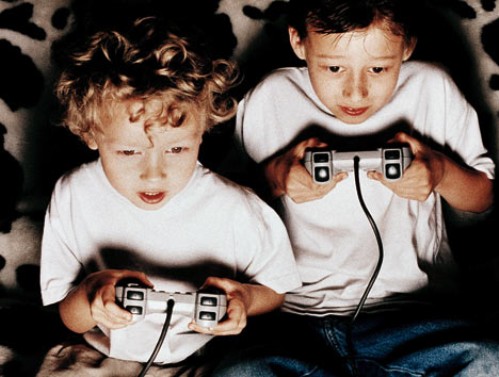
There are lots of screen activities that can addict users, but video games are among the strongest. They’re so fun and compelling that some gamers lose control and can’t pull away. Gambling and gaming are the only addictive behaviors officially recognized by the World Health Organization and the mental health community.
Behind gaming is a huge profit. In 2019, 2.5 billion gamers contributed to a gaming market that made 152 billion dollars![1] The most successful game in video game history is Fortnite. First released in July 2017, gamers can download it for free on nearly every gaming platform. In just two months of being on the market, Fortnite was played 2.7 billion hours, the equivalent of 300,000 years.[2] Currently, it boasts 78.3 million players a month.[3]
Under Fortnight’s spell of perfectly programmed brain traps, I’ve had clients drop out of school and isolate themselves from friends and family to play 12+ hours a day. The most addicted can barely sleep, fail school, and become socially isolated and burned out. Some are admitted to pricey screen addiction rehab programs that are often outside of their home states and away from their families!
What makes video games like Fortnite so addictive?
Each brain is unique with over 100 trillion synapses(the spaces between our brain cells where cell communication takes place). Not only does our DNA impact our brain wiring, but so does experience. That makes learning a nature-via-nurture phenomenon. In other words, we seek out certain experiences because of our brain wiring, and our brain wiring changes in response to our experiences.
No two people experience video games alike. Some people may be barely amused by the most addictive video game on the market, while others will forgo eating and sleeping to rack up points.
On the other hand, we are all human. We come from a common ancestry that developed with similar evolutionary triggers in play. As a species, we’ve been hunting and gathering for 200,000 years; that’s 90% of human existence.[4] Atari first introduced Pong in 1971. That means video games have only weighed in for the last .024% of our evolution. Find the triggers that captured the attention of our Neanderthal ancestors, and you’ll find triggers that capture us today. Technology has evolved much faster than our human brains. We simply can’t keep up.
Rewards and Punishments Are Folded into Gameplay
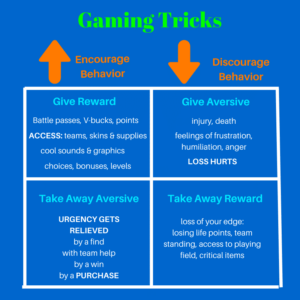
One of the first things college professors teach is the processes behind how we learn. Operant conditioning is a psychological learning method that involves rewards (pleasant) and aversives (unpleasant).
When a behavior increases, it has been reinforced. When a behavior decreases, it has been punished. Programmers use reinforcers and punishers to manipulate player behavior.
Rewards
The most obvious reinforcers in video games include points, prizes, and social likes that are delivered with attaboys in the form of yummy sights and sounds. Cool graphics, pleasing colors, attractive shapes, and amazing sounds stimulate the pleasure centers of our brains. When I asked my son what sounds he finds most appealing, he said the “kill” sounds are particularly attractive in Fortnite, especially the higher-pitched headshot sound and the sound of ammo reloading. My army of client gamers enthusiastically agreed.
Punishments
If we are doing badly in a game, it makes us anxious. Not only are we disappointing ourselves, but others may see we are failing too. Of course, game creators don’t let us feel crappy for long. They offer up relief from that unpleasant stress at mixed intervals (just like slot machines do), and we get double hooked!
Brilliant game builders exploit all four of the operant conditioning boxes on the blue image. Game features that interact with our primitive brains are so sophisticated and so well executed that we don’t even know it’s happening to us.
Remember nature via nurture? Our brain wiring sets us to seek gaming rewards and gaming rewards change our brains. Psychology research has demonstrated that addictive gameplay specifically permanently changes our brain’s interpretation of rewards and losses.[5] The addict’s rewired pleasure center makes recovery very challenging.
Learn these game traps that hack our pleasure centers, and you may be better equipped to make choices about gameplay instead of blindly getting tricked into them.
Expert Video Game Traps Designed to Snare Your Attention & Emotions
Finding Your Tribe & Being a Leader
One of the cornerstones of our survival as humans is our ability to form tribes and have babies. Through attachment and cooperative communication, humans dominate over other Earthly species.
Gaming programmers know what makes us tick. They build games by testing them on themselves and millions of teen players they pay to play for study. By isolating and testing addictive game features, programmers combine the motherload of behavioral reinforcers.
Social feedback is one of those ultimate rewards. The likes and verbal and written comments from other players are like crack cocaine to the human brain. This is why the most popular games allow you to make new friends and invite others. The more influence we have, the more social capital we’ve earned.
Social capital, the good feelings we collect from our interactions with friends, is particularly valuable to teens. It’s during this phase of development that one prepares to leave their family and hone in on attracting your tribe. By finding friends, testing skills, and “versing” each other, kids thrive on the team aspects of play.
But what if you are too shy to fail in front of your friends? No worries, the gaming engineers thought of that too. They allow you to start by playing anonymously or playing against yourself or strangers. That way you slowly gain confidence until you’re ready to show off your new skills with your team.
The emotional stimulation of wins and losses with your friends is extraordinarily captivating. As a young player told me, “Dying sucks and the team gets mad at you because they die too. If your friends are beating you, it makes you mad. So, you work to get more dubs (w for wins) to get bragging rights.”
Standing Out in the Crowd
But what if you become like everybody else in the game? You won’t stand out at all. That’s not fun.
Voila! Game makers thought of that too. They help you stand out with badges, points, and skins that discriminate who’s a newbie and who’s a pro. Sexy curves and muscled skins are valuable game commodities. By crafting the perfect look, players can attract other teammates. How you look, the levels you’ve achieved, and your arsenal of skills and weapons offer the optimal distinctiveness you need to stand out in a crowd. In Fortnite, you can even earn the opportunity to be paired with other high-ranking and even celebrity players.
Brain Candy Learning & Expert Mentorship
Humans love to set, pursue, and reach goals. Learning through trial and error and tracking progress is deeply satisfying to our most primitive selves. We especially love to learn from people we look up to and want to be someday, like celebrities and influencers. Celebrity endorsement as a branding (selling) strategy is illustrated by the popularity of Let’s Play videos (videos of other gamers playing and commenting on gameplay) on streaming sites like Youtube, Twitch, and Mixer.
You don’t want to put in the hours it takes to learn everything? No worries, game creators will let you pay your way to the top by buying up for levels. Even players who haven’t reached celebrity status can make money from expert play. I’ve had clients play an account until they’ve leveled up, then sell these accounts for thousands of dollars to buyers who want expert-level access to features without having to put in the time commitment.
Backchannel deals can also lead to big-earning e-sport tournament play. Some players even win college scholarships in tournaments that boast prize pools as big as 34 million dollars![6]
Hunting & Gathering > Building & Defending Community
Just as our ancestors did, our brains delight in building and defending the community. Being a good seeker, builder, and warrior gave us an evolutionary advantage.
Fortnite taps into these traits by having players forage for and gather useful, rare, and collectible items randomly placed around the map. Excited anticipation paired with finding items triggers our hunting and gathering instincts.
Fortnite also offers community competition and violence to scratch that primitive itch. Although parents are pleased there aren’t blood spatter and guts in Fortnite, developers know that tapping into our human need to protect and survive through violent in-group, out-group protectionism is a sure win.
How They Make Losing Fun
Getting a victory royale in Fortnite is difficult. Players must have the skill and luck to defeat other competitors in battle. Most gamers play multiple, consecutive rounds without getting a victory royale because, in their minds, they are not failing, they are “almost succeeding.”
In psychology, this is known as the near-miss effect. A gambler experiences a near-miss when almost winning a hand in poker. They take it as a sign to continue playing. During a near-miss, the brain’s reward system activates the same way it would during a win.[7] Earlier generation Candy Crush game developers learned that the near-miss effect kept players hooked for hours and willing to spend, and Fortnite adopted this strategy.
Attracting New Players & Keeping Old Players Playing
To stay successful, games need to bring in new players while keeping the attention of seasoned players (must cater to different player populations). Building anticipation for something new and exciting with a free gift is a sure way to hook and keep customers.
Upon signing up for Fortnite (which is free and convenient), players are offered a starter bundle. Once you get tired of that, more anticipation is generated with the promise of another free gift with repeated seasonal battle passes which contain prizes like free skins, a pickaxe, a glider, a rare item, and some XP multiplier to level up in the game. Each season offers a new map and fresh features to avoid burnout.
To reinforce habit and daily use, Fortnite even offers a fee asking for unlocking a majority of weekly challenges (55 of the 70) and cash if you log in on consecutive days! With immediate and long-term rewards, the game traps the immediate-reward players and the work-for-it-reward players.
Making Money From the Game & Within the Game
In 2018, Fortnite made 2.4 billion dollars in revenue.[8] Most of this revenue came from players purchasing skins and emotes. As of January 2020, Fortnite was in its first season of Chapter 2. Chapter 1 had ten seasons.
With each season comes the release of new skins and emotes, as well as the removal of ones from past seasons. Removing products from the marketing creates an impression of scarcity – meaning if you don’t buy now you’ll lose out. This makes collecting and purchasing skins and emotes a high priority to players, as it signifies status within the gaming community. The more fancy tools we collect in our cave, the more leadership we build within our community.
Triggering a sense of urgency in players is highly motivating, anxiety-producing, and builds intensity. Finding that sweet spot of flow between boredom and anxiety is the quest of every gamer. Once again, Fortnite doesn’t disappoint. The sense of urgency while searching and release upon finding creates a feedback loop of needing more, more, more! Being online puts us in a perpetual state of want.
Anxiety When We Leave the Game and Intense Craving to Get Back to Playing
Intensely craving game rewards feels pretty exciting in the short term, but in the long term, it can be stressful and take a toll on our mental health. That is why so many young gamers throw tantrums when they have to get off the game and older gamers feel irritated, frustrated, and depressed. Needing more skills to keep earning points builds what we call tolerance in addiction medicine, and the terrible feeling when we get off is called withdrawal. Just like drugs of addiction, tolerance keeps us using more and more and withdrawal makes us crave more gaming.
It’s Contagious!
Speaking of craving and withdrawal, Fortnite knows that watching friends have fun triggers FOMO (fear of missing out). By jacking up player anticipation with live online events, Fortnite gets players advertising to their friends for free.
To attract big numbers, Fortnite offers exclusive information and items. In other words, gamers must attend to get a chance to see what’s coming and get access to cool stuff. Players prioritize these events to get a leg up on team members.
Earning Your Trust & Upping the Ante
Since we covered the standards in marketing in business like scarcity and urgency, you might as well learn about the upsell. Marketers know that we buy out of habit. If they can get us to use our credit card once, we will be far more willing to use it a second and third time.
To get us into this buying habit, games offer an in-game purchase for cheap. Once we buy that, they then approach us with the pricier items. Since we trust them after liking the first item, we are more likely to purchase from them again.
An example of an upsell in Fortnite is the offer for a common emote or skin costs only $8. Once you buy that, Fortnite entices you with a more expensive and rare emote or skin for a higher $20 price. Fortnite in-game purchases can be very expensive. A father from England found out when his son spent $918 on the game in three days![9] Fortnite is a virtual marketplace that is very enticing to immature brains.
If You Like Them, You’ll Also Like Us!
Fun products that tie into popular brands, like The Avengers, are often integrated with video games. This is called affiliative marketing (meaning if you affiliate with or like another brand, they can entice that brand’s users over to them). By paying an already-popular brand to partner, both brands benefit by sharing each other’s user base. Celebrity skins, affiliation, and team competitions sweeten the offer even more.
Issues Specific to Neurodivergent Players
Neurodivergence simply means players who think differently than the average player. Most commonly, it refers to people who have traits of autistic spectrum disorder (ASD) or attention-deficit hyperactivity disorder (AD/HD). All players have gameplay strengths and weaknesses. But for neurodivergent players, these strengths and weaknesses can be more extreme.
For instance, many neurodivergent players have a tough time making and keeping friends in real life. For them, the opportunity for online mastery and social capital is particularly valuable. And the cool thing is, some strengths typical of neurodivergent players, like pattern recognition, make them awesome gamers. One of my ASD clients describes loving the problem-solving elements of gaming and the thrill of earning accolades from her teammates for her exceptional Jedi skills.
Should we just forbid video games?
Going screen-free is not an option for most because of the extraordinary learning, communication, and socialization benefits that screens bring. Also, the genie is out of the bottle already. If everybody else is doing it, it may be a real loss to your child to not have access to their friends.
Fortnite, which some say is on its way out, is not the only culprit. As long as the video game market continues to pull in a huge profit, developers will continue to build games with increasingly sophisticated brain traps.
By reviewing this article with your gamer tonight, covering the points where you agree or disagree, and asking them for their thoughts and observations, you will empower your child through the parent-child connection. Protecting your kids is less about depriving them of screen time, and more about giving them the tools they need to have informed agency. By equipping our children to be smart problem solvers on- and offline with loving support, we open the bridge to really connect as a family. It’s the connection that our children are looking for, and we are a part of that.
The Next Step
Although this article offers a ton of free information, there’s so much more to learn for long-term mental health and brain enrichment. Also, you want your kids to become increasingly more independent and start to solve problems on their own when you aren’t there for help. For even better coping and psychological resilience, you don’t want to miss our GKIS Social Media Readiness Course. Complete with lessons about digital injury risks and psychological wellness tools and individual lesson mastery quizzes, it’s the perfect prep!
I’m the mom psychologist who will help you GetKidsInternetSafe.
[5] Dong, G. Hu, Y., & Lin, X. (2013). Reward/punishment sensitivities among internet addicts: Implications for their addictive behaviors. Progress in Neuro-Psychopharmacology & Biological Psychiatry, 46, 139–145.
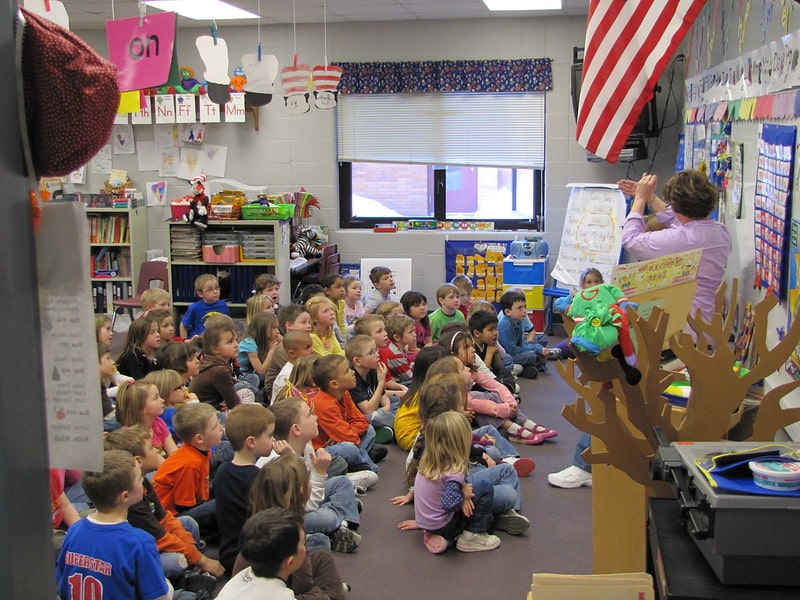
It’s a battle keeping students engaged in education in our screen-soaked world. Kids love learning. But they seem less in love with school and more in love with screen time. How do we reengage our students in school and the love of learning? Have we reached the tipping point where tech in the classroom is necessary for engagement? Or since COVID-19 Stay at Home Orders, have screens isolated kids and made them too fatigued to learn? Screens are great at teaching kids to self-interrupt, leading often report that real-life classrooms turn them off instead of turning them on. Today’s GKIS article highlights the benefit of tech and how gamification is being tested in education.
Traditional Teaching Methods Versus Screen Tech
Traditionally, schools use teacher-led workbook activities, in-class discussions, and textbook-based homework that rely heavily on structured lessons and memorization. Lessons often span longer than 10 minutes. This can be problematic considering the typical adult’s attention span is only 15 minutes.[1]
Screen technology, on the other hand, is fast-moving and interactive and offers the student on-demand selection at the click of a button. The opportunity to self-select content is empowering and gratifying. Teachers can also track the student’s learning process in real time and gradually feed relevant and increasingly challenging content.
The rewarding versatility of technology has led children to immerse themselves in their virtual worlds an average of ten hours a day. With this number of hours on-screen, many kids are creating brain pathways best matched with on-demand screen delivery rather than teacher-facilitated instruction.
Evidence of Disengagement
Even before COVID, a 2014 poll of 825,000 5th-12th grade students found that nearly half of the students surveyed felt disengaged in the learning process. Only 40% of their teachers believed their students were engaged. Reported numbers were even lower (26%) in high-poverty schools.[2] This finding is particularly concerning, considering that a student’s engagement in grade school is correlated with how well they will do in college.[3]
When schoolteacher and gamification enthusiast Scott Hebert asked his students why they didn’t seem to care about the lessons taught in school, they replied, “I don’t get why we need to do this stuff, give us a reason to care.”[4] Without intrinsic interest, meaning the task isn’t naturally motivating, they felt like they had to jump through meaningless hoops to learn.
To be successful, education must speak their language and meet them where they’re at. For most kids, that means reaching them in their virtual worlds. Studies have reported that 90% of students agree using a tablet will change the way they learn in the future, and 56% of high school students would like to use mobile devices in the classroom.[5]
Gamification
Gamification was coined by computer programmer Nick Pelling in 2002. The concept of gamification is to take the natural enjoyments that attract people to technology and inject those into education. In other words, create a more fun humanisticapproach to education, rather than our traditional instruction-led, function-focused approach.[6]
Dr. See is a professor at the University of Hong Kong who teaches human anatomy and medicine. He noticed that video games and education have features that overlap. For example, they both:
require solving mental puzzles,
recalling information,
looking for patterns,
working under pressure,
communicating ideas, and
working within a time limit.
Because his students loved video games, he decided to use gamification within his classroom. He applied puzzles and games to the curriculum, like for the memorization of the names of medications. As a result, his students reported that they were more motivated and learned better.[7] His gamification worked!
Learning through gamification does not mean it is easy. Gamification is engaging because it requires the student to generate the material instead of being instructed to do so. It is not about making school easier. Instead, it allows the student to actively engage in the learning process.[8]
Intrinsic & Extrinsic Motivators
We are psychologically motivated by intrinsic and extrinsic factors.
Intrinsic motivators (things that you enjoy doing that compel you forward) are important for well-being.
The psychological needs that must be met to feel motivated are:
autonomy (working on your own),
competence (being good at it), and
relatedness (feeling connected to what you learn).
Extrinsic motivators are rewards that come from outside. Examples include grades, points, and praise. External rewards may become harmful to our psychological well-being when they’re the only reason for engagement.[9]
For great learning, then, we must avoid rewarding students with points and grades. Instead, we must allow students to have a choice in what they’re learning and a chance to try it on their own and celebrate their efforts. These goals within a classroom can be challenging.
Gamifying Tests
Video games are set up for lots of autonomy, competence, and relatedness. The player gets to pick the game they relate to. then they get to play it on their own, simply restarting after they fail. They may lose points. But so what. They can just start over. Nobody is judging them.
Traditional school testing methods do the opposite. Typically, a failing grade on the test is the student’s final act of the lesson. They don’t get a do-over. That means failure has huge consequences and may leave the learner feeling hopeless and demoralized.
Gamifying testing could reverse that process by offering smaller quizzes that the student can retake over and over as they learn the material. Instead of feeling terrible about their first attempt, they can see their points going up and up – just like in a video game.
Starting a student at 100% with nowhere to go but down can lead the student to feel hopeless. According to prospect theory, people have a difficult time choosing activities when they anticipate a loss.
Alternatively, starting at zero and gaining points from there encourages a growth mindset. That means looking forward to learning instead of feeling defeated by it. The student would begin the semester with zero points and as the year progresses, they could earn points as they complete assignments. This would give students a growth mindset for their education!
AltSchool
Educators have tested technology-assisted education models, especially since the 2020 COVID-19 pandemic. For example, millions of dollars have been invested in AltSchool, a school that promotes a personalized learning platform using technology. In Altschool, students are provided with iPads or laptops and given individualized learning activities. The school encourages students to learn at their own pace, developing the mastery skills needed to learn the subject. The goal is engagement and learning potential.
Outcome studies revealed that students who learned at their own pace felt more competent and autonomous.[10] However, a teacher noticed his students were less connected with each other than before. They were more engaged with the technology than they were with one another. Also, we all remember the Zoom burnout students felt after the COVID epidemic. Losing motivation and connectedness over time may be risks of technologically assisted education.
The need for relatedness and connection is particularly important in learning because others provide feedback and perspective.[11]Authoritative instruction may trigger the reactance theory, which explains how people value autonomy so much they will “react” or do the opposite of what they are told to feel they made their own decision.
Quest to Learn
Another applied experiment for new and creative education is Quest to Learn. This is a gamified high school in Manhattan that was founded in 2009. Many of the classes at the school are not internet-based but instead teach through role-playing. Students act out the responsibilities of a chosen profession, like learning about politics by impersonating a politician.[12] By narrating the character, a student generates the answers needed for complex subjects.[13]
Because screen technology is still new, innovative (new and creative) teaching models and outcome studies are still being developed. Hybrid models (part in-classroom and part on-screen) are also being tested. As tech optimists, we at GKIS look forward to seeing all the cool things coming up in education.
Thanks to Andrew Weissmann for his research for this article. For a glimpse into some of the benefits of video games, check out our GKIS article Is Your Child a “Professional Gamer”?
Works Cited
[1] Usnews.com Kids asked to learn in ways that exceed attention spans by the Hechinger Report
[7] School of Biomedical Sciences sbms.hku.hk Dr. See, Christopher
[8] Christopher See Gamification in Higher Education
[9] Kasser and Ryan (1993) A dark side of the American dream: Correlates of financial success as a central life aspiration. (1996). Further examining the American dream: Differential correlates of intrinsic and extrinsic goals.
[10] Black & Deci, (2000) selfdeterminationtheory.org
[11] The Backlash Against Screen Time at School by Rob Waters
[12] Worldgovernmentsummit.org Gamification and the future of education
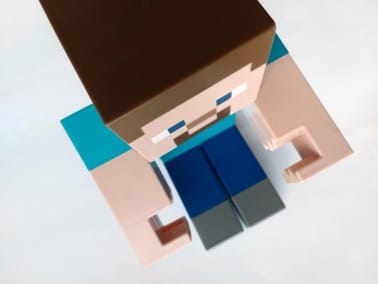
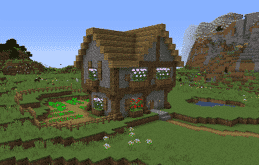
Minecraft is a virtual 3D game that allows users to create unlimited worlds using online building blocks while unlocking resources along the way. From cities to rollercoasters, the possibilities are nearly endless. We at GKIS are big fans of Minecraft because it fosters creativity, problem-solving, new skill development, and socialization opportunities. But like any online tool, there are also associated risks. This GKIS Sensible Guide provides information that parents need to optimize Minecraft’s benefits while keeping your children safe.
How long has Minecraft been around and how popular is it?
Minecraft was created in 2011 by Swedish game developer Markus Persson and purchased by Microsoft in 2014. Nearly 176 million copies were sold by late 2019. In 2019, Minecraft has over 112 million players every month and can be played on various platforms including smartphones, tablets, Xbox, and other gaming stations. It has evolved to include more elements and has a series of spin-off g
ames with different themes. Users also post Let’s Play videos YouTube to show how they build their worlds and different ways to create items.
Getting Started on Minecraft
According to Minecraft’s Terms of Service, “If you are young and you are having trouble understanding these terms and conditions, please ask a responsible adult such as your parent or guardian.” Minecraft also insists that children under age 13 have their parents download and register for an account. However, children can easily change their age before signing up to go around that rule.
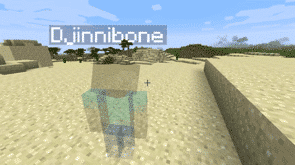
Minecraft varies in price depending on the type of platform. Signing up for an account is simple. Just create an account with a unique username and email address. Users are given one profile by default but have the option to make multiple profiles.
Features of Minecraft
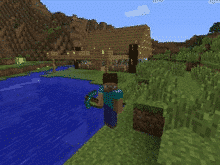
Minecraft allows users to collect resources and build their own worlds. Users can dig, build, and enchant items to transform their world into whatever they want. Users can also select different game modes, each with unique challenges and features.
Survival Mode
One of the main game modes
Players must collect resources, build structures, battle mobs, find food.
The goal is to survive and thrive.
Creative Mode
Players are able to build with an unlimited number of blocks.
Players are given all the items needed to build.
Mobs still exist, but there is no threat to survival.
Players are able to fly around the world.
Adventure Mode
Players use maps to navigate the world.
Depending on the device played on, blocks can either be destroyed or placed.
Hunger and dying is possible.
Spectator Mode
Users have the ability to fly around and observe the worlds without interacting with it
Players are invisible and can move through blocks and buildings.
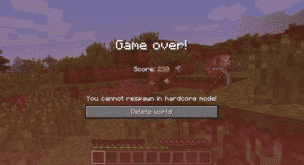
Hardcore Mode
Available only on the online version.
The world is locked to hard difficulty and the player cannot respawn after they die.
Only specific worlds enable hardcore mode and not individual players.
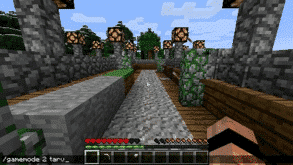
Minecraft has two different play modes, single-player and multiplayer. In single-player mode, a user only interacts with their own character and their own world. In multiplayer, users can join any game with any player, friends or strangers. Parents have the ability to sign their child up for a family-friendly multiplayer mode that is supervised and has restrictions on the chats and interactions.
The Benefits of Minecraft
Minecraft allows players to use their imagination and create what they desire. Users develop problem-solving skills while they are creating their world. Minecraft also helps users develop computer literacy skills, teamwork, and collaboration. For example, while in multiplayer mode, players are able to communicate and work together to build their worlds. Mathematics and spacial skills are also developed while playing the game. For example, it takes six planks to build one door. If players have 60 planks, they can calculate how many doors they are able to build.
Parents have the ability to limit their child to only single-player mode or a family-friendly version of multiplayer. There are several Minecraft servers that have been designed for children in mind. They are designed with a code of conduct and have full moderation. Parents are able to sign their children on to a family-friendly server where they will be safe from interacting with strangers in a negative way.
The Risks of Minecraft
There are relatively few risks for children playing Minecraft. With the exception of playing too often, for too long, or getting frustrated with gameplay, single-player mode is relatively safe because kids can be restricted from interacting with players they don’t know. However, violence can be easily found in the game. For example, there are multiple ways to kill users, mobs, or animals, such as:
setting another player on fire using lava or a torch
hanging an animal or another player
using canons and bombs
using sand to trap and suffocate mobs
using a zombie as a weapon to kill a villager
shooting with a gun or stabbing with a sword
There is also a chance for cyberbullying in multiplayer mode. It is not uncommon to come across a user who is intentionally irritating and harassing other users. They often use parts of the game in unintended ways. For example, they may curse, cheat, and kill without reason. Cyberbullying also includes players who deliberately kick players off the server and anger others for their own enjoyment.
Multiplayer mode carries the risk of children chatting with strangers. For example, in 2017 a Minecraft user was jailed for meeting two children on Minecraft and persuading them to carry out sexual acts. [i]
There is a potential for users to track down your IP address from playing Minecraft. An IP address is n unique number for an internet network. The IP address provides the location of where your network is coming from. If users are able to hack into the server, they can find another player’s IP address. This can lead the user to the location of the player within a couple of miles.
If your child wants to play Minecraft, GKIS recommends that you:
Add it to your free GKIS Connected Family Agreement (If you haven’t downloaded it yet, enter your name and email on our GetKidsInternetSafe home page and it will be emailed immediately)
Discuss the risks of chatting with strangers with your child. For ideas about how to do this, check out our GKIS Connected Family Course.
GetKidsInternetSafe rates Minecraft as a green-light app due to the safety of the game and the benefits it can have on children’s development. Dr. Bennett has found that her kids and the kids in her practice love Minecraft when they are young and even return to it as teens! They tell her they appreciate the simplicity of it and especially love the relatively stress-free atmosphere with no in-game purchase requirements.
Thank you to CSUCI intern Makenzie Stancliff for writing this article. If you love to encourage creativity with your kids, you won’t want to miss the Makerspace ideas in our Connected Family Course.
I’m the mom psychologist who will help you GetKidsInternetSafe.