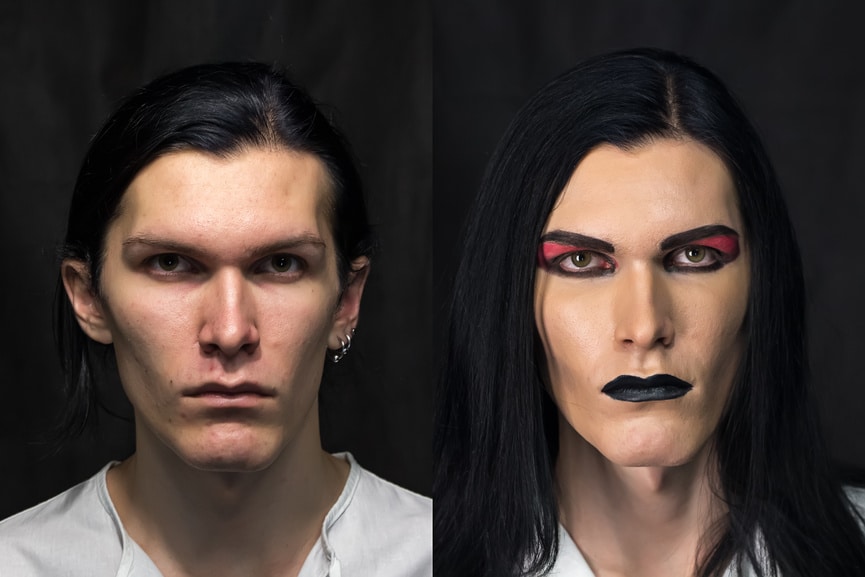
As a clinical psychologist who works with kids and teens, I’ve seen the landscape of their lives change in a rainbow of ways. These changes provide opportunities for growth and connection with self and others but can also lead them into unhealthy relationships in online and offline communities. For parents to educate and connect (rather than disconnect) with their kids over these issues, we need to know the basics. Today’s GKIS articles allows us to take a look into what sociologists predict to be a “genderless future,” where we will no longer be defining ourselves as “female” or “male.”[9] Newly created identifiers and the generic “they” will replace pronouns “she” and “he.”[9] And major businesses like Amazon, Target, Walmart, and Disney will remove gender from the labels of their products.[12]
Gender Fluidity
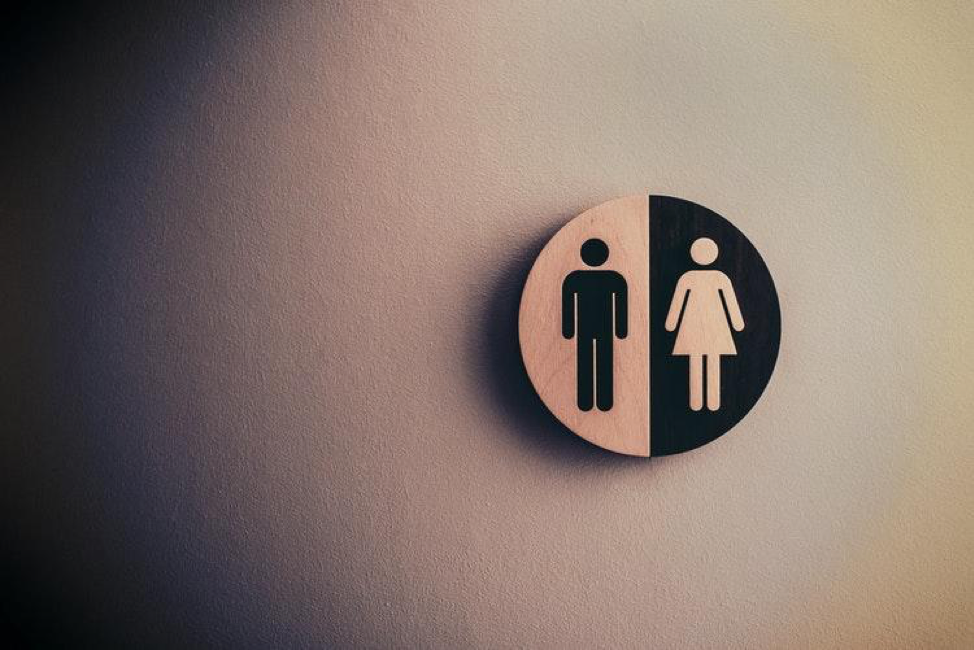
Welcome to 2019, where millennials and generation Zers have created “Gender Fluidity.”[3] Being “gender fluid” means that the individual exists on a spectrum between male and female and may shift gender several times a day or throughout their lives with different intensities.[8] A millennial poll of 1,000 people revealed that half believe that gender exists on a fluid spectrum or “outside conventional categories.”[14]
Celebrities like Will Smith’s son Jaden Smith, rapper Young Thug, actress Ruby Rose, and superstar Miley Cyrus have identified themselves as gender fluid.[10] Young Thug and Jaden Smith are known for pushing the boundaries of fashion with crop tops and skirts.[10] Ruby Rose varies in masculinity in photoshoots and TV shows like “Orange Is The New Black.”[10] Miley Cyrus has explained her gender fluidity during interviews, “It’s weird that I’m a girl, because I just don’t feel like a girl, and I don’t feel like a boy.”[4]
The Break Down
Gender and sexuality concepts are difficult to understand. They seem muddled in some way or another. Here’s some clarification:
Gender is biological sex and its cultural associations: male, female, transgender.[1]
Gender Identity is what someone perceives their gender to be: biologically a female but identifies as male.[1]
Gender Expression is how someone shows their gender whether it be through clothing choices, hair style, makeup, and the like.[1]
Sexual Orientation explains what gender someone is attracted to and would like to have sexual relations with (differs from gender identity).[1]
Romantic Orientation explains what gender someone would like to be emotionally and romantically involved with (differs from sexual orientation sometimes).[11]
Gender Stereotypes
With the traditional labels of gender came their stereotypes, with females being sexual objects and males being macho knuckleheads.[5] These stereotypes link to online gender specific characteristics. Women tend to fulfill their sexual stereotype by posting provocative photos. In captions and comments their words are more positive, supportive, emotional, and personal.[5] Men express their masculinity online by posting content related to violence, sex, and alcohol. Their online engagement is more aggressive, negative, and authoritative.[5]
Gender Expression Online
Modern society advocates for the freedom to be yourself no matter what gender you are or what the color of your skin is. Millennials and generation Zers have countered stigmatic barriers (such as stereotypes) that prevent the LGBTQIA (lesbian, gay, bisexual, transgender, queer or question, intersex, or allied) community from thriving.[13]
The internet has granted many a voice to speak their truths as well as a receptive audience who’ll listen. That power is a great confidence booster for those who feel powerless against parent authority and social judgement.
It also makes the gender journey feel less lonely for kids and teens. Social media provides a private place to relate with others, vent about being misunderstood, and express themselves unapologetically. On their own terms, they can gradually reveal discovered parts of themselves.
For example, some may feel comfortable cross dressing online but not walking out the door that way.[7] This is because coming out to strangers online is more manageable than coming out at school or home.[6] According to the LGBT Helpline, more people feel hopeful and positive about coming out online, because they know they’ll get plenty of positive support.[6]
Being Anonymous
Another great benefit of online gender expression is the freedom that anonymity provides. Kids and teens are allowed to explore their identity on their own terms. The ability to stay anonymous gives them control over who they come out to. You can choose to use an actual picture of yourself or an avatar, virtually anything to be your default picture. Usernames have the same range in reality or fantasy. Social media allows you to pick and choose who has access to your content. A powerful tool is the ability to block specific users from having access entirely. These tools allow teens to choose whether they want to interact with specific people in their inner circle or complete strangers. It also reduces the chances of cyber bullying.
The combination of anonymity and a knowledgeable online community creates an accepting venue. There’s less chance for criticism invalidating a teen’s gender identity.[7] When coming out online to strangers, a user’s gender and sexual orientation isn’t judged by their past.[7] Peers tend to think they know where someone is on the spectrum. This is because they refer to stereotypes. They judge this based on someone’s dating and sexual history. What they know about the person’s interests and hobbies, again, gender is fluid. It’s a personal journey that one can only define for themselves.
Online Safety
As explained before on GetKidsInternetSafe, “gender-awareness is one aspect, but sexual awareness is another.”[2] Unfiltered chat rooms for things like webcomics, fandoms, and role-playing games expose children to age inappropriate themes of sex and violence.[2] Predators have the opportunity to manipulate naive and vulnerable kids and teens with explicit content or groom them for exploitive relationships.[2]
If you worry that your kids aren’t quite ready to delve deep into online communities that may put them at risk, you’ll want to check out our GKIS Screen Safety Toolkit. With our family-tested, outcome-based recommendations, you can build your customized digital toolbox for each device your child uses. That translates to filtering and blocking age-inappropriate content and offer parental management tools like location tracking and monitoring. Why wouldn’t you use the free and/or subscription parental controls available to you to help? You don’t even have to waste time and energy figuring out which will fit for you. We did the research for you!
In addition to GKIS products like our free Connected Family Agreement, Screen Safety Toolkit, and Connected Family Online Course, websites like 7 cups can detour dangerous influence. 7 cups offers free 24/7 support chat rooms by volunteers trained to deal with adolescent issues like “depression, anxiety, relationships, LGBTQ+ and more.”[15] Teens can anonymously join monitored chat rooms to relate with others in the community.[15] The website is a great stepping stone for teens who feel like their parents don’t understand. If all of this is overwhelming already, book a coaching session with Dr. B so she can guide you through it. It really is as easy as that.
What else can you do?
Reflect on your ideas and beliefs about gender. It’s important to understand how you truly feel about these issues. Identify what makes you feel or think this way. Is it healthy and supportive for a child emotionally, mentally, and physically struggling to find themselves?[2]
Educate Start the dialogue about sexual education as early as you can. Answer the questions that are commonly answered with, “I’ll tell you when you’re older.” Be the person they turn to when they have questions. Keep an open dialogue. This helps deter any negative influence age inappropriate content may provide.[2]
Still wondering how to start “the talk”? Lucky for you, Dr. Bennett makes the awkward conversation easier with these tips:
Thank you to our GKIS intern Hanna Dangiapo for untangling the ever-evolving definition of gender. Have you had experiences with gender fluidity in your house or community? Let us know what you think about it in the comments below.
I’m the mom psychologist who will help you GetKidsInternetSafe.
OK OK, she wasn’t Miley Cyrus. But recently several of my teen clients who role-play online have been experimenting with gender, sexual, and romantic orientation. And just this morning I read on Facebook (my primary source for news these days) that Miley Cyrus came out as, well, gender-something. And it has me wondering, is online role-play healthy experimentation or a dangerous trend?
Screen media is having a profound influence on our culture. Between the Internet, YouTube, video games, and social media apps, we are bombarded by information with more frequency and time spent than ever before in history. Not only is screen media changing the way we consume information, it is also changing how we learn, think, develop as individuals, and interact with the world. There is even evidence that it is changing the structure of our brains! It’s one thing if you’re an adult and your brain is already developed, but what if your brain is still developing?
Teens are particularly expert with screen media, especially those obsessed with webcomics and fandoms.
A webcomic is a comic published on a website, some of which continue on for months at a time (e.g., Homestuck began in 2009, has published over 7,500 pages, and still boasts over a million unique visitors per day).
A fandom is a subculture of fans that interact around a particular interest, such as a webcomic. Fans follow complex story arcs while engaging in analytical discussions about the story and the real world, discussions ripe with slang and constantly building upon shared understanding. Fans exchange artistic and costumed images, videos, and memes that relate to their shared passion and form close relationships and subgroups that interact several hours a day. Some fans meet up at conferences for cosplay (costume play) of their favorite characters.
Along with a love of fantasy and creativity, webcomic fans often have a flair for intelligent and vigorous investigation of gender, sexual orientation, and romantic interest.
Recently I’ve observed that teens are challenging traditional gender and sexual orientations with a dizzying array of alternative sociological concepts and, ultimately, lifestyles. What do I mean?
Because webcomic characters are fantasy-based, they can incorporate any combination of state or trait imaginable. One particular way webcomic authors take artistic license is to create a character of ambiguous gender and/or sexual orientation (e.g., an alien troll who is neither male nor female). As the audience follows these forever growing storylines, they become increasingly tolerant of and curious about character trait ambiguity.
In addition to following webcomic characters with multi-faceted states and traits, many fans go on to act out their interests playing as customized avatars in massively multiplayer online role-playing games (MMORPGs like World of Warcraft). By experimenting with looks, backstories, and behaviors, players witness the intricate impacts that these variables play in social interaction. Keep in mind that they are not only communicating publicly within the game, but they are also interacting privately with individual or groups of players via instant messaging or with headsets and microphones.
Then, from the online world players go into the real world to parody traditional gender behaviors in gender crossplay, a type of cosplay in which participants cross dress.
Consider that fandom kids get a triple load of influence, one as a passive webcomic observer, a second as an engaged fandom participant on- and offline, and a third as a gamer. Many spend more time in these fantasy scenarios and online friendships than as live participants in the non-virtual world. As you might expect, their real lives gradually begin to mimic their virtual lives.
I’ve now worked with several fandom-influenced teens who no longer identify as their born gender in identity, expression, or behavior. Check out the terminology I’m learning from my clients:
Pangender: Those who identify with all genders
Trigender: Those who shift from one gender to another depending on their mood or situation
Gender Fluid: Those who mix two or more genders at a time (bigender for example)
Transgender: Those who identify with another gender than the assigned gender at birth
Along with using gender-neutral pronouns, my clients born as girls cut their hair short and wear t-shirts and basketball shorts. Clients born as boys wear their hair long and apply guy-liner. It’s all very confusing, indeed.
Now complicate that with sexual orientations (asexual, pansexual, skoliosexual, bisexual, homosexual, heterosexual) and romantic orientation (aromantic, panromantic, polyromantic), and one’s head starts to spin. Lest you think it’s city livin’ that’s creating these issues, think again. With the World Wide Web, anyone with a screen is audience and potential participant to these complex sociological principles.
The teens in my office insist that their open-minded exploration is creating the supportive cultural milieu they idealistically envision. Some feel they were born with unique gender or sexual identities and others believe this exploration is a natural result of experience and experimentation. Their parents look on dazed and shrugging, trying their best to make decisions about slumber party arrangements amidst constantly-shifting gender, sexual, and romantic orientations.
Imagine how these scenarios challenge families. Parents look to me for guidance as to whether they should encourage or discourage gender and sexual experimentation. They fear how their stance may affect their kids’ gender and sexual development.
If they whole-heartedly support gender, romantic, and sexual orientation play, are they encouraging behavior that may be overwhelming for teens in the already complex landscape of adolescence? Alternatively, if they forbid experimentation are they creating the kind of shame and isolation that can lead to serious trouble? After all, transgender youth have among the highest suicide rates of any minority group, leading us to understand this is not always “play,” but for some a working through of their very identity.
In situations where a teen is alone and closeted among family and friends, one can imagine that the opportunity for anonymity and the support of a positive, affirming community such as a fandom could literally be a lifesaver. Alternatively, game play typically involves provocative themes such as violence and sex. Online peers are friends and strangers of all ages, some with positive and others with predatory intent. The lack of transparency and versatility to manipulate what is seen and said during game play, along with a false expectation of anonymity and privacy adds further layers of risk.
On the heels of Bruce Jenner’s recent interview, Miley Cyrus was quoted in OUT Magazine saying, “I didn’t want to be a boy. I kind of wanted to be nothing. I don’t relate to what people would say defines a girl or a boy, and I think that’s what I had to understand: Being a girl isn’t what I hate, it’s the box that I get put into.” So like it or not, our gender-awareness as a society is stretching as I write.
Gender-awareness is one aspect, but sexual awareness is another. Sexual exploration on and offline is a delicate topic for even the most open-minded parents. Teens are often curious and aching for information about their developing bodies and urges, often leading them into online chat rooms for information, chatrooms with little to no monitoring for inaccurate or inappropriate information or conduct and virtually no screening of participants. They also look to celebrity idols for modeling and guidance, maybe not the wise parent’s choice for a big brother/sister/pansibling.
What should today’s parents do to help their teens through these complex identity explorations?
First, become aware that there are some life-spinning issues coming through the digital pipelines. Second, reflect and untangle your ideas and beliefs about these complex issues before you pass confusion and shame onto your kids. And most importantly, keep them safe by filtering inappropriate content before they’re ready and by providinig gender and sexual education early with an ongoing open dialogue. As a parent myself, I am in a constant state of untangling and discussion with every new TMZ report.
As I was writing this article I was reflecting on how my life would be different if I had hours of experience logged with varying gender and sexual identities. Mind-blowing right? When I discussed these issues with my 13 year-old, she responded confidently, “It’s ALWAYS good to be allowed the freedom to be whoever you want,” while I thought on…but do you even know where to start at 13 years old?
Need some sex ed tips to do your best parenting? Check out GetKidsInternetSafe for specific ideas and advice. Please comment and tell me what you think. And please remember, no matter what challenges our kids face, they will always need our patient guidance, love, and support.
I’m the mom psychologist who will help you GetYourKidsInternetSafe.