Need peaceful screen time negotiations?

Get your FREE GKIS Connected Family Screen Agreement

therapy

Pornography Blocking Sites and a Firsthand Account of Pornography Addiction

It’s no secret that porn has taken over the virtual world. But many aren’t aware that their tweens and teens are at risk for porn addiction. Today we’re looking at a candid first-hand account of someone whose porn addiction started at the age of 12. We’re also taking a glimpse at porn-blocking sites and our tips for recovery. If you’d like to find out what it takes to protect your kid from the dangers of the net and learn info on parental controls and monitoring, check out our GKIS Screen Safety Toolkit. 

The Dangers of Porn 

As mentioned in our article Online Pornography’s Impact on Kids and Teens, pornography consumption has grown. With adult sites like Pornhub growing more popular, our youth are at risk of developing a porn addiction more than ever.  

According to Dr. Bennett, the demographic most at risk for porn addiction is adolescents with troubled familial relations.[1] For years, the common stereotype was that mainly boys were at risk for porn addiction. But times have changed. Girls are just as present on the internet, meaning all our youth are at risk for developing a porn addiction. 

In the Online Pornography’s Impact on Kids and Teens article, Dr. B goes over the effects of regular pornography consumption, which could include the following: 

  • Earlier sexual intercourse 
  • Normalization of violence against women 
  • Sexual aggression 
  • Desensitization and habituation (this means the user may get used to less extreme content and will have to view more extreme content to get the same feeling of satisfaction.) 
  • Hypersexual Disorder, is a disorder that causes one to engage in or think about sex to the point that it affects their life.[2]

For a deeper dive into porn addiction and how it can affect your child, check out Dr. B’s book, Screen Time in the Meantime: A Parenting Guide to Getting Kids Internet Safe. 

A Firsthand Account of Pornography Addiction

Chase is a former pornography addict. He opened up and gave us insight into what it’s like being addicted and how it affected his mental health.

“When I was addicted to pornography, I think I was about 12 or 13 years old. It lasted until I turned 23 and it was a daily occurrence. I was consuming porn in different forms around 3 to 4 times a day,” he said. 

Chase claimed that he got used to consuming porn quickly and talked about how it became a demanding habit. “It felt very infectious to my lifestyle. I’d pick up the phone and have to indulge in porn. Done doing a specific activity? Browsing [porn] again. It felt like if I didn’t get as much satisfaction from a ‘session,’ the next session had to fit a specific theme or fetish.”  

Chase discussed how his porn addiction started creeping into other places in his life, saying “It got so bad to the point where it infected other things that aren’t even related to it in the first place. Looking up specific people, fetishes, and at its worst, trying to find easier avenues or different ways to access content. It was bad.” 

He got even more candid with us, explaining how the addiction became mentally and physically invasive. “I think it affected my mental state very much. I don’t have too much experience in mental challenges when it comes to myself anyway, but it impacted my ability to follow daily habits and schedules, and at its worst, caused me to cancel plans.”

When asked about his advice for addiction prevention advice for those suffering from porn addiction, he replied “It’d be to not create any accounts for anything porn related. Limit yourself slowly over time, and don’t let yourself lose sight of what the future version you have of yourself would do, and slowly become that. You aren’t alone and reach out for help if you need it.” 

Shame and How It Prevents Recovery 

Because of the taboo nature of pornography, many people battling porn addictions experience feelings of shame and guilt. It’s why most people keep their addiction hidden for so long before seeking help. Some experience shame so much that they never seek help. 

We see shame as a huge problem. In a study titled “Hidden in shame: Heterosexual men’s experiences of self-perceived problematic pornography use,”15 men were interviewed about their experience with porn. Nearly all of them stated that they grew up never talking or learning about sex education with their parents. They also stated that viewing pornography is taboo and it was difficult for them to seek help due to fear of rejection.[3] 

One participant even sought help through a doctor when they were experiencing a reduced libido that stemmed from porn addiction. The doctor not only had nothing to offer him, but he immediately referred him to a male fertility specialist for testosterone treatments that cost him hundreds of dollars.[4]  

Porn Site Blockers

Of course, it’s best to not even visit porn sites in the first place. But if you worry you have a problem, here are some porn-blocking tools that may help. 

Disclaimer: GKIS is not sponsored or partnered with any of the porn-blocking sites listed.

Canopy

Canopy is an app that blocks porn sites, blocks apps, schedules screen time and downtime, and sexting prevention through image and text detection.[5] Parents or spouses set up their host account on their device followed by the kid/main user account on the kid/user’s device. The parent or spouse oversees the control settings and monitors the other device.  

FamiSafe 

FamiSafe is another app that blocks porn websites on any device. Like Canopy, parents have access to controls and internet usage. Parents can track social media usage, set screen time limits, track location, monitor keywords searched or sent via text, and more. Parents are notified when their kids are texting about inappropriate topics or when they’re at a location they shouldn’t be.[6]

CovenantEyes and the Victory App

CovenantEyes is a porn detector and blocker. It’s paired with its companion tool, the Victory app, to scan for suspicious activity, send reminders and check-ins, and issue mini-courses to see your progress.[7] CovenantEyes also offers Christian resources for followers struggling with porn addiction. 

GKIS Tips for the Road to Recovery

Porn-blocking sites are useful but not foolproof. So, GKIS has tips for parents of children suffering from porn addiction.  

  • It is healthy and appropriate for children to be curious about the human body and sexuality. For tips about how to offer shame-free sex education, check out our 4-article series starting with 6 Parenting Tips for Making Sex Ed Easier! 
  • In addition to using home-setup strategies detailed in our Connected Family Course and parental monitoring tools listed in our Screen Safety Toolkit, consistently spot-check your child’s screen device. Talking to your child about spot-checking may steer them away from adult content since they know their device may be checked anytime.  
  • Let them know this is the family policy before you buy them screen devices. That way they won’t feel lied to, betrayed, or spied upon if you do find questionable content. And if you do find something, allow that to be a teaching opportunity rather than a punishing opportunity. Your best safety tool is a healthy, collaborative parent-child relationship. 
  • Limiting time on specific apps may be a useful tool for recovery. Apps like Instagram, Twitter, and Reddit are some of the most popular apps for adult film stars to promote their content. (Most smartphones report the time used on each app in ‘Settings.’) 
  • A reward system for good progress may be of good use for porn addiction recovery. Although it may seem like an old-fashioned method, rewarding good behavior has been researched and proven to be effective. Whether it’s a new book, dinner at their favorite restaurant, or a trip to the movies, rewards (with verbal affirmations) can give your child the motivation to stay on the path to recovery. 
  • If you are considering allowing social media apps for your tween or teen, our Social Media Readiness Course offers information about the risks of digital injury and helpful psychological wellness tools as well! 

Battling pornography addiction is hard for anyone, let alone our youth. Whether you have a teen or tween battling addiction or simply want to help them surf the internet safely, GKIS has multiple resources to help you get there. Whether you’re utilizing our Screen Safety Toolkit or simply giving our sex ed articles a read, GKIS is here to make it a smoother journey for you. 

A special thanks to Chase for sharing his story. 

Thanks to CSUCI intern Samantha Sanchez for preparing this article and researching porn addiction.

I’m the mom psychologist who will help you GetKidsInternetSafe.
Onward to More Awesome Parenting

Dr. Tracy S. Bennett, Ph.D. 

Mom, Clinical Psychologist, CSUCI Adjunct Faculty 

GetKidsInternetSafe.com 

Works Cited 

[1] Online Pornography’s Impact on Kids and Teens (https://getkidsinternetsafe.com/porn/)

[2] Screentime in the Meantime: A Parenting Guide to Get Kids and Teens Internet Safe (https://getkidsinternetsafe.com/parenting-guide/) 

[3] Sniewski, L., & Farvid, P. (2020). Hidden in shame: Heterosexual men’s experiences of self-perceived problematic pornography use. Psychology of Men & Masculinities, 21(2), 201–212. https://doi-org.ezproxy.csuci.edu/10.1037/men0000232  

[4] Ibid. 

[5] Canopy (https://canopy.us/2023/02/16/best-porn-blocker/

[6] FamiSafe (https://canopy.us/2023/02/16/best-porn-blocker/) 

[7] CovenantEyes (https://www.covenanteyes.com/how-it-works/  

Photo Credits 

Charlesdeluvio via Unsplash (https://unsplash.com/photos/hand-mannequin-holding-green-cactus-plant-RoB4hHjW_fc)

Franco Alva via Unsplash (https://unsplash.com/photos/man-in-black-t-shirt-using-black-laptop-computer-aqFzxyC3rf8

Annie Spratt via Unsplash (https://unsplash.com/photos/man-in-black-t-shirt-lying-on-couch-rmKkZqnVtk4 

Microdosing Magic Mushrooms – An Alternative Cure for Addiction, Anxiety, and Depression

Microdosing magic mushrooms is the new trippy trend for adults with anxiety, depression, PTSD, and addiction disorders who seek to improve their wellbeing and mental health without relying on antidepressants. Today’s GKIS article is for those who are curious about microdosing on psychedelic mushrooms. We discuss potential therapeutic uses, safety, and the current trend toward legalization and decriminalization of psilocybin. Check out Dr. Bennett’s new Screen Safety Essentials Course for comprehensive help when it comes to maintaining psychological wellness, avoiding digital injury, and keeping your family safe and connected.

What is micro-dosing?

Microdosing is the phenomenon of taking very small doses of a psychedelic drug like magic mushrooms to improve well-being, emotional, and mental health. The active chemical in medicinal mushrooms is called psilocybin. When psilocybin is metabolized, the brain responds by releasing serotonin in the prefrontal cortex region of the brain that is responsible for regulating mood, cognition, and perception.

Serotonin is a neurotransmitter, or ‘feel good’ chemical, that contributes to positive moods.[1] While microdosing, one can expect to feel the subtle effects of the drug while still remaining in control of the senses. “When you take psychedelics, you loosen up and reduce the egoic experiences of identity and self, and it allows people to feel more connected, not only to themselves but to people and to the environment.”[2]

Those who microdose usually don’t report experiencing an altered state of reality or mystical awakening. However, some do report small changes in perception, like colors appearing a little brighter. Most of all, these minor effects can contribute to new connections and mental shifts that help people think or behave in more open and creative ways. Micro-dosing also helps people become more reflective and responsive to positive suggestions by embracing the effects that the drug has on their neurotransmitters. Studies suggest a mechanism through which psychedelics might improve mental health: feeling greater self-compassion and less obsession with negative thoughts, anxiety, depression, addiction, eating disorders, and PTSD.[1] 

Micro-Magic

The effects of psilocybin are similar to the effects of LSD. But instead of a long-lasting and intense hallucinatory experience or a deep spiritual awakening, the effects of microdosing ensure a safer and more subtle mind expansion that allows for an entirely encompassing holistic understanding of the internal self and external world.

The positive effects of psychedelics, particularly psilocybin include:

  • Feelings of euphoria
  • Peacefulness
  • Creativity
  • Openness
  • Stress and anxiety relief
  • Improved moods
  • Increased energy
  • Better concentration and focus
  • Greater personal awareness
  • Less self-doubt
  • Increased sensitivity to light and sound

Micro-Mistakes

Regardless of safe and proper dosages, many people refuse and reject microdosing due to the common and rational fear of experiencing a bad trip.

A bad trip may occur due to many factors such as:

  • Derealization, or the feeling that surroundings are not real
  • Depersonalization, or a dream-like state of being separated from reality
  • Distorted thinking and behavior
  • Slight visual and auditory impairment
  • Unusual bodily sensations
  • Paranoia and confusion
  • Nausea and vomiting

To ensure a safe and positive experience, one should feel comfortable with the concept of surrendering to their psychedelic experience and feel safe in their environment. We call this set and setting. This relaxed mindset allows for feelings and ideas to naturally arise and process without reacting to fear and judgment. By channeling this calm and comfortable mindset, many can benefit from the medicinal effects of microdosing.[1]

Also, some psychedelic mushrooms are better for microdosing. As it is impossible for the average person to accurately determine how much psilocybin is in a mushroom, mushrooms with lower psilocybin content are preferable for microdosing. Weaker strains of psilocybe cubensis mushrooms are more commonly utilized for this purpose.

Microdosing Effects on Depression and Anxiety

Psilocybin still remains illegal in the country, so it is rare to find doctors and psychiatrists that recommend microdosing as a legitimate treatment for depression and anxiety. However, with FDA trials underway with psilocybin as a treatment for mood and trauma disorders, more and more professionals are endorsing the idea that microdosing may have positive clinical applications. In a 2021 survey, respondents reported that microdosing led to significant improvements in both anxiety and depression.[3] Further, those who have higher expectations of microdosing tend to respond more positively (also called the placebo effect).[4]

Microdosing Effects on Addiction

In a 2014 study at Johns Hopkins Medical Center, researchers tested whether psilocybin could help people quit smoking. It was an open-label study, which meant the participants knew they were getting the drug and not a placebo. The drug was administered in three sessions – one on the target quit date, another two weeks later, and a third eight weeks afterward. The subjects returned to the lab for the next 10 weeks to have their breath and urine tested for evidence of smoking and came back for follow-up meetings 6 and 12 months after their target quit date.

At the 6-month mark, 80% of smokers in the pilot study (12 out of 15) had abstained from cigarettes for at least a week. The study concluded that there is evidence that the sense of unity and mystical significance many people experience on psilocybin is associated with greater success and motivation towards quitting, and those who take the drug may be better able to deal with cravings. At the biological level, scientists have hypothesized that psilocybin may alter communication in brain networks, kind of like a reboot that leaves the brain more receptive to new ideas, feelings, and pathways.[5] We call this new state of openness and opportunity for brain growth neuroplasticity.

Microdosing’s Effects on Eating Disorders

The mystical and psychedelic experiences a person has with psychedelic therapy may also shift body image away from fixed and repetitive unhealthy thoughts, potentially easing symptoms of eating disorders. A 2020 systematic review concluded that several of the participants who microdosed to treat their eating disorder said their experience offered them new insights that encouraged them to embrace healthier habits.[6]

How safe is psilocybin?

A drug’s therapeutic index is a number determined by a ratio comparing the amount of a drug needed for a lethal dose to the amount of the drug needed to get the wanted effects. The higher the therapeutic index, the safer the drug. Psilocybin has a therapeutic index of 641, which is pretty high.[7] This means you are more than three times as likely to overdose on aspirin (which has a therapeutic index of around 200) than psilocybin. Also, psilocybin is considered to be non-addictive and no overdose deaths have ever occurred from psilocybin use.[8]

Legalization of Psilocybin

There is a current movement to decriminalize and legalize magic mushrooms for both therapeutic and recreational use. While several cities had already decriminalized psilocybin, Oregon became the first state to decriminalize and legalize the therapeutic use of psilocybin in 2020.[9] This year (2022) the citizens of Washington will be voting on the legislation of psychedelic mushrooms. It should not be long until they are legal throughout California. See you then, space cowboy.

Thanks to CSUCI intern Haley Begun and Michael Watson for researching co-authoring this article. Please note that GKIS does not offer an opinion on the use of psilocybin for microdosing. This is an informational piece that does not offer a GKIS-endorsed opinion.

If you are interested in learning more about the interconnection of curing addiction, anxiety, and depression, Dr. Bennett’s book, Screen Time in the Mean Time includes information and research about how parents, teachers, and adults can pinpoint the underlying causes of their own or loved ones’ addictions and mental disorders based upon biological, genetic, and environmental factors.

Onward to More Awesome Parenting,

Tracy S. Bennett, Ph.D.
Mom, Clinical Psychologist, CSUCI Adjunct Faculty
GetKidsInternetSafe.com


Works Cited

  1. Breeksema, Joost J., et al. “Psychedelic Treatments for Psychiatric Disorders: A Systematic Review and Thematic Synthesis of Patient Experiences in Qualitative Studies – CNS Drugs.” SpringerLink, Springer International Publishing, 17 Aug. 2020, https://link.springer.com/article/10.1007/s40263-020-00748-y.
  2. Kaertner, L. S., et al. “Positive Expectations Predict Improved Mental-Health Outcomes Linked to Psychedelic Microdosing.” Nature News, Nature Publishing Group, 21 Jan. 2021, https://www.nature.com/articles/s41598-021-81446-7.
  3. Lewis, Tanya. “Johns Hopkins Scientists Give Psychedelics the Serious Treatment.” Scientific American, Scientific American, 16 Jan. 2020, https://www.scientificamerican.com/article/johns-hopkins-scientists-give-psychedelics-the-serious-treatment/.
  4. “Psilocybin and Magic Mushrooms.” Medical News Today, MediLexicon International, https://www.medicalnewstoday.com/articles/308850#what-is-psilocybin.
  5.  5. Raypole, Crystal. “Mushrooms for Anxiety: The Potential Power of Psilocybin.”     Healthline, Healthline Media, 26 Aug. 2021, https://www.healthline.com/health/anxiety/mushrooms-for-anxiety.
  6. 6. Roberts, Kayleigh. “What You Need to Know before Microdosing to Treat Your Anxiety.” Allure, 19 Apr. 2019, https://www.allure.com/story/microdosing-lsd-mushrooms-anxiety-depression.
  7. Strassman, R., Wojtowicz, S., Luna, L.E., & Frecska, E. (2008). Inner Paths to Outer Space: Journeys to Alien Worlds through Psychedelics and Other Spiritual Technologies. Park Street Press. 147.
  8. Nichols D. E. (2016). Psychedelics. Pharmacological reviews, 68(2), 264–355. https://doi.org/10.1124/pr.115.011478
  9. Acker, L. (2020). Oregon becomes first state to legalize psychedelic mushrooms. The Oregonian. https://www.oregonlive.com/politics/2020/11/oregon-becomes-first-state-to-legalize-psychedelic-mushrooms.html

Photo Credits

  1. Photo by Ashleigh Shea, https://unsplash.com/photos/otVUcXqwqGM
  2. Photo by CottonBro, https://www.pexels.com/photo/silhouette-of-man-standing-in-front-of-purple-light-6491956/
  3. Photo by Anni Roenkae, https://www.pexels.com/photo/purple-green-and-yellow-abstract-painting-4299344/
  4. Photo by CottonBro, https://www.pexels.com/photo/person-lying-on-wearing-earring-3693050
  5. Photo by That One Intern

Thanks to Kent Williams for the beautiful painting used for the thumbnail. (https://www.kentwilliams.com/paintings/2018/8/16/2018/8/16/m-w)


VR Technology is Being Used to Address Domestic Abuse

Since its inception and popularization in the early 2010’s, virtual reality technology has been used for a vast array of applications from education and art to engineering, entertainment, and beyond. Recently, immersive VR technology is also being used to address the issue of domestic abuse and violence in a series of experimental studies. The goal is to enhance emotional recognition skills and subsequently foster an increased capacity for empathy among domestic violence offenders. While this is clearly a deserving cause and noble goal, the question is does this application truly work or are we overestimating the power of virtual reality?

Domestic Abuse

Domestic abuse, also referred to as domestic violence or intimate partner violence, is characterized as a pattern of behavior in any relationship that is used to gain or maintain power and control over an intimate partner. This includes physical, emotional, sexual, psychological, or economic actions designed to manipulate, coerce, frighten, intimidate, humiliate, injure, or terrorize someone. Domestic abuse can occur in any relationship and affects people of all backgrounds, socioeconomic statuses, and education levels.[1]

According to statistics published by the National Coalition Against Domestic Violence, 1 in 4 women and 1 in 9 men have been physically, sexually, or emotionally abused by an intimate partner in the United States. Various negative mental, physical, sexual, and reproductive health effects have been linked to domestic violence and studies suggest that there is a direct relationship between domestic abuse, depression, and suicidal behavior.[2] Domestic abuse is a pervasive issue that leads to distressing outcomes and justifiably deserves extensive research into ways to combat and prevent its occurrence. Recently, researchers across the globe have been searching for a possible answer to this dilemma using virtual reality immersion.

Empathy and Emotional Recognition

The role of empathy and perspective-taking abilities in mediating aggressive behaviors has been a well-documented theory behind the occurrence of interpersonal violence. Theories of aggression have suggested that the perpetration of violence against others is linked to a lack of cognitive empathy or the ability of offenders to put themselves in the perspective of their victims and understand their emotions.

The ability to recognize emotions in the facial expressions of others is a key component of effective interpersonal communication.[3] Studies have shown that domestic abuse offenders have a significantly lower capacity for recognizing and understanding the emotions expressed in the faces of others and even tend to misclassify emotional expressions.

The VR Experiments

Researchers have come up with the idea of using immersive VR technology to give male offenders the sensation of experiencing an episode of domestic abuse from the perspective of a female victim. The researchers hypothesized that the virtual reality experience may foster cognitive empathy in violent offenders by having them “physically” embody the victim’s perspective, an ability that they clinically lack. The overall goal is to investigate how the difference in perspective during a violent interaction impacts empathy and an individual’s ability to recognize emotional facial cues in others.[3]

In one experiment, a group of male offenders who had been convicted of domestic violence against women were assessed on measures of their emotional recognition capacity and compared to a control group of men without any histories of violent offenses. The results showed that the men had a significantly lower ability to recognize fear in female faces. Not only did they typically fail to recognize emotions, but they also tended to mistakenly classify fearful expressions as appearing happy.

The men were then exposed to an immersive VR program that was designed to induce the illusion of full-body ownership over their female-bodied avatar thus allowing them to have a first-person experience as a female victim of domestic abuse. The avatars’ movements were perfectly synchronized with the movements of the participants’ bodies. The participants first underwent a process called embodiment designed to strengthen the illusion of being the avatar where they looked at themselves in a mirror and interacted with various objects in the virtual space.

Following this process, a male VR character enters the space and begins verbally abusing the participant. The male character proceeds to invade the participants’ personal space and throw objects such as a telephone onto the floor. If the participant spoke up, the male character commanded them to “shut up.” If they looked away, the male character shouted to them, “look at me!” After completing the virtual encounter, the offenders were again assessed on measures of their emotional recognition capacity. The results indicated that after being embodied in a female victim, the offenders showed an improved ability to recognize fearful female faces and reduced their tendency to misclassify fearful expressions as happy.[3]

Does this truly work?

Research has suggested that virtual reality can elicit strong emotional responses in the user, especially those linked to anxiety, stress, and fear. Other studies have found that some virtual reality programs can promote pro-social behavior among users, but only to a limited extent.[4]

While the results of this study indicated that VR may have promising applications for decreasing re-offenses among perpetrators of domestic abuse, similar studies have reached different conclusions. For example, studies have been published that show that virtual reality is not effective in generating long-term cognitive empathy that allows an individual to identify, understand, and relate to the emotions of others in various contexts. Other studies regarding VR and domestic violence have reported successful results in promoting cognitive empathy.[4] Further extensive, empirical, and peer-reviewed studies must be conducted to fully conclude if VR is a viable tool for addressing violent behaviors among domestic abuse offenders and if so, to what extent it works and how.

GKIS Resources

If you enjoyed reading this article, check out the GKIS Blog for many other articles on a wide array of interesting topics such as gaming, GKIS recommendations, impacts of social media, news-worthy stories, screen safety, popular apps, and so much more. You can also check out Dr. Tracy Bennett’s book, Screen Time in the Mean Time: A Parenting Guide to Get Kids and Teens Internet Safe for family-tested parenting strategies that will help you build the tools you need to help your family navigate today’s technological pitfalls.

Thanks to CSUCI intern, Mackenzie Morrow for researching the use of VR for combatting domestic violence and co-authoring this article.

I’m the mom psychologist who will help you GetKidsInternetSafe.                                  Onward to More Awesome Parenting,

Tracy S. Bennett, Ph.D.
Mom, Clinical Psychologist, CSUCI Adjunct Faculty
GetKidsInternetSafe.com


Photo Credits

Photo by Remy Gieling (https://unsplash.com/s/photos/vr-headset)

Photo by Angel Lopez (https://unsplash.com/s/photos/sad-woman)

Photo by Olya Kobruseva (https://www.pexels.com/photo/question-marks-on-paper-crafts-5428836/)

Works Cited

[1] https://www.un.org/en/coronavirus/what-is-domestic-abuse

[2] https://ncadv.org/STATISTICS

[3] https://www.nature.com/articles/s41598-018-19987-7

[4] https://theconversation.com/empathy-machine-or-false-hope-how-virtual-reality-is-being-used-to-try-to-stop-domestic-violence-168862

GKIS Guide to Teletherapy Services

With COVID-19 quarantine guidelines and stay-at-home orders, many aspects of our daily lives have transitioned into virtual worlds. Online school, work, communication, socialization, and even grocery shopping are accessible from the safety of our homes. Mental health services are no exception to this virtual transition. With face-to-face meetings impossible, telehealth psychology services became the only viable option. As a result, state and federal regulatory agencies and insurance companies temporarily relaxed rules and regulations to ensure that more people could receive the services they need. Today’s GKIS article covers the critical issues you need to know about teletherapy.

What is teletherapy?

Teletherapy is a branch of the broader service of telehealth (or telemedicine). Generally, teletherapy facilitates remote mental health services through technology. In other words, teletherapy allows clients to receive therapeutic or psychiatric treatment from practitioners over the phone, through video chat, or even text message.[1]

How does it work?

Teletherapy involves entirely virtual interactions between mental health experts and clients through the use of smartphones, computers, or tablets. In general, teletherapy sessions are supposed to work in the same way that traditional therapy sessions work. Therapists work with clients remotely to provide talk therapy, teach therapeutic techniques, and develop coping strategies. Teletherapy can be used for one-on-one, family, marriage, and group counseling.[1]

Who offers teletherapy services?

Teletherapy services are offered by licensed mental health professionals.[1] Many of us have recently seen an increase in advertisements for teletherapy services from companies such as Talkspace and BetterHelp. These companies are online therapy platforms that hire clinicians to work for them in exchange for a steady number of clients. To apply, clinicians must provide proof of credentials, proof of competence in therapeutic treatment, and undergo a rigorous screening process.[2] Unfortunately, it is impossible to ensure that this standard of hiring and assessment is upheld by every online therapy company.

What are the potential benefits/risks of teletherapy?

Potential Benefits for Clients:

Increased Access to Mental Health Services

  • Telehealth can be very convenient. It alleviates travel restrictions, time constraints, and other barriers like childcare needs.

Greater Sense Of Security

  • Many people feel more comfortable in their homes, which allows clients to relax and be more willing to share their thoughts and feelings.

Public Health Concerns

  • The primary factor responsible for this shift to teletherapy is concern over public health during the global pandemic. Telehealth allows clients and experts to abide by stay-at-home safety protocols.

Economic Advantages

  • Teletherapy alleviates costs associated with travel and childcare.

Client Control

  • It’s much easier for a client to move to another therapist when using teletherapy because factors regarding commute and location of the new therapist are removed.[3]

Potential Benefits for Mental Health Practitioners:

Greater Access to Clients

  • Teletherapy allows therapists to meet with clients who may be unable or unwilling to travel. Many people find the prospect of meeting with a therapist in a clinical setting intimidating. For people who feel more comfortable at home, teletherapy may increase their likelihood of seeking out therapeutic treatment.

Economic Advantages

  • Teletherapy alleviates costs associated with travel, business expenses such as rent for office space, and allows practitioners to meet with more clients.

Time

  • With less time spent commuting from home to work, practitioners have greater flexibility regarding scheduling appointments with more clients.

Efficiency

  • Sessions conducted via chat or messaging automatically generate a record of the session, and video-conferencing allows the opportunity for sessions to be recorded.[3]

Potential Risks and Limitations for Clients:

Privacy

  • There are several potential risks to client privacy associated with teletherapy services.
  • It’s possible for hackers to access private data from a client’s device. Files containing sensitive client information that are unsecured may be accessed by an unwanted third party.
  • Even HIPAA compliant teletherapy services may be subject to data breaches that put client confidentiality at risk.
  • Unsecure chat and conferencing programs may expose sensitive client data, so clients should only work with therapists who have the tools and knowledge to encrypt data.
  • Some people lack access to private environments even within their own homes, this can make it difficult to protect client confidentiality as people may overhear or listen in on a private session.

Competence of the therapist

  • Therapists who are not competent regarding the use of technology and commercial software put their clients at significantly greater risk of breaches in confidentiality

Environment

  • Some people may prefer the security, and calm of a clinical office setting and have difficulty accessing a comfortable and private environment to facilitate their session.

Distractions

  • It is very easy for people to become distracted by things like notifications, emails, and text messages when using their devices and these distractions may impede upon the therapy session.[3]

Potential Risks and Limitations for Mental Health Practitioners:

Privacy

  • It is the responsibility of the clinician to protect client data, ensuring this protection is much more complex when relying on online/virtual programs than it is for clinicians in a traditional therapy setting.

Legal and ethical concerns

  • Therapists must comply with state licensing board regulations in both the state where they practice and where the client is located. Following the proper rules and regulations requires special knowledge and legal understanding which can be difficult to keep up with.

Communication

  • With the absence of face-to-face interaction comes the loss of many non-verbal cues and paralanguage that enhance overall communication among clients and clinicians. It can also be more difficult to establish a comfortable rapport with a client in a virtual setting where people feel distanced. In other words, the physical separation may impede the therapeutic dynamic.

Anonymity and client safety concerns

  • Clients can easily hide their identities online. This can make it much more difficult for clinicians who have a responsibility to report clients who may harm themselves or others to the proper authorities.[3]

Is teletherapy comparable to traditional therapy?

There is a lot of debate as to whether teletherapy is truly comparable to traditional therapeutic treatments. Some experts claim that there is a lack of research or evidence regarding teletherapy including its efficacy and effectiveness with long-term outcomes. Other experts claim that there is no significant difference between teletherapy and traditional therapy regarding the practices used and their efficacy. Some clients have reported great experiences with teletherapy, and others have expressed the opposite. As with traditional therapy, what seems to matter most is the compatibility of the client and the therapist. As of now, it seems difficult to definitively say which avenue of mental health care is superior. The bottom line is, whether it’s teletherapy or traditional, it is up to the client to decide what avenue best suits their needs.

Dr. Bennett has been practicing teletherapy with her child, teen, and adult clients since the beginning of the pandemic. She says she’s had to get creative figuring out how to keep kids focused with fun games and skill-training strategies. She says she does miss the natural comfort and improved intimacy of face-to-face therapy. But she suspects that over half of her clients will opt for telehealth services in the future. She says it’s particularly convenient for busy families who have multiple children in sporting and learning activities. She even got licensed in Hawaii and Idaho so she can work remotely while she is on vacation!

GKIS Services

  •  Screen Safety Essentials Course offers a comprehensive family program with tools for fostering open communication and creating safer home screen environments.
  • Screen Time in the Mean Time is the parenting guide needed in this digital age. Dr. B’s book posits tangible ways to keep your family safe and connected while utilizing technology.


Thanks to CSUCI intern, Mackenzie Morrow for researching Teletherapy mental health services and co-authoring this article.

I’m the mom psychologist who will help you GetKidsInternetSafe.

Onward to More Awesome Parenting,

Tracy S. Bennett, Ph.D.
Mom, Clinical Psychologist, CSUCI Adjunct Faculty
GetKidsInternetSafe.com


Works Cited

[1] Villines, Z. (2020). Teletherapy: How it works. Medical News Today. https://www.medicalnewstoday.com/articles/teletherapy

[2] Person, M. (2019). The pros and cons of contracting with online counseling companies. Counseling Today. https://ct.counseling.org/2019/01/the-pros-and-cons-of-contracting-with-online-counseling-companies/

[3] Stoll, J. et al. (2020). Ethical issues in online psychotherapy: A narrative review. NCBI. https://www.ncbi.nlm.nih.gov/pmc/articles/PMC7026245/


Photos Credited

Photo by Alex Green (https://www.pexels.com/photo/black-patient-and-psychologist-discussing-problem-in-office-5699451/)

Photo by Julia M Cameron (https://www.pexels.com/photo/person-writing-on-notebook-4144923/)

Photo by Muhammad Daudy (https://unsplash.com/photos/4eeG4Mn0HVY)

Photo by Pixababy (https://www.pexels.com/photo/gray-laptop-on-table-top-459654/)

GKIS Guide to Helping Your Child Deal with Grief

Do you remember as a young child when you lost someone you loved? Whether it was your first dog or your grandma, the pain was definitely there. Many children are exposed to death in their early years initially from cartoons, tv shows, and movies. The complex concept of death is often difficult for kids to understand. Today’s GKIS article covers some basics about children, grief, and how to help them through it.

Every child will grieve at some point.

Whether we like it or not our children will have to face a time where they must grieve. One day their fish will die, their friend may pass, maybe even a grandparent will pass away. Parents are the most important touch-point during a time like this. Knowing how to manage it can make a big difference in child outcome.

When I was 10 years old the biggest person in my world would become a memory to me, my dad. On January 22, 2009, my dad lost his battle with stage-4 colon cancer. I remember it like it was yesterday, from my feelings to the headband I was wearing when I found out. The hurt and pain I felt knowing I would never be able to smell his hair pomade, take a Walmart trip with him just so I could sneak a J-14 magazine into the cart, or learn the game of football from him with dreams of playing for his favorite team, the Raiders. My dad was my world and just like that …  he was gone.

For a long time growing up I was angry. I would act out and talk back to my mom, you name it I did it. I did not really understand how to deal with my emotions and felt that I needed to be strong for my mom and older sister. I would brush off his death like I did not care a single bit, but how could I not? My mom tried everything to help me, from taking me to therapy, encouraging me to play sports, and even retail therapy, but nothing made it better. Of course, I had many times where I was happy and laughing because yes, my life did go on, but I always felt a void in my heart.

Looking back now, I wish I could have understood the process more. Maybe with more support, my mom could have reached me better or helped me feel more understood. As I got older one of my goals was to become a children’s therapist, hoping to specialize in children who are grieving the loss of a loved one because I know first-hand how that feels. Every now and then when I think of a new way of grieving, I write it down. Writing today’s GKIS article helped me heal a little bit. I hope you find some of these helpful for you too.

Helping Your Child Overcome Grief

Try to go about your daily life as normal as possible.

Your child is already having to cope with the absence of somebody they loved. So rather than change other things in their life that they may miss as well, like friends or school, try to stick to your daily regimen.[1] The day after my dad passed away my mom encouraged me to go to my softball game. Although it was painful to see the empty seat next to my mom, it actually helped distract me for some much-needed temporary relief.

If past routines are too hard, start new ones!

If you are unable to stick to your daily routine because the pain of the missing loved one is just too great, creating new ideas may offer a fresh start. Anticipating events can be almost as much fun as doing them. When you come up with an idea, like building a sandbox, painting a room, or by making an outside fort, put it on the calendar. Give your child something to look forward to.

Show your child that you love them!

Be there for your child and remind them how much you love them each and every day by doing these small things:[1]

  • Leave them a small note in their sack lunch so they know you are always thinking of them.
  • Greet them with an enthusiastic smile and a hug in the morning.
  • Read them one too many stories and kiss them goodnight.
  • Treat them occasionally with an unexpected surprise from the store, like a cupcake or little toy.
  • Spend extra family time together, like on a hike or a special trip to their favorite ice cream shop
  • Leave love notes for them under their pillow.

It will be tough at times.

Dealing with the death of a loved one is difficult no matter what age you are. There are many complexities that come along with grieving and moving forward when losing someone you love. Although, you are probably just as heartbroken as your child, grief can manifest differently for different people. Although you will have challenging moments sometimes where you won’t know the next step, it’s okay. Breathe…you are not alone.

For extra coaching and support, it’s okay to ask for help from family, clergy, your child’s teacher, and even a psychologist. Sometimes children will speak more openly with someone they don’t have to worry may burst into tears themselves.

Teaching your child the concept of death may be challenging.

This is one thing about my dad’s death I struggled with for a long time. Like many young children who go through a loss of a loved one, I began to fear death and would constantly ask my mom if I was going to die too.

You will be asked a ton of questions

Children are curious and usually speak their minds with no filter. So, when asking about death
and loss be prepared to be asked very vague and challenging questions. Make sure you always give a thought out and complete explanation.

Questions you may get asked:

  • What is death?
  • Why do people die?
  • Where do they go when they die?
  • Will I die, too?
  • Can’t they come back?

It is important, in any which way you answer these questions, to keep it positive while also being straightforward with your child. Dr. Bennett calls it honesty with discretion. Kids get a lot of comfort if you tell them they’ll see their loved one again, but not for a very long time. Follow up that their loved one will always be with them, held close. It just won’t be as easy to see them.

Teach them the concept of death in a positive way. Be honest about your emotions while assuring them of their safety and that they are loved. Letting your children see you grieve sometimes will normalize healthy emotions. You don’t have to suppress emotion completely, all the time. It’s OK to be genuine and even accept soothing from them sometimes.

Still feel a disconnection.

Grief is a very normal and healthy process. However, kids and adults can sometimes sink into what psychologists call complicated bereavement. Complicated bereavement is grief that escalates into impairment and may benefit from professional clinical treatment. If you are wondering if it’s time to seek clinical help, ask yourself simple questions:

  • Are they sad more than half of the time?
  • Are they not eating or failing to gain or lose weight?
  • Are they having trouble sleeping or sleeping too much?
  • Are they complaining about intrusive thoughts or frequent nightmares?
  • Are they refusing to go to school or do homework?
  • Are they moving like they have no energy or agitated often?

Do they act tired, like they have no energy and can’t make decisions? Have they engaged in self-harm or threatened suicide?

Do’s and Don’ts When Helping Your Child Grieve

Do’s

  • Allow your child to grieve in their own way whether it be video games or crying into their pillow.
  • Mix curiosity with caring. This will not only show your child that you too are saddened by the loss, but it will also help your child express their feelings to you.
  • Separate your grief from theirs. It may sound selfish but, in this time, it will be beneficial to your child to see you hold yourself together as much as you can. They are in a foreign state of mind and will need to look up to you in how to move forward.
  • Be careful with your actions. Children are absorbent and pay close attention. Try not to grieve in ways that will not be beneficial to your child, like overindulging with alcohol, checking out, or having huge meltdowns in front of your child.
  • Praise! Oftentimes children develop new skills in this time of grieving. Be sure to mention how good they got at painting, you like their new makeup style, or even how easily they were able to pick up a sport.
  • Consider online support groups if there is a deficit of live support in your area.

Don’ts

  • Do not insist on a certain time or way to mourn. Everyone mourns in their own way.
  • Tell your child the truth, don’t say that their grandma is just sleeping or that their dog went on a walk. Kids can take things too literally and blame themselves or become afraid.[2]
  • Children need to be children. Don’t make them take on adult duties. Taking away their childhood will be seen as another loss for them.
  • Don’t be quick to punish. Your child may act out to elicit your attention. This sounds crazy but normalize their actions. This will help them stop this bad behavior.
  • Don’t knock the idea of support groups. Children being exposed to other children who are also experiencing loss may benefit from a sense of camaraderie.

If you live in California, Hawaii, or Idaho and need some warm, therapeutic support, Dr. Bennett offers teletherapy sessions. Go to DrTracyBennett.com for more information. A grieving child is not the only one to learn something new, you are too. Knowing how to help, nurture, and care for your child during this time is not easy but with simple steps, it can become second nature. Keep going and don’t give up on yourself, you’re doing great! Thanks to Danielle Rivera for contributing this GKIS article.


Photo Credits

Photo by Pixabay on Pexels

Photo by August de Richelieu on Pexels

Photo by Suzy Hazelwood on Pexels

Photo by Edward Jenner on Pexels

Works Cited

[1] Ehmke, Rachel. Helping Children Deal with Grief. Retrieved from https://childmind.org/article/helping-children-deal-grief/

[2] Nathan, Edy (2019). When Children Grieve. Retrieved from https://www.psychologytoday.com/us/blog/tales-grief/201903/when-children-grieve

[3] “Grief Share,” GriefShare.org, accessed May 10, 2020, https://www.griefshare.org

[4] “Corona Virus: Daily Change,” accessed May 19, 2020, https://www.google.com/search?client=safari&rls=en&q=how+many+people+have+died+of+covid+19&ie=UTF-8&oe=UTF-8

What Help Is Available for the Screen Addicted? Part 2 of a 2-Part Series.

In our last GKIS article, Is Your Child Screen Addicted? we discussed the definitions of screen addiction, who’s to blame, who is commonly afflicted, and what the brain studies say. Our next question is, OK then what? It turns out that inpatient treatment facilities for screen addiction are popping up all over Asia. We are starting to see the same here in the United States. When should you get help and what does help look like?

When to Get Help

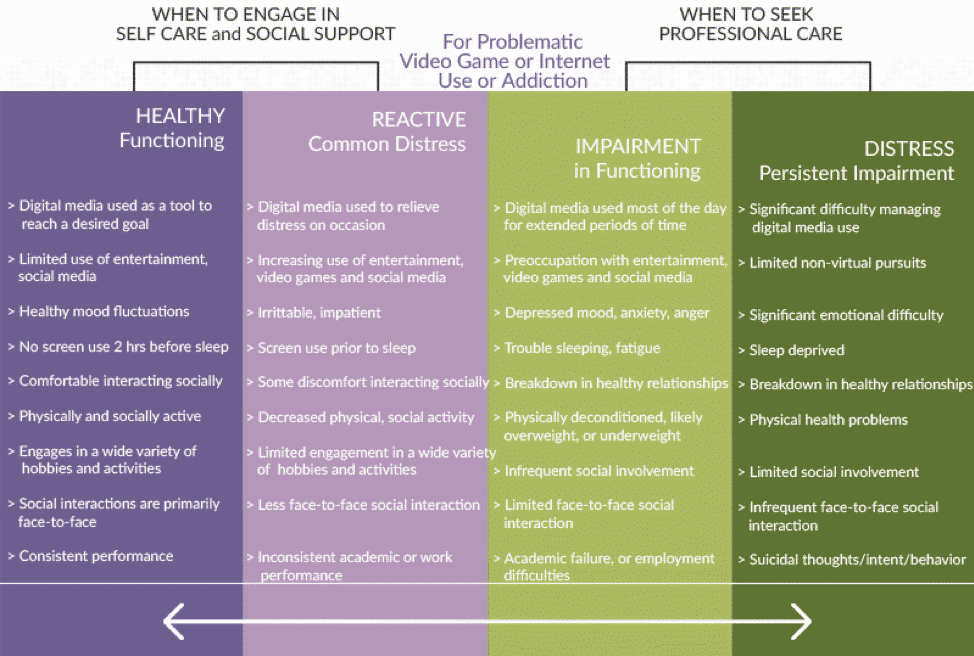
GKIS supports parents to set family rules and promote healthy screen use before digital injury and addictive use occur. If you are concerned about your child’s relationship with their screens, the chart below is a great place to start. Read through each level of functioning and determine which best describes your loved ones.

Fortunately, most kids fall under the reactive category for screen use. To avoid progression into Impairment or Distress, GKIS offers tools like our Screen Safety Essentials Course. If you think you’d like to get outside help as well, here are some facts that will help you navigate as you find the specific help you need.

Where can people with screen addiction go for treatment?

Outpatient Treatment

Outpatient” simply means treatment from an office or clinic rather than admission to a hospital. Youth inpatient treatment programs are more expensive than outpatient and do not typically admit clients until they are at least 12 years old. If your child is young, and it’s early enough that the problem seems resolvable, outpatient services are the best place to start. Find an experienced professional like Dr. Bennett that will work with you and help family members implement follow-up care and make appropriate changes in the home.

Outpatient treatment starts with a comprehensive individual and family evaluation. They will then propose a treatment plan rich in cognitive behavioral coping skills (like those we offer in our Social Media Readiness Course). Usually, the practitioner will see you and your child once a week or twice a week in crisis situations. If your child needs more support, their mental health professional will refer you to extra resources or a partial outpatient or inpatient program. Partial outpatient typically refers to a program with multiple services available more than once a week.

Inpatient Treatment

Inpatient treatment usually involves an overnight stay away from home. Programs are typically offered in timeframes lasting 30, 45, or 90 days and include problem-focused, goal-directed therapies to address the symptoms of the individual’s problematic tech use. Clinicians guide clients through the process of “disconnecting and finding themselves.”

For a long-term stay, you may want to look into programs with accredited education so that your youngster can stay on track in school during treatment. Programs work to encourage a healthy balanced lifestyle while addressing underlying issues contributing to emotional factors (depression, anxiety, ADHD, ASD). Each client’s treatment plan should be individualized and created collectively by the client, their clinicians, and the family. All programs except aftercare should require their clients to be 100% tech-free while in treatment.

The following services have been shown to successfully treat behavioral addiction:

  • Cognitive Behavioral Therapy (CBT)
  • Individual and Group Psychotherapy
  • Nutrition and Fitness
  • Interpersonal Skills Groups
  • Life Skills Psychoeducation
  • Mindfulness-Based Stress Reduction (MPSR) & Meditation
  • Guided Meditation Groups
  • Yoga
  • 12-Step Recovery Groups
  • Relapse Prevention
  • After Care Planning
  • Family Workshops

During inpatient treatment, professionals will work to better understand the complex nature of the individual’s digital media abuse and how it is affecting their development, as well as address the underlying medical and mental health conditions. Patients spend time examining their close interpersonal relationships and how their thoughts, feelings, and behaviors are connected. By exploring patterns of thinking that lead to self-destructive actions and the beliefs that direct these thoughts, patients can modify their patterns of thinking to improve coping skills. Redirecting negative thinking is imperative for self-change, and, due to the immature neural networks in young people, they need more support to achieve lasting cognitive restructuring. Negative thinking patterns also exacerbate anxiety, depression, and compulsive behaviors.

It is important to shop around for quality and fit. Make sure that all treating professionals share an open line of communication with one another, the patient, and the family. As a team, they should help employ a balanced life plan for the client during and post-treatment. They will also go over the risks and benefits of use, potential relapse obstacles and triggers, and help the patient build familial and community connections which are imperative in maintaining a healthy sustainable lifestyle.

Who does the treatment?

Counselors

Counselors focus on overcoming substance abuse and maintaining sobriety. They tend to focus on the here and now and are typically not trained to work with mental health issues directly. Counseling activities include facilitating group therapy and support groups, family counseling for rebuilding and support, and individual counseling to manage symptoms, cravings, and triggers. Counselors work in outpatient and inpatient rehabilitative programs as well as transitional living environments like sober living homes.

Specific types of counselors:

  • Substance abuse and behavioral disorder counselors provide treatment and support for those struggling with addiction. Education and licensing requirements vary by state. However, they typically have an associate degree and a substance abuse counselor certification. Some additionally seek a bachelor’s or master’s degree.
  • School counselors typically have a bachelor’s degree, a teaching credential, and a two-year master’s degree. They specialize in front-line identification of student problems and individual and group counseling about broader issues, like academic and family issues.

Therapists

Therapists focus on mental and emotional health over time, of which substance abuse may be a part. Therefore, they treat mental health issues that co-occur with addiction, including mood and anxiety disorders. Therapists train with a variety of techniques. However, when working with addiction issues they primarily focus on cognitive behavioral therapy, contingency management, motivational enhancement, and individual and family behavioral therapy. Therapists typically work in private practices and outpatient and inpatient rehabilitative programs.

Specific types of therapists:

  • Licensed marriage and family therapists (LMFT) and licensed professional clinical counselors (LPCC) have bachelor’s and master’s degrees. LPCC’s treat a broader scope of mental health issues, while LMFT’s focus on issues that stem from marriage and family relationships.
  • Licensed clinical social workers (LCSW) are part of the mental health counseling branch of social work. They are required to get extra accreditation and training after receiving their master’s in social work (MSW) degree. MSW and LCSW therapies are designed to work with the client to discover what strong natural skills and talents they possess that can be used as a launching point to tackle the issues the client is facing. This process begins with an assessment phase that inventories the strengths and perceived challenges as well as the client’s environment. Then the LCSW works with the client to make and work toward realistic goals (immediate & long term) as well as work to improve the client’s relationship with others and themselves. Social workers can diagnose and provide therapy but cannot prescribe meds.

Licensed Clinical Psychologists

Psychologists typically have a Ph.D. (5-year degree) or PsyD (4-year degree) and are trained for testing and treatment. They have the training to deal with more serious mental illnesses than other treatment providers. Psychologists are often in supervisor and program development and management roles.

Psychiatrists

Psychiatrists are medical doctors that specialize in the diagnosis and treatment referrals for individuals with mental illness. They earn their medical degree and then attend five years of residency specialty training with clients with mental illness. They can prescribe medication and monitor/make dosage adjustments as needed.

Physicians

Physicians with a specialty in addiction medicine are medical practitioners that specialize in chemical and behavioral dependency.

Quick Tips for Parents and Kids in Recovery

Many things will undermine a child’s rehabilitation. One is being too ambitious at the start. Don’t overly focus on each little thing or just the end result. This can lead them to feel defeated from the beginning. Instead, focus on the process one day at a time and acknowledge effort along the way.

Remember that they are doing something important and challenging! Kids making it through childhood and adults doing their best to parent…these are life’s hardest tasks. Blame is not useful, but courage, hope, and love are where it’s at.

“Rehab didn’t cure me of my disorder, but I do consider it to be the cornerstone of my recovery. It gave me a toolbox of coping mechanisms, others to relate to, a safe and open environment, and most importantly, the training to help me understand my specific plight and reframe my thinking. It was the starting point for the long and rigorous process of reclaiming my brain and thought patterns. It still took years after discharge for me to get truly healthy, but I do not believe without serious intervention I would not be where I am today. My disorder robbed me of my ability to connect with the world around me or manage stress without acting out. Today I can say I never imagined my brain to be released from those chains that tethered me to my addiction for so long…. and I owe much of it to the intense work I started in rehabilitation.” 

Thank you to CSUCI Intern, Katherine Bryan for informing parents about screen addiction and where families can go for help. If you want to take steps TODAY to prevent digital injury and addiction, check out our GKIS Screen Safety Toolkit, designed to show parents how to create real preventative change in easy steps.

I’m the mom psychologist who will help you GetKidsInternetSafe.

Onward to More Awesome Parenting,

Tracy S. Bennett, Ph.D.
Mom, Clinical Psychologist, CSUCI Adjunct Faculty
GetKidsInternetSafe.com

Photo Credits

Happy-kids United Way Lower Mainland CC 2.0

The pros and cons of giving an allowance Aaron Snider CC 2.0