
Need peaceful screen time negotiations?

Get your FREE GKIS Connected Family Screen Agreement

sports

Parents of Student Athletes Struggle to Cope with Critical Tweets

If you are a parent reading this, you understand how much we care about our children. Thirty-seven percent of kids have been a victim of cyberbullying, and 30% have reported cyberbullying to be an ongoing situation.[1] When we think of cyberbullying, we think of one teenager making online comments about another teen. But imagine a situation where your young adult child is repeatedly having to endure nasty remarks from other adults like it is in the case of college athletes. Some argue that is part of the fame. But is it also part of childhood? We don’t think so at GKIS. For that reason, we created our Social Media Readiness Course for tweens and teens to help your kids recognize the signs of online abuse and how to avoid it. Today’s GKIS article covers what parents of college athletes may encounter on Twitter as well as how to counterbalance the negativity.

Social Media in the Lives of College Athletes

In our GKIS article “When Young Athletes Look to Twitter to Showcase Talent and Track Sports News: An Inside Look,” we discussed the role social media plays in a young athlete’s life and how they learn to cope with it.
Our interviewee John said he learned how to detox from social media on occasion and also how to use cyberbullying as motivation. But when you’re a parent and hear something being said negatively toward your child, even if your child is an adult, it’s hard not to take that personally. There’s no protection from it, and if you jump to their aid online, it might ultimately harm them. College and professional teams don’t want to deal with online drama coming from parents. But sometimes, enough is enough…or is it?

When Parents Can’t Take the Online Attacks Anymore

Randi Mahomes, the mother of Super Bowl champion Patrick Mahomes, took to Twitter in 2021 to express her displeasure at a hit her son took from an opposing player. Arguably, she is in a reasonable position to speak her mind whether we agree with it or not because her son is already playing at the highest level.

But our division one college football player John’s parents weren’t so lucky. If someone was displeased with how John played a game and tweeted, “I hope your dog eats chocolate and gets really sick and throws up on your socks.”[2] (a tweet 7-time Superbowl champion Tom Brady once got), John’s parents must idly stand by and watch people sling mud at their child.

John’s mother Mary recalls, “The hardest one was seeing a tweet saying John was a ‘piece of shit’ after he had a bad game. Most of the time, I would listen to John and let it be, but I couldn’t with that comment. I had to speak my mind and tweet back.” She elaborated, “A few Twitter exchanges went back and forth, and then I let it go after speaking my mind.”

Mary said that some situations were more complicated than others, and she recalls many days being in tears over Twitter comments. She said a particularly hard day was when they read on Twitter that the college John had decided to go with unexpectedly selected a different quarterback. The tweet went out before John ever got a personal call saying the spot that he was offered was no longer available. It was heartbreaking, considering that he had turned down other offers in favor of this one, some of those offers were no longer available. After many conversations with the college scout prior to the tweet that seemed like a guarantee is followed with silence, it was hurtful.

Mary said, “About 80% of the time, the tweets were very positive. John had a good record, so it was more good than bad.” She said she still uses Twitter because she has other interests in the app, not just sports. Her husband, however, has since deleted the app now that their son is done with his athletic college career.

Parents are proud of their children and love to hear positive things. They don’t want to read tweets from strangers saying how their child isn’t trying hard enough or how they lost the big game for the team. Parents see firsthand how much their child loves the game, how hard they work, and how much sacrifice they give up competing at a top level. Because online education starts with parents, we created our Screen Safety Essentials Course for parents and families. Knowing what troubles lurk online will help parents teach their kids what they need to know to avoid digital injury and problem-solve through difficult online situations.

Other Ideas for How to Work Around Unwanted Negativity

  • Take regular breaks from social media. Our GKIS article, Start Fall Fresh With a Cleansing Digital Detox is a great article to help you take that first step.
  • Keep a positive dialogue going with your child about the pressures that arise from being an athlete with anonymous fans.
  • Adopt our free Connected Family Agreement, a simple tool that sets reasonable online limits and feeds a cooperative family alliance when it comes to online decisions.
  • Filter and manage online content with our Screen Safety Toolkit. This resource guide helps you build a customized set of parental controls for filtering and monitoring online content.
  • Set designated times throughout the week when everyone spends time together without their devices. Share about your offline and online lives to stay connected.

Thanks to C SUCI intern Keith Ferries for doing the research and writing this article.

I’m the mom psychologist who will help you GetKidsInternetSafe.

Onward to More Awesome Parenting,

Tracy S. Bennett, Ph.D.
Mom, Clinical Psychologist, CSUCI Adjunct Faculty
GetKidsInternetSafe.com

*Mary is a fictional name to maintain anonymity.

Works Cited

[1] Patchin, J. W., Ph.D. (2019, July 9). 2019 Cyberbullying Data. https://cyberbullying.org/2019-cyberbullying-data

[2] Kimble, L. (2021, February 5). Tom Brady Reads Mean Tweets About Himself Ahead of Super Bowl 2021. People.com. https://people.com/sports/super-bowl-2021-tom-brady-reads-mean-tweets/

Photo Credits

[1] Photographer Unknown https://www.pexels.com/photo/white-ceramic-teacup-beside-black-iphone-5-on-brown-wooden-table-58639/

[2] Karolina Grabowska
https://www.pexels.com/photo/a-woman-with-a-coffee-cup-in-front-of-a-laptop-7320744/

[3] Nicola Barts
https://www.pexels.com/photo/stressed-beard-black-man-working-on-laptop-7925881/

When Young Athletes Look to Twitter to Showcase Talent and Track Sports News: An Inside Look

Imagine being a teenager getting ready for the big game, whether it’s soccer, basketball, or football. Your anxiety is buzzing as you try to stay focused. Friends and family are in the stands and your coaches are lasered in on you. Now imagine that, in addition to your friends, family, and coaches watching, there are also the college scouts and your scholarship is on the line. The weight of the world is on your shoulders. One false move and the dream you have been working on for years may be dashed. Now let’s add one more layer and imagine that right before you head onto the field you check your phone one last time. You tweet about being pumped because your social media engagement impacts your future in BIG ways. Then, ping, a stranger tweets about how you suck and that you will never make it in college sports…

How to Play the Game on Twitter

Although athletics are highlighted on many social media platforms, Twitter leads the pack for athletes to showcase their talent. Unfortunately, it’s also a place for people to troll, vent, and attack an athlete’s performance. While the public discusses their opinions of statistics and abilities, those who may impact your future watch the fray silently.

Often college offers are announced and celebrated on Twitter, leaving those who were passed up feeling shocked and demoralized. To better understand what that is like to have your talent showcased on Twitter, I recently interviewed a college quarterback named John*.

John was a 3-star athlete, which translates into being in the top ten percent of high school quarterbacks in the nation.[1] In high school, many college coaches were competing to recruit him. Other quarterbacks were in the same boat, all on Twitter tracking stats and who was tweeting about whom. He told us that a range of emotions was at play, elaborating, “When you see the tweets on how good another quarterback is, how he is ranked higher than you, and how he got his scholarship, those tweets make you more hungry to win.”

How to Make Twitter Work for You

We asked John if, alongside motivation, he often felt despair, But John insisted that, in his case, he didn’t consider Twitter to be all that bad. “It was a great way for me to reach out to schools, to put up my stats, and to get positive feedback from prospective coaches in the off-season. If I had a good game, I made sure to send it to colleges the next day and post it for others to see.” He said that when he wants news, all he has to do is look to the internet.  When I asked about what would happen if he had a bad game, he chuckled and said, “When you have a bad game, people will post it for you. No need to worry about that.” Unfortunately, not every child can always take the negative and turn it into a positive. Our Screen Safety Essentials Course is a great way for your teen to learn to help them think before they tweet.

Everyone’s a Critic

When speaking with John about Twitter and college, he said that things change from high school to college. “ There isn’t too much negativity on a high school player when they have a bad game, but that all goes out the window when you get to college. Betters [people gambling on the game] will always have something to say when you don’t perform like they hoped you would.”

According to cbssports.com, in a single sports season up to eight billion dollars are wagered.[2] To give a perspective of what eight billion is, that is what Instacart was valued at in 2019.[3] The college football season is about four months long, with the regular season being 12 games per team.

John elaborated, “If I had a bad game, it wasn’t uncommon for me to delete the Twitter app because I was already beating myself up enough for the loss. I didn’t need to hear it from people that don’t play the game. Breaks off social media are great because you have to kinda get in check with your reality.” I asked about tweets in high school hurting him or anyone he knew at the time. He responded, “Most people are pretty forgiving to high school kids as long as it’s nothing really bad. Your coaches care about you and do help guide you. If you make a mistake and tweet something bad, your high school coach and any coach interested in you at the college level will usually talk to you. These things I have seen have usually been a learning experience. However, when you get to the college level, that all changes. They expect you to be an adult and act accordingly.” For example, in 2015, professional quarterback Josh Allen was projected to be the first draft pick of the NFL until an old Tweet of his from high school days resurfaced. His status dropped to seventh, translating into a lot of money lost. To help prepare your tween or teen on how to handle such situations, GKIS has a great Social Media Readiness Course.

Overall, the athlete we spoke to loved playing and everything about it. John said there were times that weren’t as much fun but he took what was given to him and made it work for him. He turned a mean tweet into motivation to work harder than the next guy. When asked what advice he’d give a young athlete, he said, “Don’t waste energy on something that is out of your control. It’s only going to bring you down.”

Other Tips for How to Avoid the Pitfalls

  • Before you allow your tween or teen to go on social media, require that they take our Social Media Ready Course. This information optimizes the chances that they’ll not fall victim to digital injuries and maintain the best psychological wellness practice.
  • Review with your teen how to promote themselves and build a positive brand and how to avoid negativity and online conflict. We offer these strategies in our Screen Safety Essentials Course.
  • Detox from social media on occasion to regroup and gain perspective.
  • Keep good company with coaches, friends, and family. Accept support from those who support you on and off the field
  • Reframe negativity online so it motivates you. Don’t let it take a negative hold on your attitude toward the same, your competitors, or yourself.

If you found this blog article interesting, please check out some of our other GKIS articles about Twitter.

The GKIS Sensible Parent’s Guide to Twitter

How to Spot an Internet Troll

Showcasing Child Talent Online Leads to Exploitation and Scams 

Thanks to CSUCI intern Keith Ferries for interviewing John, doing the research, and writing this article.

I’m the mom psychologist who will help you GetKidsInternetSafe.

Onward to More Awesome Parenting,

Tracy S. Bennett, Ph.D.
Mom, Clinical Psychologist, CSUCI Adjunct Faculty
GetKidsInternetSafe.com

*John is a fictional name to allow the athlete interviewed to remain anonymously

Work Cited

[1] Nusser, J. (2018, December 15). Seeing stars: 247Sports, Rivals, and ESPN star-rating systems explained. Coug Center. https://www.cougcenter.com/wsu-football-recruiting/2013/2/5/3956800/rivals-scout-espn-247-star-rating-system-national-signing-day

[2] Dodd. D. (2022, November 17). College sports’ overlooked gambling issue: Improprieties being ignored as betting soars nationwide. Cbssports.com. https://www.cbssports.com/college-football/news/college-sports-overlooked-gambling-issue-improprieties-being-ignored-as-betting-soars-nationwide/

[3] Gebel, M. (2022, November 17). 30 companies worth at least $1 billion that didn’t exist 10 years ago. Businessinsider.com. Retrieved December 3, 2019, from https://www.businessinsider.com/companies-unicorns-worth-1-billion-didnt-exist-10-years-ago-2019-11

Photo Credits

[1] Photographer unknown

https://www.pexels.com/photo/2-football-player-running-after-person-holding-football-during-daytime-in-shallow-focus-photography-159571/

[2]Photographer Unknown

https://www.pexels.com/photo/red-blue-and-yellow-textile-5417837/

[3] Photographer Unknown

https://www.stockvault.net/photo/119697/usd-bills-close-up#

Is Your Child a “Professional Gamer”?

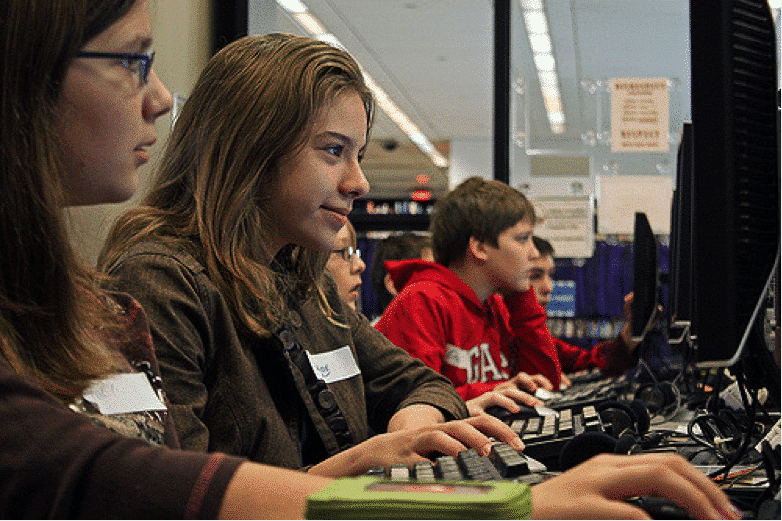
“These games are a waste of time!” Does this parent-rant sound familiar? We are all hooked on our screen activities, but gaming has a particularly addictive quality. We already covered that there are many benefits. One big benefit that we haven’t covered yet is that gaming is a great launch for professional ventures that connect players to other people all over the world. Why is gaming so popular, and what can be accomplished or gained by playing them?

Why Kids Are Hooked

A common belief about video games make us mindless. Many studies have found links to aggression and gamers. However, these studies primarily tested a small subset of games with violent shooters. In contrast, studies from role-playing games have shown benefits for the player.

Specifically, gamers have been shown to demonstrate and build emotional skills like feeling guilt and shame when a character acts immorally.[1] Games also provide a fertile resource for building team play and social skills. For instance, in one study online gamers reported feelings of community and belonging while playing online. They claimed that the social relationships gained while playing provided them with social support and helped them develop a healthy social identity.[2]

Action games, which do include shooters, have also been shown to increase our ability to hold visual information[3], increase the ability to multi-task and manage attention[4], and calm and de-stress.[5]

Games are not simply a means of passing the time. The time spent playing is meaningful. Other exciting benefits include entertainment, identity exploration, and higher-order thinking and problem-solving. Gaming can even launch life-changing educational, entrepreneurial, networking, and earning opportunities!

What game do I want to play?

Each gamer is unique and expresses themselves through the genre or style of gameplay they choose. Each genre requires certain skills and characteristics for the player to succeed. There are five main genres in gaming: Action, Role-Playing, Simulation, Strategy, and Sports.

Action

  • The player is given challenges that can include climbing obstacles, solving puzzles, defeating enemies, or collecting certain key items.
  • The player must have fast hand-eye coordination and quick reflexes to succeed.
  • Popular games include Minecraft, Overwatch, Fortnite, Grand Theft Auto.

Role-Playing

  • Based on the tabletop game Dungeons and Dragons
  • The player is tasked with completing missions to progress and strengthen their character(s).
  • Contains immersive worlds and engaging stories
  • Popular games include World of Warcraft, Final Fantasy, Pokémon.

Simulation

  • Utilizes the use of virtual worlds to simulate aspects of reality and fantasy for training purposes
  • There are no goals the player has to follow.
  • Popular Games include The Sims, Farming Simulator, Flight Simulator.

Strategy

  • Gives the player control of multiple characters
  • Players must use these characters to explore, engage in combat, and gather and utilize economic resources.
  • To succeed the player must use strategy and great tactics.
  • Popular Games include StarCraft, Civilization, Age of Empires.

Sports

  • Allows the player to take control and play as their favorite sports team or player
  • Some games in the genre try to recreate current sports as realistically as possible, while others create new sports with over-the-top effects and fast gameplay.
  • Popular Games include Madden, FIFA, Rocket League.

What do I want to do in the game?

Through gaming, children are provided with unique freedoms and communicative abilities. In most games, the first goal is to decide what mission to pursue. Completion of the mission rewards the gamer by furthering the story, giving the gamer new items, or providing the gamer with experience points used to increase the skill of their character.

When deciding how to approach the mission, the gamer is given multiple options. In single-player games, the gamer can choose the look of their character, which missions to pursue, and how they wish to approach each mission. The gamer must decide if they want to take on the mission alone, team up with a friend, or tackle missions online with millions of other players worldwide. Cooperative games offer an intimate, fun experience that can be shared with friends and family on a single TV or in private online sessions. They also have to decide about strategy. For example, they can:

  • charge straight in taking on all challenges at once,
  • take a stealthy approach,
  • scout the area and gather resources along the way, or
  • create a tactic all their own.

Game Streaming & eSports

Social media sites have become an integral part of a gamer’s identity. They give players the ability to choose their online friends, the style of their home page, and what is posted and commented on their profile. Kids can communicate through private sessions with friends and live streams to a worldwide audience.

Dozens of video streaming sites and their users have taken advantage of this gaming movement. On YouTube and TikTok, popular personalities showcase themselves playing video games to garner more views and make revenue from advertisers.

Twitch TV is a video game streaming site that allow users to live-stream themselves playing games to global online audiences. Streamers are paid through viewer subscriptions, donations, and sponsorships. Sponsorships are given to gamers for unique and appealing personalities and highly acclaimed skills. Many gamers who are sponsored for their skills are also part of a rapidly growing eSports league.

The eSports league involves teams and tournaments similar to those seen in other professional sports leagues. Funding for tournaments and players comes through sponsorships, endorsements, advertisements, and online donations. Gamers are paid well for winning. For instance, a popular game, Dota 2, had a prize pool of over twenty million in 2016. Each player of the winning team took home $1.8 million.[6]

eSports can also bring fame. The eSports league has become a huge phenomenon spanning the globe, rivaling and even surpassing long-standing professional sports. In 2014, a popular PC game, League of Legends had a tournament that garnered more viewers than game seven of the MLB finals and game seven of the NBA finals combined![7]

Universities have begun to pick up on the eSports trend as well. Robert Morris University recently launched the first sponsored eSports Team. Players of the team are students who receive scholarships for their play just as another student would receive a scholarship to play football or basketball. They train just as another collegiate team would. They are instructed by a coach, study the competition, and practice running drills.[7]

In the past, the word gamer was associated with words like lazy and non-social. Fortunately, these stigmas are changing. Gamers today are seen as entrepreneurial (creating your own business), professional, and globally connected.

Thank you to CSUCI Intern, Dylan Smithson for teaching us about the skill-rich, lucrative world of gaming. If you enjoyed reading this article, feel free to share with friends and family, and give us a like on our GetKidsInternetSafe Facebook page.

I’m the mom psychologist who will help you GetKidsInternetSafe.

Onward to More Awesome Parenting,

Tracy S. Bennett, Ph.D.
Mom, Clinical Psychologist, CSUCI Adjunct Faculty
GetKidsInternetSafe.com

Works Cited

[6] Bednarski, S (2016) Top 5 Largest eSports Prize Pools of 2016. http://www.xygaming.com/content/top-5-largest-esports-prize-pools-of-2016/

[3] Blacker, K. J., Curby, K. M., Klobusicky, E., & Chein, J. M. (2014). Effects of action video game training on visual working memory. Journal Of Experimental Psychology: Human Perception And Performance40(5), 1992-2004. doi:10.1037/a0037556

[4] Maclin, E. L., Mathewson, K. E., Low, K. A., Boot, W. R., Kramer, A. F., Fabiani, M., & Gratton, G. (2011). Learning to multitask: Effects of video game practice on electrophysiological indices of attention and resource allocation. Psychophysiology48(9), 1173-1183. doi:10.1111/j.1469-8986.2011.01189.x

[1] Mahood, C., & Hanus, M. (2017). Role-playing video games and emotion: How transportation into the narrative mediates the relationship between immoral actions and feelings of guilt. Psychology Of Popular Media Culture6(1), 61-73. doi:10.1037/ppm0000084

[2] O’Connor, E. L., Longman, H., White, K. M., & Obst, P. L. (2015). Sense of community, social identity and social support among players of massively multiplayer online games (MMOGs): A qualitative analysis. Journal Of Community & Applied Social Psychology25(6), 459-473. doi:10.1002/casp.2224

[7] Ravitz, J (2016) Varsity Gamers Making History and Dumbfounding Parents http://www.cnn.com/interactive/2015/07/us/varsity-gamers-american-story/

[5] Reinecke, L. (2009). Games and recovery: The use of video and computer games to recuperate from stress and strain. Journal Of Media Psychology: Theories, Methods, And Applications21(3), 126-142. doi:10.1027/1864-1105.21.3.126

Takahashi, D (2016) Worldwide Game Industry Hits $91 Billion in Revenues in 2016, with Mobile the Clear Leader. http://venturebeat.com/2016/12/21/worldwide-game-industry-hits-91-billion-in-revenues-in-2016-with-mobile-the-clear-leader/

Photo Credits

Paris Game Week 2013 James Cao, CC BY-NC-SA 2.0

E3 Patsun, CC BY-SA 2.0

Gaming Day Skokie Public Library, CC BY-NC-SA 2.0