Need peaceful screen time negotiations?

Get your FREE GKIS Connected Family Screen Agreement

screentime

Off the Phone and On the Soccer Field: My Cure for Digital Disconnection

Kids crave connection. Face-to-face interaction and emotional closeness are vital for healthy development—particularly for adolescents.[1] Screen time offers shallow connections and distracts kids from those unpleasant cravings. It also keeps kids so busy that they don’t seek the connection they so desperately need. What if they didn’t have to be so lonely? What if there was a way they could be off their screens, doing something good for their health, and making friends at the same time?  For me, that was playing sports.

The Seed Was Planted

As a child, I was most excited to hang out with my friends, be on my phone, watch TV, or eat sweets, in that order. That was until I joined a team sport.

It all started when my mother asked me if I wanted to join the local soccer team. I was nine years old and against the idea because I didn’t want it to cut into cartoon time on the weekends, and had we gone through the Screen Safety Essentials Course, we wouldn’t have worried so much about the impact of screens on us. But she insisted. I only agreed because my favorite cousins were on the team.

I learned from the first practice that I loved the intense physical activity of soccer, and after a while, I began to really get the hang of it. I felt proud and accomplished. I made great friends on the team. We loved team bonding activities and even began to hang out outside of practice. I loved it so much, I gave it my all and looked forward to it all week.

By high school, I had won medals and genuinely felt like I was good at the sport. I received praise and encouragement for all of my efforts and hard work. It also inspired me to work hard in other aspects of my life. I tried harder in school, was friendlier with classmates, more obedient in class, and more eager to participate in the learning process. According to Project Play, high school athletes are more likely to further their education and even receive higher grades in college.[2] I started seeing everything in the world as a skill waiting to be attained, something that required courage, effort, and training.

Having that view of the world helped me when I sprained my ankle right before the start of my freshman season. While recovering, I could have easily scrolled through Snapchat and Instagram endlessly. But I wanted to make sure I continued to build the bond with my teammates for when I returned. It taught me to wait my turn, keep a positive attitude, remain patient, and support others as they shine. As soon as I recovered, my teammates were more than happy to catch me up to speed, and I rebuilt my strength.

Core Memories That Last

One of my most memorable moments taught me something I will never forget. It was my junior year; we were tied 0-0, with a minute left in the game. My team was exhausted, but as captain, I knew this is where my job was most important. I dribbled the ball up the center, dodging two midfielders and one defender, set it up for my left forward, and yelled, “SHOOT!” She shot and sent it straight into the upper right corner of the goal. Everyone who was there to support us was on their feet, our coaches were throwing their clipboards in the air and hugging each other, and our teammates ran to us for a celebratory hug and a jump around. We spent the last 15 seconds of that game with tears in our eyes and joy in our hearts. We had just beaten a 40-year record for our school!

This is when I realized this would have a lifelong impact on me. It was one of those moments that I’ll look back on happily. It was a lifetime of preparation to become someone people could rely on when things got tough and hope felt lost. It was the moment I truly understood what being a leader meant to me and the impact it had on others.

I hugged and thanked my mother for signing me up for soccer at nine years old. She introduced me to the first love of my life, and I would forever be grateful for that. From then on, I never doubted my abilities to get something done, never lost confidence in myself, and never hurt someone without apologizing or broke something without trying to replace it.

The Impact of The Beautiful Game

Project Play reports that sports, in particular, can positively impact aspects of personal development among young people, keep them away from harmful substances, and encourage cognitive, educational, and mental health benefits.[2] I believe my experience of playing soccer was so much more than just a fun sport or a way to stay active, although both are tried and true. It was a refinement of my character, it was a positive shift in how I viewed the world and myself in it, it was what taught me that rejection was just redirection, and it was a way to build and maintain connections with people I am still close to, at 27 years old.

Why Everyone Should Play Sports

Participation in sports can protect against the development of mental health disorders.[4] These benefits include lowering stress levels, rates of anxiety and depression.[5]Lifelong participation in sports leads to improved mental health outcomes and even immediate psychological benefits which continue long after participation is over with. The improve self-confidence, encourage creativity, and nurture a higher self-esteem. Statistically, adolescents who play sports are eight times more likely to be physically active at age 24.[3]


Thanks to CSUCI intern, Elaha Qudratulla, for sharing an important story about how beneficial playing sports were for her then and how it still helps her today.

I’m the mom psychologist who will help you GetKidsInternetSafe.

Onward to More Awesome Parenting,

Tracy S. Bennett, Ph.D.
Mom, Clinical Psychologist, CSUCI Adjunct Faculty
GetKidsInternetSafe.com


Works Cited:

[1] https://www.uvpediatrics.com/topics/alone-together-how-smartphones-and-social-media-contribute-to-social-deprivation-in-youth

[2] https://projectplay.org/youth-sports/facts/benefits

[3] https://odphp.health.gov/sites/default/files/2020-09/YSS_Report_OnePager_2020-08-31_web.pdf

[4] https://baca.org/blog/does-playing-organized-youth-sports-have-an-impact-on-adult-mental-health/

[5] https://pce.sandiego.edu/child-development-through-sports/

Photos Cited:

[Header] Eva Wahyuni on UnSplash

[2] Olivia Hibbins on UnSplash

[3] Elaha Qudratulla

[4] Jeffrey F Lin on UnSplash

[5] Elaha Qudratulla

https://unsplash.com/

Are Your Kids Suffering from Sensory Overload? 

Has your child ever had an epic freakout because you demanded that they turn off their screen? Or completely went unhinged when you wouldn’t buy them a video game they wanted or allowed social media before you thought they were ready? It turns out that there is a neurological reason for that reaction beyond child entitlement and fragility. Too much screen time can result in overstimulation that results in short- and long-term effects in kids. To help manage your child’s screen time and avoid overstimulation, check out our Screen Safety Essentials Course. This course will help your family achieve screen sanity with our weekly parenting and family coaching videos featuring research-based tools from Dr. Tracy Bennett. In this article, we discuss sensory overload, how it may be affecting your children, and how to avoid it.

Our Digital Babysitter 

Raising kids is hard! And some kids are more difficult to entertain than others. Screen time can be a win-win – kids are happy, and parents can get things done. Dr. Bennett, Founder of GetKidsInternetSafe, says screen time can be a great thing, but it can also be a source for a host of digital injury. In her book Screen Time in the Mean Time, she describes screen injuries in the areas of health, interpersonal exploitation, and financial exploitation.[4]

She says that, although screen time matters, content matters too. Educational content with a calm, predictable, and sequential pace is easier for children to process than frenetic, fast-paced content. If your child melts down when you tell them to turn off screen time, you may need to be more aware of the content they are watching so they don’t suffer from sensory overload. 

What is sensory overload? 

Sensory overload refers to overstimulation that occurs when sensations from the environment, like playing video games or watching fast-paced videos and television programming, can become overwhelming.[2] For young children with maturing brains and difficulty with emotional modulation, sensory overload from unmanaged screen time can result in irritability, temper outbursts, hyperactivity, and aggression. Children with disabilities, like autistic spectrum disorder or attention-deficit/hyperactivity disorder, are particularly vulnerable to sensory overload.[4] 

What does frenetic, fast-paced content look like?  

In 2006, YouTube launched the child educational program CoComelon. By September 2022, CoComelon had 144 million subscribers and over 139.24 billion views.[5] The demand and popularity of the CoComelon led to the creation of the TV show in 2021, which also became a hit sensation. CoComelon consistently ranks in the top ten most popular shows on Netflix.   

CoComelon is known for its fast pace and bright animation. These aspects of the program are hypothesized to stimulate the release of the feel-good chemical, dopamine, in kids’ brains.[1] Dopamine also plays a key role in addiction. This rush of dopamine that kids experience while watching the show is what makes them want to watch it repeatedly.[3] Some exposure is likely harmless. However, some kids may have a vulnerability to such fast-paced content. Too much watching can lead to problems.  

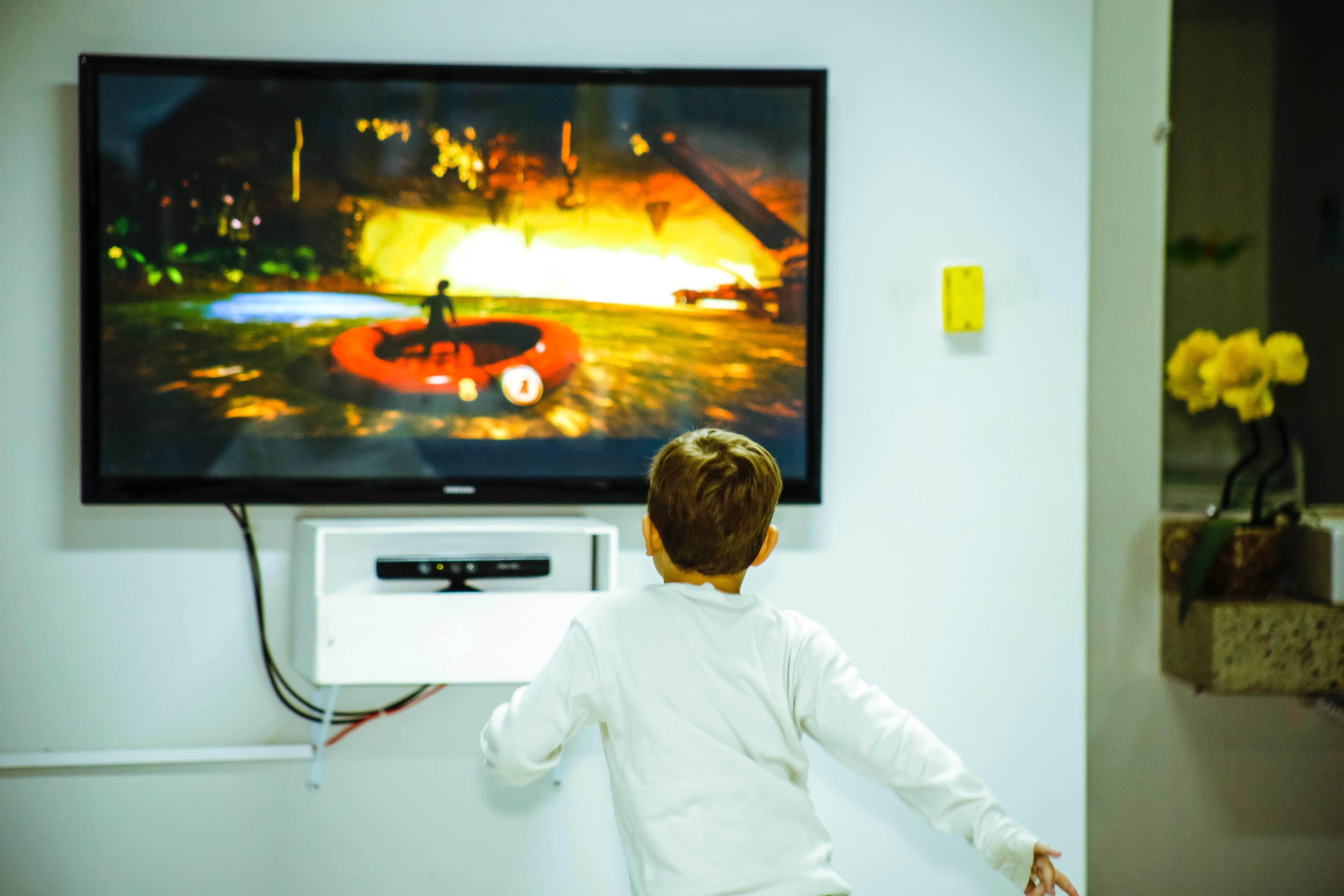
Passive television while doing homework can result in sensory overload. 

Frenetic screen content isn’t the only thing that can lead to problems with sensory overload. In her book, Screen Time in the Mean Time, Dr. Bennett writes that passive television can also strain child cognitive resources.  

Passive television refers to the television playing in the background while we’re eating dinner, doing homework, or just for pleasure. Having the television on in the background while your kids do homework creates a battleground for your child’s attention. This can negatively affect their quality of learning and academic performance.  

Dr. Tracy Bennett writes: 

Watching TV and doing homework are both demanding tasks that compete for visual and verbal cognitive processing. As a result, the toggling required to attend to both tasks will impair learning and homework quality. Research studies have demonstrated that watching television, or even just having it on i n the background, impairs reading performance, recall and recognition, and even your memory of what you’ve watched on TV.[4]  

Entertainment and big tech have commodified your child’s attention. 

Because entertainment corporations recognize that their profit depends on our screen time, they’ve created manipulative technology to capture our attention. With features like autoplay, companies like Netflix, YouTube, and TikTok know how to keep us binge-watching. The autoplay feature automatically dishes up new content without user input to promote addictive watching habits. With features like autoplay, can you be confident that Netflix is prioritizing your child’s learning and mental health over its profit?   

Signs That Your Child May be Suffering from Sensory Overload  

  • Chronic moodiness and irritability 
  • Fatigue and low energy 
  • Difficulty making decisions 
  • Temper outbursts, especially after a long screen time binge 
  • Aggression 
  • Headaches, including ocular headaches and migraines 
  • Difficulty falling asleep and staying asleep 
  • Nightmares[6] 

How can you help your child avoid sensory overload? 

  • Prioritize face-to-face family time and screen safety conversations with help from our Connected Family Screen Agreement and our GKIS Blog. 
  • Take initiative and manage what your children are able to access with help from our Screen Safety Toolkit
  • Set up sensible household rules (like screen-free zones) and amazing learning centers with help from our Connected Family Course.
  • Help your children learn how to recognize the red flags of digital injury and practice psychological wellness tools before they adopt social media with our Social Media Readiness Course.
  • Opt for the works with our megacourse the Screen Safety Essentials Course. This low-cost option offers all GKIS Courses and Agreements in one easy place. Parents-only videos and family videos from Dr. B offer 26 easy lessons that you can sprinkle in once a week to make sure you cover everything!
  • Share Dr. B’s important teachings by telling your school, church, or temple about her custom webinars!
  • If you need extra support, check out our GKIS Workshops and Dr. B’s Coaching options!

Thanks to CSUCI intern, Sarah Hernandez for researching and writing about sensory overload from screen time.  

I’m the mom psychologist who will help you GetKidsInternetSafe. 

Onward to More Awesome Parenting, 

Tracy S. Bennett, Ph.D. 
Mom, Clinical Psychologist, CSUCI Adjunct Faculty 
GetKidsInternetSafe.com 

Works Cited  

[1] The Kangaroo Forest. (2022). Is CoComelon overstimulating. Woodlands Online. https://www.woodlandsonline.com/blps/article.cfm?page=10208 

[2] Gordon, S. (2021). How to cope with your child’s sensory overload. Very Well Family. https://www.verywellfamily.com/overstimulation-in-children-4585143 

[3] Maguire, C. (2017). 6 negative effects for children playing video games. Washington Parent. https://washingtonparent.com/6-negative-effects-for-children-playing-video-games/ 

[4] Bennett, T. (2019). Screen time in the meantime: A parenting guide to get kids and teens internet safe. GetKidsInternetSafe Books. https://getkidsinternetsafe.com/parenting-guide/  

[5] CoComelon. (2022). YouTube. https://youtube.com/channel/UCbCmjCuTUZos6lnko4u57UQ 

[6] Eatough, E. (2021). What is sensory overload? Know how to deal with overstimulation. BetterUp. https://www.betterup.com/blog/sensory-overload  

Photo Credits 

Photo by Vidal Balielo Jr.: https://www.pexels.com/photo/boy-standing-in-front-of-flat-screen-tv-1682519/ 

Photo by ANTONI SHKRABA: https://www.pexels.com/photo/a-boy-leaning-his-head-on-the-table-5306486/ 

Photo by August de Richelieu: https://www.pexels.com/photo/little-girl-doing-her-homework-4260486/ 

Is Social Media a Breeding Ground for Social Anxiety Disorder?

As many as 97% of teens actively use at least one form of social media.[1] If your tween or teen has social media, help them become informed, safer consumers with our Social Media Readiness Course. Our online course includes mastery quizzes after each lesson and can be done at your own pace. We think it’s the best way to help kids avoid the many sources of digital injury and help them integrate critical psychological wellness tools. Today’s article is all about social media and psychological wellness. Is social media use contributing to your child’s social anxiety disorder?

Social Anxiety Disorder

Social Anxiety Disorder (SAD) is a debilitating disorder that impacts children and adults and is characterized by an intense fear of being judged by others in social settings.[2] Since the stay-at-home orders from COVID19, Dr. Bennett says that many kids, teens, and adults have developed social anxiety due to the stress and loss of practice due to isolation. People who suffer from SAD avoid social situations that require peer conversations, giving speeches, and being among unfamiliar people.

What are the signs of SAD?

Although we all may go through bouts of shyness or anxiety when doing social things like making speeches, SAD is a heightened and debilitating version of these same fears. Studies have shown that children with SAD often struggle with peer friendships, academics, and even family life.[3]

Here are typical characteristics of SAD:

  • Excessive fear regarding social situations
  • Agitation
  • Low self-esteem
  • Avoidance of social engagements
  • Excessive worry
  • Poor eye contact

These are things you can be on the lookout for when observing your children. Are they struggling to keep up academically? Are they complaining that they don’t have friends? Do you notice that they lack the confidence to initiate conversations or speak up for themselves?

If you feel concerned, reach out for professional assistance from a therapist or licensed psychologist. The sooner a child gets assistance with SAD, the sooner they can start working on it and find resolutions to their fears. Cognitive Behavioral Therapy (CBT) is particularly effective with SAD.

CBT is a form of therapy that offers strategies to help subjects change maladaptive thinking patterns and gain insight into things that reward anxiety. Unique treatment plans can be altered for each patient. One of the things that make CBT unique is the emphasis on teaching the patient about the disorder and allowing them to create their coping skills and ultimately be their own therapist.[4]

Social Media’s Impact on SAD

Studies have shown that children with SAD tend to have lower interpersonal trust and are more prone to hurt feelings. For some kids who have a hard time building peer relationships in person, using social media can help them make friends and feel included. Talking to peers on social media allows children to think before they send a message which may lessen their fear of judgment. Also, online conversations take out the tough-to-interpret facial expressions that sometimes cause people with SAD to overthink and freeze up.

A great example of where this could come in handy is during a lunch break. Children with SAD may have a hard time interacting during lunch and stay quiet due to fear of being judged. This same child can go home and message their friends on social media about something that was discussed during lunch without having to worry about others watching them. By messaging their thoughts to their friends, they can compose their words and it lets them be involved and part of the conversations.

On the other hand, studies have shown that children with SAD worry more about being judged on what they post than others do.[5] Since a child with SAD is already more prone to hurt feelings, they may get more upset by comments and feelings of exclusion. They may also overthink about posted content wanting to make sure others enjoy it. A balance between offline practice and online practice is key to psychological wellness and social skills mastery.

Things You Can Do to Help Your Child Avoid SAD

Enjoy the support of weekly coaching.

The most important thing that parents can do is be aware of the potential risks and promote an environment of open communication with your children. Dr. B offers a comprehensive family program for fostering this kind of communication in her Screen Safety Essentials Course. With this course, your family will learn tons of information about how to create a safer screen home environment while also connecting and having fun as a family. Armed with the right tools, you and your family can learn how to better thrive in today’s digital era.

Set screen time limits.

Most phones have parental control options to limit the amount of time spent on social media apps. The Screen Safety Toolkit explains the amount of screen time recommended for your children and gives you the tools you need to set up the controls, track usage, and filter unwanted content for safe browsing.

Offer opportunities to practice social engagement.

Sometimes kids need extra support when they are feeling socially anxious. If your child opts out of social interactions, provide a series of opportunities to practice social engagement with your help. Start by encouraging your child to order on their own in restaurants. Continue the same tasks until the child feels comfortable doing them. Once they’re comfortable with the first task, move on to slightly more challenging tasks like small talk when purchasing groceries or waiting in line. Mastering increasingly challenging social tasks can help your child learn social skills and build self-confidence.

Consider CBT Therapy.

If your child’s symptoms are getting in the way of school, friendships, or overall happiness, CBT therapy treatment can help them learn coping skills and face their fears head-on.

Thanks to CSUCI intern Tara Meizel for researching social media and its effects on children with Social Anxiety disorder and co-authoring this article.

I’m the mom psychologist who will help you GetKidsInternetSafe.

Onward to More Awesome Parenting,

Tracy S. Bennett, Ph.D.
Mom, Clinical Psychologist, CSUCI Adjunct Faculty
GetKidsInternetSafe.com

Works Cited

[1] Mayo Foundation for Medical Education and Research. (2019, December 21). Teens and social media use: What’s the impact? Mayo Clinic. Retrieved October 7, 2021, from https://www.mayoclinic.org/healthy-lifestyle/tween-and-teen-health/in-depth/teens-and-social-media-use/art-20474437.

[2] Seedat, S. (2013). Social anxiety disorder (social phobia). South African Journal of Psychiatry, 19(3), 192+. https://link.gale.com/apps/doc/A343258868/AONE?u=csuci&sid=bookmark-AONE&xid=5e09250d

[3] Khalid-Khan, S., Santibanez, M.-P., McMicken, C., & Rynn, M. A. (2012, August 22). Social anxiety disorder in children and adolescents. Pediatric Drugs. Retrieved October 7, 2021, from https://link.springer.com/article/10.2165/00148581-200709040-00004#citeas.

[4] What is Cognitive Behavioral Therapy? (2017, July). Apa.org. https://www.apa.org/ptsd-guideline/patients-and-families/cognitive-behavioral#:~:text=What%20Is%20Cognitive%20Behavioral%20Therapy%3F%20Cognitive%20behavioral%20therapy

[5] Shabahang, R., Arguete, M. S., & Shim, H. (2021). Social media posting anxiety: Interpsonal trust, fear or negative evaluation, and hurt feeling proneness as predictors. Journal of Media Psychology: Theories, Methods and Applications. https://doi.org/10.1027/1864-1105/a000300

Photo Credits

Photo by Luke Porter https://unsplash.com/photos/UGX2qdjdKkw

Photo by Javier Trueba (https://unsplash.com/photos/iQPr1XkF5F0)

Photo by Serhat Beyzkaya (https://unsplash.com/photos/AHwlM2FocV4

GKIS Sensible Guide to a Social Media Cleanse

Feeling unproductive, unmotivated, and notice that you are wasting countless hours scrolling through social media? A social media cleanse may be a great decision to improve your well-being. In this week’s GKIS article, we will provide a step-by-step guide to putting down your phone and getting that much-needed break your mental health deserves. To help your tween or teen demonstrate they have the knowledge, problem solving ability, and judgment for social media, check out our Social Media Readiness Course. It’s an online course for tweens and teens that offers information about the risks of digital injury due to social media and psychological wellness tools. With a quiz for each module, they work their way through independently so their graduation certification demonstrates mastery of content. Of course, you can take it too if you’d like. It’s like driver’s training but for the internet!

According to pewresearch.org, 70% of Americans use social media.[1] For adults, the most popular social media platforms include YouTube (73%) and Facebook (68%). In contrast, 63% of teens use Instagram, making it the most popular social media platform amongst young users ages 15-25.[2]

According to the American Academy of Child & Adolescent Psychiatry, 90% of teens have used social media and teens spend an average of nine hours a day on social media.[3] Participants of a research study conducted by the Pew Research Center found that 74% of Facebook users visit Facebook daily. People of varying ages spend a lot of time on social media.

We use social media to view funny memes, stay connected to friends and family, meet new people, share opinions and information, show off passions and creative pursuits, advertise businesses, and even get news. Most of us find it extremely rewarding and feel we’ve got it under control. But for others, social media can negatively impact mental health.

Risks of Social Media Use

I’m a millennial who’s been using social media for 10 years. I’ve experienced a wide range of negative effects due to my social media use, including feelings of insecurity and not being good enough, anxiety, and the big one, fear of missing out (FOMO).

For years, I followed my friends’ and Instagram influencers’ profiles and wondered why I wasn’t as happy as them or why I couldn’t travel the world and have a life of fun and excitement. I often compared myself to others on social media and it hurt my mental health. In her book, Screen Time in the Mean Time, Dr. Bennett calls that “compare and despair” and believes it is a common contributor to teen anxiety and depression.

Social media can be a toxic place, especially during these unprecedented times. It’s too easy to spend hours on Google trying to figure out if you have COVID-19 and spend another 45 minutes scrolling through Facebook comments of people arguing over politics. Feelings are high and extreme opinions are rampant. According to helpguide.org, social risks include increased feelings of isolation, depression, anxiety, and insecurity.[4]

The Benefits of a Social Media Cleanse

To get away from negativity, a social media cleanse may be the answer. The benefits of a social media detox include:

  • More free time for other things, like research about a favorite topic
  • Improved self-esteem
  • Improved mood
  • Increased mindfulness and awareness
  • Improved sleep quality
  • Helping you overcome FOMO
  • Reconnecting with others offline[5]

To research this article, I deleted all of my social media apps including my all-time favorite, Instagram, about a month ago. I was concerned that I was averaging too much screen time (6 hours a day), and I wanted to be more productive and connect more with my boyfriend and family.

My first week of being social media free was by far the hardest. But it became much easier after that. I often felt the urge to redownload my Instagram app, but for the most part I have been able to stay away.

The benefits of staying offline have really paid off for me. Almost immediately, I felt it was easier to fall asleep at night (since I was not on Instagram or TikTok late). I’ve also felt a reduction in stress, anxiety, and anger. Now I don’t feel the need to check my friend’s social media just to see what they’re doing all the time. Instead, I reach out directly to friends to reconnect.

I worried that if I deleted my social media accounts, I would feel more disconnected from my friends. But instead, I’ve kept in touch with them more than before my social media cleanse. Relationships and connections are important to me, and I’m glad that I’ve been able to connect in a more meaningful and sincere way. Overall, I’m happy with the results. I feel more mindful and present in my everyday life, my sleep has improved, I’ve experienced less stress and anxiety, and I have more free time to get work done and spend time reconnecting with the people I love.

Do You Need a Social Media Break?

Here are some red flags that may signal that you are ready for a social media cleanse:

  • You spend most of your free time on social media.
  • You feel like you need to share or post often.
  • You find it hard to focus on schoolwork or other life responsibilities.
  • You feel an increase in anxiety and stress after spending time on social media.
  • You feel more lonely, unmotivated, and less creative.
  • You are experiencing feelings of low self-esteem or low self-confidence.
  • You feel anxious without your phone.
  • You feel guilty or ashamed about the amount of time spent on social media.

How to Get Started  

There are many ways to jump-start your social media cleanse. You can stop your phone use cold turkey, or you can delete one or two apps at a time. You can also cut down your friend list to only those you have a close, personal relationship with to cut out the less meaningful posts. Find whatever works best for you.

Here are some tips for getting started:

  • Deactivate or delete your social media accounts.
  • Delete social media apps from your phone.
  • Connect with family and friends in alternative ways.
  • Set a time limit on your phone to cut back on overall phone use.
  • Check your daily Screen Use and make adjustments if needed.
  • Set a specific “phone bedtime” before your actual bedtime (At least 3o minutes before you go to bed is recommended).
  • Make your bedroom a phone-free zone.
  • Turn your phone on “Night Mode” to decrease blue light emissions.[6]

Most importantly, remind yourself why you decided to go on a cleanse in the first place.  And remember, your cleanse doesn’t have to be a permanent decision, you can always go back.

Enriching Activities to Reconnect Offline 

There are endless possibilities for new enriching activities. You can practice meditation, pick up a new skill, or do that thing you’ve been meaning to do. Here are some fun ideas to reconnect with your loved ones:

  • Family game night
  • Family movie night
  • Cook a family dinner. Make it exciting by trying a new recipe or cooking an old family favorite.
  • Have a family yoga or workout session.
  • Practice meditation and deep breathing (alone or with family).

Using this extra time to reconnect and spend valuable time with your family is great, but it’s also important to spend time hanging out with yourself. Start by catching up on your sleep, creating a playlist, or reading a favorite book. Don’t feel pressured to constantly look for something to keep you busy unless that’s what you want to do. This is a well-deserved break. Do whatever you want with it and enjoy!

If you’re interested in learning more helpful tips about parenting in the digital age, check out the GKIS Connected Family Course. The GKIS Connected Family Course is family-tested and outcome-based and helps you close screen risk gaps and improve family cooperation and closeness.

Thanks to CSUCI intern, Remi Ali Khan for researching social media cleanses for this article.

I’m the mom psychologist who will help you GetKidsInternetSafe.

Onward to More Awesome Parenting,

Tracy S. Bennett, Ph.D.
Mom, Clinical Psychologist, CSUCI Adjunct Faculty
GetKidsInternetSafe

Photo Credits

Photo by ijmaki from Pixabay

Photo by ROMAN ODINTSOV from Pexels

Photo by Andrea Piacquadio from Pexels

Works Cited

[1] Demographics of Social Media Users and Adoption in the United States. (2020, June 5). https://www.pewresearch.org/internet/fact-sheet/social-media/.

[2] Clement, J. (2020, September 23). U.S. teens: most popular social media apps 2019. https://www.statista.com/statistics/199242/social-media-and-networking-sites-used-by-us-teenagers/.

[3] Aacap. https://www.aacap.org/AACAP/Families_and_Youth/Facts_for_Families/FFF-Guide/Social-Media-and-Teens-100.aspx.

[4] Robinson, L. Social Media and Mental Health. https://www.helpguide.org/articles/mental-health/social-media-and-mental-health.htm.

[5] Parenta, & *, N. (2017, May 8). 7 amazing benefits of doing a social media detox. Parenta.com. https://www.parenta.com/2017/05/05/7-amazing-benefits-of-doing-a-social-media-detox/.

[6] Pacheo, D. (2020, November 21). Can Electronics Affect Quality Sleep? Sleep Foundation. https://www.sleepfoundation.org/articles/why-electronics-may-stimulate-you-bed


The American Sitting Disease Epidemic


Most of us use our screens hours every day, whether it’s our phones, tablets, mobile gaming devices, televisions, or computers. Usually, when we’re using screens, we’re sitting and being inactive. With the rise of technology and remote work stations, more people are working at desks or home, going to school online, and using screens recreationally. Because of this, adults and children are more inactive than ever, putting them at risk of digital injuries and potentially life-threatening medical conditions. Today’s GKIS article alerts you to the American epidemic of the sitting disease, how it can contribute to medical illness, and how to reduce those risks and become more active as a family.

The Sitting Disease

According to the CDC, 25% of Americans spend eight or more hours sitting per day.[1] As a result, the U.S. is experiencing an epidemic of the potentially deadly sitting disease. The sitting disease refers to the harmful effects of a sedentary or an inactive lifestyle. Research shows that sitting for long periods can be bad for your health. 

Cardiovascular Disease

For example, prolonged sitting is bad for your heart and can lead to cardiovascular disease. A study conducted by Tatiana Warren and colleagues measured the association between hours of sedentary behaviors (riding in a car and watching television) and heart disease. The researchers found that men who reported over 23 hours of sedentary activity had a 60% greater risk of dying from heart disease than men who reported only 11 hours of sedentary activity.[2]

Obesity and Type-Two Diabetes

People who spend more time sitting are also at greater risk of gaining body fat and developing obesity. This is because the number of calories burned while sitting is very low and excessive body fat results from consuming more calories than are burned throughout the day. Prolonged sitting can also put you at risk for type-two diabetes.[3]

Cancer

Those who sit for long periods daily also have an increased risk of developing certain cancers. One study conducted by the REGARDS team asked 8,000 middle-aged Americans to wear a tracking device every day for 5 years. Researchers found that the most inactive people had an 80% higher risk of dying from cancer than those who were more active.[4]

Other Physical Conditions

Migraines, back and neck problems, as well as carpal tunnel syndrome are other physical conditions that can arise from repetitive screen use. To read more about these digital injuries, check out the GKIS article Repetitive Strain, and Distraction Injuries from Screen Use.

 Dr. Bennett’s book Screen Time in the Mean Time offers even more detail about repetitive screen use injuries and offers strategies on how to reduce the risk of digital injury and get closer to your kids.

Reduce the Risks of Medical Illness

Not only are repetitive screen use injuries preventable, so is the sitting disease. Small changes can make a big difference! The goal is to move more throughout the day, offering critical blood flow and stretching to stiffening muscles. It can be as simple as:

  • Taking the stairs instead of the elevator
  • Walking around while taking a phone call
  • Doing chores around the house
  • Stand up and sit down several times a day or do a few quick squat exercises
  • Investing in a mobile laptop desk, or for the inexpensive, flexible option that Dr. B uses, check out the desk height extenders.
  • Drinking lots of water so you have to get up and go to the restroom often

Be More Active with the Family

It’s not just adults that suffer medical risk from too much sitting. Strengthen family relationships while encouraging good habits with some of these fun suggestions:

  • Morning walks are a great way to start the day and get moving.
  • Engage in active hobbies that you and the family enjoy like riding bikes, playing sports, or hiking.
  • Invest in a fitness tracker or a pedometer. Seeing how many steps you take throughout the day can help you determine if you are moving enough. I use an Apple Watch. Some of the many features of the Apple Watch is tracking movement, calories burned, and it even sends reminders to stand up. You can share your data with family or friends, and you can even compete with each other! To read about the pros and cons of fitness trackers check out our GKIS article Is Your Health Declining Due to Wearable Tech?.
  • Home workouts are also a great way to be active with the family. For a list of some great at-home workout apps, check out our article GKIS Recommended Exercise Apps for Families

Limit Screen Time

Cutting downtime spent watching television or playing video games can be beneficial for your health. It’s just too easy to spend hours on the couch binge-watching your favorite show. But if you have no choice but to work online, Dr. Bennett suggests keeping a yoga mat next to your computer and practicing yoga stretches to break up sitting time. 

She recommends subscribing to the SarahBethYoga on Youtube for a variety of high-quality, free yoga classes. Once you learn some stretches, you can practice them during breaks and even try them with your family to encourage them to move with you.

A special thank you to Alisa Araiza for researching and co-writing this article. For tips on how to manage screen time for your children, check out the GKIS Screen Safety Toolkit and grab a copy of Dr. Tracy Bennett’s Screen Time in the Mean Time: A Parenting Guide to Get Kids and Teens Internet Safe. She has done all of the research for you and will provide you with helpful strategies!

I’m the mom psychologist who will help you GetKidsInternetSafe.

Onward to More Awesome Parenting,

Tracy S. Bennett, Ph.D.
Mom, Clinical Psychologist, CSUCI Adjunct Faculty
GetKidsInternetSafe.com

Work Cited

[1] http://ergonomictrends.com/sedentary-lifestyle-sitting-statistics/

[2]https://journals.lww.com/acsm-msse/Fulltext/2010/05000/Sedentary_Behaviors_Increase_Risk_of.6.aspx

[3]https://abcnews.go.com/Health/tv-screen-time-earlier-death/story?id=12585853

[4]https://www.cnn.com/2020/06/18/health/sitting-cancer-study-wellness/index.html

Photo Credit

Photo by Laura Chouette on Unsplash

Photo by madison lavern on Unsplash

Photo by Standsome Worklifestyle on Unsplash

How A Mom-Entrepreneur’s Dream Became the Multimillion Dollar Baby Einstein Company. Part 1 of a 3-Part Series.

When my CSUCI intern, Alanna Dantona, expressed her interest in researching and writing about the history of educational software for infants and toddlers I was thrilled. As a mother of a 22 year-old, I was one of the parents who plunked her infant down in front of Baby Einstein videos in the 1990s, with the hopes of stimulating intellect and creativity. Fast-forward to the software available to infants and toddlers today and one sees a fascinating trajectory in hope and profit, indeed. Read part one of this three-part series to learn about what Alanna uncovered about screen content intended to help infants and toddlers learn. Not only will it help you with the teeny ones in your life, but this article is also a fascinating tale of hope, entrepreneurship, and brain development among we hopeful, screen-addicted cyborgs.

Technology on the Rise

Tech innovators are constantly creating new screen activities to make our lives better and easier. With immediate information access at our fingertips, we are getting increasingly dependent on our screens for outsourcing tasks, including childcare and academic tutoring. Parents spend BIG money for educational and entertainment screen content ever since the first “intellectual development videos for baby” were introduced by the Baby Einstein Company in the late 1990s. Despite a scarcity of research demonstrating benefit, the child toy and software market continue to flood the market with more products each year, increasingly targeting infants and toddlers as consumers. How did this get started and what do we know today?

The Beginning of Baby Einstein

Julie Aigner-Clark, founder of the Baby Einstein Company, developed the idea for the multimedia brand after leaving her teaching career to become a stay-at-home mom. As a mom of an infant daughter, she became discouraged by the lack of media available to expose children to music, poetry, and art. Determined to introduce her daughter to the subjects she once taught in her own classroom, Mrs. Clark created a personalized educational video using borrowed film equipment, toys, classical music, and computer editing software.

After spending approximately a year and $15,000 creating the first Baby Einstein video, Clark started to market her new invention aimed at enriching baby’s intellectual and emotional experience. She sent her first tape to a catalog company, but received no response. She hung in there though, and by a stroke of luck later met a buyer from that same catalog at a trade show. The company loved her work so much they ordered over 100 copies and sold every one. Baby Einstein was launched. In the first five years in business, Clark earned a profit of $22 million for her video sales (Garrard, 2009).

Through her desire to educate her infant daughter, Clark unknowingly sparked a video revolution in the field of early childhood education. In an effort to compliment the explosive brain development that infants and toddlers undergo in their first three years of life, she sought to enrich their language and literacy skills and promote creativity through use of colorful, moving art materials in synch with classical music. Catchy and clever characters such as “Vincent Van Goat” and “Bach the Rabbit” were created to be particularly attractive and marketable to young children and their parents. By offering videos with content not typically taught through traditional instruction, she was able to establish a wildly popular brand that still has name recognition today (Thomas, 2007).

The Disney Deal

Julie Aigner-Clark was not only a great inventor, but she also had a head for good marketing. Along with selling the public on the Baby Einstein brand, she also sold them on her personal brand as an entrepreneuring mom. In a stroke of genius, she personalized her products by including a segment at the end of each video, where she introduced herself as a hard-working middle class mom who believed fully in her mission to enrich the intellectual lives of babies and toddlers. Moms all over the world felt a kinship with Julie, wanting their babies to benefit from her vision and sharing and supporting her venture as well. When the Disney Company considered the purchase of her company in 2001, they learned through focus groups that there was little need for further advertising, because word of mouth from mother-to-mother was enough to substantially increase sales (Thomas, 2007).

In 2001, Julie Aigner-Clark and her husband sold the Baby Einstein Company to the Walt Disney Company for $25 million dollars. It would seem that if a multi-billion dollar company took over, the program must have some educational promise. Right?

Did Baby Einstein Videos Enrich Baby’s Learning?

Despite the appeal and wild success of Baby Einstein, the research failed to demonstrate that Baby Einstein videos did what was promised to consumers. As a result, the Campaign for a Commercial Free Childhood (CCFC) pressured the company into providing a $15.99 refund to anyone who purchased a Baby Einstein video between June 5, 2004 and September 4, 2009. Furthermore, the Baby Einstein website agreed to no longer offers DVDs or videos. Due to ethical labeling requirements, they can also no longer label their videos as “educational.” It appears that the Baby Einstein generations did not produce Einsteins after all . . . but what about today’s screen products?

Congratulations and thank you to Alanna Dantona, CSUCI intern, for co-authoring this awesome GKIS article! Want to know WHAT the research found and what this has meant for other companies that produce educational software for young children? Check out part two of the three-part series, “The Downfall of Baby Einstein.”

I’m the mom psychologist who will help you GetYourKidsInternetSafe.

Onward to More Awesome Parenting,

Tracy S. Bennett, Ph.D.
Mom, Clinical Psychologist, CSUCI Adjunct Faculty
GetKidsInternetSafe.com

Works Cited

Baby Einstein Recall: Refunds Offered on Educational DVDs. (2009, October 26). Retrieved from http://study.com/articles/Baby_Einstein_Recall_Refunds_Offered_on_Educational_DVDs.html

Garrard, C. (2009). Big Idea: Meet the Creator of Baby Einstein. Retrieved from http://www.parents.com/baby/development/intellectual/baby-einstein-creator/

Thomas, S. G. (2007). Buy, buy baby: How consumer culture manipulates parents and harms young minds. Boston: Houghton Mifflin.

Photo Credits

Untitled By Venturist, BY CC 2.0

Mason Watching Baby Einstein by .imelda, BY CC 2.0

Baby Einstein by Pablo Orezzoli, BY CC 2.0