Need peaceful screen time negotiations?

Get your FREE GKIS Connected Family Screen Agreement

positivity

Off the Phone and On the Soccer Field: My Cure for Digital Disconnection

Kids crave connection. Face-to-face interaction and emotional closeness are vital for healthy development—particularly for adolescents.[1] Screen time offers shallow connections and distracts kids from those unpleasant cravings. It also keeps kids so busy that they don’t seek the connection they so desperately need. What if they didn’t have to be so lonely? What if there was a way they could be off their screens, doing something good for their health, and making friends at the same time?  For me, that was playing sports.

The Seed Was Planted

As a child, I was most excited to hang out with my friends, be on my phone, watch TV, or eat sweets, in that order. That was until I joined a team sport.

It all started when my mother asked me if I wanted to join the local soccer team. I was nine years old and against the idea because I didn’t want it to cut into cartoon time on the weekends, and had we gone through the Screen Safety Essentials Course, we wouldn’t have worried so much about the impact of screens on us. But she insisted. I only agreed because my favorite cousins were on the team.

I learned from the first practice that I loved the intense physical activity of soccer, and after a while, I began to really get the hang of it. I felt proud and accomplished. I made great friends on the team. We loved team bonding activities and even began to hang out outside of practice. I loved it so much, I gave it my all and looked forward to it all week.
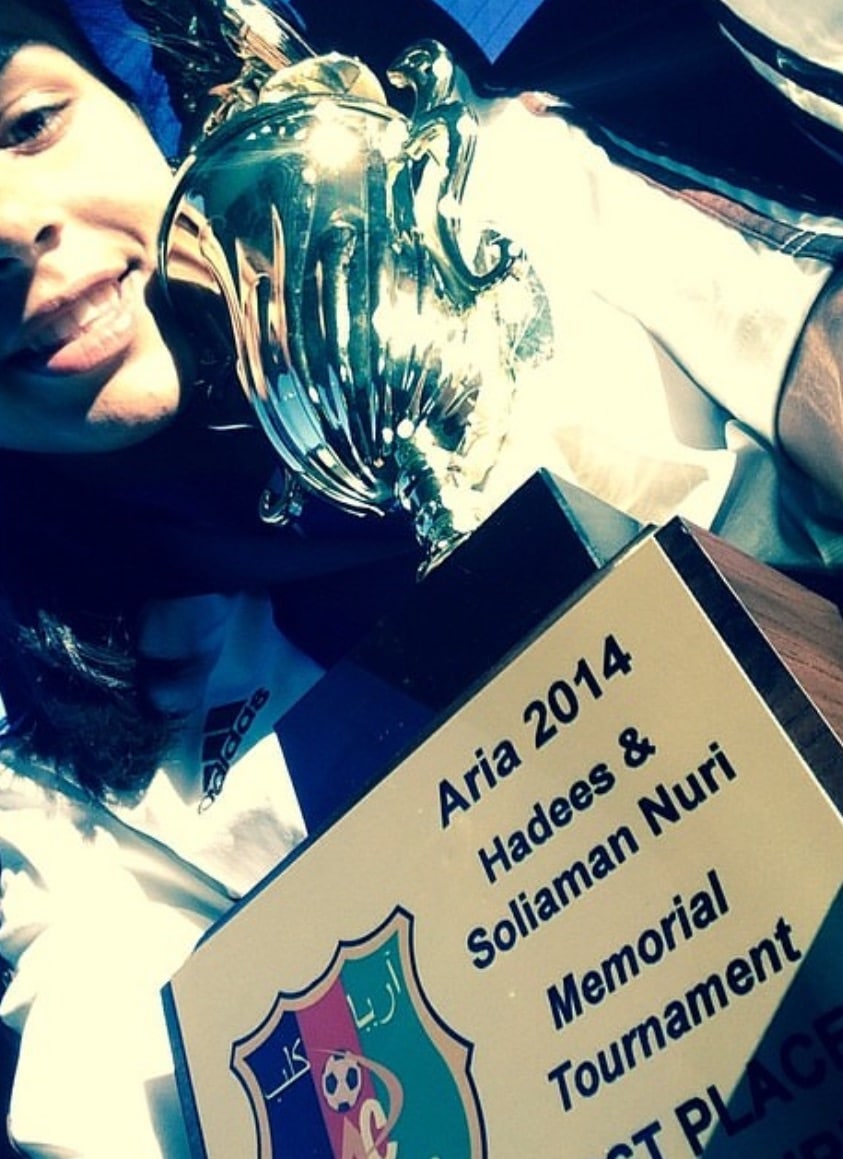
By high school, I had won medals and genuinely felt like I was good at the sport. I received praise and encouragement for all of my efforts and hard work. It also inspired me to work hard in other aspects of my life. I tried harder in school, was friendlier with classmates, more obedient in class, and more eager to participate in the learning process. According to Project Play, high school athletes are more likely to further their education and even receive higher grades in college.[2] I started seeing everything in the world as a skill waiting to be attained, something that required courage, effort, and training.

Having that view of the world helped me when I sprained my ankle right before the start of my freshman season. While recovering, I could have easily scrolled through Snapchat and Instagram endlessly. But I wanted to make sure I continued to build the bond with my teammates for when I returned. It taught me to wait my turn, keep a positive attitude, remain patient, and support others as they shine. As soon as I recovered, my teammates were more than happy to catch me up to speed, and I rebuilt my strength.

Core Memories That Last

One of my most memorable moments taught me something I will never forget. It was my junior year; we were tied 0-0, with a minute left in the game. My team was exhausted, but as captain, I knew this is where my job was most important. I dribbled the ball up the center, dodging two midfielders and one defender, set it up for my left forward, and yelled, “SHOOT!” She shot and sent it straight into the upper right corner of the goal. Everyone who was there to support us was on their feet, our coaches were throwing their clipboards in the air and hugging each other, and our teammates ran to us for a celebratory hug and a jump around. We spent the last 15 seconds of that game with tears in our eyes and joy in our hearts. We had just beaten a 40-year record for our school!

This is when I realized this would have a lifelong impact on me. It was one of those moments that I’ll look back on happily. It was a lifetime of preparation to become someone people could rely on when things got tough and hope felt lost. It was the moment I truly understood what being a leader meant to me and the impact it had on others.

I hugged and thanked my mother for signing me up for soccer at nine years old. She introduced me to the first love of my life, and I would forever be grateful for that. From then on, I never doubted my abilities to get something done, never lost confidence in myself, and never hurt someone without apologizing or broke something without trying to replace it.

The Impact of The Beautiful Game

Project Play reports that sports, in particular, can positively impact aspects of personal development among young people, keep them away from harmful substances, and encourage cognitive, educational, and mental health benefits.[2] I believe my experience of playing soccer was so much more than just a fun sport or a way to stay active, although both are tried and true. It was a refinement of my character, it was a positive shift in how I viewed the world and myself in it, it was what taught me that rejection was just redirection, and it was a way to build and maintain connections with people I am still close to, at 27 years old.

Why Everyone Should Play Sports

Participation in sports can protect against the development of mental health disorders.[4] These benefits include lowering stress levels, rates of anxiety and depression.[5]Lifelong participation in sports leads to improved mental health outcomes and even immediate psychological benefits which continue long after participation is over with. The improve self-confidence, encourage creativity, and nurture a higher self-esteem. Statistically, adolescents who play sports are eight times more likely to be physically active at age 24.[3]


Thanks to CSUCI intern, Elaha Qudratulla, for sharing an important story about how beneficial playing sports were for her then and how it still helps her today.

I’m the mom psychologist who will help you GetKidsInternetSafe.

Onward to More Awesome Parenting,

Tracy S. Bennett, Ph.D.
Mom, Clinical Psychologist, CSUCI Adjunct Faculty
GetKidsInternetSafe.com


Works Cited:

[1] https://www.uvpediatrics.com/topics/alone-together-how-smartphones-and-social-media-contribute-to-social-deprivation-in-youth

[2] https://projectplay.org/youth-sports/facts/benefits

[3] https://odphp.health.gov/sites/default/files/2020-09/YSS_Report_OnePager_2020-08-31_web.pdf

[4] https://baca.org/blog/does-playing-organized-youth-sports-have-an-impact-on-adult-mental-health/

[5] https://pce.sandiego.edu/child-development-through-sports/

Photos Cited:

[Header] Eva Wahyuni on UnSplash

[2] Olivia Hibbins on UnSplash

[3] Elaha Qudratulla

[4] Jeffrey F Lin on UnSplash

[5] Elaha Qudratulla

https://unsplash.com/

How to Spot an Internet Troll 

If you’re on social media, you’ve come across internet trolls. They’re on every social media platform, including Facebook, Twitter, Instagram, and TikTok. It’s almost impossible to avoid them. Read today’s GKIS article to find out why people troll and how you can minimize your child’s risk of being targeted.

What are internet trolls?

An internet troll is someone who makes intentionally inflammatory, rude, or upsetting statements online to elicit strong emotional responses in viewers or to steer the conversation off-topic. I Popular influencers, like Perez Hilton, have become famous for their trolling. Unfortunately, even your friends and family can act like trolls when they’re fired up about a certain topic. But if a “friend” online regularly shows troll-like behavior, it’s best to steer clear of them or, even better, block them altogether.

Why do people troll?

  • To feel empowered
  • There are few consequences
  • They are immature and think it’s funny
  • They feel so passionate about their topic they get emotionally triggered
  • They’re envious and want to take the poster down
  • They’re in a bad mood ii
  • They are feeling incited by other trolls ii
  • They are in a spiral of negativity ii

How to Spot an Internet Troll

Internet trolls are easy to spot once you are aware of certain online behavior patterns.

  • They don’t show their own face in their profile image. Instead, they typically use a seemingly “funny” photo of a cartoon character, a celebrity photo, or a random image.
  • Their username is a nickname rather than their real name.
  • Their education is listed “The School of Hard Knocks” or some other cliché.
  • They are typically following several accounts but have few to no followers themselves.
  • They usually have a lot of memes on their profile.
  • There often have several offensive and controversial posts or interactions with controversial comments.
  • They usually take extreme political or opinion positions on certain issues and repeatedly focus on them.
  • They are likely attacking more than one account.

Troll Tactics

Trolls get creative when it comes to targeting their victim. They have come up with several tactics to use when trolling their victims such as refusing to back down on known fallacies, troll telephone, aggressively poor reading comprehension, threats and doxxing, and it wasn’t me. All these tactics have their own ways in which trolling takes place. iv

Demeaning Nicknames

Used to insult and provoke their victim, like “libtard,” “heartbreaker,” and even more personalized attacks like “DanielleSucks.”

 Incredulous Questions

Used to insinuate that a person’s post can’t possibly be what they meant and to provoke shame and humiliation (e.g., “Did you really just say you agree with him?”)

 Isolating the Victim

Making the victim feel small for pretending to have or creating an “army” of allies.

 Theoretical laughter

Used to belittle the victim, for example responding “HAHAHA” or “Wow” or “You’re so dumb I can’t even understand you.” iii

 Refusing to Back Down with a Known Fallacy

 Also known as “lying about lying”, this strategy is common when trolls are trying to hurt you professionally

 Troll Telephone

 This means that the troll passes rumors from one troll to the next, so it becomes a repeating cycle.

Aggressively Poor Reading Comprehension

 This refers to web the troll claims you wrote/said something you did not and then using “your own words” against you.

Doxxing

Doxxing refers to posting peoples personal information online for the public to see and making their victim feel unsafe. Doxing frequently escalates to direct threatening and cyberstalking.

It Wasn’t Me

If a victim dares to publicize that they are getting trolled, the troll acts shocked and blames the victim for not being able to take a joke or that you asked for it by responding. This is a form of gas lighting.

Signs That Your Child Might Be Getting “Trolled”

If a child is frequently interacting with a troll, they may show signs they are being cyberbullies. Here are some signs from Dr. Bennett’s book, Screen Time in the Mean Time: A Parenting Guide to Get Kids and Teens Internet Safe, to look out for:

  • mood changes
  • distancing themselves from you and their friends
  • changing appearance and/or ways they act
  • using new slang
  • deleting their browser history or switching windows when you walk in like they’re ashamed
  • frequently asking for reassurance
  • thoughts of self-harm


Steps to Defeating Internet Trolls

Understand who is harassing you.

According to write Ragen Chastain, there are three types of troll attackers: The Thinker who often fabricates stories, The Zombie Army whose main goal is to hurt the person they are attacking where it hurts, and the The Zealot who is obsessive about ruining your life by making fake profiles and websites about you just to express their hate for you. Iv

Find out why they are harassing you.

Often times this is not evident. It may be as simple as a teenager who has too much time. Trolls are made, not born into being a troll ii.

Question yourself if the engagement is adding anything positive to your life.

 Try these tactics to remove yourself from the fight.

  • Bore them into disengagement by ignoring them.
  • Simply type, “I don’t feed trolls.”
  • Mute/Block/or Blacklist them.
  • Put your account on private. V

Why is trolling potentially harmful to kids?

Kids are especially vulnerable to trolling due to lack of experience and immature social skills. One unexpected or shocking negative comment online can have a damaging impact and has been demonstrated to contribute to clinically impairments like depression, anxiety, and insomnia. Once when I was younger, peers posted cruel comments on my Facebook profile body shaming me and calling me fat and gross. That post changed the way I viewed myself in ways I still struggle with today at the age of 22.

What to do if Your Child is Being Trolled

  • Suggest a cooling-off period from the forum where the trolling is occurring.
  • Adopt our free Connected Family Screen Agreement to start important safety discussions where your kids learn from you and you learn from them. A strong parent-child alliance is your best defense against bad actors online.
  • Set parental controls and adopt smart tech tools, like those offered in our Screen Safety Tool Kit. With this tool kit you will gain the knowledge to set up screen monitoring so that way if your child is experiencing trolls and not telling you, you will be able to be notify yourself. Also setting up parental controls with the help of this tool kit will also be valuable because it will allow you to give your child a safer internet experience. You can get this valuable tool kit for $37 off the GKIS website.
  • Set up your home and adopt rules for smart and safe screen use using our family tested blueprint in our Connected Family Course. This 10-step course offers new and creative ways to get your household screen safe. It takes less than 2 hours!

We have all seen how trolls harm confidence and stop cooperative dialogue online. It’s tough enough for adults to cope with, but for kids it can be really painful. Check out our Screen Safety Toolkit to improve your family’s online safety. A special thank you to Danielle Rivera for researching and co-writing this article.


Onward to More Awesome Parenting,


Tracy S. Bennett, Ph.D.
Mom, Clinical Psychologist, CSUCI Adjunct Faculty
GetKidsInternetSafe

Works Cited

[i]Vicente, Vann (2020). What Is an Internet Troll? Retrieved from https://www.howtogeek.com/465416/what-is-an-internet-troll-and-how-to-handle-trolls/

[ii]Kubota, Taylor (2017). Stanford research shows that anyone can become an Internet Troll. Retrieved from https://news.stanford.edu/2017/02/06/stanford-research-shows-anyone-can-become-internet-troll/

[iii]Brandau, Melvina (2016). Adolescent Victims’ Experiences with Cyberbullying: A Grounded Theory Study. Retrieved from https://commons.und.edu/cgi/viewcontent.cgi?article=2880&context=theses

[iv]A Medium Corporation (2018). The Complete Guide to Understanding and Dealing with Online Trolls. Retrieved from https://medium.com/better-humans/the-complete-guide-to-understanding-and-dealing-with-online-trolls-4a606ae25c2c

[v]Study Break (2018). 5 Easy Ways to Get Rid of Internet Trolls. Retrieved from https://studybreaks.com/culture/internet-trolls/


Photo Credit

Photos by Peggy_Marco on Pixabay

Photo by Open Clipart-Vectors on Pixabay

Photo by Geralt on Pixabay

[i]

[ii]

[iii]

[iv]

[v]

How Social Media Impacted My Grieving Process

It’s universally understood that losing a loved one is difficult. Navigating the grieving and mourning process is different for everyone and can sometimes be extremely damaging to families. But, what about social media’s influence over the grieving process?

According to Kübler-Ross model, there are five steps to grief:

  1. Denial and separation,
  2. Anger,
  3. Bargaining,
  4. Depression, and
  5. Acceptance.

I’ve found that although categorizing what I was experiencing made it easier to express to individuals who were not mourning, it made it harder for me to overcome my grief especially with how connected I am to social media. This is my story on how I navigated the grieving process in today’s online era.

My father had been sick for a while. He had a variety of illnesses, but ultimately it was chronic obstructive pulmonary disease that killed him. He was a lifelong cigarette smoker, and even when he was first put onto oxygen, it was hard for him to quit.

I knew this day was coming, and that inevitably I would receive that heartbreaking phone call from my mother that changed everything for me.

He passed away early in the morning on June 9, 2019, just six days away from one social media’s popular posting day… Father’s Day.

My grieving process was like anyone else’s who loses a parent. I was heartbroken, regretful, and nothing I felt… seemed like enough.  A wave of, “I’m sorry for your loss” and “My thoughts are with your family” flooded my social media accounts and text messages. I couldn’t bare to respond. It made his passing all the more real, and talking about it to acquaintances who weren’t there for the devastating end of his life couldn’t even imagine the pain I was in. I felt alone, and social media made me feel even more alone.

How Social Media Affected My Grieving Process

Father’s Day rolled around and almost every person I followed posted a picture along with a loving caption about their dad. It was like a slap in the face from the universe, mocking my pain. I also couldn’t understand why the entire world seemed to move forward. I’d go on Twitter, Instagram, and Facebook just to see how happy everyone was and how their world hadn’t crumbled into pieces as mine had. I was surprisingly bitter and angry. I snapped at friends who would complain about mundane things. I couldn’t leave the house, because everywhere around me people were celebrating summertime. It wasn’t until my birthday (June 27) that I finally overcame the weight of my loss. I spent the entire day drinking, laughing, and soaking up the sun with my mom at a spa. I was finally able to post something on Instagram, and, instead of faking it, I discussed my depression, my withdrawal, and how slowly I stepped out of both.

The overwhelming love and support I received from even strangers that follow me filled my heart with joy and warmth. I finally felt like I could breathe again and that life wasn’t so heavy. Sharing my grief with my followers and hearing their stories about their grieving process made me feel less guilty about my isolation and anger.

You are not alone.

The hardest part was leaving my house and doing everyday mundane things. But when I opened up on Instagram, I found comfort from my online friendships. People would comment, message me, and check-in with me after they knew what I was going through.

Social media made it easier for me to express myself without actually having to put myself out into the world again. Friends and family members sent me memes and silly cat videos to keep me laughing. Some friends even Venmoed me money so I could order food to my door rather than having to go to the grocery store.

If you or a loved one has lost someone, perhaps you would find comfort from social media sharing and connection. There are people that want to help and listen to you.

Here are some things that I did that were helpful:

  • Blogging about my experience
  • Reddit for information and distraction
  • Facebook posts to share stories with friends/families of loved one
  • Instagram pictures/personal captions
  • Spotify playlists that you can share with family
  • Venmo for food delivery gifts

Thank you to CSUCI Intern, Kaitlin Hoover for contributing this article. If you found this article helpful, please read 6 Reasons to Subscribe to GetKidsInternetSafeOr, if you are looking for professional help, consider scheduling an appointment with Clinical Psychologist, Dr. Tracy Bennett.

I’m the mom psychologist who will help you GetKidsInternetSafe.

Onward to More Awesome Parenting,

Tracy S. Bennett, Ph.D.
Mom, Clinical Psychologist, CSUCI Adjunct Faculty
GetKidsInternetSafe.com

Photo Credits

Photo by Mike Labrum on Unsplash

Photo by Marcelo Lealon Unsplash

Photo by Nordwood Themes on Unsplash

The Power of Online Positivity

Martin Seligman, the father of Positive Psychology, emphasized the strength of social influence and how it can create meaning in life. We all need purpose. Despite its challenges, sometimes social media can help spread positive influence. Today’s GKIS article highlights some beautiful bright spots on GoFundMe and in the Twitter community. I hope you find it inspiring to join the joyful fray!

Paying it Forward: GoFundMe

GoFundMe.com is a popular website used for personal fundraising. For example, Dana Barrett’s tragic story of suffering from a traumatic spinal injury left her unable to breathe on her own. She’d already suffered a great loss with the death of both of her parents when she was only twenty-one years old. Now, after her accident, she was left struggling with quadriplegia. Dana is a loving, positive, and strong individual who is mightily loved and appreciated by her community. Her medical expenses will cost over $500,000. GoFundMe offered a platform for her loving community to come together for support. At the time of this writing, her fund was nearing $300,000 and growing!

Recent updates say that, with the support and money coming in from GoFundMe.com, Dana has been able to eat and drink on her own! She was told those goals were outside of her reach. The online community has consistently promoted events since her accident via social media, attracting the attention of singer-songwriter Gloria Estefan, comedian Amy Schumer, and actor Adrian Grenier.

The Ripple Effect

It doesn’t take a celebrity to spread generosity and joy; it can begin straight from your social media feed.

Recently I experimented with the ripple effect meaning one good deed spreads and encourages others. By offering thoughtful comments of appreciation and support on Instagram to friends and acquaintances, I let them know I read their captions and enjoyed their photos rather than mindlessly scrolling and clicking the heart eyes emoji. I took Martin Seligman’s active listening techniques and applied them to social media posts.

I saw a positive return on my posts almost immediately. I felt connected in an online world where connection is sometimes lost. Soon I started messaging people I wanted to be friends with just by watching their Instagram stories and saying something nice about the content. In a short time, I felt like I had a whole tribe of new friends eager to connect and share the joy.

Social media isn’t all about distraction. With a little bit of authentic, mindful effort, it is a tool for a fun and convenient connection.

The Positive Impact of Twitter Influencers

Twitter is, in my opinion, the fastest way to find hilarious memes, political content, and trolling. Trolling refers to the act of intentionally fighting with someone online, often in a joking manner, just to spark a reaction.

My favorite Twitter account right now is that of rapper @lilNasXHe’s used his charismatic online presence to create the longest-leading Billboard No.1 track “Old Town Road.” He takes Twitter harassment and comments from “trolls” as gracefully as anyone I’ve ever seen.

In response to his brushing a mean comment off his shoulders recently, comedian Chris D’elia tweeted, “We love you, kid.” The music industry seems to have welcomed LilNas silly endless remixes of “Old Town Road” (ft. Billy Ray Cyrus, Diplo, Young Thug & popular meme “yodeling kid” Mason, Seol Town Road K pop version, and Cupcakkke) with open arms.

In response to lilNasX’s release“C7osure (you like)” on the last day of Pride month, Twitter went wild for LilNas’s came out as a full-time African American rapper LGBTQ representative with a country NO.1 hit and a hilarious Twitter account. The LGBTQ community loved it, adopting it as a new theme song, a voice spreading positivity, energy, and love.

Thank you LilNas for your positive representation. I found it so positive and inspiring. It’s time to use social media as a tool for positivity. The first step starts with your online footprint!

I’m Kaitlin Hoover, GKIS intern. Paying it forward is a great way to feel connected to the world and finding representatives that make you laugh is a great start. Check out GKIS article Gaming Together Increases Family Bonding for more ways to incite spontaneous joy and connection!

I’m the mom psychologist who will help you GetKidsInternetSafe.

Onward to More Awesome Parenting,

Tracy S. Bennett, Ph.D.
Mom, Clinical Psychologist, CSUCI Adjunct Faculty

Photo Credits

Photo by Perry Goneon Unsplash
Photo by Guilherme Stecanella on Unsplash
Photo by Ellie Adams on Unsplash