Need peaceful screen time negotiations?

Get your FREE GKIS Connected Family Screen Agreement

kids

Live Streaming Can Cause PTSD in Adults and Children

We are vulnerable to dangers previous generations couldn’t even imagine. We are on-demand, world connected – available to watch any horror from any place. Graphic (meaning vivid or realistic) live stream videos can be found on social media platforms such as Facebook Live, Instagram, TikTok, Snapchat, and YouTube. Children are especially vulnerable to getting upset when viewing violence. Today’s GKIS article covers if the mental illness Post Traumatic Stress Disorder (PTSD) can result from viewing violence on screen.

How Graphic Live Streams Affect Children

Accidentally clicking on a violent video would frighten anybody. Children are particularly vulnerable to trauma, including the development of serious mental illness. PTSD is a mental health disorder in which a person struggles to recover from experiencing or witnessing a traumatic event such as an assault, war, natural disaster, or serious accident. People with PTSD often have severe anxiety and panic attacks when reminded of the traumatic event. They feel stressed and frightened even when there is no danger present.

PTSD symptoms include intense nightmares, difficulty sleeping, and flashbacks of the traumatic event (intrusive images like you’re re-experiencing it). Children younger than six years old show signs of PTSD differently than adults. Their symptoms include behaviors like wetting the bed, being unable to speak, acting out the traumatic event in playtime, and clinging to their caregiver. PTSD is a very serious, debilitating disorder that can leave the individual in a nearly constant state of fear and stress.

Being able to discuss the witnessed traumatic event is a necessary step in treatment. In a study with Danish high school students, subjects who had witnessed a school shooting were assessed for PTSD. It was found that the prevalence of PTSD seven months after the incident was 9.5%. Being unable to talk about the incident was found a predictor of those who developed PTSD.[1]

Studies on Videos and the Onset of PTSD

Because violent videos are relatively new, there is little research on how they affect us. One of the earliest studies was conducted after Americans viewed the television coverage of the 9/11 tragedy.

The researchers interviewed 560 adults three to five days after 9/11. Approximately 90% reported one or more stress symptoms. In contrast, 35% of children had one or more stress symptoms, and 47% were worried about their safety or the safety of loved ones. Ten percent of the children had trouble falling asleep or staying asleep.

In another study, researchers surveyed 4,675 adults who viewed the 2013 Boston Marathon bombings on video. They found that people who had repeatedly watched the tragic footage sustained more trauma and stress than people who had witnessed the events in real life!

Those who watched six or more hours per day of media coverage were nine times more likely to report high acute stress than those who viewed less than one hour a day. Symptoms of acute stress included intrusive or troubling thoughts, feeling hyperaware, avoiding anything that reminds one of the traumatic events, and feelings of detachment.

If your children witnessed a traumatic live stream or Internet video, how would you know if they had PTSD? 

Elementary School-Aged Children

“PTSD in children and adolescents requires the presence of re-experiencing and avoidance, numbing, and arousal symptoms. However, PTSD may not present itself in children the same way it does in adults.”[2] For example, young children may not experience flashbacks like adults with PTSD. They are more likely to experience “time skew” and “omen formation,” which are symptoms usually not seen in adults.

Time skew is the mis-sequencing of trauma-related events when remembering the experience.

Omen formation is a belief that there were warning signs that foreshadowed the traumatic event.

Children often believe that if they remain alert, they will recognize the warning signs and avoid another trauma resulting in chronic hypervigilance, anxiety, and sleep disorders.

School-aged children with PTSD often engage in posttraumatic play or reenactment of the trauma in play, drawings, or verbalizations. Post-traumatic play is a literal representation of the traumatic event in which the child repetitively acts out some aspect of the trauma. This often does not relieve anxiety.

An example of post-traumatic play would be a child shaking a playhouse after they’ve experienced an earthquake.

Post-traumatic reenactment, on the other hand, is more flexible and involves behaviorally mimicking some aspects of the trauma. An example would be carrying a toy gun after being exposed to violence.

Adolescents and Teens

PTSD in adolescents more closely resembles symptoms seen in adults. However, some features are unique to teenagers.

As discussed above, children may engage in traumatic play after the onset of trauma. Adolescents are more likely to engage in traumatic reenactment, in which they merge some aspects of the trauma into their lives. Reenactments occur due to psychological vulnerabilities and defensive mechanisms which are characteristic of PTSD survivors.  Adolescents tend to engage in impulsive and aggressive behaviors more than younger children and adults do.

What can parents do?

  • Advocate for better safety protocols including monitoring and filtering with platforms like Facebook, Instagram, Snapchat, TikTok, Periscope, and YouTube.
  • Filter video access to children by using a child-safe browser, refusing requests to adopt livestream social media apps, and using appropriate child sites like YouTube Kids.
  • Maintain an ongoing dialogue about content viewed online to optimize the chance your child will go to you if they happen upon inappropriate content.
  • Let your child know they won’t be in trouble for accidental views.
  • Be alert for changes in behavior that may be reflective of PTSD like fears, anxiety, bathroom accidents, mutism, sleep problems, appetite problems, substance abuse, or school failure.
  • Seek the help of a child psychologist if you have concerns.

Thank you to CSUCI Intern, Mara Pober for writing this important series to inform parents and help them keep their kids Internet safe. For more parenting advice on-screen media and trauma in children, pick up your copy of Dr. Bennett’s book, Screen Time in the Mean Time: A Parent Guide to Get Kids and Teens Internet Safe.

I’m the mom psychologist who helps you GetKidsInternetSafe.

Onward to More Awesome Parenting,

Tracy S. Bennett, Ph.D.
Mom, Clinical Psychologist, CSUCI Adjunct Faculty
GetKidsInternetSafe

Works Cited

A National Survey of Stress Reactions after the September 11, 2001, Terrorist Attacks (2001)

[2] National Center for PTSD

Prolonged viewing of Boston Marathon bombings media coverage tied to acute stress (2013)

[1] The psychological reactions after witnessing a killing in public in a Danish high school

Viewing violent news on social media can cause trauma (2015)

Photo Credits
Don´t let it happen again

classroom-laptops-computers-boy.jpg

Little Boy Bluescreen

Is Facebook Messenger Kids Harmless Fun or a Gateway Drug for Compulsive Social Media Use?

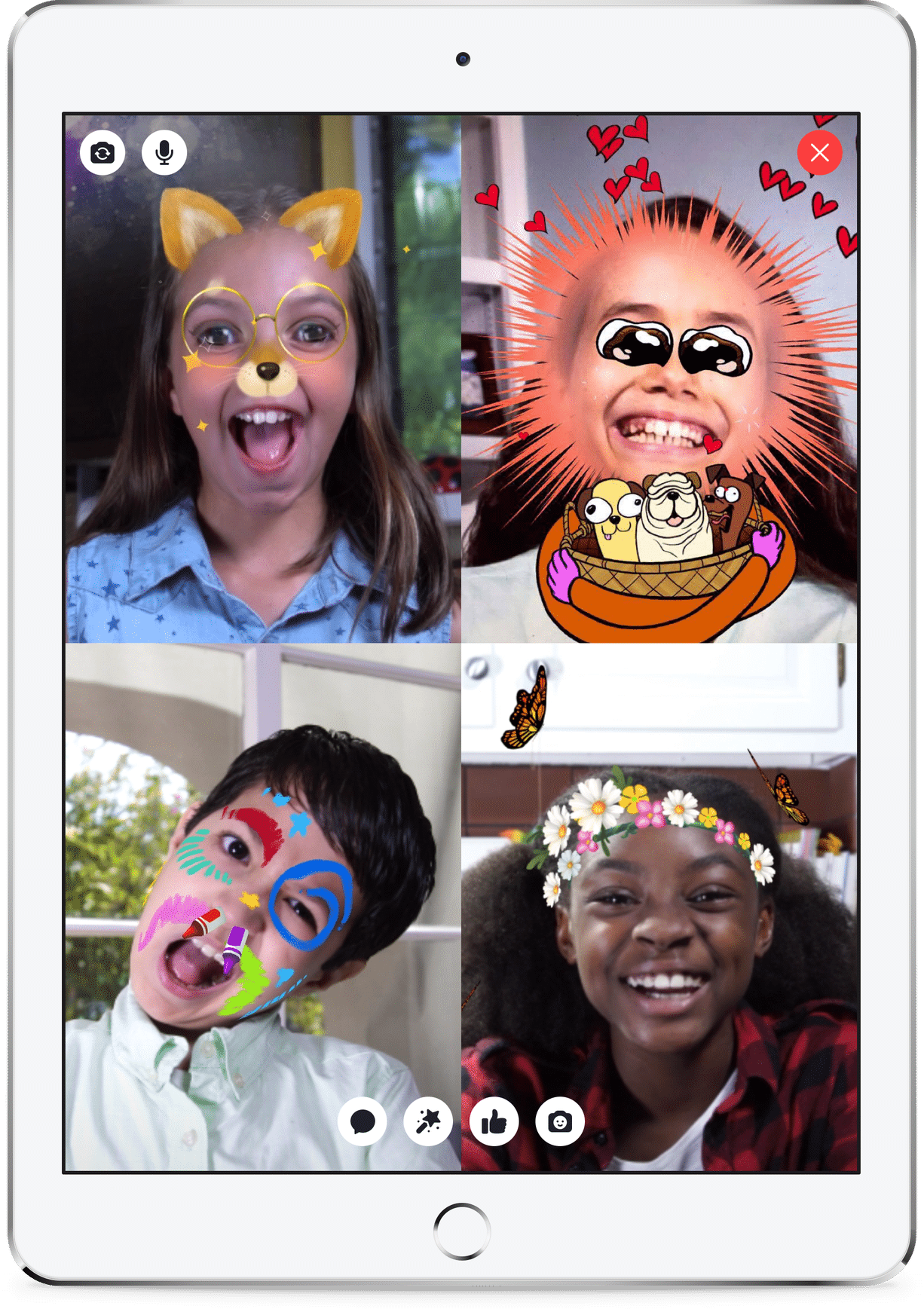
Facebook recently launched Messenger Kids, a free, stand-alone video chat and messaging app for children ages 6 to 12 to “connect with people they love but also has the level of control parents want.” Designed with kid preferences in mind, this app aims to please with one-to-one and group video chat or text thread, fun filters, masks, stickers and GIFs. Facebook says they have integrated features with the consult of a 100-member team with child safety and privacy in mind. Although I welcome the integration of kid-friendly features (finally!) that doesn’t sell to kids or collect information for marketing, introducing young children to a screen activity may be distracting at the least and addictive at the worst. Having participated with a team of experts talking about Messenger Kids, I believe Facebook has developed a much-needed product that can be very positive when used optimally with parent guidance.

Why now?

Historically, kids have been restricted from social media app membership without parental consent because of The Children’s Online Privacy Act (COPPA, 1998). This federal law imposes certain requirements on operators of websites or online services, like not collecting data from or advertising to children under thirteen years of age. Facebook is compliant with COPPA in that Messenger Kids won’t show ads, offer in-app purchases, or collect data for marketing. Also, in order to adopt the app, kids must have parent permission as an extension of the parent’s Facebook profile. Other safety features include parent control over their child’s contact list, child inability to delete messages, and an option to block users and report inappropriate content with parent notification. Kids can be found through Facebook search and parents must ask permission to see kid content to avoid spying. Facebook also says they won’t automatically upgrade users to an adult account when the child reaches 13 years old.

What are the privacy risks?

In response to privacy and security concerns, Democratic Sens. Ed Markey and Richard Blumenthal asked Facebook to specify what data is collected and what they’re planning to do with it, if information about child device location is being collected and stored, and whether Messenger Kids will be walled off from the Internet. Facebook has said collected information will only be used for infrastructure purposes to improve the app.

What are the behavioral risks?

As a clinical psychologist and screen safety expert, I am pleased that Facebook has delivered a product with child safety in mind. After all, surveys reveal that most kids are using apps before age thirteen that don’t have safety features. Messenger Kids offers families an option without the same risk profile as Instagram, Snapchat, Twitter, or KIK. However, there are still some risks to consider before allowing your child to adopt Messenger Kids.

First, we are all well aware of the compulsive nature of social media use. According to Apple, we check our iPhones an average of 80 times a day, 30,000 times a year.[i] Nearly 60% of parents think their teens are addicted to their mobile devices.[ii] With features specifically designed to keep people using, social media can lead to addictive use patterns that distract us from healthier activities and nonvirtual relationships. The younger the brain, the higher the vulnerability to habit formation and brain wiring changes. I’m not entirely satisfied with the argument that without this, kids are going to use less safe social media anyway. It’s kind of like letting your teen drink at your house since they’re going to do it anyway…Maybe the answer is don’t let them drink in the first place.

Do we really want children as young as six years old to have that kind of opportunity?

After all, child screen use is so new we have no idea what kind of long-term impact these kind of use patterns will have. Behavioral conditioning is an intentionally embedded component of  Silicon Valley tech products to increase profits. I believe the old adage, “If you can’t see the product, you are the product” may apply here. Furthermore, just because parents can monitor child behavior doesn’t mean kids won’t impulsively offer or view inappropriate or embarrassing information that can lead to shame and cyberbullying. The younger the child, the higher the risk. As a parent, are you ready for your child to adopt the “training wheels” for social media independence?

On the other hand, we must keep in mind that Messenger Kids is a messaging app, not a social media app. Parents have full monitoring control and must approve the contact list. This app is a fun way for kids to connect to other kids and family members, with playful adjunct features like masks and stickers. Facebook has said that this is not a product designed to profit off of children. Instead, Facebook believes it is good business to build products that people love to use.

Things I learned when Facebook asked me to participate in a working session with child and technology experts:

I believe that the best outcomes are reached through collaboration from people of all different viewpoints. As a result, I was very pleased to accept the invitation of Facebook to participate in a discussion with a panel of experts. I believe that being a part of the solution means getting in there and working with industry, academia, and with front-line teachers and practitioners. Obviously, I am under the restrictions that are typical of nondisclosure agreements when one works with a company about a product. However, it is appropriate to share my impressions having interacted with Antigone Davis, Head of Global Safety for Facebook, and the Facebook employees who have developed and continue to work on Messenger Kids.

I am somewhat unique in that I have lots of day jobs, all relating to psychology and families. I have had a private practice for over 23 years working with kids, teens, and adults. I teach addiction studies, parenting, and clinical psychology at CSUCI and supervise interns writing from a screen-media research perspective, and I’m founder of GetKidsInternetSafe, my love project. I’m fond of saying that I’m the MacGyver of psychology in that I take the theories and research findings from academia and apply them to real people in my practice, adjusting and tweaking as I go. From this perspective, I have a lot of opinions about the benefits and risks of screen activities to the American family.

Having interacted with the impressive panel of experts Facebook invited to the Facebook Global Safety Summit, I came away with the feeling that Facebook is being thoughtful and open about their child products. They are conducting their own research, generously open to feedback, and clearly dedicated to an ongoing dialogue about what families want and need. Let’s face it, they are experts with what they do and have enormous reach. I believe they have the potential to provide positive child and family service, and they’re taking that role seriously. As the company has matured, they seem to realize that they have a precious social responsibility to their customers and were very enthusiastic to hear from those of us who have dedicated our careers to child and family advocacy. I’m feeling pretty good about Messenger Kids, yet believe that kids and parents still need more education and support to best implement this fun communication tool while optimizing learning and connection on screen and off screen.

What should you keep in mind if you want to try out Messenger Kids for interactive digital play?

  • Stay engaged during the on-boarding process and visit the Messenger Kids FAQ page.

  • Recognize that this app was not designed for education, but rather as an alternative to adult social media apps that kids were already using. Not only must parents create a Facebook profile for Messenger Kids setup (another customer?), but Facebook branding has just been launched in your child’s tender consciousness. Ready, set, go!

  • Start a teaching dialogue about privacy, marketing, and balance. Familiarize your kids with the rules at a developmentally optimal level for their age and understanding.

  • Adopt the GKIS Living Agreement digital contract found in my book, Screen Time in the Mean Time: A Parent Guide to Get Kids and Teens Internet Safe.

  • Once on-boarded, your child has launched a dynamic digital footprint within the walled garden of their contact list. This may be their first introduction to digital messaging. Exciting yes, but supervision and building teaching opportunities are important for positive outcome.

  • Set up a creativity kit next to the computer with play props, dress up clothes, art materials, and toys. When you are having a conversation on Messenger Kids, encourage your child to act out a fun, creative activity like pretending to prepare and serve you lunch, writing a poem and presenting it, or choreographing a dance. Augmenting virtual reality with fun nonvirtual reality keep kids engaged with a balanced life of two-dimensional and three-dimensional play. Building relationships and play are still critical learning opportunities for the developing brain.

  • Watch to make sure your child doesn’t exhibits behaviors suggestive of compulsive use or addictive patterns.

  • Encourage your child to attend to the other person’s words, facial expressions, and feelings while chatting. Recognize that fun animations may be distracting, so they need your prompts and teaching narrative to learn social skills and digital citizenship.

  • Most importantly, offer an enriching balance of virtual with nonvirtual activities, a key to healthy development.

For additional information about another popular child app, check out The GKIS Sensible Parent’s Guide to Musical.ly.

I’m the mom psychologist who will help you GetKidsInternetSafe.

Onward to More Awesome Parenting,
Tracy S. Bennett, Ph.D.
Mom, Clinical Psychologist, CSUCI Adjunct Faculty
GetKidsInternetSafe.com

Works Cited

[i] Bajarin, B. (2016). “Apple’s Penchant for Consumer Security.” Tech.pinions, 18 Apr. 2016, techpinions.com/apples-penchant-for-consumer-security/45122.

[ii] Common Sense (2015). The Common Sense Census: Media Use by Teens & Tweens. www.commonsensemedia.org/sites/default/files/uploads/research/census_executivesummary.pdf

Photo Credits

Facebook

Is Your Child a Screen Addict?

My niece is five years old and lives in a tiny village in Switzerland. You would think that in a cute Alpine village the world is still safe, that kids are playing outside until it gets dark, craft themselves little walkie-talkies from strings and cans, and don’t have any interest in online media. But you would be wrong. Smartphones and tablets and the vast possibilities of online entertainment are all the rage everywhere. With her little eyes fixed on the screen, my niece stays online for hours.

Generation X, Y, Z…and now: Alpha!

Futurist, demographer and TEDx speaker Mark McCrindle distinguished a new cohort of anyone born after 2010. He calls it Generation Alpha. The main characteristic of Generation Alpha is the constant use of screen technology. In his opinion, Alpha kids grow up with screens in hand, able to transfer a thought online in seconds (Sterbenz, 2014). Shocking numbers provide evidence of McCrindle’s observations, with kids from five to 16 years spending an average of 6 1/2 hours a day in front of a screen (Wakefield, 2015). Teenage boys have an even higher average of 8 hours a day (Wakefield, 2015).

Why do children spend so much time online?

Every time I visit my sister, I’m fascinated by how her daughter is able to use a smartphone or tablet at such a fast pace. It’s almost impossible for me to get her attention and convince her that drawing with her aunt can be more fun than styling dolls on her tablet. A reward for her for doing a chore could either be chocolate or smartphone-time. Guess what her choice usually is? And it’s not just my niece that prefers YouTube over Oreos, Disney, and Crayola. In Smarty Pants’ eighth annual Brands Love study with 8,125 kids, YouTube was chosen as the most loved brand for kids aged 6-12 (2016). Number one over 2,285 consumer brands!

Why do kids love screentime? Because browsing for quick, yummy screen content really fun. Interacting with friends, playing games, watching videos or movies, and sharing information and experiences are just a few examples of amusing online activities.

Another major contributor to screen addiction is FOMO (fear of missing out) and peer pressure. It’s hard to pass up online engagement when friends are sharing funny snapshots and their latest filtered selfies. You MUST join in or get left behind. Peer acceptance and forming an identity independent of your parents is just too tempting to turn away from.

Jim and Sandra

Jim is 11 years old and has always been a very shy child. He has an immense fear of meeting new people and feels uncomfortable around others. He is always worried about judgement from others, and when someone is rejecting him, he thinks it’s because he made a mistake and that he is unlikable.

Sandra is 10 years old and is a great soccer player. When she wins, she attributes it to factors outside herself, like the poor skills of the other team or luck. She doesn’t believe that she could be a contributor to her team’s success. Her psychologist recognizes that Sandra attributes success to an external locus of control, which means that she looks at everything around her as part of success or failure rather than herself.

Do you think that Jim and Sandra are at high risk for screen addiction?

Predisposing traits for screen addiction

Researchers have found that several personality traits serve as a predisposition for a child becoming an Internet addict. The more shy and the less faith a child has in his or her control over life, the higher the tendency of being addicted to the Internet (Chak & Leung, 2004).

For shy children online communication and interaction with others is less directly linked to judgments and possible disapproval than it would be in the offline world. That means Jim may be more comfortable and suffer less anxiety from online interactions. Although, that doesn’t mean all shy children will become addicted. But it does mean that parents may benefit from knowing shyness is a risk factor.

This study also suggests that kids like Sandra may be less successful at controlling Internet use and tend to offer external explanations why they stayed online for so long rather than take direct accountability (Chak & Leung, 2004).

When Internet use goes from innocent fun to addiction

Internet Addiction was first defined in 1995 by Young as a use of the Internet for more than 38 hours per week which will lead to clinically significant impairment or distress (Flisher, 2010). However, by these criteria most of America would be considered addicted. Today, experts detail several criteria that must be met in order for a person to be considered “addicted.”

Criteria for clinical addiction include four main features:

  • Loss of control
    Your child can’t disengage from the Internet even with the understanding that he or she is spending too much time.
  • Tolerance
    Your child needs more and more time to get the same “fix” from their screen use. Once 15 minutes would do, but now your child feels vaguely dissatisfied and chases more and more screen time.
  • Withdrawal
    When your child has to turn her screen off, she demonstrates classical withdrawal symptoms such as restlessness, nervousness, dissatisfaction, irritation, aggressiveness and psychological craving. Dr. Bennett further theorizes that screen-off meltdowns are the result of too much autonomic arousal. This means your child’s brain is overstimulated and tantrums are like coming down off crack rather than trying to express distress or manipulate parent behavior.
  • Negative social consequences/impairment
    Screen time becomes the sole focus of your child’s life. It’s all he/she wants to do, it’s all he/she wants to talk about. It has replaced nonvirtual relationships and activities needed for healthy balance.

Thank you to CSUCI intern Lisa Sommer for this GKIS article. Are you worried that your kids may be demonstrating symptoms of screen addiction? Wondering when and how to seek help?  Check out Lisa’s next article, “Child Screen Addiction From Asia to America: Do We Need a Shut-Down Law?” for answers!

I’m the mom psychologist who will help you GetKidsInternetSafe.

Onward to More Awesome Parenting,

Tracy S. Bennett, Ph.D.
Mom, Clinical Psychologist, CSUCI Adjunct Faculty
GetKidsInternetSafe.com

Works Cited

Chak, K. & Leung, L. (2004). Shyness and Locus of Control as Predictors of Internet Addiction and Internet Use. Cyber Psychology & Behavior, Volume 7, Number 5

Flisher, C. (2010). Getting plugged in: An overview of Internet addiction. Journal of Paediatrics and Child Health 46, p. 557–559

http://asksmartypants.com

Sterbenz, C. (2014) Generation Alpha Is Coming And It Will Change The World Forever for Business Insider. Retrieved February 15, 2017 from http://www.businessinsider.com/generation-alpha-2014-7?IR=T

Wakefield, J. (2015). Children spend six hours or more a day on screens for BBC Technology. Retrieved February 18, 2017 from http://www.bbc.com/news/technology-32067158

Photo Credits

Child & Computer 2014, Dilmen, N., CC BY-SA 3.0

Romain Guy, Shy little girl 2006, CC BY-SA 2.0

GKIS Quick Tips for Intellectual Enrichment Through Screen Media for Preschool Age Children


Families can no longer avoid screen media exposure in today’s technology driven society. Research demonstrates that exposure to different types of screen media, including television, computers, smartphones, and tablets, can have positive as well as negative effects on children depending on the age of the child, the quality of content, and the amount of exposure. How can we ensure that our children are exposed to the RIGHT type of media in ways that promote intellectual growth?

The Preoperational Child

Preschool age is between 3 to 5 years. The first 5 years of life are critical ages for learning and brain development. Let’s take a look at the different areas preschool-aged children learn and how their educational outcomes can be optimized through appropriate media use:

A Growing Brain & Motor Development

  • Ninety percent of a child’s brain development occurs between birth and 5 years of age (Frist, 2013). This makes it a pivotal time to expose children to a variety of educational information to expand their growing minds to their fullest potential.

GKIS Quick Tip: Choose media that introduces a wide variety of concepts to build upon for future learning. Areas can include language, math, functional skills, motor skills, creativity, and more. But make sure these concepts are delivered in small, deliberate doses. Avoid overwhelm by limiting screen time, delivering age-appropriate content, and avoiding frenetic, rapidly paced videos. Ensure appropriate engagement by co-viewing with your child and talking them through new concepts to facilitate learning and deepen your parent-child learning alliance.

  • As children progress through the preoperational stage, they learn to master gross motor skills, like running, jumping, and climbing, through exercise and play (Hanley, 2016).

GKIS Quick Tip: Interactive games that require active participation through physical activity rather than passive viewing can help improve motor, spatial, and coordination skills, particularly when outside play is not possible. For example, many Wii games encourage active participation through movement detection and feedback. Again, co-engagement is a win-win!

  • Children also learn to master fine motor skills (working with their fingers and hands) through active practice (Hanley, 2016).

GKIS Quick Tip: Tablets for children provide age-appropriate games and apps that enable children fine motor skill practice, like playing the piano, drawing shapes, as well as writing letters and words. For example, the Color and Draw for Kids app works as a virtual coloring book that helps children learn colors as well as fine-tune fine motor skills that are practiced through drawing.

Concrete & Abstract Thinking

  • According to Jean Piaget’s stages of cognitive development, children between the ages of 2 to 7 years old are undergoing the preoperational stage of development. This means kids are learning to form stable concepts but still have magic beliefs and have trouble taking the perspectives of others. With play and practice, they are constantly adding to their mental repertoire, such as major language development. In fact, children who do not develop necessary language skills by the age of 5 years are 6 times more likely to experience difficulty with reading in school (Frist, 2013).

GKIS Quick Tip: Media can benefit young children by teaching literacy and numerical skills. A recent study has shown that growth produced from watching the show Sesame Street is equally comparable to learning in a preschool classroom (Tankersley, 2015). Children exposed to the show were more likely to keep up academically at the appropriate grade level for their age. Interestingly, this effect was particularly pronounced among boys and children who grow up in disadvantaged neighborhoods. Reading skills can also be enhanced through computer games such as Teach Your Monster to Read. That means balanced use digital literacy using appropriate content can be intellectually beneficial by preschool age!

  • Thoughts are primarily generated by concrete rather than abstract ideas in early preschool years. In other words, young children learn about the world around them in a physical manner rather than through representations in their own thoughts.

GKIS Quick Tip: Choose games that allow your preschooler to be an active, rather than a passive, learner. For example, the game Sago Mini Toolbox lets players work virtually with tools, including saws and power drills, to complete building projects. These types of games teach children to work directly toward accomplishing a goal without too much emphasis on the depth of thinking that abstract ideas require. More information about this game can be found at the Common Sense Media website which provides ratings of educational media that will benefit your preschool child.

  • Although preschool children learn primarily through manipulating their environment, towards the end of this period they begin to use symbolic thinking, which means they use internal images to represent objects or people. This is evident through imaginary play. Preschool children often adopt roles such as doctor, mother, father, or cook so that they can practice using social norms and gender roles they see performed in their everyday lives. A child will also use inanimate objects as symbols for other objects (Cherry, 2016). For example, a child may use a blanket to represent a cape, therefore making him/her a real-life superhero.

GKIS Quick Tip: Because imaginative play is developing in the preschool years, exposing children to apps and computer games that emphasize pretend thinking may enhance intellectual abilities as well as creativity. Dr. Panda School is a highly rated game from the website Fundamentally Children’s “Good App Guide.” This app enables players to adopt and explore different roles in an educational context by telling stories about their experiences from the perspective of a teacher, nurse, cook, or even a janitor.

Making and Keeping Friends

  • According to Erikson’s psychosocial stages of development, preschoolers begin to practice interpersonal skills in classroom settings. They do this through participating in pretend play with others and initiating activities with others.

GKIS Quick Tip: Media can benefit preschool children by teaching social skills (Burton, 2015). Videos, television shows, and computer games can teach cooperation and sharing. An example of a beneficial program includes Toca Tea Party This program teaches social skills by allowing children to practice hosting their very own tea party with parents or friends.

  • Children at this age become increasingly curious and inquisitive. They begin to assert themselves more and ask questions to learn more about the world around them (McLeod, 2013).

GKIS Quick Tip: Try using screen activities that prompt questions that require parental input or knowledge. For example, the app Knoala requires children and parents to collaborate in a variety of activities including dancing, singing, crafts, treasure hunts, and more. These types of games not only promote learning, but also strengthen the attachment between you and your child.

  • Children in later preschool years begin to develop theory of mind, which means they gain the ability to understand the feelings and thoughts of others rather than just their own (Cherry, 2016). This particular change in mentality strengthens relationships with peers as well as adults.

GKIS Quick Tip: Computer games can provide children with the practice they need to interact with others appropriately. The game Social Express allows children to interact in simulated situations that mimic social interactions in real-life. It involves decision-making on the part of the player. Each social decision made will have a positive or negative response (Higgin, 2014). Through these experiences in a virtual world, preschool children are able to learn social cues, norms, and skills that they can apply in different settings as well as identify how their actions affect others.

Early exposure to educational media during the preschool years may contribute to intellectual growth. However, preschool children using too much screen media is associated with lower cognitive development and academic achievement (Kirkorian, Wartella, & Anderson, 2008). That means short time periods and age appropriate educational content is key for screen media benefit. Furthermore, accessibility to loving, responsive caregivers is necessary to enrich screen learning and teach important interpersonal skills such as empathy and emotional soothing. There is simply no replacement for love and one-to-one attention.

Thank you Alanna Daytona, CSUCI intern, for putting together these important tips for smart tech use. If you have recommendations for great educational online content for preschool children, please share them with the rest of the GKIS community and leave a response in the comment section below.

I’m the mom psychologist who will help you GetYourKidsInternetSafe.

Onward to More Awesome Parenting,

Tracy S. Bennett, Ph.D.
Mom, Clinical Psychologist, CSUCI Adjunct Faculty
GetKidsInternetSafe.com

Works Cited

Burton, L. (2015, June). Media benefits for children and teenagers. Retrieved from http://raisingchildren.net.au/articles/media_benefits.html

Cherry, K. (2016). What Is the Preoperational Stage of Cognitive Development? Retrieved from https://www.verywell.com/preoperational-stage-of-cognitive-development-2795461

Frist, B. (2013). Child’s first 5 years hold key to success. Retrieved from http://toosmall.org/news/commentaries/childs-first-5-years-hold-key-to-success

Hanley, S. (2016). Major Milestones in the Biological Development of Children. Retrieved from http://oureverydaylife.com/major-milestones-biological-development-children-1883.html

Higgin, T. (2014). Inventive Games That Teach Kids About Empathy and Social Skills. Retrieved from https://ww2.kqed.org/mindshift/2014/04/18/inventive-games-that-teach-kids-about-empathy-and-social-skills/

Kirkorian, H. L., Wartella, E. A., & Anderson, D. R. (2008). Media and Young Children’s Learning. Retrieved from http://www.futureofchildren.org/publications/journals/

McLeod, S. A. (2013). Erik Erikson. Retrieved from www.simplypsychology.org/Erik-Erikson.html

Tankersley, J. (2015). Study: Kids can learn as much from ‘Sesame Street’ as from preschool. Retrieved from https://www.washingtonpost.com/business/economy/sesame-street-and-its-surprisingly-powerful-effects-on-how-children-learn/2015/06/07/59c73fe4-095c-11e5-9e39-0db921c47b93_story.html

Photo Credit

9/365 game day by Jack Fussell, BY CC 2.0

On the Edge by Miika Silfverberg, BY CC 2.0

Student With Ipad At School – 143 by Brad Flickinger, BY CC 2.0

How A Mom-Entrepreneur’s Dream Became the Multimillion Dollar Baby Einstein Company. Part 1 of a 3-Part Series.

When my CSUCI intern, Alanna Dantona, expressed her interest in researching and writing about the history of educational software for infants and toddlers I was thrilled. As a mother of a 22 year-old, I was one of the parents who plunked her infant down in front of Baby Einstein videos in the 1990s, with the hopes of stimulating intellect and creativity. Fast-forward to the software available to infants and toddlers today and one sees a fascinating trajectory in hope and profit, indeed. Read part one of this three-part series to learn about what Alanna uncovered about screen content intended to help infants and toddlers learn. Not only will it help you with the teeny ones in your life, but this article is also a fascinating tale of hope, entrepreneurship, and brain development among we hopeful, screen-addicted cyborgs.

Technology on the Rise

Tech innovators are constantly creating new screen activities to make our lives better and easier. With immediate information access at our fingertips, we are getting increasingly dependent on our screens for outsourcing tasks, including childcare and academic tutoring. Parents spend BIG money for educational and entertainment screen content ever since the first “intellectual development videos for baby” were introduced by the Baby Einstein Company in the late 1990s. Despite a scarcity of research demonstrating benefit, the child toy and software market continue to flood the market with more products each year, increasingly targeting infants and toddlers as consumers. How did this get started and what do we know today?

The Beginning of Baby Einstein

Julie Aigner-Clark, founder of the Baby Einstein Company, developed the idea for the multimedia brand after leaving her teaching career to become a stay-at-home mom. As a mom of an infant daughter, she became discouraged by the lack of media available to expose children to music, poetry, and art. Determined to introduce her daughter to the subjects she once taught in her own classroom, Mrs. Clark created a personalized educational video using borrowed film equipment, toys, classical music, and computer editing software.

After spending approximately a year and $15,000 creating the first Baby Einstein video, Clark started to market her new invention aimed at enriching baby’s intellectual and emotional experience. She sent her first tape to a catalog company, but received no response. She hung in there though, and by a stroke of luck later met a buyer from that same catalog at a trade show. The company loved her work so much they ordered over 100 copies and sold every one. Baby Einstein was launched. In the first five years in business, Clark earned a profit of $22 million for her video sales (Garrard, 2009).

Through her desire to educate her infant daughter, Clark unknowingly sparked a video revolution in the field of early childhood education. In an effort to compliment the explosive brain development that infants and toddlers undergo in their first three years of life, she sought to enrich their language and literacy skills and promote creativity through use of colorful, moving art materials in synch with classical music. Catchy and clever characters such as “Vincent Van Goat” and “Bach the Rabbit” were created to be particularly attractive and marketable to young children and their parents. By offering videos with content not typically taught through traditional instruction, she was able to establish a wildly popular brand that still has name recognition today (Thomas, 2007).

The Disney Deal

Julie Aigner-Clark was not only a great inventor, but she also had a head for good marketing. Along with selling the public on the Baby Einstein brand, she also sold them on her personal brand as an entrepreneuring mom. In a stroke of genius, she personalized her products by including a segment at the end of each video, where she introduced herself as a hard-working middle class mom who believed fully in her mission to enrich the intellectual lives of babies and toddlers. Moms all over the world felt a kinship with Julie, wanting their babies to benefit from her vision and sharing and supporting her venture as well. When the Disney Company considered the purchase of her company in 2001, they learned through focus groups that there was little need for further advertising, because word of mouth from mother-to-mother was enough to substantially increase sales (Thomas, 2007).

In 2001, Julie Aigner-Clark and her husband sold the Baby Einstein Company to the Walt Disney Company for $25 million dollars. It would seem that if a multi-billion dollar company took over, the program must have some educational promise. Right?

Did Baby Einstein Videos Enrich Baby’s Learning?

Despite the appeal and wild success of Baby Einstein, the research failed to demonstrate that Baby Einstein videos did what was promised to consumers. As a result, the Campaign for a Commercial Free Childhood (CCFC) pressured the company into providing a $15.99 refund to anyone who purchased a Baby Einstein video between June 5, 2004 and September 4, 2009. Furthermore, the Baby Einstein website agreed to no longer offers DVDs or videos. Due to ethical labeling requirements, they can also no longer label their videos as “educational.” It appears that the Baby Einstein generations did not produce Einsteins after all . . . but what about today’s screen products?

Congratulations and thank you to Alanna Dantona, CSUCI intern, for co-authoring this awesome GKIS article! Want to know WHAT the research found and what this has meant for other companies that produce educational software for young children? Check out part two of the three-part series, “The Downfall of Baby Einstein.”

I’m the mom psychologist who will help you GetYourKidsInternetSafe.

Onward to More Awesome Parenting,

Tracy S. Bennett, Ph.D.
Mom, Clinical Psychologist, CSUCI Adjunct Faculty
GetKidsInternetSafe.com

Works Cited

Baby Einstein Recall: Refunds Offered on Educational DVDs. (2009, October 26). Retrieved from http://study.com/articles/Baby_Einstein_Recall_Refunds_Offered_on_Educational_DVDs.html

Garrard, C. (2009). Big Idea: Meet the Creator of Baby Einstein. Retrieved from http://www.parents.com/baby/development/intellectual/baby-einstein-creator/

Thomas, S. G. (2007). Buy, buy baby: How consumer culture manipulates parents and harms young minds. Boston: Houghton Mifflin.

Photo Credits

Untitled By Venturist, BY CC 2.0

Mason Watching Baby Einstein by .imelda, BY CC 2.0

Baby Einstein by Pablo Orezzoli, BY CC 2.0

6 Experts Share Productive Screen Time Tips for Kids

screenshot-2016-12-02-13-36-52

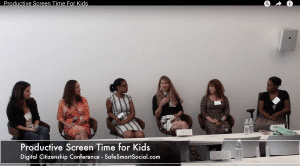
On November 11, 2016 I was invited to participate in a panel discussion and present in a breakout session at the Safe Smart Social Conference at the Microsoft Corporate Headquarters in Los Angeles, CA. Here is a link to the panel presentation with thought leaders in child screen safety. My favorite takeaway?

***

How can we collaborate with technology to build a connection with our kids?

Strive to have a strong, fun, connection with your children that includes an ongoing dialogue; one of the best ways to achieve that connection is with tech. If children see us as a partner in tech, then we can keep the conversation open. Remember that the partnership between tech and your connection with your child is the most important. –Dr. Tracy Bennett, GetKidsInternetSafe