
Need peaceful screen time negotiations?

Get your FREE GKIS Connected Family Screen Agreement

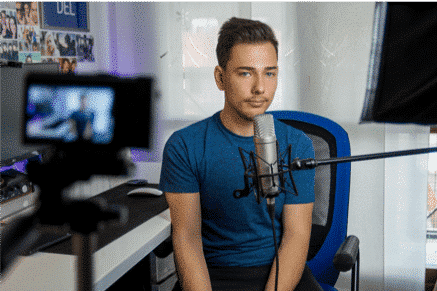
Jake Paul

Is Your Teen Becoming Wealth-Addicted?

Click on YouTube and the first video trending is “Million Dollar Home Tour.” The next recommended video is “My Multi-Country Vacation” followed by “Upgrading my Lambo (short for Lamborghini).” You’ve fallen into the rabbit hole of people flashing their wealth and the expensive items they have. Next thing you know, three hours have passed, and you catch yourself thinking about how nice it would be to afford the huge homes, nice cars, and expensive vacations. Could you be falling victim to wealth addiction?

Wealth Addiction

In Dr. Bennett’s CSUCI Addiction Studies course, we learned that addiction is often characterized by three factors, compulsive use, loss of control, and continued use despite the presence of consequences. Typically, these result from drug addiction. However, they are also seen in the behavioral addictions of gambling and video gaming. If you compulsively seek get-rich-quick schemes, can’t stop watching online flex videos, and make rash decisions in your quest for wealth, you might be wealth addicted!

Wealth addiction or money addiction is a fairly old concept that is currently being fueled by new social media trends. Philip Slater’s 1983 book, “Wealth Addiction” illustrated how Americans are addicted to money.[1] Thirty-six years later, more and more people seem wealth addicted than ever.

In his 1999 research, economist Romesh Diwan compared wealth to the general quality of life. He discovered that the overconsumption of materialistic items promotes wealth addiction. Diwan said that people believe that if they buy the material item they’ve been longing for, they’d be happy. However, his research surprisingly demonstrated that purchasing those items did not fulfill the need and want, instead leaving the consumer anxious and dissatisfied.[2]

Key Influencers
Many YouTube stars flaunt their wealth and material possessions in their videos. For example, YouTuber Jake Paul has 19.6 million subscribers on his channel.[3] As of 2018, his net worth was nearly $19 million.[4] Paul shows off how much money he has by posting videos such as, “I Spent $1 Million Dollars On This Vacation” where he documented an expensive vacation with his brother and friends.[3] In another video called, “I Spent $100,000 in 56 Minutes,” Paul created a competition where he and five of his friends had to spend $10,000 cash in less than an hour.[3]

Jeffree Star is another popular YouTuber who shows off how much money he has. With 15.9 million subscribers as of 2018, Star’s net worth is almost $75 million.[4] Star also posts videos that flaunt his wealth such as, “My Pink VAULT Closet Tour,” where he gave a tour of his dream closet in his home that is full of designer clothes.[5] In another video titled, “Surprising my Boyfriend with His Dream Car,” Star bought his boyfriend an Aston Martin Vantage worth roughly $150,000.[5]

The Benefits of Wealth Addiction

Not all aspects of longing for wealth are negative. For instance, if a watcher is encouraged to pursue higher education to get into a higher-paying career, one might argue that the dream is worthwhile.

Another positive aspect of wealth addiction is sparking the desire to give back with philanthropic gestures. Despite his obscene displays of wealth, Jeffree Star donates money to several charities including victims of gun violence and LGBTQ organizations.[6]

The Risks of Wealth Addiction

Teaching kids that wealth is the highest priority may lead them to seek wealth from opportunistic marketers. For instance, several years ago in Camarillo, a get-rich-quick scheme was introduced to popular high school and college students causing a rash of school dropouts. The product called Vemma Nutrition promised riches in exchange for selling their energy drinks and protein shakes. To get in on the action, the seller had to purchase the products themselves.[7]

Another risk is kids seeking wealth in place of healthier activities like academics, sports, and socializing. After binge-watching videos, they may get duped into believing that money will solve all their problems and make them happy. Of course, this may not be true, instead luring them into false hope with pressure to show off wealth instead of saving or investing in their future.

For some, the first goal of earning is never enough. They chase wealth in a quest to find true happiness. That could translate into depression and anxiety. Addiction studies tell us that living to chase a high is a dead-end scenario. If wealth is the goal, will you ever reach it?

Thank you to GKIS intern, Makenzie Stancliff for alerting us about the risks of wealth addiction. If you learned something about this article, please join us on our DrTracyBennett Instagram page so you won’t miss out on other fun GKIS opportunities.

I’m the mom psychologist who will help you GetKidsInternetSafe.

Onward to More Awesome Parenting

Tracy S. Bennett, Ph.D.
Mom, Clinical Psychologist, CSUCI Adjunct Faculty
GetKidsInternetSafe.com

Works Cited

[1] Peele, S. (2015, February 8). Addicted to Wealth – A National Trait? Retrieved from https://www.psychologytoday.com/us/blog/addiction-in-society/201402/addicted-wealth-national-trait

[2]  Diwan, Romesh. (2000). Relational wealth and the quality of life. Journal of Socio-Economics, 29(4), 305. https://doi-org.summit.csuci.edu/10.1016/S1053-5357(00)00073-1

[3] JakePaulProductions. (n.d.). Jake Paul. Retrieved from https://www.youtube.com/channel/UCcgVECVN4OKV6DH1jLkqmcA

[4] Chakrabarti, R. (2019, September 15). The Highest-Paid Stars on YouTube. Retrieved from https://moneywise.com/a/the-highest-paid-youtube-stars

[5] jeffreestar. (n.d.). jeffreestar. Retrieved from https://www.youtube.com/channel/UCkvK_5omS-42Ovgah8KRKtg

[6] Diply. (2018, October 24). 15 Facts About Controversial YouTuber Jeffree Star. Retrieved from https://diply.com/11366/15-facts-about-controversial-youtuber-jeffree-star

[7] Press, T. A. (2015, August 26). FTC: Vemma temporarily shut down for running pyramid scheme. Retrieved from https://www.ksl.com/article/36179492/ftc-vemma-temporarily-shut-down-for-running-pyramid-scheme.

Photo Credits

Photo by Alexander Milson Unsplash

Photo by Christian Wiediger on Unsplash

Photo by Andrew Ponson Unsplash

YouTube Celebrity Scams


Kids and teens love YouTube’s colorful celebrities who cater to their specific interests. But many influencers use their celebrity status to lead fans into harmful situations. In today’s GKIS article, find out how these YouTube celebrities promised big earnings from online gambling, offered poorly planned conventions, attacked other influencers, and encouraged fans to harass other online competitors. Using unethical tactics and no disclosure, many of these profit-making schemes succeed unchallenged.

What’s a YouTube influencer?

A YouTube influencer is a person with a YouTube profile that has a large number of followers and can influence trends, products, and purchasing habits. Their content is typically videos of product recommendations or reviews. Other times, it’s a video (vlog) with influencers talking to their audience about anything that strikes their fancy. Most vlogs include colorful opinions, vulgar language, and provocative topics.

Most influencers are trained marketers who profit from ads, partnerships, and paid sponsorships. Although some provide harmless entertainment, others intentionally mislead or introduce content that can harm their followers.

“Oops, I didn’t mean it.”

One-time mistakes are getting increasingly rare among YouTube celebrities. For some, a string of mistakes results in more fame and profit. For instance, PewDiePie is one of the world’s most famous YouTube celebrities with 91 million subscribers. In 2108, he was criticized for promoting an Anti-Semitic YouTube channel [1], delivering Anti-Semitic jokes [2], and using the hard N-word to thousands of viewers in a live stream video [3].

In 2019, PewDiePie stoked fan fires by encouraging “a fight” with a YouTube channel T-Series and Indian production house. Competing for subscribers, PewDiePie fanned a competition between American YouTube culture versus Indian YouTube Culture. The rallying cry resulted in hacking printers and Google homes, a vandalized World War II memorial in Brooklyn (“subscribe to Pewdiepie”), and, most horrifying, a Christchurch mass murderer yelling “subscribe to PewDiePie” during the live stream of his shooting.

YouTube Influencers Encourage Gambling

CSGOLotto: In 2016, YouTubers TmarTn and ProSyndicate promoted and advertised a site called CSGOLotto. On this site, players bought in-game items that were placed into an online pot alongside other people’s purchased merchandise. The goal was to gamble to win the biggest pot of merchandise.

Video ads for the GSGOLotto showed TmarTn and ProSyndicate having fun gambling large amounts of money trying to win big. Most times, they did win BIG – up to three times the amount they started with up to $20,000 worth of merchandise!

Based on our research, at no point in the ads or written copy did either influencer mention to their collective audience of 13.5 million that they owned this site and were profiting directly. We found the ads to be misleading, looking like the celebrities were simply players rather than profiteers.

Mystery Brand: In 2018, Jake Paul and RiceGum created a similar gambling site called Mystery Brand. In this game, players purchase $5 to $100 virtual boxes that would contain a mystery item worth either less or more than the amount paid. The promised a chance to win a $250 million house with only a $15 buy-in.

The influencers were reportedly paid $100,000 for promotion to their collective 30 million subscribers. In their videos, they narrated how they “teamed up” with Mystery Brand to show how “dope” it was to play.

After demonstrating the easy signup process, the two spent big. Once a player buys in, their money stays in. Players can’t cash out. They can only earn sponsored prizes shown on the site, like a virtual shopping mall. For example, in one video RiceGum shows off his $15,000 profit after only spending $3,000. Neither RiceGum nor Jake Paul refers to the site as “gambling,” but instead call it a “game” with “good value,” promising “there is no losing in this.” Based on our research, no place on the site states the players’ chances of winning.

A Poorly Planned Convention

Tana Mongeau is a content creator with 3.7 million subscribers. In 2018, 5,000 people showed up at a hotel in Anaheim to attend her convention, advertised to be a cheaper and more accessible version of Vidcon (which is a large-scale event hosted by YouTube to meet your favorite YouTuber). Due to poor planning, over 4,000 people waited for over four hours in the sweltering heat outside of the hotel. There were little shade, food, or water available, and many attendees got sunburned, passed out, and rioted due to poor accommodations and security.

Although promised to be free, it wasn’t. While 4,000 waited outside, the 1,000 inside were greeted with a $60 “VIP” pass, with a lack of entertainment, overcrowding, and almost the same issues as those outside the hotel. The videos of this event are upsetting to watch.

Using Their Platform to Attack People

When some YouTube influencers don’t like other content creators or other people in general, they sometimes rant with name-calling and unfair accusations. This cyberbullying can result in a cyber flash mob of dedicated fans that cyber attack through doxing (showing private information), pranking, and cyber-harassment.

False Accusations Against a Competitive Influencer

Jackie Aina is a popular beauty guru who creates and shares videos of makeup applications with 2.9 million subscribers. In 2018, she made a video accusing another YouTuber, Petty Paige (128 thousand subscribers), of stealing $1,500 from her personal bank account.

This accusation appeared to have no proof of legitimacy. Although she never stated Petty Paige’s name in the video, she put up a picture of a video Paige had made, making it easy for her subscribers to identify the accused perpetrator. Jackie Aina’s fans took to social media to harass Paige for weeks. Paige even stated that many business and job opportunities were canceled because of harassment.

Targeting Their Audience

The Gabbie show (6.4 million subscribers) is one of many YouTubers who have targeted everyday people with no regard to how the fan base would react to it. When a young girl in her audience made a negative comment on one of Gabbie’s tweets, Gabbie screenshotted it along with the girl’s account and posted it on her Twitter (2.7 million followers). This led fans to spam and harass the girl, flooding her inbox with hateful messages.

Are there legal consequences?

Too often, when malicious or unethical online behavior is identified, the scandal is fleeting. For example, in the case of TmarTns and ProSyndicate’s gambling scam, the Federal Trade Commission (FTC) filed a case for lying about ownership of a product. Yet somehow, both influencers avoided legal prosecution, only suffering a mild loss in subscribers and yearly income due to a damaged reputation. They still have a net worth of around $5 million.

For Jake Paul and RiceGum, absolutely nothing happened. RiceGum created a video justifying his behavior as the same as what others do. Jake Paul made a joke about the situation. When asked, “You loved being called out for selling a gambling scam to underage kids?” He responded, “Yes, love it.”

Of the influencers covered in this article, Tana Monogue probably received the biggest consequences. After months of backlash and hate from fans and YouTubers, Tana made multiple apologies. But she still suffered no legal consequences. And as for what Jackie Aina and Gabby Shows did, many just see it as insignificant errors in judgment.

What can be learned?

  • Influencers are not your friends and most often cannot be trusted.
  • Fanning follower anger is often fake and staged.
  • On the internet, bad behavior makes influencers money and often goes unpunished.
  • If you believe the hype, you’re gullible. It’s probably not worth the drama. Think for yourself instead of following blindly.

Thanks to GKIS intern Jack Riley for researching and writing this article. If you learned from this article, stay tuned for part 2, which details the irresponsibility and scams that YouTube influencers continue to feed their audience as well as the marketing and social manipulations used to make sure viewers keep coming back.

Onward to More Awesome Parenting,
Tracy S. Bennett, Ph.D.
Mom, Clinical Psychologist, CSUCI Adjunct Faculty

Works Cited

YouTube Influencers Encourage Gambling

  • Fluff, TMARTN GAMBLING ON CSGO LOTTO & DECEIVING OWNERSHIP (Full Video Reupload), YouTube.com

  • (2016, July) YouTube gamers caught in gambling row, bbc.com

  • FTC

-HonorTheCall, CSGO Lotto Update ft. Tmartn & Prosyndicate (HonorTheCall Show), YouTube

  • Jake Paul’s Tweet

  • Jake Paul, I Spent $5,000 ON MYSTERY BOXES & You WONT Believe WHAT I GOT… (insane), YouTube

  • MysteryBrand.net

  • RiceGum, How I Got AirPods For $4, YouTube

  • RiceGum, This Dude Calls Me Out For Mystery Unboxing…, YouTube

 A Poorly Planned Convention

-Dishwashinglickwid, Intentions: The Good, the Bad, and the Just Plain Stupid (Tana, James Charles, Huda Beauty), YouTube.com

-Farokhmanesh, M. (2018, June) YouTuber’s anti-VidCon convention -TanaCon was such a disaster that fans are comparing it to Fyre Fest, theverge.com

-Kircher, M. M. (2018, June) A Mouth to Hell Opened This Weekend at Tanacon, a Fyre Festival for the YouTube Set, nymag.com

  • Shane Dawson, The Real Truth About Tanacon, YouTube.com

Targeting Their Audience

  • Dishwashlickwid, Influencers acting stupid (protect your brain cells), YouTube.com

  • TeaSpill,JACKIE AINA MAKES SERIOUS ALLEGATIONS AGAINST PETTY PAIGE, YouTube

Photo Credits

“man sitting on chair in front of condenser microphone” Photo by Gianandrea Villa

“man holding black Android smartphone” Photo by Rachit Tank

“black and white skull printcrew neck shirt” Photo by Todd Trapani