This has been a big week for grassroot efforts to GetKidsInternetSafe. First was the petition urging YouTube to delete the account of wildly successful YouTube celebrity, Logan Paul, after he tastelessly posted a video showing him giggling alongside a suicide victim. Second was an open letter from two investors urging Apple to help parents with screen management due to screen addiction rates among children. Although research is scrambling to get current, there is substantial evidence that kids are being exposed to harmful content and addicted to their mobile screens. These two precedent-setting moves reflect growing concern and awareness about the very aspects that spurred me to create GetKidsInternetSafe; that technology is profoundly changing childhood and even brain development. After her inspiring Golden Globes speech about our influence on kids, we need Oprah to help us get the GetKidsInternetSafe Revolution some momentum!
In modern times, child screen use has had a greater impact on the American family than anything since the abolition of child labor in 1938. Parenting has become a full-time preoccupation. Kids don’t labor for parents, parents labor for kids. Because of what we perceive as society’s high expectations of parents, raising healthy, happy kids has become overwhelming. We are expected to faithfully care for and entertain our children most of our waking hours without complaint. Although parents are waiting later to have kids and having fewer kids per family, with both parents working and the disappearance of extended family help, we have fewer supportive resources than ever before.
Even with little support, we have been accused of “helicopter parenting” to keep our kids safe and successful. We too often expect our kids to earn 4.0 GPAs, awards in robotics, and trophies in sports. Cs aren’t “average” anymore, now they’re a mark of parents not helping enough with homework. Our fear that we aren’t doing enough trickles down to our kids in the form of encouraging lectures and, too often, scathing shame and disappointment. We know this is too much pressure. So in between the “enriching” activities we work so hard to provide, we allow them leisure time…more leisure time than any children in history.
Parents are no longer willing to order their kids to go play outside until the streetlights come on. It’s too scary knowing what we do about child predators, bullying, sex, and drugs. To keep kids safe, we shelter them inside our houses to save them from the world’s perils. Instead of running amok like we did with hordes of neighborhood kids creating spontaneous, street-smart missions, they watch screens. And while they’re on their screens, we’re also on ours. Screen time gives us much needed breaks and provides what we hope is enriching content and a primer in digital literacy. But the troubling behaviors our kids demonstrate while compulsively viewing videos, social media, and video games eerily resemble signs of addiction. And we are the dealers, providing screens too often while they’re too young. We are hooked too. We feel guilty, but it’s often the best we can do. Screen technology has transformed childhood and parenting.
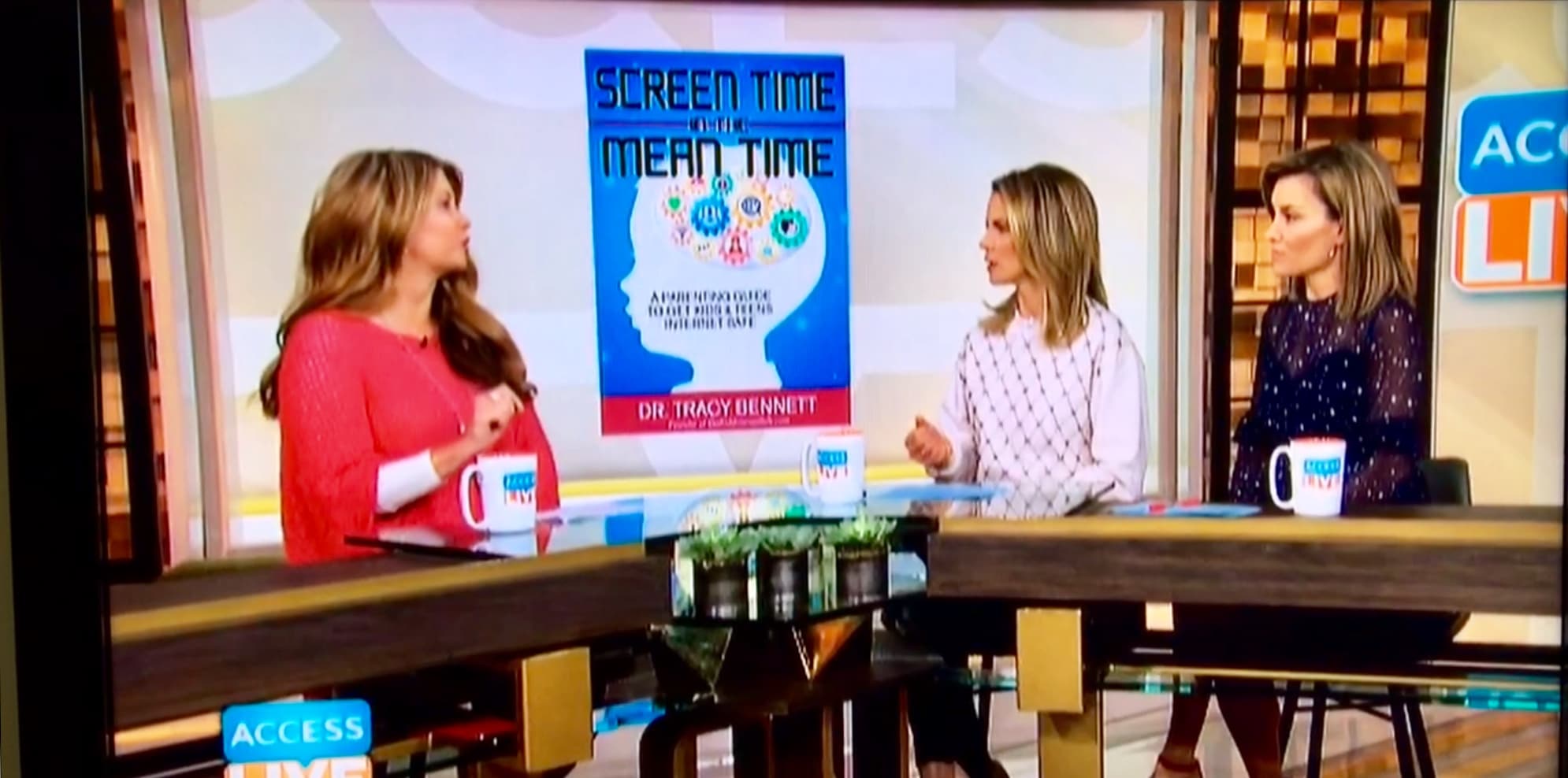
Thursday, Universal’s Access Hollywood Live, again hosted me as their parenting expert to talk about America’s concern about the negative impact of inappropriate video content through YouTube. As I stated on the program, the content that gets through is tantamount to child abuse, and kids don’t have insight into their psychological vulnerabilities. It is up to parents to filter and monitor. But we all know that there isn’t a tool strong enough to keep out sneaky algorhythms and celebrities and corporations bent on viral views that translate to big profits. We need help…and soon!
In their open letter to Apple, activist investors Jana Partners and the California State Teachers’ Retirement System (Calstrs), detail how surveys and studies definitively demonstrate that “it is both unrealistic and a poor long-term business strategy to ask parents to fight this battle alone.” They go on to say, “Imagine the goodwill Apple can generate with parents by partnering with them in this effort and with the next generation of customers by offering their parents more options to protect their health and well-being.” With their $2 billion dollar’s worth of Apple shares, their message is bound to get Apple’s attention.
Let’s be honest here. There is a rich clubhouse of companies that share the responsibility of the wellbeing of the world’s screen-watching kids. Youtube and Apple, yes, but grassroots activitists like myself are also reaching out to collaborate with other influential tech-giants like Facebook, Twitter, Instagram, Snapchat, Google, Amazon, and Disney, among others.
Until we come up with technology tools and sensible legislation protecting our kids from destructive violent and pornographic content as well as distracting, brain-changing, addictive use habits, we are stuck to do our best. Like I said on nationally syndicated television Thursday, how about we start by making our voices heard!
Here are the talking points from my AHL visit with fellow concerned moms, Natalie Morales and Kit Hoover:
Logan Paul has 15 million subscribers. He posts a 15-minute video a day, getting 300 million views a month (making 12-15 million dollars off these videos). His eager subscribers are primarily young people. How do you monitor?
With good old-fashioned supervision, location parameters, and rules to start. No screens in bedrooms, bathrooms, or behind closed doors. Dock mobile screens at night and set a Wi-Fi curfew. The GKIS Family Living Agreement helps get parents on-track.
YouTube does have a “safety” mode, but that doesn’t always prevent your child from seeing this content. Is it more about having a conversation as a family? How should you approach this?
There is a YouTube Kids site that also helps, but yes, it is about having conversation as a family, and a lot of it. Recognize that kids don’t yet have the experience to understand psychological vulnerabilities. Use current, fact-based information like that offered for free and delivered weekly on GetKidsInternetSafe to keep the conversation going. Saying “don’t do that” isn’t enough. Follow the specific conversation starters and sex ed tips offered in Screen Time in the Mean Time to ensure your kids know the difference between sensational content designed for profit (fake news) and content that reflects real-life, factual scenarios.
You have to be 13 years or older to use YouTube, but many of his followers are under the age of 13 (including Kit’s son)….
Exactly. We are all guilty of monitoring failure. We simply can’t supervise our kids 24/7, nor is it appropriate to do that. Social media platforms say 13 years old is required for use, but that is based on privacy issues rather than sound psychological reasoning. Accidental exposure is the most common type, but recognize that kids and teens are developmentally curious and bold; they’ll go looking for distressing material.
Is there a problem with kids being desensitized from these type of videos? Some kids who viewed this may have thought nothing of it.
My GetKidsInternetSafe articles detail how desensitization and even PTSD symptoms can result from livestream video viewing by kids and adults! Not only should Logan Paul have had x-generation team members to help him with common sense and compassion in that Japanese “suicide forest,” but our kids need a support team too. The victim ended his life in deep despair and his family members are destined to maintain it in their grief. Parents must specifically teach empathy and compassion and recognize that viewing violence and flippantly talking about issues like suicide can create real risk, like suicide contagion – a dangerous cry for help.
People are calling for Youtube to suspend Logan Paul’s account after posting this video. Do you think that’s the right move? Are you surprised Youtube hasn’t taken action?
The truth is that YouTube profits from viral videos, and you can’t help but wonder how often does profit get in the way of ethical constraint or human compassion. I think that parents need to advocate for better safety measures on all the livestreaming platforms. In my practice, I treat kids who are commonly viewing violent pornography, imitating life-threatening stunts, and engaging with human traffickers, hate groups, and child predators. The research is showing that seeing hours of livestream news video, like what we saw with the Las Vegas shootings, can be more psychologically distressing than being a live witness to the tragedy! We can prevent this, and more can be done.
What can you do today?
Decide on a course for getting kids Internet safe by advocating with your favorite organization, like GetKidsInternetSafe.
At the time of this publication, the “Delete Logan Paul’s YouTube Channel” petition by an unknown author on Change.org had over 465,000 signatures. I personally wish the petition was addressed to YouTube with a plea to tighten their security measures rather than publicly shame Logan Paul. Although he is on a well-earned break, he took the video down himself. Before he did that, it still got over 6.5 million views and is currently being shown by other YouTubers who are at once shaming him for his judgment while simultaneously rebroadcasting the videos. Really folks? Hypocrisy in action.
Clean up your own screen use habits.
We are all habituated to picking up our phones in the meantime, whether it be waiting in line or during soccer practice. Let’s all make a little more effort to stay in the present with our kids and risk being alone with our thoughts. Remember what that used to be like? 🙂
While we all spend the meantime on our phones, the mean time is being fueled. There are online risks to kids that most parents have never dreamed of. The future is here and despite how many of us, like Kit Hoover, wish we could go back to kick-the-can days, digital literacy is necessary for academic progression. Our kids won’t hear of no-screen weeks, nor will we. That means we need to get brave and educated. You may think you’ve heard it all, but I’m certain my information will help you make a more comprehensive and sensible safety plan and bring you closer to your kids. At the end of the day, what matters is that we do a good job raising great kids. Nothing is more important than that.
I’m the mom psychologist who helps you GetKidsInternetSafe.
We are vulnerable to dangers previous generations couldn’t even imagine. We are on-demand, world connected – available to watch any horror from any place. Graphic (meaning vivid or realistic) live stream videos can be found on social media platforms such as Facebook Live, Instagram, TikTok, Snapchat, and YouTube. Children are especially vulnerable to getting upset when viewing violence. Today’s GKIS article covers if the mental illness Post Traumatic Stress Disorder (PTSD) can result from viewing violence on screen.
How Graphic Live Streams Affect Children
Accidentally clicking on a violent video would frighten anybody. Children are particularly vulnerable to trauma, including the development of serious mental illness. PTSD is a mental health disorder in which a person struggles to recover from experiencing or witnessing a traumatic event such as an assault, war, natural disaster, or serious accident. People with PTSD often have severe anxiety and panic attacks when reminded of the traumatic event. They feel stressed and frightened even when there is no danger present.
PTSD symptoms include intense nightmares, difficulty sleeping, and flashbacks of the traumatic event (intrusive images like you’re re-experiencing it). Children younger than six years old show signs of PTSD differently than adults. Their symptoms include behaviors like wetting the bed, being unable to speak, acting out the traumatic event in playtime, and clinging to their caregiver. PTSD is a very serious, debilitating disorder that can leave the individual in a nearly constant state of fear and stress.
Being able to discuss the witnessed traumatic event is a necessary step in treatment. In a study with Danish high school students, subjects who had witnessed a school shooting were assessed for PTSD. It was found that the prevalence of PTSD seven months after the incident was 9.5%. Being unable to talk about the incident was found a predictor of those who developed PTSD.[1]
Studies on Videos and the Onset of PTSD
Because violent videos are relatively new, there is little research on how they affect us. One of the earliest studies was conducted after Americans viewed the television coverage of the 9/11 tragedy.
The researchers interviewed 560 adults three to five days after 9/11. Approximately 90% reported one or more stress symptoms. In contrast, 35% of children had one or more stress symptoms, and 47% were worried about their safety or the safety of loved ones. Ten percent of the children had trouble falling asleep or staying asleep.
In another study, researchers surveyed 4,675 adults who viewed the 2013 Boston Marathon bombings on video. They found that people who had repeatedly watched the tragic footage sustained more trauma and stress than people who had witnessed the events in real life!
Those who watched six or more hours per day of media coverage were nine times more likely to report high acute stress than those who viewed less than one hour a day. Symptoms of acute stress included intrusive or troubling thoughts, feeling hyperaware, avoiding anything that reminds one of the traumatic events, and feelings of detachment.
If your children witnessed a traumatic live stream or Internet video, how would you know if they had PTSD?
Elementary School-Aged Children
“PTSD in children and adolescents requires the presence of re-experiencing and avoidance, numbing, and arousal symptoms. However, PTSD may not present itself in children the same way it does in adults.”[2] For example, young children may not experience flashbacks like adults with PTSD. They are more likely to experience “time skew” and “omen formation,” which are symptoms usually not seen in adults.
Time skew is the mis-sequencing of trauma-related events when remembering the experience.
Omen formation is a belief that there were warning signs that foreshadowed the traumatic event.
Children often believe that if they remain alert, they will recognize the warning signs and avoid another trauma resulting in chronic hypervigilance, anxiety, and sleep disorders.
School-aged children with PTSD often engage in posttraumatic play or reenactment of the trauma in play, drawings, or verbalizations. Post-traumatic play is a literal representation of the traumatic event in which the child repetitively acts out some aspect of the trauma. This often does not relieve anxiety.
An example of post-traumatic playwould be a child shaking a playhouse after they’ve experienced an earthquake.
Post-traumatic reenactment, on the other hand, is more flexible and involves behaviorally mimicking some aspects of the trauma. An example would be carrying a toy gun after being exposed to violence.
Adolescents and Teens
PTSD in adolescents more closely resembles symptoms seen in adults. However, some features are unique to teenagers.
As discussed above, children may engage in traumatic play after the onset of trauma. Adolescents are more likely to engage in traumatic reenactment, in which they merge some aspects of the trauma into their lives. Reenactments occur due to psychological vulnerabilities and defensive mechanisms which are characteristic of PTSD survivors. Adolescents tend to engage in impulsive and aggressive behaviors more than younger children and adults do.
What can parents do?
Advocate for better safety protocols including monitoring and filtering with platforms like Facebook, Instagram, Snapchat, TikTok, Periscope, and YouTube.
Filter video access to children by using a child-safe browser, refusing requests to adopt livestream social media apps, and using appropriate child sites like YouTube Kids.
Maintain an ongoing dialogue about content viewed online to optimize the chance your child will go to you if they happen upon inappropriate content.
Let your child know they won’t be in trouble for accidental views.
Be alert for changes in behavior that may be reflective of PTSD like fears, anxiety, bathroom accidents, mutism, sleep problems, appetite problems, substance abuse, or school failure.
Seek the help of a child psychologist if you have concerns.
Thank you to CSUCI Intern, Mara Pober for writing this important series to inform parents and help them keep their kids Internet safe. For more parenting advice on-screen media and trauma in children, pick up your copy of Dr. Bennett’s book, Screen Time in the Mean Time: A Parent Guide to Get Kids and Teens Internet Safe.
I’m the mom psychologist who helps you GetKidsInternetSafe.
Popular livestream video platforms, like Facebook Live, Twitter, Instagram, and Periscope, can put viewers at psychological risk with graphic content that’s impossible to moderate or filter. Last week we learned the history of news coverage, including livestream during the recent Las Vegas shooting. Today’s article covers how quickly and dramatically easily-accessed video content has changed with a constantly increasing viewing audience. Is violent livestream video detrimental to our psychological wellbeing? #Vegasstrong
How is livestreaming different from news coverage?
We are all disheartened by the unprovoked mass murder of country concert attendees in Las Vegas recently. Constant bombardment with graphic news coverage left many of us reeling. No longer do news outlets need a reporter on-scene to get dramatic live coverage. Private citizens stream photos and videos from their smartphones real time on the Internet, while outlets choose and air the most dramatic content available.
Graphic news coverage is a relatively new phenomenon. Prior to smartphones, network executives edited out content that would upset viewers. Community standard determined the selection process, with ethics and consumer preference in mind. Livestreaming does not undergo this filtration process. It’s raw, authentic, and very real. Viewers can hear, see, and observe the terror of victims real-time without actually being there.
Livestream Horrors
Imagine the horror of watching a mass murder unfold real-time, helpless to do anything about it. This is exactly what happened to hundreds of Internet and television viewers of recent Las Vegas livestreams. As people livestreamed themselves enjoying the concert, the scene quickly changed. Viewers watched on in horror as the chilling events unveiled. This is not the only case of a tragic event captured on livestream.
In April 2017, Steven Stephens livestreamed himself shooting a 74 year old man on Facebook Live in Cleveland. In the video, Steven is seen in his car saying, “Found me somebody I’m going to kill — this guy right here, this old dude.” Steven then exits the car and kills Robert Godwin Sr. on the spot. The video was on Facebook live for three hours with hundreds of viewers before it was finally taken down.
In a similarly disturbing incident, a man in Thailand livestreamed himself murdering his daughter. The recording showed Wuttisan Wongtalay hanging his 11 month-old daughter by the neck from the rooftop of a building. The footage was on Facebook Live for twenty-four hours before it was taken down. Wongtalay later committed suicide off camera. Facebook called this “an appalling incident.”
In another criminal event, Obdulia Sanchez, 18, livestreamed herself on Instagram driving under the influence with two 14 year-old girls in the back seat. After losing control of the vehicle, she shakes her sister, dead in a pool of blood, pleading, “Jacqueline, please wake up.”
Another particularly noteworthy livestreaming event occurred in January 2017, when four people broadcasted a 28-minute livestream video as they tortured a mentally disabled man. They taped his mouth shut and threatened him with a knife as they beat him, made him drink from the toilet, and cut off a part of his scalp. The first perpetrator to be tried, nineteen year-old Brittany Covington, pleaded guilty to the hate crime and received four years probation where she was ordered not to use social media.
Tolerance of Violence?
Information reaching us faster alerts us to a more accurate reality. This can be beneficial when considering the authenticity of news. But at the same time, instant access to unfiltered media may be desensitizing us to violent imagery. According to the World Health Organization, “Rules or expectations of behavior … within a cultural or social group can encourage violence.”
Children and adolescents who are curious and thrill-seeking seek out content to be shocked, scared, or more “in-the-know.” Other times viewers come across this content by accident. Each of us have our own complicated profile of risk. Perhaps the normalization of violent livestreams reduces our sense of safety, even sensationalizing issues like assault, murder, and suicide. Copycat behaviors seeking notice can also be a problem.
The fact that there are thousands of disturbing videos circulating the Internet at any time makes one question how it got this bad. As a nation, we are becoming more tolerant of viewing violence on-screen. Many argue that certain types of violent videos must be publicly available for informational and educational purposes. In response to this, most Internet platforms have specific rules for how violent videos are filtered.
For example, Facebook now has guidelines regarding which violent videos are permitted to stay on the website and which are removed. Videos of violent deaths are not always taken off the site, because they can help bring awareness to issues such as mental illness or war crimes. Videos in this category are instead marked as disturbing content and blocked from minors. Facebook also permits users to livestream themselves attempting suicide or committing acts of self-harm. The justification for doing so is because they do not want to censor freedom of expression or punish someone in distress. If a person does livestream a suicide attempt, the video documenting the incident may not be taken down if it is deemed newsworthy.
Youtube also has challenges filtering inappropriate content. Dr. Bennett was invited as a parenting expert on Access Hollywood Live to discuss the poor judgment of celebrity Youtube Logan Paul after he posted video of a suicide victim hanging in Japan’s notorious “suicide forest.” Although Logan took it down after receiving criticism, over six million of his followers, mostly young people, saw the footage and Logan’s poor taste of giggling uncomfortably throughout. People are increasingly willing to post scandalous content in order for it to go viral. After all, that mean’s BIG profits. Dr. Bennett called for parents to talk to their kids and advocate for better safety monitoring on video and livestream social media sites.
Find out how graphic livestreams may affect mental health in Mara Pober’s last article of her three-part series, “Live Streaming Can Cause PTSD in Adults and Children.”
I’m the mom psychologist who helps you GetKidsInternetSafe.
Onward to More Awesome Parenting,
Dr. Tracy Bennett
Internet technology has brought us instantaneous access to global information. We see the latest news coverage in seconds with convenient notifications on our smartphones. Personal posts on Facebook delivers everything, including beheadings by ISIS and mass shootings like the tragedy in Las Vegas. Unregulated and increasingly pushing the boundaries of decorum, shocking information and violent images and videos constantly slice into our everyday lives. We at GKIS believe this comes at a grave price to our feelings of security and overall mental health, particularly for kids. Trigger warning: please beware that this post includes graphic news images.
Photojournalism: The First Graphic Images to Reach the Masses
Graphic popular news content is a relatively new phenomenon. Before the Internet, people primarily accessed news from newspapers. The first printed newspaper was written in Germany in 1605. The first newspaper photos in the 1850s were wood-engravings used for printing purposes rather than actual printed photographs. Though these images were not true to life, they still conveyed messages to the masses.
Roger Fenton, one of the first war photographers, captured images of the Crimean War in 1854. His photos revolutionized photojournalism. Due to the limited photo technology of the time, he could only capture stationary objects. As a result, his photos were often staged and depicted landscapes or posed people. He avoided taking pictures of dead bodies and bloodied soldiers.
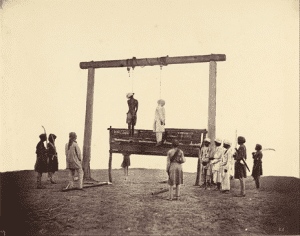
In 1857, photographer Felice Beato pushed the envelope further to more graphically expose the devastation of war. He captured what may be the first popularly published photograph of a human corpse.
In the late 1800s, newspapers developed a more efficient method of printing photos, called half-toning. These are the black and white images many of us are familiar with. By the 1920s this technology was very sophisticated and could produce high quality images which proved vital for eliciting public response.
A poignant example of graphic news coverage evoking public response was the Emmet Till incident in 1955. Emmet was a 14-year-old African-American boy who was senselessly lynched when a white woman claimed that he had disrespected her. Her husband and his brother abducted Emmet and beat and mutilated him before tossing his body into a river. When his body was discovered, Emmet’s mother allowed journalists to photograph his severely disfigured body. These disturbing images outraged the public and brought light to injustice in the South. Emmet became the face to The Civil Rights Movement.
News Video Coverage: A Revolutionary Medium
The introduction of film media added an even more sophisticated layer of interaction between news reports and the public. The first filmed news coverage, called Newsreel, was prominent from the 1910s to the 1960s, before Americans had televisions in their homes. Newsreels were short documentary-style films reporting on current events, most often shown before motion pictures in movie theaters. They tended to be informative and non-graphic in nature, often used as propaganda to influence public opinion on war and politics.
When televisions became common in American homes in the 1960s, TV stations began producing their own newsreels. Soon there would be entire programs dedicated to news, marking the beginning of nationwide news broadcasting stations like CBS.
In the 1970s, innovative technologies emerged that could record audio and video for television broadcasting, called electronic news gathering. With the onset of the unpopular Vietnam war, news broadcasters covered the battlefield in graphic detail. This exposed the world to raw and real depiction of the brutalities of war, fueling anti-war sentiments.
For example, on March 27, 1970, CBS News aired a graphic report with correspondent Richard Threlkeld. In the clip, Richard accompanies several soldiers patrolling the jungles of Vietnam. Suddenly shots fire, and Richard and the soldiers take cover. One of the soldiers, Kregg Jorgenson, is shot in both legs off camera. With gunfire sounds in the background, Richard briefly interviews the heroic soldier who earned his fourth Purple Heart that day.
In more recent memory, the graphic videos of 9/11 traumatized a nation. Millions of television viewers were entranced by the continuous hours of disturbing footage. Particularly horrifying were the images of victims jumping from the burning towers to their deaths. Richard Griffiths, the senior editorial director at CNN, ruminated with his colleges about whether or not to air “The Jumpers.” Ultimately, they decided to show a four-second clip of a person falling before impact. This decision was met with universal disapproval as audiences were shocked and deeply upset. How far is too far in television journalism?
Livestreaming: The New Frontier
With the advent of smartphones, we now have immediate, continuous access to the unregulated Internet. Not only can we conveniently view video coverage, but we also can take and share it real-time. Livestreaming is the ability to transmit live audio and video footage over the Internet. Popular livestream mediums are Facebook live, Twitter, Instagram, and Periscope.
The problem with livestreams is that it’s impossible to moderate and filter graphic content. It’s raw, authentic, and very real. Captured livestreaming incidents have included rape, torture, and murder. Most recently, the world looked on at the horrifying livestreaming videos of victims during the Las Vegas shooting. Viewing livestreamed events can feel like you’re actually there but helpless to do anything to aid victims. Just as we saw with 9/11 coverage, audience response has been emotional and, in some instances, symptomatic of secondary trauma.
Thank you Intern Mara Pober for giving us a great overview of photojournalism and how the tide has turned. Stay tuned for her article next week, “Graphic Livestream Horrors” to learn why viewing graphic video content can contribute to clinical distress for all of us, particularly children.
I’m the mom psychologist who helps you GetKidsInternetSafe.
Since the 2010 launching of the mobile app, Instagram, users share pictures and videos with their peers like never before. While this social media app provides a fun and convenient way to show off family photos and adorable pets, it can also be a source of worry for parents. Do you worry about who is viewing their child’s photos and what they are posting? If so, you’ll be happy to learn about the possible dangers of hashtags.
What are hashtags?
Hashtags are “#” symbols in front of words or short phrases that drop them into a posting page with the same tag. Sorting content this way allows others to see your picture and any other pictures that use the same hashtag if your social media profile is not set on private. Click on a hashtag phrase like “#Monday”, you would be directed to a page of #Monday photo collections from all Instagram photos tagged with #Monday from various user profiles.
Hashtags seem harmless, should I worry?
Most hashtags are used for fun and harmless sharing (#MomGoals, #GKIS). However, as with any social media trend, teens often use this tool to find and contribute to pages with explicit material. One way to hide this activity from parents is to use vague or shortcut terms.
An unfortunate example of this secret language is for pictures depicting images of self-harm (#cutting) and eating disorders (#mia, #ana). While some profiles provide helpful information to help empower those in distress, others overtly encourage self-destructive behaviors. These online communities are commonly known to share detailed techniques and strategies, provide emotional support, and serve as a launch pad for online friendships. In my clinical practice, these relationships often spiral into emotionally dependent and frequently abusively manipulative pairings that remain hidden and are resistant to protective parent intervention.
Hashtags are used on most social media sites, including Instagram, Twitter, and Tumbler (Whitlock, 2009 & Nock, 2010, as cited in Moreno, 2015). Although many kids go looking for these forums after they’ve already experimented with concerning behaviors, others get started this way (Seko, 2011, as cited in Moreno, 2015).
Until social media sites improve the strength of their content advisory, parents must keep their children safe from viewing explicit content.
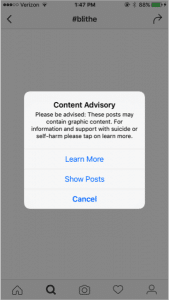
Instagram now has a content advisory that pops up and warns users of content that might be graphic and even provides resources for help with eating disorders and links to helplines. However, just as kids are great at creating sharable online resources, they are also great at staying hidden from parental interference. For example, in a 2015 study that identified similar hashtag meanings on multiple social media sites, vague and hard to identify hashtags including “#mysecretfamily”, “#blithe”, “#Bella” or “#Ben” (a term used for Borderline Personality Disorder), “#Ana” or “#Rex” (used to reference Anorexia), and “#Sue” or “#Dallas” (terms for suicide) (Moreno, 2015). Only a portion of these hashtag terms generated a content advisory warning.
GKIS TIPS for protecting your children from viewing destructive online content:
Check out social media site help centers for information. For example, Instagram’shelp center provides downloadable privacy and safety guides for parents, teens, and gives information and resources for addressing abuse and eating disorders.
Make sure that your child’s social media profiles are set on private.
Have open conversations about what your children view and post online. Remind them that they can talk to you if they do accidently view images, post, or receive something that makes them uncomfortable. No blame, no shame.
By opening up nonjudgmental conversations about what your child may view on social media and mental health issues, you model healthy communication skills, promote stigma free views on mental health, and most importantly, develop a positive and loving relationship between you and your child. If you feel they are too young for these discussions, then they’re too young for social media.
Parenting can be incredibly difficult at times. Parenting a teen struggling with painful psychological issues is particularly scary. In situations like these, many aren’t sure where to turn or what to do. As a psychologist and a mom, I want to remind you that you are not alone. Whether your concerns are about Internet safety or getting a better understanding of where your psychological issues your child may be dealing with, GetYourKidsInternetSafe is here as your resource.
Moreno, A.M., Ton, A., Selkie, E., & Evans, Y. (2015). Secret Society 123: Understanding the Language of Self-Harm on Instagram. Journal of Adolescent Health, 58, 78-84
A selfie is a self-portrait shared on texts or social media for attention-seeking, communication, documenting one’s day, and entertainment.[1] The term was first seen in 2002, but didn’t become popular until 2012. By 2013 The Oxford English Dictionary named it “The Word of the Year.”[2] We’ve all been guilty of taking selfies. But it takes education and practice to use good judgment. Today’s GKIS article asks, “Are selfies bad for our mental health?”
Celebrity Selfies
With ads on social and print media, billboards, and television, kids and teens are exposed to thousands of images and videos every day. And, it isn’t obvious how filtered, lighted, contoured, surgically and cosmetically altered, and digitally enhanced the photos are. They aren’t a quick, natural snapshot. They are highly produced and stylized. Kim Kardashian proudly shared that she once took 6,000 selfies during a four-day vacation. Her celebrity sister, Kylie Jenner, also admitted that it sometimes takes up to 500 photos before she gets the right shot.
With such exposure, kids are encouraged to scrutinize their appearance, striving to develop and refine the “perfect” face and body.3 Hyper-sexualized selfies further serve as a negative influence. One can easily get roped into hyper focusing on looks and attracting “likes” and comments as a reflection of worth and popularity.
Selfie Editing Apps
Makeup and selfie editor apps are very commonly used and include features to:
Change eye color
“Slim and trim to selfie perfection”
Enlarge features
Shrink the nose
Plump the lips
Enhance facial contours
And even offer hundreds of pupil templates “to make your eyes look beautiful.”
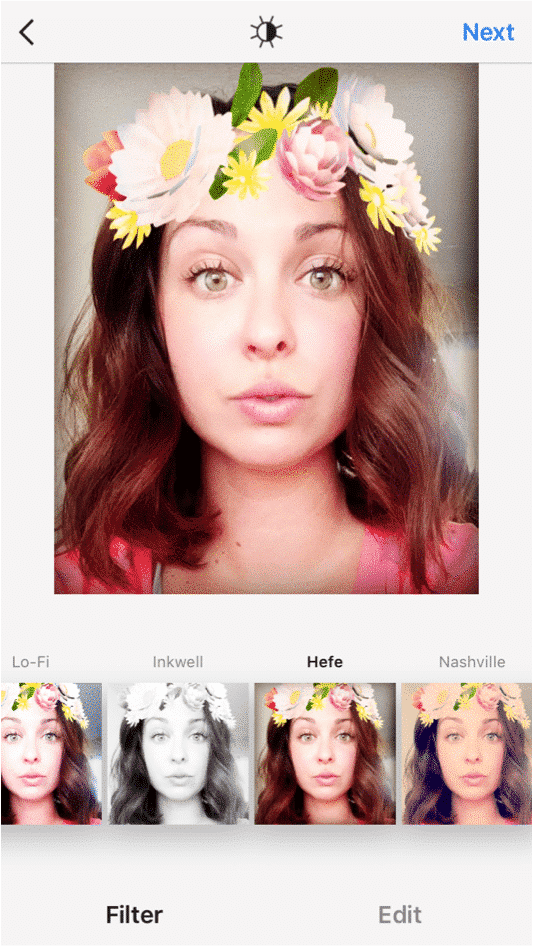
Apps also offer combo features that turn your image into cartoon perfection. For example, the “fairy filter” on Snapchat can change your selfie in multiple ways at once, making your eyes larger and gleaming bright while also smoothing out the skin and whitening teeth.
The Beauty, Fashion, and Health and Fitness Industries
Selfie alteration isn’t motivated simply by entertainment. A far more sinister reason often lurks behind the manipulation of young minds, namely profit.
Each year the beauty industry boasts a profit of 42 billion dollars.[10] Add that to the 30 billion dollars brought in by fashion, health, and fitness and the big business of advertising on social media, and one can imagine the lengths corporations will go to manipulate buyers into buying.[4] The worse we feel about ourselves, the more we buy products to “fix” us.
Do we adopt unrealistic attractiveness standards?
In the past twenty years, anxiety and depression have been rising at an alarming rate. The rates of mental health issues among women have particularly jumped.[5] Social media and the pursuit of perfection are likely contributors.
Not only can media exposure lead to mood issues, but body distortion and eating disorder issues are also on the rise.[7] Forty to 60% of elementary school girls report having concerns about weight.[8]
Body shaming among peers starts young and peaks during adolescence. Both males and females engage in shaming, but they do it differently. Males tend to be more directly aggressive, while females shame through passive-aggressive means like gossip and cyberbullying.[9]
Body image issues can lead to excessive use of diet and exercise products and potentially lead to clinical eating disorders. In the United States alone, 20 million women and 10 million men suffer from a clinically significant eating disorder at some time in their life.[6] Even with awareness and education, prevalence numbers continue to rise.
How can we protect our kids from unhealthy self-perception and distorted body image?
Love and compliment your kids loudly and unapologetically for all they are! This includes their worthiness of love just for being the “perfect,” nondigitally enhanced them.
Reinforce that the self is made up of far more facets than a beautiful face. Likes, interests, skills, and traits make up what’s important about a person, not eye size and hair color.
Discuss the fact that we will be hanging out with our bodies for the long haul, which means we must treat our bodies as our best friends rather than our enemies.
Lead by example. Do you voice your disapproval about your face or body aloud to your kids? If you do, they too will follow suit about themselves. Instead, be loud and proud of the woman or man you are today. Value yourself just as you would like your daughter or son to value themselves.
Implement healthy eating, sleeping, and exercise habits and explain why that is so important for strength and health. I prefer to focus on words like “delicious” and “nourishing” for healthy food to highlight lifestyle factors and frame nutritious food options as a treat, rather than words like “diet,” “cleanse,” or “cheat” that focus on junk food as treats and healthy foods as punishment while aggrandizing shaming fads.
Remind your teen that what they see on social media and in ads isn’t always the real deal. Take an Internet browsing journey with them researching this topic by searching “photoshop hacks” or looking up Jean Kilbourne’s ground-breaking work in this area with her “Killing Us Softly” video series. A must-see!
Thank you to CSUCI Intern, Brooke Vandenbosch for her contributions to this important article! Wonder if only girls are susceptible to body image risk to mental health? Check out, “Body Shame and the Average American Male” for a discussion about how boys are increasingly affected as well.
I’m the mom psychologist who will help you GetKidsInternetSafe.
1 – Sung, Y. , Lee, J. , Kim, E. , & Choi, S. (2016). Why we post selfies: Understanding motivations for posting pictures of oneself. Personality and Individual Differences, 97, 260-265.
5 -Press Association Newswire (2014). ‘Very High Rates of Anxiety and Depression for Young Women. Newsquest Media Group.
6 – Wade, T., Keski -Rahkonen A., & Hudson J. (2011). Epidemiology of eating disorders. In M. Tsuang and M. Tohen (Eds.), Textbook in Psychiatric Epidemiology (3rd ed.) (pp. 343 – 360). New York: Wiley.
7 – Leit, R. (2002). “The Media’s Representation of the Ideal Male Body: A Cause for Muscle Dysmorphia?” International Journal of Eating Disorders, vol. 31, no. 3, pp. 334–338., doi:10.1002/eat.10019.
8 – Smolak, L. (2011). Body image development in childhood. In T. Cash & L. Smolak (Ed s.),Body Image: A Handbook of Science, Practice, and Prevention (2nd ed.). New York: Guilford.
9 – Aslund, C., Starrin, B., Leppert, J., & Nilsson, K. (2009). “Social Status and Shaming Experiences Related to Adolescent Overt Aggression at School.” Aggressive Behavior 35.1: 1-13. Web.