Need peaceful screen time negotiations?

Get your FREE GKIS Connected Family Screen Agreement

getkidsinternetsafe

Did You Know the Internet is Programmed Like a Slot Machine? 6 Ways Internet Marketers Are Grooming Our Kids to Be Paying Customers

blog3buy-1024x1024

When we are online, we often view content designed to get us to buy something. Companies and people who make money this way are called online marketers. The more customers these marketers attract, the more money they make. Today’s GKIS article teaches you how to recognize the tricks marketers use to earn money. If you are able to recognize these tricks, you will be more likely to avoid buying things you don’t need or want.

6 Tricks Marketers Use to Encourage You to Buy

Neuromarketing Strategies 

Neuromarketing strategies refer to the tricks created from research that studies customer motivations, preferences, and buying behaviors. With customer data collected from brain scans (which areas of the brain engage with certain ad content), eye movement tracking, and customer reports, marketers design their products and advertisements for the best appeal. This means that advertisers know what we respond to and how we respond better than we even know! 

Illusion of Scarcity

The illusion of scarcity refers to the technique of only offering a product or a discount for a limited time. By using terms like BUY NOW or LIMITED-TIME OFFER, marketers make us anxious to click the buy button quickly without thinking it through. Adults are better at taking their time before buying than kids are. Not only have adults had more experience and practice, but their brains are more developed to control buying impulses. Most people believe that using these tricks on kids is unfair and unreasonable.

Pester Power

Once a child wants something, they will pester and beg their parents to buy it for them. Parents then buy the item to make their kids happy, sometimes without thinking enough about it. Pester power leads to more family stress and unnecessary purchases. 

Packaging Tricks

We buy things if they look great and if we think they would be fun or good for us. That is why marketers spend a lot of money on design and use certain words and images that suggest the product is healthy even if it isn’t, like calling sugary flavors “fruit flavors.” 

Using Slot Machine Reward Schedules

We will keep doing something if we are rewarded for it (get something for doing it). Video gaming companies know this. That is why they offer lots of rewards (like points, levels, weapons, and access to other players), so we keep playing and spending.

Psychology studies have shown that the best way to keep somebody playing is by giving them a variable ratio of reinforcement. This means the player is rewarded after an unpredictable number of responses (e.g., sometimes after three clicks, sometimes after one, and sometimes after twelve). There is no set pattern; it’s variable.

Slot machines are also set with a variable ratio of reinforcement because it is the best formula to keep people playing. Gaming companies apply a variable ratio of reinforcement within gaming design to keep players playing too. This can lead to losing control over the time we spend playing, which can lead to unhealthy screen use. 

Too much reward can also overload your nervous system and stress you out without you realizing it. If you are cranky after gameplay, it may be that you’ve played too long or should opt for a mellower game.

Aspirational Marketing

Aspirational marketing refers to the technique of making the customer aspire, or wish, to be like the celebrity or influencer selling the product or to be happy like other customers seem to be.

Children’s brains are wired to copy people they look up to. This makes them vulnerable to this trick.

Parents must look out for ads that sell inappropriate things to young kids like sexy clothing, make-over products, rated-R movies, violent or sexual video games, music with inappropriate lyrics, processed and high-sugar, high-fat foods, and other things that aren’t good for kids. 

What do psychologists have to say about marketers targeting kids?

In the last twenty years, people have been speaking out about concerns that young children are being specifically targeted by online marketers. In 2004, the American Psychological Association (APA) released a special task force report addressing these concerns.

They concluded that advertising to kids is unfair and promotes the use of harmful products to kids. They recommended that:

  • more research be conducted,
  • new policies be adopted like restricting advertising to children 8 years of age and under, and
  • developing media literacy programs starting in the third grade.

Other countries have responded to these concerns. For example, television marketing to children was banned in Norway and Sweden, junk-food ads were banned in Britain, and war toys were banned in Greece. America is far behind.

Parents and teachers are our children’s only real defense against sneaky online marketers. Although teaching kids about these tricks is a good start, it may place unfair expectations on children. Even knowing the tricks, they often still can’t stop themselves. They don’t have the brain development to do that yet.

We Can Make a Difference

Not only must parents adopt smart online management strategies, but they must also demand changes within the online world and advocate for new laws.

Recent changes in child nutrition are excellent examples of how change can start at home and lead to effective progress within the broader community. For example, due to parents determined to make positive changes in California elementary and middle schools, soft drinks were banned, and healthier food choices were offered.

We can impact what happens to our kids on the internet too! What do you think about formal advertising regulations? Should the government step in or is it the responsibility of the parents? How much regulation is too much? Is there enough regulation already?

If you are ready to reduce the marketing aimed at your kids, check out our Screen Safety Toolkit. Designed to offer tried-and-true links and descriptions of free and for-sale safety products at the device level, this course gives you what you need to increase online safety for your family.

Onward To More Awesome Parenting,

Tracy S. Bennett, Ph.D.
Mom, Clinical Psychologist, CSUCI Adjunct Faculty
GetKidsInternetSafe.com


The Psychological Mind Tricks of Online Neuromarketers

blog2rat-trap-1024x749 The commercialization of childhood refers to the fact that companies advertise to kids through websites, video games, and social media. These marketers use sneaky tricks that most adults aren’t even aware of! Before screen devices, we partly blocked advertising to kids since they don’t yet know how to defend themselves. Manipulating kids into thinking they MUST have a product for happiness is unfair. Convincing them that they need something can also make them anxious and feel bad about themselves. Advertising can be harmful to kids. Today’s GetKidsInternetSafe (GKIS) article was written to teach tweens and teens about the sneaky techniques that marketers use to get their money.

How an Experiment with a Rat Taught Me About Operant Conditioning

When I was at UCLA, I took a physiological psychology class. We learned how to study the effects of certain drugs on rats.

Here is how this worked.

  • Give the rat a drug so she doesn’t feel any pain.
  • Insert a wire into the pleasure center of her little rat brain.
  • Attach the wire to an electric source that is controlled by a lever in her cage that she presses with her little paws.
  • Count every time she pushes her lever to get a small electric charge to her brain’s pleasure center resulting in pleasurable feelings.

We collected two types of data; the number of times she pushed the lever when she was on her medication, and the number of times she pushed the lever when she wasn’t on any medication. If the medication enhanced pleasure, she would push the lever more. If it had no effect, she would push the same amount. If it decreased pleasure, she would push it less.

Because of the “happy inducing” medication assigned to my study group, we found that our rat pushed the lever more when she was on the medication. Not only did my happy rat teach us about the effects of the medication, but she also taught me about how behavior can be manipulated with medication and brain stimulation.

In psychology we call this operant conditioning, meaning the frequency of a behavior (like pushing a lever) is increased with reward and decreased with punishment.

Advertisers Manipulate Us with Operant Conditioning

To get us to buy things, marketers must convince us we need them. To do that, they bake in rewards for buying and punishments for not buying. Sometimes we realize that we are being manipulated, and sometimes we don’t.

Like the rat cage is designed for more lever pushes, advertisements are designed to coax a behavior from us – which is to buy, buy, buy.

Advertising to Children on Screen Devices

In 2006, the Federal Trade Commission reported that food and beverage companies spent 20 billion dollars on advertising targeting children. This often involved cross-promotion with movies or popular television programs.1 With screen devices (like game stations, computers, smartphones, tablets, and handheld game devices), we are exposed to more advertising than ever!

Advertising Techniques Used to Manipulate Kids

Internet marketing influences child brains like the electricity influenced the rat’s brain. Advertisements impact our neurology. That is why advertising designed to influence our brains is called neuromarketing. By persuading you with the company’s messaging (also called branding), you learn to like and trust that brand.

When kids visit websites or play games online, what sneaking advertising tricks might they expect?

  • Appealing characters that are designed to build brand loyalties at an early age
  • Banners and popups with lots of color and movement designed to attract and keep their attention
  • Featured games, puzzles, contests, toys, videos, and appealing activities that are branded to keep kids engaged for long periods of time. The longer you are on screen, the more exposure to the different marketing strategies
  • Promises of discounts and extra value to encourage pester power (the powerful influence of begging kids on parents’ wallets)
  • Action commands that create anxiety and spur buying behaviors like BUY NOW, GO NOW, SHOP NOW, PLAY NOW, LEARN MORE

Internet marketing is neither all-good nor all-bad. Sometimes we want to watch advertising content and learn about new things to buy. There is even advertising within online educational products (like the website you are on now). Without customer purchases, companies can’t afford to make cool things.

Young Kids Don’t Yet Have the Brain Abilities to Defend Against Marketing

The good news is that you have found GetKidsInternetSafe.com as a resource to start this educational process and ultimately better educate yourself and your children.

The bad news is that psychological research has demonstrated that, even when trained, children under eight years old lack the cognitive ability to view commercials defensively. In other words, young kids have a limited ability to understand the vocabulary, sentences, and inference drawing required for analyzing marketing schemes. For young kids, visual aspects of advertising dominate informational aspects. Their brains soak in the fun but fail to see the business side of screen time.

Although tweens and teens have the brain wiring to learn the tricks, even with parents helping young kids may still not be able to see them. For this reason, it is important that we limit child exposure to online advertisements and content. Parents must choose what their young kids watch wisely and only allow screen time for short periods of time. As kids grow older and onboard more reasoning abilities, they become less vulnerable to the tricks if they know what they are looking for!

Your Call to Action

Over the next week, I challenge you to change your focus while you are online. Instead of being a passive consumer (watching without thinking), keep an eye out for the marketing strategies embedded within each activity. Notice what tempts you and holds your attention and why. Notice that some strategies push for an immediate sale, while others coax a long-term trusting relationship with the brand to breed familiarity for ongoing sales. Share your observations and your opinions about what is fair play and what isn’t with your friends, parents, and teachers. Pay particular attention to strategies geared toward the adult viewer versus the child viewer.

Next week, I will share with you 6 powerful marketing techniques intended to groom children to be paying customers.

Onward To More Awesome Parenting,

Tracy S. Bennett, Ph.D.
Mom, Clinical Psychologist, CSUCI Adjunct Faculty
GetKidsInternetSafe.com

Anna Lappe asserts that parenting needs to be left to parents – not food marketers, in this TED talk.

Works Cited
1″FTC Report Sheds New Light on Food Marketing to Children and Adolescents.” Federal Trade Commission. Federal Trade Commission, 29 July 2008. Web. 29 Mar. 2014. <http://www.ftc.gov/news-events/press-releases/2008/07/ftc-report-sheds-new-light-food-marketing-children-adolescents>.

Texting, Hip Hop, and Too Many Cheeseburgers

Parenting will probably be the hardest thing we ever do. If you don’t think that yet … buckle in it’s probably coming. With screens, parenting has gotten even harder. I also think it’s gotten more difficult to be a teen. Normal developmental mistakes are broadcast and shared among too many immediately and the sharing of dangerous “coping” methods happen too often. This article is about my oldest daughter, who graduated in 2012. This was even before the scary social media platforms came on-scene. Here’s a story about a road trip with a teen, texting, and a perimenopausal mother; what could possibly go wrong?

My oldest daughter, Carly, is amazing. She has always had the kind of vibrancy that makes everybody in her presence buzz. She’s smart, funny, and beautiful, and I’m beyond smitten with her. (I know, duh, I’m her mom). She and I have a close and complex relationship. She was my only for eight years and my mini-mom for her younger brother and sister after that. We complete each other’s sentences, yet have totally different ideas of “clean.” Nobody knows me better or gets to me quicker. Just as she puts sparkle in my soul, she can make me simmer with frustration.

During the summer between her sophomore and junior years, I panicked that she was not intending to pursue the future of my dreams. Yes, I said MY dreams. Since I loved her so much, I dreamed her future would be pre-paved by my hard-earned experience. No failures and frustrations for my child. She’d accept my wisdom and effortlessly make her way.

You’d think I’d know better being a shrink. Of course kids don’t accept parent influence like that. Once they become teens, it’s the healthy course for them to be hell-bent on stumbling into their own mistakes. As they hitch their own wagons, we can only look on wide-eyed and trembling. It is then that parents must grieve the children they expected (fantasy) and accept the children they got (reality).

Lucky for me, Carly’s true self is way better than my fantasy of who she would be. I had to learn that by coursing through many parenting challenges along the way. Don’t judge, you will too. 🙂

blog4steeringwheel

One of those challenges happened with my brilliant idea to inspire Carly’s academic goals with a college visit road trip. Well, technically it wasn’t all my idea. At the time, we were hanging with the coolest parents we know, at the coolest backstage concert venue we’ve ever been, when we were treated with the story of how their college road trip inspired their son into four-year university. Convinced at that moment I was failing to inspire as a parent, I rushed home and frantically mapped out a last minute, end-of-the-summer college road trip throughout Central and Northern California. Just Carly and I on a life adventure! It’s an understatement to say that Carly was NOT happy with my impulsive announcement. It was honestly nothing less than a cultish abduction inspired by maternal enthusiasm. I dismissed her pleas to let her spend the remaining two weeks of summer hanging with her friends and packed us up to go, snacks and sodas in the cooler, playlists on the iPod. Carly affectionately calls me BOSS LADY for a reason.

We launched on a beautiful sunny day; me at the wheel chirping excitedly with agenda in hand, Carly beside me rolling her eyes wearing a hoodie, earphones, and scowling contempt. At 15 years old, her love-hate for me ran deep and boiling, just as mine did for my mother when I was 15. I understood it completely and considered myself impervious, saintly if you will. After all, in my panic it was evident I had few opportunities left to land amazing feats of perfect mothering. And damn it we were going to go down ablaze tryin’!

Carly and I were no strangers to mother-daughter togetherness. As cheer mom of her high school cheer squad, I drove her and her friends to every home and away game for all football, basketball, and volleyball seasons for two years running; her little brother and sister clutching their Nintendo DS’s in tow. She and I were like a well-oiled machine fueled by smoothies and silver hair bows.

Blog4polkadots

Upon pulling out of the driveway, Carly immediately hijacked the stereo for hip-hop, knowing that in an hour I’d pull rank to soak in my achingly sad singer-songwriter dirges.  I was afire with anticipation.

It was as soon as the second hour of driving when my eager delight began to wane. At this point, I had exhausted my most inspired questions to entice her into conversation. She occasionally placated me with a forced nod or two-word response, most the time texting madly to her army of fascinating friends. When she did talk to me, she would give me that dead-eyed stare only teenage girls can give their mothers, then look with adoration at her iPhone, throwing her head back giggling at times with true delight. It was beyond annoying.

By the fifteenth dead-eyed stare, I was sulking and angry, or more accurately, self-righteously furious. How could she be so entitled when I had given up EVERYTHING to pave this path of college educational awesomeness? Kids these days and their entitlement…my head abuzz with indignation.

Now I could drag you through some entertaining tales about this road trip that would make you LOL and recoil in empathy for us both, but I won’t. Let’s just say she had little interest in navigating, and I had little interest in being compassionate. Overall, we rescued a pretty good trip.

Reflecting Back . . .

A credit to Carly’s innate kindness, she somehow forgave my epic tantrum stemming from my perceived rejection the first three hours. And over the next ten days we braved a historical B&B full of rose-colored wallpaper and creepy staring dolls, had a whirl through San Francisco with my two best college buddies in a convertible Mini Cooper, and hobnobbed with drag queens in the Castro district. We drove along beautiful pine mountain roads, ate lots of cheeseburgers, and splashed our feet in a gurgling stream. I even backed into a pole in a parking lot, which was awesome modeling in crisis management considering she was logging driving permit hours.

Oh and the college tours! Despite my efforts to entice her into the campus of my dreams, Carly soundly vetoed every campus visited, ultimately choosing what turned out to be the perfect local alternative. No pine woods and darling river guide co-eds for Carly. She opted for a slower academic transition closer to home with beaches and frat boys. True to our special connection, we ultimately negotiated a choice that honored her individuality while soothing my fears of academic slacking. She even saved us loads of cash along the way, while kicking tail to a bachelor’s degree earned in only four years! Unheard of in today’s impacted college campuses. She had an awesome college experience…and I learned that I should have listened to her better…and sooner.

On this riot of a road trip, I learned more from Carly than she will ever know. Not only did I recognize that she is worthy of profound trust, but also that my fears that she would no longer need me were only partly true. And that army of texters that kept her distracted from my neediness? They wanted what was best for her too. Ultimately I had to learn to trust them as well.

From the proud heartbreak of watching my little girl become her own woman, I gathered the serenity I needed to help other families negotiate the loaded landscape of adolescence. The truth is, no matter how much we want to rescue them from life’s tragedies, they must experience their own failures to find success.

As we hide our faces in fear, we must not forget to peek through and be impressed by their gritty adolescent ferocity, because that is exactly what is necessary to carve adult resilience. To preserve sanity during your occasionally terrifying parenting journey, keep your sense of humor and remember that each challenging phase passes. But the special memories live forever…especially those that involve hiphop, mountain passes, and too many cheeseburgers. Enjoy your frantic, panic-inspired road trips.

Onward to More Awesome Parenting,

Tracy S. Bennett, Ph.D.
Mom, Clinical Psychologist, CSUCI Adjunct Faculty
GetKidsInternetSafe.com

Photo Credits

Golden Country by Greg Westfall, CC by 2.0
Happy by Greg Westfall, CC by 2.0

Tavi Gevinson demonstrates teen empowerment in this inspiring TED talk


GKIS Prevents Digital Injuries Like This: Brandon’s Story

blog1dragon

In twenty years of clinical practice and parenting my own children, I’ve seen more and more families in crisis due to Internet safety issues. Parenting in the Digital Age can be so overwhelming! I created GetKidsInternetSafe.com to give parents sensible Internet safety parenting tips that work.

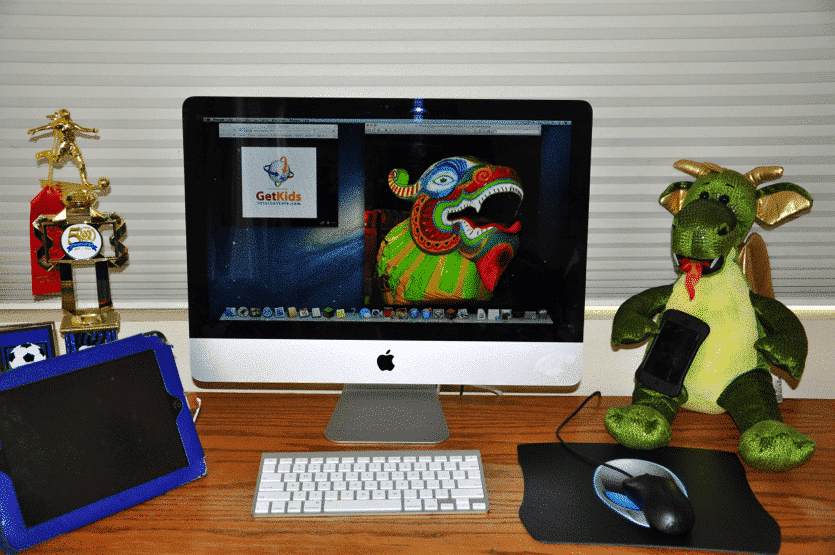
Searched “Dragon”

“Brandon” is a ten-year-old, gifted student. He loves fantasy books and has a few good friends at school. Team sports are not “his thing,” but he is in Tae Kwon Do in the winter and swim team in the summer with his parents’ insistence. Although brilliant, his grades usually slip mid-semester until his parents get after him to better track his homework and limit screen time. Recently, between his usual video games and YouTube surfing, Brandon decided to Google “DRAGON” for sketch ideas. This led him to a sadomasochistic chat room that he compulsively visited for the next two weeks until his parents discovered it. During that time, he made several “friends” with creepy adults who solicited sexual text exchanges and nude photos.

When his parents discovered what was happening they called the police, who then contacted the FBI. By the time they called me for help, they were hoping Brandon wouldn’t be charged with child pornography charges. More importantly, they worried this experience might change his thoughts and feelings about trust and sexuality forever. Brandon’s Internet compulsions left him titillated, ashamed, and confused.

Despite weeks of psychotherapy and increased supervision, Brandon is still distressed and can’t concentrate on his regular activities. He struggles with intrusive images and thoughts about violent sex, feels like he is forever different from his peers, and is worried about how this experience may affect his ability to have “normal” relationships. His symptoms are similar to what I see with children who’ve been molested.

Brandon’s parents, who are excellent parents honestly, are burdened with feeling alone, frightened, and saddened by the loss of their child’s normal pre-adolescent development. Tragedies like these are not often shared outside the walls of therapy, which is why I am sharing it. Brandon’s situation ended better than many other clients I see. In twenty years of clinical practice, I’ve never seen a more epidemic and distressing danger to child psychological health as unfiltered access to the Internet.*

Cognitive Dissonance

The psychological concept, cognitive dissonance, refers to a state of discomfort when one holds beliefs, attitudes, and behaviors that conflict with one another. When we feel this discomfort, we are driven to act in order to return to a state of cognitive consistency or harmony.

Out of my own cognitive dissonance about parenting and technology came GetKidsInternetSafe.com. Simply stated, parenting in the digital age is a difficult and confusing task. It’s time we get busy creating effective solutions rather than reacting AFTER our kids stumble into trouble; trouble that may stick with them forever. Although there are a lot of parents already doing a great job, it’s simply not enough. We need more effective education, intervention, and support on a massive scale. As a mother of three with a large age span in between them, I’m very aware of the dramatic changes in technology just in the last ten years. And just as I had to overhaul my parenting skills and house rules in regard to digital media, you likely do too.

Technology is an excellent tool, and our kids need to be proficient with it to thrive. And proficient they are, resulting in a digital generational divide and shift in power within the home never seen before in history, with our children’s impulsive frontal lobes at the wheel and parents running haphazardly behind trying to put out fires.

What are your fears about online play? How can I help?

Please comment on your concerns below. What are your top three fears? What’s worked for you? What hasn’t worked?

GetKidsInternetSafe.com is designed to help parents get control in an easy, educated, reasonable, effective way, BEFORE the fires are lit. Over the next several weeks, you will receive factual information about screen media and the Internet that will help you make better decisions about child technology use. In addition, I will provide you with tried-and-true parenting techniques to build more positive and cooperative relationships with your kids; no shaming lectures, no expensive and complex systems, just common sense ideas that work. Not only will you be better able to protect your children from inappropriate content, but they will be better prepared and more resilient for the content that leaks past the protective barriers.

I’m Dr. Tracy Bennett, the mom psychologist who will help you get smart about Internet safety. Tell your friends!

Onward to more awesome parenting,

Tracy S. Bennett, Ph.D.
Mom, Clinical Psychologist, CSUCI Adjunct Faculty
GetKidsInternetSafe.com

*details and names are changed to preserve client confidentiality.

I love Ken Robinson’s take on creatively thinking outside of the box to help kids. Watch his TED talk.