People seeking companionship or romantic connections online are falling victim to internet predators. There has been a dramatic increase in recent reports claiming that LGBTQ+ individuals are being purposely targeted for malicious online sextortion crimes. These crimes have led to devastating and long-lasting repercussions for victims and their families. As a result, the Federal Trade Commission (FTC) issued a warning in response to complaints about dating sites geared towards LGBTQ+ community members being infiltrated by sextortion perpetrators.[1] To help ensure your family has the tools to safely navigate the online world, check out our Screen Safety Essentials Course.
What is Sextortion?
The term sextortion (sexual-extortion) falls under the broader category of sexual exploitation. In many cases, sextortion is a form of blackmail that involves the act of extorting things like money and sexual favors through means of manipulation and coercion. For example, a perpetrator may threaten to reveal or expose personal and sensitive information about the victim to others unless they agree to the perpetrator’s demands.
How are people being victimized?
Despite advancements in societal attitudes towards LGBTQ+ community rights, the world can sadly still be a hostile place. That’s why dating apps geared toward members of the LGBTQ+ community, like Grindr, Feeld, and Her, have become popular.
These sites were designed to provide a safe space for both openly queer and closeted people to meet and make connections with each other without fear of harassment or exposure. Unfortunately, recent reports have indicated that an increasing number of apps and websites marketed toward members of the LGBTQ+ community are being infiltrated by sextortion predators.
Blackmail
A typical sextortion scam begins with a perpetrator creating a fictitious account on a dating app or social media networking site using a fake identity and photos. The perpetrator poses as a potential partner or someone looking to make a connection online and attempts to establish contact with another person under the guise of starting a romantic relationship. This is a process referred to as catfishing.
The perpetrator cultivates the relationship with their target to gain their victim’s trust and make them feel comfortable. The process can last for days, weeks, or even months. After establishing rapport, the perp will send explicit messages, photos, and videos and ask for some in return. Once the target shares their personal images and information, the scammer threatens to release it to the victim’s friends, family, or co-workers, or post it online unless the victim does what they say.
The primary motivations behind these types of romance scams can be financial and sexual. Sextortion predators use various manipulation tactics to not only extort money from victims but also to access sexually explicit photographs and messages, for their own sexual gratification. Recent reports have revealed that minors using the app, despite there being minimum age of use requirements, were targeted specifically by pedophiles hoping to elicit child pornography. In both cases, similar methods of exploitation are used.[2]
The FBI has stated that most victims report that initial interactions with perpetrators are mutual and unsuspicious. However, after a brief period, the extortionist will attempt to transition the interaction away from the app and onto private messaging forums. Without exposing their true identities, these online predators will go to great lengths to convince targets that they are legitimate users of the app.
Scammers often use stolen or fake photographs and may even hire a video model to convince their victims that they are interacting with an authentic person. It is very common for perpetrators to befriend victims on social media to access a list of the victim’s followers which typically include family members, friends, and co-workers.[2]
Why are LGBTQ+ apps being targeted?
Experts suggest that individuals using these dating apps are being specifically targeted by predators for a few different reasons. Given the nature of the apps, which are primarily used to foster romantic connections, online predators have a much greater opportunity to collect private and sexually explicit information from their targets. Additionally, since these apps have been designed for LGBTQ+ community members, predators assume that their targets have an even greater incentive to keep quiet about their victimization and comply with demands.
Because these apps are marketed as a safe space, people who are not openly queer rely on them to make connections with others without fear of exposure. As the thought of public shaming and the potential outing of their sexual orientation or gender identity is so profound, these individuals are more easily subject to victimization.
The Fallout
According to the FBI, the number of these cases has been steadily increasing. Experts speculate that the onset of the COVID-19 pandemic and the emergence of hookup-culture has escalated this trend. As the dating world transitioned largely onto virtual platforms, sextortion predators took advantage of this change.
Last year, the federal agency reportedly received over 16,000 sextortion complaints with financial losses totaling over $8 million.[2] In reality, the repercussions of these crimes extend beyond financial ruin. Sadly, the effects of being targeted and exposed by sextortion predators were overwhelmingly devastating for some victims who felt driven to take their own lives.[1] As a result of the seriousness of these crimes, law enforcement officials have significantly increased their efforts to capture and charge perpetrators.
How to Protect Yourself
It is important to be aware of the potential dangers inherent online in order to prevent yourself and your loved ones from becoming victimized. Dr. Bennett believes that providing our kids and teens with the necessary knowledge and skills to navigate these pitfalls before they arise, is the key to avoiding digital injury. That is why we created the Social Media Readiness Course which is designed to empower families to promote safe and responsible practices while avoiding harmful outcomes online. The internet can be an exciting and helpful tool when we are equipped with the proper skills to use it.
Thanks to CSUCI interns, Mackenzie Morrow and Michael Watson for researching the targeting of LGBTQ+ community members in sextortion scams on popular dating apps and co-authoring this article.
I’m the mom psychologist who will help you GetKidsInternetSafe.
The incel movement was discovered by the general population in 2014 after a mass murderer posted on Facebook, “The Incel Rebellion has already begun…” Starting as an inspirational social movement, incels has been tied to at least four mass murders and, most recently, as a mass shooting threat for the October 2019 movie premier of The Joker. Like with other hate groups, radicalized young men use incel ideas to boost their tattered egos and justify sexist and even violent behavior. How can we prevent our kids from being victimized or radicalized by this crazy movement?
What is an incel?
The term incelwas first coined in 1993 and is short for “involuntarily celibate,” a non-derogatory term for people who’ve had a hard time finding an intimate relationship.
The incel movement began when a young woman named Alana was working in a university math department. While she was at her desk, a man walked up and said, “I am 27 years old and have never been on a date.”[1] Alana noticed the man needed someone to talk to, so she listened. She discovered that she too could identify as an involuntary celibate. After she found love, she created an online support group for “INVCELS” who were distressed due to intimacy problems.
Early in the group’s development, a primary rule was adopted that members could not blame others for their problems. Instead, each member was required to commit to self-improvement. At that time, haters and blamers were kicked out of the group.[2] Over time, Alana left, the movement grew, and different sub-groups of incels formed.
Social Movement to Hate Group
Researchers believe that the boasts and posts of social media feed into a hopeless cycle of compare and despair for some users.[3] For the more radical of social media users, there are online forums where one can find validation for their despair. Radicalized incels adopt hateful belief systems typical of a broader online manosphere on forums like 4chan, Reddit, and Voat. Incels overlap with extremist men’s rights vlogs that offer pickup artistry tips and espouse the hateful rhetoric of alt-right and white supremacy groups, inciting suicide among fellow incels, the assault of sexually successful women, and violence toward sexually successful men.
Further spurred by the #MeToo Movement, radicalized incel groups spew hate and use their comradery to threaten and intimidate others. Some stereotype people who have successful relationships as “Chads” and “Stacys.” With young people unsupervised online hours every day, hate group forums can influence vulnerable teens. In my book, Screen Time in the Mean Time, I describe how “the Internet platform is the perfect tool for grooming, behavioral manipulation, and coercive thought control.”
The Black Pill
The black pill is an analogy from the movie, the Matrix. In the Matrix, Neo has two options of pills to take, the blue pillto stay in the Matrix, and remain in the comfort of blissful ignorance or the red pillto face life’s harsh realities.[4] Incels use the term black pill to describe the fatalistic perspective that women control the world, and incels are hopeless to get sex because of biological determinism, meaning they were fatalistically born with intimacy-crippling features like low attractiveness, small penis size, or shyness.[5] They believe they lost their chances of intimacy at birth because they lost the genetic lottery.[6]
Group Think & Radicalization
Online forums offer violent incels a community of like-minded individuals to escalate hateful philosophies. In psychology, we call thisgroupthink, reflecting the dynamic of one’s ethical, moral, and rational values eventually dissolving into the group’s character. Individuals joining a group in search of support are vulnerable to a group’s coercive and sometimes irrational group opinions. Groupthink differs from individual opinions in that members ultimately fail to think for themselves, instead of becoming dependent on group principles.
Mass Murder
In May 2014, a member of the incel group shot and killed six people in Isla Vista, California.[7] His name was Elliot Rodger, and he was 22 years old. Fueled by the philosophies of other members of the group, he felt revenge was his only solution. Rodger felt rejected by women. He blamed handsome people who were happy for his lack of intimacy with women. The Incel community saw him as a hero.
In April 2018, Alek Minassian killed ten people driving through a crowded street. He posted on Facebook, “The Incel Rebellion has already begun… All hail the Supreme Gentleman Elliot Rodger!”[8] Alek carried out the attack for the same reasons Rodger did, hatred for those who did not have intimacy problems.
In October 2015, Christopher Harper-Mercer killed nine people at his community college campus in Roseburg Oregon before killing himself.[9] He too identified as an incel.
In February 2018, another man who was part of the incel community, Nikolas Cruz, was charged with killing 17 people at Marjory Stoneman Douglas High School in Parkland, Florida.[10]
Clowncel
In September 2019, the FBI reported to partners in the private sector about a threat from online incel communities regarding unspecific mass shootings threatened to occur at the premiere showings of ‘the Joker’, slated for October 4, 2019. A September 2019 report by the Department of Defense reported on the same threat.
Those making these threats were reported to be a side group of incels who identify as clowncels. They chose this movie because they resonated with the beliefs of the main character, Arthur Fleck. Arthur is a poor, mentally ill stand-up comedian who is a victim of violent thugs and a society that views him as a freak. In the movie, he retaliates against society by becoming a criminal mastermind known as The Joker.
Support positive online and offline peer relationships rather than restrict unhealthy friendships.
Teach your teen how to avoid cyberbullying by teaching empathy, social and netiquette skills, and complex problem-solving.
Just as parents keep an eye on their teens’ school and after-school activities, they must also monitor their virtual activities.
Model healthy balance and self-care.
Implement healthy eating, sleeping, and exercise habits and explain why that is so important for strength and health.
Love and compliment your kids loudly and unapologetically for all they are.
Reinforce that the self is made up of far more facets than a beautiful face.
Remind your teen that what they see on social media and in advertisements isn’t always the real deal.
Thank you to CSUCI intern, Andrew Weissmann, for teaching us about the incel movement, and how it has splintered off to be a hate group with coercive access to kids. For more information about how to protect your kids from the grooming techniques of cults and hate groups, check out the GKIS article “White Supremacists or ISIS? Are Hate Groups and Cults Seducing Your Teen Online?
I’m the mom psychologist who will help you GetKidsInternetSafe.
Onward to More Awesome Parenting,
Tracy S. Bennett, Ph.D.
Mom, Clinical Psychologist, CSUCI Adjunct Faculty
Works Cited
[1] ReplyAll Gimlet
[2] ReplyAll Gimelt
[3] bbc.com Facebook lurking makes you miserable by Sean Coughlan
[4] medium.com by Ethan Jiang
[5] medium.com by Ethan Jiang
[6] bbc.com/news/blogs-trending Toronto van attack: Inside the dark world of ‘incels’ by Jonathan Griffin
[7] The New York Times What is an Incel? A term used by the Toronto Van Attack Suspect, Explained by Niraj Chokshi
[8] The New York Times What is an Incel? By Niraj Chokshi
[9] The New Yorker The Rage of the Incels by Jia Tolentino
[10] Babe.net by Harry Shukman
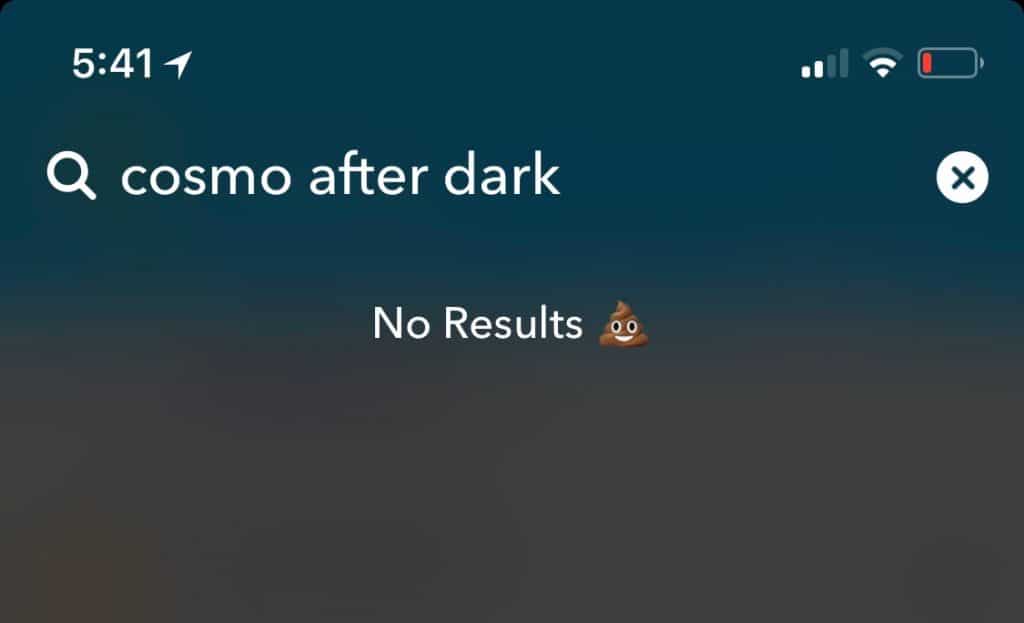
Now that consumers are getting more educated about online content, could the tide be turning in favor of more accountability and better online child safety? Earlier today I got a phone call from an FBI agent friend alerting me to the new Snapchat channel, “Cosmo After Dark,” after a parent called him with concern. This channel is searchable in the Discover feature of Snapchat. The issue became public knowledge when my friend at Protect Young Eyes, Chris McKenna, published his whistleblowing article, “Snapchat Introduces Cosmo After Dark (It’s P*RN).” Todays quick read explores why this is an issue GKIS parents need to know about.
Cosmo After Dark advertises that it is “an X-rated weekly edition that goes live every Friday at 6 p.m. and is exclusively dedicated to all things hot and h*rny.” Not only might your child access this content, they might even be able to subscribe to it! Although Snopes points out that Snapchat has age-gating tools that block “adult” content from users under 18 years old, Chris argues that Snapchat may be getting more desperate and allowing more lascivious content in order to maintain more marketshare. As Snapchat gets more worried about the bottom line, the worry is they may slip in corporate responsibility.
Another issue raised is if this content is Cosmo’s traditional sexy fare or is it actually pornography? You be the judge. Cosmo After Dark articles include:
“The 19 Best Sites to Binge-Watch Porn On”
“12 Songs You Should Have Sex to Right Now”
“The Steamiest Most X-Rated Sex Party Confessions”
Just sexy articles, right? I would argue that our kids and teens are harmed by hypersexual content. Are you comfortable with your teen son or daughter getting instructions for more satisfying anal sex? I didn’t think so.
After a busy day of watching this story evolve between clients, I am happy to say there is a happy ending. Due to parent outcry, Cosmopolitan magazine just pulled Cosmo After Dark. It turns out that our voices matter. As parents get more educated, we are becoming increasingly effective advocates with real influence. Thank you Chris for keeping an eye out for us. Unfortunately, this won’t be the last risk trap on social media.
WHAT CAN YOU DO TO PROTECT YOUR KIDS FROM ADULT ONLINE CONTENT?
If your teen has Snapchat, make sure their birthdate is accurate within the app. According to Snapchat, this will give some protection from inappropriate content.
If you’re worried your child may edit his or her birthday in order to access adult content, Protect Young Eyes reports that you can lock the edit feature by changing the birthdate on your child’s phone until you reach max attempts.
Avoid the whole issue altogether by following the Terms of Agreement on social media apps due to COPPA. If your child is younger than 13 years old, don’t allow them social media yet. Messenging apps and texting is risk enough.
Use sound digital parenting tools like Ourpact, Unglue, and Bark. Filtering content, tracking use, encouraging accountability, and monitoring content not only teaches kids important skills, it also puts parents in the screen driver’s seat so they can stay involved and offer teaching and support along the way.
Get informed about risk and best screen sanity parenting practices with Screen Time in the Mean Time: A Parenting Guide to Get Kids and Teens Internet Safe. It’s not just what you do that matters, how you do it counts too. Although safety strategies are important, forming a fun, cooperative relationship with your kids is key to a happy, healthy, screen safe family.
I’m the mom psychologist who will help you GetKidsInternetSafe.
Once again, America is mourning and devastated from a tragic loss of innocent lives at the hands of a school shooter. Yesterday 19-year-old Nikolas Cruz shot and killed 17 students and injured 14 others at his former high school in Parkland, Florida. He’d been identified as a threat to other students and expelled last year. Buzz Feed reported that both his parents had died, and he was known as a loner who frequently posted about his obsession with guns on social media. He may be the same Nikolas Cruz who wrote on Ben Bennight’s YouTube vlogger site in September, “I’m going to be a professional school shooter.” The FBI conducted an interview with Bennight the day after he reported the comment and again reached out to him yesterday. In response to the tragedy, President Trump tweeted, “So many signs that the Florida Shooter was mentally disturbed, even expelled from school for bad and erratic behavior. Neighbors and classmates knew he was a big problem. Must always report such instances to authorities again and again!” He promised support to America’s children, saying “We are here for you. Whatever we can do to ease your pain.” What is going on and how do we stop it? What do these shooters have in common? What role does gun control, mental illness, online radicalization, first-person shooter video game play, politics, and parenting play as contributors to this violence?
Like all “experts,” I have pockets of advanced knowledge and gaping blind spots. No single authority can tell us how to fix this insidious and complicated issue. Many of us even hesitate to speak out, as we know we will be diluged with trollish insults and inflammatory arguments. But let’s face it. We all have to get braver and speak up. Children’s lives are on the line and our everyday safety has been compromised. I believe there are many factors at play, many of which we can change to positively impact child safety.
Schools
In over twenty years of being a mom and treating kids, families, and teachers, I’ve seen school resources and policies change. We’ve moved from swatting with a paddle, to expensive team treatment plans, to expelling problem students with “zero tolerance.” Class sizes are too big, behavioral issues have dramatically increased, teachers are overworked and underpaid, and administration is understaffed. With one counselor per school (if they’re lucky) and a few school psychologists per district, at-risk kids go unidentified and underserved. By the time these kids hit middle and high school, they are too often suspended, expelled, or sent for independent study in response to problem behavior. This leaves at-risk kids more isolated with fewer supportive resources when they most need it. They cry out lonely, rejected, and angry; left to play first-person shooter games for hours on end with a team of other self-selected assassins.
Where’s the funding for education?
Mental Illness
I’m a clinical psychologist. That means I have a Ph.D. and five years of post-graduate training for diagnostics and treatment. I often get referred the more challenging cases for treatment. Psychologists are the only mental health experts trained for standardized testing and assessment. We are diagnostic experts with powerful assessment tools at our disposal. Even with years of experience and expert abilities, our accuracy for predicting violence is poor. The number one factor for violence prediction is a history of violence. Yet, many school shooters do not have a criminal or violent history. FBI officials agree that taking a threat assessment perspective is best for detecting potential violence, but there is no crystal ball.
Furthermore, even if an at-risk individual is identified, cost-effective intervention is hard to come by. In 22 years of private practice, I’ve seen either no or negligible change in insurance reimbursement for mental health providers. As a result, to economically survive our higher insurance and overhead costs, many of us charge client’s out-of-pocket for treatment. This results in services unaffordable for many families in need, including military families.
Where’s insurance reform and funding for mental illness research, assessment, and intervention?
Inpatient Hospitals and Prison
Federal and state funding for the treatment of mental illness has not been priority since the closure of state hospitals during deinstitutionalization in the 1960s – 1990s. I was a staff psychologist at Camarillo State Hospital in 1996 when my adolescent male unit was the last to leave. I saw mental health treatment move from a state-of-the-art research and team treatment facility to community mental health. Although I believe the intent for more cost-effective treatment was a good one, a majority of our chronically mental ill transferred from the state hospital, to homelessness, to the costly churn of imprisonment. Our most vulnerable citizens have been left to wander cold and hungry relying on the generosity of churches, not unlike the mentally ill in the dark ages. The money did not follow them, nor did the treatment. Instead too many of our mentally ill are in county, state, and federal prisons who offer little treatment. In fact, many of these inmates are put in jail as a mercy booking, meaning they’re housed waiting for the availability for too few psychiatric beds in order to get shelter and food. Not only do they not get treatment, they are also among the most vulnerable for assault by violent inmates. We have more people in jail than any other industrialized country in the world. The enormous churn of Americans going in and out of the prison system is a subject of intense debate for good reason.
Where’s prison reform and funding for the chronically mentally ill?
Violent Video Games and the Internet
Screen use has transformed childhood in all the ways detailed in my book, Screen Time in the Mean Time: A Parent Guide to Get Kids and Teens Internet Safe. One such way is the potential to be radicalized online, as evidenced by the raging manifestos of school shooters Dylann Roof in Charleston and Elliot Rodger in Isla Vista. From this radicalization comes a desire to go “viral” and be famous on the Internet, often in response to being rejected in nonvirtual life. Further, anger and hate are too often fed by unmanaged violent video game play.
Ninety-seven percent of teens play video games and more than 85% of video games have violent content. As with all complex psychological phenomena, different effects happen in different situations with different people. Thus, issues like content, time spent playing, and player vulnerabilities due to family life or mental health must be taken into account when considering effect. This makes for messy factors to control for quality research and controversial opinions about the risks of violent video games. However, meta-analytic reviews of decades of psychological research have found that violent video games can cause aggressive behavior, aggressive thinking styles, and aggressive mood, as well as decreased empathy and prosocial behavior. That doesn’t mean all kids that play first-person shooter games will be violent, but it does raise serious concern about vulnerable kids and overall empathy and prosocial skills.
Where are the laws that protect kids? In response to video game players committing violence, several lawsuits have been filed by private citizens and class actions claiming that video game manufacturers were negligent by selling violent content that is harmful to children. However, few have succeeded due to first amendment rights claims and insufficient evidence related to flawed research methodology or correlational rather than causal research. City ordinances attempting to limit violent game play by unaccompanied minors in public places have also largely failed. Law professors and psychologists continue to argue that the evidence is too flimsy to make solid claims that video games cause mass violence, particularly considering the fact that despite widespread game play, the rate of juvenile violent crime is at a thirty-year low.
Where is legislation for technology risks and psychological research funding?
Limiting Access to Firearms
We can argue all day if it’s safer to have armed school personnel or limit access to firearms overall. But I think there’s one thing we can all agree on in the wake of another mass murder by a semi-automatic weapon. How is it possible that a troubled teen like Nikolas Cruz can legally obtain a semi-automatic AR-15 rifle and enough ammunition to murder so many of his classmates? And why, if President Trump is focusing on mental illness as a primary risk factor in school shootings, did he repeal an Obama-era regulation that would add the names of SSI-registered mentally ill people to a database for gun purchase and background checks?
It’s impossible to overlook that his campaign received $30 million in donations from the National Rifle Association (NRA), leading him to say at their 2017 annual convention, “Only one candidate in the general election came to speak to you, and that candidate is now the president of the United States, standing before you.” “You came through for me, and I am going to come through for you.” If President Trump genuinely believes mental illness plays a role here, then how is it that he’s not working for more sensible gun access laws rather than helping his rich friends get richer? If only the rich lobbyists are being represented by our law makers, than what about American citizens?
Where is campaign contribution reform and sensible firearm access legislation?
Clearly there are no easy answers in regard to violence prevention. There is no single school shooter profile and no single funding option or legislation that is going to stop it. But one thing President Trump and I agree on is that meaningful connection is at the heart of the solution. We need to prioritize and fund issues that impact America’s children. No child in the United States should be afraid to go to school and no parent should panic when they see a district phone call. Character building starts at home, and we need to step up and do even better. It’s time we work collaboratively and make some hard decisions to curb school violence.
Virtual kidnapping scams are on the rise and, since it is difficult to identify the perpetrator, they are unlikely to go away. Last week a Facebook friend posted about a terrifying telephone scam. She encouraged me to share her story. Be warned, it’s really upsetting, and it’s a true story! It’s worth the read so you won’t fall emotional and financial victim to scammers, phishers, and extortionists.
“Mommy! Mommy! Mommy! He’s got me! He’s got me!”
A mother’s WORST NIGHTMARE, and it happened to me Saturday morning.
I was at home working in my office when my cell phone rang. I picked it up and heard a girl screaming and crying, “Mommy! Mommy! Mommy! He’s got me! He’s got me!” Then a male voice saying, “Shut the f__ up b___!” The girl’s voice sounded like my daughter who is living away for graduate school.
The world beneath me fell away. I can’t tell you the fear I felt. This VILE man spoke to me in a thick accent telling me what he is going to do to her, and after he’s finished with her he will send her home to me in pieces if I don’t give him money right now.
I kept talking to him on speaker while dialing 911. The dispatcher said, “Stay on the phone, police have been dispatched.” Within minutes a special crime unit arrived.
For the next twenty minutes, I spoke to the “kidnapper” while the police coached my questions and traced the call. I demanded he put her on the phone and text me her picture. He continued to threaten terrible things. Meanwhile, our calls to my daughter went to voicemail, so they sent Arizona police her work.
My husband and other daughter could see my texts, CALL HOME NOW!!!! URGENT!!! and were freaking out. Neighbors told them the police were everywhere, and they couldn’t get through.
Finally she texted after the police located her at work. They checked her apartment and verified it was safe. I broke down crying.
I don’t want ANYONE, EVER to go through what we did! The fear and possible reality were there for me for what seemed like hours! All I have thought about ALL weekend is “These VILE people are putting someone else through this!” Please share this story about the new horrible scam out there.
Source of the Theft
A few days after my friend posted this story, I followed up with her. She informed me that another family from the same university was scammed by the same man minutes after he hung up on her. They were about to wire $7000 before they were able to contact their daughter. This incident made her wonder if the information was gathered from hacked university data. A few weeks later, another Facebook friend posted this one:
Today my parents got a phone call from someone pretending to be my son. He told my dad that he went to the store to get cold medicine with a friend from school who was driving, they got pulled over, and his friend had pot in the car, so he was arrested and now was in jail. He begged my dad not to tell “my mom.”
My dad asked a few questions and was thinking it may be a scam, but he said the person on the phone sounded young, so he wasn’t quite sure. After a few questions, the kid hung up. We’re pretty sure that he would have asked for money to wire or something. My son is safe at school (I checked). But wanted to pass this on to you guys. Maybe this scam has been going around? Obviously, they are targeting older people, and I can see some people falling for it. My dad is pretty sharp, and it still tricked him at first.
Other Scams to Look Out For
Other types of extortion scams involve the perpetrator posing as the IRS or a crime cartel framing you for a false crime that will result in a suspension of your bank accounts, criminal charges, or a threat to you or your family’s safety if you do not send money. For instance, there have been reports of victims on vacation receiving a call in their hotel room stating that they are being targeted by a drug cartel and should turn off their phones to remain safe. While the victim is out of communication, the virtual kidnappers demand money from friends and family.
Another type of scam involves ransomware, which is a virus that infects your computer and encrypts the data. The scammer sends a message threatening to keep your hijacked computer data unless a ransom is received.
To avoid this kind of virus:
learn how to identify typical phishing strategies,
do not click on unknown email links or websites,
install premium security software, and
keep your software updated.
It is also important to backup computer data on a secure cloud-based backup service with revision history. Even legitimate websites can be hacked to spread malware, so awareness and preparation are key.
Here are GetKidsInternetSafe tips to avoid being a victim of virtual kidnapping:
Stay up to date about the scams popular in your area.
Set your social media profiles to private and avoid giving out personal information. Teach your kids to do the same with GetKidsInternetSafe techniques.
Occasionally cleanse your social media profile of photos. A backlog of photos tells a detailed blueprint of your family’s activities and personalities. When viewed by a perpetrator, those details can be used against you.
Keep your telephone landline.
Download GPS location-sharing apps to family member phones, such as Find My iPhone, Find Friends, or Life360.
Create an emergency plan, which includes a list sharing of names and phone numbers of workplace landlines, friends, and extended family. Create and include family nicknames to use in case of a need for emergency telephone identification.
If you get a suspicious call, assess its authenticity. For example, if the call is not from the victim’s telephone and they want you to stay on the phone until the money is delivered, be suspect.
If they are on the victim’s phone, recognize that the phone may have been hacked and forwarded to another phone or lost or stolen. Just because the number shows up as your child’s phone doesn’t necessarily mean the scammer has possession of the phone or the phone’s owner.
Recognize that scammers often ask for money to be wired through services like Western Union or online currency like Bitcoin, as these methods of payment are untraceable.
Stay calm, slow the caller down, and do not share any personal information. Ask them to answer a question only the victim would know. Don’t challenge or argue with the caller. Buy time by saying you are writing down the demand and need time to comply.
Use another device to call the police while on the phone.
Ask questions and, if feasible, demand a call from the victim’s phone or a picture of the victim.
Get to a safe place as soon as possible.
These tips do not constitute legal advice from GetKidsInternetSafe. Although many of these suggestions are offered by the Federal Bureau of Investigation website, recognize that nothing outweighs your instincts. Err on the side of caution and seek expert help from your local police department or the FBI.