
Need peaceful screen time negotiations?

Get your FREE GKIS Connected Family Screen Agreement

cyberbullying

How to Create an Open, Honest Screen Media Family Conversation Like a Boss


2261753548_9a9c551a28_z

Teaching kids what they need to know to be best prepared for Internet safety isn’t an easy task for parents. To start with, parents need to form that super-charged connection with their kids so they have BIG influence. One way to connect AND influence is to sprinkle hot tech topics into everyday conversation. My GetKidsInternetSafe blog conveniently serves up weekly information to fuel connecting conversation. Worried about Internet predators, cyberbullying, and online porn? Teach them the assertiveness and problem-solving skills during your chats. Fueling that connection while implementing powerful parenting strategies like those offered in the GKIS Connected Family Online Course create an effortless GKIS family culture. Wondering how to get them jazzed and engaged? Here are some quick tips on how to get the conversation started:

Create an open, honest, and positive family environment.

  • If your kids have a different opinion than yours, have a sense of humor and go with it. Don’t scold or shame them. Encourage them to try out different perspectives.

Play HIGH-LOW.

  • Each person shares the HIGH part of their day and the LOW part of the day. This is a tried-and-true conversation starter!

Start young but recognize it’s never too late to get started.

  • Consider the age of your child and simplify your language accordingly, but don’t be afraid to talk to little ones about hot topics. Sharing your values, opinions, and problem solving style is an awesome opportunity to connect and teach.

Get out there and get tech-savvy.

  • Before your child gets a social media app, test it out first so you know the in’s and out’s. Be eager to let them teach you.

Seek them out to share funny memes and videos.

  • This will quickly become a fun two-way street, an awesome opportunity to engage and stay engaged!

Initiate the conversation with the intention to listen.

  • Don’t lecture, shame, or threaten. If you start with “kids these days…” you’re headed in the wrong direction. Connect rather draw lines between you.

Inform them about hot topics.

Structure conversations about complex situations as a series of legitimate options.

  • Stress that there is rarely one “right” way to respond and that you celebrate mistakes and failures. That’s how we all learn.

Recognize that, in fact, “everybody” IS doing it even if you won’t let them.

  • Have empathy for their dilemma but still stay firm.

Praise.

  • Look for demonstrations of good moral reasoning, assertiveness, and leadership and be generous with worthy compliments.

Don’t scare them but share that people are often inappropriate and unsafe to talk to online.

  • Role-play how to assertively manage these situations. For example, teach them how flattery is used as a manipulation technique.

Can’t figure out how to bring up an uncomfortable topic?

  • Let your kids “overhear” a conversation with your partner at dinnertime. Yes, the walls do have ears.

Be patient.

  • Be prepared to have many small conversations over time rather than one big one.

And there you have it! Some actionable, easy ideas for how to be awesome, even at the end of the day when you feel like an overworked, bedraggled turnip. Please don’t forget to say hi to me on Facebook. I’ve been a little social media lonely lately.

I’m the mom psychologist who will help you GetYourKidsInternetSafe.

Onward to More Awesome Parenting,

Tracy S. Bennett, Ph.D.
Mom, Clinical Psychologist, CSUCI Adjunct Faculty
GetKidsInternetSafe.com


Photo Credit:

Mommy Sandwich by Theresa Martell, CC by-NC-ND 2.0

The Public Shaming of Ashley Madison

dreamstimefree_17531918-1024x794

I just got back from a podcast interview with AskaLoveGuru.com founder, Dr. Wendy Walsh, the perfect person with whom to discuss today’s scandal. Did you hear that hackers stole and threatened to publish user databases, financial records, and other proprietary information from the cheater website Ashley Madison (“Life is short. Have an affair”)? Over 37 million users could be affected!

News reports claim that hackers demanded that Avid Life Media take the AshleyMadison.com and EstablishedMen.com websites down or more information will be leaked. Public shaming unleashed!

The moment I heard this report I imaged hoards of trembling, middle aged adults being marched naked through the city by a twenty-something in Converse ringing a bell above his head yammering, “Shame … shame … shame” a la Game of Thrones.

How do you feel about this modern-day vigilante justice?

It turns out that the hackers are actually calling out Avid Life Media for reportedly charging members $19 to delete their profile and usage history, yet still maintaining name, address, and purchase details on their server. The threat from hackers calling themselves The Impact Team reads, “Too bad for those men, they’re cheating dirt bags and deserve no such discretion. Too bad for ALM, you promised secrecy but didn’t deliver.”

Is this justice or another form of cyber bullying? If you’re cheating on the Internet do you deserve to be publically outed? Will hitting Avid Life Media in the pocketbook assure more ethical corporate behavior in the future? Is this David calling out Goliath? What if these hackers were threatening to out KKK or NAMBLA members? Would that change your mind at all?

Public shaming has been on my mind often lately. And honestly I am a bit conflicted. I like to think that most of us manage our impulses from an internal sense of right and wrong. However, I’ve seen some really bad behavior lately from people whose conscience clearly went out for happy hour in the 80s and never came back. For those people it seems public shaming may be the sole source for limiting terrible behavior, cruelty that harms innocent others.

And I have to admit; I wasn’t above threatening public shame on my teenager to encourage her best judgment while she was in high school. My poor child was told on more than one occasion, being from my hometown, that Mom would hear of her public shenanigans should she have any temptations to have them. It mostly seemed to work too.

So here’s my main point. In general, I think using the Internet as a vehicle for public shame is evil. Show me an adult who doesn’t have regrets, and I’ll show you that their gray matter isn’t firing. Who’s right is it to judge?

Furthermore, the position of the person doing public shaming is often far from accurate. A single individual’s perspective is rarely the whole story. What if somebody decides to throw your name in the Ashley Madison list just for giggles? Or what if a hacker decides that you deserve a public lashing for your political views, your religion, or your hobbies? Does being controversial or having enemies justify a breach of your privacy? Or, even worse, extortion?

As a woman who values civil liberties, I abhor the idea of contemptuous computer geniuses being my judge and jury. After all, what gives the self-selected the moral high ground? As founder of GetKidsInternetSafe, I see ample evidence that Internet vigilante mobs are rarely on the side of what is accurate, compassionate, or just. Yet with so few effective Internet regulations, gaps are ripe for vigilante correction.

All in all, what’s most important is what happens in our own homes and communities. It’s about how we treat each other. Tonight we can be assured that many married couples had some interesting conversations about cheating and digital floggings; conversations that we all probably need to have more often, conversations that involve true intimacy, digital privacy, and why we should beware of the dangerous power of the Internets.

I’m the mom psychologist who will help you GetYourKidsInternetSafe.

Onward to More Awesome Parenting,

Tracy S. Bennett, Ph.D.
Mom, Clinical Psychologist, CSUCI Adjunct Faculty
GetKidsInternetSafe.com

What We All Need to Remember About Public Shaming and Parenting the Suicidal Teen


Screenshot-2015-06-07-11.48.43

It’s happened again. Another hopeless teen chooses suicide possibly in response to cyber bullying, and this time it is tragically from her dad, a dad who posted a public-shaming video of Izzie Laxamana sitting defeated with her beautiful black hair blanketing the floor around her as he scolds her for “getting messed up.” What was she thinking jumping off the 48th Street Bridge? What was her dad thinking?

None of us will every know, but I suspect neither of them were thinking clearly. As a mother of three, psychologist, and creator of GetKidsInternetSafe I treat the suicidal teen and unthinking parent everyday. And before we rant self-righteously about what a monster this grieving father was, take a moment and reflect on your less-than-stellar parenting moments, those times you ranted, or humiliated, or hit. Recall your desperation, your fear, and your hope that this time your kids would actually listen. Because of this one impulsive intervention, maybe they’d steer clear of what was looking like a careless leap into the lake of entitlement, cruelty, or peril.

Let’s face it. Nothing makes us more crazed than our love for our babies, love that is tinged with shame and fear that we are not being our best parent, that we failed in our efforts to protect them from the dangerous things in the world. We let them watch that violent movie or allowed too much access to friends on social media who were poor influences. We did it because we wanted to make our kids happy. They begged and pleaded and it was a sweet opportunity to let them know we love them and listen to their feelings and desires. They told us to trust them, and we did. Or that time we went too far when they didn’t pick up their backpacks from the billionth time, threatening to retire as their parent or never let them do anything fun again, ever.

If you were really honest, can you say that you have the perfect formula of discipline and affectionate connection dialed in? Because if you can say yes, then your kid is either a robot or you are in deep denial. After all, the best way to teach our kids is to allow them, and ourselves, to fail – and recover, with humility, validation, and self-compassion.

The psychological research is squarely in favor of authoritative rather than authoritarian or permissive parenting. Being authoritative means being attentive, consistent, warm, strict, validating, and forgiving; not a tyrant demanding of blind obedience and not a friend accepting of all choices. Sometimes that means parenting with affection and humor. Other times it means laying down a consequence that your kids will be really angry about. But most often, it means gently guiding them through a protected path while letting them know you love them through it all, achievements AND mistakes. That includes sharing your own accomplishments and failures and limiting their exposure to content and people that pose risk or may come between you and your gullible child.

As I sit here, my heart aching from this beautiful lost child and her tortured father, I’d like to share my guess of the vulnerability this dad caved to that contributed to the loss of his daughter. Fear. In twenty years of practice I have learned to keep a keen eye out for the one thing that people seem determined to make happen, and that is to make their biggest fear come true.

I promise you it happens to all of us. Those who fear abandonment will challenge their loved ones to leave in the most ingenious of ways. Those who fear infidelity will accuse and threaten until their loved ones throw up their hands and stray. Those who fear disobedience will smother until survival depends on an epic reach for independence. Those who fear rejection will permissively allow until their loved ones to beg for boundaries.

If you are rolling your eyes in denial that you would fall victim to fear, I suspect you’re in the most danger. And if your wide-eyed and swallowing all that this article is offering, I suspect you may also need some support. Heck, if you’re breathing you deserve a hug today. Because life is hard and parenting well is even harder.

But rest assured that there is good news about fear. With patient reflection and an open heart, it doesn’t take much to identify the fears that threaten to take over the wheel. And from those insights, one can seek out the support they need to be better, do better. We can’t do this alone. If you worry you haven’t set a firm safety plan for screen use in your home, check out the GetKidsInternetSafe Screen Safety Toolkit to get started TODAY.

I’m the mom psychologist who will help you GetYourKidsInternetSafe.

Onward to More Awesome Parenting,

Tracy S. Bennett, Ph.D.
Mom, Clinical Psychologist, CSUCI Adjunct Faculty
GetKidsInternetSafe.com

This news report states Izzy wrote suicide notes on her iPod, including one to her dad saying she loves him very much and he is not responsible for her actions. Apparently her dad did not post the video. Izzy gave it to a friend who posted it on social media. An investigation revealed that there were several contributing stressors, including a history of bullying and embarrassment about sending a selfie in sports bra and leggings to a boy at school:

For my cautionary tale about selfies being passed among teens, check out http://goodmenproject.com/featured-content/hey-dad-your-twelve-year-old-daughter-has-a-nude-out-wcz/

YouTube Shaming Doesn’t Rehab the Cyberbully, But Kindness and Education Just Might


BLOGBC9cyberbullydad

Did you see the YouTube video of the Minnesota dad defending his 14-year-old Black-American daughter from racist Snapchat cyberbullies? It went viral and gained over 7 million views! Instead of standing by, he took matters into his own hands. Read today’s GKIS article and see if you agree with the way he handled it. Also, find out what we at GKIS think the internet hates.

How a Dad Defended his Daughter Against Cyberbullies

Bradley K’s daughter and her friend were sending Snapchat selfies to friends when freshman twin boys viewed them at a party and responded with racist, sexist giggling comments. She showed her parents who were horrified and recorded the snaps. They then tried to contact the boys’ parents on several occasions, even knocking on their door.

When the boys’ parents didn’t respond, Mr. K went to the police. The police investigated and shared Deron P’s (the dad of the boys) cell number with Bradley K. Mr. K left a message for the boys’ parents, only to receive a series of verbally abusive responses. Mr. K was furious and threatened to post the voicemails on YouTube. Mr. P reportedly replied, “I don’t care.”

So, Mr. K posted them.

The Fallout

After the publication of the YouTube naming Mr. P and the high school his boys attend, news reports stated that Mr. P lost his job and was admitted for detox from prescription pills and alcohol. The P family also released the following statement:

“The P family is not racist, nor do we use the “N” word lightly in our household. What happened was very unfortunate for both families, and we hope each family can heal and move on from this. There is no excuse for how Deron P acted, and nothing can take back the words he said to Brad K.”

Isn’t this dad bullying back?

Due to my experiences as a mother, clinical psychologist, and professor at CSUCI, I created GetKidsInternetSafe to support kids and parents in exactly this kind of situation, which are increasingly epidemic in our unregulated online culture. As a result of my expertise, people come to me for my specialized GKIS parenting programs and informational support. In this capacity, I received an email from a good friend with this news report asking what I thought of Bradley K’s posting. She said, “Isn’t this dad bullying back?”

Upon watching the video my heart goes out to Bradley and his daughter. He is clearly hurt and angry and has every reason to be. I’m a mother and I know the almost-crippling rage that burns when somebody hurts my child. I TOTALLY GET IT.

And the racist and sexist verbal abuse that this beautiful teenage girl had to endure…my thoughts play like a slide show of the hundreds of cyberbully stories I have helped young people process in my clinical office. I ache with empathy for the pain kids experience at the hands of their impulsive peers; pain that becomes woven into the tapestry of how they view themselves, their bodies, and their very identities. Like Mr. K, I am angry at the permanent damage that is being inflicted on our kids over screen media.

But here’s the kicker; I also treat the cyberbullies. In fact, more times than not, the victims have retaliated or acted badly on social media themselves. Victims often respond by perpetrating back or passing the abuse to another peer. And so on, and so on, and so on. Each child becomes a desensitized and sometimes monstrous participant, usually under parents’ noses.

What do you think of Mr. K’s choice to publicly air this incident?

He stated his intent for the Ps to “own” their racism. Considering the content of the statement released by the P family, that ownership simply did not happen. The children involved are now held up for public scrutiny for the public to debate this very real, very painful, and very common issue. The victims and cyberbullies will be forever paired with this shameful, brutal, and highly publicized incident.

I don’t vilify Mr. K for making the decision he did. He tried civilized means of resolution only to be verbally assaulted himself. Furthermore, he had no way of knowing he would get 7 MILLION views.

And my opinions about Mr. P? Clearly the man has serious substance abuse issues and wrestles with hate. My father taught me it is never OK to kick those who are already wounded. Assert myself, yes, but brutalize back, no. I’d like to think I wouldn’t make Mr. K’s choice myself. But having addiction in my family has taught me the hard way that addicts can provoke the worst from us.

My passionate feelings about this incident have little to do with the parents actually and more to do with the children. These boys are 15 years old! They were at a party showing off for friends harassing girls they didn’t know. They were clearly raised with ignorance and hate and verbal abuse. They were likely taught that this behavior is what men do. And any 10-minute Internet surf session shows us that this revolting behavior is modeled to our kids hundreds of times a day online. These goofball boys’ split-second decision has resulted in the financial ruin and public humiliation of their entire family; a piercing punishment indeed for 30 seconds of poor judgment.

Here is what you and your kids need to know about the Internet:

THE INTERNET HATES

The Internet hates privilege. It hates poverty. It hates women. It hates men. It hates puppies. It hates children. It hates race. It hates culture. It hates anybody and everybody, everywhere and all of the time. The Internet spews all that is inside of us – all that is vile, ugly, and hurtful – all that is loving, beautiful, and nurturing.

And kids get mixed up. They can be TERRIBLE at determining what is funny and what is brutal. Kids need to be taught humanity, generosity, and assertiveness. They need to be taught by those who most love and understand them, their family. They need to fail and succeed, only to fail again before they get it right.

And sadly, some parents are TERRIBLE at parenting. These parents need to be taught humanity, generosity, and assertiveness themselves. So many of us get lost in our jobs, our relationships, our finances, and our addictions. We all sometimes lose our way to some degree or another. We all need support and love and understanding to find our way back. Like our children, we need to fail and succeed, only to fail again before we get it right.

Mr. K is clearly an intelligent and loving man. Was it his responsibility to teach Mr. P? Was it the police officer’s job? Perhaps the school staff should have intervened more effectively.

I don’t know an easy answer to this. But I do know that our kids saw us buy an 86-year-old stranger and his wife their dinner this week for his birthday. We didn’t know him, and we asked that the server not point us out. But what a gift to us to see the old man light up when he was told about the gift. And to our delight, we watched the 20-year-old server love all on him (“He’s a regular!”) and then witness no fewer than six other people from the restaurant come and shake his hand.

Our kids watch us love on our pets, talk kindly to our neighbors, hug and kiss each other, and validate them when they feel hurt, angry, or confused about the actions of others. When they act terribly toward each other or others, we patiently reprimand them, encourage better problem-solving, and reassure them that it’s ok to make mistakes if you learn from them. Anger, frustration, and remorse are normal and must be validated rather than shamed. We make sure they know our values and challenge them to develop opinions of their own. We are not perfect parents, but our kids absolutely know we are there to listen and support them through success and failure.

Please, in the wake of tragic news events like this one, do the world a favor and take the opportunity today to pay a little kindness forward to somebody in your life, stranger or kin. Love and education are how we spread kindness, not public shaming and humiliation. And please, most of all, protect and guide the children, cyberbullies and victims alike. Their prefrontal lobes are not done developing until they are 23 years old! We have to lovingly guide them knowing that perfection is not a reasonable expectation of anybody, especially of impulsive teens.

I’m the mom psychologist who will help you GetKidsInternetSafe.

Onward to More Awesome Parenting,

Tracy S. Bennett, Ph.D.
Mom, Clinical Psychologist, CSUCI Adjunct Faculty
GetKidsInternetSafe.com

Photo credit:
Copy of old pictures 232, by Mighty mighty bigmac, CC by-ND 2.0

Is Your Child a Bystander or a Cyberbully? A GKIS Guide to Empowerment.

cyberbully (1)

We’ve all read about cyberbullying and know it’s a bad thing. But do you know that recent surveys report that more than half of teens have been cyberbullying victims? This week’s GKIS article is an awesome start to an important conversation – what should parents do to help their kids avoid being the victim of cyberbullying?

THE BYSTANDER EFFECT

blog31bystander The bystander effect refers to the phenomenon of how people are less likely to respond to a person in distress if others are present. The larger the number of bystanders, the less likely anybody will get involved. In other words, people tend to look to others for action instead of acting themselves. Another word for this psychological principle is the diffusion of responsibility,

The most common illustration of the bystander effect is the case of Catherine “Kitty” Geovese. Kitty was a young woman who was attacked and robbed in New York City in 1964. Although as many as 37 people witnessed the crime from their windows and heard Kitty screaming for help, nobody helped. One man, however, did yell, “Let that girl alone!” causing her attacker to flee and Kitty to crawl to her apartment.

Kitty’s attacker, Winston Moseley, then returned ten minutes later to kill her and steal $50. The attack took 30 minutes. A neighbor finally called the police after the final attack, resulting in an ambulance arriving 75 minutes after the first assault. This event suggests that if the neighbors weren’t aware of other onlookers, maybe somebody would have done more to help or intervened sooner.

How does this relate to cyberbullying?

blog31nobullies

For any single cyberbullying incident, there are various levels of participation. Many incidents involve an assessment of other online bystanders.

These include:

  • The perpetrator who posts the harmful content (with varying levels of malicious intent)
  • Those who encouragingly “like” or publicly comment on the post
  • Those who encouragingly comment via backchannel chat
  • Those who share or “favorite” the post
  • Those who repeatedly bring the content back via online sharing or in the form of gossip or face-to-face bullying. (Repeat sharing sometimes goes on for years!)
  • Those who view and “friend” or remain “friends” with the cyberbully online or offline
  • Those who copy the cyberbully’s technique
  • Those who view the cyberbullying incident without further action
  • Those who view the cyberbullying incident and comment their protest via backchannel chat
  • Those who view the cyberbullying incident and publicly comment their protest
  • Those who flag the content as inappropriate or request Web mediation
  • Those who request adult intervention through parents, academic staff, or law enforcement

Why do kids choose not to intervene?

So many possible responses! And it gets even more complicated from here. Not only are there many options to choose from about WHAT kind of response to make, but there are several reasons kids give WHY they make their decisions.

Robert Thornberg (2007) cites the following seven concepts associated with passive or non-intervention bystander behavior:

  • Trivialization: The child doesn’t consider the incident serious (often because cyberbullying is so common children are desensitized).
  • Dissociation: The child feels they are not involved in the situation or is not a friend of the cyberbully or the victim.
  • Embarrassment association: The child doesn’t want to make the victim more embarrassed or doesn’t want to get embarrassed themselves (stage fright).
  • Audience modeling: The child looks to bystanders for the social norm.
  • Busy working priority: The child considers doing other things that are a higher priority than helping.
  • Compliance with the competitive norm: The child considers social media etiquette or politeness more important than helping behavior.
  • Responsibility transfer: The child ascribes more responsibility to other bystanders than themselves (e.g., online peers who are more involved with the bully or victim or online viewers with more authority).

What should a parent do?

blog31daughter

Children need engaged parents to help them sort through these options to choose what’s right. That doesn’t mean parents should lecture about what’s right and what’s wrong, punish them, or take over. Kids need parents to help them work through complex problems to find the best solution. If the first choice doesn’t make a difference, try the second, the third, and so on. The important thing is to help each other through it.

What should parents encourage kids to do in a cyberbully situation?

blog31boyteen

  • Assess their influence potential on the cyberbully. If they are allies at school, it may be worth it to reach out and ask the friend to remove the post or lay off the negativity.
  • Assess their influence potential on the victim. Reaching out to help somebody who is hurting is a powerful maneuver. Even if the victim is not a friend, it helps to hear that you’re not alone.
  • Reach out for expert support. Simply flagging the content online may be enough. Reaching out to offline authorities is also an option. Educate your child about the opportunity for anonymous reports and making a real difference.
  • Never bully the bully or escalate the situation. Sometimes that’s just what the bully is looking for and then your child may become the victim.
  • Do SOMETHING. Being observant, knowledgeable, and willing to think through your options is powerful.

And most importantly of all…parents please remember, what works in your adult world does not always work in your children’s worlds. Ultimately, they are the experts on what may make a positive difference, you are simply the facilitator.

I’m the mom psychologist who will help you GetKidsInternetSafe.

Onward to More Awesome Parenting,

Tracy S. Bennett, Ph.D.
Mom, Clinical Psychologist, CSUCI Adjunct Faculty
GetKidsInternetSafe.com

Works Cited:

Thornberg, Robert. “A Classmate in Distress: Schoolchildren as Bystanders and Their Reasons for How They Act.” Social Psychology of Education 10.1 (2007): 5-28. Web.

Photo Credits:

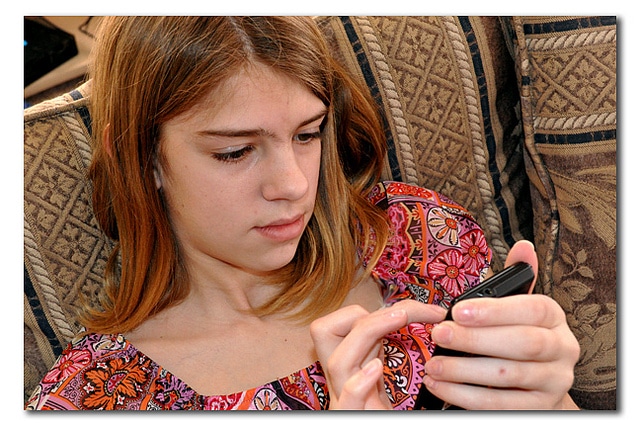
Tween Cell Phone Texting, Carissa Rogers. CC by 2.0Tiles by José Sáez, CC by 2.0
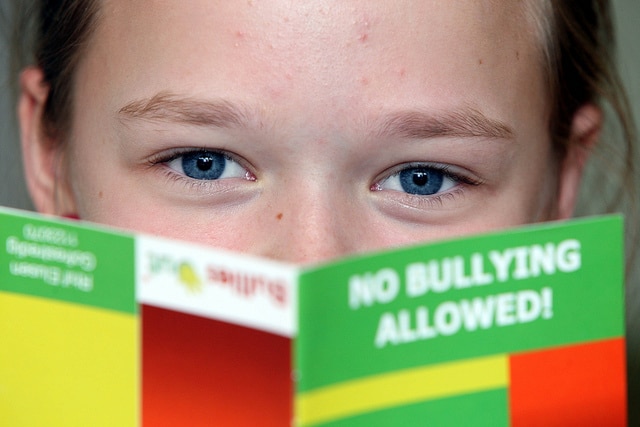
Working Word, CC by 2.0
J.K. Califf, CC by 2.0
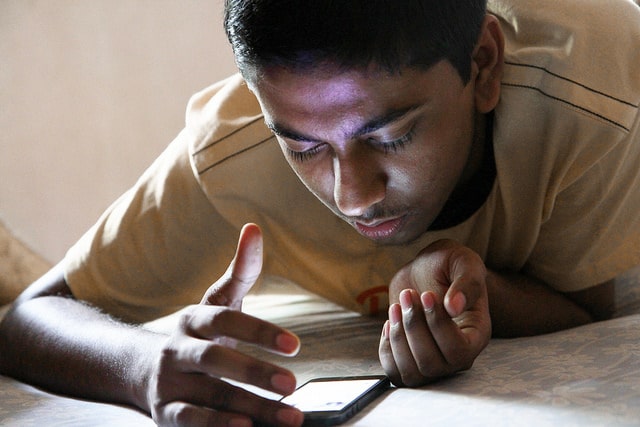
Smartphone Teen by Pabak Sakar, CC by 2.0