
Need peaceful screen time negotiations?

Get your FREE GKIS Connected Family Screen Agreement

child pornography

If You Use Social Media, Beware of Sex Traffickers

Reading today’s GKIS article will likely be shocking, horrifying, and frightening. If you are reading it for my Social Media Readiness Course and have not discussed these issues before, please seek out a parent or teacher to help you decide if it’s right for you to read it. If it isn’t, the adult can take the course quiz questions for you that apply to this article. I included this article in your lessons because I believe this is something social media users must know about so they can protect themselves. If they are not ready to learn about sex trafficking, they are too vulnerable to being tricked by criminals online and not ready to face the risks of social media.

What is Sex Trafficking?

Sex trafficking refers to the act of tricking or forcing someone into sex with paying customers. Traffickers typically lie, threaten violence, or engage in debt bondage (demanding services until a financial debt is paid off).

Although most Americans believe human sex trafficking is only a problem in poor countries, it happens in America too. Increasingly, kids from all types of families are being lured using social media. All it takes is smartphone access.

How likely is it that there is human sex trafficking in my town?

Two types of sex trafficking defined by the Trafficking Victims Protection Act of 2000 include domestic minor sex trafficking (the exchange of sex with a child under the age of 18 for the gain of cash, goods, or anything of value) and commercial sexual exploitation of children (such as exchanging images of child sexual assault, prostitution, child sex tourism, and child marriage).

In a 2014 report conducted by the Urban Institute, it was estimated that the underground illegal sex trade is bringing in profits as high as $290 million in Atlanta.[1] Other top-earning cities include Chicago, Las Vegas, Memphis, and New York City.

By grooming kids on social media and texting, traffickers have easy access to kids from any town. Common methods used to recruit and control victims include faking romantic interest (pretending to be the child’s boyfriend), emphasizing that nobody else understands them like they do, discouraging women from “having sex for free” (convincing them the money they will get paid is a good thing), and promises of expensive gifts.[1] Once the trafficker gains the child’s trust, it’s easy to set up a live meeting.

How does a trafficker obtain a child’s cooperation without their parents knowing?

All it takes is a curious teen and a motivated trafficker to create an online relationship that can lead to exploitation (using the child to earn money). Consider thirteen-year-old Savannah. Her parents never got around to setting up parental controls on the laptop she got for her birthday. One day she visited a website that was offering sugar daddies to pay for things and quickly fell under the influence of a sex trafficker.

“I don’t know why I did it . . . I didn’t know that I would have to have sex with them. I thought they would just buy me stuff because I was pretty,” claimed the attractive, well-spoken THIRTEEN-year-old girl. She had no idea what she was getting into. “Even as they were taking me to the hotel, I still wasn’t really sure what was going on,” said Savannah. Savannah said that if she didn’t cooperate, they would hit her, hold a gun to her head, and threaten to kill her. She lived in constant fear as a hostage because she was fearful of speaking out.[2]

Another story involves Teresa. She was like any other fifteen-year-old girl entering ninth grade. She lived in Detroit, and her dad had a high-paying government job. To lure her, a trafficker had a boy at her school pretend to like her. These criminals had been watching Teresa for a while before making their move on their “perfect” target. Teresa developed a crush on the boy who showed her attention and would tell her how beautiful she was. Then one day he offered her a ride home from school. She didn’t even think twice about the offer. Unfortunately, he never took her home.

Instead, he took her to an apartment where she was drugged and sexually assaulted. They used photographs of the assault to blackmail her and force her into sex slavery for months. They stalked and monitored her constantly and threatened that if she told anyone they would kill her family. At night they would sneak her out and take her to different homes. “Sometimes they were high-class homes, mansions, sometimes even politicians or business owners,” she stated. Ultimately, she was able to escape when her father was relocated for work. She never told her family what happened and to this day lives with the trauma.[3]

What can you do TODAY to GetKidsInternetSafe?

Insist that your child (or student) passes the GKIS Social Media Readiness Course

In 2023, the American Psychological Association released a Health Advisory on Social Media Use in Adolescence that offered recommendations to families for safer social media use. One of those recommendations was, “Adolescents’ social media use should be preceded by training in social media literacy to ensure that users have developed psychologically-informed competencies and skills that will maximize the chances for balanced, safe, and meaningful social media use.” Nine years before this recommendation, Dr. Bennett offered screen safety tools to families. Our Social Media Readiness Course covers the social media risks teens must know to keep themselves safe and offers psychological wellness tools to optimize the evaluation, problem-solving, and refusal skills necessary for safety.

Provide education about online risks and have ongoing discussions.

As a psychologist, much of my work starts with psychoeducation or teaching people about the issues that lead to harm and how to achieve wellness. People can only move to independent problem-solving if they understand the issue from an informed perspective.

From there, I move into teaching and skill-building. I walk kids through the security risks of social media, such as having public versus private profiles, posting with identifying information, having contact with strangers, and posting location information from geotagged photos or logos on clothing.

Once kids learn the risks, they get more serious about self-protection. GetKidsInternetSafe articles, like “White Supremacists or ISIS? Who’s Seducing Your Teen Online?” are awesome resources for education and immediately applicable tips.

Teach psychological wellness tools and encourage frequent practice.

Increasingly, teachers, parents, and mental health experts are teaching kids mindfulness and cognitive behavioral tools to help with healthy emotional identification, insight, and management. These tools help inoculate kids from the vulnerabilities that bad actors online exploit. Learning the tools, like those offered in the Social Media Readiness Course, is critical before using social media platforms including YouTube, TikTok, Instagram, Snapchat, Twitter, or Facebook.

Offer warm and nonjudgmental support.

Let your kids know that, just as everybody makes mistakes in nonvirtual life, it is expected that they also will make mistakes online. Create an ongoing cooperative dialogue about online life so your kids won’t fear shaming lectures or punishing consequences if they do ask for help.

Not only will this enrich your trust and connection with your kids, but it will also optimize the chance that they will come to you if they get worried or have questions. Usually, the learning goes both ways between Internet natives and Internet immigrants, which is a win-win! Our free Connected Family Screen Agreement gets that dialogue started, even about the uncomfortable topics of online safety.

Use parental controls and monitoring and filtering software.

We all want to trust our children to be honest with us and use good judgment. But counting on a child to use good judgment is not always enough to keep them safe online. Rather than allowing unmanaged access to online content and hoping for the best, use technology to block and filter content and monitor and manage use.

Set up a toolkit that fits your style of parenting from the recommendations in our GKIS Screen Safety Toolkit. Start with strict and more intrusive controls for young children and gradually allow more independence and privacy as they age and demonstrate skills and responsibility. Don’t be afraid to loosen up a little then tighten again as your child tests limits and experiments with online choices. Be honest, as sneaking and ambushing can damage that critical parent-child alliance. Cracking down once the damage is done is simply too late.

Take an hour to review social media profiles together.

  • Review and change security and privacy settings on each other’s social media profiles from public to private.
  • Use free apps to review metadata from posted photos and strip them of location information.
  • Change the settings on your smartphones to prevent geotagging when you use the camera. For the iPhone, it’s as simple as going to Settings> Privacy>Location Services >Camera. Then set the toggle switch to never.

Your influence is optimized if you have a fun, warm connection with your kids. I created the GetKidsInternetSafe Screen Safety Essentials Course to educate parents and offer doable parenting strategies so families could get on track with Internet safety.

I’m the mom psychologist who will help you GetYourKidsInternetSafe.

Onward to More Awesome Parenting,

Tracy S. Bennett, Ph.D.
Mom, Clinical Psychologist, CSUCI Adjunct Faculty
GetKidsInternetSafe.com

Works Cited

[1] Dank, Meredith, Bilal Kahn, P. Mitchell Downey, Cybel Kotonias, Debbie Mayer, Colleen Owens, Laura Pacifici, and Lilly Yu. “Estimating the Size and Structure of the Underground Commercial Sex Economy in Eight Major US Cities.” Http://www.urban.org/events/shedding-light-americas-underground-commercial-sex-economy, 2014. Urban Institute, 12 Mar. 2014. Web.

[2] Kristof, Nicholas D., and Sheryl WuDunn. A Path Appears: Enriching the Lives of Others–and Ourselves. N.p.: Random House, 2014.

[3] ABC NEWS. “ABC NEWS- PRIMETIME.” PRIMETIME ABC NEWS. ABC. 9 Feb. 2006. Teen Girls’ Stories of Sex Trafficking in U.S. Web. 24 Feb. 2016.
GetKidsInternetSafe Sheds Light on the Dark Net: Drug Traffickers, Child Pornographers, and Nude Selfies

Screenshot-2016-03-17-16.03.47

Along with being a mother of three and clinical psychologist in private practice for twenty years, I’m adjunct faculty at California State University Channel Islands. This semester I’m teaching the courses Addiction Studies and Parenting. Over the summer I read an incredibly interesting book, The Dark Net by Jamie Bartlett. I was so fascinated by what he had to say, I assigned the book to my class along with a reaction paper. I asked them to identify with and support one extremist position or the other, the techno-optimists or the techno-pessimists. Who would you side with?

What is the dark net and how does it relate to GKIS?

The dark net is a hidden, encrypted overlay Internet network with over 50,000 websites that can only be accessed by the Tor Hidden Services browser. It’s the online underground. To get on the dark net, anybody with Internet can download the free Tor browser. From the Tor browser, your search request gets bounced around via several computers encrypting and decrypting your request as it goes, ultimately making your search untraceable. That means anonymous users can browse and interact with websites that cannot be regulated or censored.

Interestingly, the Tor browser was originally invented in the 1970s by the United States Department of Defense (Advanced Research Projects Agency Network – ARPANET) so they could browse the net without being recognized. The same technology used for national security is the very software being utilized by users of the dark net, the criminals and those using it for social benefit.

As you may suspect, the dark net is populated largely by those who have something to hide. In his book, Jamie Bartlett interviews dark net frequenters, including trolls, pornographers, child pornographers, self harm chatters, political and social movement extremists, and those who participate in black market drug sales (referred to as the Silk Road).

The Silk Road

The Silk Road is an ecommerce site that specializes in the sale of illegal drugs. To shop on the Silk Road, one simply needs to browse for products (marijuana, cocaine, methamphetamine, hallucinogens, heroin, you name it) that are displayed like any ecommerce site, such as Ebay or Amazon, with thousands of products offered by hundreds of vendors. One can see a photo and description of the product, read customer reviews to assure quality, contact the vendor, place an order with your delivery address, and pay with bitcoin, which is cryptocurrency designed to keep your identity secret. Once ordered, your money is held in a secure account until the product is on its way, then it is released to the seller and you’re left to wait for your product to be delivered to your nonvirtual mailbox.

Of course, there is not full safety, privacy, and anonymity on the dark net. The clever encryption makes it very difficult to locate the server for the website…and thus the creator. But there are arrests made from dark net activity. For example, the founder of the first Silk Road website, 31 year-old Ross Ulbricht, was sentenced to life in federal prison in May, 2015. The federal judge was quoted to say, “What you did with Silk Road was terribly destructive to our social fabric.” Silk Road cashed in over a billion dollars in sales between 2011 and 2013. Destructive indeed. However, even in the high profile case of Silk Road 1 being taken down by the FBI; within a month, the Silk Road 2 site popped up on its place. And the illicit online drug trade was reborn.

Perhaps what is most concerning for GetKidsInternetSafe (GKIS) is the large number of child pornography images available on the dark net. GKIS prefers the term online child sexual abuse to child pornography. However, one of the big problems identified by Jamie Bartlett is that up to one-third of child pornography images are self-produced. This means that children and teens, sometimes coerced, take and share their own partially nude and nude photos. As a result, eradication of these images becomes nearly impossible.

Why in the world would a child or teen publish their own photos and interact online with strangers?

In order to understand a child’s motives, one must consider what tweens and teens are trying to accomplish socially at this developmental stage. They are trying to form their self identity independent from their family of origin. They are trying to create their “brand.” And what models do they have for branding? Nude selfies experts like Kim Kardassian. No only are they mimicking their favorite Internet celebrities, but they’re also trying to build their confidence and street cred among their peers.

Just like trolls on the Internet, teens practice thickening their skin by boldly brushing up against risk. What is too scary to do in real life is more possible in virtual life. The harmless end of the spectrum for online skin thickening is talking smack to same-age friends (e.g., cyberbullying on Twitter) and the dangerous end of the spectrum is engaging with an adult stranger on the Internet (e.g., opening oneself up to grooming by an online predator).

Scary right? Yes! The truth is, telling your tween a scary story isn’t enough to stop them from experimenting with their social power and sexuality online. They will engage in conversation with an online “creeper” as a kind of dare. The kids think they’re in control and enjoy the banter . . . until they get titillated or start to trust the guy and ultimately lose control. That’s when it gets dangerous. Because in the chess game of pedophilia, creepers are well practiced and use extremely sophisticated grooming methods to manipulate children. Overly confident teens with immature prefrontal brain regions (the seat of problem solving and judgment) are easy pickings for sinister adults.

I recently saw a disturbing playing out of this very dynamic when I was investigating the new video streaming social media app, Periscope. A very popular stream with lots of floating hearts revealed what looked like a 12 year-old girl playing truth or dare with a hoard of flirting anonymous strangers. She had the demeanor of a hardened flirt, but her vulnerability was dangerously evident. Talking to men who were daring her to take off her clothes soon revealed she was in way over her head. But not only did she not realize she was in peril, she was becoming more and more determined to demonstrate she could handle it. As a mother and psychologist, it was distressing in the least. And yet it is playing out everyday, all the time. Parents are the last to know.

What can parents do to keep their kids off the dark net and from self-promoting sexualized images?

I’m sorry to say there is no magic shortcut to this question. The GKIS short answer is, you have to parent.

Not only must you stage your home appropriately with a good monitoring and filtering techkit and techniques like I offer in the GKIS Connected Family Online Course, but you also must teach your kids good judgment and digital skills. One scary story won’t get the job done. Skill building is a gradual process that takes root from a strong parent-child alliance. That powerful connection can only occur with quality, fun family time and engaging, informed conversation.

Start your digital parenting with deliberate restriction of content (e.g., no social media apps in elementary school). As your child gains experience and judgment, slowly loosen up and allow more digital freedoms, with tech monitoring and frequent check-in discussions. Avoid dishonest spying that can lead to a hurtful ambush that will blow your credibility. If you’re straight with them that you will check their online content, they’ll post with better judgment and accountability from the beginning. Ongoing digital conversations not only offer bi-directional teaching opportunities between kids and parents, but it also builds a cooperative relationship and teaches family values.

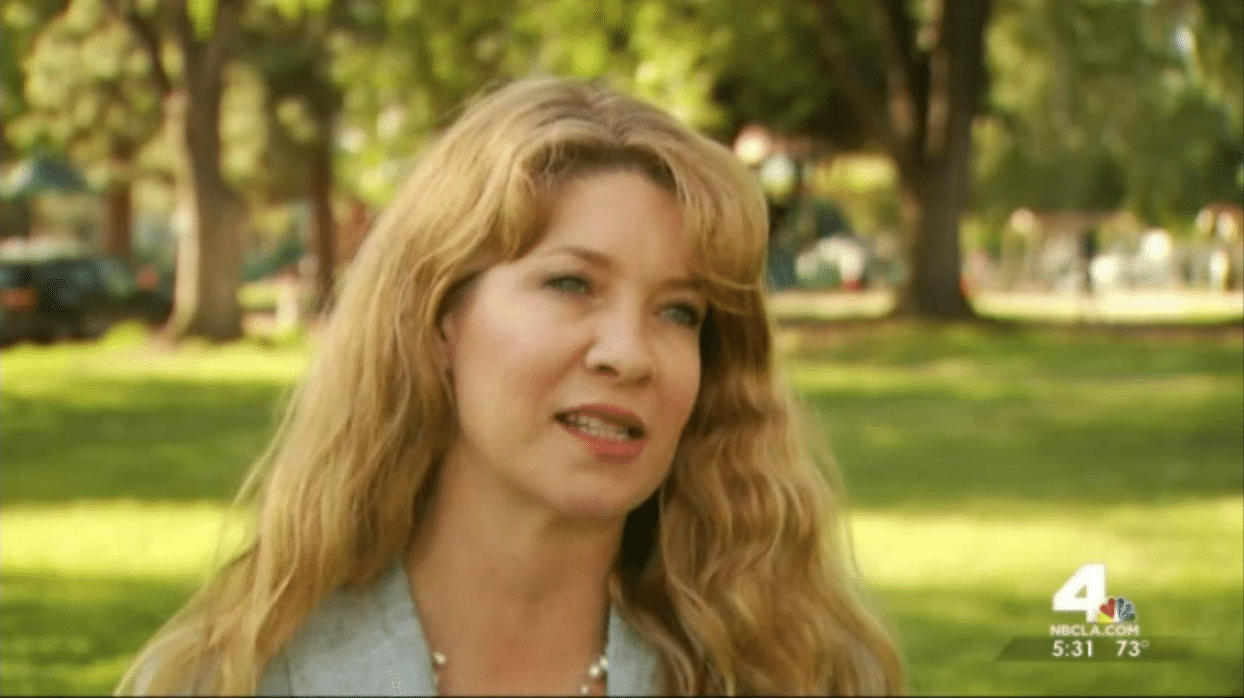
Consistent with my article last year Hey Dad, Your Twelve Year-Old Daughter Has a Nude Out, Jim McDonnell the Sherriff of Los Angeles County recently penned an open letter to parents cautioning them about the perils of self-published nude selfies and human trafficking. Check out my NBCLA interview for details.

I’m the mom psychologist who will help you GetYourKidsInternetSafe.

Onward to More Awesome Parenting,

Tracy S. Bennett, Ph.D.
Mom, Clinical Psychologist, CSUCI Adjunct Faculty
GetKidsInternetSafe.com

Hey Creep, Those Were MY Facebook Photos!

BLOG71privacy

What if you saw your teenage daughter’s photo posted on a stranger’s Facebook page? Perhaps he created his own caption under her photo too, like “I’m so hot!” Perhaps he’s a grown man and has other women’s photos posted as well! I bet you’re thinking that’s too extreme or unlikely. Until recently, I would have agreed with you … until it happened to me. My name is Adrienne Roy-Gasper, and I am a CSUCI intern for Dr. Bennett. I was also guilty of thinking, “it won’t happen to me.” I believed my photos were safe on Facebook, and no one would ever want them.

I WAS WRONG.

Theft of my Photos

Several weeks ago, I received a message from a Facebook friend saying a forty-year-old man had a bunch of photos of me on his Facebook page. She elaborated, “This guy was being really scary and inappropriate with my friend, so I was looking through his Facebook page and saw pictures of you!”

My stomach dropped. I was shaking. My heart was racing. I panicked. When I went to his page, I saw that this man had visited my profile, stole my pictures, and posted them!

BLOG71PROFILEPICS

I was shocked and scared. I didn’t know this man. I never saw him in person. Never spoke to him. Yet somehow, he found my profile and stole my photos.

Why would he do this? Who is this guy? Why me? How did he find my Facebook profile? What else could he be using these photos for?!

I was freaked out and ready to cry. Maybe my reaction was “overdramatic.” But I was just notified that this man was sexually harassing another girl. This potentially dangerous man, who was a lot older than me, was downloading and publicly posting my personal pictures. How long had he been tracking me? Since I was 17? 20? A year ago? I wasn’t sure, and I didn’t have a way to find out.

How I Got Him to Cooperate

First, I asked for advice from friends and family by posting a Facebook message about the situation. Many of them were frightened for me. They felt it was unsafe and were just as upset as I was. With their suggestions, I ultimately decided to be direct and message this man with a polite request to remove my photos.

I messaged, “I notice that my pictures are on your profile. I did not give you permission to use them. Can you please take them down?”

Now it gets even stranger. Instead of taking the photos down, he replied, “I thought I told you I will when I get back.”

His response was so confusing to me. You thought you told me what? That you stole my pictures? I politely messaged him again, explaining that I’d never spoken with him before.

His response was defensive, “So don’t say rude things to me,” he replied.

At this point, I lost it!

Friends and family came to my rescue and decided to say something to him. I am not one for cyberbullying, but that’s what it came down to. Ten of my friends messaged him with threats like calling the cops or finding him and beating him up. Finally, he took my pictures down.

What do you think?

I kind of worry that this was a mass cyberbully campaign. But was it? Were my champions justified? Whether it was a good reason or not, I ended up feeling guilty but happy that he no longer had my photos on his profile.

BLOG71Circledphones

I don’t know of many people this has happened to, and I wasn’t sure how to react. After I had time to process what had happened, I discussed the situation with our intern group and agreed to share the story, research solutions, and offer advice.

Facebook’s safety features suggest that you first try to handle situations like this on your own. If it remains a problem, then report it.

  • Go to Facebook’s Desktop Help. Go to “Report something” on the side.
  • Click what fits your problem the most. For me it was, “Someone is using my photos or my child’s photos without my permission.”
  • Then click the link that says, “Get help reporting unauthorized photos.”
  • Click “Image privacy rights.”
  • Lastly, click what fits your problem the most. For me, I would have chosen “Imposter accounts.”
  • Facebook will take you to a form to fill out and, hopefully, they will agree that something needs to be done.

There are three frustrating aspects to this reporting process:

  • First, you have to sit and wait for their response while the photo remains active.
  • Another frustration is your photos may not get removed from the other person’s account. Facebook may disagree with you and not view it as a problem.
  • Finally, Facebook can’t do anything about the fact the guy had downloaded the photos for his personal collection. Yuck!

Despite my initial reservations, I came away from this situation feeling that I went about it reasonably.

If timely trouble-shooting Facebook options are limited, I suggest two further considerations:

  • Don’t ever post photos with intimate content. You never really know where they’ll end up!
  • Select strict privacy settings on all social media profiles from the beginning rather than waiting until the damage is done.
    • There are even worse situations that could occur, such as virtual kidnapping, where a person collects personal information from your social media accounts and uses it to extort money from your loved ones, saying you are in danger and will be harmed or even killed if they do not send money. Or imagine if a child pornographer collects and shares your images with other sickos! Dr. Bennett suggests we re-label “child pornography” to be “images of child sexual assault.” I hadn’t considered that before, but I agree with her because that’s exactly what it is.
  • Disable location services for Facebook on your mobile device.

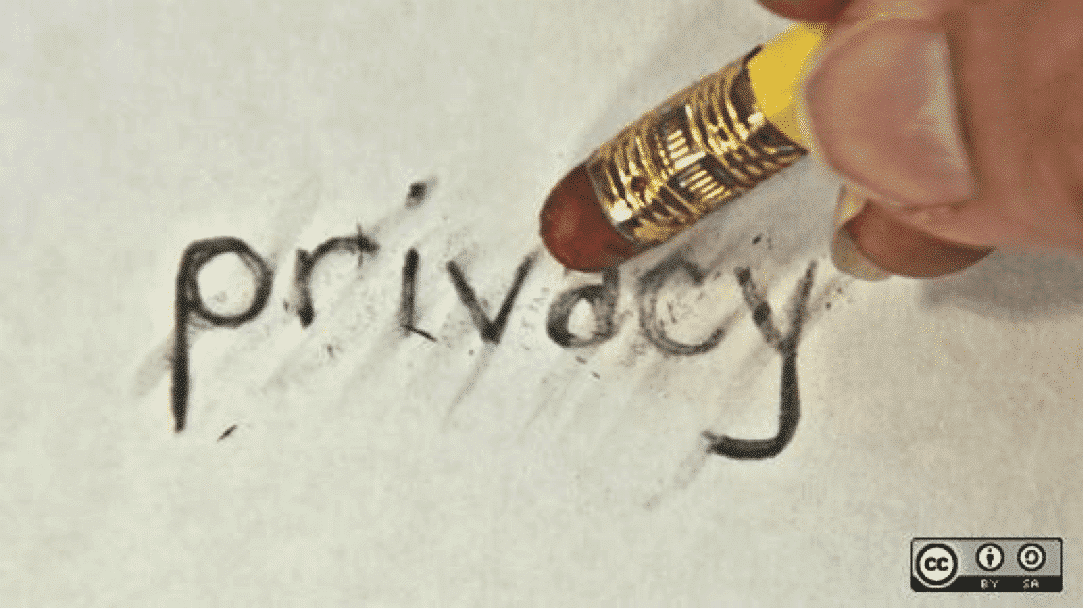
Take it from me! By accepting the Terms of Agreement from each social media app, we are consenting to have our personal data tracked, collected, and used for corporate profit and potentially personal exploitation. We apparently think it’s a reasonable trade for the free fun and real-time communications we have with friends and family. But the truth is, we all now have our virtual identity to protect as well as our nonvirtual identity. And if you’re a parent, posting images and information about your children launch their digital footprints as well as your own.

Before every comment and image I post, I now ask myself some important questions, including, “Do I care if this image is out there on the World Wide Web?”

Take a moment today and talk to your kids about netiquette, digital footprints, and online privacy. Check out Dr. Bennett’s article, “How to Create an Open, Honest Screen Media Family Conversation Like a Boss,” for tips about how to get started.

11755355_1062290680448181_4814698546326661932_nCongratulations and thank you to Adrienne Roy Gasper, CSUCI intern, for authoring this awesome GKIS article!

I’m the mom psychologist who will help you GetKidsInternetSafe.

Onward to More Awesome Parenting,

Tracy S. Bennett, Ph.D.
Mom, Clinical Psychologist, CSUCI Adjunct Faculty
GetKidsInternetSafe.com

Photo Credits

Facebook: The privacy saga continues by Ruth Suehle CC BY-SA 2.0

Wrong neighborhood, motherf*cker! by Kahlil Opeda, CC BY-NC-ND 2.0