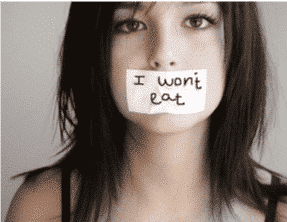
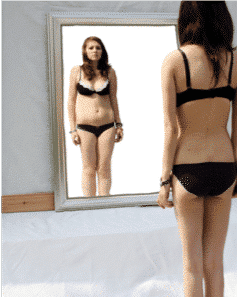
Janessa developed anorexia in 2002 and bulimia a year later. What started as a fad diet quickly took over her life leaving her feeling helpless, ashamed, and isolated with her secret. She discovered an eating disorder chatroom with people who understood what she was going through, a constant feed of support from young women just like her posting recipes, photos, and ideas for thinspiration. She began to compulsively check her feed hundreds of times a day, obsessively comparing herself to others in a desperate competition for thinness. This eating disorder online culture not only normalized her self-harm but also encouraged it. Her compulsive online activities provided an intimate escape that no one in her face-to-face life knew of, not even her therapist. By the time she was 19 years old, Janessa was diagnosed with osteoporosis. By 21 years old, she was buried.
81% of ten-year-olds are afraid of being fat
Bullying about body size and appearance is the most common form of bullying in schools.
25% of American men and 45% of American women are on a diet on any given day.
Americans spend over $40 billion on dieting and diet-related products each year.
Four out of ten individuals have either personally experienced an eating disorder or know someone who has.
What is an eating disorder?
Eating disorders (EDs) are a class of mental illness characterized by maladaptive eating behaviors that negatively impact health, emotions, and general life functioning. EDs have the highest death rate of any mental illness, frequently persisting for years. The most common EDs are anorexia nervosa, bulimia nervosa, and binge-eating disorder.
Eating disordered behaviors typically begin as a way for individuals to lose weight or gain a sense of control over their lives. With a compulsively escalating course, dieting, binge eating, purging, self-starvation, excessive exercise, abuse of laxatives, and compulsive participation with online forums are common.
Who develops ED(s)?
National surveys estimate that 20 million women and 10 million men in America will have an eating disorder at some point in their lives. It’s estimated that 40% of female teenagers have an eating disorder, with more men and younger children falling victim in more recent years. EDs are particularly common with individuals who have difficulty coping with stressors.
Risk Factors
Biological
Psychological
Social
Having a close relative with an eating disorder.
Having a close relative with a mental health condition.
Female sex. Although people of any, all, or no gender can develop an eating disorder, being female increases the risk of developing an eating disorder.
History of dieting or using weight loss tactics
Type One (Insulin-dependent) Diabetes
Perfectionism. Unrealistically high expectations for yourself.
Body image dissatisfaction. Internalization of the thin ideal.
Personal history of an anxiety disorder.
Behavioral inflexibility. Many people with anorexia report that, as children, they always followed the rules and felt there was one “right way” to do things.
Prejudices about weight – The idea that thinner is better
Personal history of being teased or bullied about weight.
A drive to be perfect
Members of the LGBTQ community are at higher risk due to stigma and discrimination.
Loneliness and isolation.
Online Forums
Online forums often times exacerbate these already serious mental illnesses by advocating for ED’s as a healthy way of life and painting mainstream society as condemning, encouraging a “they just don’t understand us” attitude and offering a “we’re in this together” alliance. Compulsive data journaling promotes unhealthy social comparison and competition.
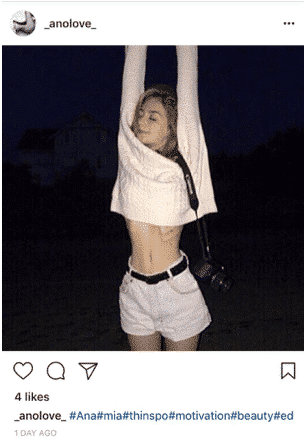
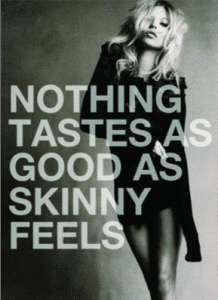
Thinspiration or “Thinspo” is also used to encourage extreme and unhealthy thinness by sharing photos, memes, media, and stories. For example, “Once on the lips, forever on the hips” or “Every time you say no thank you to food, you say yes please to being skinny.” Secret terminology or slang is also used often to hide online activities from parents. Commonly used slang include:
“Ana”: anorexia
“Mia”: bulimia
“Bikini Bridge”: when an underweight woman in a bikini lies down and her hip bones protrude well past their flat stomach causing their bikini bottom to stretch across and gap is formed.
“Thigh Gap”: space between the inner thighs when standing upright with both knees touching as a result of low weight.
Signs Your Child is at Risk for an Eating Disorder
Wearing concealing clothing
Emotional changes suggestive of co-occurring emotional distress like social anxiety, depression, or low self-esteem.
Behavioral changes like social isolation, eating more or eating less, sleeping more, fatigue or low energy, or an overall loss of interest in things they’ve always enjoyed.
Often spending time browsing for information about exercise and dieting or visiting pro eating disorder online forums
How You Can Help
Seek help & treatment
EDs can be extremely dangerous and commonly co-occur with depression, anxiety, social phobia, and obsessive-compulsive disorder. Consult a clinical psychologist who has specialized training with eating disordered behaviors early, don’t wait. Not only can a clinician work with your child to achieve insight and build resilience by teaching emotional coping skills, but she can also provide much needed consult and support for family members. Kids will often accept influence from a therapist even when they are dismissive of parenting support.
Stay calm and matter-of-fact
If you see evidence of eating disordered behavior; ask about it in a straightforward, emotionally neutral manner. Of course share your concern, but be careful not to escalate the situation by panicking, threatening, or lecturing.
Be supportive and present
Make yourself available and willing to talk when your child approaches, on her terms. Kids often avoid talking to their parents, because they’re afraid that they’ll lose their trust or add an additional stress factor to an already stressful situation, like going through a divorce or financial issues (Steinberg, 2014).
Reduce stigma
Shame and guilt can keep individuals tethered to their Eating Disorder longer. It is common for misinformed persons to think that disordered eating is simply a choice. Once EDs take hold, it is very difficult to recover without comprehensive professional treatment.
Helpful Online Resources
NEDA (National Eating Disorder Association) has recently worked with major platforms, including Facebook, Tumblr and Pinterest, to adjust their terms-of-use policies to forbid the promotion of “self-harm” by users.
Eating Disorder Hope provides its readers with extensive information online such as; defining each type of eating disorder, tools for recovery, treatment options, support groups in your area, an much much more.
Eating Disorders Anonymous (EDA provides and outlet of support and fellowship for individuals suffering. EDA is a free online community with the only requirement being that the member is committed to recovering from his/her eating disorder.
Thank you to CSUCI Intern, Katherine Bryan for contributing this article. If you or someone you know is concerned about the effects that media driven beauty ideals online have on our youth please check-out the GKIS article, “I Want To Be Hot When I Grow Up”.
I’m the mom psychologist who will help you GetKidsInternetSafe.
When did men become as fussy about their looks as women? Since marketers have scoped in on us as a buying audience, that’s when. The multi-billion dollar health and fitness industry found our vulnerable spots, and they’ve targeted us expertly. Men buy in for costly gym memberships and nutrition formulas, we get our eyebrows “done,” and we even pay for cosmetic surgery. Don’t get me started about specially conditioned beards and man buns. Marketers have successfully sold us thru body shame.
As much as the focus on body image marketing centers on teen girls, boys are increasingly effected. Dr. Bennett’s How to Spot Marketing: Red Flags Supplement is designed for parents of any child to recognize the signs of dangerous marketing. In media we often see images that insinuate how men should look and what products we need to buy in order to get the job, the fortune, or the girl. Every man wants to be a stallion. When other men threaten our image, we want to improve. How is the 2016 man affected by shame?
Six-Packs Everywhere
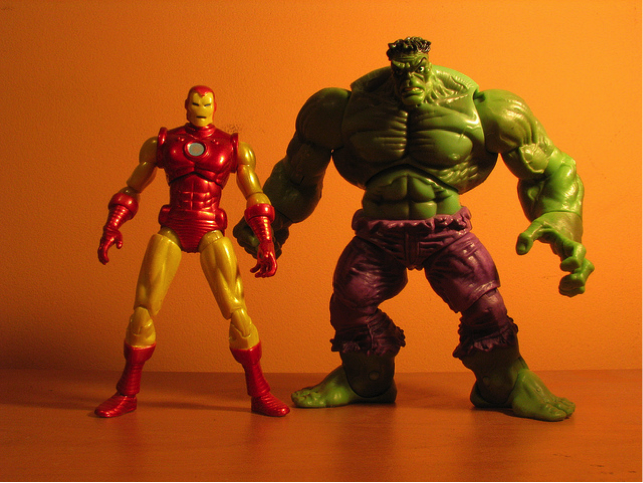
We are in the era of the six-pack. Abdominal bulging is everywhere; in supplement commercials, movies, toys, and advertisements. Consider the multi million-dollar movie, Twilight. Millions flocked to theaters to gawk at Taylor Lautner’s stellar abs (#TeamJacob). Let’s face it, it wasn’t his intellect or dazzling wolf battle strategies that made the ladies swoon. And I’m embarrassed to say that when I saw the movie, I felt extremely self-conscious about my baby belly.
I’m not alone. Research has demonstrated that muscular male figures in the media cause body dissatisfaction in men (Leit, 2002). The hundreds of images we see on our screens everyday of six-packed actors and models make us feel inferior. Despite the realization that those types of bodies are only attainable with digital enhancement, dietary supplements, or extraordinary fitness programs, we aspire to it and feel disheartened when we fail to measure up.
“Do You Even Lift Bro?”
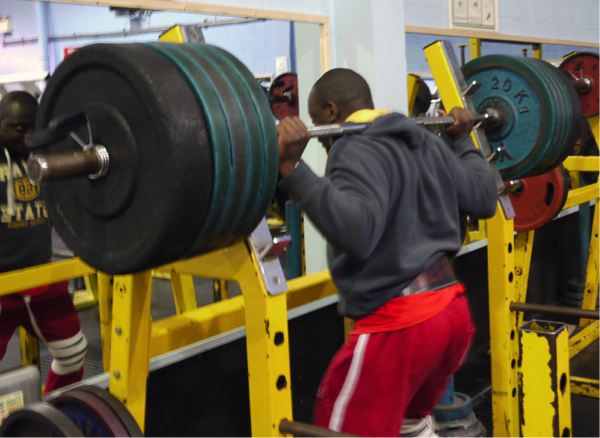
Sorry to break it to you ladies, men are not becoming sexier to impress you. It is often about, “Do you even lift Bro?” We are constantly competing with each other. No guy has ever said, “I am going to do an extra squat, because the ladies are digging tight butts.” It is all about the pressure to lift more than the guy next to you. And frankly, it doesn’t hurt that the ladies are attracted to the dominant male in the room. The best compliment is a beautiful woman purring about how strong we look.
You Too Can Look Like This
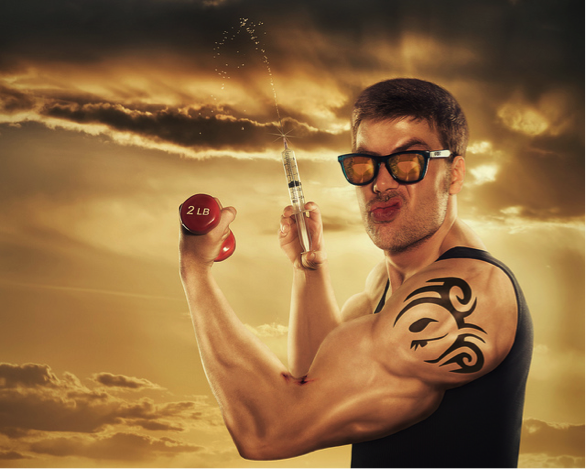
Unfortunately, our quest for strength and fitness does not always lead us to healthy choices. Many men use expensive and untested fitness supplements to speed up the muscle-building process. Some powder proteins already have enough ingredients that are bad for your body, and some men are using it in combination with steroids. When I go to the gym, I often see these steroid using pretty boys. I myself have used protein and been tempted to use steroids to gain faster results. Luckily I never have and never will, but the pressure is always there.
Increasing numbers of men are so concerned about their appearance that they develop a psychological condition called muscle dysmorphia (Mosley, 2009). This is when a man sees himself thinner and weaker than he actually is. He begins to hit the gym and use substances to gain more mass, but he will never get there because he sees a delusional result in the mirror. He focuses so much on attaining his ideal image that he begins to put everything aside to hit the gym. This disorder is fairly new and there are no clear estimates of how many men are affected (Choi, Pope, & Olivardia, 2002).
My Classmates Changed Me
Body shaming can start young but peaks during the vulnerable developmental period of adolescence. According to researchers Aslund, Starrin, Leppert, & Nilsson (2009), both males and females engage in body shaming, but they tend to do it differently. Males tend to be more directly aggressive, while females shame through passive aggressive means like gossip.
When I was in high school, I remember feeling shame because of the way I dressed and my physical appearance. I was smurf’s size and wore clothes out of fashion. Students would often attack me with bad remarks. In my senior year, I changed my appearance and grew a little more to become a larger smurf. People started to notice me and praise my better looks, and I even started to date girls. This made me care more about my appearance, because I did not want to be shamed again. My point is that shame can really change a man. Even though men want to appear tough, we are sensitive teddy bears on the inside.
How can we protect our sons from body shame?
Teach them to understand that we all have different body types. Obtaining a body that looks exactly like somebody else’s is impossible.
It is a good thing to want to be the best, but make sure that you are doing it for yourself and not for others.
Eating healthy and getting plenty of restorative sleep will earn the fastest and healthiest fitness results.
Before considering supplements, research their ingredients. Nothing beats a healthy diet and hard work.
Ensure you have a realistic understanding of what a “healthy” body actually looks like. That means a keen awareness that most images have been digitally enhanced.
Be vigilant not to body shame others with critical or hurtful comments.
Protect kids from frequent exposure to inappropriate images designed to sell products.
Set a healthy example of what is healthy and cool.
Remember, “SHAME IS LAME.” Because you are an extraordinary parent, you won’t want to miss, The Secrets to Happiness and the Creation of GetKidsInternetSafe, It’s an awesome personal blog written by Dr. Tracy Bennet. She is an extraordinary person willing to help those in need.
Congratulations and thank you to Cristian Garcia, CSUCI intern, for authoring this awesome GKIS article!
I’m the mom psychologist who will help you GetKidsInternetSafe.
Aslund, C. , Starrin, B. , Leppert, J. , & Nilsson, K. (2009). Social status and shaming experiences related to adolescent overt aggression at school. Aggressive Behavior, 35(1), 1-13.
Mosley, P. (2009). Bigorexia: Bodybuilding and muscle dysmorphia. European Eating Disorders Review : The Journal of the Eating Disorders Association, 17(3), 191-198.
Leit, R. , Gray, J. , & Pope, H. (2002). The media’s representation of the ideal male body: A cause for muscle dysmorphia?. International Journal of Eating Disorders, 31(3), 334-338.
Choi, P. , Pope, Jr, H. , & Olivardia, R. (2002). Muscle dysmorphia: A new syndrome in weightlifters. British Journal of Sports Medicine, 36(5), 375-377.