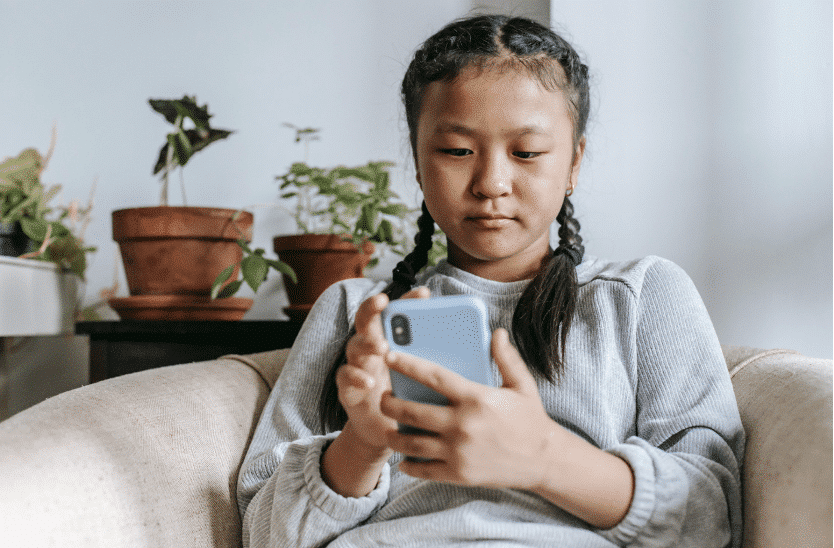
Three billion people use social media globally. We use it to stay in touch with friends and family, share memorable moments in our lives, and entertain ourselves during our leisure time. Although social media has its benefits, it also has its negative effects. Much of the outcome depends on the characteristics of the user. One characteristic that impacts social media use is the user’s attachment style. In today’s GKIS article, you will learn what attachment style is, how a child’s attachment style may impact the way they use social media, and strategies to improve your family relationships and create healthier attachments.
Social Media Readiness
In the article “Do Kids Need Driver’s Training … for the Internet?” Dr. Bennett asks, “Does driving city streets have anything in common with browsing the internet?” She argues it does, stating that “ Like driving a car, browsing the internet can cause significant injury. But instead of a concussion, we see kids succumbing to anxiety, depression, and body image problems linked to cyberbullying, radicalization, and compare-and-despair. Also, like driving, kids browsing the internet can wander into any kind of digital neighborhood making friends from faraway places. Most of the places they visit are cool, with fun friends, creativity, and harmless excitement. But there are also digital neighborhoods that would horrify us. Dangerous people like predators and traffickers may be common there and so is intensely violent and explicit sexual content.” With over 25 years of helping kids and families navigate difficult situations resulting from screen use, she created an online course for tweens and teens called the GKIS Social Media Readiness Course.
Dr. B argues that kids need specific knowledge and problem-solving strategies to recognize red flags online, as well as psychological wellness tools to bolster mental health and overall resilience. Not only does our course teach kids what they need to know for online safety, but parents need knowledge too along with an ongoing cooperative dialogue with their kids about online issues. Creating this dialogue has a lot to do with healthy attachment.
Attachment
The father of attachment theory is John Bowlby, a British psychoanalyst who was interested in studying the intense distress that infants demonstrate when they are separated from their parents. Other attachment researchers went on to create theories and testing measurements, like the Strange Situation paradigm created by Mary Ainsworth.
Strange Situation
To test a child’s “attachment style,” researchers created a child separation situation in the psychology lab. For the Strange Situation method, researchers put a mother and toddler child alone in a room. The room was filled with toys and plenty of eye-catching items for the child. After some time of playing, a stranger enters the room and attempts to interact with the child. The mom is instructed to then leave the room. After a few minutes, she returns and comforts her child. A few minutes later the stranger returns and interacts with the child again. Then the mother comes back and greets her child.[2]
The Strange Situation was designed to present children with an uncommon, but not too overwhelming, experience. The child’s response was then coded and classified to fit in one of four attachment styles.
Attachment Styles
Attachment styles are academic descriptors of how an individual relates to other people. An attachment style is formed at an early age, and once established it stays with you.
Children with secure attachment styles have healthier relationships overall. Kids with avoidant, anxious, or disorganized attachment styles tend to form poor quality family and peer interactions. They have trouble maintaining healthy, mutually beneficial friendships because they’re often anxious or dependent.
The Four Types of Attachment Styles
SecureAttachment
Secure attachment is characterized by a stable sense of security and comfort to be out and about knowing that their caregiver will be there when needed. Caregivers of securely attached children are typically available, sensitive, and protective of the child. They use authoritative (warm and consistent) parenting strategies rather than being overly strict (authoritarian) or indulgent (permissive).
Avoidant Attachment
Avoidant attachment is characterized by a child who avoids interaction with the caregiver and shows no distress during separation. Caregivers of an avoidant attached child typically don’t acknowledge a distressed child, instead of shaming the child for showing emotions and having unrealistic expectations. These caregivers often don’t validate the child. Emotional validation is the process of encouraging emotional expression and offering warm acceptance and nurturance. Validating a child’s emotion is a critical element to teaching children socio-emotional intelligence and self-soothing.
Anxious Attachment
Anxious attachment is characterized by a child who fears abandonment and doesn’t interact with strangers. Kids with anxious attachment tend to be clingy and insecure. Caregivers of anxiously attached children are often overly protective or insensitive. They can be available at one moment, then unavailable, which can leave the child confused.
Disorganized Attachment
Disorganized attachment is characterized by a child who, when their caregiver unexpectedly leaves the room, will respond with a confused expression, freezing, and demonstrating unorganized behavior. Caregivers in this situation are inconsistent. More specifically, they may demonstrate kindness and care to their child sometimes and other times ignore their needs or get angry. Parents who send these types of mixed signals are often impaired due to mental illness, addiction, or severe overwhelm.
What does social media have to do with attachment?
Social media has become a new form for people to receive validation and support from others, especially for those who are building identities like tweens and teens. In a study by Stöven and Herzberg, researchers reviewed 17 studies on attachment styles and social media use. They found that people with higher levels of abandonment anxiety tend to overuse social media as a way to feel like they belong.[1] The subjects were more likely to seek support and attention from people online to feel good. Social media was a way for them to seek reassurance and feel like people liked them.
How is an over-reliance on social media for identity a problem?
A constant need for reassurance can cause undesired results, such as
trouble making decisions because the subject is too concerned about what others think.
anxiety or depressive symptoms when the subject does not get the response they hope for.
the subject having an “internal debate” with themselves with questions like, “what if?”
Ways to Improve Your Child’s Attachment and Make Them Healthier Adults
Be sensitive and compassionate. Children need nurturing warmth during their early years to identify the emotion, learn how to express it, and build the confidence to self-soothe on their own.
Respond calmly to your child. Modeling self-soothing is an awesome way to teach socio-emotional skill-building. Plus, it serves to clear the way for logical problem-solving rather than escalating an already stressful situation.
Get involved. Just as you would supervise and monitor your child’s exploration of city neighborhoods, you must do the same with digital neighborhoods. That means setting rules and expectations like those detailed in our Connected Family Courseand setting up parental controls using the resources (and discounts) offered in our Screen Safety Toolkit.
If you’d like all GKIS course materials delivered in an inexpensive, convenient, easy-to-follow drip on your smartphone, check out Dr. Bennett’s weekly parent and family coaching videos in the GetKidsInternetSafe App!
Thanks to CSUCI intern, Maira Soto for researching social media and attachment styles for this article.
I’m the mom psychologist who will help you GetKidsInternetSafe.
Although a lot of parents let their kids play video games, not many co-play. Parents are busy! And for many, video games are unknown territory. Trust me, I’ve seen my mom try to play new video games, and she was beyond lost. But as a kid’s interest in video games increases, your relationship with them may seem to decrease, as if screen time replaces relationship-building. And with newer games like Fortnight, God of War, and Call of Duty, the complexities can drive a wedge between digital immigrants and digital natives. But it doesn’t mean they should! Many games offer teamwork and cooperation and can be fun for the whole family. Gaming might not be as scary as you think. Using hobbies your kids already enjoy is a great start to strengthening family bonds. Check out Dr. Bennett’s Connected Family Course for a guide on balancing screen time, like gaming, with family time. Read on to learn what co-playing has to offer, and why you might want to start gaming with your kids.
What makes co-play important?
The “fear of the unknown” can cause parents to separate themselves from their children’s virtual activities. As a result, kids can become isolated. Parents see this and either reprimand the kid for playing too much or guiltily allow the distance.
When I grew up, my mom provided me with interactive video games that offered entertainment and learning experiences. As a digital native, I started playing more and more online games and would even search some out in hopes that my parents would play with me. But because they were digital immigrants, they never did.
In 2013, researchers Hayes and Siyahhan found that “parents miss a huge opportunity when they walk away from playing video games with their kids.” They elaborated that parents don’t realize that there are many games designed to teach problem-solving, science, or literature. Not only can you learn alongside them, gaming with your kids can also offer countless ways to interact and have teaching moments. Gaming together offers new lines of communication and give them a reason to want to bond with you.[1]
Teaching and Bonding
In 2018, Bingqing Wang’s research on video games and family cooperation showed that family members who play video games together have better family satisfaction and family closeness. They also showed that families with poor family communication can benefit from co-playing.[2]
One benefit of co-play is the opportunity to work together to achieve a common goal. Strategizing and reflecting on executed choices encourages sportsmanship and the value of failure. Rather than the child walking away from a failure disheartened, parents can teach them to analyze the loss and improve on strategy with enthusiasm rather than defeat. Co-play also allows parents to set good examples for setting limits. Ending a gaming session together seems better than being “forced” or “made” to stop playing.[3] Shared experiences are more fun, wins are more fulfilling, and cooperation is much better than isolation.
You may be concerned that, even with effort, you’ll look stupid and won’t “get it.” But if you both played and had fun, they’ll recognize you took the effort to get close to them and better understand why they love to play. You’re not just an outsider trying to limit something they enjoy. Growing up, I had multiple friends who got to play with their parents and bond over the games they liked. They loved talking about it and became even closer, something I missed out on.
What to Play
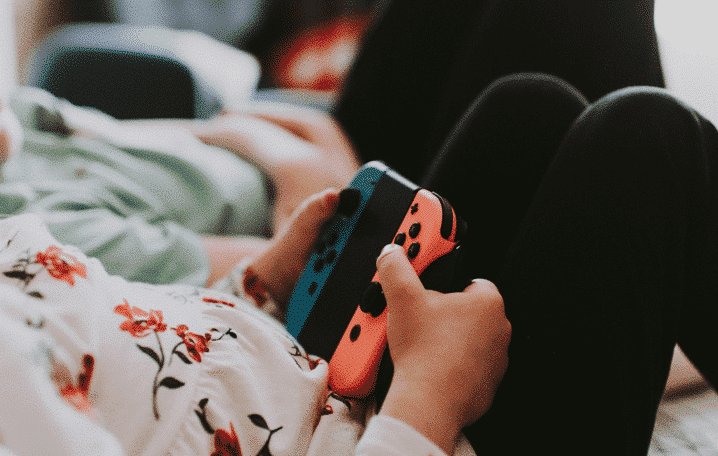
Which games are family-friendly? Dr. Bennett said her kids asked for a Nintendo Switch so they could return to games they used to play together on the Wii. There are many options that are rated E(for everyone). It also offers parent controls and time limits that allow parents to manage what and how much their kids are playing.
Some fun and family games we at GKIS recommend are:
Mario Kart is a competitive driving game with lots of cute levels, fun characters, and a ton of quality. Race against friends and family in different beloved Mario worlds. Dr. Bennett cautions to start with the cow land…she says she’s spent many hours screeching in agony trying to stay on the slippery Rainbow Road while her kids roared. She says kids can’t get trusted to pick the level…
Just Dance is another Nintendo Switch game that Dr. B says provided hours of fun family co-play. With many popular and even old hits, everybody finds their favorite games to competitively dance to. She says her youngest was delighted by this game, because even when he was little, he could out score her and his older sisters! Plus, everybody worked up a sweat and got a little exercise. No pain, all gain.
Super Mario Party is a game designed for group play and loads of fun. With 80 mini-games, like Bumper Brawl and Croosin’ for a Broosin’, everybody has a favorite. Play with or against your kids with the large board game style platform.
Yoshi’s Island is an fun and simple game for the whole family. Jump around as the adorable Yoshi solving creative puzzles and collecting all the hidden items.
Snipperclips has great games for the whole family don’t have to cost an arm and a leg. This game is designed for communicating and working together to snip your cute little paper characters into the perfect shape for each unique and entertaining puzzle.
Knock ‘Em Down Bowling is a fun one with many game modes like split screen, team matches, and no gutters. With a variety of traditional bowling games and party modes, team work is always a fun possibility.
Forza Motorsport Games for Xbox offers lots of options for fun family car racing in professional-style track racing events.
Scribblenaughts for the Nintendo DS is a fun, emergent puzzle action video game where the players must solve puzzles in order to collect Starlites. Warner Bros. Active Entertainment published this game with the goal of promoting emergent game play by challenging the player through systematically more difficult puzzles.
I’m Jack Riley a GKIS intern. I hope you find the courage to carve the time and try co-play now that you see the pros in family gaming. My parents were never able to do any of this with me and as my interest in games increased, I felt as if our family relationship decreased. Interested in learning about other benefits of video game play? Check out the GKIS article Is Your Child a “Professional Gamer”?
I’m the mom psychologist who will help you GetKidsInternetSafe.
Onward to More Awesome Parenting,
Tracy S. Bennett, Ph.D.
Mom, Clinical Psychologist, CSUCI Adjunct Faculty
Works Cited
[1] (July 2013). Move over, Monopoly: ASU researchers find families bond over video game play, Arizona State University.edu
[2]Wang, B. (April 2018). Families that play together stay together: Investigating family bonding through video games. Sage Journals.com
[3]Shapiro J.( December 2014). Research Says Parents And Kids Should Play Video Games Together. Forbes.com
Photo Credits
Photo By Kelly Sikkema
“My mini on our PS4” photo by Samantha Sophia
“Two people playing Sony PS4 game console” photo by JESHOOTS
“Nintendo Switch Joy-Cons” photo by Aleks Dorohovich