Need peaceful screen time negotiations?

Get your FREE GKIS Connected Family Screen Agreement

algorithm

How is Surveillance Capitalism Affecting You? 

Most of us love to have free online platforms available to us for information and entertainment. But have you ever noticed that each person’s online “feed” differs? Learn how your online behaviors are tracked, monitored, studied, and sold in today’s GKIS article. If you worry your family hasn’t covered all the bases in regard to online safety, check out our Screen Safety Essentials Course to learn how to be internet safe for you and your family.

Your Digital Footprint 

Let’s cover some basic tech vocabulary to start.  

A digital footprint is a data map that is left behind anytime you use the internet. You may be notified that your data is being tracked or it may be happening without your explicit consent.  

When you aren’t aware of the data that is being collected, you have a passive digital footprint.[2] This information usually includes your IP address and where and when it came from.   

An active digital footprint is created when you upload information about yourself on a website, usually under a profile.[3]  

The term cookies refers to a third-party system that collects statistics about your current browsing to tailor your future browsing experience. Cookies remain even after you leave a website.[4] There is usually a pop-up service announcement informing you about the use of cookies when entering a website because of the EU General Data Protection Regulation (GDPR). This legislation was passed in Europe in 2018 to protect personal data and privacy for companies that intend to sell consumer data information to a third party.[6] This legislation requires any website to have a “cookie pop-up” for websites based in Europe or for those that target European citizens. Legislation similar to this is California’s Consumer Privacy Act (CCPA). CCPA is the first legislation in the United States to also protect users from having their data stored by a third party without their consent.[7] To learn more about protective legislation for online content, check out our GKIS article California’s Newest Online Privacy Protections for Kids.

What is surveillance capitalism? 

Surveillance capitalism refers to the process of online data collection from cookies that can then be used to create an algorithm for personalized advertising. An algorithm is a specific sequence of content tailored for you that is automatically offered when you use a browser, app, social media, or shopping platform. Creating algorithms is profitable because it allows online businesses to tailor ads for you and offer products they think you’re most likely to buy.  

Surveillance capitalism is practiced by companies that profit from knowing your interests and habitual online behaviors. Some corporations don’t sell to you directly. Instead, they collect your data and then sell it to third parties.[4] In this situation, YOU are the product. Companies like Google, Amazon, and Microsoft are required to release statements about their direct data collection. Many of them have also admitted to using third-party data companies.[5]   

Dr. Bennett writes about this very phenomenon in her book Screen Time in the Mean Time.[8] She writes:  

Websites often have many of these ad trackers surveilling your online activity. The data generated from online tracking has been referred to as digital exhaust because clusters of trackers can follow you from site to site. In addition to information collected from tracking, Facebook buys personal information about its users from one of many services like Experian and Equifax … Not only are adults targeted for ads, but the digital age has ushered in an increasing commercialization of childhood as well. Because of a dramatic increase in personal screen privatization (child Internet use without supervision) and unregulated corporate marketing, an enormous growth in advertising targets children.  

Companies are so good at anticipating your interests, many speculate if they are recording your conversations. Find out if this is legal in our GKIS article, “Is Facebook Spying by Hijacking Your Smartphone Mic? 

What can you do to protect your privacy?  

  • Review terms of service for every website. 
  • Check privacy settings on browsers.[1] 
  • Clear your data and search history frequently.  
  • Filter and block for safe browsing. 
  • Opt out of cookies for specific websites. 

To learn more about cyber safety, Dr. B created the Cybersecurity & Red Flags Supplement to help parents learn about exposure to online risks and how to protect their privacy. Also, if you are a parent concerned about your child accessing the internet, check out the Screen Safety Toolkit. This toolkit guides you to learn how to filter your family’s browsing and offers information about our own favorite third-party party safety system.  

Thanks to CSUCI intern Sarah Hernandez for researching Surveillance Capitalism. 

I’m the mom psychologist who will help you GetKidsInternetSafe. 

Onward to More Awesome Parenting, 

Tracy S. Bennett, Ph.D.
Mom, Clinical Psychologist, CSUCI Adjunct Faculty
GetKidsInternetSafe.com 

Work Cited 

[1] How to search and find your digital footprint: TDS Home. TDS Home | Home, Internet, Phone, TV & DVR Services. (2019, September 12). Retrieved October 26, 2022, from https://blog.tdstelecom.com/security/how-to-search-and-find-your-digital-footprint/ 

[2] Digital footprints. Family Lives. (n.d.). Retrieved October 26, 2022, from https://www.familylives.org.uk/advice/your-family/online-safety/digital-footprints#:~:text=A%20passive%20footprint%20is%20made,sites%20or%20by%20using%20websites. 

[3] Kaspersky. (2022, March 9). What is a digital footprint? and how to protect it from hackers. www.kaspersky.com. Retrieved October 26, 2022, from https://www.kaspersky.com/resource-center/definitions/what-is-a-digital-footprint 

[4] Guide to third-party-data: Third-party-data services. Mobilewalla. (n.d.). Retrieved October 26, 2022, from https://www.mobilewalla.com/third-party-data#what-is-third-party-data 

[5] Lee, R. (2022, August 10). Can your phone hear your conversations? (yes, but here’s how). Spiralytics. Retrieved October 26, 2022, from https://www.spiralytics.com/blog/mobile-ads-can-phone-hear-conversations-infographic/ 

[6] What is GDPR, the EU’s new Data Protection Law? GDPR.eu. (2022, May 26). Retrieved November 11, 2022, from https://gdpr.eu/what-is-gdpr/ 

[7] Daniela. (n.d.). CCPA compliance with Cookiebot CMP. Cookiebot. Retrieved November 11, 2022, from https://www.cookiebot.com/en/ccpa/?utm_source=google&utm_medium=cpc&utm_campaign=usa-generic&utm_device=c&utm_term=do%2Bi%2Bneed%2Ba%2Bcookie%2Bpolicy%2Bon%2Bmy%2Bwebsite%2Busa&utm_content=usa-eng-cookie-policy&gclid=Cj0KCQiA37KbBhDgARIsAIzce15QgUuLTccBBOR_gea1lFedi3w7Id85Ubz06ejheiLsMeEFvnrZgVoaAsUMEALw_wcB 

[8] Bennett, T. (2019). Screen time in the meantime: A parenting guide to get kids and teens internet safe. GetKidsInternetSafe Books. https://getkidsinternetsafe.com/parenting-guide/ 

Photo Credits  

Chris Yang: https://unsplash.com/photos/1tnS_BVy9Jk 

Maxim Hopman https://unsplash.com/photos/IayKLkmz6g0 
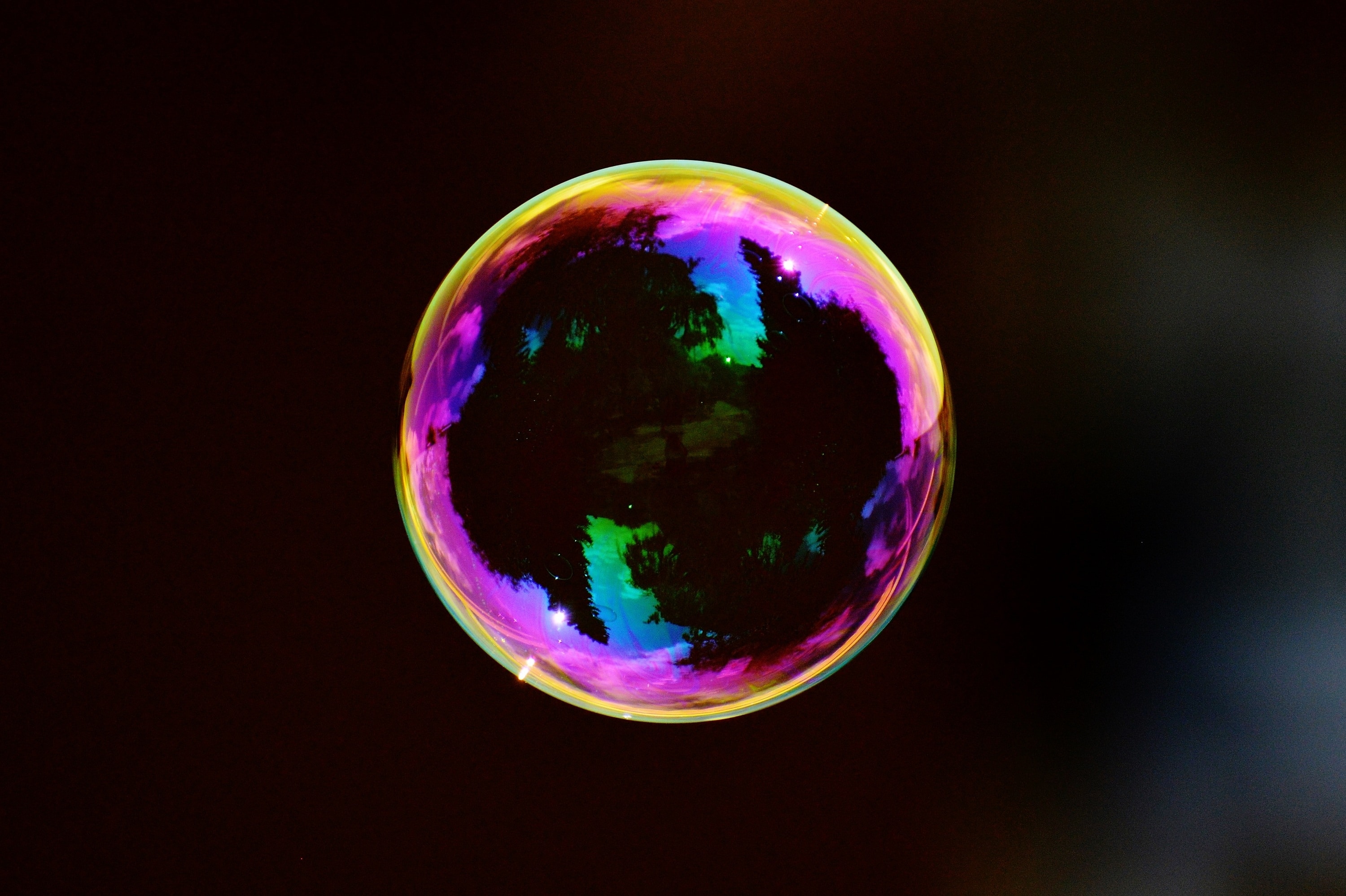
Gerd Altmann https://pixabay.com/images/id-1054708/ 

Sorry to Burst Your [Filter] Bubble 

Do you find yourself becoming bored or fatigued by your daily intake of social media? Do you feel trapped in a constant cycle of monotony? You may be caught in a filter bubble. Due to the ongoing pandemic, families and children have looked to technology for sources of happiness, news, and leisure. Quarantines have limited social interaction, forcing society to indulge in more screen-time. Not all screen-time is detrimental, but we must acquaint ourselves with the concept of filter bubbles. Today’s article covers what filter bubbles are, the harms of filter bubbles, and how you can keep your family safe from the strings attached to algorithms with the help of our sensible GKIS tips.

What is a “filter bubble” and how are they formed?

Coined by Eli Pariser, a filter bubble is a tailored universe of information built through algorithm filters.[1] Social media algorithms process and gather information (data), with the task of predicting what the user would like to see.[2] Despite the use of free products and services (like Facebook), your family’s personal information (like browsing and buying behaviors) is collected and sold to advertisers (this is how platforms grow). Filter bubbles form through data gathered during your recurring use of social media, apps, and websites. In fact, as you browse through the internet, you are being followed by trackers you pick up from websites that gather this data. The trackers that invisibly follow you as you visit various virtual neighborhoods is referred to as virtual exhaust.

With your personal information, these algorithms can then retarget you by showing you ads about the things you seemed interested in during previous browsing. An example of these algorithms at work includes a story about a girl who was targeted with baby ads before knowing she was pregnant! The young woman did not outright give herself away by looking at cribs or diapers; however, her subscription and purchase history led to data collection that pointed to the direction of pregnancy.[3]

If algorithms could go as far as attempting to predict sensitive information such as pregnancy, imagine the different directions the algorithms will predict with each of your family members. Although we give our permission for marketers to track us by using certain platforms (because we love that free, delicious content), it’s useful to be educated about the ways of marketers. To help you recognize the red flags of marketing so you can teach them to your kids, GKIS offers ways to keep your family internet safe. Take the first step by signing up for our How to Spot Marketing Red Flags Supplement. It’s the perfect addition to our free Connected Family Screen Agreement available at GetKidsInternetSafe.com.

Everyday Examples

Everyday examples of tools that form filter bubbles include Facebook news feeds, Twitter timelines, and any kind of “For You” feature. Because these pages are tailored to your liking (based on personal data), a filter bubble is compiled through media similarities, leading to a customized but limited online experience.

Other examples of tools that form filter bubbles are the checkboxes to “get to know you better” or “Suggested Pages.” I love to indulge in following online influencers that offer fashion and makeup inspiration, but at the same time, I realize that it’s a bubble of advertisements that are trying to get me to swipe my card. These days, almost every influencer post includes a paid promotion. Because we love the convenience of buying off the internet, it reinforces the idea that you can easily shop in the comfort of your own home. You can see where this constant cycle of exposure can be detrimental, not just to the reward system in our brains (instant gratification) but also to our financial stability.

What are the harms of filter bubbles?

Narcissism and Herd Mentality

It has been proposed that filter bubbles may lead to narcissistic tendencies, as the filter bubble ricochets one’s preferences. Narcissism in the digital age includes preoccupation with self-image, which is evident in a filter bubble when your beliefs and opinions are reinforced.[4]

In psychology, the herd mentality is the notion that people tend to make decisions to fit in with the majority. This mentality can be especially harmful in a filter bubble, as your family members may blindly follow an idea or group without considering opposing viewpoints or repercussions of their actions. Sometimes a filter bubble gives the impression of a majority preference when it’s actually just a small part of the overall picture.

Exposure to Fake News

Searching the internet makes it very easy to fall victim to a confirmation bias, which is the notion that people prefer sources that confirm their beliefs, negating opposing viewpoints. This bias can put you at risk of digital injury by exposing your family to fake news and misinformation, leading you to believe in (and even share) false conclusions about important topics.

Consider the following thought experiment. Imagine disagreeing with someone so much so that you resort to searching the internet for backup. You might feel tempted to click on the first source that confirms your stance, and then a second, and so on… As you search for information, algorithms are tailoring your search results to your search history, filtering out beneficial information that would be useful to know to form an unbiased opinion.

Voting is a prime example of this dilemma, as politics in this digital age are nearly impossible to evade. Filter bubbles have not only intensified our stance on the current presidential election between President Trump and former Vice President Biden, but they have also affected the way we engage in politics with family members, friends, and even strangers.

No matter where you stand, it is clear to see the effects of confirmation bias on political polarization. Polarized opinions and interactions are just a few of many examples of digital injury and toxic online behavior. To learn more about the repercussions and psychology behind misinformation, check out this in-depth GKIS article about fake news.

Isolation and Narrow-Mindedness

Eli Pariser suggests that we can think of the filter bubble as a “party of one.”[5] Without exposure to information that will challenge our way of thinking, our outlook on the world around us will inevitably become one-dimensional.[6] Dr. Tracy Bennett, founder of GetKidsInternetSafe, says she sees evidence of this emotional isolation every day in practice. By feeling more and more confident in their belief systems, many of us increasingly feel frustrated and angry. As we seek sources to increase our confidence, we fall into a cycle of fear, confirmation, anger, and isolation. “Worst case scenario,” she says, “we give up and sink into depression and apathy.”

Hate Groups and Radicalization

Kids can fall into filter bubbles just like adults can. To keep kids from accessing hate group and cult information and potentially becoming radicalized, parents need to access parental controls like those offered in our GKIS Screen Safety Toolkit. To learn more about how these harmful communities could be targeting your family, check out this GKIS article about hate groups and cults.

Thanks to CSUCI intern Kaylen Sanchez for researching filter bubbles for this GKIS article.

I’m the mom psychologist who will help you GetKidsInternetSafe.

Onward to More Awesome Parenting,

Tracy S. Bennett, Ph.D.
Mom, Clinical Psychologist, CSUCI Adjunct Faculty
GetKidsInternetSafe.com

Photos Credits

Image by Pixabay from Pexels

Photo by Tracy Le Blanc from Pexels

Image by Yomare from Pixabay

Works Cited

[1] TEDtalksDirector [TED] (2011, May 2) Beware online “filter bubbles” | Eli Pariser [Video File]. Retrieved from: https://youtu.be/B8ofWFx525s

[2] Orlowski, J. (Director) (2020).The Social Dilemma [Documentary] Netflix. https://www.netflix.com/title/81254224

[3] Hill, K. (2016, March 31). How Target Figured Out A Teen Girl Was Pregnant Before Her Father Did. Retrieved from https://www.forbes.com/sites/kashmirhill/2012/02/16/how-target-figured-out-a-teen-girl-was-pregnant-before-her-father-did/#30b9ac0e6668

[4] MacDonald, P. (2014). Narcissism in the modern world. Psychodynamic Practice: Individuals, Groups and Organisations, 20(2), 144–153. https://doi-org.summit.csuci.edu/10.1080/14753634.2014.894225

[5] TEDtalksDirector [TED] (2011, May 2) Beware online “filter bubbles” | Eli Pariser [Video File]. Retrieved from: https://youtu.be/B8ofWFx525s

[6] GCFLearnFree.org (2018, Nov 29) How Filter Bubbles Isolate You [Video File]. Retrieved from: https://youtu.be/pT-k1kDIRnw


YouTube Celebrity Burnout, Is It Viral? Part 2 of a 2-part series.

Most parents are baffled by the YouTube celebrity phenomenon so popular with kids and teens. To keep us in-know, our last GKIS article, Why are YouTube Celebrities Popular?, explained why YouTube celebrities are so popular. It looks easy, but the truth is attracting and keeping viewers is not as easy as it looks. Recently, YouTube celebrities have been coming out in droves talking about their struggles with mental health issues. Is this a fad topic intended to attract more viewers? Is it a valuable community service, because it offers mental health information? Or are YouTube celebrities actually stressed out and overextended to maintain earnings? Find out what’s behind the curtain of YouTube celebritydom and how practicing tried-and-true self-care methods is the answer for staying healthy and successful. 

The Breakdown Video

In 2016, top YouTube celebrity PewDiePie reached his breaking point. In a video titled “I QUIT (for now),” he announced that he couldn’t keep up the pace of uploading videos daily. Even the wildly successful veteran PewDiePie was crumbling under the stress and anxiety of a daily vlog. 

Elle Mills is a more recent celebtrity who became an overnight sensation last year with her coming out video, increasing her subscriber count to 1.2 million. Soon after, she posted her burnout video. In her seven-minute emotional video, she explains:

“This is all I ever wanted. And why the fuck am I so unfucking unhappy? It- It doesn’t make any sense. You know what I mean? Because, like this is literally my fucking dream. And I’m fucking so unfucking happy. It doesn’t make any sense. It’s so stupid. It is so stupid.”

Because of the fast changes in her life and the effect YouTube was having on her, she decided to take a break to recuperate and find her love for creating content again. 

Bobby Burns gained almost a million subscribers in less than two weeks after working with celebrity Shane Dawson. Shortly after, Burn abruptly decided to move to Los Angeles and change his content. Sadly, Burn received a lot of backlash from Shane fans and his subscriber numbers ultimately declined under accusations of selling out and changing content for Shane. Eventually this led to his video explaining his breakdown, saying:

“I didn’t make videos, I did- I literally didn’t do anything. I tried- I tried incredibly hard but I couldn’t. I would go to touch my camera or touch premiere and I would just have a full-blown anxiety attack. When this was first happening I was so confused, I was like why? I love making videos so why the fuck is this happening? And the reason that was happening is because I completely burnt myself out and I lost myself in YouTube.”

Common Elements Behind YouTube Celebrity Breakdowns

AdSense:When YouTubers are first starting out, they receive their money through Google AdSense. The amount of money received depend on two key factors, the types of ads and the pricing of ads appearing in your videos. So, whenever a viewer clicks on an ad on your YouTube channel, you get paid a certain amount of money. This creates a pressure to upload daily among YouTubers, so they can maintain their status as a YouTube celebrity and have a consistent flow of income. 

Always-Changing YouTube Algorithms:An algorithm is a set of rules created to solve a class of problems. When we speak of YouTube algorithms, we are referring to the specifications that get one’s video offered up to viewers. There is big competition. Every minute there are over 400 hours of videos uploaded to YouTube, making it necessary to have a way to make content easier to find.[1] According to YouTube, the point of having the search and discovery system are to help viewers find videos they want. 

Initially, the algorithm was fairly simple, rewarding the most clicked videos. Now videos are rewarded by the number of minutes the video is viewed, among other factors. Staying relevant creates a lot of pressure to produce fresh, new, and creative content each upload.

Currently, the six ways the algorithm can affect where YouTuber’s videos appear are through search results, suggested video stream, recommended viewing, trending stream, the viewer’s subscriptions, and any notifications the viewer has set up. [1]

Demonetization:Another concern is the fear and frustration of having your video demonetized. Demonetization means that the video is not suitable for monetization (making money from ads), since it does not comply with YouTube guidelines. However, this continues to be a frustrating and confusing topic for YouTubers since YouTube’s software decides if the video is advertiser-friendly. Software occasionally messes up ad revenue by incorrectly putting it in the ‘demonetization’ category. This can have a costly financial impact.

Brand Ambassadorships & Product Lines: Not only must YouTube celebrities manage their own brands, but they often partner with others. Typically that means partnering with somebody with a similar platform (number of subscribers). Other times, there’s pressure to earn the attention of a bigger celebrity. In order to be marketable, one must create and test content to build an attractive business portfolio. Another way to increase profits and expand influence is to create a personal product line. One business quickly leads to others… 

Is YouTube doing enough to support YouTube celebrities?

YouTube Creator Academy launched in 2013 for the purpose of providing free educational videos on starting a YouTube channel or helping your channel be successful. Creator Academy courses include foundation, production, growing your channel, earning money and building your business on YouTube, and YouTube content categories. [2]

The course “Staying well and avoiding burnout” was added in June, 2018. Polygon writer, Julia Alexander, writes:

 “There is no concrete answer for how YouTube executives and employees can tackle burnout. They can offer more transparency around monetization and copyright rules…but it’s going to take a lot of experimenting and communication. Tools like the community tab, which offer creators a chance to hang out and talk to fans without needing to work on a video is just one step.” [3]

Avoiding Burnout

YouTuber celebrity and vlogger, Casey Neistat, offers, the following suggestions for preventing YouTube burnout:

Take a break.

It’s important to give yourself a break from the fast pace of YouTube. Letting your viewers know that you are taking time to recuperate and take care of yourself shows an openness and bond as a creator. Go on that long-awaited vacation without feeling guilty. 

Spend time with family and friends.

Usually a YouTuber’s time consists of long hours of planning, filming, and editing. Having a balance of work and play are crucial for one’s mental health. When you spend time with family and friends it can be a time to unwind and not focus on YouTube. Remember, you still have a life outside of YouTube, and it doesn’t always need to be publicized to millions of viewers in the world.

Don’t be afraid to ask for help.

This can mean many things. Hiring more hands-on deck to film the content, edit videos, manage social media outlets, and create a balance on work and life can remove those added pressures and creative blockage. For impairing mental health issues, seek professional help.

Diversify your income.

YouTube ad revenue isn’t the only way to make money. The membership site, Patreon,is an outlet for YouTubers to create a page so subscribers can pay to get bonus creator content. Forming a direct relationship with sponsors can also help funding. Being a part of events that hold Q&A panels, conferences, or platforms for YouTubers also help. Production deals with media companies like Netflix or Disney can offer lucrative revenue. Finding ways to diversify your income is important to weather dips in one revenue source.

At the end of the day, YouTube businesses are like other entrepreneurial ventures. Staying centered, learning how to tolerate risk, build support for wearing multiple hats and ultimately outsource, and learning how to manage teams and finances are critical for success. Want to learn more about YouTube’s impact on kids? Checkout YouTube Beauty Gurus Suck Money and Teen Confidence and GetKidsInternetSafe Tips for YouTube.

Thank you to CSUCI Intern, Sasha Mejia for taking the initiative to research and write this article in response to your insights!

I’m the mom psychologist who will help you GetKidsInternetSafe.

Onward to More Awesome Parenting,

Tracy S. Bennett, Ph.D.
Mom, Clinical Psychologist, CSUCI Adjunct Faculty
GetKidsInternetSafe.com

Works Cited

[1] YouTube. “Lesson: Search and Discovery on Youtube.” Youtube Creator Academy, 2018.

[2] Google. “Learn with the YouTube Creator Academy.” YouTube Help, 2018.

[3] Alexander, Julian. “YouTube exec addresses burnout epidemic: ‘We should be the thought leaders in the space’.” Polygon,18 September 2018.

Photo Credits

Photo by Darius Bashar on Unsplash

Photo by Claudia on Unsplash

Photo by MARK ADRIANE on Unsplash