Need peaceful screen time negotiations?

Get your FREE GKIS Connected Family Screen Agreement

suicide

What Parents Need to Know About America’s Cutting Epidemic

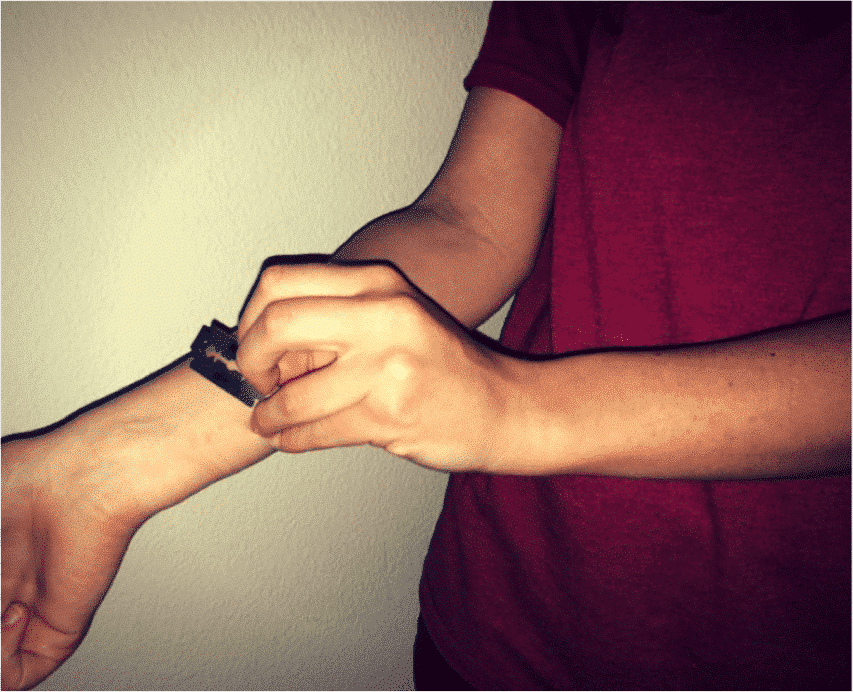
Teenager About to Cut Arm with Razor
Pia was 13-years-old when she cut herself for the first time. She was confused, lonely, and hopeless. Self-harm provided a distraction from her emotional pain and anchored her to her physicality amongst the numbness. She started with a tiny cut, ultimately inflicting deeper and deeper cuts. Even the hours anticipating cutting brought her comfort. She found a community of cutters on an online forum who provided support and caring while also encouraging more dangerous behaviors. She wasn’t alone with her shameful secret. But she wasn’t stopping either … Could your child end up like Pia?

Cutting

Cutting refers to self-harming practice distinct from a suicide attempt. Cutters typically make small superficial cuts on their arms, legs, or parts of the body easily concealable by clothing. Cutting distracts the individual from emotional pain, releases endorphins which may trigger a mood boost, and is often a cry for help rather than an intent to inflict lethal harm (Davis, 2005).

Dr. Bennett often treats teens and adults who self harm. I’ve also seen several cutting incidents working as a paramedic. Because the cutting ritual can take on profound meaning, some injuries are uncomfortably creative. For instance, I’ve seen kids cut shapes, patterns, words, and even sentences into their skin. When I interviewed Pia for this article, she showed me her first “masterpiece,” the word “HATE” cut into her right thigh.

Why cut?

Pia: “I remember a painful time in my childhood when my dad didn’t come home at night. My mom told me he had troubles at work, and that I shouldn’t be worried. But then it started to become a habit, and my dad would be gone most days of the week. I was really attached to him. I missed having a male role model and friend who could tell me what to do when there seemed to be no way out for me. When my parents got a divorce my world fell apart. I felt lonely, hopeless, sad, and misunderstood. I withdrew more and more, lost most of my friends, and started to become depressed. Since I wasn’t able to soothe my emotional pain on my own, I looked for answers online. That was when I found out about cutting.”

***
The most common reasons teens give for cutting are that they’re trying to make themselves “feel alive” instead of the numbness, or they’re trying to distract themselves from intense or overwhelming emotions such as anger or hurt (McCoy, 2009).
***

That was true for Pia. She wanted to have the control and power of harnessing pain whenever she wanted. She said that sometimes when she woke up in the morning, she felt nothing but emptiness. Cutting helped her “feel” her body again rather than just feeling intense emotional pain.

The controversial Netflix show 13 Reasons Why addresses self-harming behavior, with the main character ultimately committing suicide, leaving behind her audio-recorded 13 reasons “why”. The show was a huge success, with children of all ages binge-watching it over spring break without their parents’ consent. I wondered, if this show could be a danger to teens already on the edge?

During an interview for I-heart radio, Dr. Bennett referred to the show and stated that a majority of people have suicidal fantasies at one time or another. She suggested that 13 Reasons Why could trigger vulnerable teens. She lectured in our psychology class that she has seen self-harming behavior be quite contagious in schools and inpatient treatment settings, spreading from teen to teen quickly. Now the Internet is a source of cutting contagion.

Who cuts, and how common is it?

Cutting is a fairly common practice in the United States. There are about two million cases reported annually with approximately 15% of teens reporting some form of self-injury. Studies show an even higher risk for self-injury among college students, with rates ranging from 17%-35% (Mental Health America, 2013). One in five females and one in seven males have engaged in self-injury practices (Gluck, 2016). Ninety percent of people who engage in self-harming techniques start during their teen or pre-adolescent years (Gluck, 2016).
Parent Researching Cutting Epidemic on Laptop

Did the Internet contribute to Pia’s cutting?

Pia: “I remember sitting at my desk. I was supposed to do homework but instead I Googled “how to deal with emotional pain.” Somehow I stumbled on a few websites which mentioned cutting. Pretty soon I was hooked, researching for hours and eventually finding a useful tutorial how to start my first cut.”

Experts say the Internet is the main contributor for teens to not only find out about the various methods of cutting but also to demonstrate or even glorify self-injury (Steinberg, 2014). Forums like “The Cutting-Board” encourage kids to share their concerns and questions about cutting and find useful expertise. Tips and tricks about how to hide their cuts, what do to if someone gets suspicious, or advice when cutting-goes wrong are popular posts. Furthermore, there are several YouTube tutorials of “how to cover up your scars after cutting,” like a video by 14-year-old Julia Ansell.

How to recognize that your child is cutting

Concealing clothes
If your child suddenly starts wearing long sleeves even during hot days, this could be a sign that she is hiding injuries or scars.

Behavioral changes
Social anxiety, depression, and low self-esteem are often comorbid with cutting (Davis, 2005). If your child starts isolating, eating more or eating less, sleeping more, acts lethargic, isn’t interested in his usual interests, or acts sad or irritable, keep an eye out for self mutilation practices.

Spending time browsing for information about self harm and visits on online forums
Kids often use secret terminology to hide their online activities from parents. Hashtag terms like #sue (a synonym for suicidal) or #secretsociety123 are popular code words to discreetly form online communities discussing self-harm (Yandoli, 2014). Sometimes pictures with these hashtags overlap with other self-harming techniques or mental disorders like anorexia (#ana) or depression (#deb).

Possession of cutting tools
Keep an eye out for sharp objects that may be used for cutting, piercing, or burning like razor blades, knives, paper clips, broken glass, scissors, needles, or lighters.

Cuts, bruises, burns, or scars
Kids will occasionally change methods or location if they fear detection. Escalation is rare but can become an issue. Dr. Bennett has treated clients with comorbid mental illness that went as far as breaking joints with a ball ping hammer or engaging in oddly ritualistic mutilation like the practice of suspension (piercing the skin with hooks and hanging from them).

What you can do for your child?

Be empathetic and sensitive
If you see evidence of intentional injury, ask about it in a straightforward, emotionally neutral manner. Of course share your concern, but be careful not to escalate the situation by panicking, threatening, or lecturing.

Be supportive and present for your child
Let your child know he or she can always come to you with any troubles, issues or concerns. Make yourself available and willing to talk when your child approaches, on her terms. Kids often avoid talking to their parents, because they’re afraid that they’ll lose their trust or add an additional stress factor to an already stressful situation, like going through a divorce or financial issues (Steinberg, 2014).

Express your emotions
Be authentic and present. Not only does this model appropriate communication strategies, but your child will recognize that he is loved and important. Tell him that you can get through this together.

Seek help and treatment
Cutting is often an expression of distress from mental disorders, like depression or anxiety. Consult a clinical psychologist who has specialized training with self harm behaviors. Not only can a clinician work with your child to achieve insight and build resilience by teaching emotional coping skills, but she can also provide much needed consult and support for family members. Often times kids will accept influence from a therapist even when they are dismissive of parenting support.

CSUCI Intern, Lisa Sommer Thank you to CSUCI Intern, Lisa Sommer for writing this important piece. Please share your thoughts in the comments below. Self harm forums are common on the dark net. To find out more about that, check out Dr. Bennett’s article, GetKidsInternetSafe Sheds Light on the Dark Net: Drug Traffickers, Child Pornographers, and Nude Selfies.

I’m the mom psychologist who will help you GetKidsInternetSafe.

Onward to More Awesome Parenting,

Tracy S. Bennett, Ph.D.
Mom, Clinical Psychologist, CSUCI Adjunct Faculty
GetKidsInternetSafe.com

*Due to professional discretion, Pia is a fictional name.

Works Cited

Davis, J.L. (2005). Cutting and Self-Harm: Warning Signs and Treatment. WebMD, Retrieved April 23rd, 2017 from: http://www.webmd.com/mental-health/features/cutting-self-harm-signs-treatment#1

Gluck, S. (2016). Self Injury, Self Harm Statistics and Facts. Healthy Place, retrieved April 24th, 2017 from: https://www.healthyplace.com/abuse/self-injury/self-injury-self-harm-statistics-and-facts/

McCoy, K. (2009). When Teenagers Cut Themselves. Everyday Health, retrieved April 23rd, 2017 from: http://www.everydayhealth.com/kids-health/when-teens-cut-themseleves.aspx

Steinberg, S., (2014). What to Do If Your Child Is Cutting. US News, retrieved April 24th, 2017 from: http://health.usnews.com/health-news/health-wellness/articles/2014/02/28/what-to-do-if-your-child-is-cutting

Krystie Lee Yandoli (2014). Inside The Secret World Of Teen Suicide Hashtags. For buzzfeed, retrieved April 30th, 2017 from https://www.buzzfeed.com/krystieyandoli/how-teens-are-using-social-media-to-talk-about-suicide?utm_term=.jtRrkE8Q9#.kpAzK8oX6

Photo Credits

Girl with a Razorblade, 2016 CC0 1.0

Girl on the Laptop, 2016 CC0 1.0

The Underworld of Hashtags: Does Your Teen’s Hashtags Hide a Secret?


Since the 2010 launching of the mobile app, Instagram, users share pictures and videos with their peers like never before. While this social media app provides a fun and convenient way to show off family photos and adorable pets, it can also be a source of worry for parents. Do you worry about who is viewing their child’s photos and what they are posting? If so, you’ll be happy to learn about the possible dangers of hashtags.

What are hashtags?

Hashtags are “#” symbols in front of words or short phrases that drop them into a posting page with the same tag. Sorting content this way allows others to see your picture and any other pictures that use the same hashtag if your social media profile is not set on private. Click on a hashtag phrase like “#Monday”, you would be directed to a page of #Monday photo collections from all Instagram photos tagged with #Monday from various user profiles.

Hashtags seem harmless, should I worry?

Most hashtags are used for fun and harmless sharing (#MomGoals, #GKIS). However, as with any social media trend, teens often use this tool to find and contribute to pages with explicit material. One way to hide this activity from parents is to use vague or shortcut terms.

An unfortunate example of this secret language is for pictures depicting images of self-harm (#cutting) and eating disorders (#mia, #ana). While some profiles provide helpful information to help empower those in distress, others overtly encourage self-destructive behaviors. These online communities are commonly known to share detailed techniques and strategies, provide emotional support, and serve as a launch pad for online friendships. In my clinical practice, these relationships often spiral into emotionally dependent and frequently abusively manipulative pairings that remain hidden and are resistant to protective parent intervention.

Hashtags are used on most social media sites, including Instagram, Twitter, and Tumbler (Whitlock, 2009 & Nock, 2010, as cited in Moreno, 2015). Although many kids go looking for these forums after they’ve already experimented with concerning behaviors, others get started this way (Seko, 2011, as cited in Moreno, 2015).

Until social media sites improve the strength of their content advisory, parents must keep their children safe from viewing explicit content.

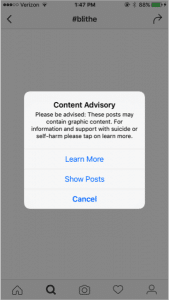
Instagram now has a content advisory that pops up and warns users of content that might be graphic and even provides resources for help with eating disorders and links to helplines. However, just as kids are great at creating sharable online resources, they are also great at staying hidden from parental interference. For example, in a 2015 study that identified similar hashtag meanings on multiple social media sites, vague and hard to identify hashtags including “#mysecretfamily”, “#blithe”, “#Bella” or “#Ben” (a term used for Borderline Personality Disorder), “#Ana” or “#Rex” (used to reference Anorexia), and “#Sue” or “#Dallas” (terms for suicide) (Moreno, 2015). Only a portion of these hashtag terms generated a content advisory warning.

GKIS TIPS for protecting your children from viewing destructive online content:

  • Check out social media site help centers for information. For example, Instagram’s help center provides downloadable privacy and safety guides for parents, teens, and gives information and resources for addressing abuse and eating disorders. 
  • Make sure that your child’s social media profiles are set on private.
  • Have open conversations about what your children view and post online. Remind them that they can talk to you if they do accidently view images, post, or receive something that makes them uncomfortable. No blame, no shame.

By opening up nonjudgmental conversations about what your child may view on social media and mental health issues, you model healthy communication skills, promote stigma free views on mental health, and most importantly, develop a positive and loving relationship between you and your child. If you feel they are too young for these discussions, then they’re too young for social media.

Parenting can be incredibly difficult at times. Parenting a teen struggling with painful psychological issues is particularly scary. In situations like these, many aren’t sure where to turn or what to do. As a psychologist and a mom, I want to remind you that you are not alone. Whether your concerns are about Internet safety or getting a better understanding of where your psychological issues your child may be dealing with, GetYourKidsInternetSafe is here as your resource.

Thank you to CSUCI Intern, Brooke Vandenbosch for teaching us about the #RisksofHashTags. If you’re looking to get a better understanding of issues your teen may be struggling with like suicidal ideation, check out my other article The Death of Robin Williams: Suicidal Impulse, the Media, and Your Obligation As a Compassionate Citizen of the Planet.

I’m the mom psychologist who will help you GetYourKidsInternetSafe.

Onward to More Awesome Parenting,
Tracy S. Bennett, Ph.D.
Mom, Clinical Psychologist, CSUCI Adjunct Faculty
GetKidsInternetSafe.com

Photo Credits

I Died So I Couldn’t Haunt You, CC BY-ND 2.0

Holding Hands, CC BY-NC 2.0

Works Cited

Moreno, A.M., Ton, A., Selkie, E., & Evans, Y. (2015). Secret Society 123: Understanding the Language of Self-Harm on Instagram. Journal of Adolescent Health, 58, 78-84

What We All Need to Remember About Public Shaming and Parenting the Suicidal Teen


Screenshot-2015-06-07-11.48.43

It’s happened again. Another hopeless teen chooses suicide possibly in response to cyber bullying, and this time it is tragically from her dad, a dad who posted a public-shaming video of Izzie Laxamana sitting defeated with her beautiful black hair blanketing the floor around her as he scolds her for “getting messed up.” What was she thinking jumping off the 48th Street Bridge? What was her dad thinking?

None of us will every know, but I suspect neither of them were thinking clearly. As a mother of three, psychologist, and creator of GetKidsInternetSafe I treat the suicidal teen and unthinking parent everyday. And before we rant self-righteously about what a monster this grieving father was, take a moment and reflect on your less-than-stellar parenting moments, those times you ranted, or humiliated, or hit. Recall your desperation, your fear, and your hope that this time your kids would actually listen. Because of this one impulsive intervention, maybe they’d steer clear of what was looking like a careless leap into the lake of entitlement, cruelty, or peril.

Let’s face it. Nothing makes us more crazed than our love for our babies, love that is tinged with shame and fear that we are not being our best parent, that we failed in our efforts to protect them from the dangerous things in the world. We let them watch that violent movie or allowed too much access to friends on social media who were poor influences. We did it because we wanted to make our kids happy. They begged and pleaded and it was a sweet opportunity to let them know we love them and listen to their feelings and desires. They told us to trust them, and we did. Or that time we went too far when they didn’t pick up their backpacks from the billionth time, threatening to retire as their parent or never let them do anything fun again, ever.

If you were really honest, can you say that you have the perfect formula of discipline and affectionate connection dialed in? Because if you can say yes, then your kid is either a robot or you are in deep denial. After all, the best way to teach our kids is to allow them, and ourselves, to fail – and recover, with humility, validation, and self-compassion.

The psychological research is squarely in favor of authoritative rather than authoritarian or permissive parenting. Being authoritative means being attentive, consistent, warm, strict, validating, and forgiving; not a tyrant demanding of blind obedience and not a friend accepting of all choices. Sometimes that means parenting with affection and humor. Other times it means laying down a consequence that your kids will be really angry about. But most often, it means gently guiding them through a protected path while letting them know you love them through it all, achievements AND mistakes. That includes sharing your own accomplishments and failures and limiting their exposure to content and people that pose risk or may come between you and your gullible child.

As I sit here, my heart aching from this beautiful lost child and her tortured father, I’d like to share my guess of the vulnerability this dad caved to that contributed to the loss of his daughter. Fear. In twenty years of practice I have learned to keep a keen eye out for the one thing that people seem determined to make happen, and that is to make their biggest fear come true.

I promise you it happens to all of us. Those who fear abandonment will challenge their loved ones to leave in the most ingenious of ways. Those who fear infidelity will accuse and threaten until their loved ones throw up their hands and stray. Those who fear disobedience will smother until survival depends on an epic reach for independence. Those who fear rejection will permissively allow until their loved ones to beg for boundaries.

If you are rolling your eyes in denial that you would fall victim to fear, I suspect you’re in the most danger. And if your wide-eyed and swallowing all that this article is offering, I suspect you may also need some support. Heck, if you’re breathing you deserve a hug today. Because life is hard and parenting well is even harder.

But rest assured that there is good news about fear. With patient reflection and an open heart, it doesn’t take much to identify the fears that threaten to take over the wheel. And from those insights, one can seek out the support they need to be better, do better. We can’t do this alone. If you worry you haven’t set a firm safety plan for screen use in your home, check out the GetKidsInternetSafe Screen Safety Toolkit to get started TODAY.

I’m the mom psychologist who will help you GetYourKidsInternetSafe.

Onward to More Awesome Parenting,

Tracy S. Bennett, Ph.D.
Mom, Clinical Psychologist, CSUCI Adjunct Faculty
GetKidsInternetSafe.com

This news report states Izzy wrote suicide notes on her iPod, including one to her dad saying she loves him very much and he is not responsible for her actions. Apparently her dad did not post the video. Izzy gave it to a friend who posted it on social media. An investigation revealed that there were several contributing stressors, including a history of bullying and embarrassment about sending a selfie in sports bra and leggings to a boy at school:

For my cautionary tale about selfies being passed among teens, check out http://goodmenproject.com/featured-content/hey-dad-your-twelve-year-old-daughter-has-a-nude-out-wcz/

The Death of Robin Williams: Suicidal Impulse, the Media, and Your Obligation As a Compassionate Citizen of the Planet


ROBINWILLIAMS-300x292

As a practicing clinical psychologist for twenty years, I have treated the desperately hopeless, tortured souls of the suicidal on many occasions; each with his or her unique story and lonely grief. Soothing the suicidal person is not an easy part of my job. Most psychologists recognize that we will probably lose a patient to suicide sometime in our career. And we fear it. We also help those patients fight their destructive impulses with everything we’ve got for excellent reasons.

The news of Robin William’s death by asphyxiation struck me with the deep compassion that appears common to his adoring audience. It’s profoundly sad to think of this gentle, hypomanic funny man desperate enough to call it quits. He was open about his struggles with depression and addiction, yet we wonder how he could not be led to hope with all the help available that money can buy. I have many ideas about the loneliness of fame and how his years of alcoholism and cocaine abuse may have depleted the very dopamine receptors that would have allowed him to fully capture the joys of life. But instead of exploring Robin’s reasons, I’d like to discuss my fears of how his death may influence others and ask for your help.

In 1996, I wrote my dissertation about suicide. I completed a comprehensive review of the literature, held trainings, and currently teach about suicide in my university courses. One of the scarier facts I’ve learned and witnessed over the years is how suicide can be a contagious behavior. When a community loses somebody to suicide, mental health experts hold their breath and brace for battle. And now in the digital age, and with the constant bombardment of media from our many treasured devices, few escape full immersion into salacious stories such as Robin William’s suicide.

The most prominent message in the media appears to be WHY?

There are many theories about what leads to suicidal ideation; depression, hopelessness, lack of social support, spiritual crisis, etc. And each of these is critical to assess for each individual. However in my view, at its core, suicidal impulse is a problem-solving deficit. It is a concrete, black-and-white, easy answer to escape emotional pain. It is where people often go when they are too overwhelmed to reason. Fortunately, it doesn’t take long in the face of reason for suicide to extinguish as a real option.

It is a rare individual who has not fantasized about suicide. It is a tempting solution whether it be the hope of a quick escape from emotional torment or a hostile act of “I told you I was hurting!”. Until, that is, one realizes how it hurts the survivors and leaves them without opportunity for resolution. In most circumstances, suicide is a hostile act that leaves emotional wreckage in its wake. Loved ones are left with the blunt force of despair, anger, and torturous guilt if something they did contributed to their loved one’s anguish, or, alternatively, if they could have done something to save him. Or, in the worst circumstances, if joining him in self-murder is a reasonable option.

Profoundly injuring those who love and know you seems too hostile to contemplate. Other achievable, less destructive solutions to overcoming emotional pain may emerge.

Solutions are what I work furiously to coax forth in session when I excavate suicidal impulse from my client’s emotional landscape. Of highest priority is facilitating honest expression of emotional pain, then validation, exploration, and gradual reassurance and guidance toward hope; the hope that emotional agony is temporary and relief will come soon; that a sunset, a hug, a memory, or a delicious meal may be all that is needed to provide nurturing relief. My goal in session is to provide compassionate psychoeducation that there are other solutions. And being fortunate thus far to have not lost a client to suicide (although there have admittedly been some close calls), I have witnessed countless recoveries from despair. I have been blessed with the profound rejoice and gratefulness of my clients who thank me for helping them come out better with rejuvenating hope. It is these moments that inspire me to remain in the battle. But the battle has become even more complicated in the digital age.

Just as I am grateful for the love that permeates this planet and protects its citizens, I am also furiously mind-boggled by those who feed hopelessness and encourage reckless destruction. In face-to-face encounters most people cannot carry through with hostile encouragement of another’s suicidal ideation. Behind a computer screen, however, there seem to be many anonymous trolls who lurk to attack and hurt others, getting off on the shared “connection” they may form with a suicidal audience despite its potential destructive consequence.

We have all become aware of dastardly cyberbullying campaigns that have led some to despair, but are you aware that there are actually websites and chat groups that provide instruction and encouragement for suicide? It seems impossible to imagine that people would contribute to that, doesn’t it? Well they do, and it’s our job to step up and do extra to protect the vulnerable from these hostile individuals. Perhaps these enablers insist they are there to provide honest validation and sought-out instruction and that suicide is a real answer for some that are in pain. However, I would argue that most visitors to a site like this are not the terminally ill seeking a peaceful rest, but instead the confused and frightened among us who need a helping hand toward recovery rather than a push in the direction of shattering destruction

If you suspect somebody you know is emotionally struggling, please don’t ignore it or keep her secret. Ask frankly if she is thinking of suicide and commit to finding the help she needs. Love her fully AND get her to a trained mental health expert who can help you both navigate these treacherous emotional waters. And if you are a parent, educate your children and filter their exposure to Internet predators who want so badly to feel important that they will fuel even a descent into emotional hell. Most importantly, have compassion for the pain of the suicidal and those who have lost loved ones.

Rest in peace Robin Williams. I may not agree with your choice, but I offer my love to your soul and all of those who have cared for you and are hurting from your loss.