
Need peaceful screen time negotiations?

Get your FREE GKIS Connected Family Screen Agreement

suicide

Anthony Bourdain and Kate Spade: Why Americans are Suicidal

Another tragic news story this morning; Anthony Bourdain committed suicide in his France hotel room. Chef, author, and host of the wildly successful series “Parts Unknown,” 61-year-old Bourdain seemed to have the dream life to the rest of us. This news after famous 55-year-old designer, Kate Spade, was pronounced dead by suicide Tuesday. She left behind a 13-year-old daughter. Devastating. So many speculations about depression and marital conflict. We are all asking, why? How could this be?

It’s not just celebrities that struggle with emotional overwhelm. Too often parents in my practice sit on the edge of my couch terrified that their child’s social media post about wanting to “go dark” and their announcement that they have the lamest parents ever is the red flag that they could lose him to suicide. Teens tell me how burdened they are with worry about their friends who are cutting, using drugs, and talking of suicide. They keep their confidence and listen; all the while caught in terror that telling an adult will violate the loyalty code but not telling may result in a more tragic consequence. Those who are suicidal leak their pain out bit by bit, desperately grasping for a moment of contentment and calm. Suicide rates are up by 25%, yet we aren’t clear what factors support this devastating trend.

Although many suicidal people are depressed or addicted to drugs or alcohol, many are not. The one thing suicide completers have in common is a perfect storm of events that culminate in five minutes of the courage it needs to escape their current situation. For those who are suffering from terminal illness, chronic pain, addiction spirals, mental illness, and/or horrific life circumstances, we can kind of understand that logic. After all, who hasn’t dreamed of a moment of relief when mired with emotional or physical pain?

Those Left Behind

What we don’t understand, and in many circumstances can’t forgive, is how can the suicidal burden friends and family with such devastating feelings of confusion and loss. When one loses a loved one to suicide, they are left ruminating over what they missed, how they might have intervened. They grieve, and they rage. They become trapped in that vicious cycle of fear and confusion similar to the suicide victim, usually for far longer than the suicide victim contemplated their plan. With postmortem analysis, there’s no opportunity to discover all the pieces of the puzzle or intervene for recovery. The decision to give up has been made for them, usually without sufficient explanation or warning. If one didn’t know better, it would seem suicide is a violently hostile behavior aimed at all those who love.

We must know better, for the sake of Asia Argento, Andy Spade, and Frances Beatrix Spade. And please, please, please don’t judge or shame the victims left behind. I’m disgusted with online comments blaming parents and spouses. They are suffering so much already. They need our love and compassionate support more than ever.

The truth is, most suicidal individuals I have worked with explain after recovery that they simply couldn’t generate any other alternative to escape their overwhelming feelings of hopelessness. That in the midst of it all, they were simply numb to possibilities.  This brings me to three important points when dealing with suicidal ideation.

 

Take the Time

First, to recover from life crisis, one must be prepared to take the time to process powerful feelings with the intent of working through them. That means recognizing that in the phase of emotional numbing or overwhelm, parts of the brain are actually offline. They are not available to fill in the overall picture of understanding and insight. Often it takes time to sketch in the emotional factors necessary for insight and emotional mastery. As our brain and feelings come online again, we will feel a range of sometimes baffling emotions. For some that is experienced as a slow drip, while for others it will be a firehose. For most, those feelings wax and wane based on situational cues, resulting in a rollercoaster of experience. Painful and sometimes seemingly impossible, tolerating the leaning in is necessary for the stretching of the soul that is wisdom.

To support those struggling to lean in, help them establish peaceful moments for honest, investigative discovery. These moments of authentic insight weave into profound wisdom over time that becomes the tapestry of who we really are. Coming out of a crisis with a more integrated and thorough understanding of oneself and others is called post-traumatic growth. Sometimes it is at times of extreme pain that one becomes capable of understanding the precious elements of life. The key is to lean in and patiently recognize that recovery is imminent.

Encourage Active Problem Solving

Second, work to achieve recovery by actively problem solving and making an activity schedule (take a walk, shower, eat breakfast, visit a friend, make a meal, listen to rejuvenating music, write in your journal or engage in some type of creativity). Psychology researchers have identified active problem solving as an important contributor to recovery. Active problem solving is the ability to generate and implement discrete steps to make the situation better. In contrast with passive problem solving, or relying on others or fate or luck to fix things, active problem solving can pull in just enough hope to get help or find reasons and ways to stay living until things get better.

Agreeing to Silent Witness May be Emotional Abuse

The final point I’d like to offer is how to provide the best support to a friend or loved one in pain. Too often young people in my practice shoulder the devastating burden of the emotional chaos that their friends express in private online disclosures. To seek help is a breach of trust and loyalty. But to endure the pain with the friend can wear one down to the point where they too are depleted of passion, hope, and joy. Is the solution to tell adults for help and risk angering the friend who seems incapable of tolerating yet another disappointment?

The answer is, absolutely. Every day I teach clients that being there for those we love is the fuel of intimacy. However, when one crosses the line to self threat, either with self harm, drug abuse, or suicidal threats, private disclosure can become emotional abuse. When friends fish for support with threat and then demand secrecy, they are burdening others in a helpless shackle of emotional violence. Unloading pain on a loved one without taking steps for recovery traps them as a devastated and impotent audience to destruction. That is not friendship.

If you or somebody you love is struggling with emotional overwhelm, numb hopelessness, or an inability to actively problem solve, take these steps for relief:

  • Reach out for professional help.

  • Recognize that these feelings are temporary. The permanent solution of suicide is too devastating to all of those who love you to be a reasonable option.

  • Give yourself the occasional self-compassionate, quiet time it takes to gently process your feelings as you engage in the routines and rituals of everyday life.

  • Avoid alcohol (a depressant).

  • Seek restorative sleep, exercise, and clean, delicious food.

  • Postpone big decisions.

  • Allow your friends the privilege of support and surround yourself with pleasant memories and precious future plans.

  • If you are witness to self-harm threats, whether this is your loved one, your friend, or your child’s friend, notify the person’s loved ones or reach out for professional help. Silently shouldering your knowledge is missing opportunity for potentially life-saving intervention.

Life is a difficult journey, but it is worth the fight of living it well. When in doubt, always err in the direction of compassion. What do you think? To read more about the components of suicide risk, check out my 2014 article The Death of Robin Williams: Suicidal Impulse, the Media, and Your Obligation As a Compassionate Citizen of the Planet.

National Suicide Prevention Hotline: 1-800-273-8255

Live & online chat available 24 hours/day

I’m the mom psychologist who will help you GetKidsInternetSafe.

Onward to More Awesome Parenting,

Tracy S. Bennett, Ph.D.
Mom, Clinical Psychologist, CSUCI Adjunct Faculty
GetKidsInternetSafe.com

Photo Credits

Photo by Ian Espinosa on Unsplash
Investors Urge Apple and Parents Petition YouTube to GetKidsInternetSafe. Has the GetKidsInternetSafe Revolution Begun?

This has been a big week for grassroot efforts to GetKidsInternetSafe. First was the petition urging YouTube to delete the account of wildly successful YouTube celebrity, Logan Paul, after he tastelessly posted a video showing him giggling alongside a suicide victim. Second was an open letter from two investors urging Apple to help parents with screen management due to screen addiction rates among children. Although research is scrambling to get current, there is substantial evidence that kids are being exposed to harmful content and addicted to their mobile screens. These two precedent-setting moves reflect growing concern and awareness about the very aspects that spurred me to create GetKidsInternetSafe; that technology is profoundly changing childhood and even brain development. After her inspiring Golden Globes speech about our influence on kids, we need Oprah to help us get the GetKidsInternetSafe Revolution some momentum!

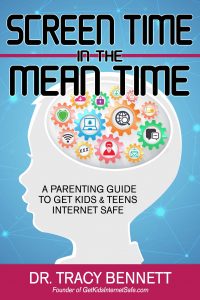
In the introduction of my book Screen Time in the Mean Time: A Parent Guide to Get Kids and Teens Internet Safe, I describe how childhood and parenting has made a profound shift.

In modern times, child screen use has had a greater impact on the American family than anything since the abolition of child labor in 1938. Parenting has become a full-time preoccupation. Kids don’t labor for parents, parents labor for kids. Because of what we perceive as society’s high expectations of parents, raising healthy, happy kids has become overwhelming. We are expected to faithfully care for and entertain our children most of our waking hours without complaint. Although parents are waiting later to have kids and having fewer kids per family, with both parents working and the disappearance of extended family help, we have fewer supportive resources than ever before.

Even with little support, we have been accused of “helicopter parenting” to keep our kids safe and successful. We too often expect our kids to earn 4.0 GPAs, awards in robotics, and trophies in sports. Cs aren’t “average” anymore, now they’re a mark of parents not helping enough with homework. Our fear that we aren’t doing enough trickles down to our kids in the form of encouraging lectures and, too often, scathing shame and disappointment. We know this is too much pressure. So in between the “enriching” activities we work so hard to provide, we allow them leisure time…more leisure time than any children in history.

Parents are no longer willing to order their kids to go play outside until the streetlights come on. It’s too scary knowing what we do about child predators, bullying, sex, and drugs. To keep kids safe, we shelter them inside our houses to save them from the world’s perils. Instead of running amok like we did with hordes of neighborhood kids creating spontaneous, street-smart missions, they watch screens. And while they’re on their screens, we’re also on ours. Screen time gives us much needed breaks and provides what we hope is enriching content and a primer in digital literacy. But the troubling behaviors our kids demonstrate while compulsively viewing videos, social media, and video games eerily resemble signs of addiction. And we are the dealers, providing screens too often while they’re too young. We are hooked too. We feel guilty, but it’s often the best we can do. Screen technology has transformed childhood and parenting.

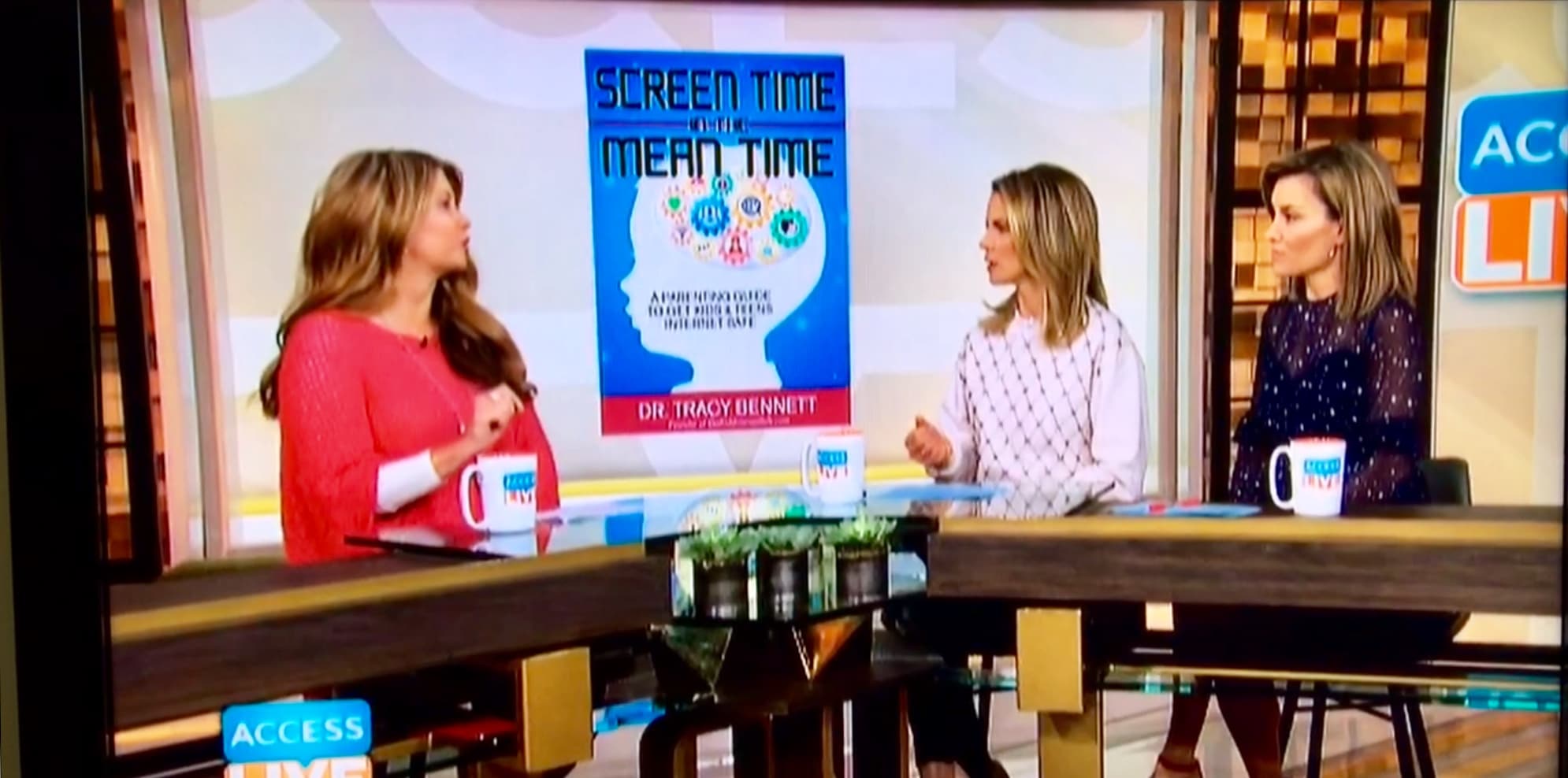
Thursday, Universal’s Access Hollywood Live, again hosted me as their parenting expert to talk about America’s concern about the negative impact of inappropriate video content through YouTube. As I stated on the program, the content that gets through is tantamount to child abuse, and kids don’t have insight into their psychological vulnerabilities. It is up to parents to filter and monitor. But we all know that there isn’t a tool strong enough to keep out sneaky algorhythms and celebrities and corporations bent on viral views that translate to big profits. We need help…and soon!

In their open letter to Apple, activist investors Jana Partners and the California State Teachers’ Retirement System (Calstrs), detail how surveys and studies definitively demonstrate that “it is both unrealistic and a poor long-term business strategy to ask parents to fight this battle alone.” They go on to say, “Imagine the goodwill Apple can generate with parents by partnering with them in this effort and with the next generation of customers by offering their parents more options to protect their health and well-being.” With their $2 billion dollar’s worth of Apple shares, their message is bound to get Apple’s attention.

Let’s be honest here. There is a rich clubhouse of companies that share the responsibility of the wellbeing of the world’s screen-watching kids. Youtube and Apple, yes, but grassroots activitists like myself are also reaching out to collaborate with other influential tech-giants like Facebook, Twitter, Instagram, Snapchat, Google, Amazon, and Disney, among others.

Until we come up with technology tools and sensible legislation protecting our kids from destructive violent and pornographic content as well as distracting, brain-changing, addictive use habits, we are stuck to do our best. Like I said on nationally syndicated television Thursday, how about we start by making our voices heard!

Here are the talking points from my AHL visit with fellow concerned moms, Natalie Morales and Kit Hoover:

Logan Paul has 15 million subscribers. He posts a 15-minute video a day, getting 300 million views a month (making 12-15 million dollars off these videos). His eager subscribers are primarily young people. How do you monitor?

With good old-fashioned supervision, location parameters, and rules to start. No screens in bedrooms, bathrooms, or behind closed doors. Dock mobile screens at night and set a Wi-Fi curfew. The GKIS Family Living Agreement helps get parents on-track.

YouTube does have a “safety” mode, but that doesn’t always prevent your child from seeing this content. Is it more about having a conversation as a family? How should you approach this?

There is a YouTube Kids site that also helps, but yes, it is about having conversation as a family, and a lot of it. Recognize that kids don’t yet have the experience to understand psychological vulnerabilities. Use current, fact-based information like that offered for free and delivered weekly on GetKidsInternetSafe to keep the conversation going. Saying “don’t do that” isn’t enough. Follow the specific conversation starters and sex ed tips offered in Screen Time in the Mean Time to ensure your kids know the difference between sensational content designed for profit (fake news) and content that reflects real-life, factual scenarios.

You have to be 13 years or older to use YouTube, but many of his followers are under the age of 13 (including Kit’s son)….

Exactly. We are all guilty of monitoring failure. We simply can’t supervise our kids 24/7, nor is it appropriate to do that. Social media platforms say 13 years old is required for use, but that is based on privacy issues rather than sound psychological reasoning. Accidental exposure is the most common type, but recognize that kids and teens are developmentally curious and bold; they’ll go looking for distressing material.

Is there a problem with kids being desensitized from these type of videos? Some kids who viewed this may have thought nothing of it.

My GetKidsInternetSafe articles detail how desensitization and even PTSD symptoms can result from livestream video viewing by kids and adults! Not only should Logan Paul have had x-generation team members to help him with common sense and compassion in that Japanese “suicide forest,” but our kids need a support team too. The victim ended his life in deep despair and his family members are destined to maintain it in their grief. Parents must specifically teach empathy and  compassion and recognize that viewing violence and flippantly talking about issues like suicide can create real risk, like suicide contagion – a dangerous cry for help.

People are calling for Youtube to suspend Logan Paul’s account after posting this video. Do you think that’s the right move? Are you surprised Youtube hasn’t taken action?

The truth is that YouTube profits from viral videos, and you can’t help but wonder how often does profit get in the way of ethical constraint or human compassion. I think that parents need to advocate for better safety measures on all the livestreaming platforms. In my practice, I treat kids who are commonly viewing violent pornography, imitating life-threatening stunts, and engaging with human traffickers, hate groups, and child predators. The research is showing that seeing hours of livestream news video, like what we saw with the Las Vegas shootings, can be more psychologically distressing than being a live witness to the tragedy! We can prevent this, and more can be done.

What can you do today?

Decide on a course for getting kids Internet safe by advocating with your favorite organization, like GetKidsInternetSafe.

At the time of this publication, the “Delete Logan Paul’s YouTube Channel” petition by an unknown author on Change.org had over 465,000 signatures. I personally wish the petition was addressed to YouTube with a plea to tighten their security measures rather than publicly shame Logan Paul. Although he is on a well-earned break, he took the video down himself. Before he did that, it still got over 6.5 million views and is currently being shown by other YouTubers who are at once shaming him for his judgment while simultaneously rebroadcasting the videos. Really folks? Hypocrisy in action.

Clean up your own screen use habits.

We are all habituated to picking up our phones in the meantime, whether it be waiting in line or during soccer practice. Let’s all make a little more effort to stay in the present with our kids and risk being alone with our thoughts. Remember what that used to be like? 🙂

Get educated by reading books like Screen Time in the Mean Time.

While we all spend the meantime on our phones, the mean time is being fueled. There are online risks to kids that most parents have never dreamed of. The future is here and despite how many of us, like Kit Hoover, wish we could go back to kick-the-can days, digital literacy is necessary for academic progression. Our kids won’t hear of no-screen weeks, nor will we. That means we need to get brave and educated. You may think you’ve heard it all, but I’m certain my information will help you make a more comprehensive and sensible safety plan and bring you closer to your kids. At the end of the day, what matters is that we do a good job raising great kids. Nothing is more important than that.

I’m the mom psychologist who helps you GetKidsInternetSafe.

Onward to More Awesome Parenting,

Dr. Tracy Bennett

Live Streaming Can Cause PTSD in Adults and Children

We are vulnerable to dangers previous generations couldn’t even imagine. We are on-demand, world connected – available to watch any horror from any place. Graphic (meaning vivid or realistic) live stream videos can be found on social media platforms such as Facebook Live, Instagram, TikTok, Snapchat, and YouTube. Children are especially vulnerable to getting upset when viewing violence. Today’s GKIS article covers if the mental illness Post Traumatic Stress Disorder (PTSD) can result from viewing violence on screen.

How Graphic Live Streams Affect Children

Accidentally clicking on a violent video would frighten anybody. Children are particularly vulnerable to trauma, including the development of serious mental illness. PTSD is a mental health disorder in which a person struggles to recover from experiencing or witnessing a traumatic event such as an assault, war, natural disaster, or serious accident. People with PTSD often have severe anxiety and panic attacks when reminded of the traumatic event. They feel stressed and frightened even when there is no danger present.

PTSD symptoms include intense nightmares, difficulty sleeping, and flashbacks of the traumatic event (intrusive images like you’re re-experiencing it). Children younger than six years old show signs of PTSD differently than adults. Their symptoms include behaviors like wetting the bed, being unable to speak, acting out the traumatic event in playtime, and clinging to their caregiver. PTSD is a very serious, debilitating disorder that can leave the individual in a nearly constant state of fear and stress.

Being able to discuss the witnessed traumatic event is a necessary step in treatment. In a study with Danish high school students, subjects who had witnessed a school shooting were assessed for PTSD. It was found that the prevalence of PTSD seven months after the incident was 9.5%. Being unable to talk about the incident was found a predictor of those who developed PTSD.[1]

Studies on Videos and the Onset of PTSD

Because violent videos are relatively new, there is little research on how they affect us. One of the earliest studies was conducted after Americans viewed the television coverage of the 9/11 tragedy.

The researchers interviewed 560 adults three to five days after 9/11. Approximately 90% reported one or more stress symptoms. In contrast, 35% of children had one or more stress symptoms, and 47% were worried about their safety or the safety of loved ones. Ten percent of the children had trouble falling asleep or staying asleep.

In another study, researchers surveyed 4,675 adults who viewed the 2013 Boston Marathon bombings on video. They found that people who had repeatedly watched the tragic footage sustained more trauma and stress than people who had witnessed the events in real life!

Those who watched six or more hours per day of media coverage were nine times more likely to report high acute stress than those who viewed less than one hour a day. Symptoms of acute stress included intrusive or troubling thoughts, feeling hyperaware, avoiding anything that reminds one of the traumatic events, and feelings of detachment.

If your children witnessed a traumatic live stream or Internet video, how would you know if they had PTSD? 

Elementary School-Aged Children

“PTSD in children and adolescents requires the presence of re-experiencing and avoidance, numbing, and arousal symptoms. However, PTSD may not present itself in children the same way it does in adults.”[2] For example, young children may not experience flashbacks like adults with PTSD. They are more likely to experience “time skew” and “omen formation,” which are symptoms usually not seen in adults.

Time skew is the mis-sequencing of trauma-related events when remembering the experience.

Omen formation is a belief that there were warning signs that foreshadowed the traumatic event.

Children often believe that if they remain alert, they will recognize the warning signs and avoid another trauma resulting in chronic hypervigilance, anxiety, and sleep disorders.

School-aged children with PTSD often engage in posttraumatic play or reenactment of the trauma in play, drawings, or verbalizations. Post-traumatic play is a literal representation of the traumatic event in which the child repetitively acts out some aspect of the trauma. This often does not relieve anxiety.

An example of post-traumatic play would be a child shaking a playhouse after they’ve experienced an earthquake.

Post-traumatic reenactment, on the other hand, is more flexible and involves behaviorally mimicking some aspects of the trauma. An example would be carrying a toy gun after being exposed to violence.

Adolescents and Teens

PTSD in adolescents more closely resembles symptoms seen in adults. However, some features are unique to teenagers.

As discussed above, children may engage in traumatic play after the onset of trauma. Adolescents are more likely to engage in traumatic reenactment, in which they merge some aspects of the trauma into their lives. Reenactments occur due to psychological vulnerabilities and defensive mechanisms which are characteristic of PTSD survivors.  Adolescents tend to engage in impulsive and aggressive behaviors more than younger children and adults do.

What can parents do?

  • Advocate for better safety protocols including monitoring and filtering with platforms like Facebook, Instagram, Snapchat, TikTok, Periscope, and YouTube.
  • Filter video access to children by using a child-safe browser, refusing requests to adopt livestream social media apps, and using appropriate child sites like YouTube Kids.
  • Maintain an ongoing dialogue about content viewed online to optimize the chance your child will go to you if they happen upon inappropriate content.
  • Let your child know they won’t be in trouble for accidental views.
  • Be alert for changes in behavior that may be reflective of PTSD like fears, anxiety, bathroom accidents, mutism, sleep problems, appetite problems, substance abuse, or school failure.
  • Seek the help of a child psychologist if you have concerns.

Thank you to CSUCI Intern, Mara Pober for writing this important series to inform parents and help them keep their kids Internet safe. For more parenting advice on-screen media and trauma in children, pick up your copy of Dr. Bennett’s book, Screen Time in the Mean Time: A Parent Guide to Get Kids and Teens Internet Safe.

I’m the mom psychologist who helps you GetKidsInternetSafe.

Onward to More Awesome Parenting,

Tracy S. Bennett, Ph.D.
Mom, Clinical Psychologist, CSUCI Adjunct Faculty
GetKidsInternetSafe

Works Cited

A National Survey of Stress Reactions after the September 11, 2001, Terrorist Attacks (2001)

[2] National Center for PTSD

Prolonged viewing of Boston Marathon bombings media coverage tied to acute stress (2013)

[1] The psychological reactions after witnessing a killing in public in a Danish high school

Viewing violent news on social media can cause trauma (2015)

Photo Credits

Don´t let it happen again

classroom-laptops-computers-boy.jpg

Little Boy Bluescreen

Graphic Livestream Horrors

Popular livestream video platforms, like Facebook Live, Twitter, Instagram, and Periscope, can put viewers at psychological risk with graphic content that’s impossible to moderate or filter. Last week we learned the history of news coverage, including livestream during the recent Las Vegas shooting. Today’s article covers how quickly and dramatically easily-accessed video content has changed with a constantly increasing viewing audience. Is violent livestream video detrimental to our psychological wellbeing? #Vegasstrong

How is livestreaming different from news coverage?

We are all disheartened by the unprovoked mass murder of country concert attendees in Las Vegas recently. Constant bombardment with graphic news coverage left many of us reeling. No longer do news outlets need a reporter on-scene to get dramatic live coverage. Private citizens stream photos and videos from their smartphones real time on the Internet, while outlets choose and air the most dramatic content available.

Graphic news coverage is a relatively new phenomenon. Prior to smartphones, network executives edited out content that would upset viewers. Community standard determined the selection process, with ethics and consumer preference in mind. Livestreaming does not undergo this filtration process. It’s raw, authentic, and very real. Viewers can hear, see, and observe the terror of victims real-time without actually being there.

Livestream Horrors

Imagine the horror of watching a mass murder unfold real-time, helpless to do anything about it. This is exactly what happened to hundreds of Internet and television viewers of recent Las Vegas livestreams. As people livestreamed themselves enjoying the concert, the scene quickly changed. Viewers watched on in horror as the chilling events unveiled. This is not the only case of a tragic event captured on livestream.

In April 2017, Steven Stephens livestreamed himself shooting a 74 year old man on Facebook Live in Cleveland. In the video, Steven is seen in his car saying, “Found me somebody I’m going to kill — this guy right here, this old dude.”  Steven then exits the car and kills Robert Godwin Sr. on the spot. The video was on Facebook live for three hours with hundreds of viewers before it was finally taken down.

In a similarly disturbing incident, a man in Thailand livestreamed himself murdering his daughter.  The recording showed Wuttisan Wongtalay hanging his 11 month-old daughter by the neck from the rooftop of a building. The footage was on Facebook Live for twenty-four hours before it was taken down. Wongtalay later committed suicide off camera. Facebook called this “an appalling incident.”

In another criminal event, Obdulia Sanchez, 18, livestreamed herself on Instagram driving under the influence with two 14 year-old girls in the back seat.  After losing control of the vehicle, she shakes her sister, dead in a pool of blood, pleading, “Jacqueline, please wake up.”

Another particularly noteworthy livestreaming event occurred in January 2017, when four people broadcasted a 28-minute livestream video as they tortured a mentally disabled man. They taped his mouth shut and threatened him with a knife as they beat him, made him drink from the toilet, and cut off a part of his scalp. The first perpetrator to be tried, nineteen year-old Brittany Covington, pleaded guilty to the hate crime and received four years probation where she was ordered not to use social media.

Tolerance of Violence?

Information reaching us faster alerts us to a more accurate reality. This can be beneficial when considering the authenticity of news. But at the same time, instant access to unfiltered media may be desensitizing us to violent imagery. According to the World Health Organization, “Rules or expectations of behavior … within a cultural or social group can encourage violence.”

Children and adolescents who are curious and thrill-seeking seek out content to be shocked, scared, or more “in-the-know.” Other times viewers come across this content by accident. Each of us have our own complicated profile of risk. Perhaps the normalization of violent livestreams reduces our sense of safety, even sensationalizing issues like assault, murder, and suicide. Copycat behaviors seeking notice can also be a problem.

The fact that there are thousands of disturbing videos circulating the Internet at any time makes one question how it got this bad. As a nation, we are becoming more tolerant of viewing violence on-screen. Many argue that certain types of violent videos must be publicly available for informational and educational purposes. In response to this, most Internet platforms have specific rules for how violent videos are filtered.

For example, Facebook now has guidelines regarding which violent videos are permitted to stay on the website and which are removed. Videos of violent deaths are not always taken off the site, because they can help bring awareness to issues such as mental illness or war crimes. Videos in this category are instead marked as disturbing content and blocked from minors. Facebook also permits users to livestream themselves attempting suicide or committing acts of self-harm. The justification for doing so is because they do not want to censor freedom of expression or punish someone in distress. If a person does livestream a suicide attempt, the video documenting the incident may not be taken down if it is deemed newsworthy.


Youtube also has challenges filtering inappropriate content. Dr. Bennett was invited as a parenting expert on Access Hollywood Live to discuss the poor judgment of celebrity Youtube Logan Paul after he posted video of a suicide victim hanging in Japan’s notorious “suicide forest.” Although Logan took it down after receiving criticism, over six million of his followers, mostly young people, saw the footage and Logan’s poor taste of giggling uncomfortably throughout. People are increasingly willing to post scandalous content in order for it to go viral. After all, that mean’s BIG profits. Dr. Bennett called for parents to talk to their kids and advocate for better safety monitoring on video and livestream social media sites.

Find out how graphic livestreams may affect mental health in Mara Pober’s last article of her three-part series, “Live Streaming Can Cause PTSD in Adults and Children.”

I’m the mom psychologist who helps you GetKidsInternetSafe.

Onward to More Awesome Parenting,
Dr. Tracy Bennett

Works Cited

4 charged with hate crimes in Facebook Live beating of man with ‘mental health challenges’

How Facebook decides what violent and explicit content is allowed

Jailed woman says she livestreamed aftermath of deadly crash to raise funds for sister’s funeral

Las Vegas shooting FRONT ROW at country music concert live stream

Man livestreams murder of baby daughter on Facebook before committing suicide

Nationwide manhunt for suspect in Cleveland Facebook video murder

Post Traumatic stress disorder

Photo Credits

Eye By Richard Broderick

Girl on Computer Notebook

Gun

From Newspapers to Livestreaming: Is Instant Access to News Good for Americans?

Internet technology has brought us instantaneous access to global information. We see the latest news coverage in seconds with convenient notifications on our smartphones. Personal posts on Facebook delivers everything, including beheadings by ISIS and mass shootings like the tragedy in Las Vegas. Unregulated and increasingly pushing the boundaries of decorum, shocking information and violent images and videos constantly slice into our everyday lives. We at GKIS believe this comes at a grave price to our feelings of security and overall mental health, particularly for kids. Trigger warning: please beware that this post includes graphic news images.

Photojournalism: The First Graphic Images to Reach the Masses

Graphic popular news content is a relatively new phenomenon. Before the Internet, people primarily accessed news from newspapers. The first printed newspaper was written in Germany in 1605. The first newspaper photos in the 1850s were wood-engravings used for printing purposes rather than actual printed photographs. Though these images were not true to life, they still conveyed messages to the masses.

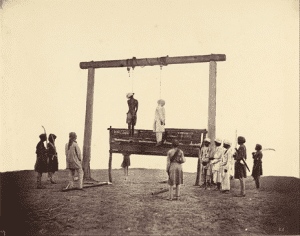
Roger Fenton, one of the first war photographers, captured images of the Crimean War in 1854. His photos revolutionized photojournalism. Due to the limited photo technology of the time, he could only capture stationary objects. As a result, his photos were often staged and depicted landscapes or posed people. He avoided taking pictures of dead bodies and bloodied soldiers.

In 1857, photographer Felice Beato pushed the envelope further to more graphically expose the devastation of war. He captured what may be the first popularly published photograph of a human corpse.

In the late 1800s, newspapers developed a more efficient method of printing photos, called half-toning. These are the black and white images many of us are familiar with. By the 1920s this technology was very sophisticated and could produce high quality images which proved vital for eliciting public response.

A poignant example of graphic news coverage evoking public response was the Emmet Till incident in 1955. Emmet was a 14-year-old African-American boy who was senselessly lynched when a white woman claimed that he had disrespected her. Her husband and his brother abducted Emmet and beat and mutilated him before tossing his body into a river. When his body was discovered, Emmet’s mother allowed journalists to photograph his severely disfigured body. These disturbing images outraged the public and brought light to injustice in the South. Emmet became the face to The Civil Rights Movement.


News Video Coverage: A Revolutionary Medium

The introduction of film media added an even more sophisticated layer of interaction between news reports and the public. The first filmed news coverage, called Newsreel, was prominent from the 1910s to the 1960s, before Americans had televisions in their homes. Newsreels were short documentary-style films reporting on current events, most often shown before motion pictures in movie theaters. They tended to be informative and non-graphic in nature, often used as propaganda to influence public opinion on war and politics.

When televisions became common in American homes in the 1960s, TV stations began producing their own newsreels. Soon there would be entire programs dedicated to news, marking the beginning of nationwide news broadcasting stations like CBS.

In the 1970s, innovative technologies emerged that could record audio and video for television broadcasting, called electronic news gathering. With the onset of the unpopular Vietnam war, news broadcasters covered the battlefield in graphic detail. This exposed the world to raw and real depiction of the brutalities of war, fueling anti-war sentiments.

For example, on March 27, 1970, CBS News aired a graphic report with correspondent Richard Threlkeld. In the clip, Richard accompanies several soldiers patrolling the jungles of Vietnam. Suddenly shots fire, and Richard and the soldiers take cover. One of the soldiers, Kregg Jorgenson, is shot in both legs off camera. With gunfire sounds in the background, Richard briefly interviews the heroic soldier who earned his fourth Purple Heart that day.

In more recent memory, the graphic videos of 9/11 traumatized a nation. Millions of television viewers were entranced by the continuous hours of disturbing footage. Particularly horrifying were the images of victims jumping from the burning towers to their deaths. Richard Griffiths, the senior editorial director at CNN, ruminated with his colleges about whether or not to air “The Jumpers.” Ultimately, they decided to show a four-second clip of a person falling before impact. This decision was met with universal disapproval as audiences were shocked and deeply upset. How far is too far in television journalism?

Livestreaming: The New Frontier

With the advent of smartphones, we now have immediate, continuous access to the unregulated Internet. Not only can we conveniently view video coverage, but we also can take and share it real-time. Livestreaming is the ability to transmit live audio and video footage over the Internet. Popular livestream mediums are Facebook live, Twitter, Instagram, and Periscope.

The problem with livestreams is that it’s impossible to moderate and filter graphic content. It’s raw, authentic, and very real. Captured livestreaming incidents have included rape, torture, and murder. Most recently, the world looked on at the horrifying livestreaming videos of victims during the Las Vegas shooting. Viewing livestreamed events can feel like you’re actually there but helpless to do anything to aid victims. Just as we saw with 9/11 coverage, audience response has been emotional and, in some instances, symptomatic of secondary trauma.

Thank you Intern Mara Pober for giving us a great overview of photojournalism and how the tide has turned. Stay tuned for her article next week, “Graphic Livestream Horrors” to learn why  viewing graphic video content can contribute to clinical distress for all of us, particularly children.

I’m the mom psychologist who helps you GetKidsInternetSafe.

Onward to More Awesome Parenting,

Dr. Tracy Bennett

Works Cited

Felice Beato Biography

How “Electronic News Gathering” Came to Be

Newsreel archive

Vietnam War, 1970: CBS camera rolls as platoon comes under fire

https://www.youtube.com/watch?v=89_3DgW_7mg

9/11: ‘Jumpers’ from the World Trade Center still provoke impassioned debate

Photo Credits

Emmet till before and after the incident:

Before:

https://www.flickr.com/photos/11304375@N07/2534273093/in/photostream/

After:

https://www.flickr.com/photos/11304375@N07/2534273097/in/photostream/

Felice Beato

Twin Towers

Iraqi Girl

Is Social Media Behind the Spike in Child Suicide? Teens and The Blue Whale Challenge

blue whale

Recent reports of child and teen suicides have flooded the news recently. Too often social media and cyberbullying plays a role. The Blue Whale Challenge is the latest fad kids are talking about. Should parents worry?

Suicide risk

According to the Centers for Disease Control and Prevention there has been a recent spike in child and teen suicides. The rate for 10 to 14 year-olds doubled between 2007-2014. Suicide is the third leading cause of death among kids aged 10 to 14 and second among persons aged 15 to 34. Firearms is the most commonly used method for males, and poisoning is the most commonly used method for females. Because kids immerse themselves with their screens on average of 10 hours a day, there is often little escape from online peer pressures and conflict. Experts consider social media and Internet access to be major contributors to risk. The most recent sinister social media game tied to suicidal gestures is the Blue Whale Challenge.

What is The Blue Whale Challenge?

The Blue Whale Challenge is a game shared on social media that encourages players to complete a series of 50 challenges. Players are required to prove they are accomplishing these challenges by Skyping or instant messaging descriptions, images, and videos to a “whale,” who is typically an older person manipulating the younger subject. There is also a version where a Blue Whale Online Forum does the challenging. The name is reported to have come from the song Burn by the Russian rock band Lumen.

Blue whale challenges typically include a series of tasks with increasing risk that require subjects to “prove” obedience to the whale. These include various self-mutilation tasks, like poking, scratching, cutting, and carving words into one’s body, overcoming a fear, like climbing a crane or standing on a bridge, watching horror movies, and ultimately killing oneself on video. Gradual obedience training with social isolation and sleep deprivation gradually wears down a victim’s resolve and increases dependency. This type of psychological manipulation is a typical grooming technique used by online predators.

Descriptions of this challenge have been shared on Reddit and are rumored to have originated in Russia. A CNN article reported that 21 year-old Philip Budeikin was arrested in November 2016 with the charge “incitement of suicide” for encouraging 16 victims to kill themselves, and a 26 year-old postman was also detained by Russian authorities. An article by SkyNews stated, “Civil society groups in Russia believe that at least 130 young people have taken their lives while playing Blue Whale, while reports of incidents and fatalities in places such as Ukraine, Estonia, Kenya, Brazil and Argentina have also surfaced in recent months.”

Although it is unclear how pervasive this challenge is in the United States, at least two U.S. families have come forward to the media stating that it lead to the suicides of their children. Fifteen year-old Jorge Gonzalez of San Antonio was found hanging in his closet with his cell phone propped up to record. His parents told news media he had sent videos of challenges to friends after following the directives of a Blue Whale social media group. The parents of a sixteen year-old Georgia girl reported that their daughter killed herself, leaving behind paintings of blue whales, letters in Russian, and several clues linking her to this challenge. One clue was a sketch of 17 year-old Rina Palenkova, who killed herself in Russia in November 2015 and became an icon among online suicide fan communities.

What I have seen in clinical practice

So far I’ve not heard of the Blue Whale Challenge other than when my teenage son brought it up after seeing a cautionary video from famous YouTube star, Shane Dawson. However, I have treated many people with suicidal ideation since I started practice in the mid-1990s. My personal experience is that kids are speaking of suicidal ideation at younger ages and with higher prevalence. They often discuss suicide among strangers and peers online. Although it is argued that online communities provide support when kids are isolated or distressed, habitual discussion may also desensitize kids, causing them to lose sight that suicidal threats are very serious and devastating to those they love. For some, habitual discussion places them in a hopeless, one-solution mind space, distracting them from more productive and uplifting activities and relationships. Furthermore, comments like “Go die” or “Go drink bleach,” are too often delivered online with little regard to the potential consequences.

parents protecting kids

What can parents do to keep their kids safe?

Teach your kids the vocabulary necessary to talk about feelings while they’re young, gradually teaching more advanced problem solving strategies over time.

Rather than shrinking away from your kids when they are frustrated, sad, or angry, lean in and let them know you understand and consider their emotional well being your highest priority. If you see evidence that your child is being bullied, address the problem assertively with your child and seek support from school administrators and law enforcement. “Just ignore it” is not a reasonable solution.

Don’t allow your kids to flippantly make threats about hurting themselves.

Sometimes kids threaten to hurt themselves in order to express their pain and cry for help. Other times these threats are intended to express anger and manipulate others. Take any type of threat seriously and require a family discussion about every incident. You may want to let things calm down before you engage in the discussion, but don’t let a comment go unaddressed. Make sure your children understand that a consequence of such a threat is that they will have to talk it through to solution. If they won’t cooperate with you, offer adult alternatives like a trusted family member or a mental health professional.

Be alert for signs of emotional distress offline and online.

Mood and anxiety disorders and substance abuse often contribute to suicidality. Be on the lookout for depressed or agitated mood, an inability to have fun, a drop in initiative, sleeping often during the day, a change of appetite, low energy, a drastic change in behavior, social isolation, or expressions of inappropriate guilt or hopelessness. A drastic change in appearance, pulling away from friends, or giving away favorite items may also signal your child is in trouble.

If your child loses a friend or family member to suicide, be aware that he or she may be at increased risk. Keep in mind that not every suicidal individual is depressed and not every depressed individual is suicidal. Statistics show that only half of those who have killed themselves demonstrated depressive symptoms. Keep an eye out for hashtags that demonstrate dangerous themes on your child’s social media activity, like #bluewhalechallenge, #curatorfindme, or #sue.

If you have concern that your child is engaging in self-harm or has suicidal ideation, ask about it directly.

Parents often worry that mentioning suicide first may give their child ideas. But most people who attempt suicide show signs before the attempt. Asking directly is the best way to elicit critical information that can lead to prevention.

Be direct but avoid frequent, fearful questioning or shaming. Instead focus on validation, understanding, and problem solving. Suicide is often a consequence of feeling so hopeless the subject is unable to see a way to resolve their pain. Don’t stop at investigation and validation; help your child generate solutions. Praise positivity and resilience while discouraging blind obedience. Take every opportunity to authentically express your love and admiration for your child’s efforts, no matter how disappointing the ultimate performance. They need us to reveal our love for them in order to recognize that they are worthy of love just for being them.

Ensure that potentially lethal means are not available.

Lock firearms, razor blades, poisons, and dangerous medications in a safe, particularly if any family members have demonstrated suicidal ideation before.

Let go of your stigma toward mental illness and treatment.

Life is more difficult for some more than others, but few of us escape this life without hard times. Compassion is key. If your child is suffering, seek an expert who can help. Kids and teens will often accept the influence of other adults in a different way than they do with their parents. Don’t go it alone.

If you or someone you know expresses suicidal ideation, reach out to local mental health resources or call the National Suicide Prevention Lifeline at 1-800-273-8255. An online chat is also available, or you can text HOME to the National Suicide Hotline at 741741.

Worried about self harm and cutting? Check out my GetKidsInternetSafe article What Parents Need to Know About America’s Cutting Epidemic.

I’m the mom psychologist who will help you GetKidsInternetSafe.

Onward to More Awesome Parenting,

Tracy S. Bennett, Ph.D.
Mom, Clinical Psychologist, CSUCI Adjunct Faculty
GetKidsInternetSafe.com

Photo Credits

Half alive –  soo zzzz by I Love Playdough, CC by-ND 2.0

Family Travel by Roderick Eime, CC by 2.0