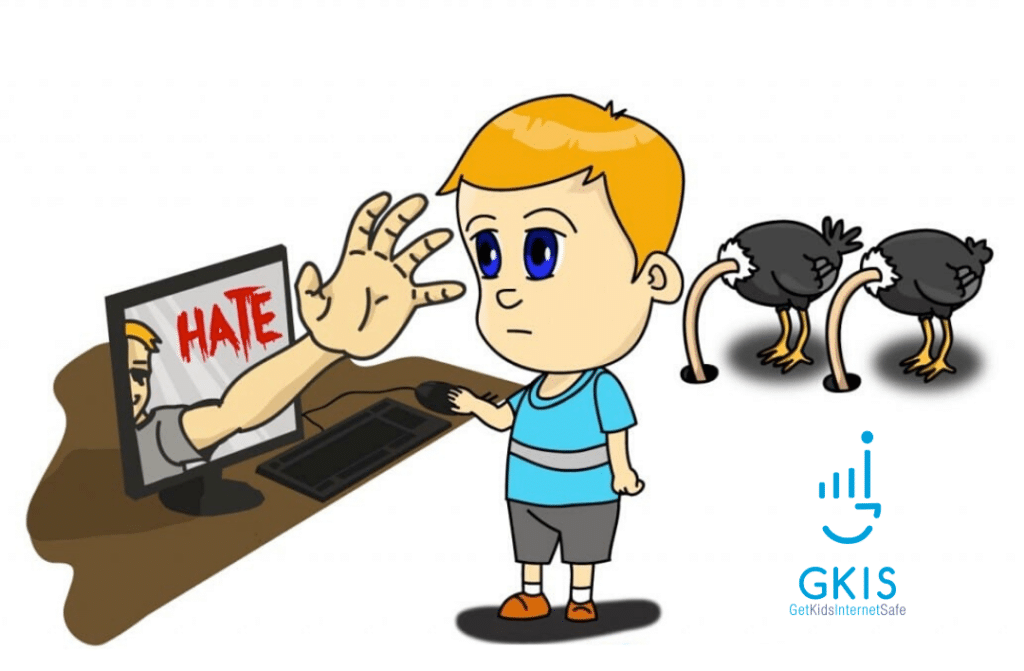
The internet offers virtual neighborhoods to satisfy any interest. For kids and teens, online neighborhoods can be dangerous. The Southern Poverty Law Center estimates that 940 hate groups are operating in the United States. Fueled by the COVID-19 pandemic, immigration fears, an increasingly global economy, troubled race relations, and divisive politics, the number of hate groups in 2021 was more than a 55% increase since 2000. When one considers that the Internet is worldwide, the potential for online hate is staggering. Hate groups and cults have a powerful recruitment tool with the internet. Too many of our mass shooters have been radicalized online, meaning that their opinions have become extreme. Our kids may not only view manipulative recruiting information but they may also be assessed for vulnerabilities. Could your teen be at risk?
Those who commit hate crimes were often radicalized online.
In 2015, 21-year-old Dylann Roof walked into a Charleston church and shot and killed nine innocent people. Like Isla Vista shooter Elliot Rodger, Dylann posted a hateful online manifesto before his rampage detailing his violent and racist beliefs. Along with photos of him standing on and burning an American Flag and aiming his gun, his manifesto titled “an explanation” detailed his “disdain” for blacks, Jews, Hispanics, and patriotism.
“I have no choice. I am not in the position to, alone, go into the ghetto and fight. I chose Charleston because it is the most historic city in my state, and at one time had the highest ratio of blacks to whites in the country. We have no skinheads, no real KKK, no one doing anything but talking on the internet. Well someone has to have the bravery to take it to the real world, and I guess that has to be me.”
His hate crime was not a split-second decision. The shooter had spent months online in white supremacy forums escalating into hate and violence. He didn’t have to look far online for hate.
No longer do hate groups and cults have to rely on interpersonal contact, newsletters, and rallies for recruitment. New members can be recruited and groomed slowly and deceptively from the safety of their bedrooms.
Websites and social media posts are inexpensive and easy to design, offering big reach and control over the content. Internet platforms are the perfect tool for grooming, behavioral manipulation, and coercive thought control. By the time a teen is ready to pack their suitcase to join the group, they may have been expertly brainwashed over months to adopt a radicalized web of beliefs.
The Red Flag Strategies of Hate Groups and Cults
By learning about the strategies hate groups and cults use to attract members, you will be better able to recognize dangerous online sites.
Here are some of the ways bad actors online radicalize their victims.
Attract Your Attention with Sensational Messaging
The bad actor will put up clickbait, which is messaging based on deception and false facts to trigger intrigue, suspicion, and paranoia. An example of a clickbait question is, “Did you know that Martin Luther King Jr. was not a legitimate reverend?”
Attempt to Isolate You by Exploiting Emotional Vulnerabilities and Destabilizing Friend and Family Support
Isolating you from those who look out for you starts with probes that assess if you are being supervised and are willing to engage with them with questions like, “Where is your computer?” “Are you alone?”
Then, the bad actor will attempt to win your trust by pretending to be understanding and friendly with comments like, “I know what that feels like.” “You can trust me.”
Once the victim shows interest and openness, the bad actor will challenge your belief system and attack your trust of family and friends. If the recruiter can tap into your fear and insecurity, they can then start to target blame on the people who protect you with comments like, “Do your parents overlook and dismiss you?” “Do you feel lonely and misunderstood?” “If they loved you, they would not control you as they do.”
Promise a Cure for Emotional Pain
Once they have you sharing private feelings and information, they’ll promise to be the one to help you out with promises of protection, secret intimacy, romantic unconditional love, belonging to a community, wealth, fame, power over others, escape, or a spiritual “answer.”
Intense unrelenting pressure to build trust and a sense of belonging
Once they have you on the hook, they will overwhelm you with manipulative messaging. Online blogs are highly effective in nurturing belief change with long narratives dispersed over time. Cyber communities bond with a sense of special belonging, shared values and practices, and a fierce sense of specialness and pride. The goal is to tempt you into slowly sacrificing your free will and becoming increasingly reliant on the group to do your thinking for you. Members are often encouraged to troll others in support of radicalized beliefs.
Marketing Techniques and Products Targeting Teens
Inducing guilt by providing offers of friendship and gifts leaves subjects feeling that they owe the recruiter and must give back. Hyped meetings, branding, and merchandising support the power and exclusivity of the group (e.g., slogans, symbols, colors, mascots, music, video games, and customized slang).
Tests of Loyalty and Intimidation
Once they have you joined up to their cause, bad actors will demand your blind obedience with ideas like, “We have direct authority from a divine power.”
Invitations and Offers for Wealth and Travel
Once you are engaged with them, they may ultimately try to get you to send them money, recruit others, or travel to meet them in person. They do this by offering you money, gifts, leadership positions, and affection.
Who is susceptible?
If you are thinking that only older teens are susceptible to online recruitment, think again. Many hate group websites include a kids’ page with coloring pages, puzzles, animated mascots, videos, and downloadable music and video games (sometimes with racially intolerant content like torturing or hunting the target populations of their hate) for early grooming. Like with all big brands, the sooner they rope in a customer, the more influence they’ll have and the more profit they’ll make.
Perhaps you’re thinking government surveillance and regulation will keep your family safe. Unfortunately, regulation to block hateful cyber conduct is only in its infancy. With America’s protection of civil liberties, it’s left to parents to police child access to online content.
Even with parent monitoring, it’s difficult to keep up. Digital natives often actively seek causes to get behind in their healthy quest for individual identity, even if it means joining somebody else’s civil war. Rolling Stone Magazine wrote of three Muslim teens who were taken into custody at the airport on their way to join ISIS after a long period of online grooming, all without their parent’s awareness. It’s impossible to know how many young people have been radicalized through Internet content, and those prosecuted are protected by sealed records due to minor status.
Teens are onboarding traits that make them fight for social justice.
To prepare teens to find their own tribes, their brains take on new ways of looking at things. Teens often become idealistic (meaning they over-overestimate positive outcomes without being cautious enough), omnipotent (meaning they think they are more powerful than they are), and more committed to their own way of looking at things (also called egocentrism). They seek simple answers in a confusingly nuanced world and are primed to seek spiritual fulfillment, meaning, and a sense of belonging.
When I was young, I was shy and eager to please. As a tween, sometimes my dad would say sensational comments to provoke me into an argument. We would then engage in heated debates littered with respectful confrontation and presentation of evidence. It wasn’t until I was much older that I realized that he was teaching me assertiveness in the face of authority. Although he required obedience, he made it clear that blind obedience was not acceptable and provided me with a safe place to experiment with critical thinking and speak up with questions and complaints. Most importantly, he taught me that there is no shame in standing up for what’s right and in risking failure. That is the kind of loving, fun, and safe training ground every child needs to build resilience. Love and safety build resilience, not oppression and long lectures.
If you’re a tween or teen taking out Social Media Readiness Course, ask your parents if they’ve ever come across hateful or radical ideas online. Share with them the red flags of manipulation that you learned from this article and ask them if they have any ideas how you can avoid these dangerous ideas online.
I’m the mom psychologist who will help you GetYourKidsInternetSafe.
The incel movement was discovered by the general population in 2014 after a mass murderer posted on Facebook, “The Incel Rebellion has already begun…” Starting as an inspirational social movement, incels has been tied to at least four mass murders and, most recently, as a mass shooting threat for the October 2019 movie premier of The Joker. Like with other hate groups, radicalized young men use incel ideas to boost their tattered egos and justify sexist and even violent behavior. How can we prevent our kids from being victimized or radicalized by this crazy movement?
What is an incel?
The term incelwas first coined in 1993 and is short for “involuntarily celibate,” a non-derogatory term for people who’ve had a hard time finding an intimate relationship.
The incel movement began when a young woman named Alana was working in a university math department. While she was at her desk, a man walked up and said, “I am 27 years old and have never been on a date.”[1] Alana noticed the man needed someone to talk to, so she listened. She discovered that she too could identify as an involuntary celibate. After she found love, she created an online support group for “INVCELS” who were distressed due to intimacy problems.
Early in the group’s development, a primary rule was adopted that members could not blame others for their problems. Instead, each member was required to commit to self-improvement. At that time, haters and blamers were kicked out of the group.[2] Over time, Alana left, the movement grew, and different sub-groups of incels formed.
Social Movement to Hate Group
Researchers believe that the boasts and posts of social media feed into a hopeless cycle of compare and despair for some users.[3] For the more radical of social media users, there are online forums where one can find validation for their despair. Radicalized incels adopt hateful belief systems typical of a broader online manosphere on forums like 4chan, Reddit, and Voat. Incels overlap with extremist men’s rights vlogs that offer pickup artistry tips and espouse the hateful rhetoric of alt-right and white supremacy groups, inciting suicide among fellow incels, the assault of sexually successful women, and violence toward sexually successful men.
Further spurred by the #MeToo Movement, radicalized incel groups spew hate and use their comradery to threaten and intimidate others. Some stereotype people who have successful relationships as “Chads” and “Stacys.” With young people unsupervised online hours every day, hate group forums can influence vulnerable teens. In my book, Screen Time in the Mean Time, I describe how “the Internet platform is the perfect tool for grooming, behavioral manipulation, and coercive thought control.”
The Black Pill
The black pill is an analogy from the movie, the Matrix. In the Matrix, Neo has two options of pills to take, the blue pillto stay in the Matrix, and remain in the comfort of blissful ignorance or the red pillto face life’s harsh realities.[4] Incels use the term black pill to describe the fatalistic perspective that women control the world, and incels are hopeless to get sex because of biological determinism, meaning they were fatalistically born with intimacy-crippling features like low attractiveness, small penis size, or shyness.[5] They believe they lost their chances of intimacy at birth because they lost the genetic lottery.[6]
Group Think & Radicalization
Online forums offer violent incels a community of like-minded individuals to escalate hateful philosophies. In psychology, we call thisgroupthink, reflecting the dynamic of one’s ethical, moral, and rational values eventually dissolving into the group’s character. Individuals joining a group in search of support are vulnerable to a group’s coercive and sometimes irrational group opinions. Groupthink differs from individual opinions in that members ultimately fail to think for themselves, instead of becoming dependent on group principles.
Mass Murder
In May 2014, a member of the incel group shot and killed six people in Isla Vista, California.[7] His name was Elliot Rodger, and he was 22 years old. Fueled by the philosophies of other members of the group, he felt revenge was his only solution. Rodger felt rejected by women. He blamed handsome people who were happy for his lack of intimacy with women. The Incel community saw him as a hero.
In April 2018, Alek Minassian killed ten people driving through a crowded street. He posted on Facebook, “The Incel Rebellion has already begun… All hail the Supreme Gentleman Elliot Rodger!”[8] Alek carried out the attack for the same reasons Rodger did, hatred for those who did not have intimacy problems.
In October 2015, Christopher Harper-Mercer killed nine people at his community college campus in Roseburg Oregon before killing himself.[9] He too identified as an incel.
In February 2018, another man who was part of the incel community, Nikolas Cruz, was charged with killing 17 people at Marjory Stoneman Douglas High School in Parkland, Florida.[10]
Clowncel
In September 2019, the FBI reported to partners in the private sector about a threat from online incel communities regarding unspecific mass shootings threatened to occur at the premiere showings of ‘the Joker’, slated for October 4, 2019. A September 2019 report by the Department of Defense reported on the same threat.
Those making these threats were reported to be a side group of incels who identify as clowncels. They chose this movie because they resonated with the beliefs of the main character, Arthur Fleck. Arthur is a poor, mentally ill stand-up comedian who is a victim of violent thugs and a society that views him as a freak. In the movie, he retaliates against society by becoming a criminal mastermind known as The Joker.
Support positive online and offline peer relationships rather than restrict unhealthy friendships.
Teach your teen how to avoid cyberbullying by teaching empathy, social and netiquette skills, and complex problem-solving.
Just as parents keep an eye on their teens’ school and after-school activities, they must also monitor their virtual activities.
Model healthy balance and self-care.
Implement healthy eating, sleeping, and exercise habits and explain why that is so important for strength and health.
Love and compliment your kids loudly and unapologetically for all they are.
Reinforce that the self is made up of far more facets than a beautiful face.
Remind your teen that what they see on social media and in advertisements isn’t always the real deal.
Thank you to CSUCI intern, Andrew Weissmann, for teaching us about the incel movement, and how it has splintered off to be a hate group with coercive access to kids. For more information about how to protect your kids from the grooming techniques of cults and hate groups, check out the GKIS article “White Supremacists or ISIS? Are Hate Groups and Cults Seducing Your Teen Online?
I’m the mom psychologist who will help you GetKidsInternetSafe.
Onward to More Awesome Parenting,
Tracy S. Bennett, Ph.D.
Mom, Clinical Psychologist, CSUCI Adjunct Faculty
Works Cited
[1] ReplyAll Gimlet
[2] ReplyAll Gimelt
[3] bbc.com Facebook lurking makes you miserable by Sean Coughlan
[4] medium.com by Ethan Jiang
[5] medium.com by Ethan Jiang
[6] bbc.com/news/blogs-trending Toronto van attack: Inside the dark world of ‘incels’ by Jonathan Griffin
[7] The New York Times What is an Incel? A term used by the Toronto Van Attack Suspect, Explained by Niraj Chokshi
[8] The New York Times What is an Incel? By Niraj Chokshi
[9] The New Yorker The Rage of the Incels by Jia Tolentino
[10] Babe.net by Harry Shukman