
Need peaceful screen time negotiations?

Get your FREE GKIS Connected Family Screen Agreement

online safety

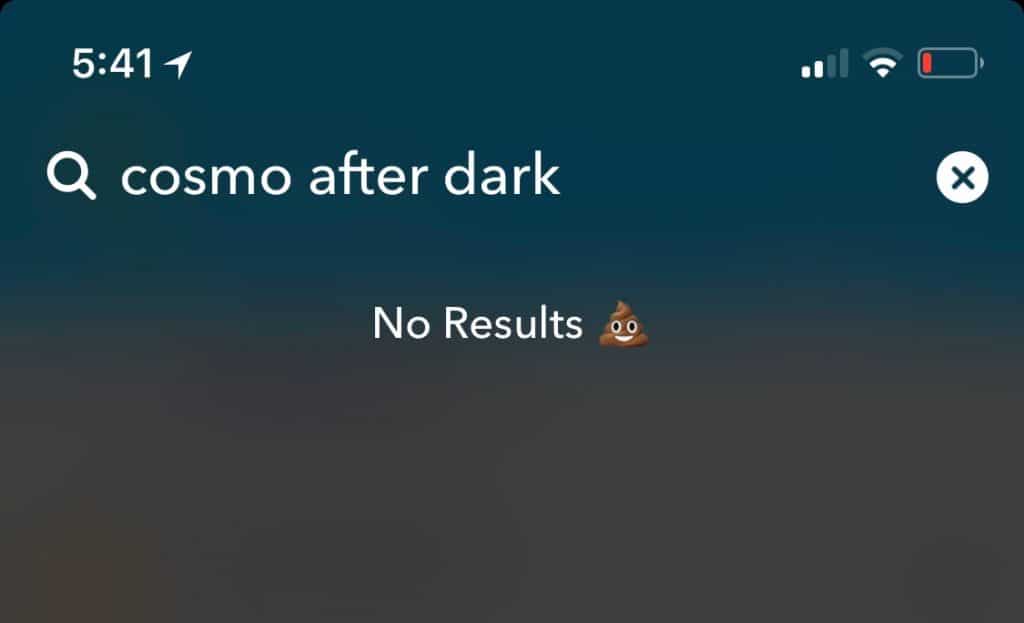
Snapchat Channel “Cosmo After Dark” Goes Legit Dark Due to Parent Outcry

Now that consumers are getting more educated about online content, could the tide be turning in favor of more accountability and better online child safety? Earlier today I got a phone call from an FBI agent friend alerting me to the new Snapchat channel, “Cosmo After Dark,” after a parent called him with concern. This channel is searchable in the Discover feature of Snapchat. The issue became public knowledge when my friend at Protect Young Eyes, Chris McKenna, published his whistleblowing article, “Snapchat Introduces Cosmo After Dark (It’s P*RN).” Todays quick read explores why this is an issue GKIS parents need to know about.

Cosmo After Dark advertises that it is “an X-rated weekly edition that goes live every Friday at 6 p.m. and is exclusively dedicated to all things hot and h*rny.” Not only might your child access this content, they might even be able to subscribe to it! Although Snopes points out that Snapchat has age-gating tools that block “adult” content from users under 18 years old, Chris argues that Snapchat may be getting more desperate and allowing more lascivious content in order to maintain more marketshare. As Snapchat gets more worried about the bottom line, the worry is they may slip in corporate responsibility.

Another issue raised is if this content is Cosmo’s traditional sexy fare or is it actually pornography? You be the judge. Cosmo After Dark articles include:

“The 19 Best Sites to Binge-Watch Porn On”

“12 Songs You Should Have Sex to Right Now” 

“The Steamiest Most X-Rated Sex Party Confessions”

Just sexy articles, right? I would argue that our kids and teens are harmed by hypersexual content. Are you comfortable with your teen son or daughter getting instructions for more satisfying anal sex? I didn’t think so.

After a busy day of watching this story evolve between clients, I am happy to say there is a happy ending. Due to parent outcry, Cosmopolitan magazine just pulled Cosmo After Dark. It turns out that our voices matter. As parents get more educated, we are becoming increasingly effective advocates with real influence. Thank you Chris for keeping an eye out for us. Unfortunately, this won’t be the last risk trap on social media.

WHAT CAN YOU DO TO PROTECT YOUR KIDS FROM ADULT ONLINE CONTENT?

If your teen has Snapchat, make sure their birthdate is accurate within the app. According to Snapchat, this will give some protection from inappropriate content.

If you’re worried your child may edit his or her birthday in order to access adult content, Protect Young Eyes reports that you can lock the edit feature by changing the birthdate on your child’s phone until you reach max attempts.

Avoid the whole issue altogether by following the Terms of Agreement on social media apps due to COPPA. If your child is younger than 13 years old, don’t allow them social media yet. Messenging apps and texting is risk enough.

Use sound digital parenting tools like OurpactUnglue, and Bark. Filtering content, tracking use, encouraging accountability, and monitoring content not only teaches kids important skills, it also puts parents in the screen driver’s seat so they can stay involved and offer teaching and support along the way.

Get informed about risk and best screen sanity parenting practices with Screen Time in the Mean Time: A Parenting Guide to Get Kids and Teens Internet Safe. It’s not just what you do that matters, how you do it counts too. Although safety strategies are important, forming a fun, cooperative relationship with your kids is key to a happy, healthy, screen safe family.

I’m the mom psychologist who will help you GetKidsInternetSafe.

Onward to More Awesome Parenting,

Tracy S. Bennett, Ph.D.
Mom, Clinical Psychologist, CSUCI Adjunct Faculty
GetKidsInternetSafe.com

If You Use Social Media, Beware of Sex Traffickers

Reading today’s GKIS article will likely be shocking, horrifying, and frightening. If you are reading it for my Social Media Readiness Course and have not discussed these issues before, please seek out a parent or teacher to help you decide if it’s right for you to read it. If it isn’t, the adult can take the course quiz questions for you that apply to this article. I included this article in your lessons because I believe this is something social media users must know about so they can protect themselves. If they are not ready to learn about sex trafficking, they are too vulnerable to being tricked by criminals online and not ready to face the risks of social media.

What is Sex Trafficking?

Sex trafficking refers to the act of tricking or forcing someone into sex with paying customers. Traffickers typically lie, threaten violence, or engage in debt bondage (demanding services until a financial debt is paid off).

Although most Americans believe human sex trafficking is only a problem in poor countries, it happens in America too. Increasingly, kids from all types of families are being lured using social media. All it takes is smartphone access.

How likely is it that there is human sex trafficking in my town?

Two types of sex trafficking defined by the Trafficking Victims Protection Act of 2000 include domestic minor sex trafficking (the exchange of sex with a child under the age of 18 for the gain of cash, goods, or anything of value) and commercial sexual exploitation of children (such as exchanging images of child sexual assault, prostitution, child sex tourism, and child marriage).

In a 2014 report conducted by the Urban Institute, it was estimated that the underground illegal sex trade is bringing in profits as high as $290 million in Atlanta.[1] Other top-earning cities include Chicago, Las Vegas, Memphis, and New York City.

By grooming kids on social media and texting, traffickers have easy access to kids from any town. Common methods used to recruit and control victims include faking romantic interest (pretending to be the child’s boyfriend), emphasizing that nobody else understands them like they do, discouraging women from “having sex for free” (convincing them the money they will get paid is a good thing), and promises of expensive gifts.[1] Once the trafficker gains the child’s trust, it’s easy to set up a live meeting.

How does a trafficker obtain a child’s cooperation without their parents knowing?

All it takes is a curious teen and a motivated trafficker to create an online relationship that can lead to exploitation (using the child to earn money). Consider thirteen-year-old Savannah. Her parents never got around to setting up parental controls on the laptop she got for her birthday. One day she visited a website that was offering sugar daddies to pay for things and quickly fell under the influence of a sex trafficker.

“I don’t know why I did it . . . I didn’t know that I would have to have sex with them. I thought they would just buy me stuff because I was pretty,” claimed the attractive, well-spoken THIRTEEN-year-old girl. She had no idea what she was getting into. “Even as they were taking me to the hotel, I still wasn’t really sure what was going on,” said Savannah. Savannah said that if she didn’t cooperate, they would hit her, hold a gun to her head, and threaten to kill her. She lived in constant fear as a hostage because she was fearful of speaking out.[2]

Another story involves Teresa. She was like any other fifteen-year-old girl entering ninth grade. She lived in Detroit, and her dad had a high-paying government job. To lure her, a trafficker had a boy at her school pretend to like her. These criminals had been watching Teresa for a while before making their move on their “perfect” target. Teresa developed a crush on the boy who showed her attention and would tell her how beautiful she was. Then one day he offered her a ride home from school. She didn’t even think twice about the offer. Unfortunately, he never took her home.

Instead, he took her to an apartment where she was drugged and sexually assaulted. They used photographs of the assault to blackmail her and force her into sex slavery for months. They stalked and monitored her constantly and threatened that if she told anyone they would kill her family. At night they would sneak her out and take her to different homes. “Sometimes they were high-class homes, mansions, sometimes even politicians or business owners,” she stated. Ultimately, she was able to escape when her father was relocated for work. She never told her family what happened and to this day lives with the trauma.[3]

What can you do TODAY to GetKidsInternetSafe?

Insist that your child (or student) passes the GKIS Social Media Readiness Course

In 2023, the American Psychological Association released a Health Advisory on Social Media Use in Adolescence that offered recommendations to families for safer social media use. One of those recommendations was, “Adolescents’ social media use should be preceded by training in social media literacy to ensure that users have developed psychologically-informed competencies and skills that will maximize the chances for balanced, safe, and meaningful social media use.” Nine years before this recommendation, Dr. Bennett offered screen safety tools to families. Our Social Media Readiness Course covers the social media risks teens must know to keep themselves safe and offers psychological wellness tools to optimize the evaluation, problem-solving, and refusal skills necessary for safety.

Provide education about online risks and have ongoing discussions.

As a psychologist, much of my work starts with psychoeducation or teaching people about the issues that lead to harm and how to achieve wellness. People can only move to independent problem-solving if they understand the issue from an informed perspective.

From there, I move into teaching and skill-building. I walk kids through the security risks of social media, such as having public versus private profiles, posting with identifying information, having contact with strangers, and posting location information from geotagged photos or logos on clothing.

Once kids learn the risks, they get more serious about self-protection. GetKidsInternetSafe articles, like “White Supremacists or ISIS? Who’s Seducing Your Teen Online?” are awesome resources for education and immediately applicable tips.

Teach psychological wellness tools and encourage frequent practice.

Increasingly, teachers, parents, and mental health experts are teaching kids mindfulness and cognitive behavioral tools to help with healthy emotional identification, insight, and management. These tools help inoculate kids from the vulnerabilities that bad actors online exploit. Learning the tools, like those offered in the Social Media Readiness Course, is critical before using social media platforms including YouTube, TikTok, Instagram, Snapchat, Twitter, or Facebook.

Offer warm and nonjudgmental support.

Let your kids know that, just as everybody makes mistakes in nonvirtual life, it is expected that they also will make mistakes online. Create an ongoing cooperative dialogue about online life so your kids won’t fear shaming lectures or punishing consequences if they do ask for help.

Not only will this enrich your trust and connection with your kids, but it will also optimize the chance that they will come to you if they get worried or have questions. Usually, the learning goes both ways between Internet natives and Internet immigrants, which is a win-win! Our free Connected Family Screen Agreement gets that dialogue started, even about the uncomfortable topics of online safety.

Use parental controls and monitoring and filtering software.

We all want to trust our children to be honest with us and use good judgment. But counting on a child to use good judgment is not always enough to keep them safe online. Rather than allowing unmanaged access to online content and hoping for the best, use technology to block and filter content and monitor and manage use.

Set up a toolkit that fits your style of parenting from the recommendations in our GKIS Screen Safety Toolkit. Start with strict and more intrusive controls for young children and gradually allow more independence and privacy as they age and demonstrate skills and responsibility. Don’t be afraid to loosen up a little then tighten again as your child tests limits and experiments with online choices. Be honest, as sneaking and ambushing can damage that critical parent-child alliance. Cracking down once the damage is done is simply too late.

Take an hour to review social media profiles together.

  • Review and change security and privacy settings on each other’s social media profiles from public to private.
  • Use free apps to review metadata from posted photos and strip them of location information.
  • Change the settings on your smartphones to prevent geotagging when you use the camera. For the iPhone, it’s as simple as going to Settings> Privacy>Location Services >Camera. Then set the toggle switch to never.

Your influence is optimized if you have a fun, warm connection with your kids. I created the GetKidsInternetSafe Screen Safety Essentials Course to educate parents and offer doable parenting strategies so families could get on track with Internet safety.

I’m the mom psychologist who will help you GetYourKidsInternetSafe.

Onward to More Awesome Parenting,

Tracy S. Bennett, Ph.D.
Mom, Clinical Psychologist, CSUCI Adjunct Faculty
GetKidsInternetSafe.com

Works Cited

[1] Dank, Meredith, Bilal Kahn, P. Mitchell Downey, Cybel Kotonias, Debbie Mayer, Colleen Owens, Laura Pacifici, and Lilly Yu. “Estimating the Size and Structure of the Underground Commercial Sex Economy in Eight Major US Cities.” Http://www.urban.org/events/shedding-light-americas-underground-commercial-sex-economy, 2014. Urban Institute, 12 Mar. 2014. Web.

[2] Kristof, Nicholas D., and Sheryl WuDunn. A Path Appears: Enriching the Lives of Others–and Ourselves. N.p.: Random House, 2014.

[3] ABC NEWS. “ABC NEWS- PRIMETIME.” PRIMETIME ABC NEWS. ABC. 9 Feb. 2006. Teen Girls’ Stories of Sex Trafficking in U.S. Web. 24 Feb. 2016.