
Need peaceful screen time negotiations?

Get your FREE GKIS Connected Family Screen Agreement

Online gaming

Virtual Reality Distorts Reality: An Increase in Dissociation

Virtual reality (VR) has become increasingly popular in the gaming community. VR allows consumers to experience new environments and activities that push the boundaries of creativity and possibility. Although VR offers excitement, studies have shown that the extended use of VR can lead to an uncomfortable mental health symptom called dissociation. Find out about VR-induced dissociation and the pros and cons of VR in today’s GKIS article. If you are worried about your kids’ extended use of VR gaming, our GKIS Screen Safety Essentials for the family offers weekly videos and downloads so you can achieve a peaceful fun home with healthy screen time. With 26 quick, fun lessons, our Essentials Course offers tons of ideas to keep you connected and safe. Keep reading to learn how to maintain your kids’ safety while giving them access to virtual fun.

What is virtual reality?

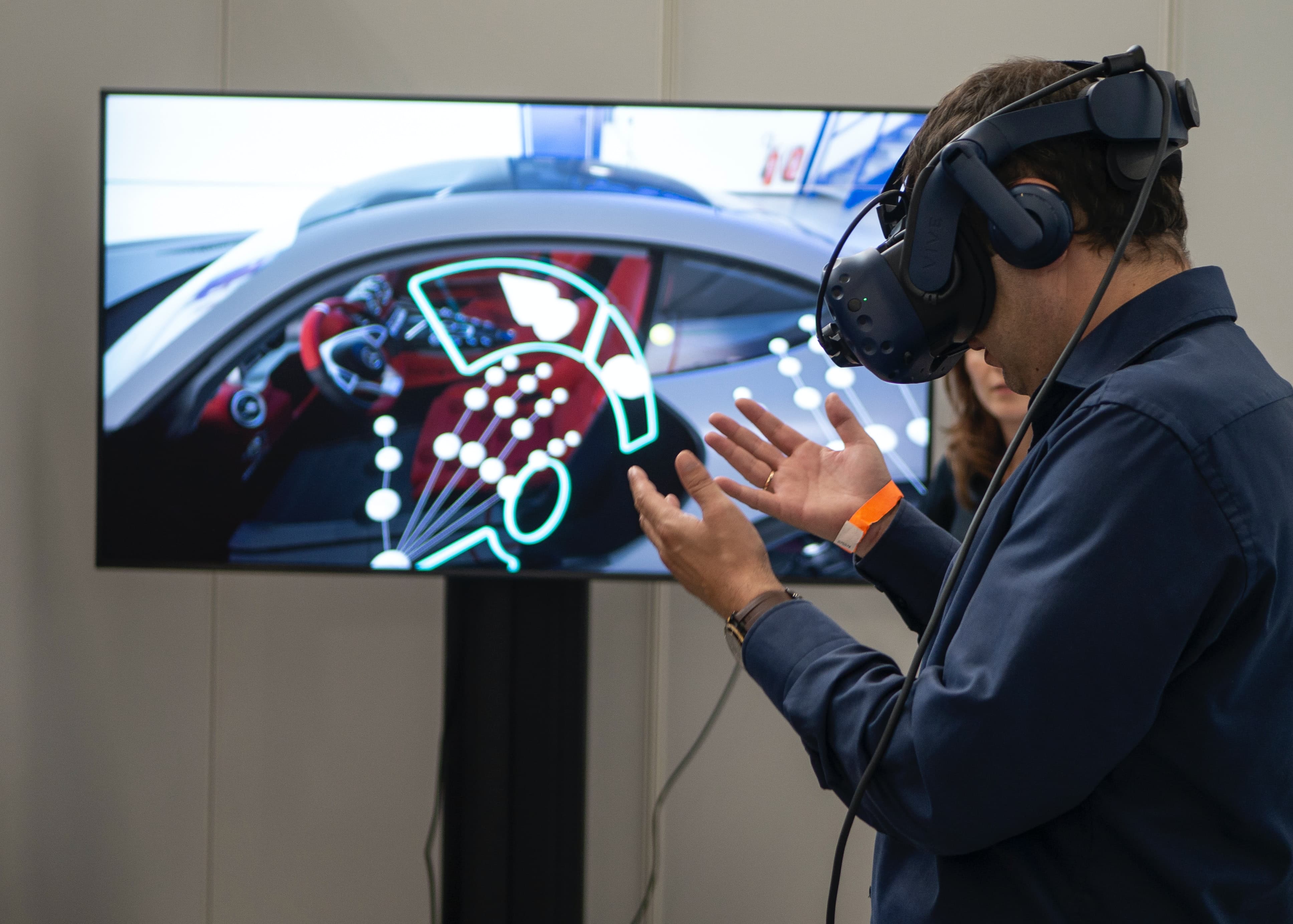
Virtual reality is gaming technology that simulates real or fantasy worlds that the players can immerse themselves into for a variety of activities. Immersion into the 3D VR world is possible by stimulating many senses all at once like vision, hearing, and touching.[1]

The Pros and Cons of VR Use

Pros

It’s fun and therapeutic!

VR can be really fun and exciting. It can serve as a mental break or escape from day-to-day routines and is a great way to connect with friends and meet new people with similar interests.

Access to new worlds and experiences can also be beneficial for those suffering from physical disabilities because they can experience activities that they cannot in the real world.

People with neurodevelopmental disabilities, like autism, can also benefit from VR. For example, an individual may use VR to learn how to better socialize in an environment where mistakes won’t lead to risks like in the real world. For example, as a behavioral intervention that works to help kids with autism, one of my patients has a goal of learning how to cross the street. Practicing in real life can be nerve-wracking and even dangerous due to the possibility of being hit by a car if my patient runs into the street from overstimulation. By practicing VR, he can eliminate risk as he learns to master this new skill.[2,3]

Work Training

VR also has potential benefits in the professional worl d as a safe way for training in many fields of work. For example, during the COVID19 pandemic, health care workers could interact with patients in VR without being exposed to the virus. VR has also allowed students and professionals to perfect skills and procedures before risking with real patients, like practicing a surgical technique for example.[4]
Cons

Feelings of Withdrawal and Disappointment with the Real World

For some people, what goes up must come down. Many players report feelings of sadness after play and a growing disappointment with real-life experiences. Tobias Schneider, a user of VR described feeling detached from the real world because it lacks the ‘magic’ and excitement VR has to offer. As an oculus user (a VR gaming system) myself, I recently went to their online forum and found that many users reported these feelings.[5]

Dissociation

Studies and forums have shown that VR has the potential risk of dissociation such as derealization and depersonalization. Derealization is this mental state where a person will feel so detached from their surroundings including people and objects, that the world will feel unreal. Depersonalization is this feeling that you are floating outside yourself. These types of dissociation occur for a variety of reasons, most typical in response to panic attacks and generalized anxiety. Theorists have described these symptoms as a defense that our bodies mobilize to protect us from stress. Other conditions that can cause dissociation include sensory deprivation, trauma, seizure disorders, dementia, and the use of hallucinogens or marijuana. Some people are even genetically prone to demonstrating this psychological symptom. Once a person dissociates once, they are more likely to dissociate again.

Although most people who dissociate describe it as a passing feeling, once one dissociates once they are more likely to do it again. For a minority of people, dissociation can occur often out of the blue in a condition called Depersonalization/Derealization Disorder.

A 2006 study examined the effects of VR use and found that for some players, episodes of dissociation increase after VR use. Even a gamer developer describes a time when they had to touch things around their surroundings after finishing a VR demo just to erase any lingering skepticism from her brain. If you look at the oculus forum, you will read many users complaining that their hands don’t feel like their own even after taking off the VR headset.[6,7,8,9]

Tips To Avoid the Negative Effects Of VR

  • Read your VR system’s instruction manual and safety warnings.
  • Start off with baby steps and play at a comfortable level that is not overwhelming.
  • Take frequent breaks when using VR.

When To Seek Professional Help

Having feelings of depersonalization or derealization that occasionally pass is common and should not necessarily cause alarm. But if these feelings of depersonalization or derealization become persistent and severe, this can be a sign of a physical or mental health disorder. You should seek immediate help from a doctor if these feelings are:

  • disturbing you or becoming disruptive to your emotional well-being,
  • become persistent and seem to never go away or improve, or
  • interfere with personal relationships, work, or other daily activities.

GKIS Resources That Can Help You Build Healthy Relationships with The VR World

GKIS Screen Safety Essentials Course

Want a peaceful, fun home with healthy screen time, but don’t want to spend on something that won’t work for? Check out our GKIS Screen Safety Essentials Course. We have a free two-week trial so you can determine if it’s the right resource for you before you spend a penny. Plus, it includes videos and downloads from all GKIS parent courses that are designed for weekly viewing, making the material digestible and easy.

GKIS Social Media Readiness training for teens & tweens

If you are not sure your child is ready to experience the online world check out our GKIS Social Media Readiness training. This self-paced course will get your kids ready for VR or anything in the online world. It includes mastery quizzes after each lesson to ensure they are prepared for online fun while maintaining safety. Guaranteed to make happy teens and relieved parents.

GKIS Online Safety Red Flags for Parents

Digital injury is real, and many users run to forums when trying to understand the negative feelings they experience from the overuse of technology. With our GKIS Online Safety Red Flags For Parents, parents will learn which behavioral red flags to look out for that may signal that their kid is suffering from digital injury.

Virtual reality is a hot topic. You can also check out our other GKIS articles to learn more about the benefits and risks VR has to offer:

Virtual Reality to Treat Phobias

“Metaverse” VR App Allows Sexual Exploitation of Minors

Thanks to CSUCI intern Ashley Salazar for researching and co-authoring this article. Prevent digital injury after VR use and check out our GKIS resources. They will help you launch a fun screen-safety dialogue. If you or a loved one is suffering from severe and persistent dissociation, please contact your health insurance provider and see a doctor.

I’m the mom psychologist who will help you GetKidsInternetSafe.

Onward to More Awesome Parenting,

Tracy S. Bennett, Ph.D.
Mom, Clinical Psychologist, CSUCI Adjunct Faculty
GetKidsInternetSafe.com

Works Cited

[1] Bardi, J. (2019) What Is Virtual Reality: Definitions, Devices, and Examples.

3D Cloud Marxent. https://www.marxentlabs.com/what-is-virtual-reality/

[2] Arrango, B. (2022) Pros and Cons of Virtual Reality. Filmora.Pros and Cons of Virtual Reality[2021] (wondershare.com)

[3] Mileva, G. (2022) 7 Benefits of AR and VR For People With Disability. AR

Post. 7 Benefits Of AR And VR For People With Disability| ARPost

[4]Dannewitz, M. (2020) Virtual Reality: A Valuable Tool for Health Care Training. Motive.ioVirtual Reality: A Valuable Toolfor Healthcare Training Motive.io

[5] Searles, R. (2016) Virtual Reality Can Leave You With an Existential Hangover. The Atlantic.https://www.theatlantic.com/technology/archive/2016/12/post-vr-sadness/511232/

[6] Forrester, J. (2020) Oculus Community: Forums. https://forums.oculusvr.com/t5/General/Feels-like-I-m-in-VR-even-though-I-am-not/td-p/839398

[7] Kiefaber, D. (2017). Using Virtual Reality Could Lead to Feelings of Detachment, Sadness. Inside Hook. https://www.insidehook.com/article/health-and-fitness/virtual-reality-leads-feelings-detachment-sadness

[8] Cleveland Clinic. (2020) Depersonalization/Derealization Disorder. Cleveland Clinic. https://my.clevelandclinic.org/health/diseases/9791-depersonalizationderealization-disorder

[9] Mayo Clinic. (n.d.) Depersonalization-derealization disorder. https://www.mayoclinic.org/diseases-conditions/depersonalization-derealization-disorder/symptoms-causes/syc-20352911

Photo Credits

Photo by Pham, Minh. (https://unsplash.com/photos/HI6gy-p-WBI)

Photo by Expo, Xr. (https://unsplash.com/photos/ipDhOQ5gtEk)

The GKIS Sensible Parent’s Guide to Fortnite

Fortnite is a video game that has taken the world by storm. It has kids glued to their screens for hours on end and flooded social media sites with videos of kids recreating its dances. In today’s GKIS Sensible Guide, you’ll learn all the things parents need to know to make an informed decision about whether your kids should play this wildly popular video game.

How long has Fortnite been around, and how popular is it?

Fortnite is a video game that was initially released in 2015 by a team led by the American game developer Tim Sweeny. The game has gone through radical changes in its short lifetime. In its first iteration, the game was centered around grouping with other players to take on computer-controlled enemies. While this version of the game received modest success, it wasn’t until the game’s Battle Royale game mode was introduced in 2017 that the game became a worldwide phenomenon.[i]

As of 2020, a staggering 250 million accounts have been created on Fortnite.[ii] In 2018, Fornite generated over 2 billion dollars from in-game purchases called microtransactions. Through these microtransactions, players can exchange real-world currency for an in-game currency called V-Bucks. The V-Bucks can subsequently be used to choose from an array of in-game purchases including dances, emotes, or outfits for their character.

Getting Started on Fortnite

In order to create a free Fortnite account, the user must be at least 13 years of age or have the consent of a parent or guardian. However, this restriction can easily be bypassed by simply lying about your age. Fortnite can be downloaded on all popular gaming platforms.

Before allowing your child to play a new app or game, we recommend you implement our free Connected Family Screen Agreement. The agreement is available for children and teens. Offering digital negotiation tips, it also covers family values and screen smarts. It’s far more than a digital contract. To claim yours today, go to the home page of GetKidsInternetSafe and fill in your name and email address. If the contract is not for you, you can simply unsubscribe.

Features of Fortnite

Save the World

  • The original game mode.
  • Players must collect firearms and resources to fight off waves of monsters.
  • There are different objectives in each mission, but the enemies are always the non-player monsters.

Battle Royale

  • The most popular game mode.
  • Players are dropped from a flying bus onto a large battlefield where they must find firearms and collect resources to fight other players.
  • Up to 100 players can be in the same game.
  • The last player standing earns the victory royale, and thus wins the game.
  • Once you die you must leave and join a different game; you don’t respawn.

Creative Mode

  • Players can build their own world and are free to do almost anything they desire.
  • They have unlimited resources and items.
  • Players can be alone in their world to create without interruptions, or they can invite friends and collaborate on a project.
  • If they desire, they can set rules and make mini-games in their world. This opens almost endless possibilities for custom player-made game modes.

Most of the game modes in Fortnite are optimized for multiplayer gameplay.

The Benefits of Fortnite

Fun

Fortnite is super fun for players. Like most video games, you start with 0 points, so there is only one way to go – UP!

Friendship and Cooperation

Fortnite has various benefits, most notably the cooperation aspect of the game. Players are required to cooperate with their teammates whether it be to create a building or fighting enemy players. It can be a great way to make new friends and spend time with the friends you already have!

Showcase Creativity and Ingenuity

The creative mode of the game also allows children to showcase their creativity and ingenuity with almost endless possible building projects.

Gaming Skills

The fast-paced competitive nature of Fortnite helps build hand-eye coordination, finely tune reaction time, problem solve in a fast-paced situation, and learn to cooperate and compete with others.

Monetization Opportunities

Expert players can be so good at Fortnite, that they build up a character and sell the account to the highest bidder. Players can also make money by becoming an influencer and streaming their play.

E-Sport Opportunities

Kids also pick up tech prowess and may even provide the foundation for an e-sports or a professional gaming career.

The Risks of Fortnite

Distraction and Addiction

Possibly the greatest risk of Fortnite is playing for extended periods of time. This could cut into children’s study time and real-life social interactions. Fortnite employs various brain hooks to keep kids glued to the screen as long as possible. The efficacy of these hooks was proven at the end of Season 10 when the game seemingly “disappeared,” leaving an image of a black hole in its place. This event caused a social media frenzy as players all around the world posted incessantly about it. Then after 48 hours, the game returned and ushered in a new season. The players were overjoyed – a genius move on Fortnite’s part!

Violence

Fortnite is a third-person shooter (TPS) style game. That means your character is visible on your 3D screen during the game. Although Fornite is inherently violent as a shooter game, parents often don’t mind because as the violence is depicted in the game’s seemingly innocuous cartoon art style.

Some of the violent acts can be carried out on Fortnite include:

  • Shooting an enemy player with a firearm, rocket launcher, or harpoon gun.
  • Killing an enemy utilizing a trap with retractable spikes
  • Bludgeoning an enemy to death with a pickaxe, bat, hammer, etc.
  • Lobbing a grenade at an enemy player.
  • Slicing an enemy player with a sword or knife.

Vulgarity

One can communicate with strangers through the in-game voice chat. Fortnite is a game that appeals to players of many ages. Many times small children may be paired up with adults on the same team. This can be alarming as older players frequently use vulgar or inappropriate language.

Cyberbullying

Children may also fall victim to cyberbullying behaviors that individuals employ in order to intimidate competitors. Distracting and stressing out other players, called griefing, is extremely common in the virtual, cut-throat environment of gaming. Because players can be anonymous or known to each other, cyberbullying online is commonplace. It is also common for older players to cyberbully younger players just because they are young. Young players have dubbed squeakers. For further insight on the dangers of multiplayer video games please check out our dedicated GKIS article.

Fortnite falls under the GKIS yellow-light app category. It may not be as violent as many games on the market, but it is violent nonetheless. As with any other video game, it is also important that the game is played in moderation so a child allocates enough time to take care of other responsibilities. It is recommended that parents have a look at the GKIS Cybersecurity and Red Flags Supplement so you are aware of the signs that your child has encountered danger while playing Fortnite. This supplement can be added to our free Connected Family Screen Agreement.

Thanks to CSUCI intern, Jess Sherchan co-authoring this article.  If you’d like to learn how to create an enriching and enticing screen-free home environment (like with Makerspaces), check out our GKIS Connected Family Online Course. With 10 quick steps, you can bring the fun back into family life.

I’m the mom psychologist who will help you GetKidsInternetSafe.

Onward to More Awesome Parenting,

Tracy S. Bennett, Ph.D.
Mom, Clinical Psychologist, CSUCI Adjunct Faculty
GetKidsInternetSafe.com

Works Cited

[i] Hyatt, Edward (2019) Who created Fortnite, what is Tim Sweeney’s net worth and how much money does Battle Royale make? https://www.thesun.co.uk/tech/6285387/fortnite-creator-tim-sweeney-founder-net-worth-7-16b/

[ii] Loveridge, Sam (2020) How many people play Fortnite? Is it really as many as people say? https://www.gamesradar.com/how-many-people-play-fortnite/

Photo Credits

Photo by Whelsko on Flickr

Photo by Jess Sherchan

Photo by Whelsko on Flickr

The Dangers of Online Multiplayer Video Games

In my 25 years of psychology practice, I have treated many kids and teens victimized by online predators and cyberbullies. And in many of those cases, there were steps the parents could have made to prevent this type of digital injury. First, parents must block inappropriate games and content using the rating system and parental controls. Second, teach the red flags that kids must look for to spot dangerous inquiries. That’s why I created the Cybersecurity and Red Flags Supplement to add to our free Connected Family Screen Agreement (available on the home page of GetKidsInternetSafe.com). Finally, maintain a close parent-child relationship with ongoing topics for learning (offered in your GKIS weekly articles). To help, parents have to learn what’s out there and accept that kids will make mistakes. Today’s article will discuss the risks in the multiplayer gaming world, expertly written by a young female gamer.

What is a multiplayer game?

Multiplayer games” refers to video games where an individual player can join a team in defeating a computerized enemy or can battle it out against other gamers. To play multiplayer games, Xbox and PlayStation require gamers to purchase memberships.

Battle Royale Style of Gaming

Battle royale is a relatively new genre of multiplayer gaming that can have over 100 people competing on a large map. These games embody a survival element as players are dropped onto a map with little armor or weapons. Players can either battle their way through the game with friends or fight solo. The ultimate goal is to be the last player standing.

Before the likes of Fortnite and PlayerUnknown’s Battlegrounds, battle royale was a concept heavily influenced by the popular movie The Hunger Games. In the early days, the only way to play battle royale was by downloading modifies to a base game. This modification was extremely popular in Minecraft as it added an extra dose of flair and made the game more challenging and intriguing.

Brenden Greene made battle royale mods for the hit games DayZ and Arma III, which quickly became huge sensations. In 2017, he released PlayerUnknown’s Battlegrounds, which paved the way for other games like Fortnite and Apex Legends.[3]

Who plays multiplayer games?

In 2018, 28% of gamers were under 18 years old, 45% of gamers were female, and 55% were male.[5] Although multiplayer games are entertaining and fast-paced, there are dangers young gamers could be exposed to including chatting with random strangers, bullying, and child grooming by sexual predators.

Create a party for you and your friends.

One of the ways kids can gain access to voice chat over the PS4 console is to be invited via “party.” Party directly sets up friend invites using your friends list. People can also request to join a party, but the creator has the option to deny specific player access. On PlayStation, the creator must specify whether the party is private or open to the public. Opening to the public will allow anyone to join the voice chat, meaning child players could be exposed to bad actors.[4]

Xbox one has the same features, except if the person receiving the invite does not accept it within a five-minute window, Xbox Live will cancel the invitation, and the person who sent the request will have to resend it.[5]  Voice chat can be a great way for socially isolated or anxious kids to connect with others. However, there are dangers as well.

Meeting Strangers in the Lobby

A lobby is where players wait to join a team game in multiplayer games. This feature is also known as matchmaking because it randomly assigns players to teams.

While in the lobby, you can communicate with other joining players. In some instances, you can also check out what the other player characters look like and view their cache of weapons. You can also communicate with other players in the lobby if you have the microphone enabled.

When I play multiplayer games, I disable the microphone feature (mainly by not plugging my headset in), unless I am playing with friends because, even as an adult, I don’t feel comfortable chatting with strangers online.

Bullying, Abuse, and Harassment

People can be cruel over voice chat for no reason. Insulting gaming skills or using racial slurs and sexual comments are typical. I’ve been in lobbies where players threaten to find and kill you as a form of intimidation. Younger kids seem to get the brunt of it.

While scouring the Internet for answers as to why kids are harassed on gaming platforms, I came across blogs and forums dedicated to how annoying young children can be online. A majority of these posts were made by people in their late teens or older. One of the biggest complaints is the profanity and racist comments from younger gamers. While many gamers just hit the mute button, some will take it to the extreme and harass the younger kid until they leave.

As a female gamer, I’ve experienced an unbelievable amount of harassment and abuse, ranging from people calling me names to more extreme measures like asking for sexual favors or making inappropriate noises.

Predators

According to ABC News, predators are grooming kids by making friends with them online and then gaining their trust so that they can meet in person. Fox News has also reported that Fortnite has recently become a favorite place to target young kids because of the volume of people who are playing online all at once.

The interactions between the young child and the predators are not always sexual. For instance, Breck Bednar was 14 years old and loved to play video games with a tight-knit group of people. The only person that was unknown to the group was Lewis Daynes, an adult who developed a strong relationship with Bednar over time. This chilling and disturbing “friendship” came to an end when Daynes lured Bednar to his home and killed him.[6]

Parental Features on Gaming Consoles

There are many ways to keep child gamers safe while playing video games and many of these features are available on the gaming console itself.

PlayStation 4 Parental Features[7]

Xbox One Parental Features[8]

  • Restrict access to certain tv shows, movies, games, and apps
  • Web filtering
  • Parents can determine what type of apps can be downloaded

Tips to keep child gamers safe!

  • Use parental features.
  • Pay attention to the rating guide on video games. Avoid mature-rated games for kids and teens.
  • Use anonymous and masculine or gender neutral Gamertags.
  • Inform kids about the importance of not sharing personal information while online.
  • Don’t accept friend requests from strangers.
  • And connect better with your child and set up your home for screen safety using our Screen Safety Essentials Course.

Thank you to CSUCI intern, Kassidy Simpson for providing parents with the information they need to help keep their kids safe on multiplayer games.  If you learned something fun from this article, please “like” our GetKidsInternetSafe Facebook page so other parents can find us!

Want to learn more about the dangers of video games? Check out Sex and Violence in Video Games Change the Brain: What GKIS Parent Need to Know.

Onward to More Awesome Parenting,
Tracy S. Bennett, Ph.D.
Mom, Clinical Psychologist, CSUCI Adjunct Faculty

Works Cited

[1] PlayStation®Plus 12-Month Membership. (n.d.). Retrieved March 8, 2019, from https://store.playstation.com/en-us/product/IP9101-NPIA90005_01-1YEARPACKAGE0000

[3] Hornshaw, P., & Hornshaw, P. (2019, February 28). From PUBG to Apex Legends, this is how battle royale happened. Retrieved from https://www.digitaltrends.com/gaming/history-of-battle-royale-games/

[4] Joining a party. (n.d.). Retrieved March 8, 2019, from https://manuals.playstation.net/document/en/ps4/party/join.html

Katersky, A. (2012, April 5). Online Gaming Is Becoming Predator’s Playground. Retrieved February 12, 2019, fromhttps://abcnews.go.com/US/online-gaming-predators-playground/story?id=16081873

Nath, D. (September 17). Fox on Tech: Predators using online games, FBI warns. Retrieved February 12, 2019, fromhttps://www.foxnews.com/tech/fox-on-tech-predators-using-online-games-fbi-warns

[5] U.S. average age of video gamers 2018 | Statistic. (29018, May). Retrieved February 12, 2019, from https://www.statista.com/statistics/189582/age-of-us-video-game-players-since-2010

[6] Moore, A. (2016, January 23). I couldn’t save my child from being killed by an online predator. Retrieved from https://www.theguardian.com/lifeandstyle/2016/jan/23/breck-bednar-murder-online-grooming-gaming-lorin-lafave

[7] PS4: Family Management and Parental Controls. (n.d.). Retrieved March 14, 2019, fromhttps://support.playstation.com/s/article/PS4-Parental-Controls?language=en_US

[5] Xbox Live chat on the Xbox 360 console. (n.d.). Retrieved March 8, 2019, from https://support.xbox.com/en-US/xbox-360/xbox-live/chat

[2]  Buy Xbox Live Gold. (n.d.). Retrieved March 8, 2019, from https://www.microsoft.com/en-us/p/xbox-live-gold/CFQ7TTC0K5DJ/000G?rtc=1&activetab=pivot:overviewtab

[7] How to manage play time controls. (n.d.). Retrieved March 14, 2019, from https://www.playstation.com/en-gb/get-help/help-library/my-account/parental-controls/play-time-settings/

[8] About the core family safety features of Xbox One. (n.d.). Retrieved March 14, 2019, from https://support.xbox.com/en-US/xbox-one/security/core-family-safety-features#e1f06038f2184dac80b0167174e26e4e

Photo Credit

Photo by Alexander Andrews on Unsplash

Photo by Fabian Alberton Unsplash

Photo by Alex Haneyon Unsplash