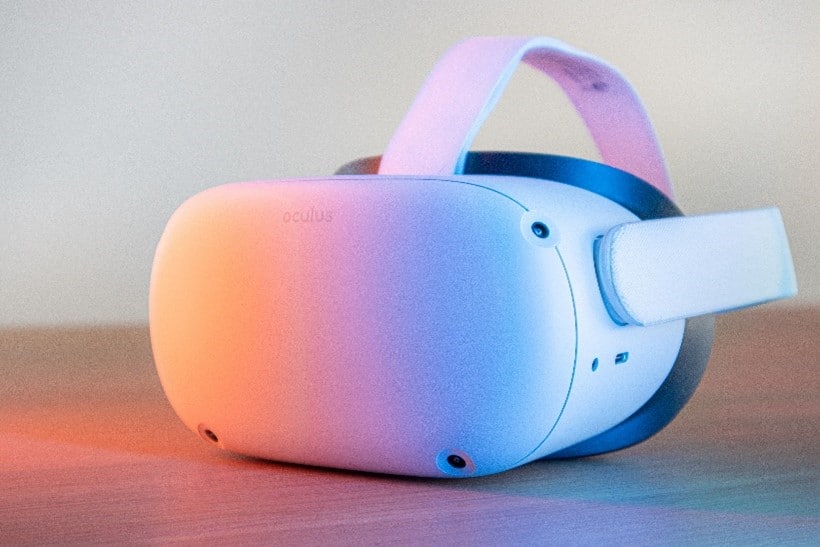
Since its inception and popularization in the early 2010’s, virtual reality technology has been used for a vast array of applications from education and art to engineering, entertainment, and beyond. Recently, immersive VR technology is also being used to address the issue of domestic abuse and violence in a series of experimental studies. The goal is to enhance emotional recognition skills and subsequently foster an increased capacity for empathy among domestic violence offenders. While this is clearly a deserving cause and noble goal, the question is does this application truly work or are we overestimating the power of virtual reality?
Domestic Abuse
Domestic abuse, also referred to as domestic violence or intimate partner violence, is characterized as a pattern of behavior in any relationship that is used to gain or maintain power and control over an intimate partner. This includes physical, emotional, sexual, psychological, or economic actions designed to manipulate, coerce, frighten, intimidate, humiliate, injure, or terrorize someone. Domestic abuse can occur in any relationship and affects people of all backgrounds, socioeconomic statuses, and education levels.[1]
According to statistics published by the National Coalition Against Domestic Violence, 1 in 4 women and 1 in 9 men have been physically, sexually, or emotionally abused by an intimate partner in the United States. Various negative mental, physical, sexual, and reproductive health effects have been linked to domestic violence and studies suggest that there is a direct relationship between domestic abuse, depression, and suicidal behavior.[2] Domestic abuse is a pervasive issue that leads to distressing outcomes and justifiably deserves extensive research into ways to combat and prevent its occurrence. Recently, researchers across the globe have been searching for a possible answer to this dilemma using virtual reality immersion.
Empathy and Emotional Recognition
The role of empathy and perspective-taking abilities in mediating aggressive behaviors has been a well-documented theory behind the occurrence of interpersonal violence. Theories of aggression have suggested that the perpetration of violence against others is linked to a lack of cognitive empathy or the ability of offenders to put themselves in the perspective of their victims and understand their emotions.
The ability to recognize emotions in the facial expressions of others is a key component of effective interpersonal communication.[3] Studies have shown that domestic abuse offenders have a significantly lower capacity for recognizing and understanding the emotions expressed in the faces of others and even tend to misclassify emotional expressions.
The VR Experiments
Researchers have come up with the idea of using immersive VR technology to give male offenders the sensation of experiencing an episode of domestic abuse from the perspective of a female victim. The researchers hypothesized that the virtual reality experience may foster cognitive empathy in violent offenders by having them “physically” embody the victim’s perspective, an ability that they clinically lack. The overall goal is to investigate how the difference in perspective during a violent interaction impacts empathy and an individual’s ability to recognize emotional facial cues in others.[3]
In one experiment, a group of male offenders who had been convicted of domestic violence against women were assessed on measures of their emotional recognition capacity and compared to a control group of men without any histories of violent offenses. The results showed that the men had a significantly lower ability to recognize fear in female faces. Not only did they typically fail to recognize emotions, but they also tended to mistakenly classify fearful expressions as appearing happy.
The men were then exposed to an immersive VR program that was designed to induce the illusion of full-body ownership over their female-bodied avatar thus allowing them to have a first-person experience as a female victim of domestic abuse. The avatars’ movements were perfectly synchronized with the movements of the participants’ bodies. The participants first underwent a process called embodiment designed to strengthen the illusion of being the avatar where they looked at themselves in a mirror and interacted with various objects in the virtual space.
Following this process, a male VR character enters the space and begins verbally abusing the participant. The male character proceeds to invade the participants’ personal space and throw objects such as a telephone onto the floor. If the participant spoke up, the male character commanded them to “shut up.” If they looked away, the male character shouted to them, “look at me!” After completing the virtual encounter, the offenders were again assessed on measures of their emotional recognition capacity. The results indicated that after being embodied in a female victim, the offenders showed an improved ability to recognize fearful female faces and reduced their tendency to misclassify fearful expressions as happy.[3]
Does this truly work?
Research has suggested that virtual reality can elicit strong emotional responses in the user, especially those linked to anxiety, stress, and fear. Other studies have found that some virtual reality programs can promote pro-social behavior among users, but only to a limited extent.[4]
While the results of this study indicated that VR may have promising applications for decreasing re-offenses among perpetrators of domestic abuse, similar studies have reached different conclusions. For example, studies have been published that show that virtual reality is not effective in generating long-term cognitive empathy that allows an individual to identify, understand, and relate to the emotions of others in various contexts. Other studies regarding VR and domestic violence have reported successful results in promoting cognitive empathy.[4] Further extensive, empirical, and peer-reviewed studies must be conducted to fully conclude if VR is a viable tool for addressing violent behaviors among domestic abuse offenders and if so, to what extent it works and how.
GKIS Resources
If you enjoyed reading this article, check out the GKIS Blog for many other articles on a wide array of interesting topics such as gaming, GKIS recommendations, impacts of social media, news-worthy stories, screen safety, popular apps, and so much more. You can also check out Dr. Tracy Bennett’s book, Screen Time in the Mean Time: A Parenting Guide to Get Kids and Teens Internet Safe for family-tested parenting strategies that will help you build the tools you need to help your family navigate today’s technological pitfalls.
Thanks to CSUCI intern, Mackenzie Morrow for researching the use of VR for combatting domestic violence and co-authoring this article.
I’m the mom psychologist who will help you GetKidsInternetSafe. Onward to More Awesome Parenting,
Virtual reality (VR) software has become increasingly popular among young tech consumers. Users of the latest VR headset technology love to explore vast digital worlds and interact with other users. While there are many creative and exciting possibilities for this technology, intensive oversight is needed to ensure the safety of our kids in this brave new world of virtual reality. Unfortunately, recent reports have come forth detailing disturbing issues of sexual impropriety and exploitation of minors across virtual reality domains. It is important for parents to be aware of the possible risks of VR so that kids can be better protected while exploring its fun and creative applications. It’s also important for tweens and teens to be aware. That is why we created the Social Media Readiness Course. This course was designed to prepare kids and teens for the inherent risks of social media in order to prevent digital injuries and promote responsibility
What is the Metaverse?
The term metaverse appears to be one of those recent buzzwords that seemingly everyone has heard of yet understands very little about. People wonder if it’s a game, a new type of internet, or a singular virtual reality space inhabited by everyone who has a VR headset. As it exists right now, the metaverse refers to apps that use virtual reality technology. For example, someone can download a Jurassic-themed VR app that allows them to use their VR headsets to engage in a virtual space inhabited by dinosaurs. Or someone could download a different VR app that allows the user to virtually explore a museum. Although they are completely separate from one another, the virtual spaces provided by the two different apps collectively comprise the metaverse.
Kids may access adult-themed virtual domains.
The VR industry profits billions of dollars per year which has resulted in an enormous amount of VR apps being developed for consumer use. The expansion rate for app development is too fast for there to be comprehensive oversight of all the apps that children have access to download. This means that it is relatively easy for kids to download a VR app that may look innocent but end up being completely inappropriate for them. Additionally, some apps that should have stringent user-age restrictions simply don’t, allowing kids access to virtual strip clubs and other adult-themed spaces.
Children and Adults Mix
A researcher posing as a 13-year-old girl was given access to a virtual strip club while using a VR app that had a minimum user age agreement of 13. The researcher downloaded an app called VRChat which is characterized as an online virtual platform which users can navigate through as 3-D avatars. The app can be downloaded from an app store on Facebook’s Meta Quest VR headset, which only requires a Facebook account instead of an age verification. Inside of the app there are virtual rooms where users can meet and interact with one another. Some of these rooms are quite innocent such as popular fast-food restaurants whereas others are highly sexually explicit.
Upon entering the virtual strip club, the researcher was exposed to sex toys, condoms, and approached by adult male avatars who asked her to engage in erotic role play. The adult content is not restricted to a single room, rather it spans across multiple virtual rooms providing more points of access and exposure for young users. While pink flashing neon lights and booming music might signal sexual connotations to adults in the real world, to kids on a VR headset this might just look like an enticing feature of a fun video game.
Children using this app and others like it have reported being groomed by other users with adult avatars and forced to engage in virtual sex. The avatars on this app have the ability to get completely nude and simulate sex acts which may require the user wearing the headset to physically act out the motions themselves. The completely immersive nature of VR can make these experiences as traumatic and harmful as they would be in real life.
Parents Can Help
Parents can’t rely on tech companies and app developers to keep their children safe in a virtual reality space, especially with billions of dollars on the table. However, this doesn’t mean that kids should not be allowed to engage with this technology that also offers fun, creative, and educational experiences. Keep in mind that technology is like any other tool. The tool may be safe as long as it is being handled properly and wisely.
To optimize a safe and positive VR experience:
Research apps before allowing your kids to download them.
Take time to explore the virtual space yourself to sample what your kids will be seeing.
Periodically monitor the list of apps your kids have downloaded to ensure that no unapproved apps are being used.
Hold your children accountable to understand and guard against potential online risks that can lead to digital injury.
Check out our GKIS Social Media Readiness Course. Our course is a valuable tool that teaches tweens and teens about the inherent risks of social media and ways to be prepared when encountering them. We also cover critical psychological wellness tools to optimize mental health and overall satisfaction.
Verbally check in with your kids about what their experiences in the metaverse are like.
If you have school-age kids, you’ll want to check out Dr. B’s GKIS Connected Family Course which offers essential tips for fostering this kind of open communication.
Finally, remember to be kind, create an environment that allows for open dialogue between you and your kids, and rest assured that you have provided your family with the tools to facilitate safe and healthy internet practices. For ideas on what to talk about and to stay up to date on relevant internet/gaming topics, read our weekly free articles on the GKIS Blog by signing up for our free Connected Family Agreement.
Thanks to CSUCI intern, Mackenzie Morrow for researching some of the risks of virtual reality spaces for kids and co-authoring this article.
I’m the mom psychologist who will help you GetKidsInternetSafe.